In this lecture, Dr. Thomas Kirsch will reflect on how individuation was viewed by first-generation Jungians in the 1950s and 1960s. The role of the mandala as a symbol of individuation will be discussed. In the early days of analytical psychology, individuation was a process belonging strictly to the second half of life. Fordham in London extended individuation to the first half of life, and studied it in infants and children. From our knowledge of sand play and children's drawings, we know that mandalas and other symbols of individuation begin at a very early age.
In his workshop, Dr. Kirsch will focus on the life of Dr. C.G. Jung. As a dream image, Jung seems to represent many things, from the wise old man to finding one's center. We will discuss Jung's confrontation with the unconscious, showing pictures that have been made public from the Red Book. The workshop will move from Jung's own life to our present understanding of what he means for each of us.
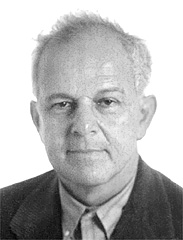
Thomas Kirsch, M.D. is a Jungian analyst in private practice in Palo Alto since 1967. He is a graduate of the San Francisco Jung Institute. He is a past president of the Jung Institute in San Francisco, and immediate past president of the IAAP. He has authored a number of articles on dreams, Jung, and the analytic process. He is currently writing a book on the history of analytical psychology.
Note: Preregistration is available for this workshop. See the Preregistration for Winter 1997 Workshops page.