Sonoma County California

This page explores Sonoma and Jack London from several angles. Sonoma Plaza, Mission San Francisco Solano, local birding and hiking in parks and along the coast, the lighted tractor parade celebrating agricultural heritage, and the French bakery Les Pascals in Glen Ellen, as well as a discussion of wildfire, flood, and seismic risks and why fall is often the best time to visit are discussed. The conversation then shifts to Jack London State Historic Park, outlining its trails, historic buildings, Wolf House ruins, “Pig Palace,” and eucalyptus groves, and summarizing London’s life as an adventurer‑author who became an experimental, sustainability‑minded rancher on his “Beauty Ranch,” where he applied ideas from his travels (like Korean terracing) and attempted—unsuccessfully—to launch a eucalyptus timber business.

Trump’s “Freedom Cities”

Trump’s “Freedom Cities” proposal is fundamentally aligned with and directly connected to the technology billionaire agenda for building network states—but with a crucial strategic difference: rather than relying on members to crowdfund land acquisition (Balaji Srinivasan’s original model), the Freedom Cities concept leverages federal land and executive power to bypass democratic approval processes entirely.wikipedia+2 The Network State…

Santa Barbara, California USA

The story of Santa Barbara, known as the American Riviera, begins with the iconic Old Mission Santa Barbara. Founded in 1786 by Spanish Franciscans, this “Queen of the Missions” stands as a testament to the area’s rich cultural heritage. Its twin bell towers and stunning architecture have become synonymous with the city’s character.

The city’s tumultuous history includes Zorro, the 1969 oil spill, the California Oil Spill and the burning of a Bank of America branch in Isla Vista in 1970, a reflection of the era’s social unrest and anti-establishment sentiments.

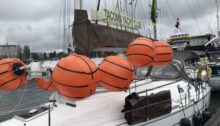
Dock Zero Diplomacy: Historic Floating Communities vs. Highway Construction on Portage Bay”

“Dock Zero Diplomacy” ultimately shows how a temporary, purpose‑built floating community—grounded in over a century of houseboat and yacht‑club history—won real concessions from a 21st‑century infrastructure project, demonstrating that even massive highway work must negotiate with the cultures and traditions that already inhabit the water.

Floating Communities

Once born from logging, fishing lore, Now havens on a liquid floor. From industry to tranquil bliss, A lifestyle change, none would miss.

The Salish Sea, their backyard view, Where old and new blend into blue. A testament to human will, These homes that ride the water, still.

From work to play, they’ve found their way, These floating isles where children play. A world apart, yet close to shore, Where land and sea forever more,

Seattle’s Opening Day

Seattle Yacht Club grew alongside the city—from an Elliott Bay club to a Portage Bay institution tied to the ship canal and Montlake Cup. It then went beyond the city with an international Opening Day event through invited yacht clubs and the Windermere crew races. High‑quality bike routes with light rail to University of Washington Station provide a low‑carbon way to reach Opening Day events.

Seattle: America’s Millennial City

The election of Katie Wilson as Seattle’s mayor in November 2025 marks a symbolic and substantive watershed moment: the emergence of the first millennial-led major American city, one explicitly designed around millennial values—not as a generational novelty, but as a coherent reimagining of urban life fundamentally different from the industrial cities of the twentieth century.…

Arc

Arc quotes the Arc Sport’s 226 kWh battery as supporting a full typical day on the water, with several hours of hard wake use between charges. Arc Boats chose the name “Arc” as a sleek, forward-looking nod to electric arcs—the brilliant, high-energy sparks symbolizing the raw power and instant torque of their electric drivetrains. It…

Catalina Yachts Bankruptcy

The explosion of capable used fiberglass boats was a powerful structural headwind. Catalina’s own success from the 1970s–1990s flooded the market with durable, still‑sailable hulls—C‑22s, 27s, 30s, 34s—that can be refit for a fraction of the cost of a new build. The decision to move upmarket with the 5 Series and powerboats certainly raised Catalina’s exposure to macro economic shocks, but it was a plausible strategic response to Beneteau’s dominance at the entry level, not the core “mistake.” The collapse happened when fragile financing met a historically tough market—and when a storied brand no longer had Frank Butler’s conservative, cash‑focused stewardship guarding the downside. Primary, immediate responsibility lies with the 2025 acquirer (Reardon/Daedalus) for under‑capitalized consolidation, unpaid obligations, and the loss of the Largo plant that made continued production impossible.