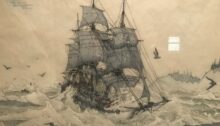
How Maritime Life Shaped the United States

The United States is a maritime nation whose history, economy, culture, and power have been shaped by the sea. From Civil War shipbuilding and the Gold Rush to immigration, submarine warfare, commercial law, and everyday language, maritime life helped build the nation and connect it to the wider world.

Berlin, Germany by Boat, Border, and Reconstruction

Berlin makes a compelling one or two‑day side trip from Munich, offering a dense blend of river scenery, Cold War history, and contemporary political debate. For a first‑time visitor, the city’s Spree River boat tours provide a calm, visual introduction to the urban landscape, while Checkpoint Charlie and the remains of the Berlin Wall anchor…

Salish Sea Opening Day

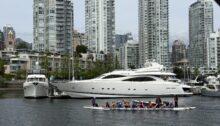
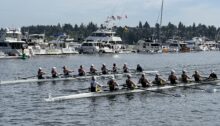
In the Pacific Northwest, “Opening Day” refers to the start of the boating season—especially for recreational boaters, yacht clubs, and maritime communities. It’s a big deal around the Salish Sea region and has a long-standing tradition. ⚓ Seattle – The Biggest Celebration The most famous Opening Day event is in Seattle, hosted by the Seattle Yacht…

Ted Turner

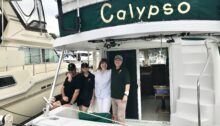
Turner’s best-known sailing vessels included American Eagle, Mariner, Courageous, Tenacious, and, through his Cousteau connection, Calypso. The routes and venues that mattered most in his story were the Fastnet Race, the transatlantic passage aboard American Eagle, the Sydney Hobart Race, the Newport America’s Cup campaigns, and the Amazon voyage with Cousteau. Those settings mattered because they connected elite racing with exploration and environmental storytelling.

Opening Day 2026 Poem One

This post walks through a poem built from an unusual constraint: turning a list of boat names into verbs within a scene about the 2026 log boom, which is an extension to Dock Zero. The unpacking of several invented verbs, translates poetic language into concrete meaning—watching the horizon, tightening lines, chaining logs, riding wind, easing tension, and reflecting on history.

What makes it compelling is the tension between abstraction and realism. The language is playful and surreal on the surface, but every line maps back to very physical, recognizable maritime actions and shared human moments—labor, coordination, memory, and release. It becomes a kind of linguistic choreography, where naming turns into doing, and the reader gets to see how meaning is constructed rather than just delivered.
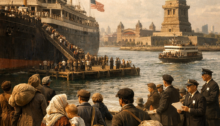

Columbia River Maritime Museum at Astoria, Oregon

The Columbia River Maritime Museum is considered a must-see in Astoria because it vividly interprets the unique and dramatic maritime history of the Columbia River and the surrounding “Graveyard of the Pacific.” It offers insight into exploration, shipwrecks, rescue missions, navigation challenges, and river commerce—anchoring an understanding of Astoria’s pivotal role in Pacific Northwest maritime…

Sonoma County California

This page explores Sonoma and Jack London from several angles. Sonoma Plaza, Mission San Francisco Solano, local birding and hiking in parks and along the coast, the lighted tractor parade celebrating agricultural heritage, and the French bakery Les Pascals in Glen Ellen, as well as a discussion of wildfire, flood, and seismic risks and why fall is often the best time to visit are discussed. The conversation then shifts to Jack London State Historic Park, outlining its trails, historic buildings, Wolf House ruins, “Pig Palace,” and eucalyptus groves, and summarizing London’s life as an adventurer‑author who became an experimental, sustainability‑minded rancher on his “Beauty Ranch,” where he applied ideas from his travels (like Korean terracing) and attempted—unsuccessfully—to launch a eucalyptus timber business.

Santa Barbara, California USA

The story of Santa Barbara, known as the American Riviera, begins with the iconic Old Mission Santa Barbara. Founded in 1786 by Spanish Franciscans, this “Queen of the Missions” stands as a testament to the area’s rich cultural heritage. Its twin bell towers and stunning architecture have become synonymous with the city’s character.

The city’s tumultuous history includes Zorro, the 1969 oil spill, the California Oil Spill and the burning of a Bank of America branch in Isla Vista in 1970, a reflection of the era’s social unrest and anti-establishment sentiments.

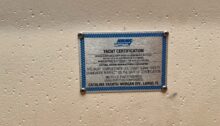
Catalina Yachts Bankruptcy

The explosion of capable used fiberglass boats was a powerful structural headwind. Catalina’s own success from the 1970s–1990s flooded the market with durable, still‑sailable hulls—C‑22s, 27s, 30s, 34s—that can be refit for a fraction of the cost of a new build. The decision to move upmarket with the 5 Series and powerboats certainly raised Catalina’s exposure to macro economic shocks, but it was a plausible strategic response to Beneteau’s dominance at the entry level, not the core “mistake.” The collapse happened when fragile financing met a historically tough market—and when a storied brand no longer had Frank Butler’s conservative, cash‑focused stewardship guarding the downside. Primary, immediate responsibility lies with the 2025 acquirer (Reardon/Daedalus) for under‑capitalized consolidation, unpaid obligations, and the loss of the Largo plant that made continued production impossible.