Arc quotes the Arc Sport’s 226 kWh battery as supporting a full typical day on the water, with several hours of hard wake use between charges.
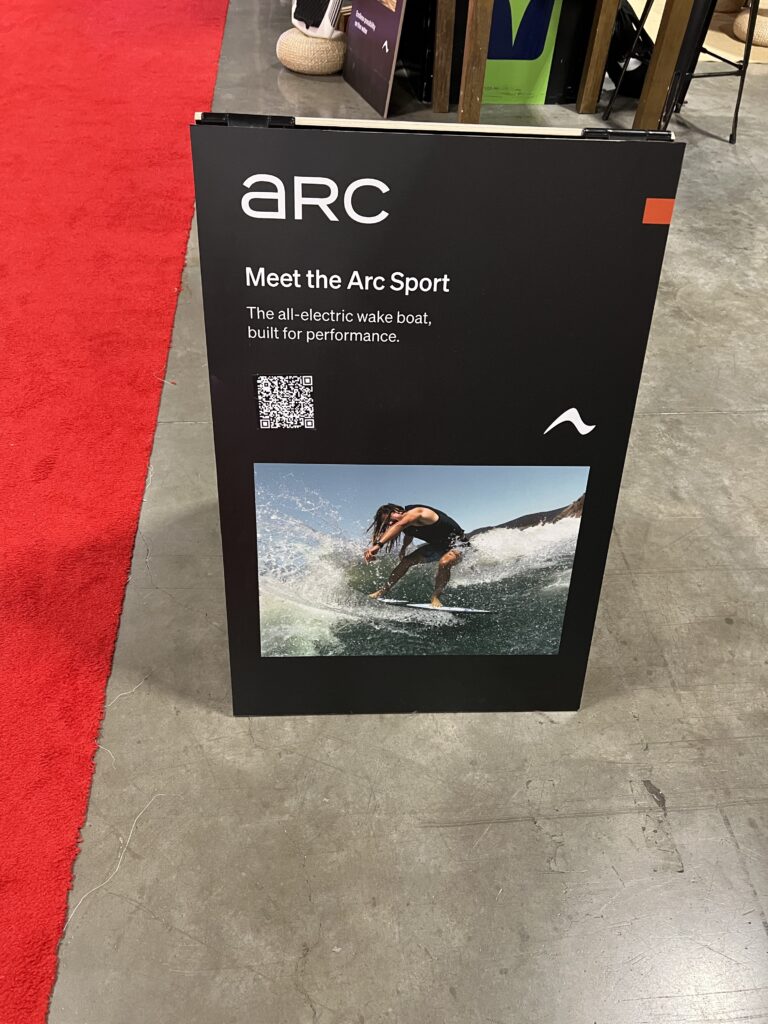
Arc Boats chose the name “Arc” as a sleek, forward-looking nod to electric arcs—the brilliant, high-energy sparks symbolizing the raw power and instant torque of their electric drivetrains. It also evokes motion and trajectory, like an arc across the water, capturing the thrill of high-performance boating from the founders’ waterskiing roots to modern EV tech. The branding deliberately avoids stuffy nautical terms, aligning with their mission to electrify and modernize the industry, much like SpaceX alumni bringing rocket rigor to marine propulsion.
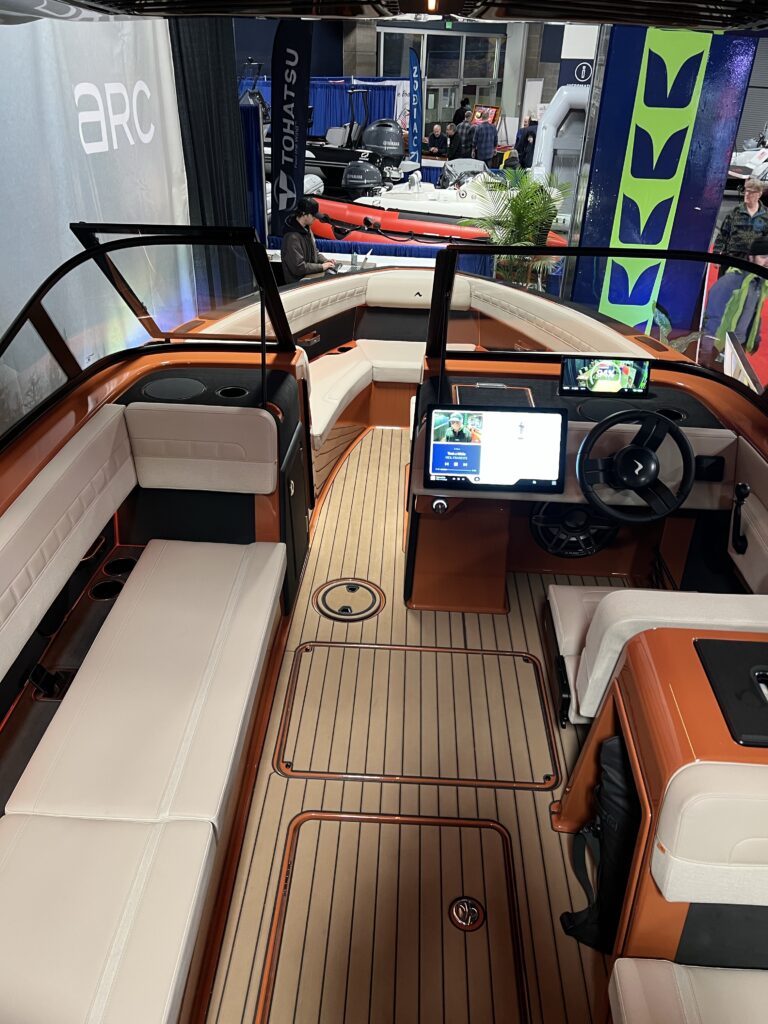
Range on a charge
- Battery capacity is 226 kWh.
- Arc says the boat can cruise at low/no‑wake speeds for over 24 hours continuously on a single charge.
- For wakeboarding/wakesurfing and other “active usage,” the company and independent tests consistently quote about 4–6 hours of use, including plenty of towing and some high‑speed running, which aligns with their “typical 8–10 hour day of mixed use” claim.
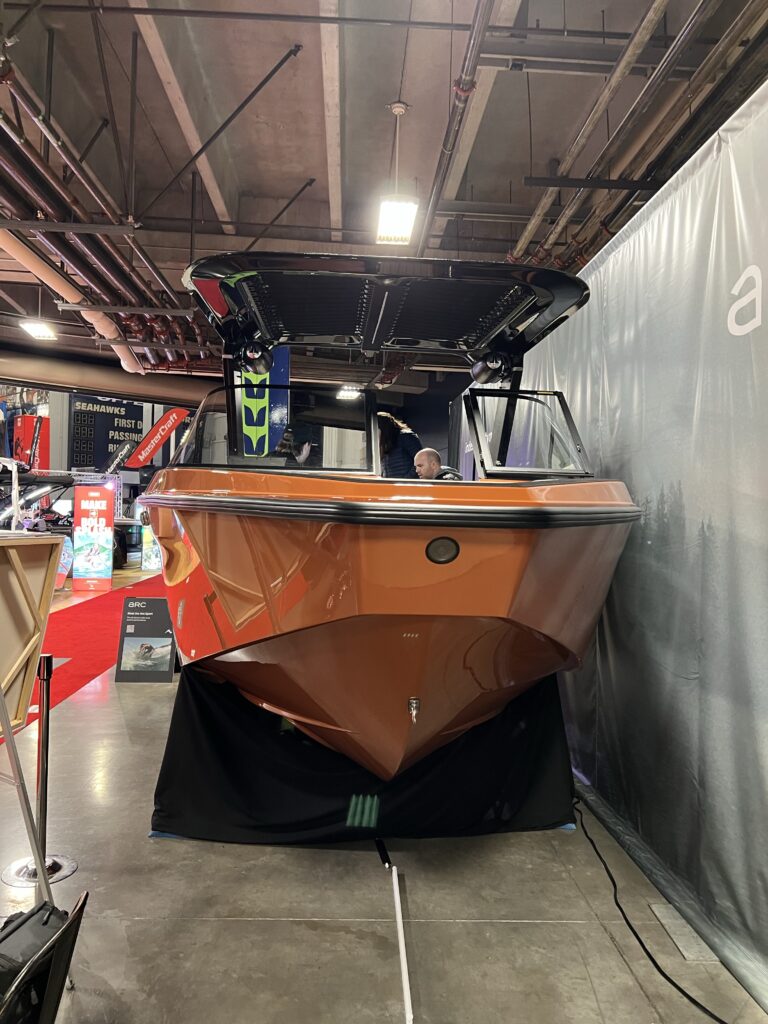
Charging time
- Level 2 (typical marina 240 V shore power, around 7–10 kW) is described as taking roughly 20–30 hours for a full 0–100% charge of the 226 kWh pack, though in normal use you’re usually just topping up overnight rather than refilling from empty.
- Arc’s own charging FAQ models a 10–90% charge (about 180.8 kWh) on Level 2 over the course of an overnight plug‑in, which they frame as “plug it in at the dock and it’s ready the next day.”[arcboats]
- With DC fast charging (up to 225 kW CCS) or other high‑power Level 3 setups, third‑party coverage reports a 20–80% charge taking on the order of about 45 minutes under ideal conditions.
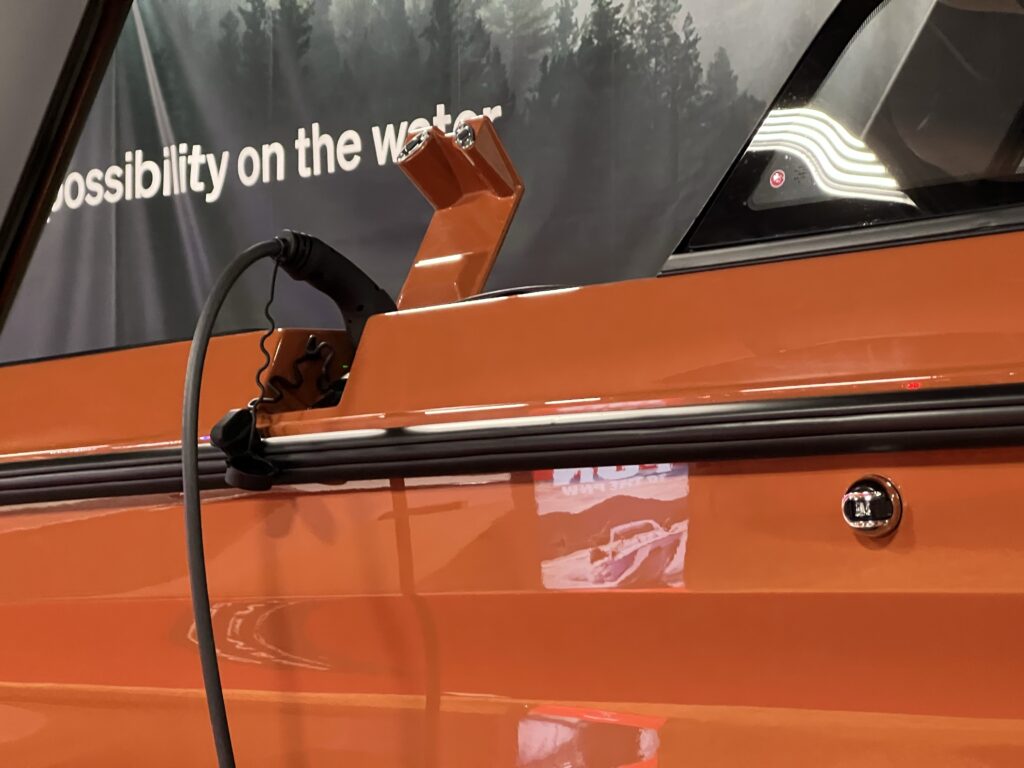
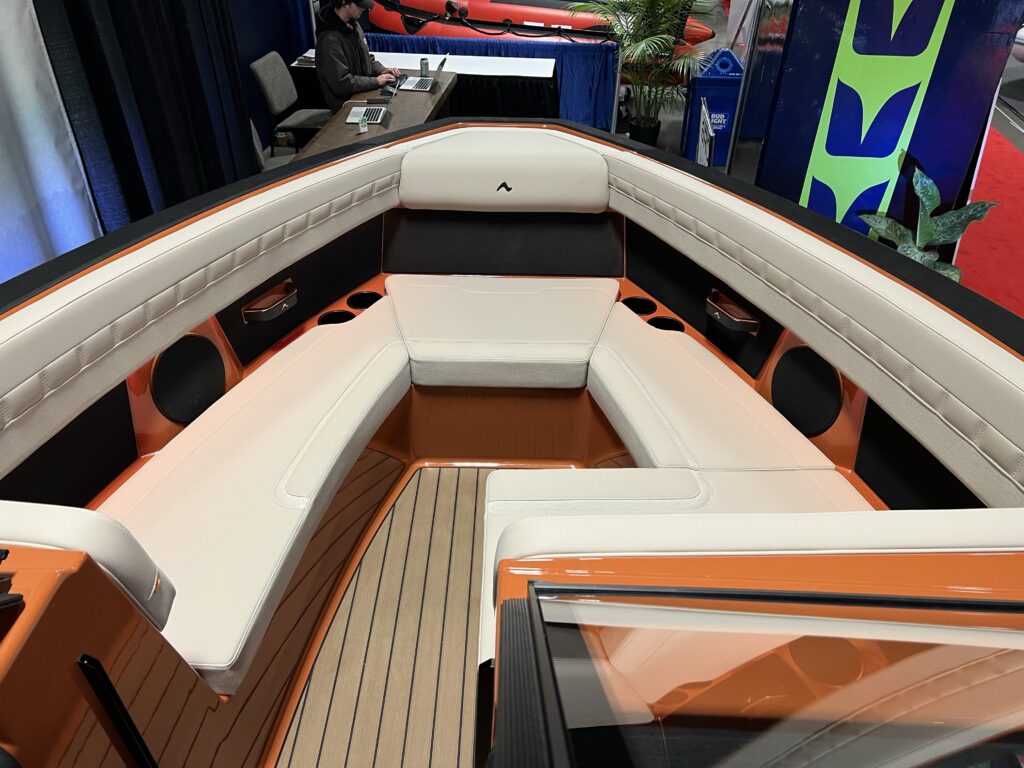
Arc’s Arc Sport is a 100% electric wakesport boat designed from the keel up around EV hardware so that it can throw a big, tunable wake with far less noise, smell, and mechanical fuss than a traditional V‑drive gas inboard.[arcboats]
Founders and their wake obsession
Arc was founded in 2021 in Los Angeles by CEO Mitch Lee and CTO Ryan Cook, both mechanical engineers who met at Northwestern and later worked in aerospace (Boeing and SpaceX). Lee grew up in a Bay Area boating family so fanatical that his mother went waterskiing the morning of her wedding, which he describes as part of the inspiration for building a company around tow‑sports and time on the water. As they looked for “a fun mission,” Lee’s lifelong love of skiing and wake sports, combined with Cook’s hardware background, pushed them toward electric boats capable of delivering serious tow performance rather than just slow “harbor runabout” duty.[arcboats]
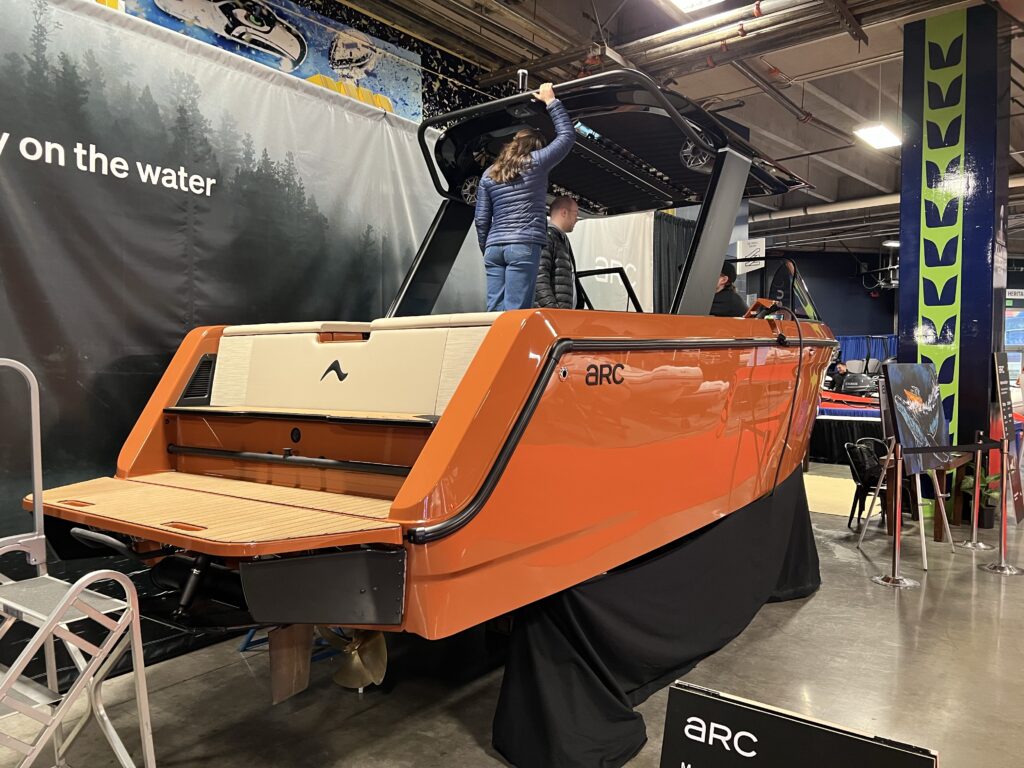
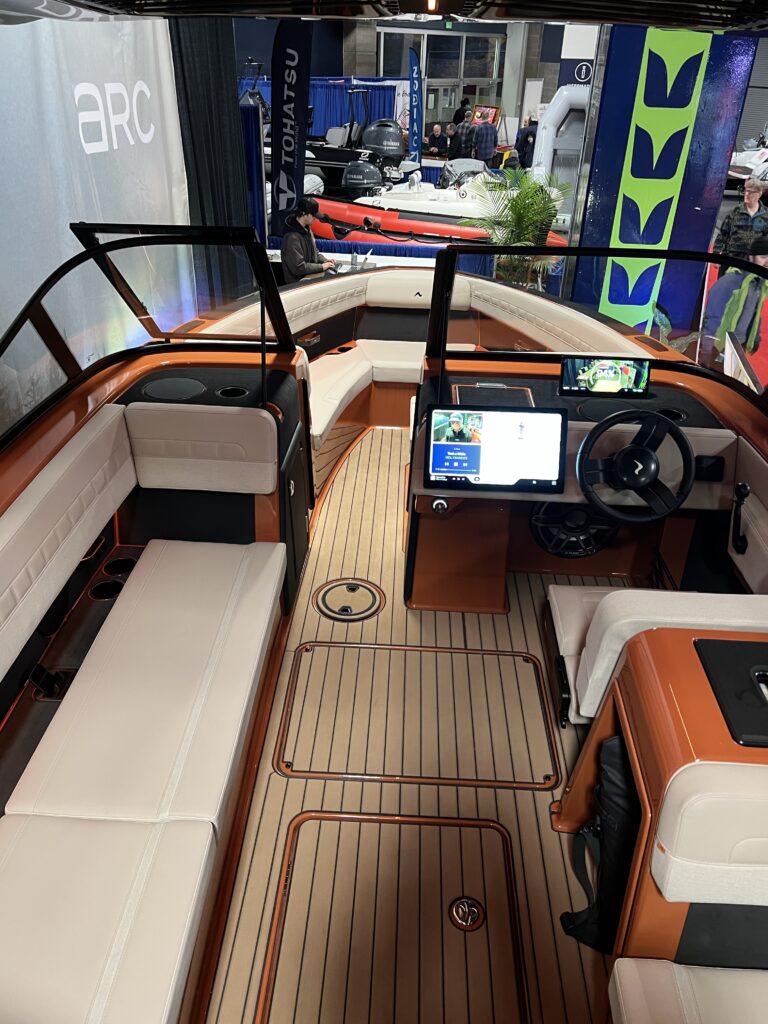
Electric powertrain and “truck‑like” heart
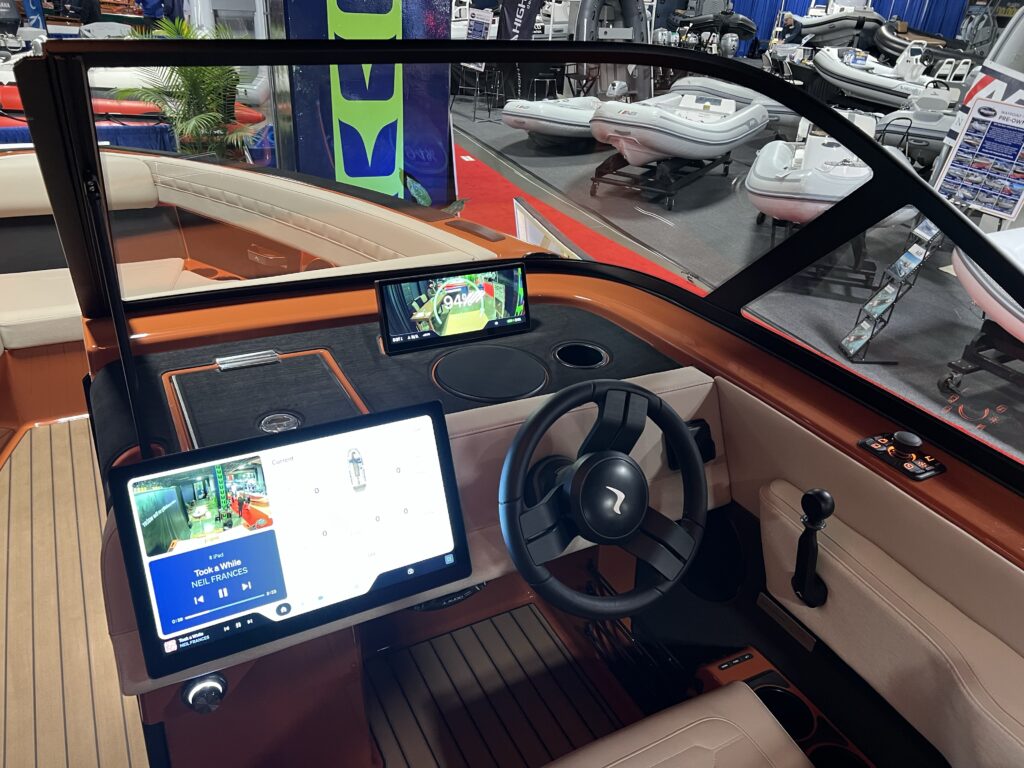
The Arc Sport uses a large traction battery (on the order of roughly 225 kWh in third‑party tests of the platform) feeding a roughly 500 hp electric motor, which gives near‑instant torque and lets the boat jump a rider up on plane quickly and hold a heavy wake speed steadily. The pack is mounted low and central in the hull, similar to a skateboard EV or electric pickup layout, so the boat behaves like it is built around an electric truck powertrain in terms of weight distribution, stiffness, and instantaneous power delivery. That high, flat torque is key for wakeboarding: it makes deep‑water starts easier for riders, lets the driver dial in speed precisely, and still has reserve pulling force even with full ballast.[leandesign][youtube]
Numerous alternatives exist from players like:
• Nikola: ~100 motors deployed in Tre BEV trucks (production paused/scaled back).
• Peterbilt/Daimler: Motors in ePeterbilt 579EV, similar scale to Freightliner.
• Lion Electric/PACCAR/Kenworth: Smaller fleets (<200 total) with Lion/PACCAR T680E motors.
• BYD/Blue Arc: 8TT tractor motors in limited U.S. port ops (~50 units).
Most heavy-duty e-truck motors are bespoke axial/permanent magnet designs from truck OEMs or partners (e.g., Proterra/Wabtec, BorgWarner), not direct Arc Boat analogs, with total U.S./global deployments under 5,000 across all brands.
Weight, ballast, and the big wake
Wake boats need both hull form and mass to generate a large, clean wake, so the Arc Sport layers heavy fixed battery weight with controllable water ballast. Reports on the wake platform describe multiple ballast tanks that can be filled quickly and asymmetrically, shifting the boat’s center of gravity to shape the lip, length, and face of the wake for different riders and sports. Water ballast is ideal because it can be dumped for trailering and ramp work, while the dense battery mass stays low and permanent, improving stability and ride comfort in chop. Together, battery weight and water ballast give the Arc Sport enough displacement and control authority to produce a sizable, surfable wave comparable to premium gas wake boats.[youtube]
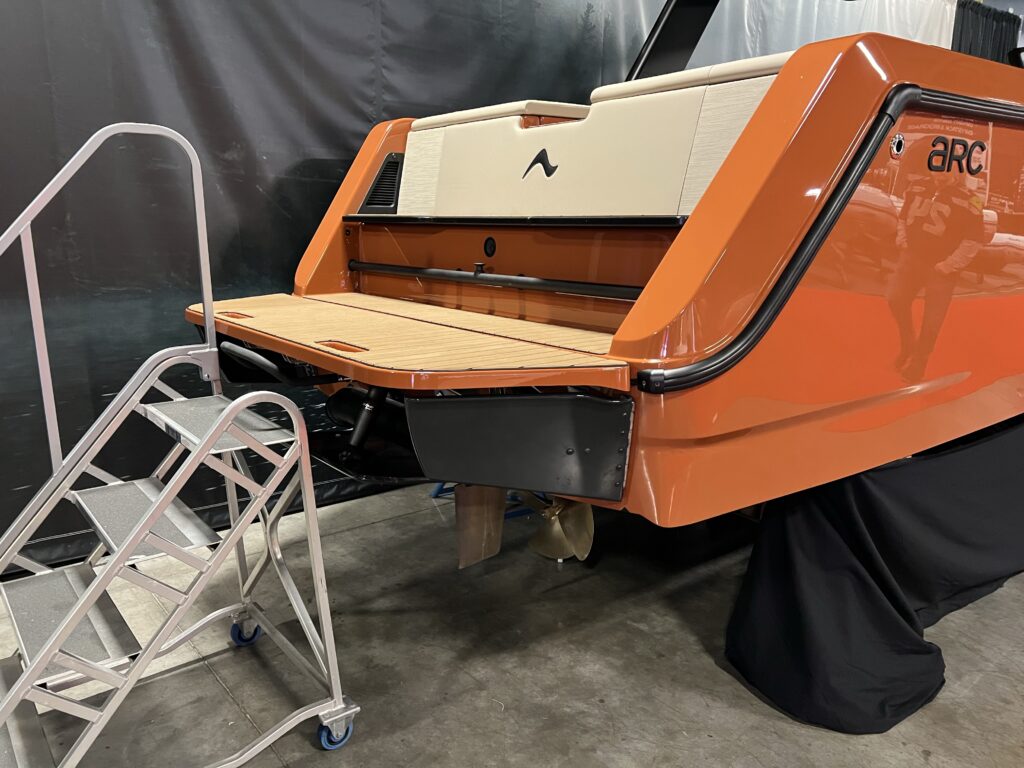
Why the prop is so large
Electric drive favors a larger‑diameter, relatively lower‑rpm propeller: the motor can deliver high torque at low shaft speed, so the prop can be sized for thrust and efficiency instead of needing to spin at automotive‑like rpm. For a wakesport hull that runs in the 10–25 mph band most of the day, a big prop disc area gives more “grip” on the water, which helps with hole‑shot, fine speed control, and the ability to hold a loaded wake speed without hunting. The bigger prop also improves overall drive efficiency at those lower speeds, turning more of the battery’s stored energy into useful thrust rather than wasted slip and turbulence.[leandesign][youtube]
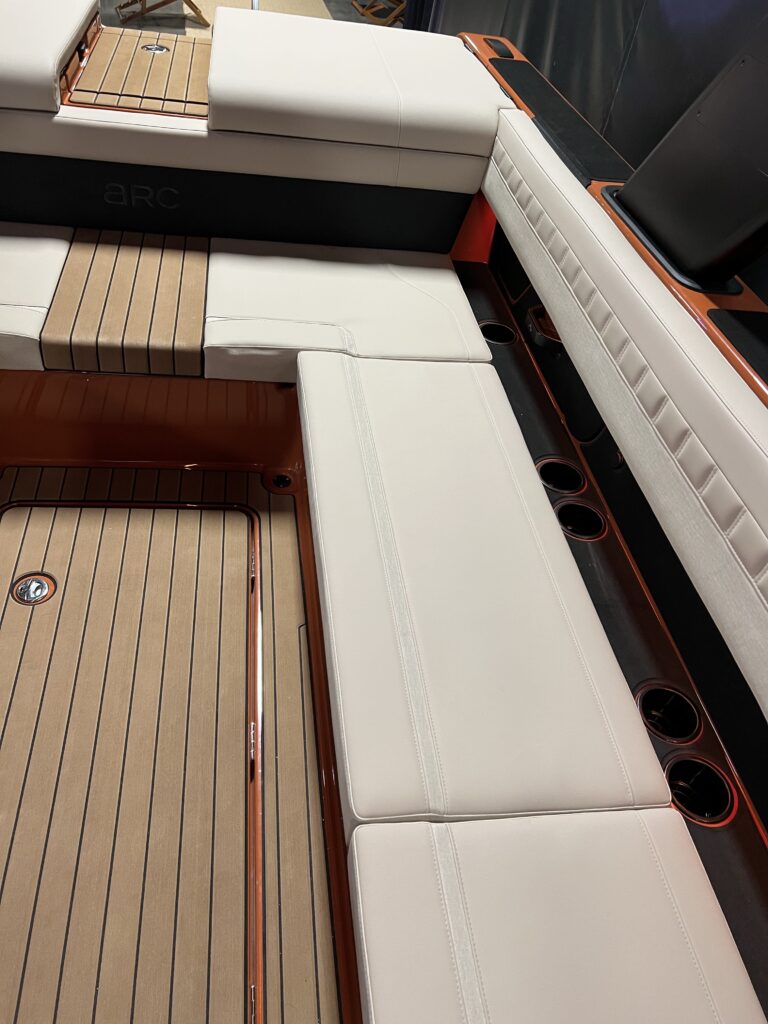
Why no exhaust is so important
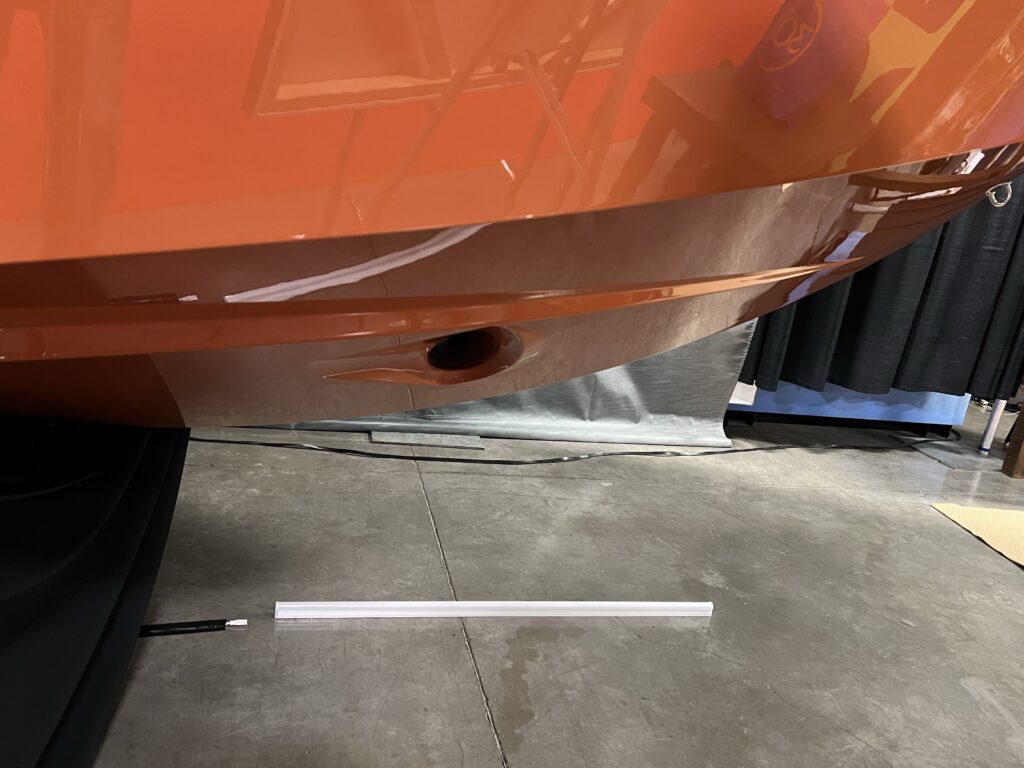
The Arc Sport’s battery‑electric drivetrain produces no tailpipe exhaust at all, so there are no hydrocarbons or carbon monoxide venting around the transom. For wakeboarding and wakesurfing, the rider spends long periods directly behind the boat at low speed, face close to the water and wake; with a gas inboard, this exposes them to exhaust fumes and CO that can collect in the wake trough, which is unpleasant and, in extreme cases, dangerous. Removing exhaust makes the experience quieter, cleaner‑smelling, and reduces CO risk for people sitting in the cockpit and for riders surfing right behind the platform.[arcboats]
Maintenance and sales status
Arc markets the Sport as requiring “minimal maintenance,” emphasizing that the electric motor and drivetrain have far fewer moving parts than a gasoline inboard and that winterization is much simpler. There is still routine care—impellers or pumps for cooling and ballast, gear oil in the reduction drive, hull, and trailer—but owners do not have to deal with fuel systems, engine oil changes, or exhaust components. The company does not publicly list exact production or units‑sold figures for Arc Sport; available materials describe the Arc One as sold out and the Arc Sport as their mass‑market follow‑on, but without disclosing how many Sports have been delivered so far, so any specific sales count would be speculative.
Charging and portable generators
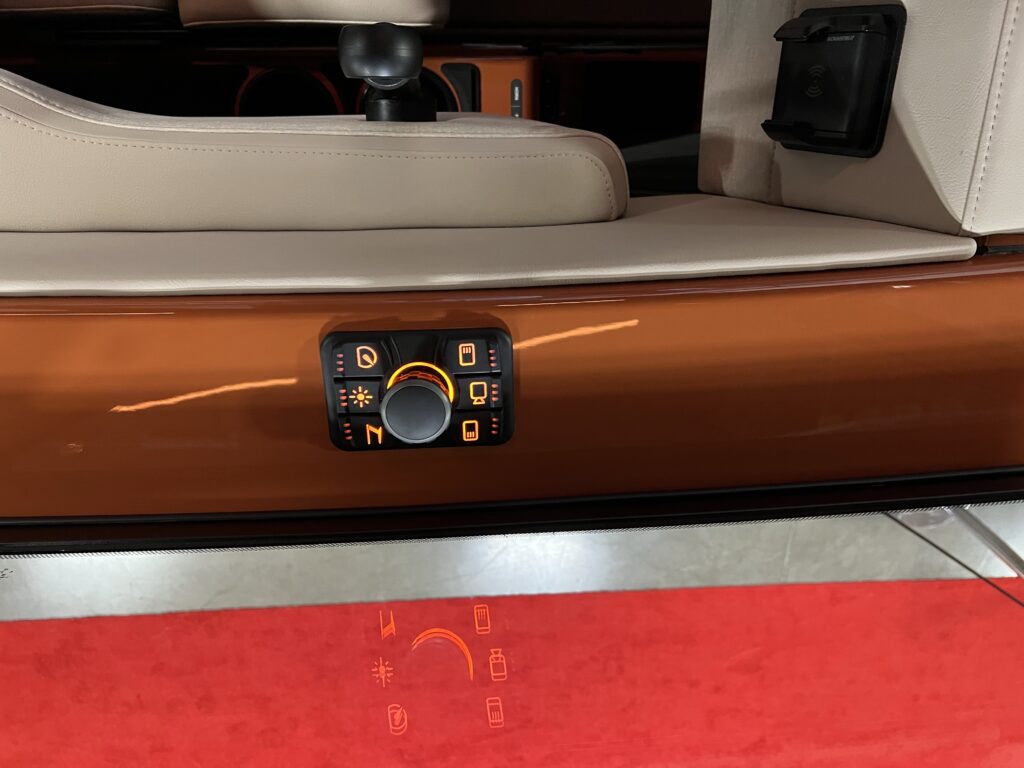
Arc’s own guidance is that you simply “plug it in” at a dock or marina, using infrastructure and charging equipment similar to what is used for electric cars, and they highlight overnight charging so the boat is ready each morning. That implies a focus on shore‑power AC or dedicated marine DC chargers rather than portable generators, which typically cannot deliver high continuous power without being noisy, smelly, and slow relative to the boat’s large battery size. In principle, a suitably rated portable gasoline generator could be connected through an appropriate charger to add range, but Arc does not promote or package this as a standard solution; instead, they position the Sport as an all‑day boat on a single charge, to be recharged at the dock rather than “refueled” from a small portable genset.[youtube][leandesign]
Arc Sport sits very close to Nautique’s wake boats in size, performance, and price, but differs in propulsion, running costs, noise, and maintenance focus.
Core similarities
- Both Arc Sport and Nautique wake boats (like the G‑/GS‑series) are premium 22–23 ft inboards built to throw a shaped wake or wave with integrated ballast, tabs/plates, and tower systems.
- They target similar use cases: wakeboarding, wakesurfing, and high‑end family watersports with seating for roughly a dozen or more passengers and luxury interiors.
Powertrain and performance
- Arc Sport uses a roughly 570 hp equivalent electric motor and a 226 kWh battery, giving instant torque and a top speed around 40 mph, with 4–6 hours of typical tow‑sports use.
- Gas Nautiques rely on high‑output V8 inboards; Nautique’s own electric GS22e used a much smaller ~124 kWh pack and delivered about 2–3 hours of towing, showing shorter electric run time than Arc Sport’s system.[boatingmag]
- On hole‑shot and pull, Arc Sport effectively has “double the torque of most premium wake boats,” which helps deep‑water starts and speed holding under heavy ballast compared with traditional gas setups.[gearjunkie]
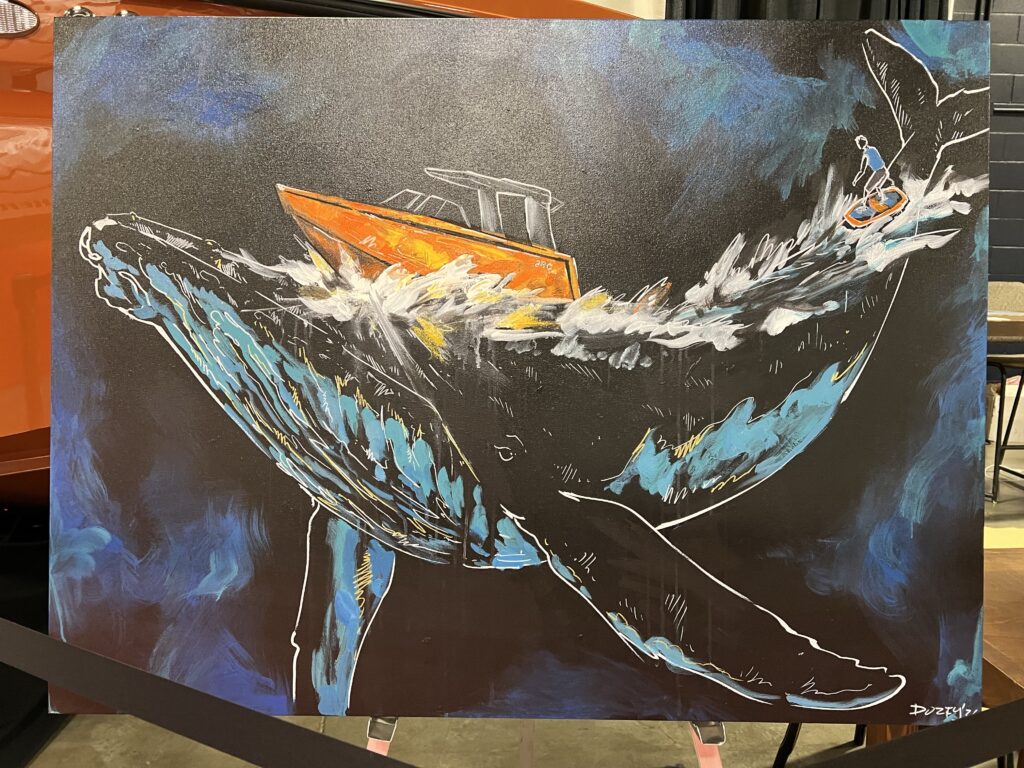
Wake, noise, and ride experience
- Arc Sport’s wake is built from battery mass plus about 2,100 lb of water ballast, shaped via tabs and software, aiming to rival top gas wake boats in size and tunability.
- User and demo feedback compares the wave to big gas flagships (e.g., Nautique and other brands’ surf models), sometimes noting the very biggest wakes from heavy gas boats can still be larger, but Arc’s is already in the premium range.
- Arc Sport runs much quieter, with no exhaust smell; riders and crew notice the reduced engine noise and fumes versus gas Nautiques, which is especially meaningful for wakesurfing right behind the transom.
Price and ownership
- Arc Sport’s starting price around 258,000 USD puts it directly in the same luxury bracket as high‑end Nautique gas models, but under Nautique’s own electric GS22e, which was reported around 300,000 USD and is now discontinued.
- Arc emphasizes lower routine maintenance (no engine oil, fuel system, or exhaust work, plus software updates over the air), whereas Nautique gas boats follow traditional inboard service schedules; Nautique’s electric GS22e did not reach wide adoption partly due to cost and complexity.
Summary view

- Choose Arc Sport if you prioritize electric torque, quiet operation, lack of exhaust, and tech‑centric features with simpler ongoing maintenance.
- Choose a Nautique gas wake boat if you want proven long‑range refueling at any marina, the very largest possible surf waves from their heaviest flagships, and a long‑established dealer and service network.


