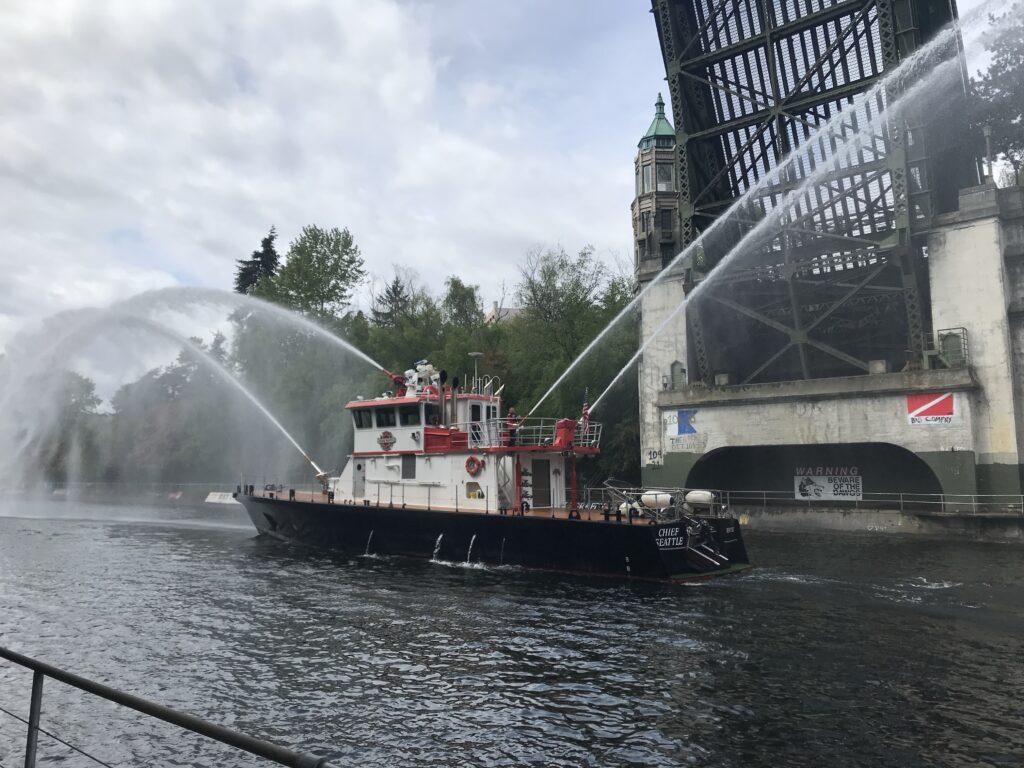
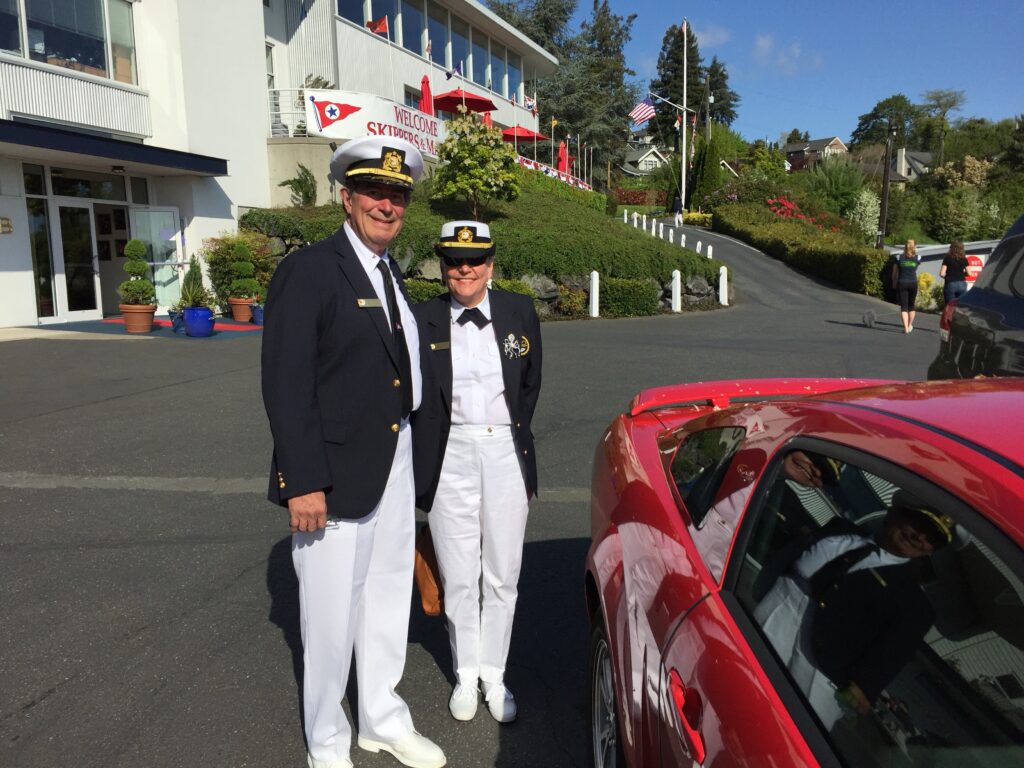
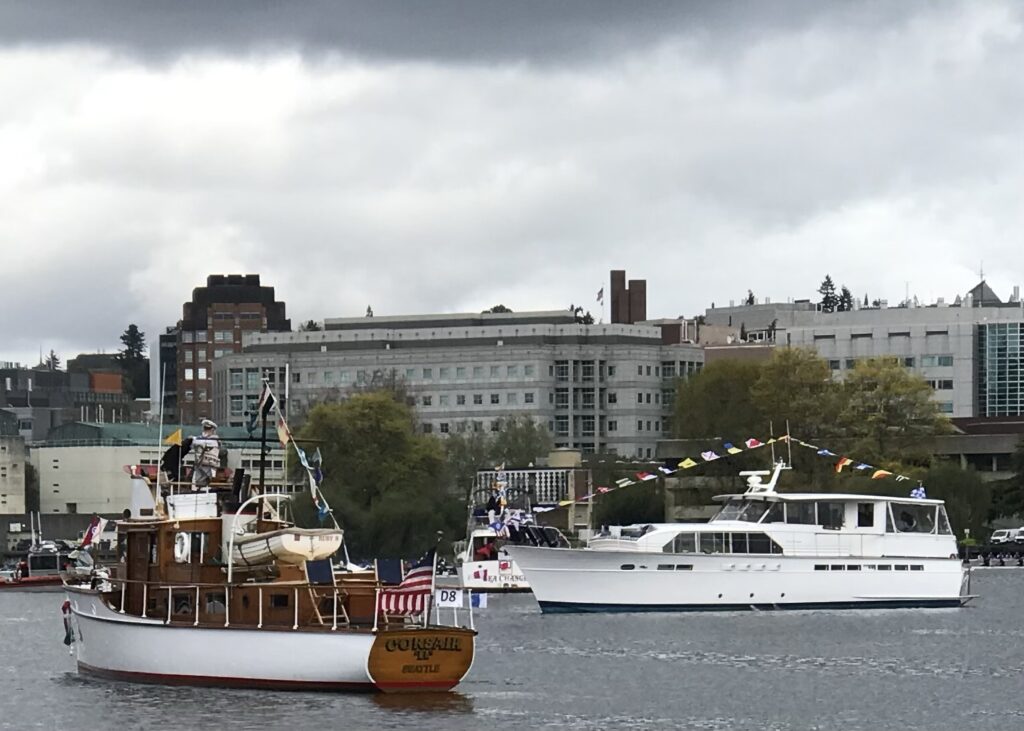
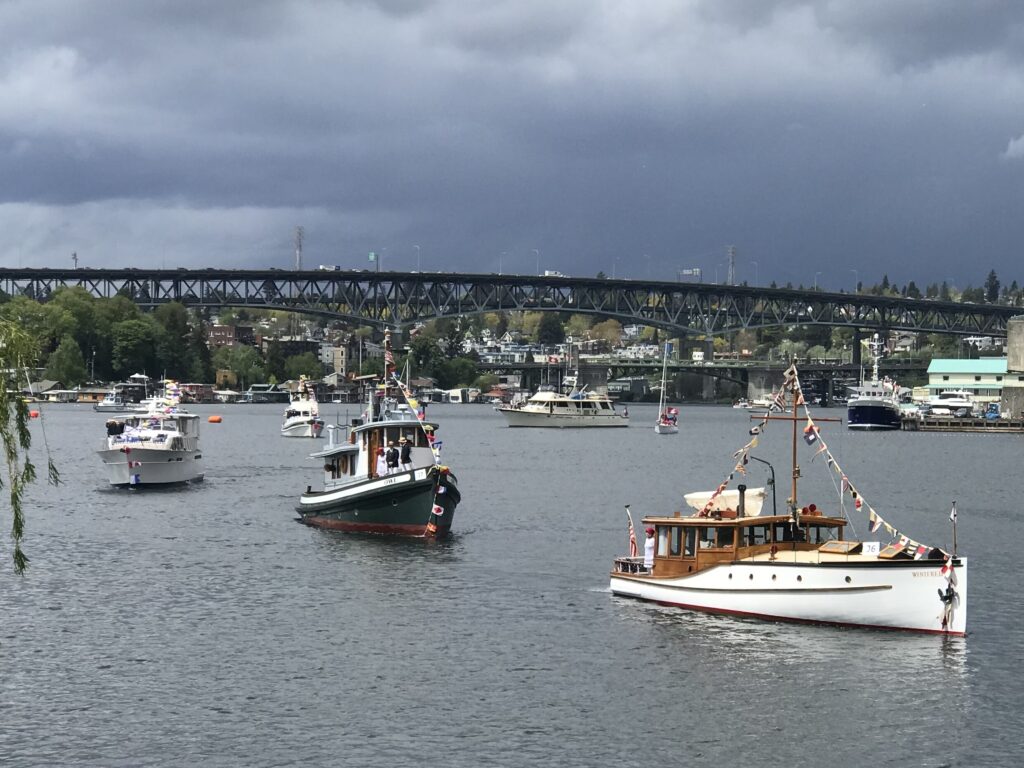
Seattle’s Opening Day is a single day when almost every way of loving the water, the city, and performance gets compressed into three miles of canal, turning a local yacht-club ritual into an international festival of seamanship, sport, art, and spectacle.[1][2][3]
Growing up with Seattle
Seattle Yacht Club (SYC) was founded in 1892 as a small group of “yachting gentlemen” racing off a rickety boathouse on Elliott Bay, just as Seattle was booming on Klondike‑Gold‑Rush money and new maritime trade.[2]
By 1909, SYC had merged with Elliott Bay Yacht Club and helped animate the Alaska‑Yukon‑Pacific Exposition with a “Potlatch Parade” of yachts that many historians treat as the first Opening Day, tying the club’s celebration directly to the city’s coming‑of‑age on the national stage.[1][2]
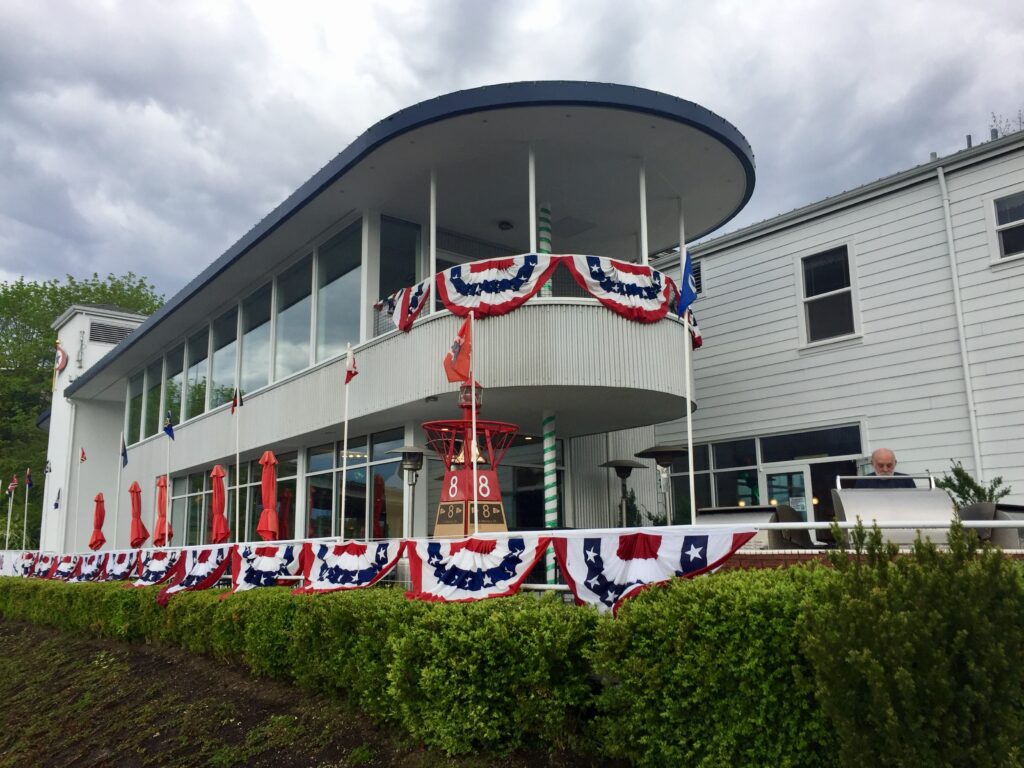
The completion of the Lake Washington Ship Canal and the Chittenden Locks in 1917 shifted Seattle’s maritime geography inland and pulled the club with it; when SYC’s new colonial‑revival Portage Bay clubhouse opened in 1920, the first formal Opening Day parade through the brand‑new Montlake Cut followed almost immediately.[4][2][1]
Through Depression austerity, wartime fuel rationing, and postwar prosperity, Opening Day grew from a few dozen yachts to more than a thousand boats by the late 1950s, with spectators lining both banks of the Cut and SYC becoming a recognized civic institution in Seattle’s official historic record.[5][2][1]
Five days that build to one
Today, Opening Day is the culmination of about five days of layered activity that turn Portage Bay into a dense, floating village.
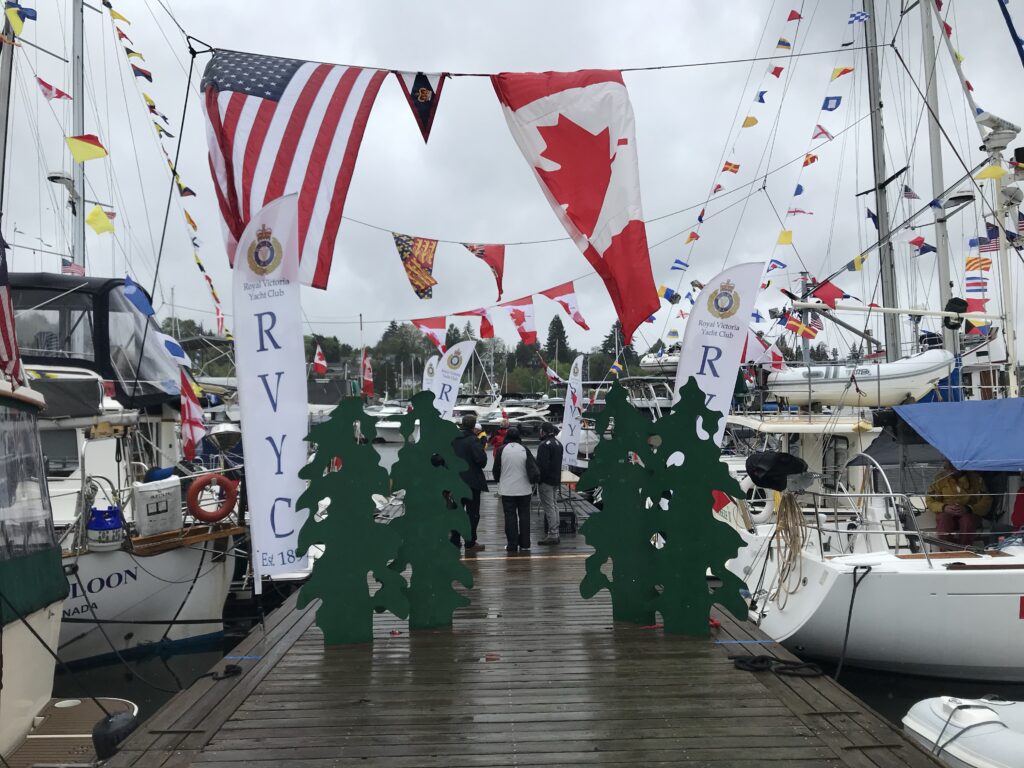
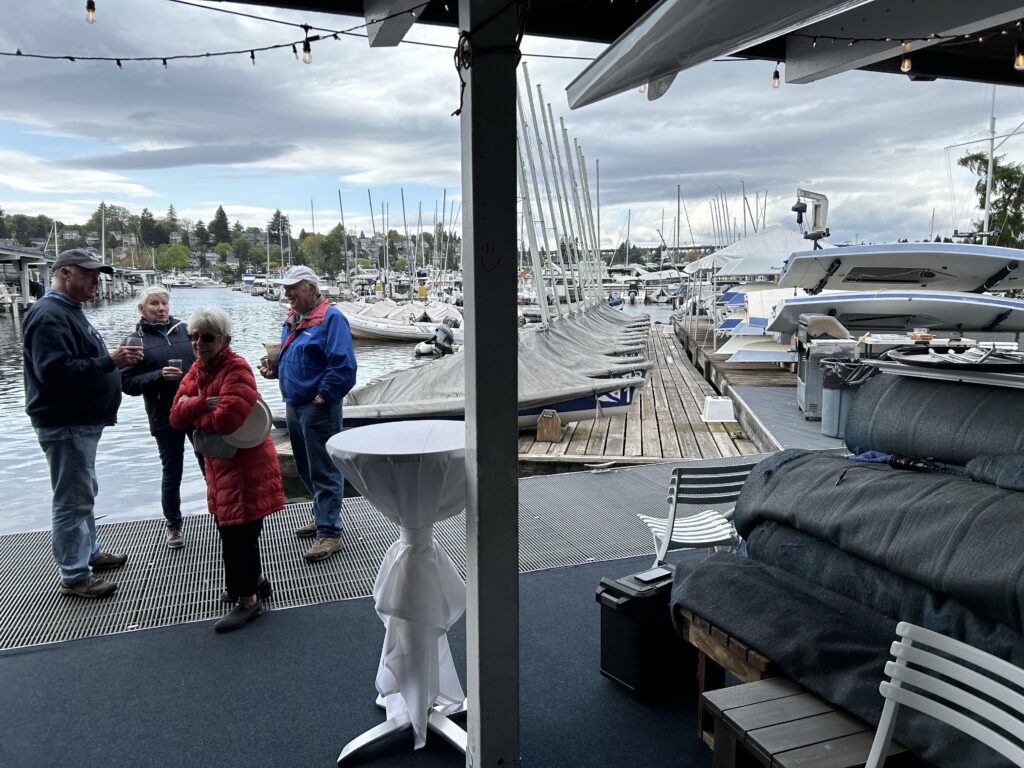
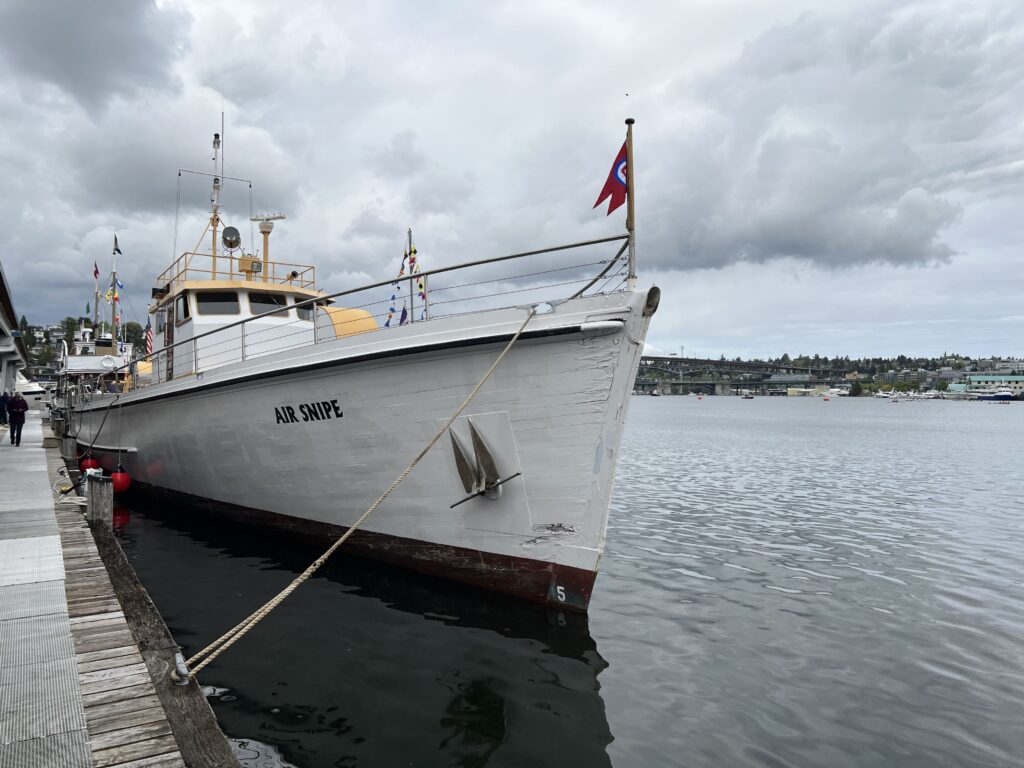
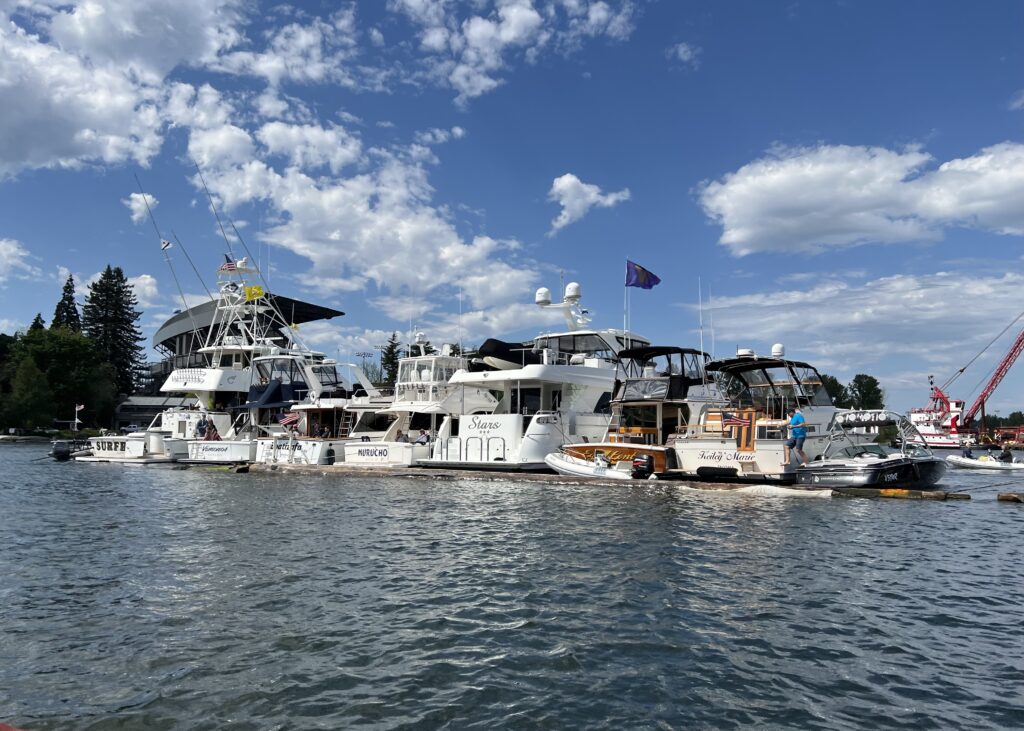
In the early days of the week, visiting boats from “north of the border” and across the Sound arrive, and reciprocal‑club parties begin to unfold on Dock Zero and in the clubhouse lounges.
There are themed north‑of‑the‑border gatherings that celebrate the long relationship with Canadian clubs, elaborate buffets in the club’s dining rooms, and both formal lunches and more casual dining options that keep crews, guests, and volunteers fed between meetings, briefings, and rehearsals.
One evening typically features a steak dinner hosted at Tyee Yacht Club, a fellow club on Portage Bay whose dock and clubhouse become an extension of the festival and a place where racing crews, cruising skippers, and guests from multiple clubs mingle.
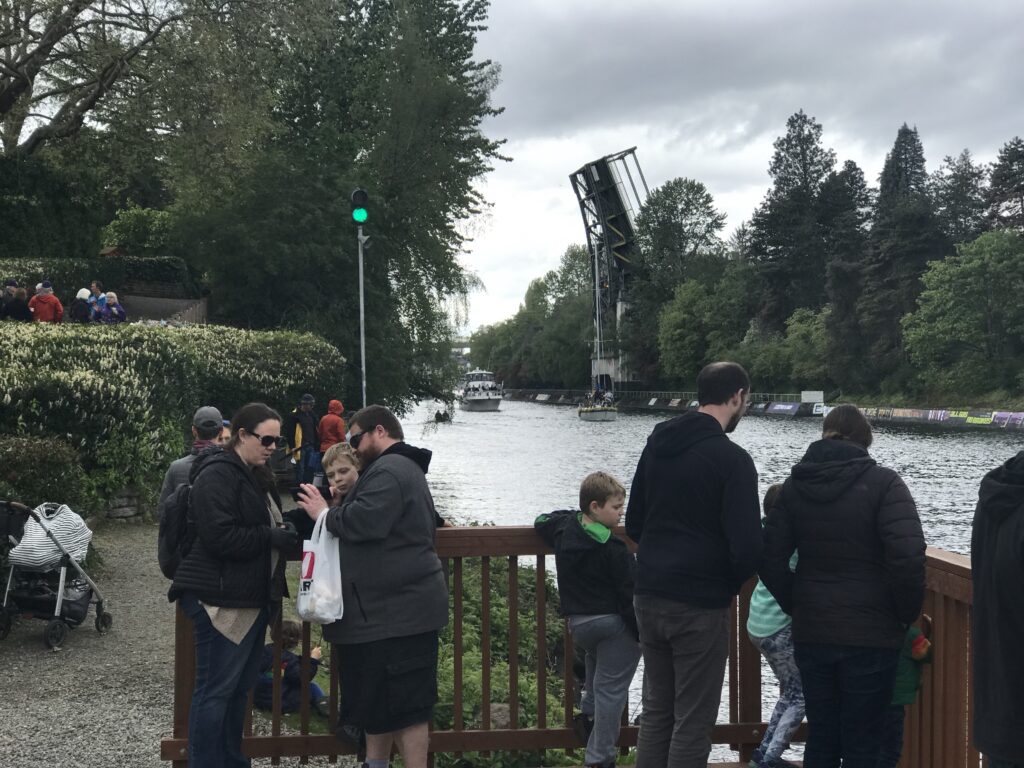
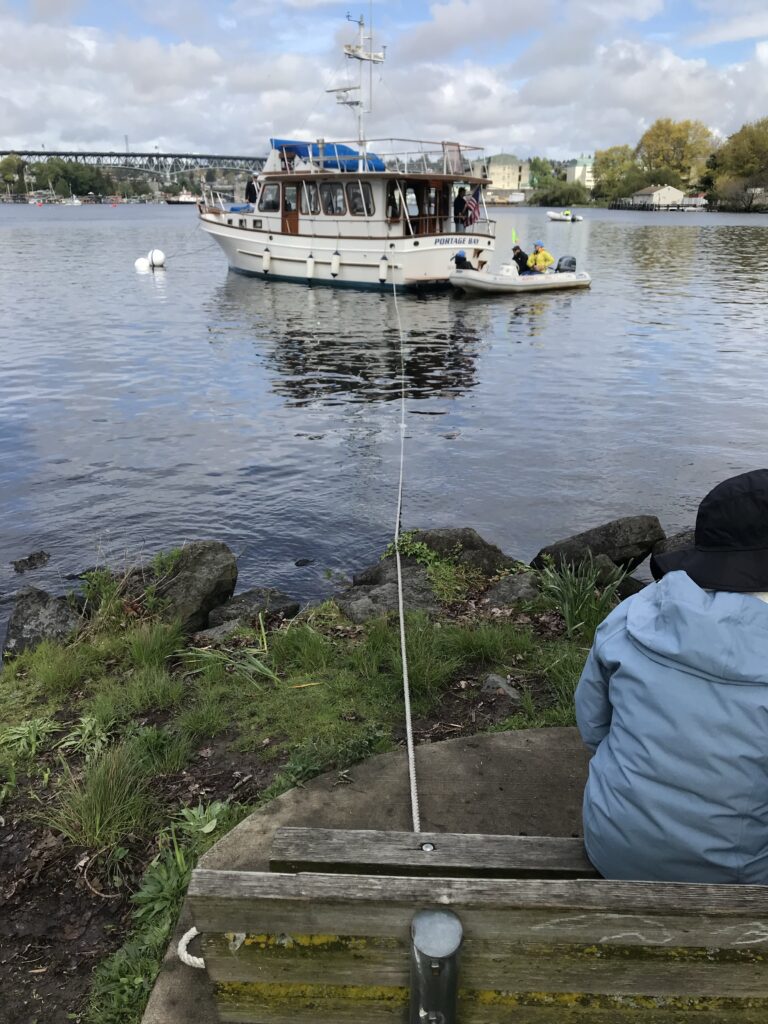
Throughout the days, a log boom is established in Lake Washington near the Montlake Cut, where powerboats and sailboats raft up to create a floating grandstand that will later watch the Windermere Cup races and the parade itself.
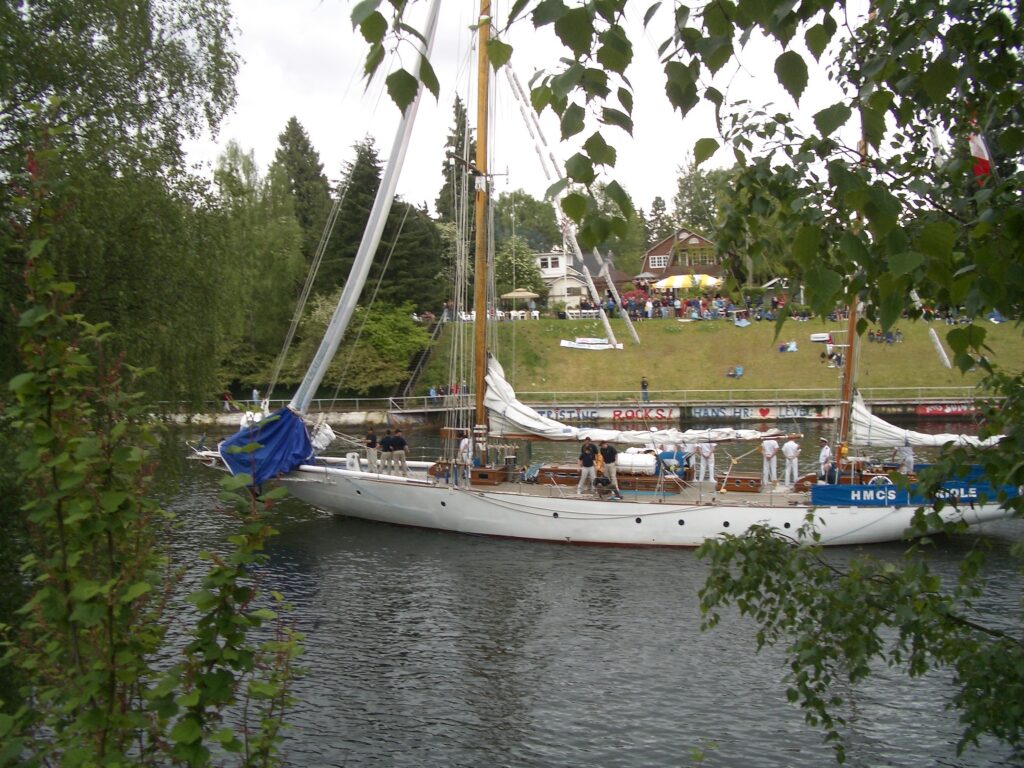
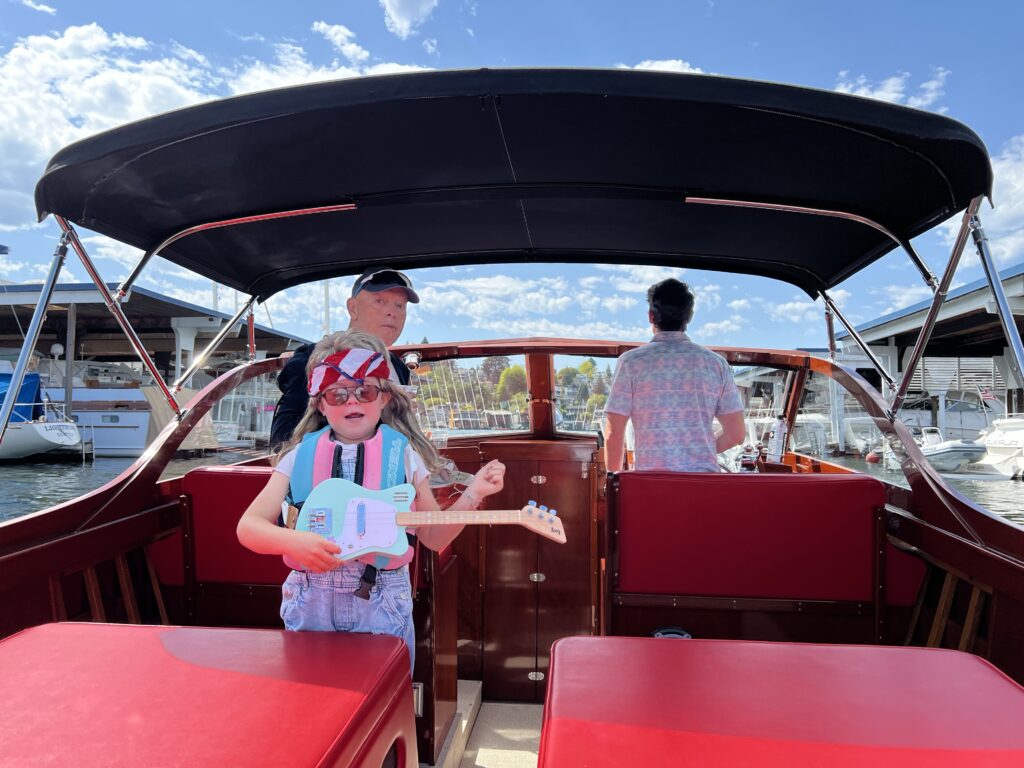
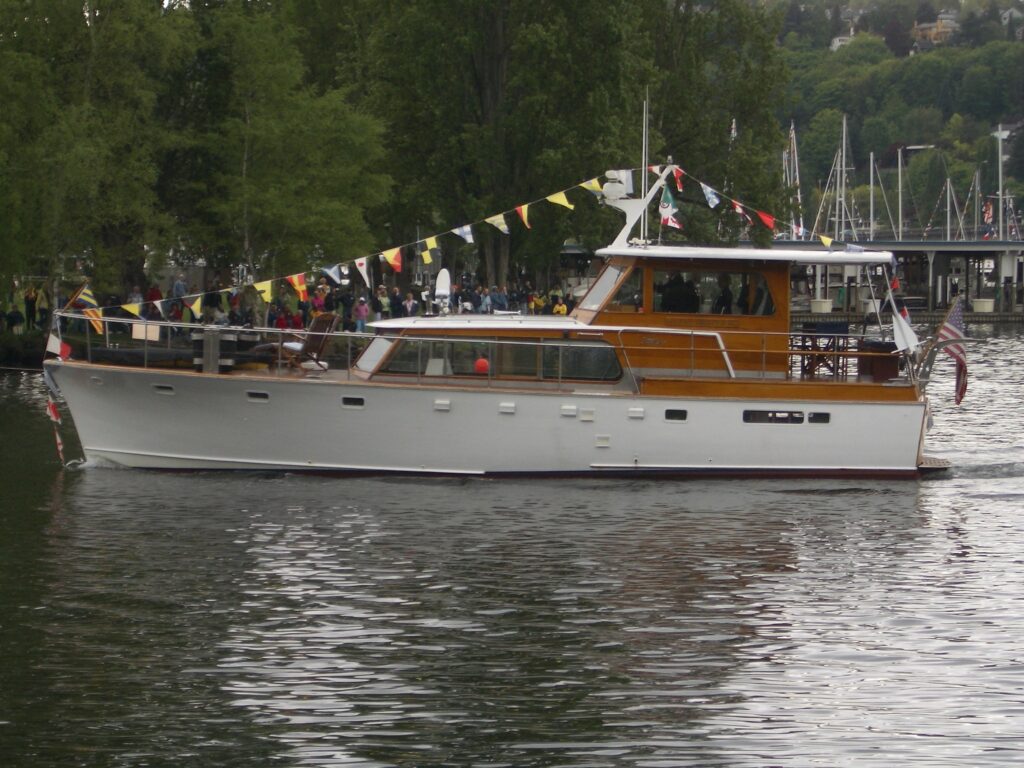
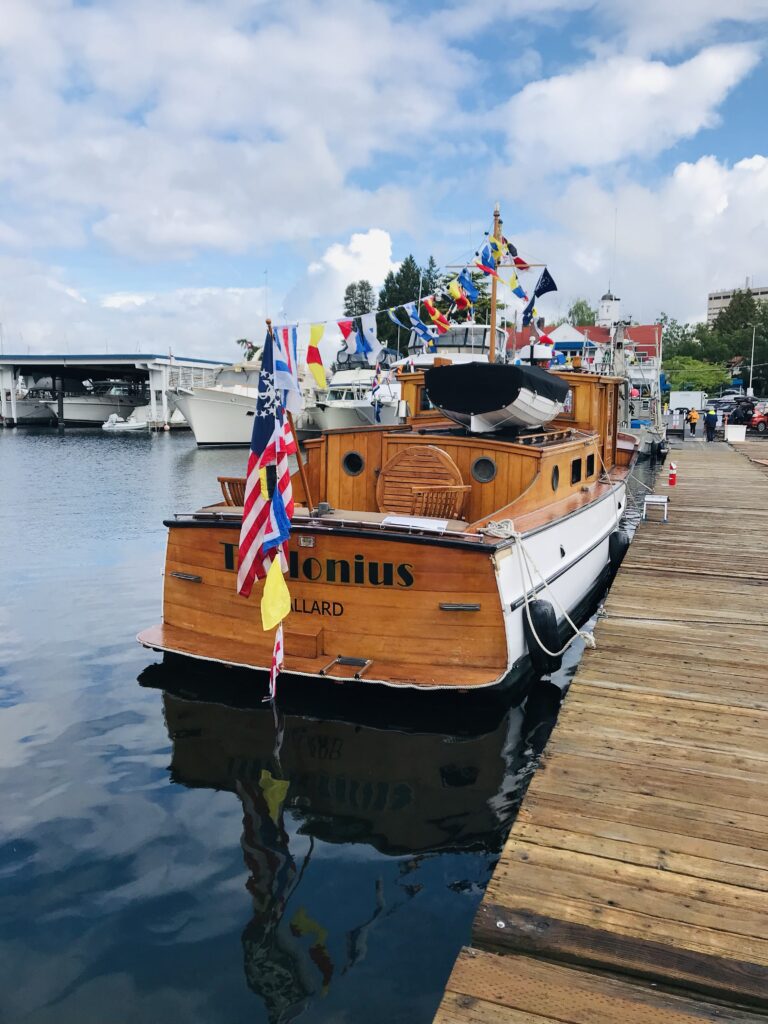
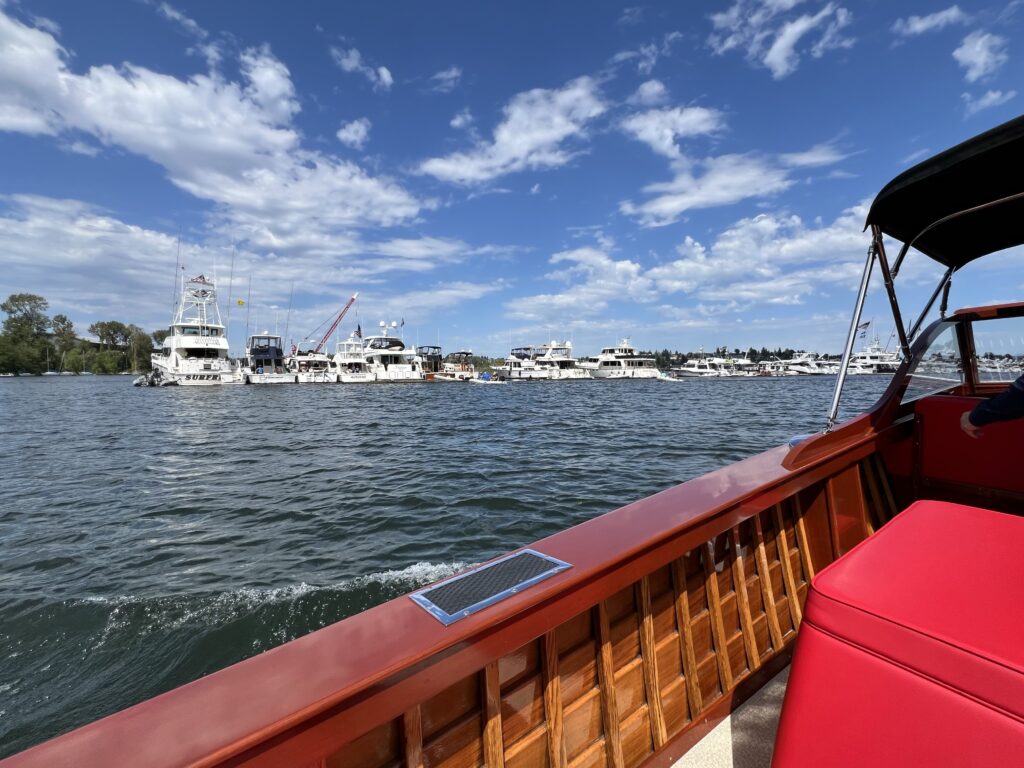
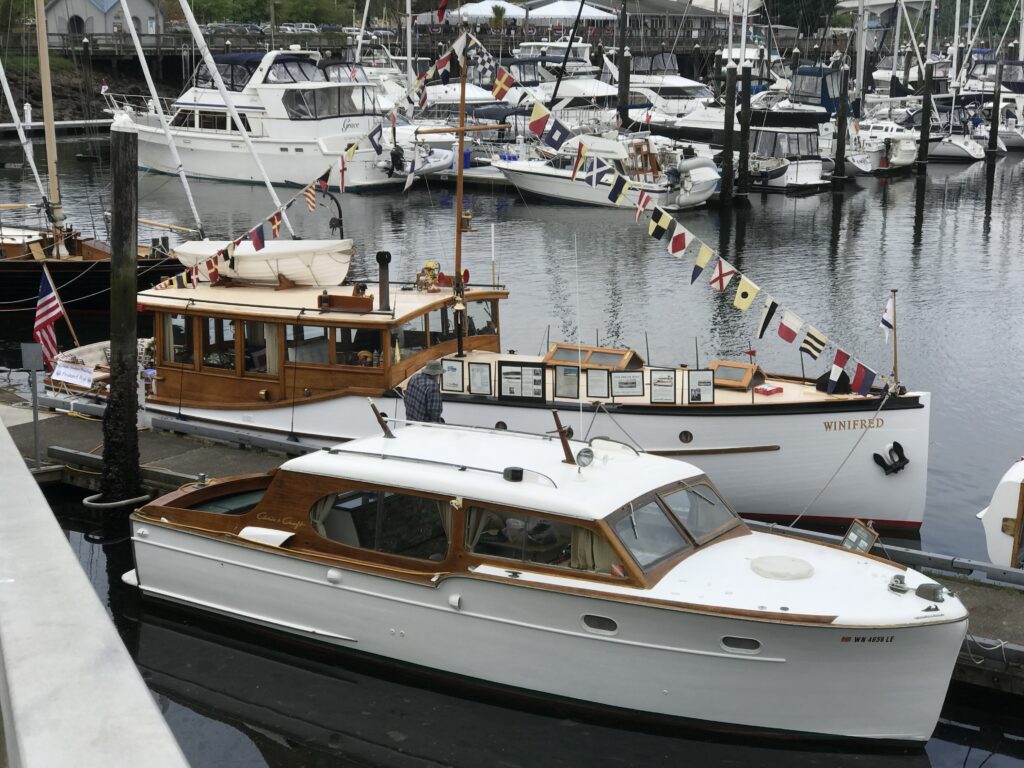
The lead‑up also includes classic boat rides offered by owners of restored wooden yachts and runabouts, giving guests a tangible encounter with the region’s maritime heritage.
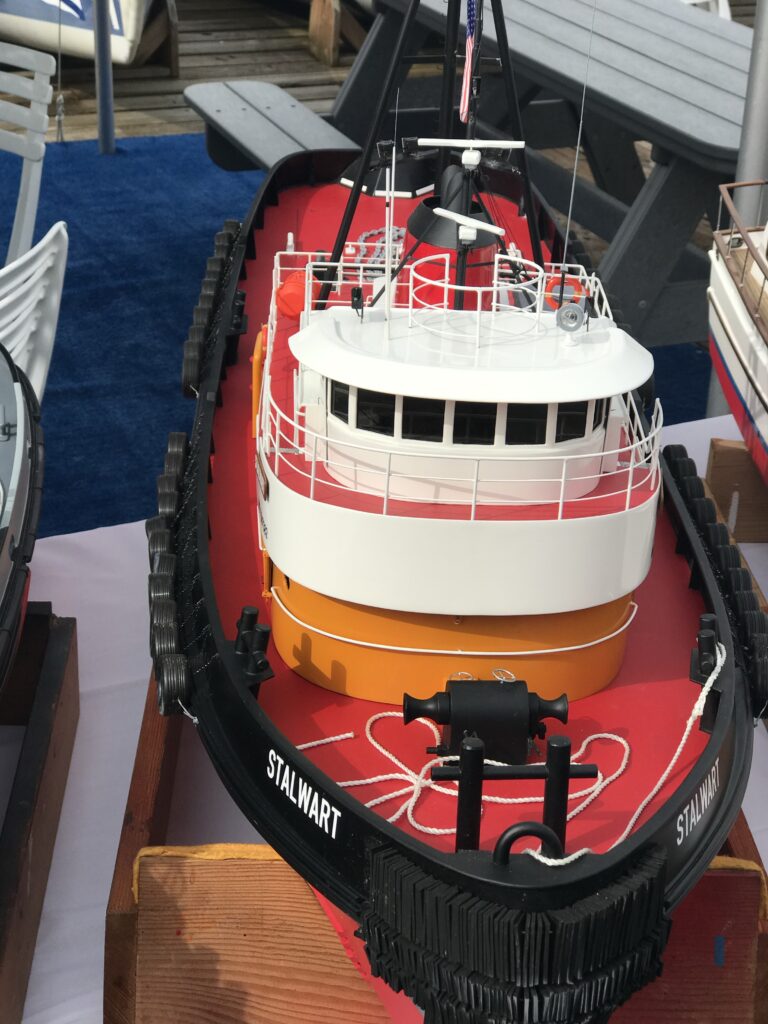
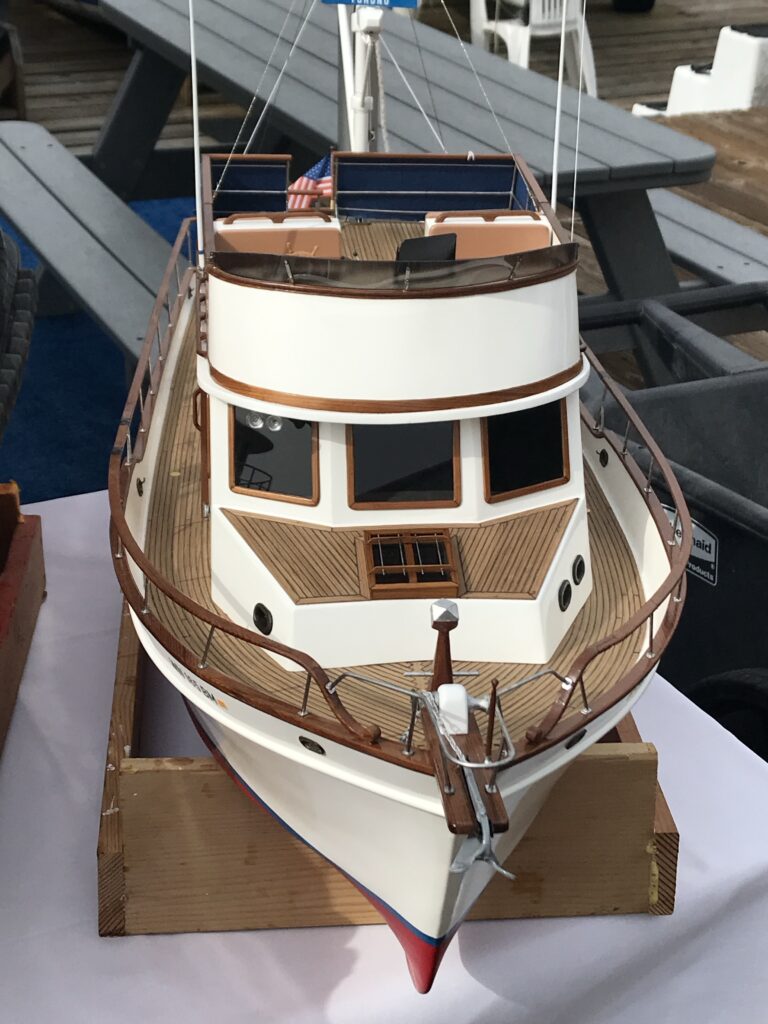
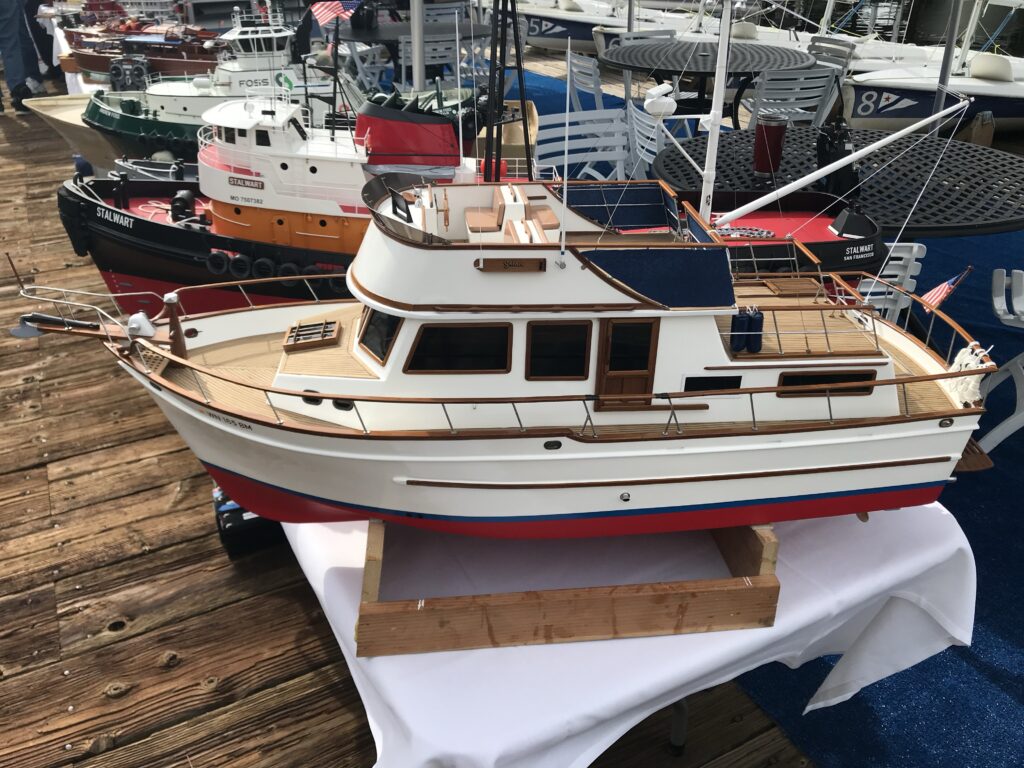
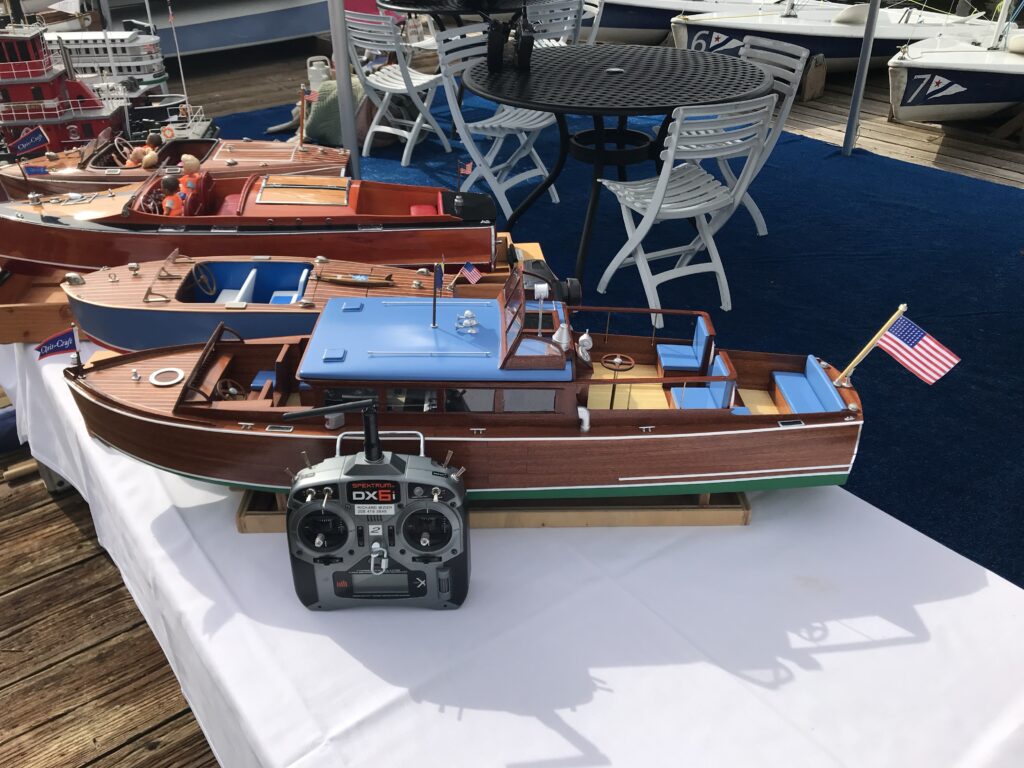
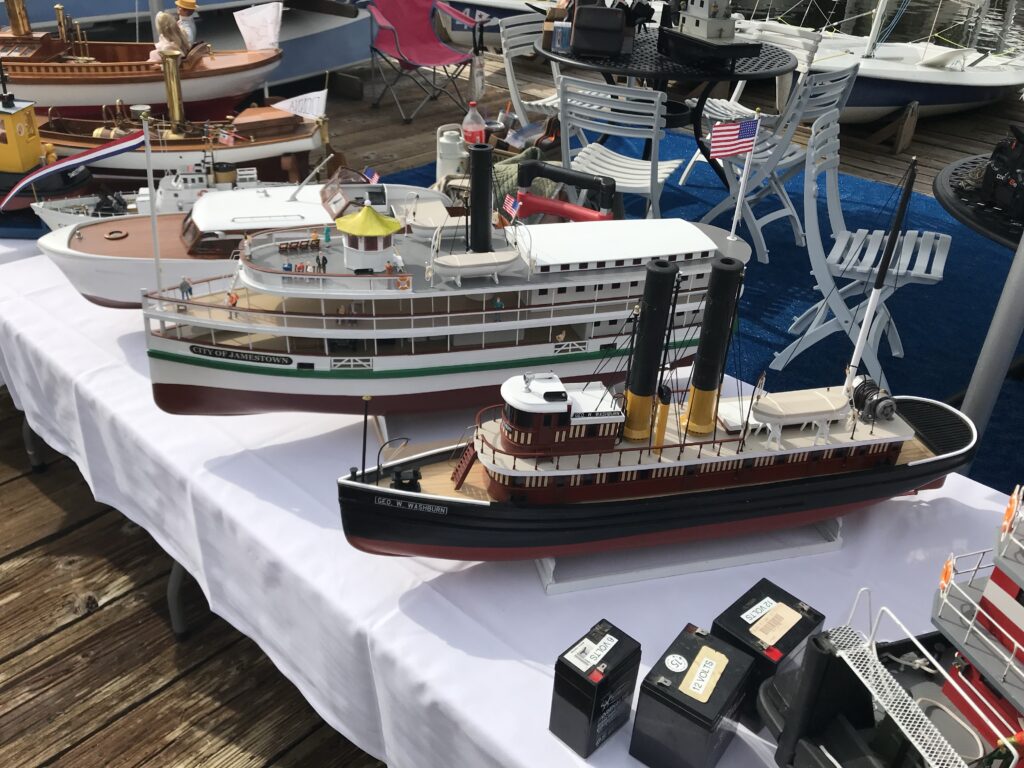
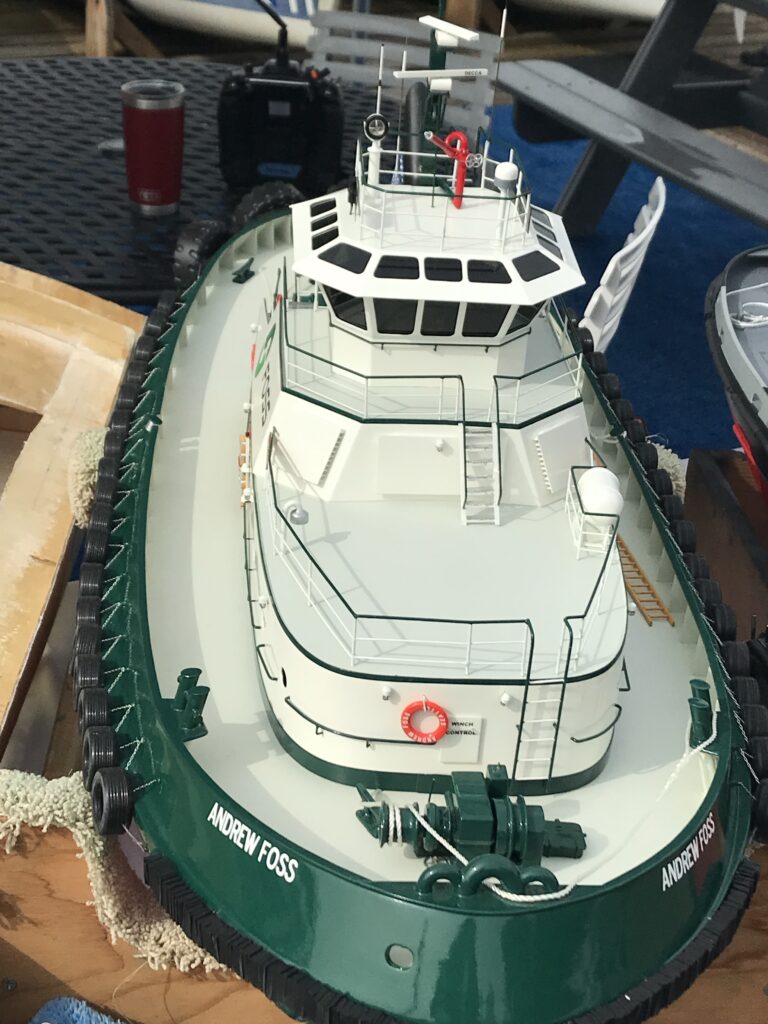
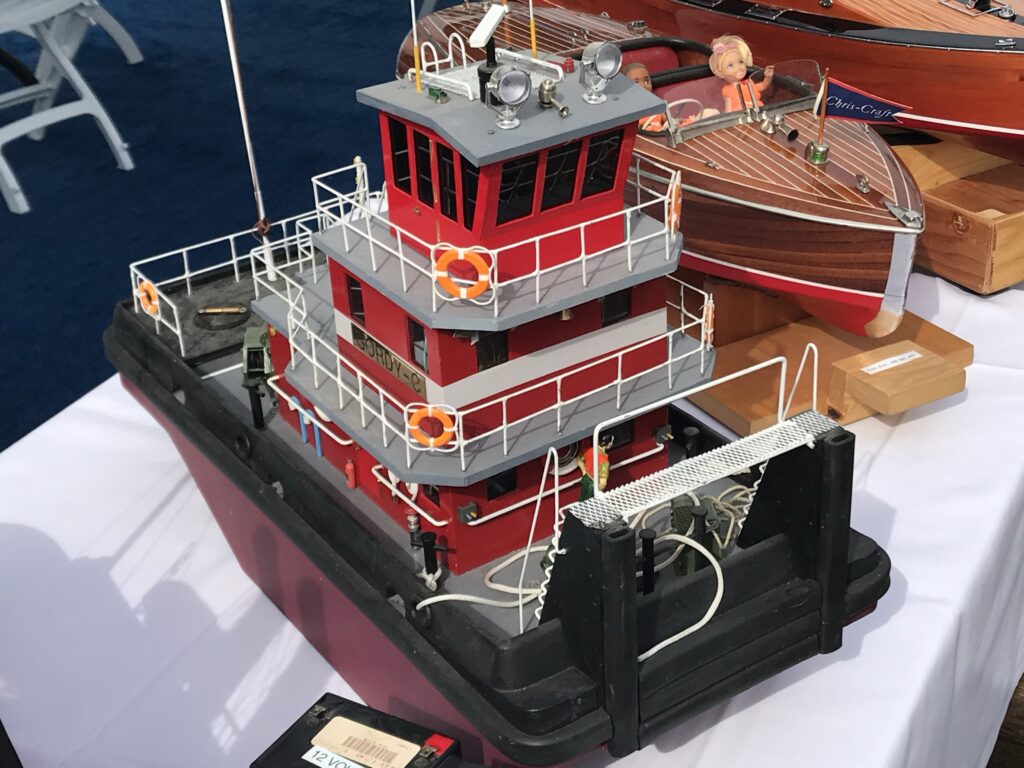
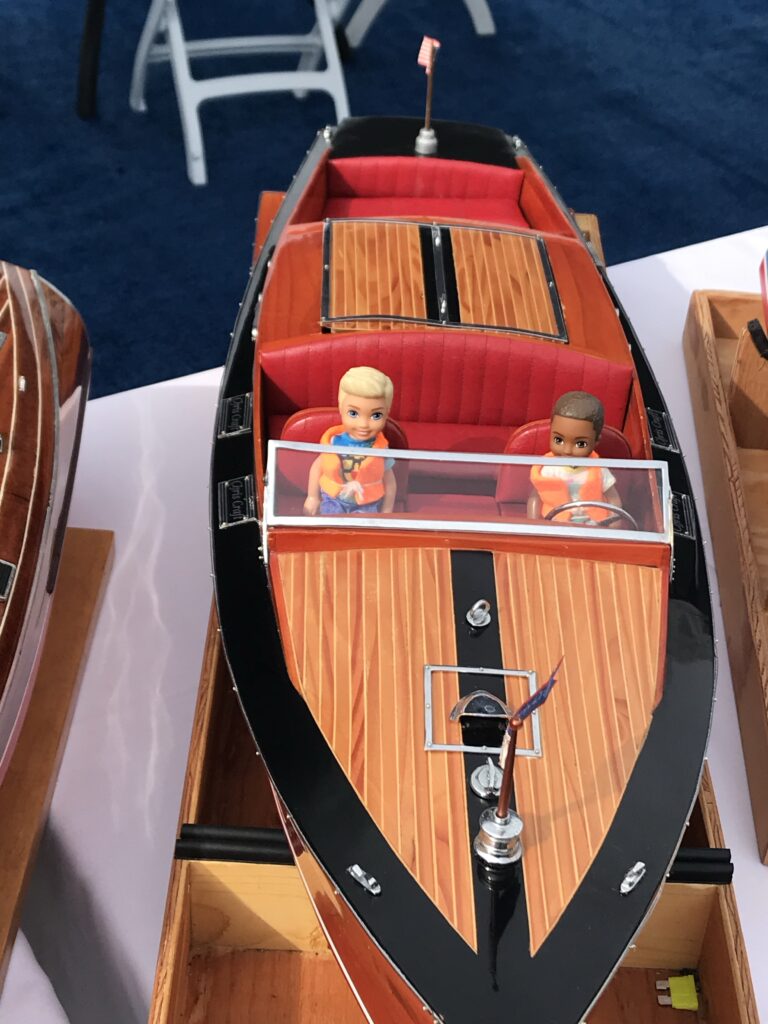
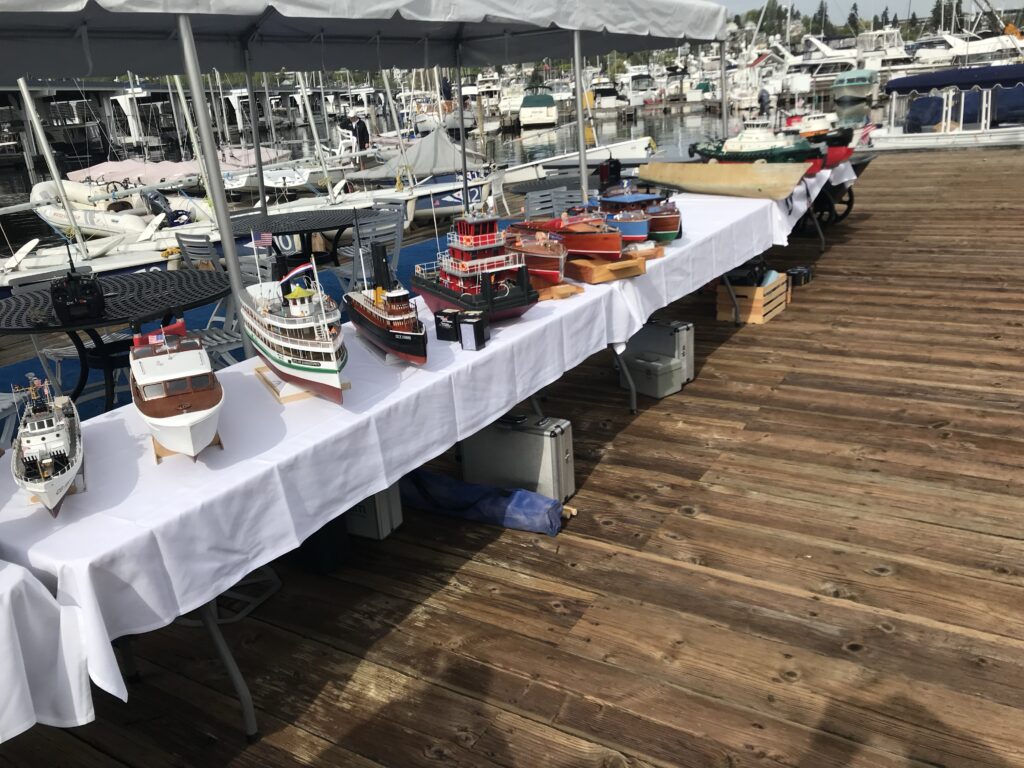
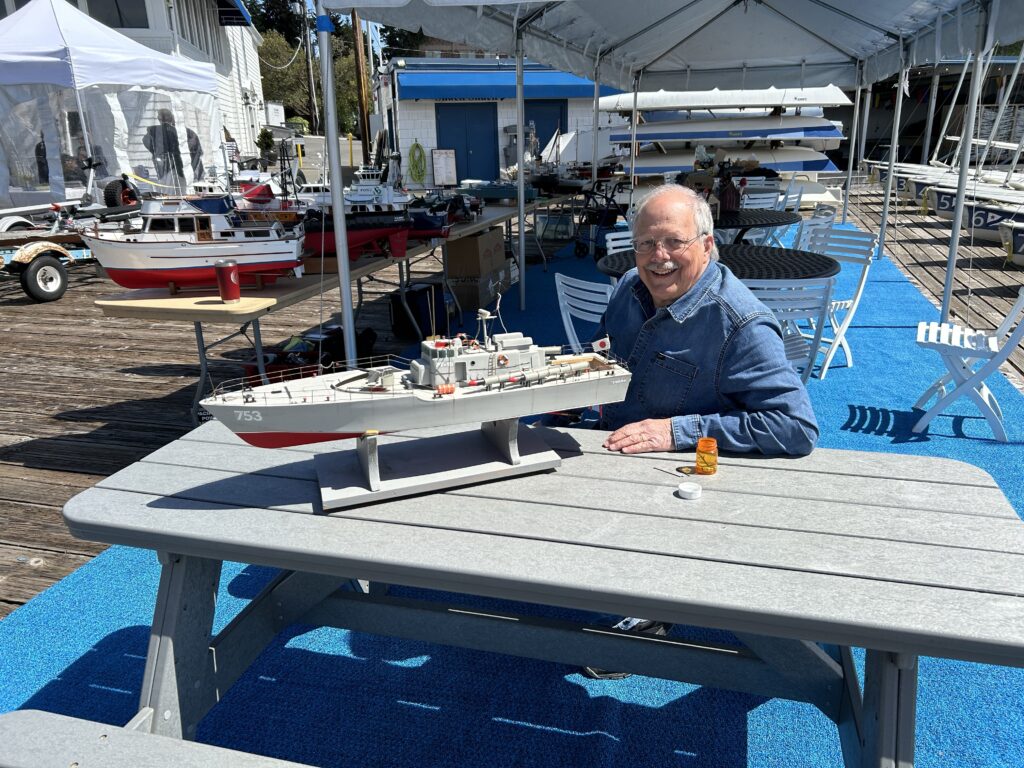
In and around the clubhouse, model boat displays appear on tables and stages—ranging from meticulously built scale models of classic yachts to operational radio‑controlled craft—turning the week into a festival not just of full‑size vessels but of miniature naval architecture.
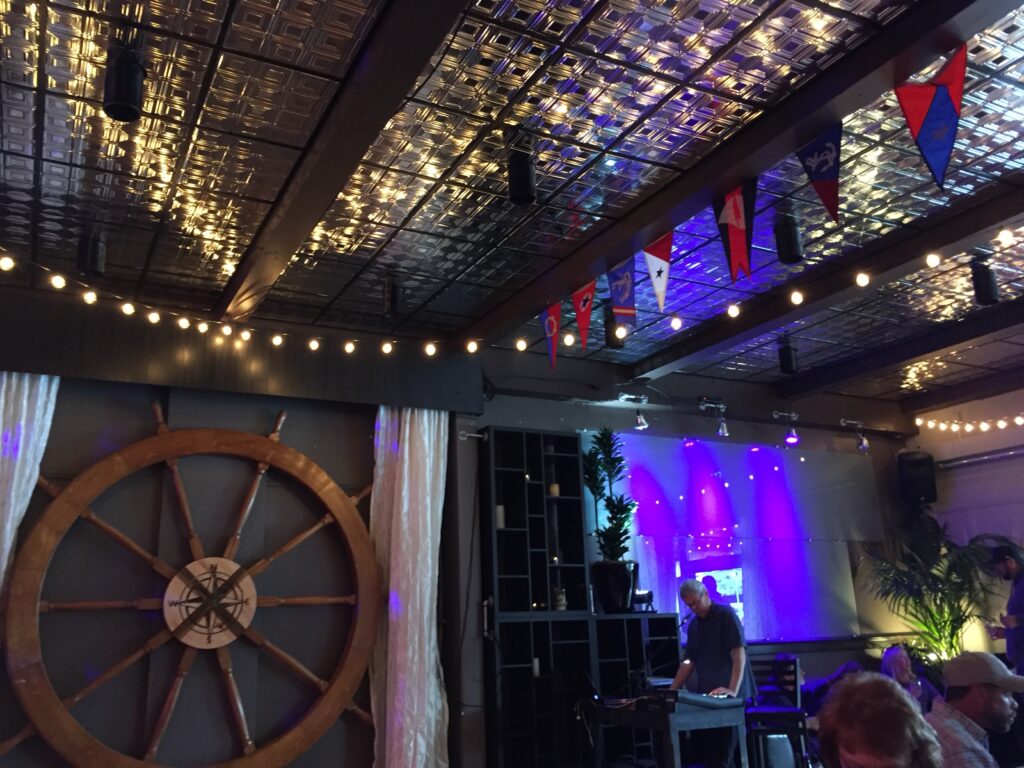
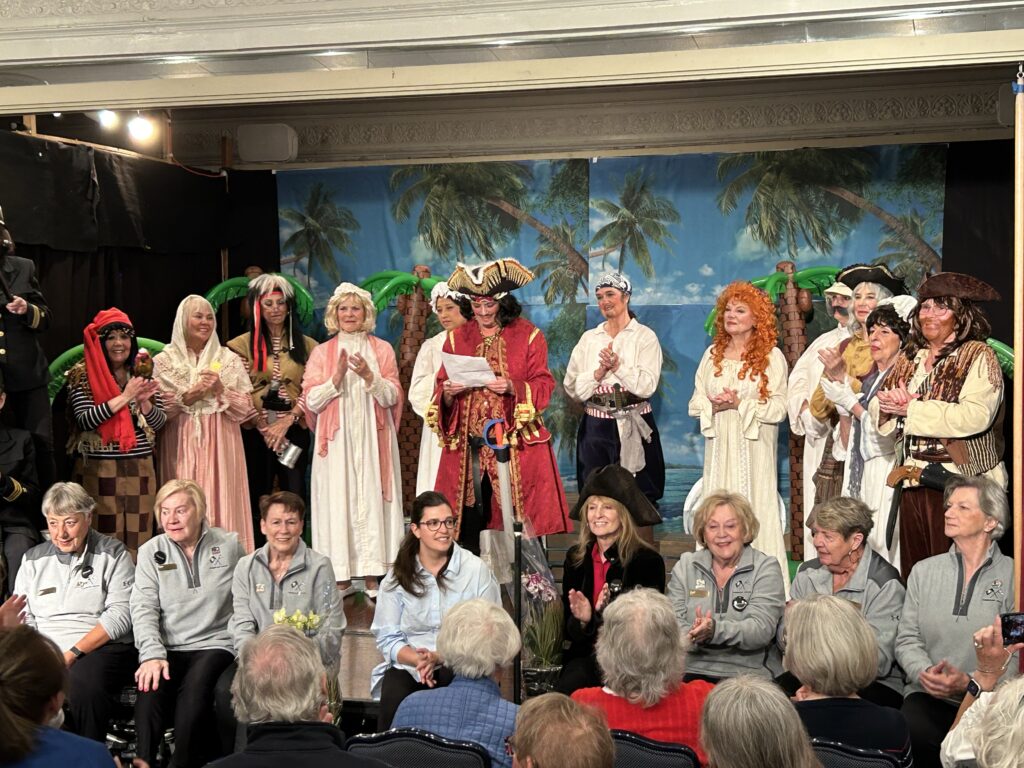
Evenings often feature a play or theatrical performance staged by club members or partner groups, keeping the “Art to Sea” tradition alive on land as well as on the water.
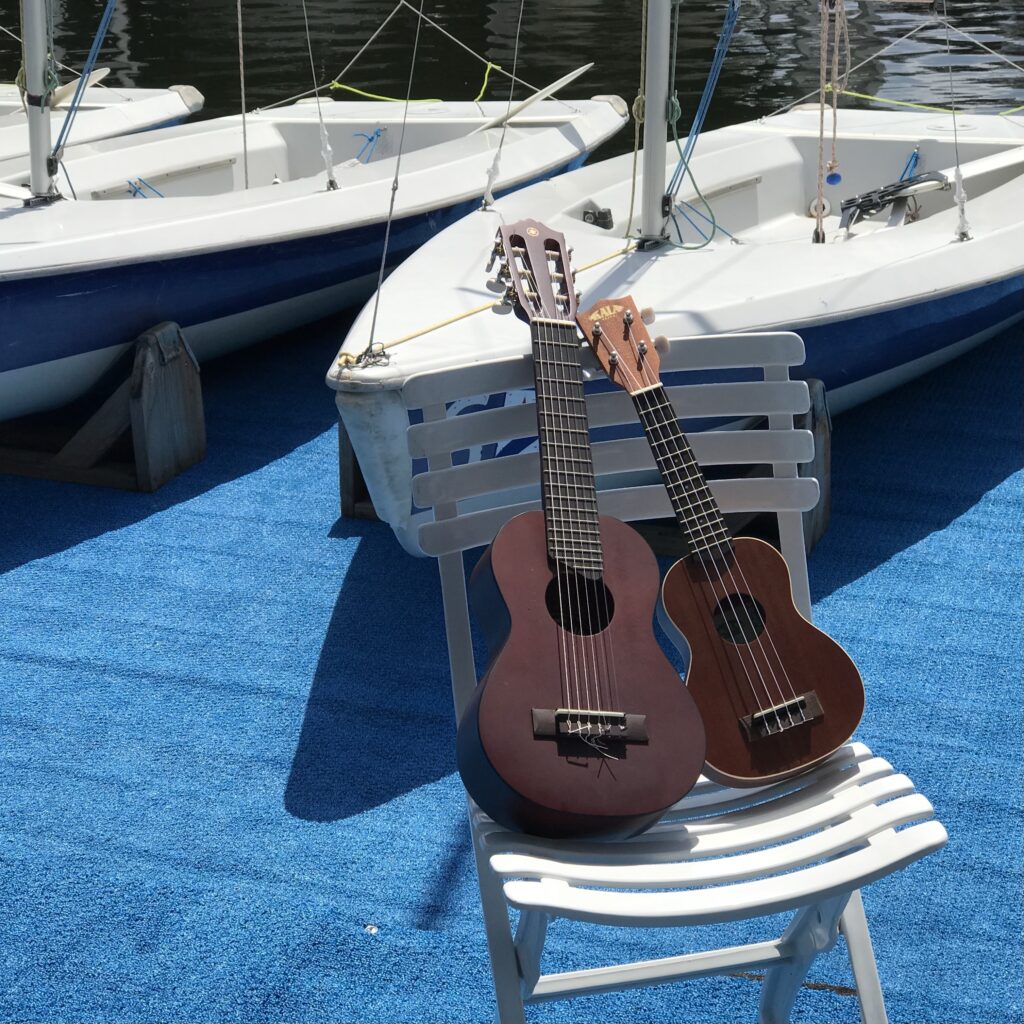
Impromptu musical gams—musicians drifting between docks and boats with guitars, fiddles, or brass, or bands gathering on a stern deck—emerge as crews relax after long days of decorating, practicing parade maneuvers, and rigging their boats to match the year’s theme.
By the time Opening Day morning arrives, those five days of hospitality, shared meals, performances, rides, and informal jam sessions have knit visiting clubs and local members into a temporary, international waterfront community whose energy pours into the races and parade.
Moving beyond the city
In 1946, as the region rebounded from World War II, SYC explicitly invited “all yacht clubs in the Puget Sound area” and the Royal Vancouver and Royal Victoria Yacht Clubs to join Opening Day, expanding it from a house party to a cross‑border Salish Sea gathering.[1]
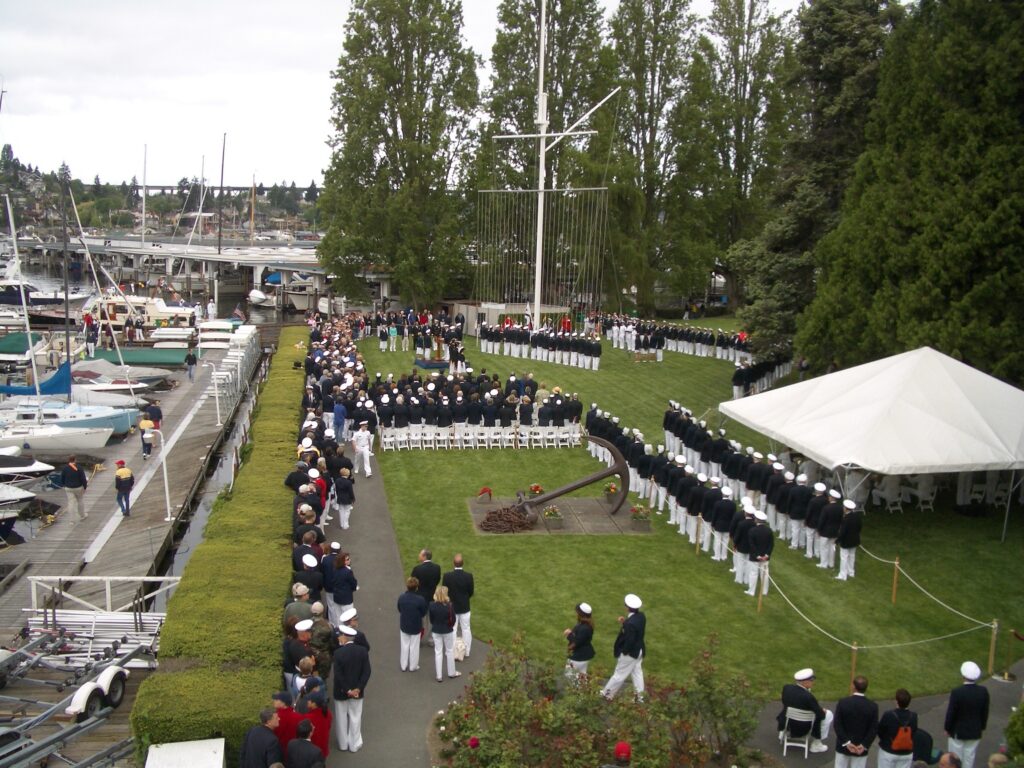
During the 1950s and 1960s the club layered on more structure—formal ceremonies on the lawn, a large parade, sailboat races on Lake Washington, and eventually themed decorations—while also building a network of outstations from Gig Harbor to Desolation Sound that made SYC and Opening Day a hub for cruising fleets across Washington and British Columbia.[6][2][1]
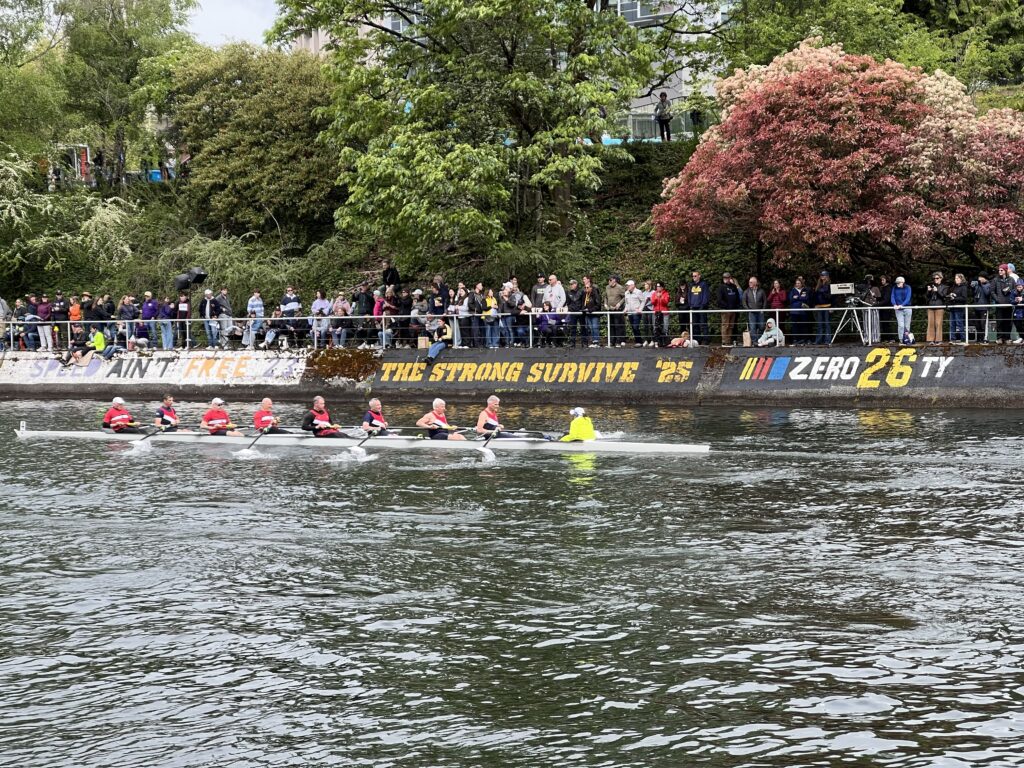
In 1971, SYC invited the University of Washington to stage a crew race in the Cut before the parade; by 1986 this evolved into the Windermere Cup, an invitational regatta bringing national and international rowing crews—Soviet, German, New Zealand, and many others—to race in front of packed log booms and shorelines.[3][7][8][1]
The Windermere Cup races, the final two events of Seattle’s annual Opening Day Regatta, will pit two UW women’s crews against entries from the British and Canadian National Teams, while the Husky men’s varsity eight will face the British and the Northeastern varsity eight.
Great Britain has been, of course, a powerhouse in international rowing for as long as the sport has existed. The British men and women have won a total of 78 Olympic medals in rowing, second only to the United States, including 34 all-time gold medals, tied with the U.S. for most ever. Most recently, at the 2024 Games, the Brits earned a total of eight medals, including gold in the men’s eight and bronze in the women’s. Both of those crews included Washington alumni.
Canada boasts 44 all-time rowing medals in the Olympics and has emerged as a power in the women’s eight recently, having won the gold medal in 2020 and the silver in 2024. That 2024 crew included current Washington men’s team assistant coach Kristina Walker.
The Northeastern men’s team is coached by Alex Perkins ’15, the stroke rower in UW’s 2013 and 2015 IRA National Champion crews. He also won a gold medal in the freshman eight in 2012. Northeastern has won the national championship twice in its history, in 1988 and 1991.
By the late twentieth century, Opening Day had become “the nation’s largest regional celebration of spring and the beginning of boating season,” marrying an international rowing regatta, a themed boat parade, and a historic clubhouse that itself is listed on the National Register of Historic Places.[2][3][1]
In 2016 the light rail University of Washington Station opened to passengers just in time for Opening Day activities. In 2026 this station will connect with the number 2 line, just in time again, making light rail transit possible from the east side of Lake Washington.
Why Opening Day matters to so many people
Opening Day’s power it offers something compelling to almost anyone who cares about water, movement, or story.[9][1]
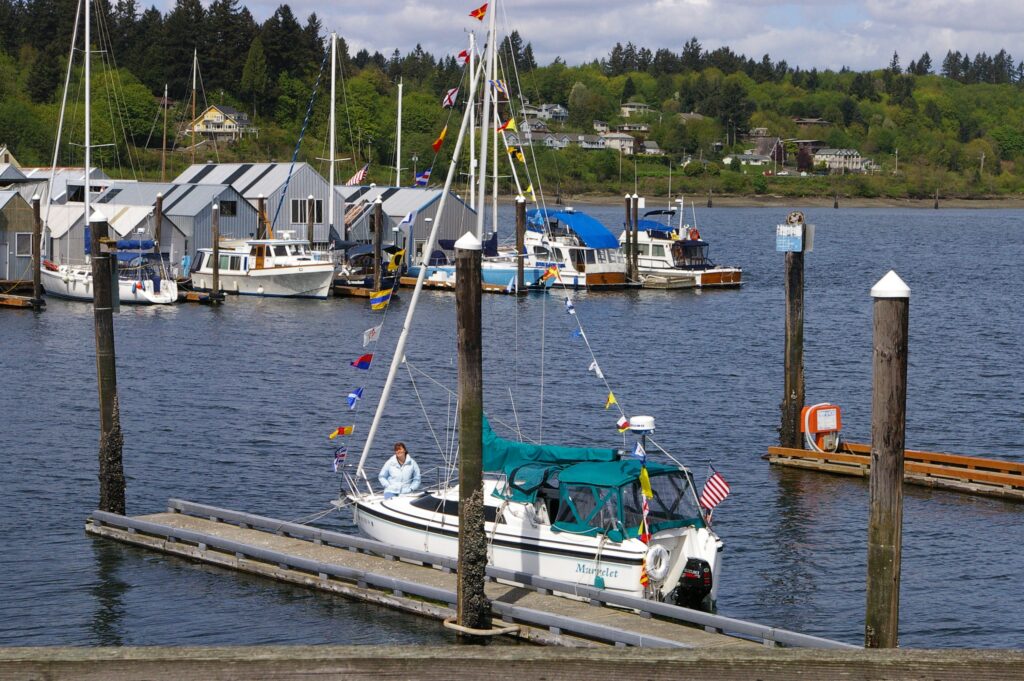
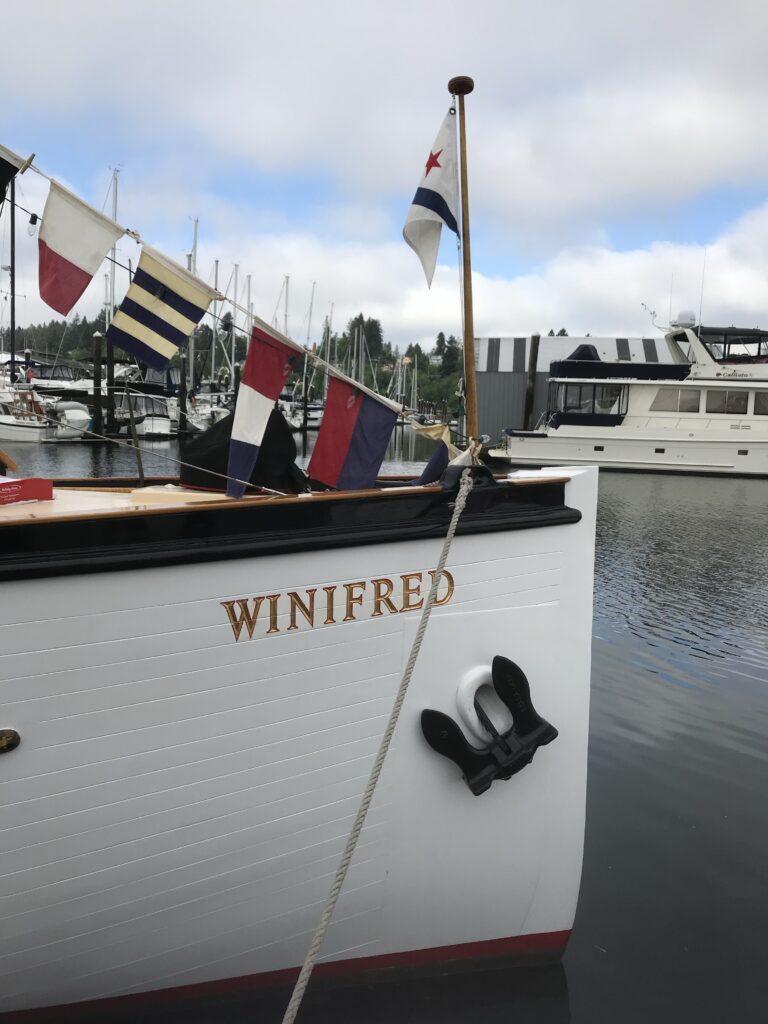
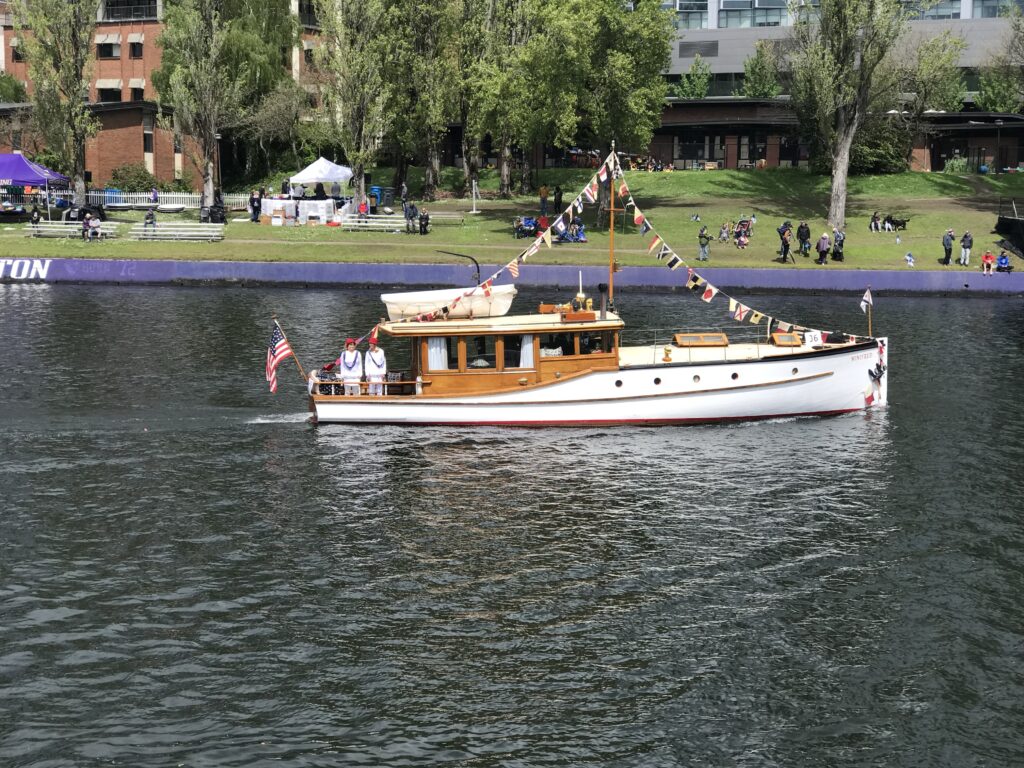
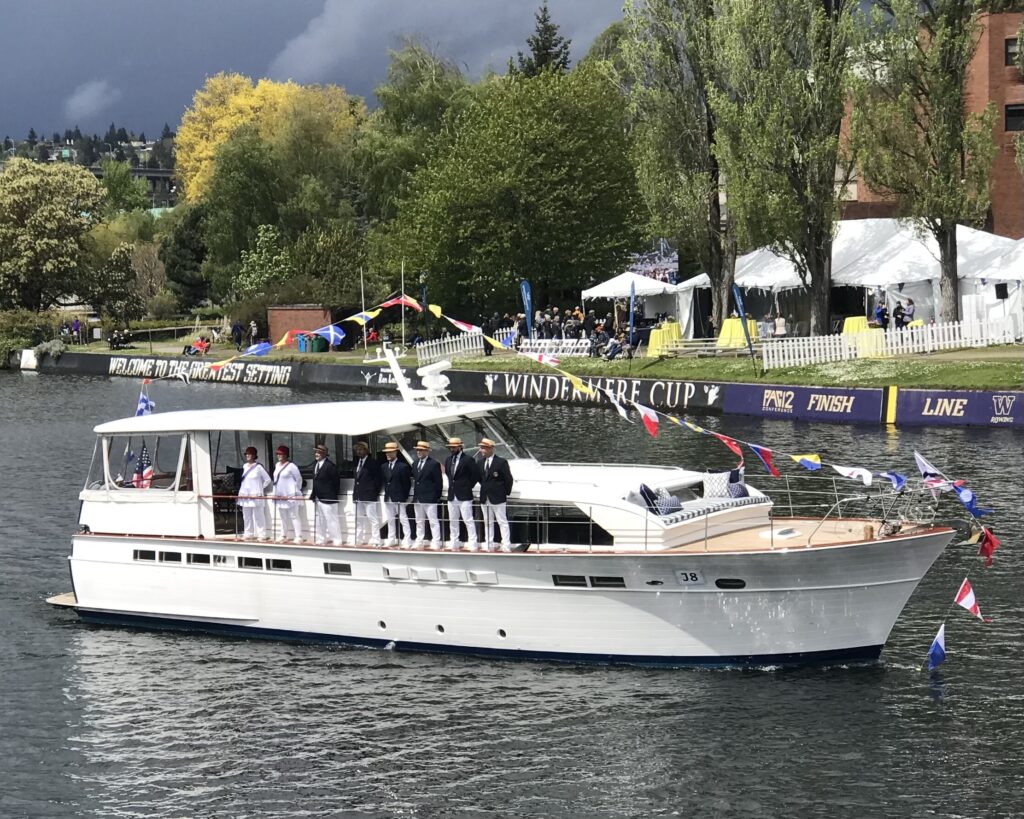
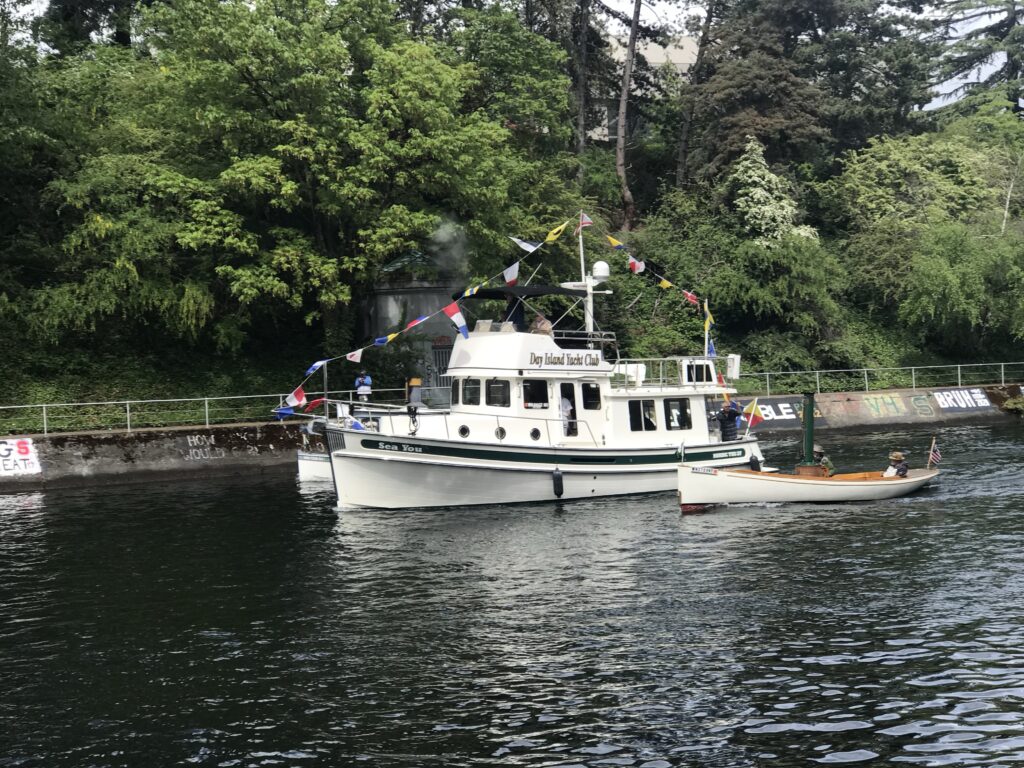
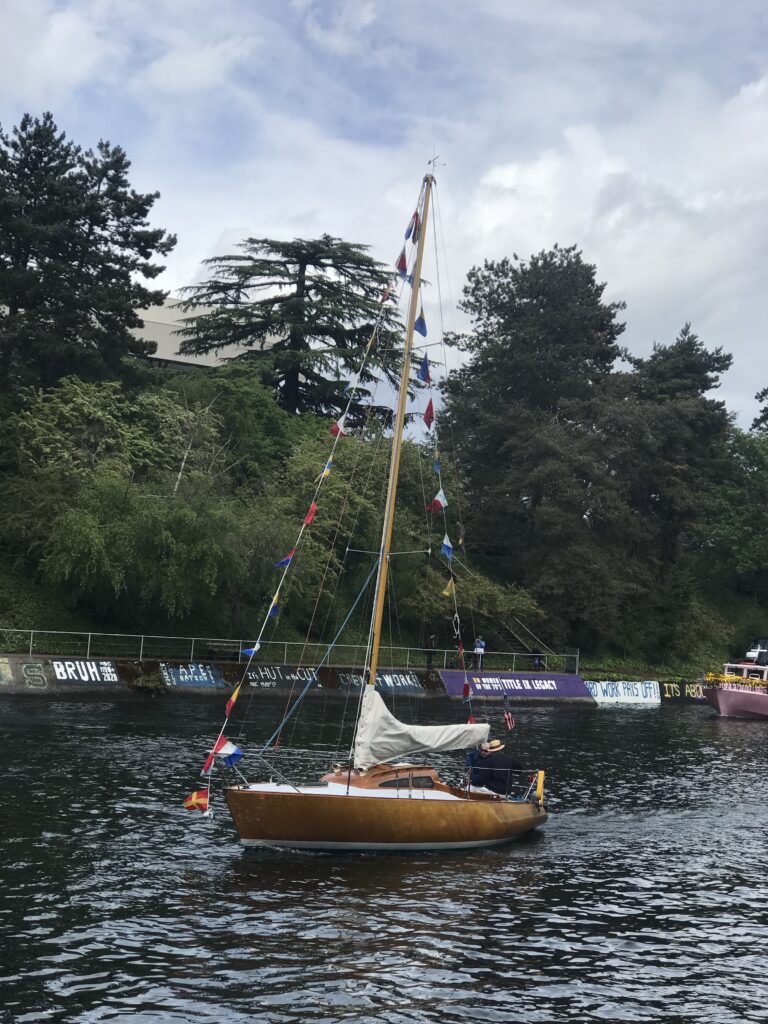
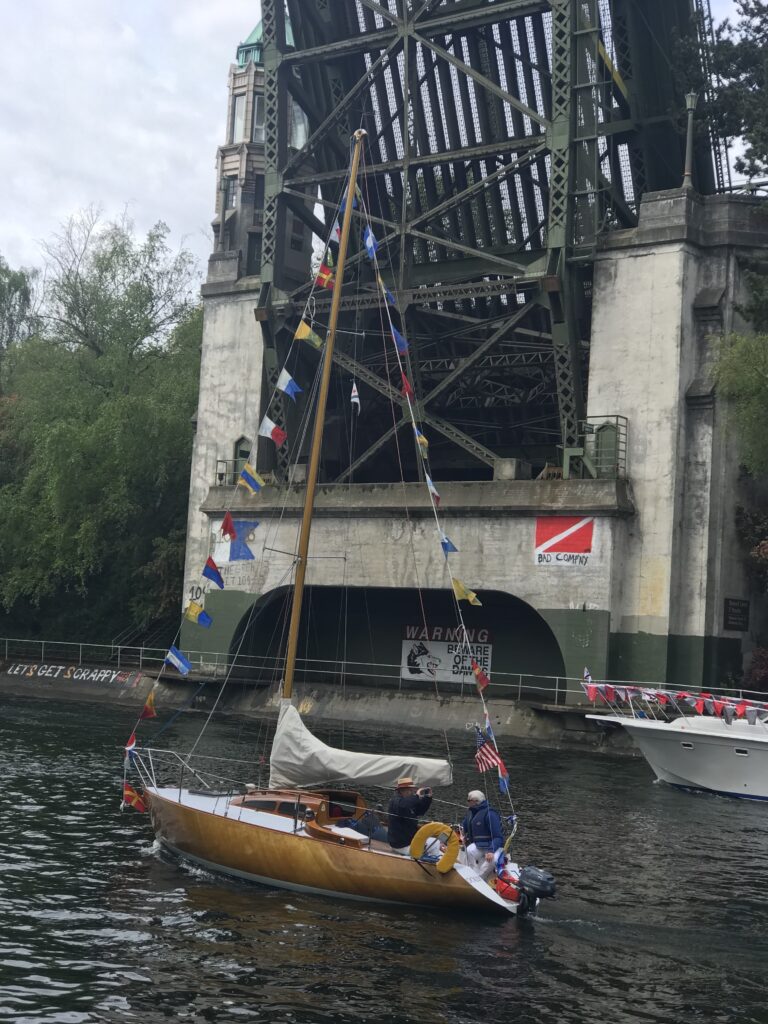
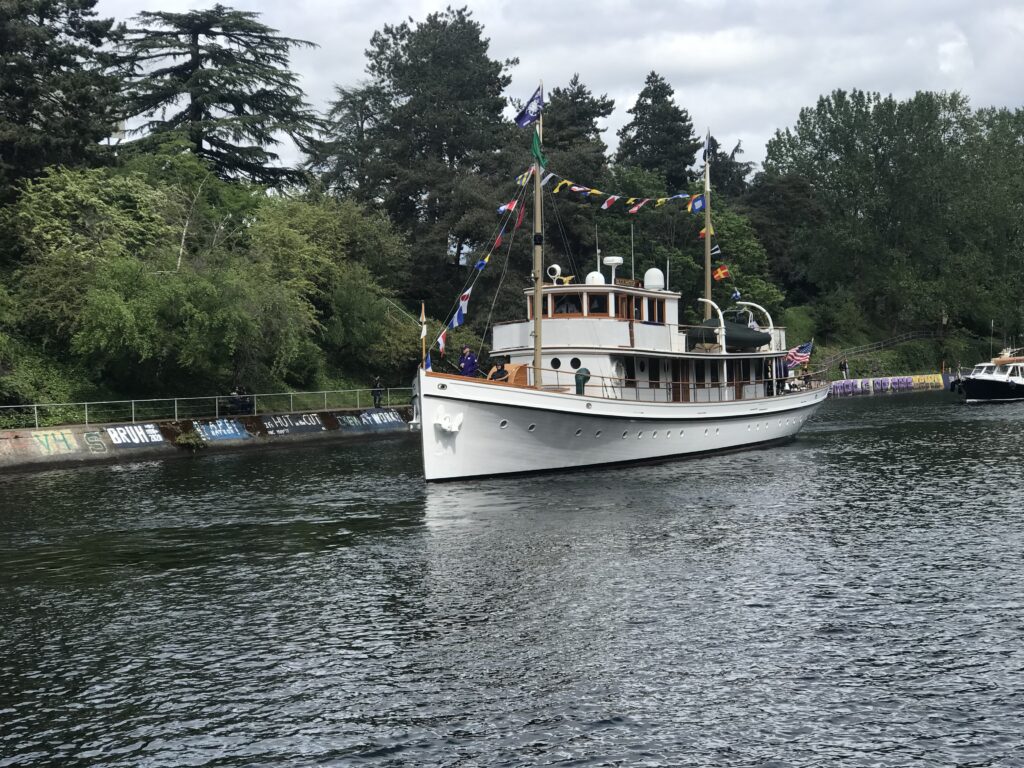
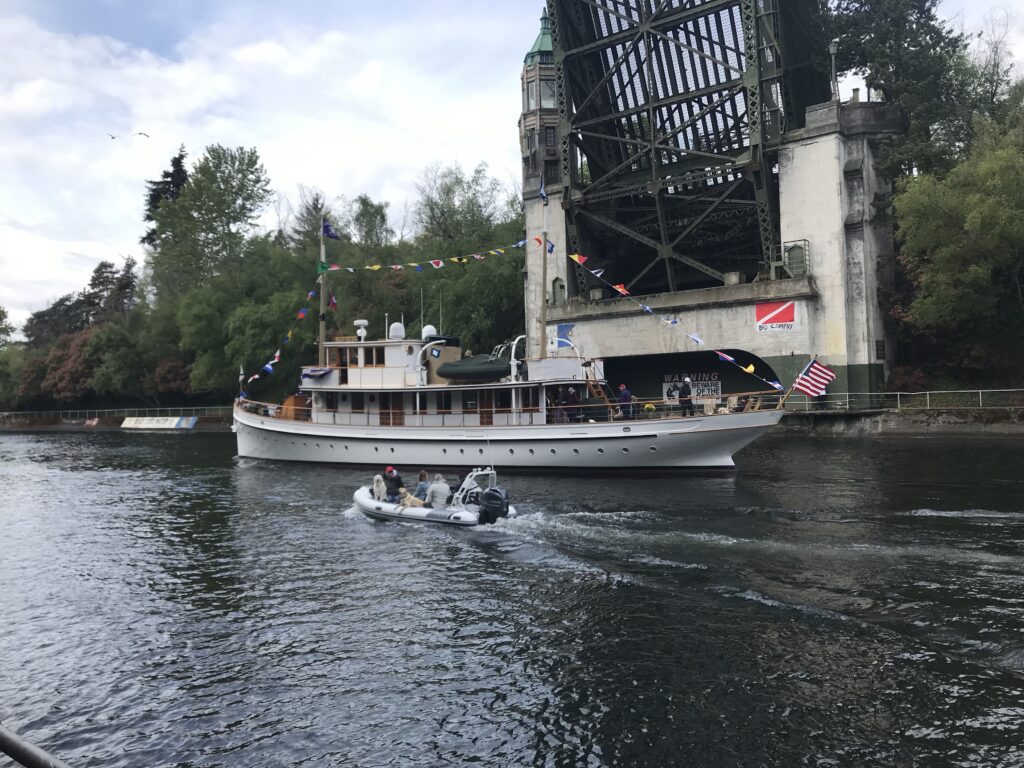
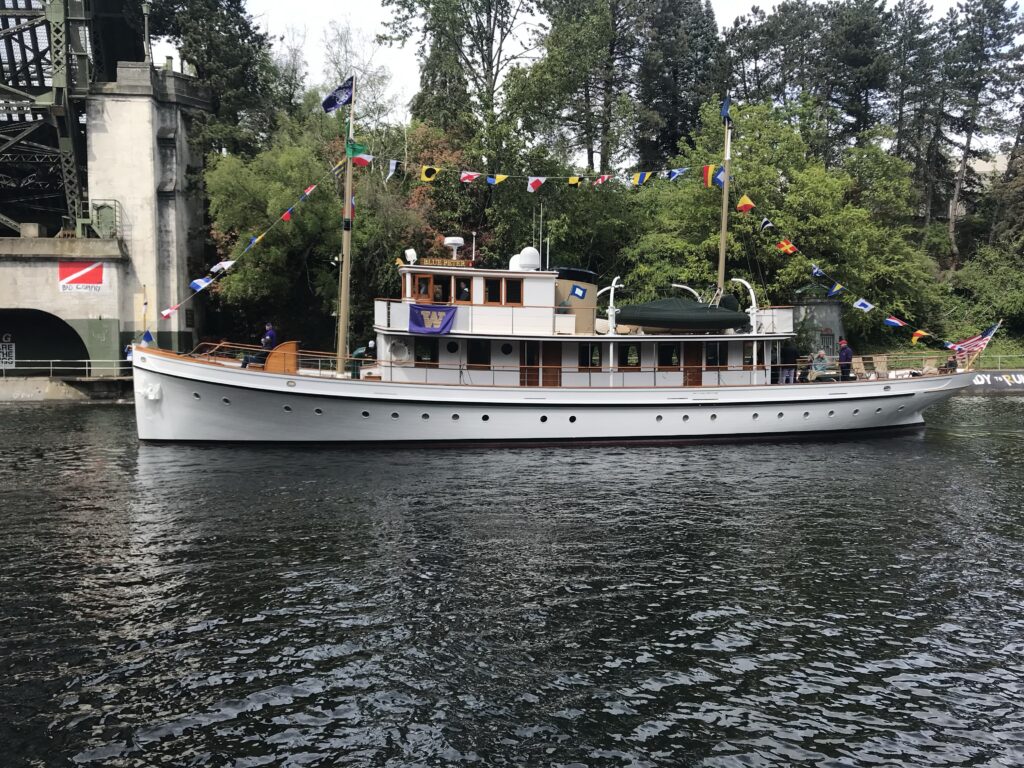
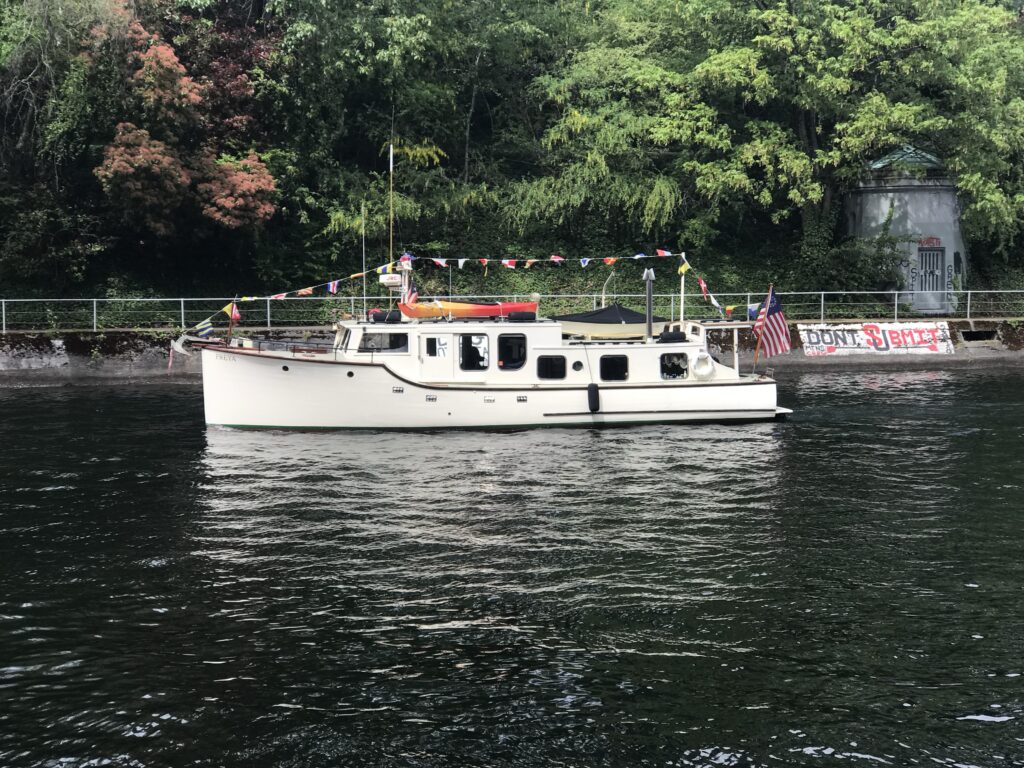
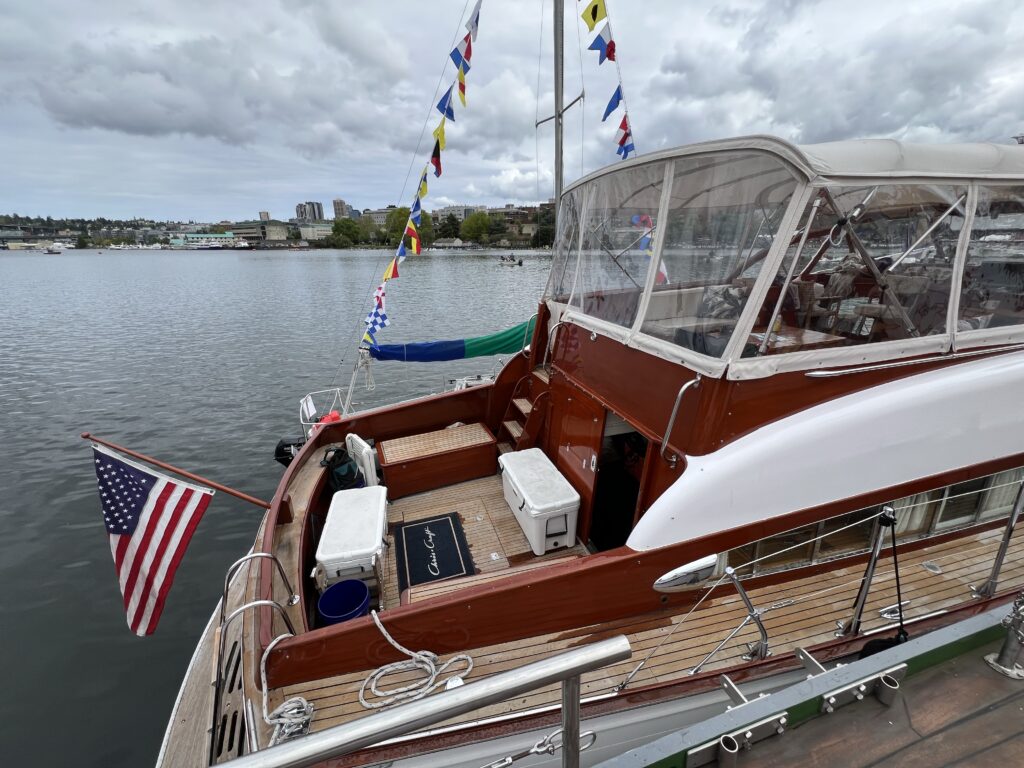
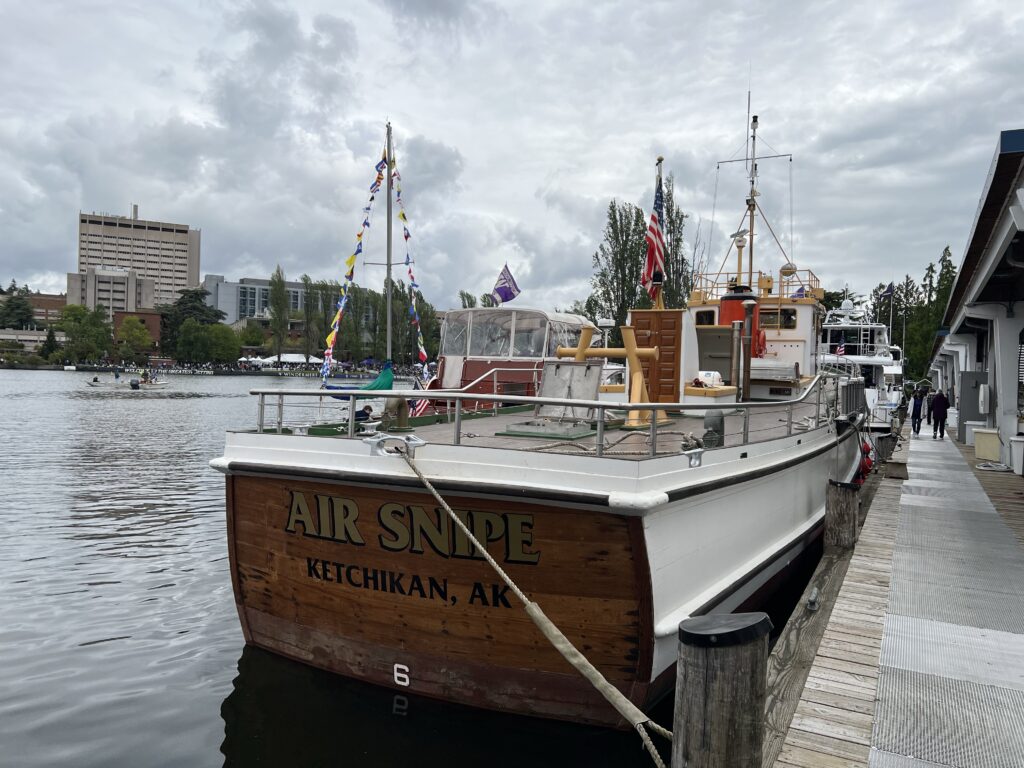
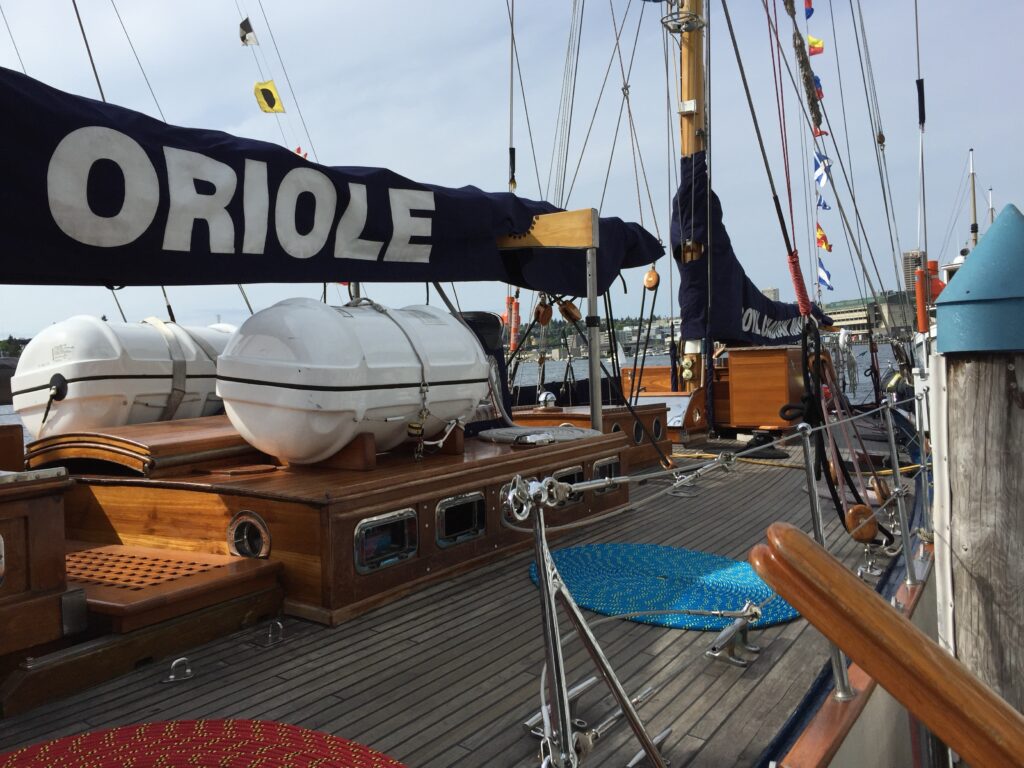
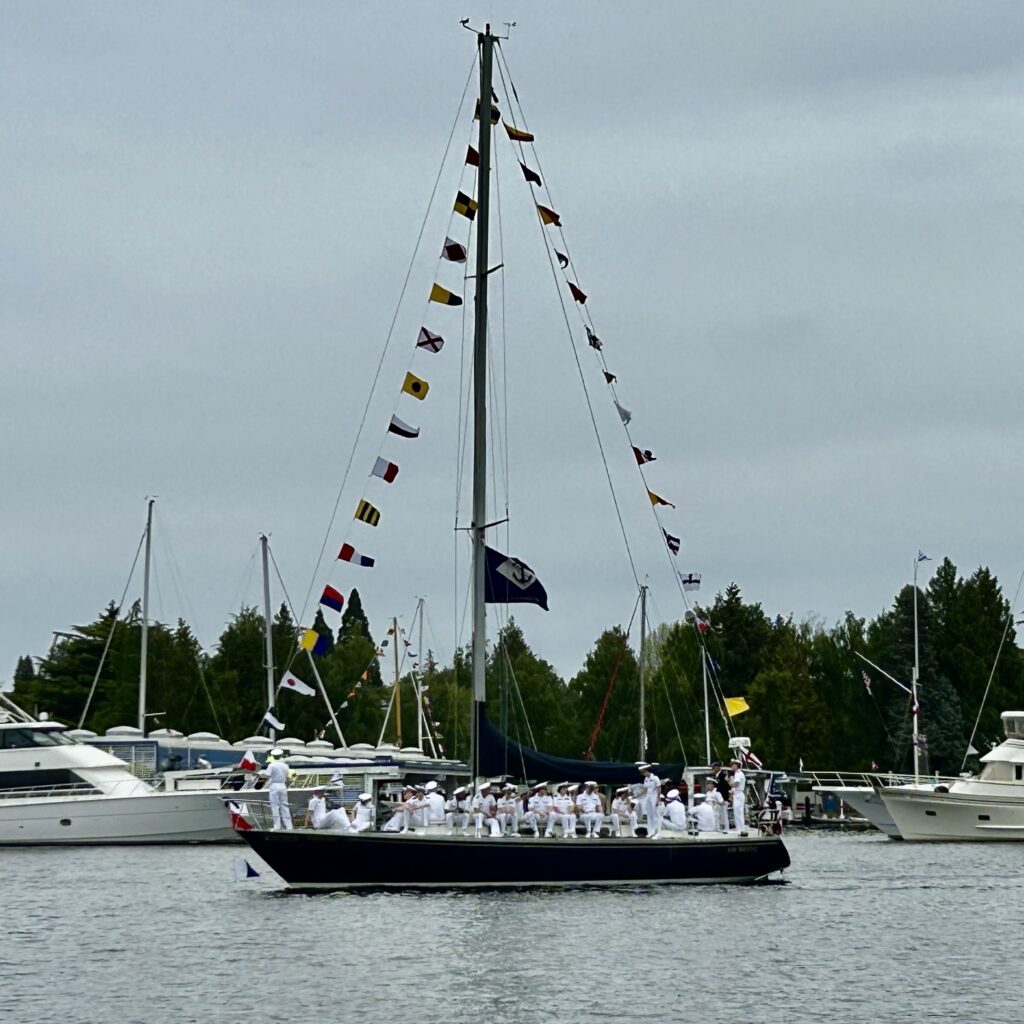
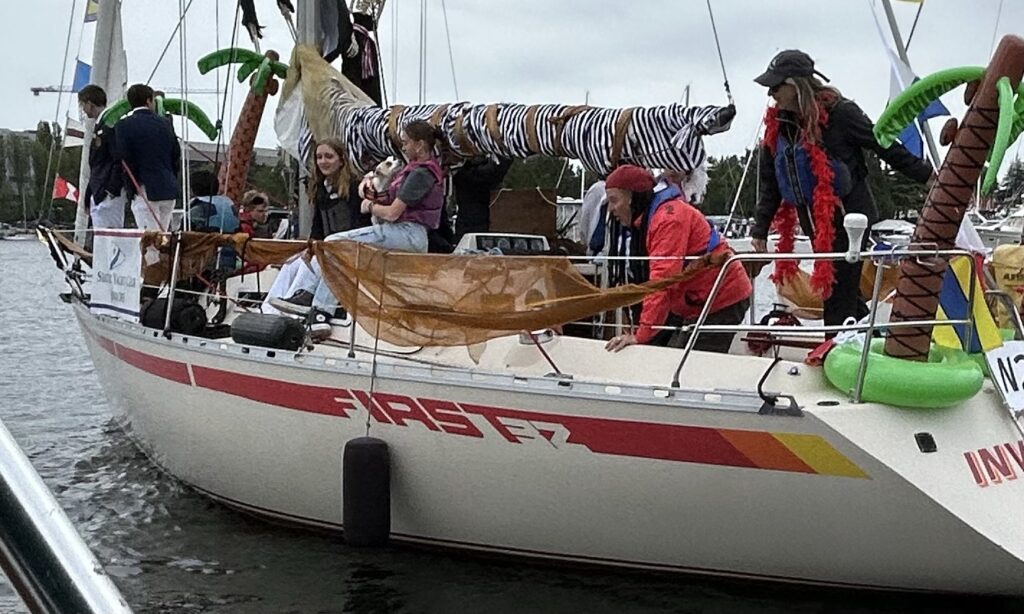
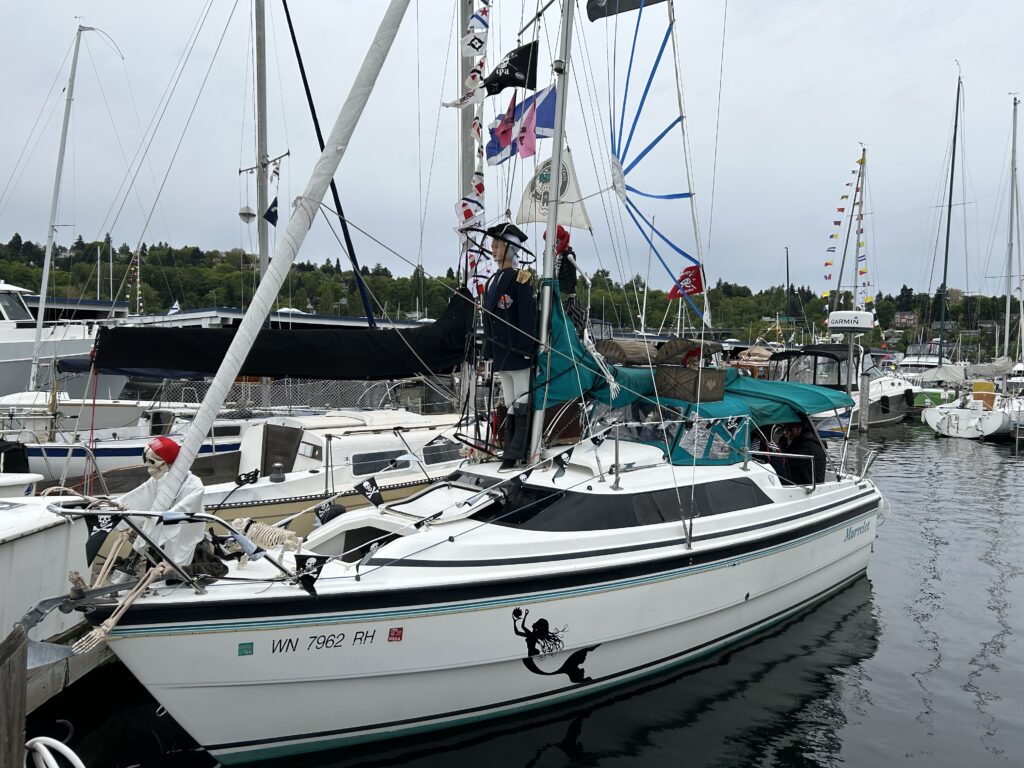
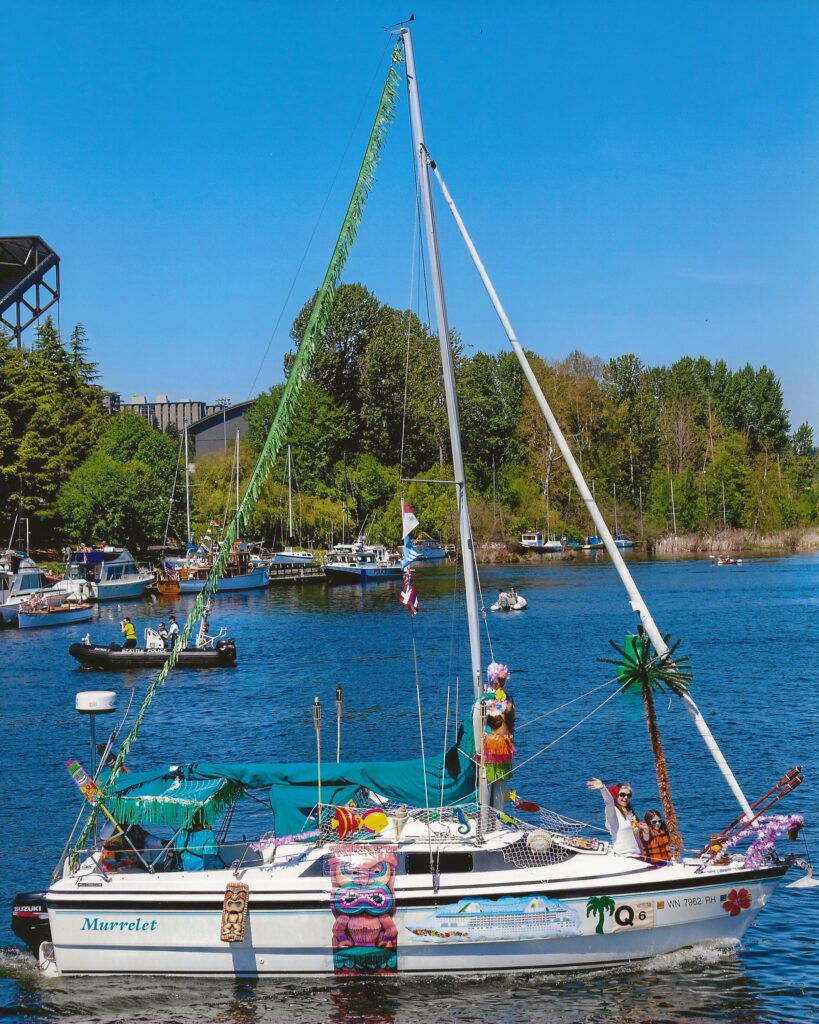
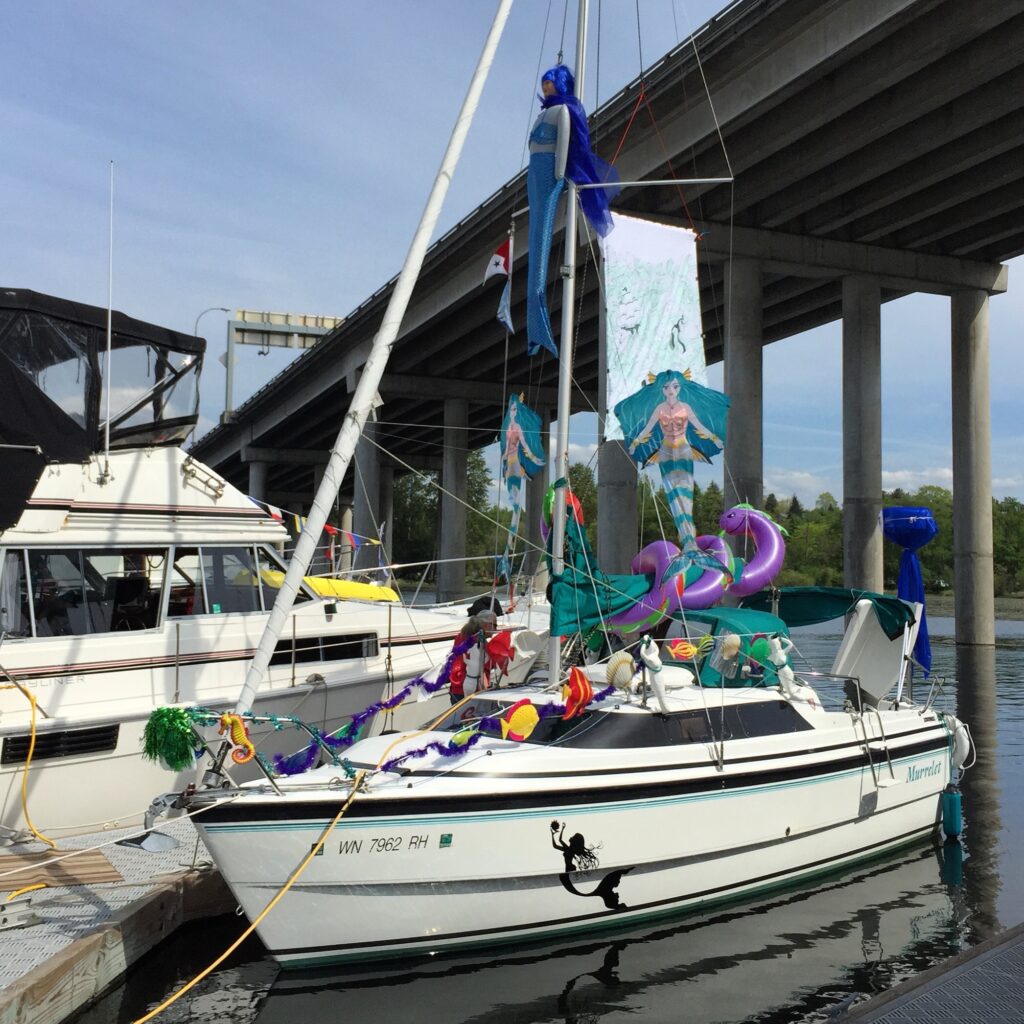
In dressing ship, the yacht ensign is hoisted at the stern staff, and the Union Jack may be displayed at the jack (bow) staff. A rainbow of flags of the International Code is arranged, reaching from the water line forward to the water line aft, by way of the bowsprit end (or stem if there’s no bowsprit) and the masthead(s). Flags and pennants are bent on alternately, rather than in any indiscriminate manner. Since there are twice as many letter flags as numeral pennants, it is good practice, as in the Navy, to follow a sequence of two flags, one pennant, two flags, one pennant, throughout.
The sequence recommended here provides a harmonious color pattern throughout:
Starting from forward: AB2, UJ1, KE3, GH6, IV5, FL4, DM7, PO Third Repeater, RN First Repeater, ST Zero, CX9, WQ8, ZY Second Repeater.
This sequence is shown above on the sloop Murrelet
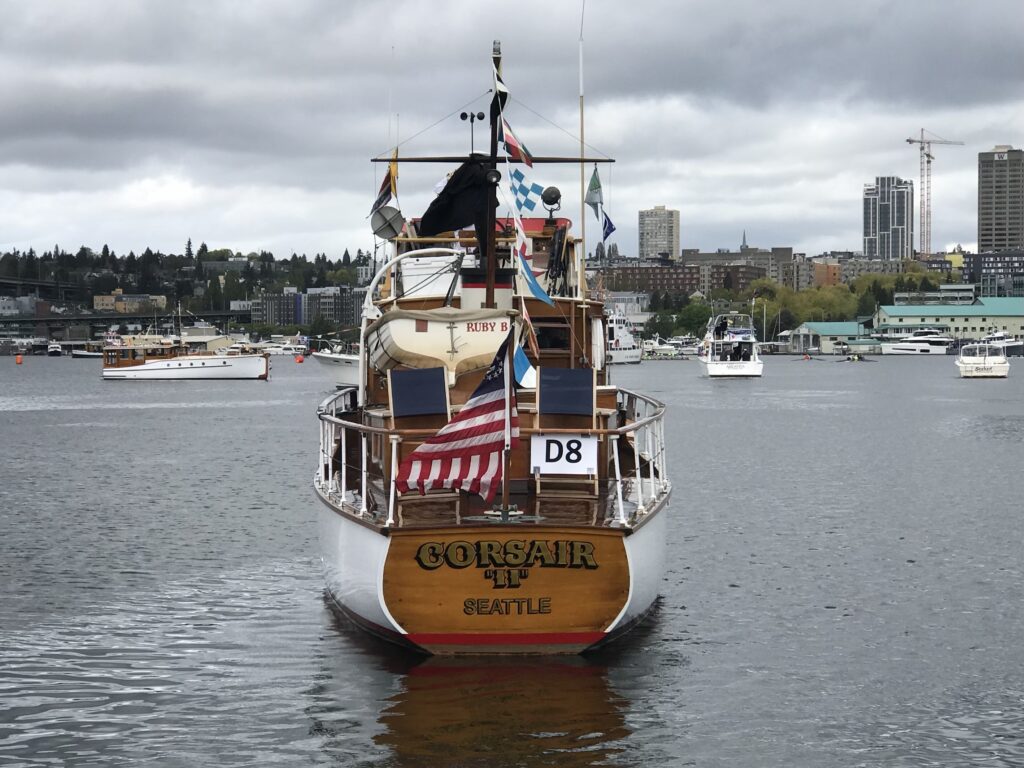
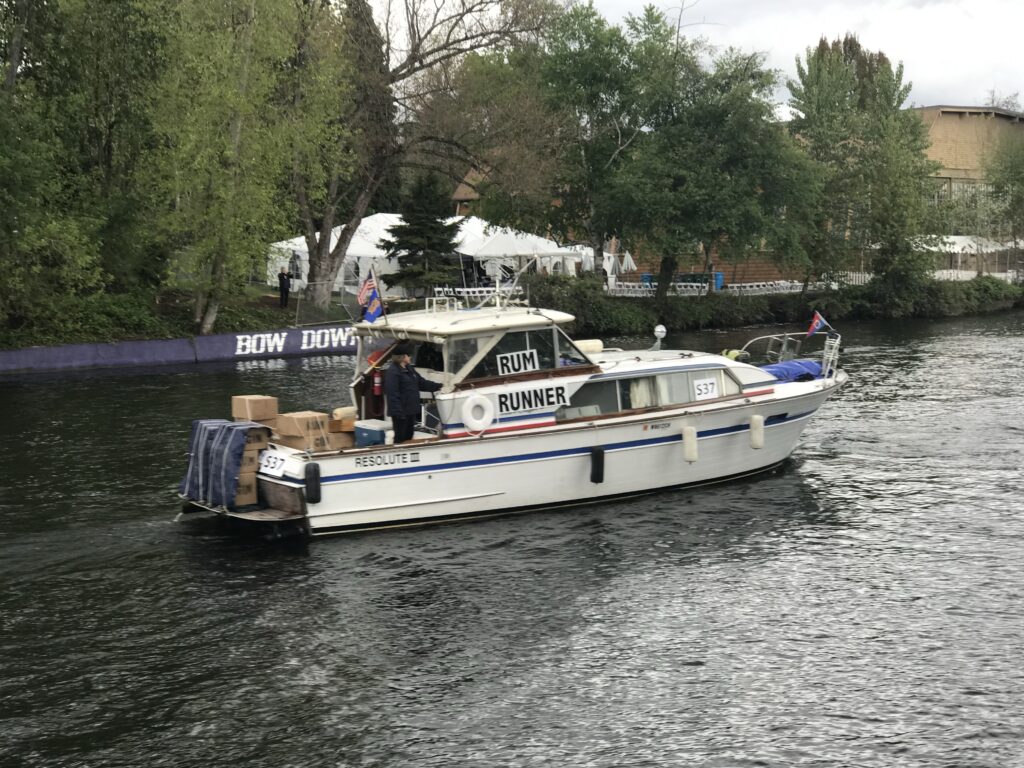
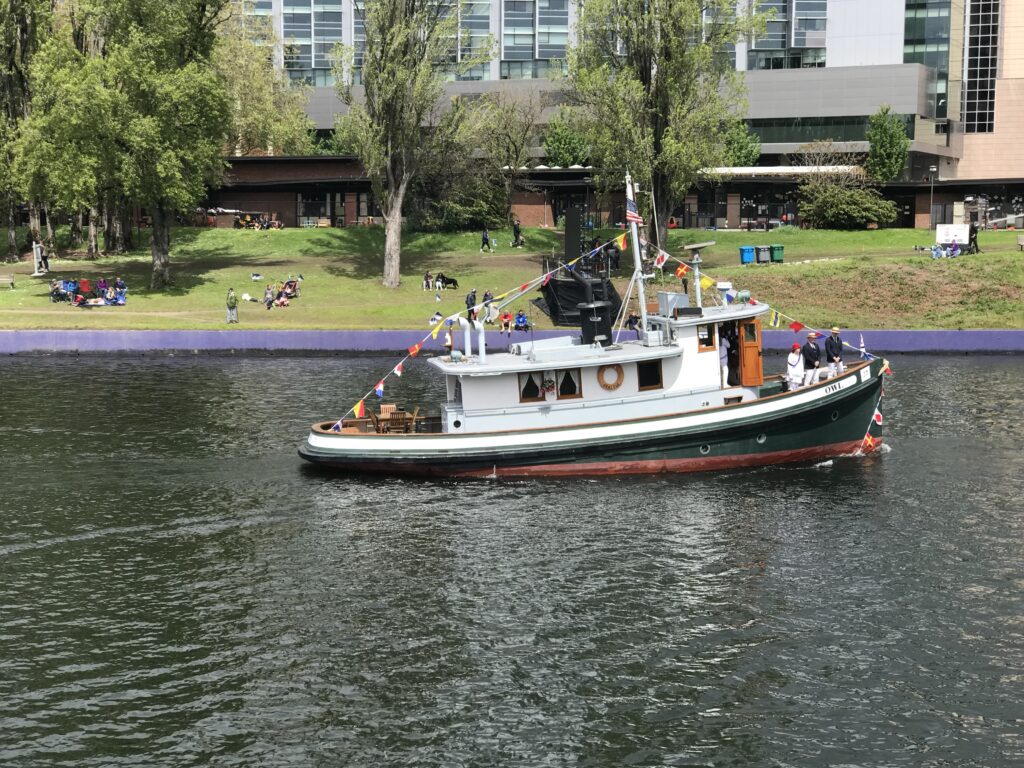
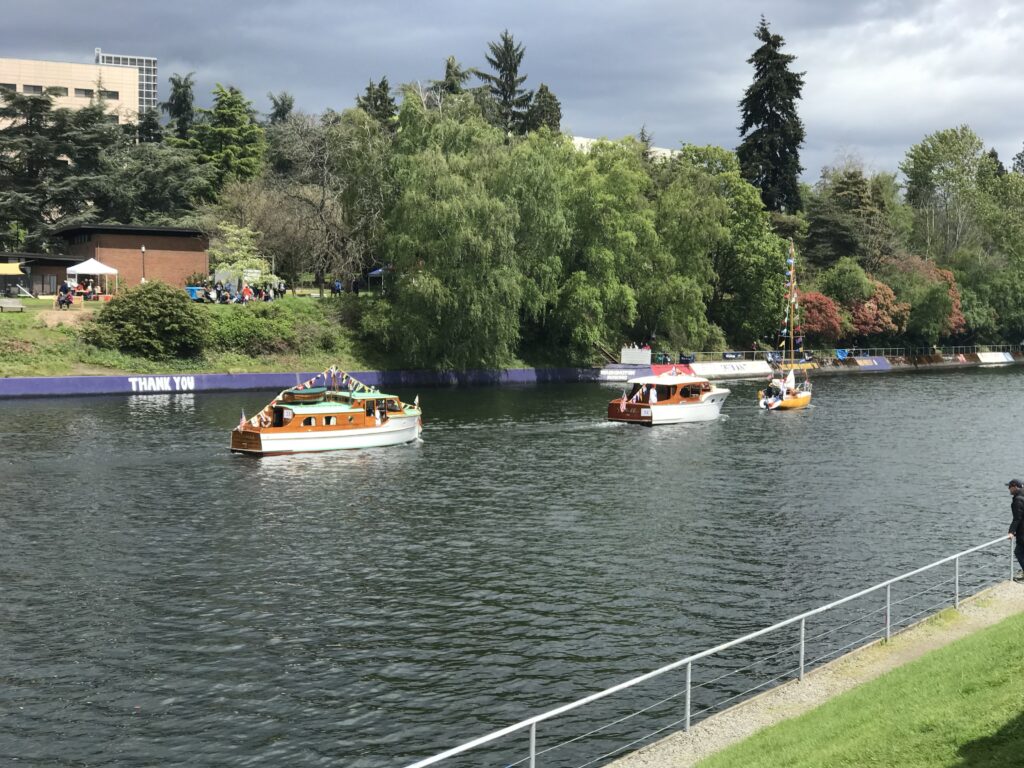
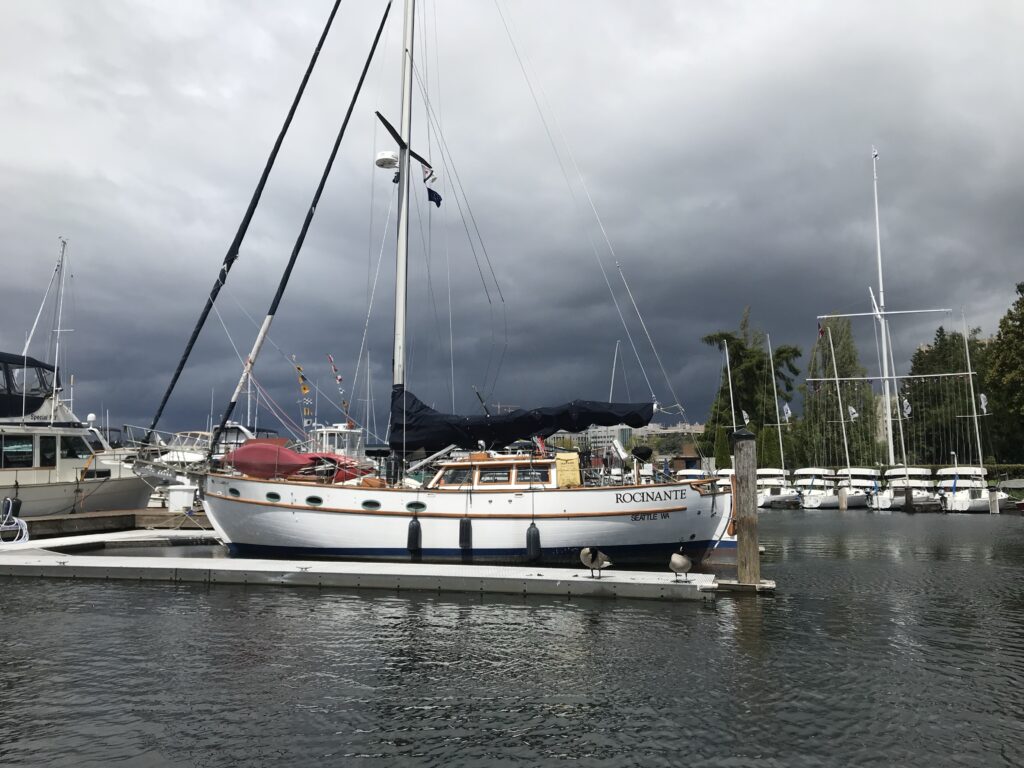
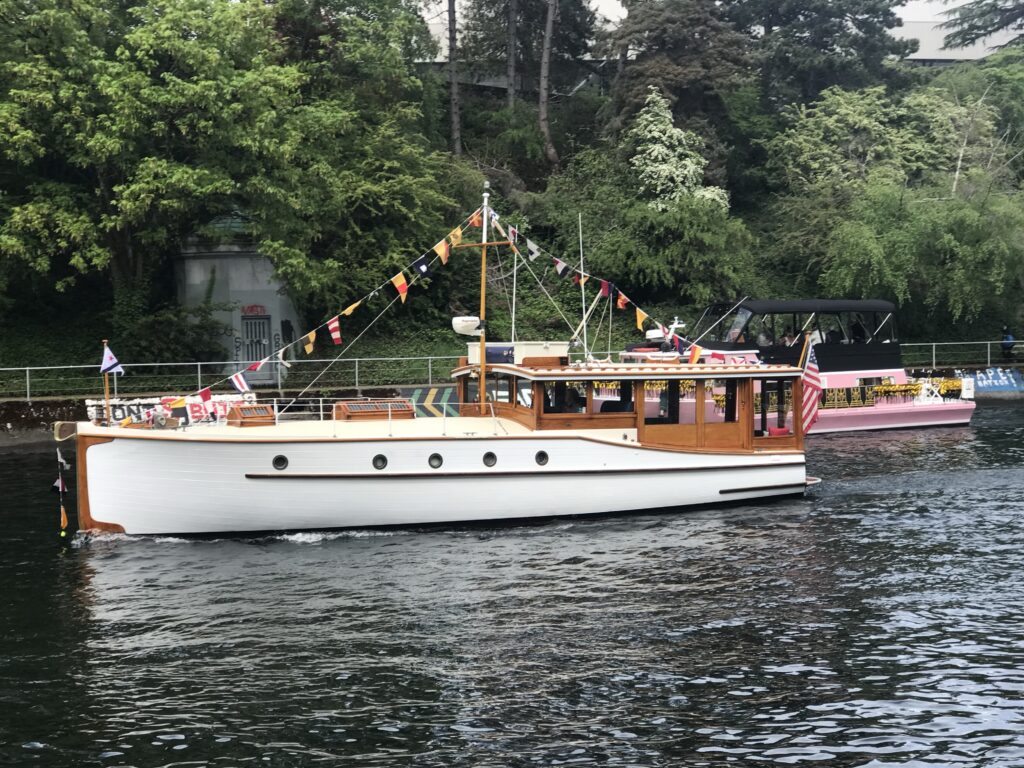
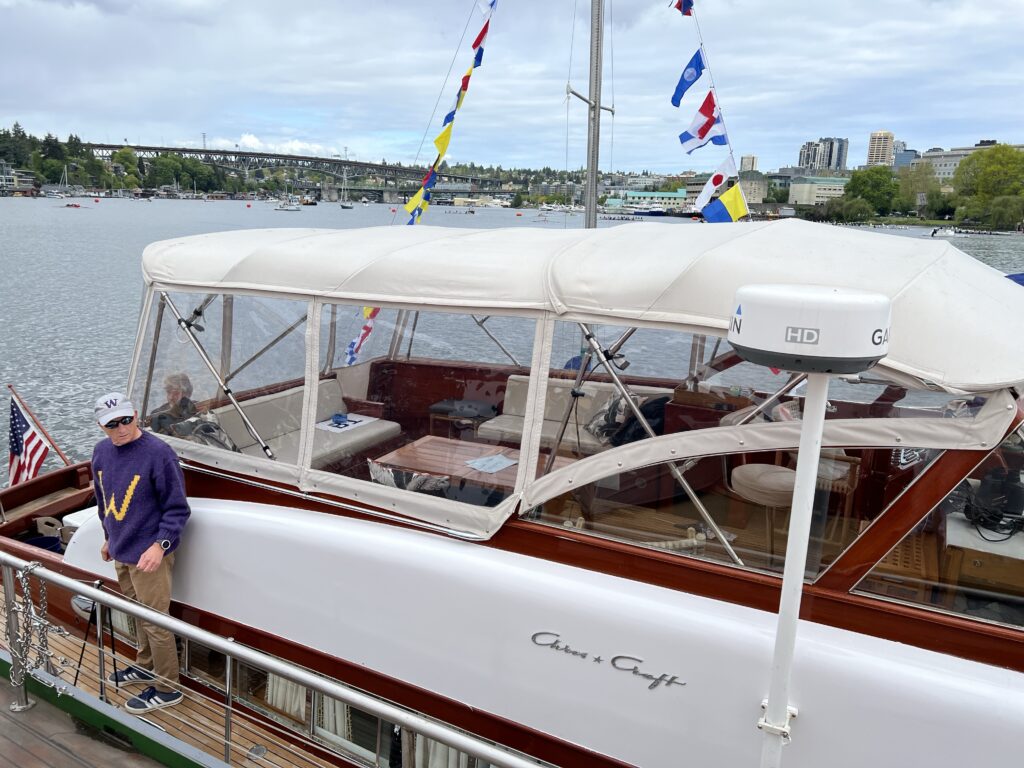
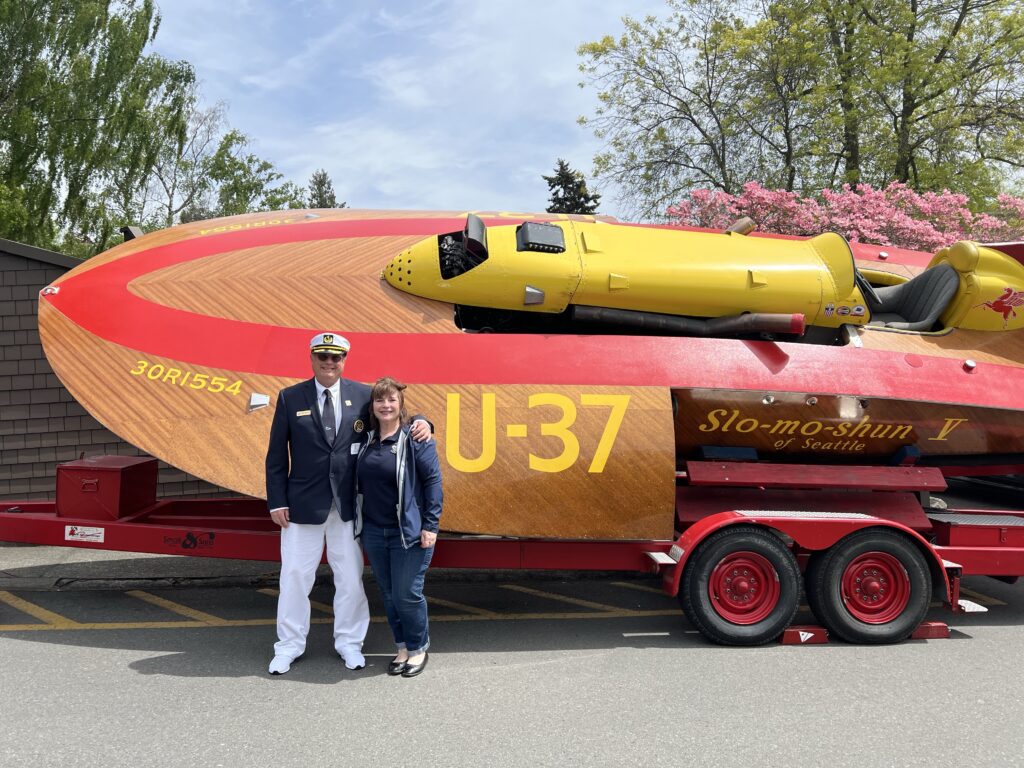
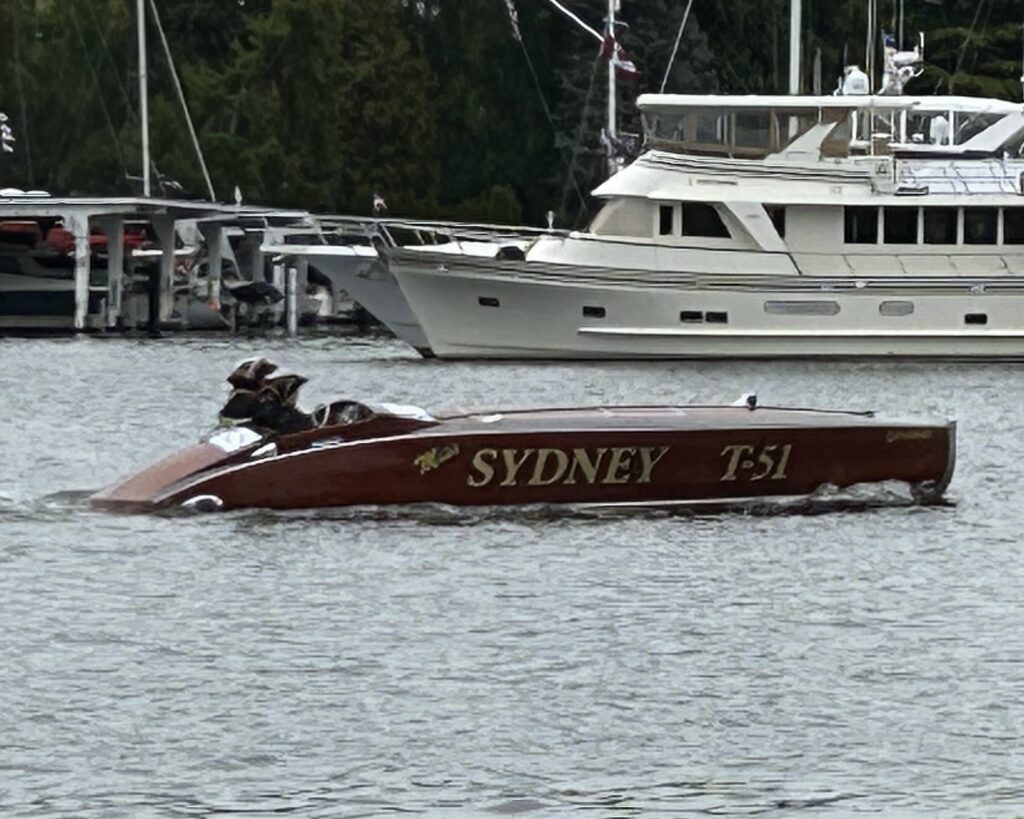
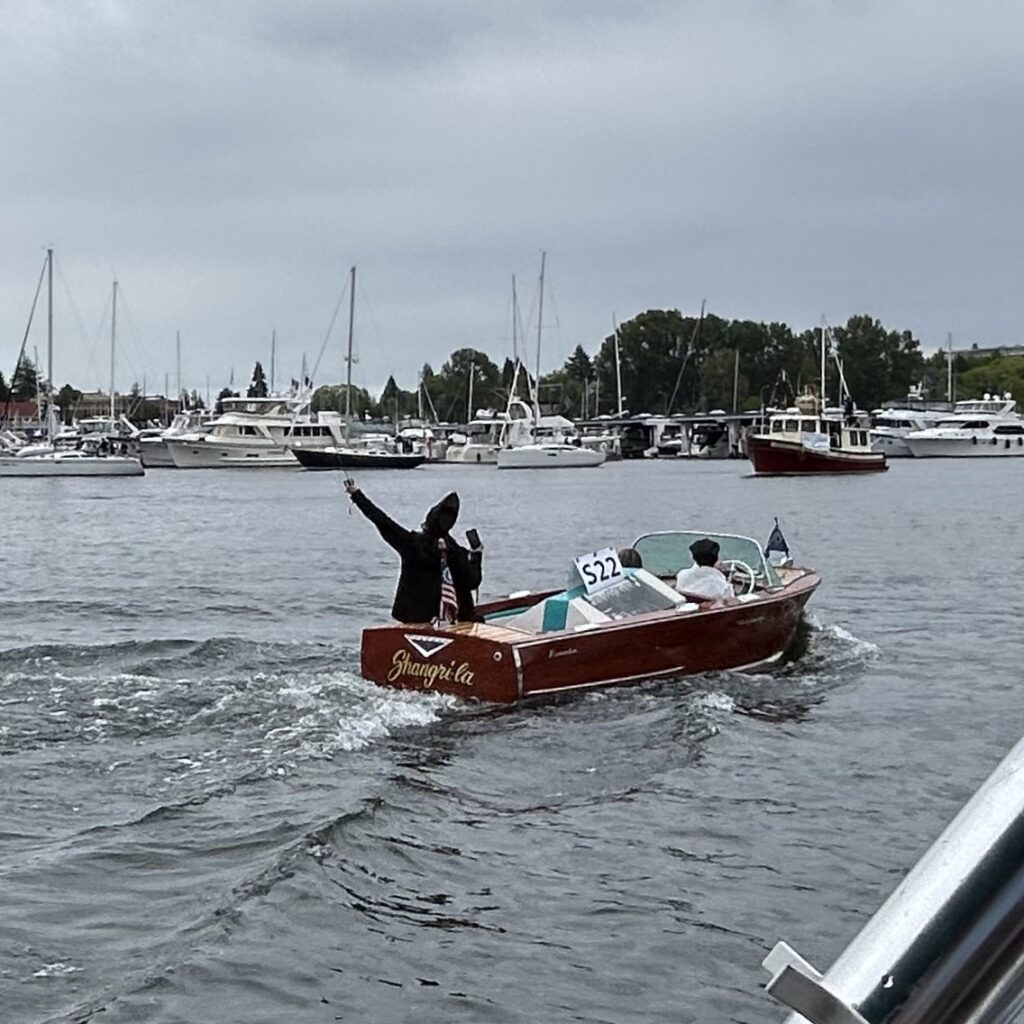
Naval architect: The Montlake Cut is a full‑scale parade of hull forms and propulsion choices—from classic wooden powerboats and restored sailboats
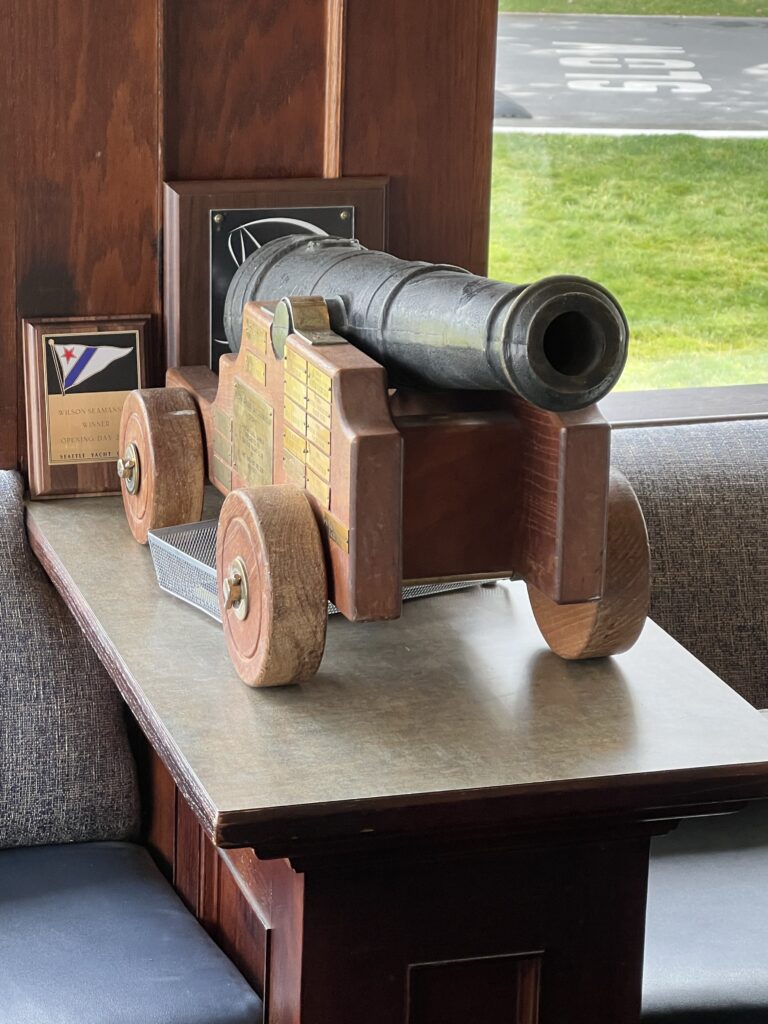
to hydroplanes and workboats—offering a live laboratory of stability, maneuvering, and seakeeping as fleets execute tight formation drills for the Wilson Seamanship Trophy.[1]
Dancer: The parade fleets practice synchronized turns, spacing, and salutes; crews in coordinated uniforms move in unison at rail, and the entire procession reads like a waterborne choreography to band music and horns. And in the evenings live bands and disk jockeys inspire footing it by beginners and experts.
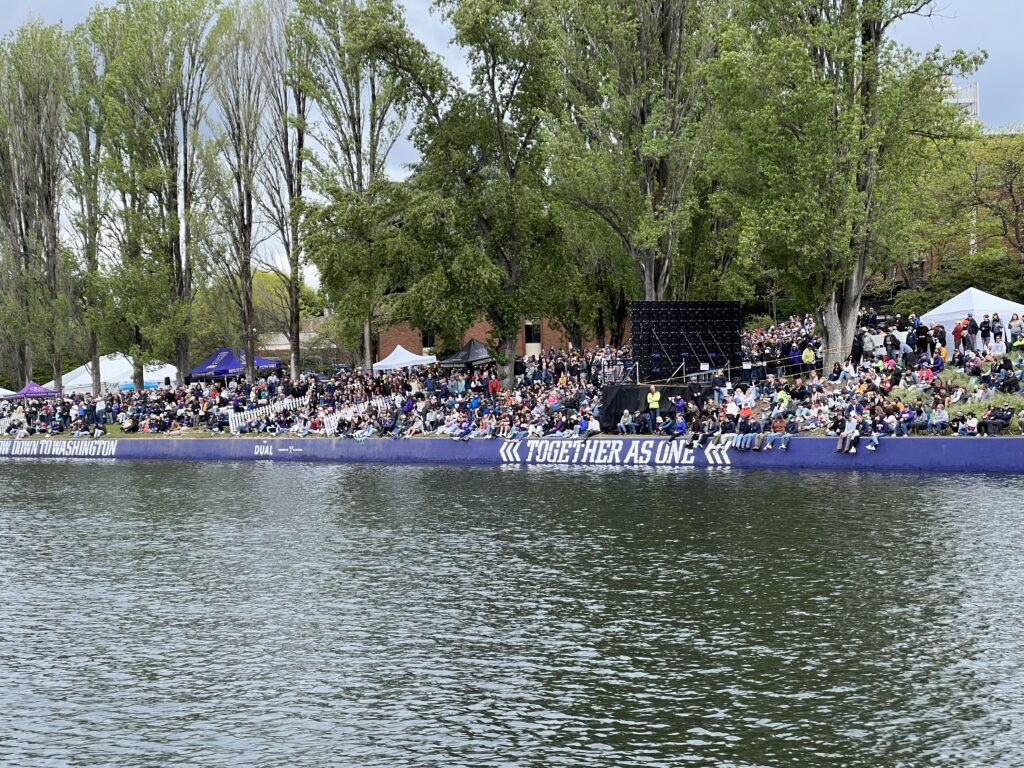
Rower: The Windermere Cup and Opening Day Regatta turn the Cut into one of the world’s premier 2,000‑meter rowing venues, hosting Husky varsity boats, visiting U.S. universities, and international crews racing in flat water framed by thousands of spectators and moored boats.[7][8][3][1]
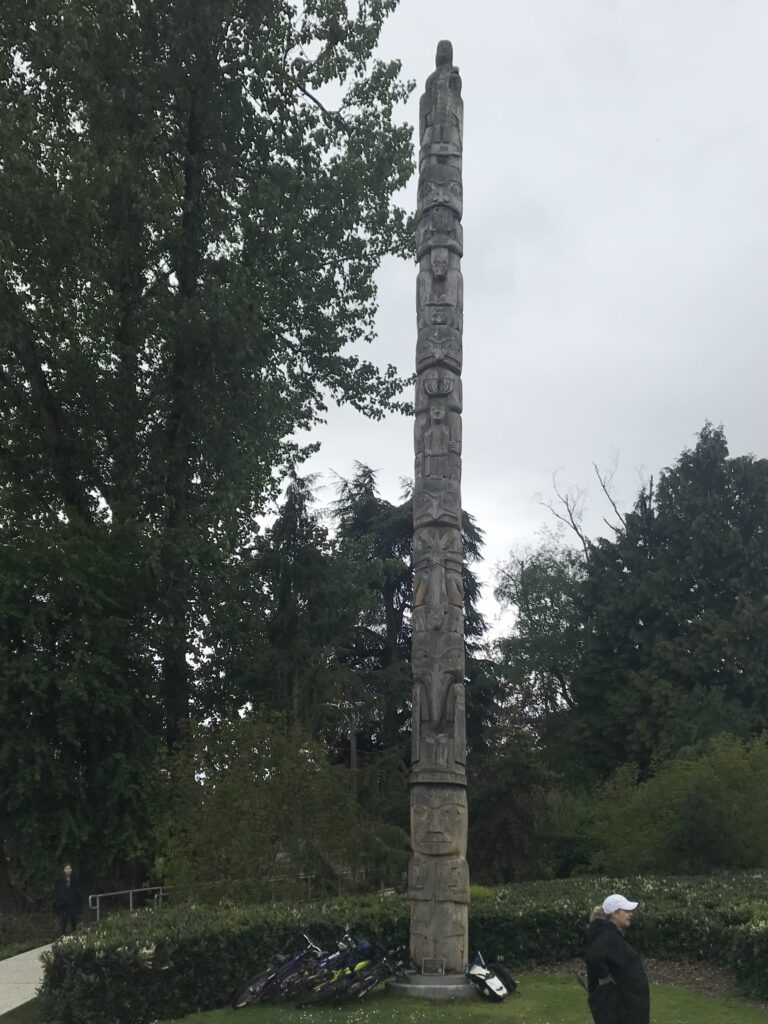
The Boys in the Boat is a story about the University of Washington’s rowing team in the 1930s and is the name of the movie directed by George Clooney135. The team consisted of nine working-class young men who achieved great success in the rowing world and represented the United States at the 1936 Berlin Olympics12. The History of the Coast Salish People is a fascinating contribution to that continuing story that is not discussed in the film but is fundamental to the story nonetheless. Coast Salish canoe construction and racing have a rich history that predates the development of modern rowing shells.
Artist: “Art to Sea,” introduced in 1989, deliberately brought public art aboard boats, pairing professional and student artists with corporate‑sponsored vessels to create large‑scale floating installations that attracted national media coverage.[1]
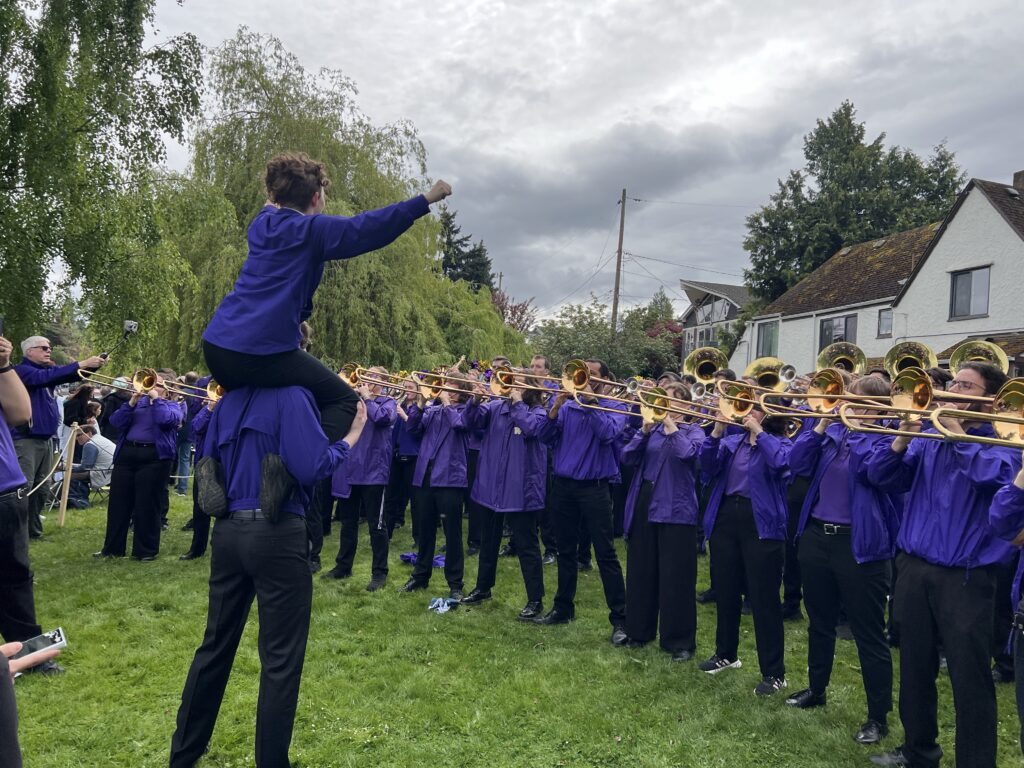
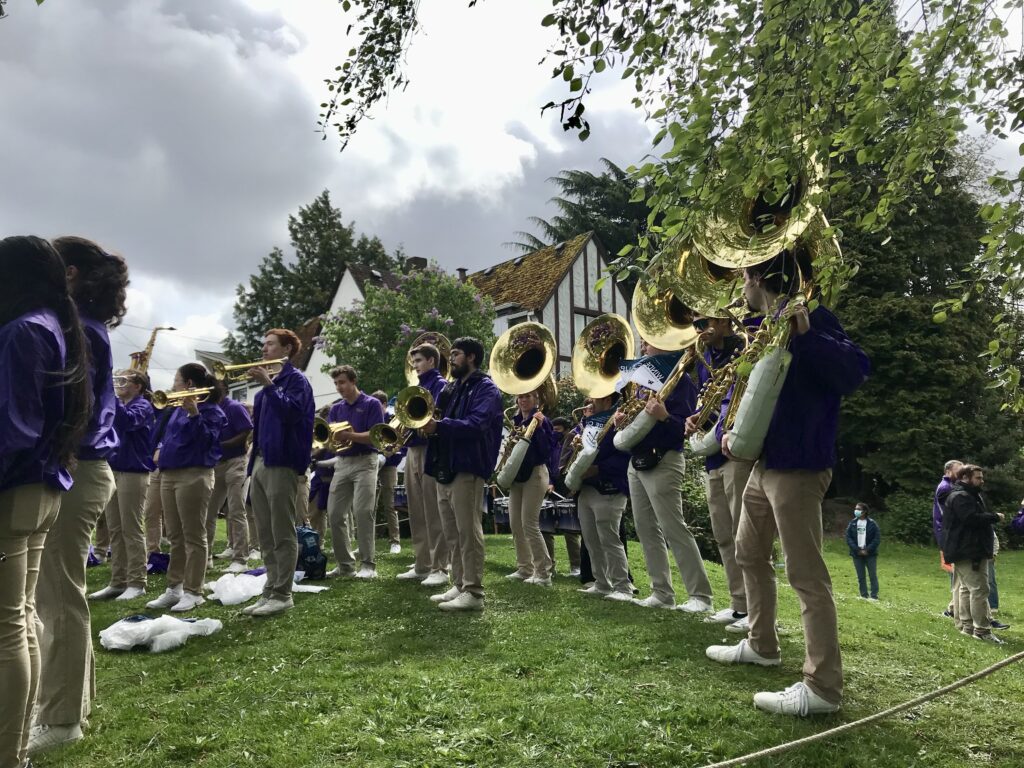
Musician: From early bands at the 1911 festivities to multiple orchestras playing at the clubhouse in the 1940s and Husky and Cougar bands on dedicated “band boats” today, music is woven into the parade, regatta, and dockside parties.[1]
Sailboat racer: Opening Day has always included sail races—catboats, flatties, Stars, One‑Design fleets, predicted‑log contests, and now modern dinghies and keelboats—offering early‑season competition and the prestige of racing under a historic burgee.[2][1]
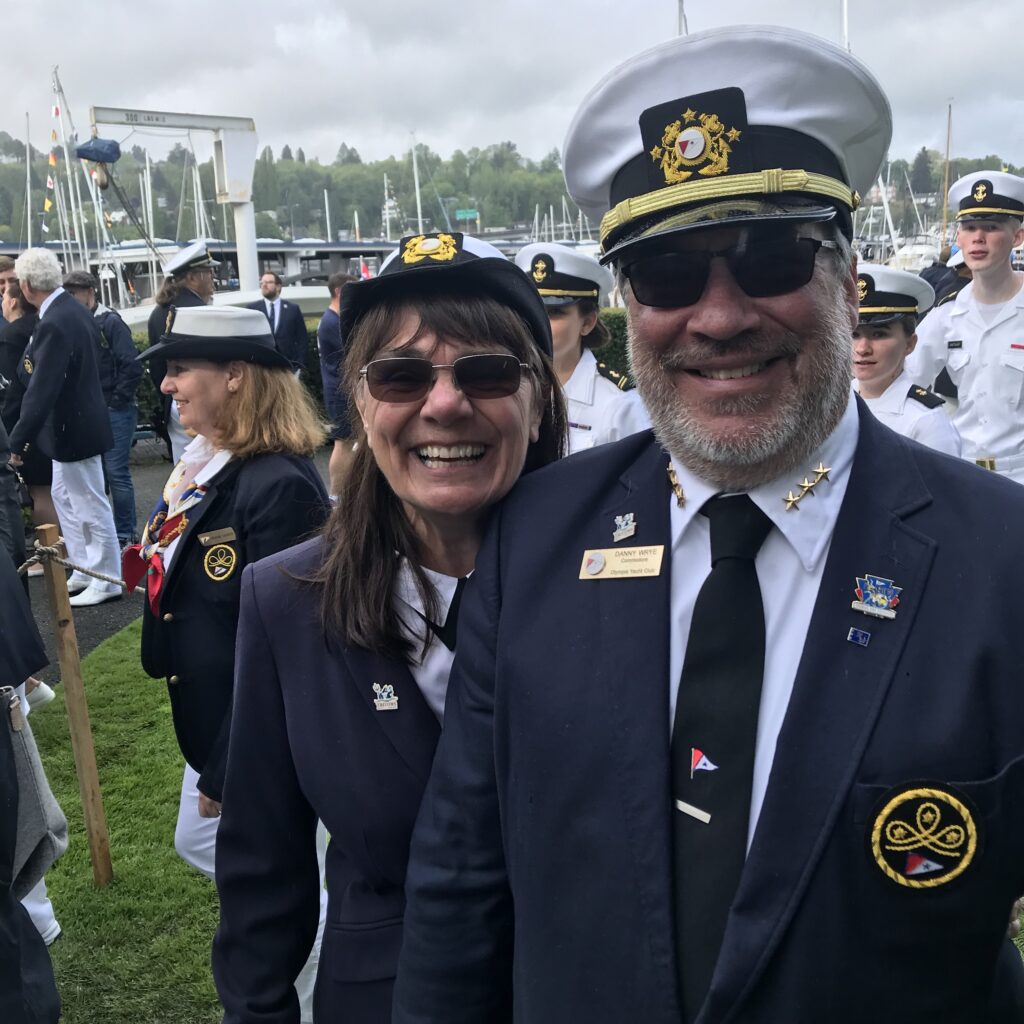
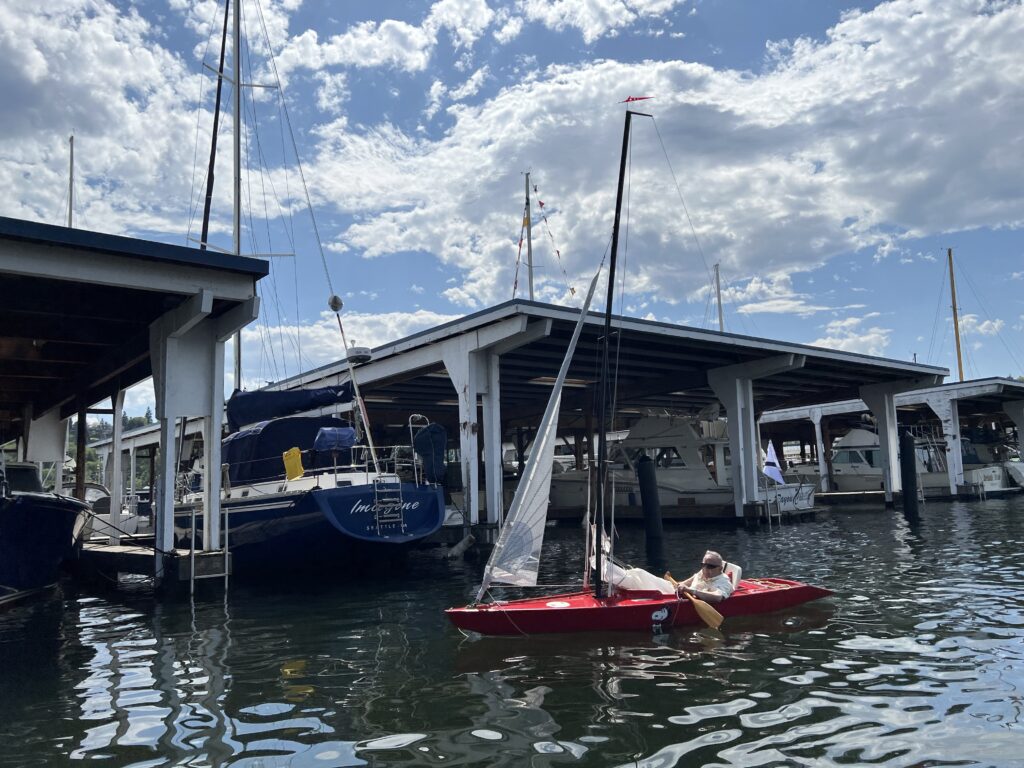
Commodores from the Seattle Yacht Club, the Royal Vancouver Yacht Club and the Victoria Yacht Club race in mini 12 sailboats and the winner is obliged to drink beer from a commode (toilet). This hosted crowd pleasing event is well attended.
Pedal-controlled mini 12 meter sailboat at conclusion of the “Commode Cup Race”.
Washington college student or alumni: The event is tightly intertwined with the University of Washington; Husky crews race at home, alumni pack the log boom and shoreline, and the campus‑side arboretum fills with picnics and purple‑and‑gold gatherings.[8][4][1]
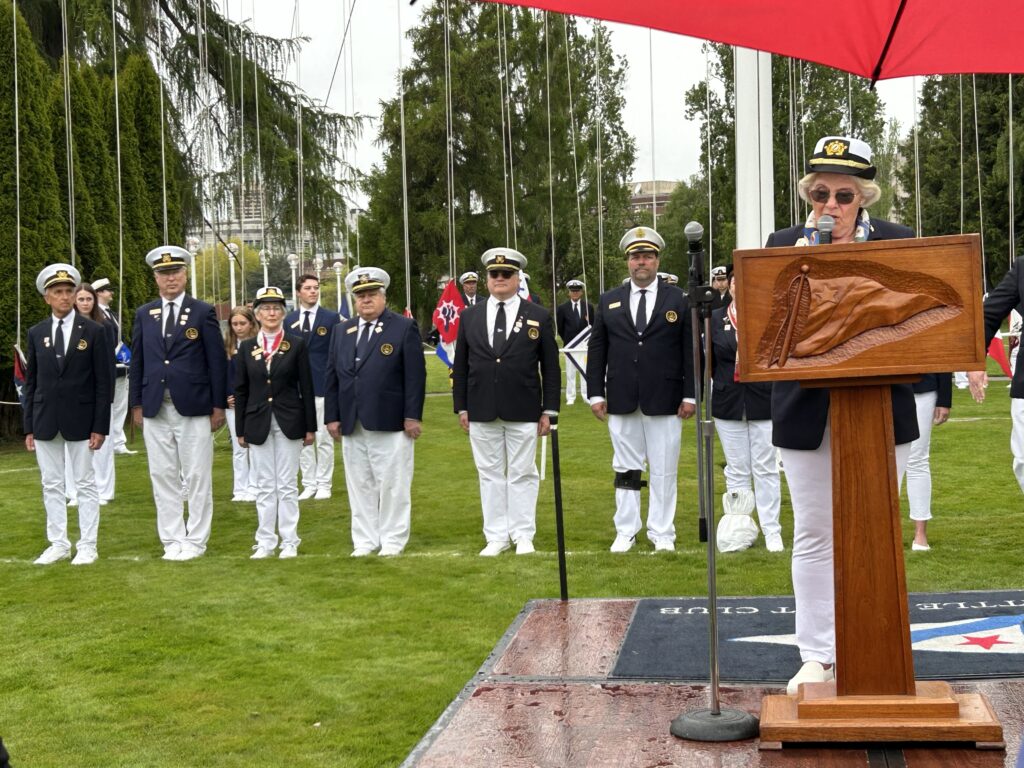
Religious person: Opening Day retains ritual weight—commissioning ceremonies, color guards, salutes to flag officers, and the almost mythic expectation that an eagle will pass overhead—inviting reflection on stewardship of water and community.[1]
Historian: The day is a living timeline of Seattle’s relationship with water, from Indigenous canoe races noted in early regattas, through Gold‑Rush–era yachting, Prohibition parties, wartime patrol duties, and civil celebrations of postwar prosperity.[2][1]
Hiker: The urban trail network around the Cut—Montlake, the Arboretum, Foster and Marsh Islands—turns Opening Day into a walking festival where people wander wooded paths between vantage points of boats, crews, and mountains.[1]
Foodie: Club oyster feeds, dockside barbecues, and elaborate picnics along the banks echo traditions dating back to the 1940s “Oyster Feeds” and modernize them with food‑truck culture and local seafood, coffee, and craft beverages.[2][1]
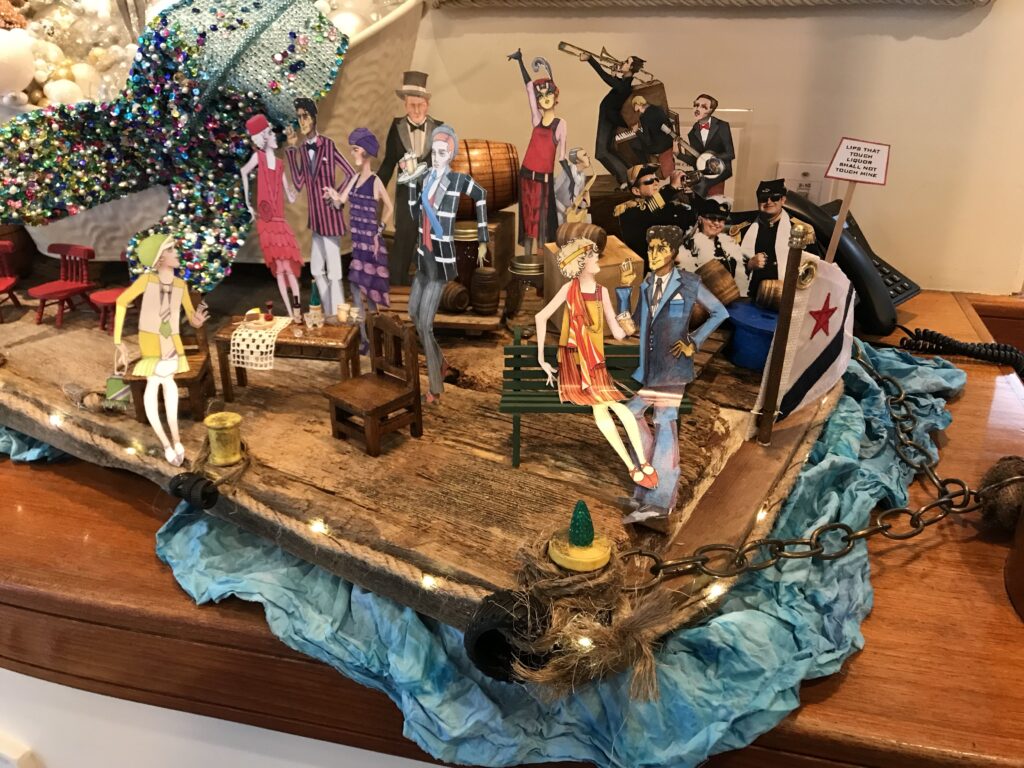
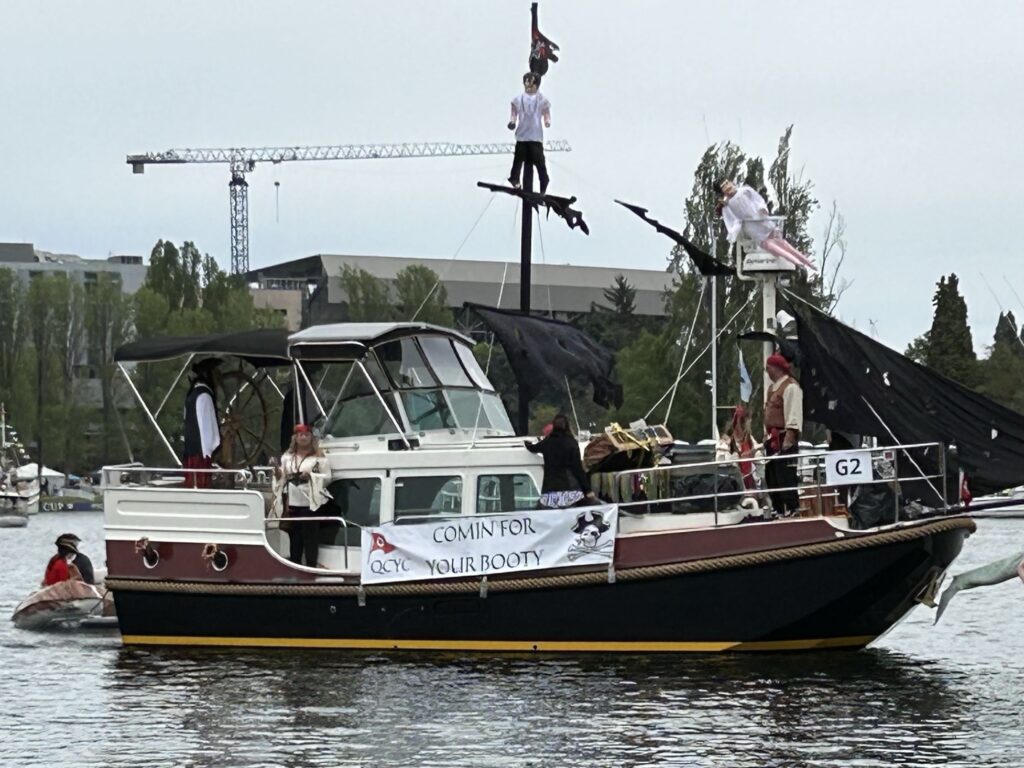
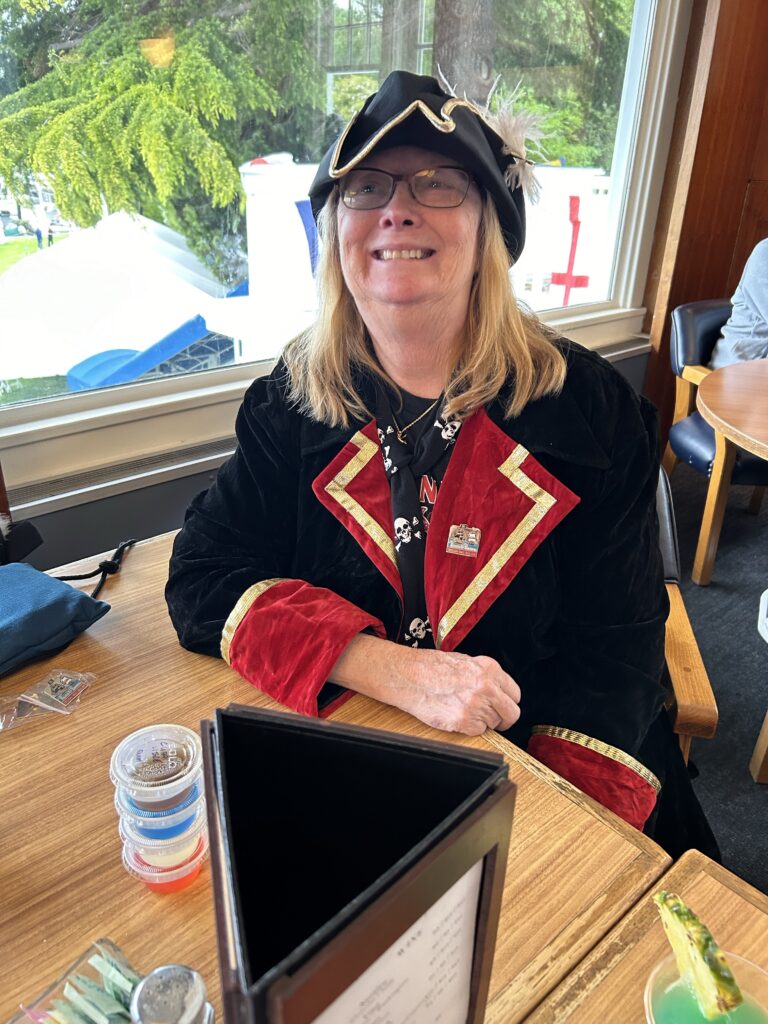
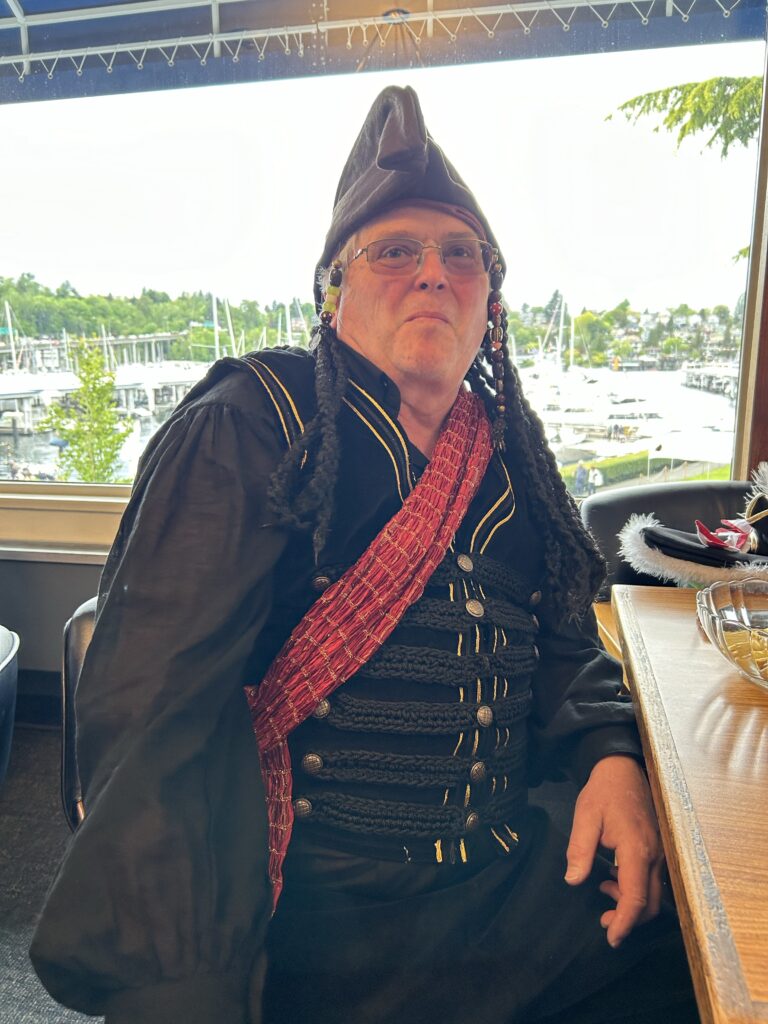
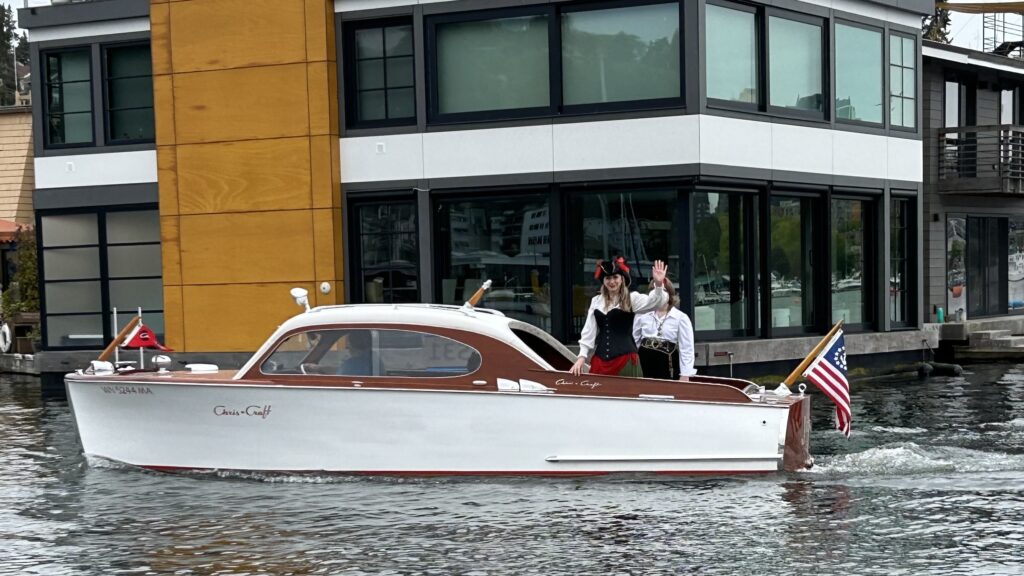
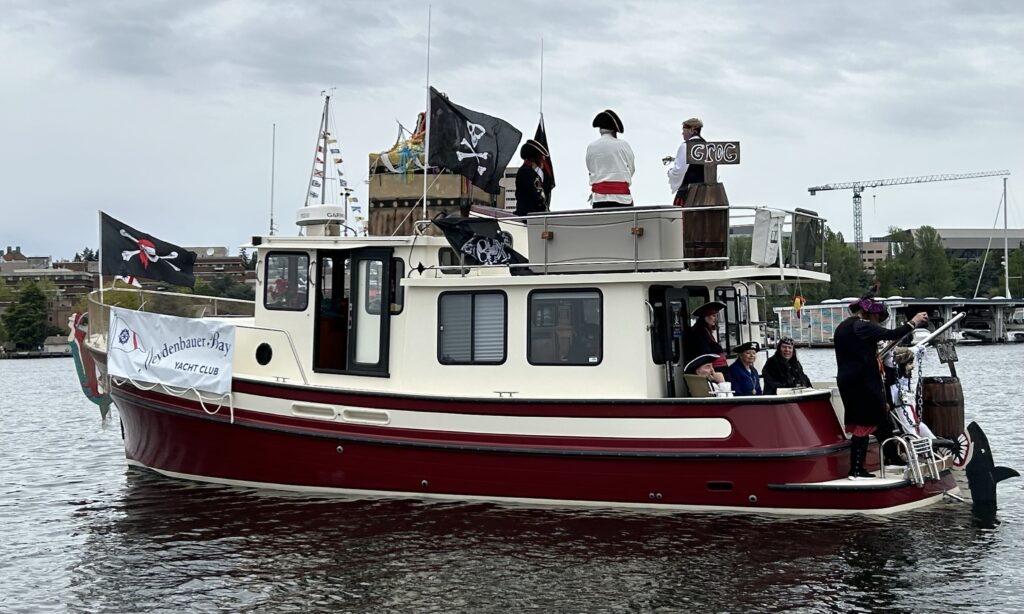
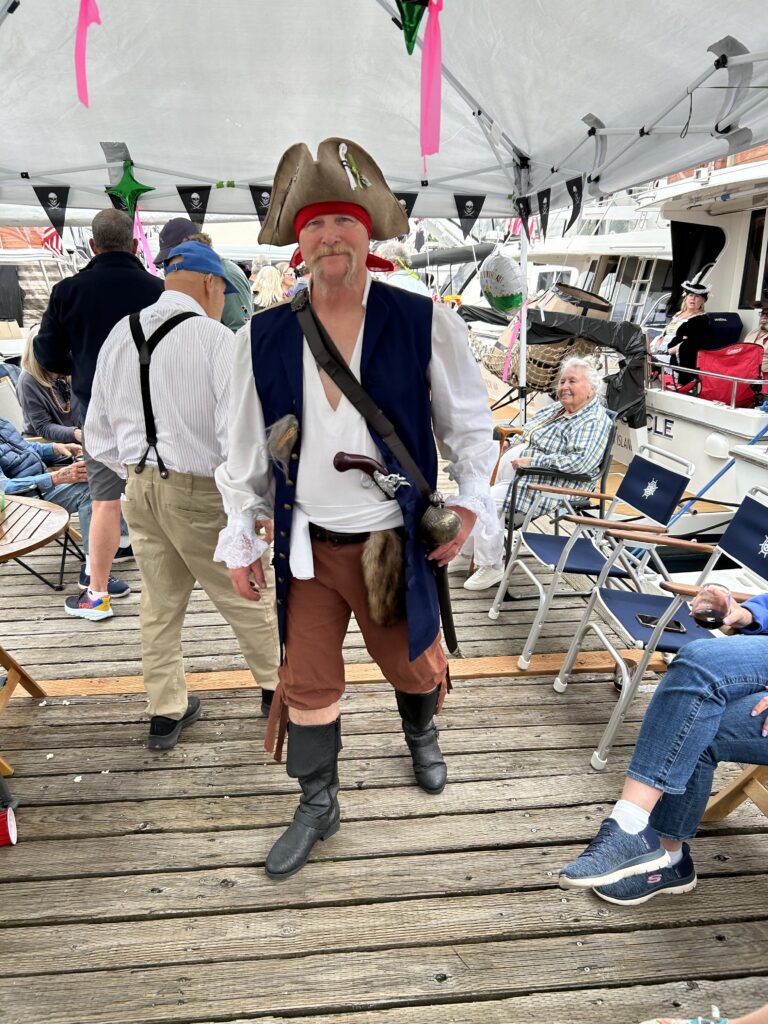
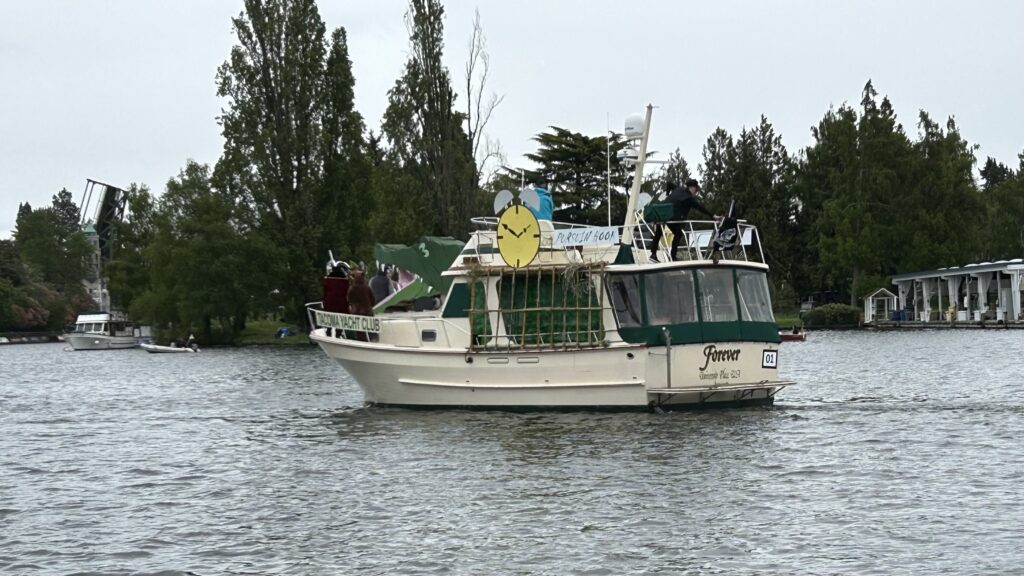
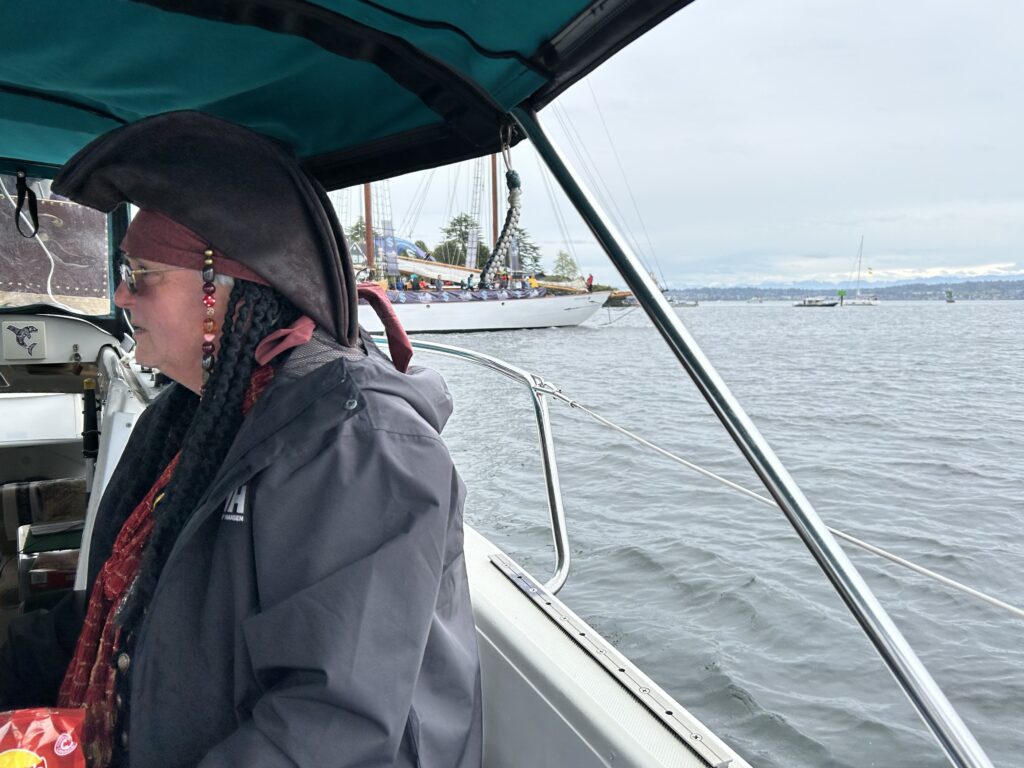
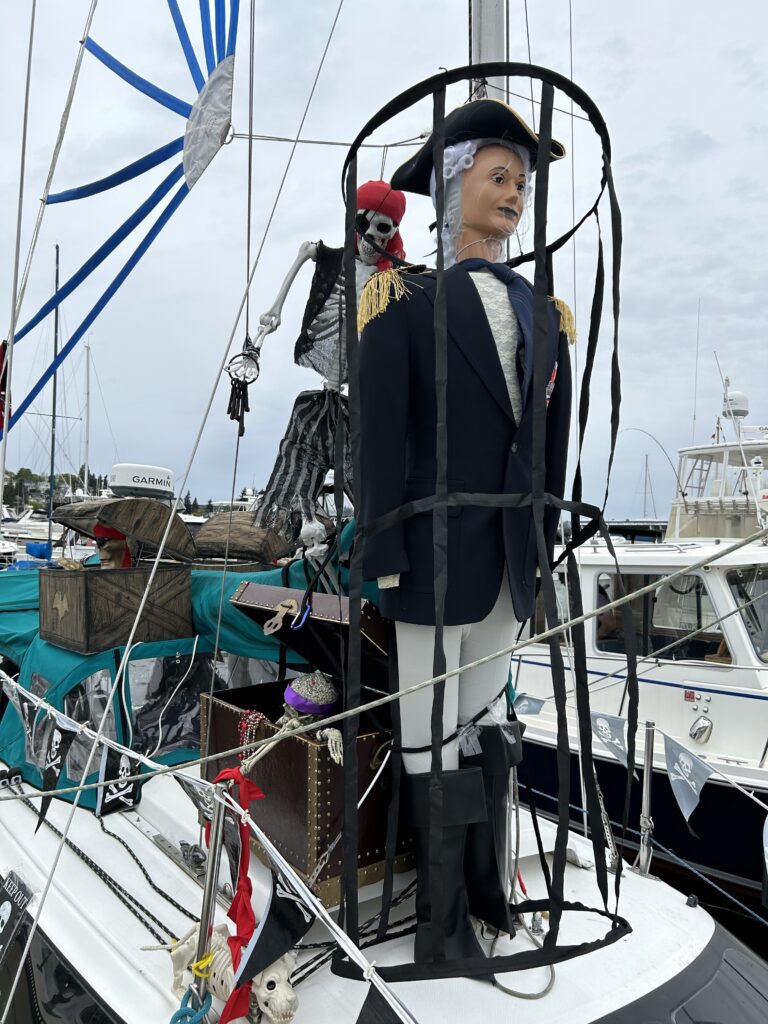
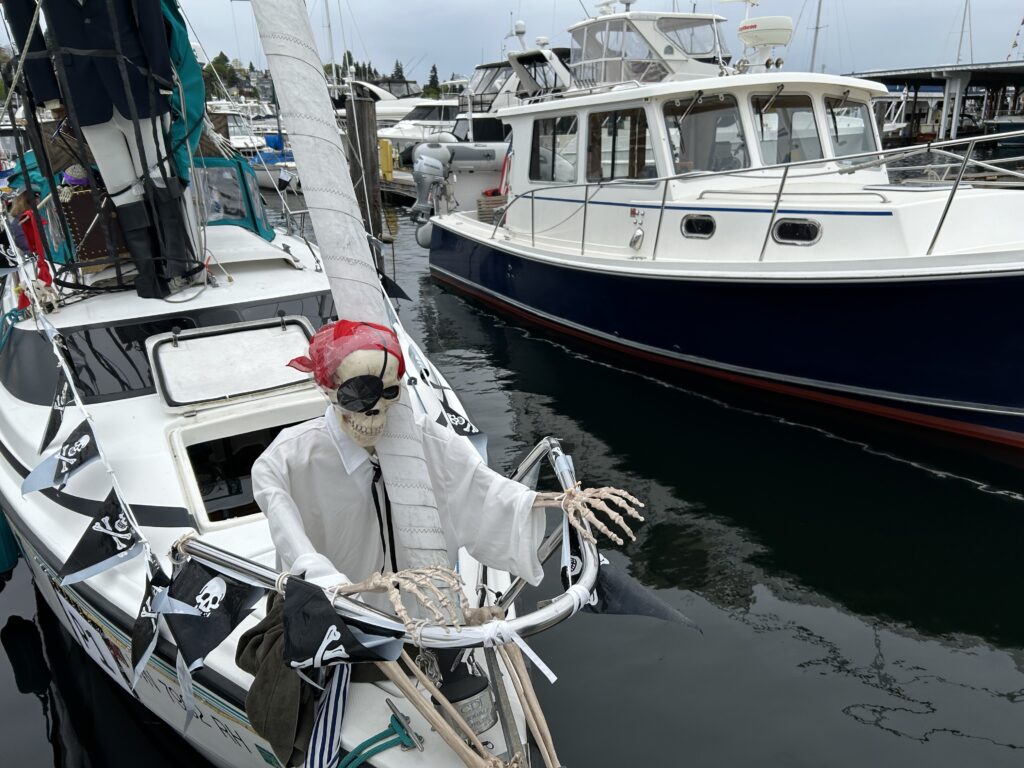
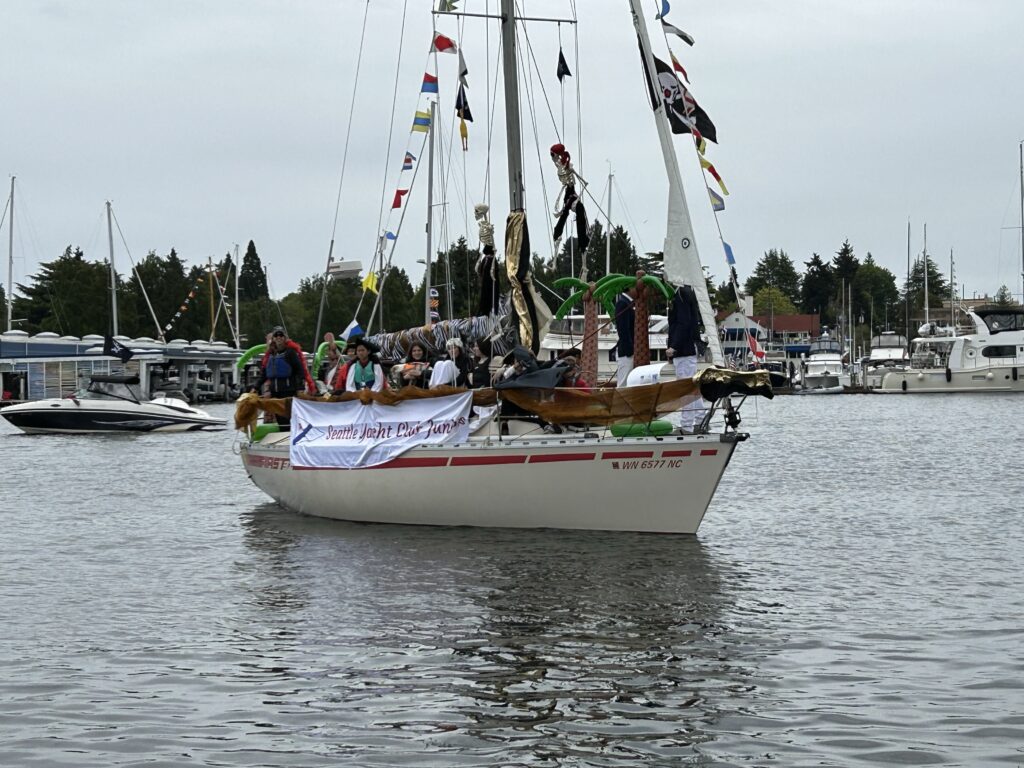
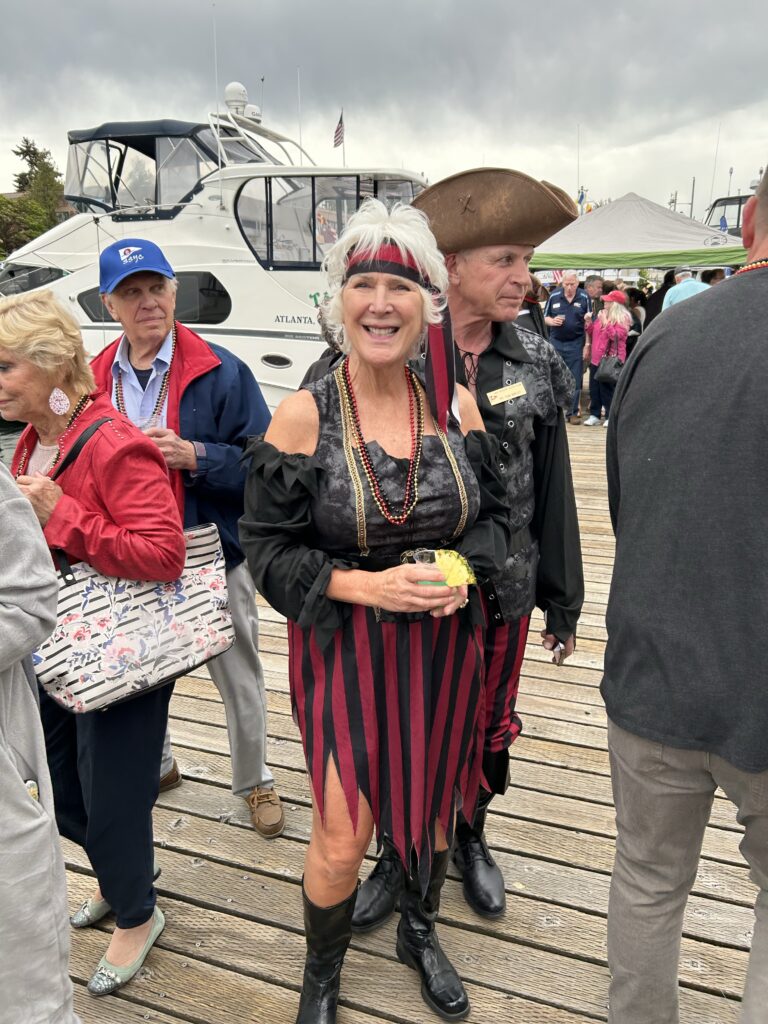
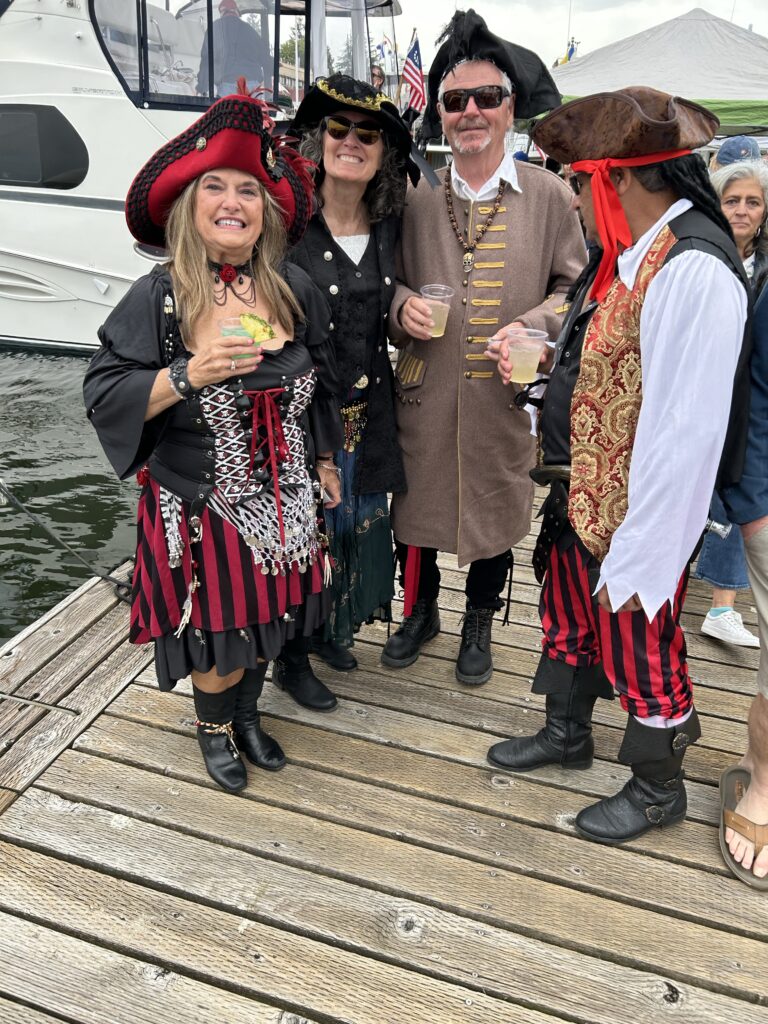
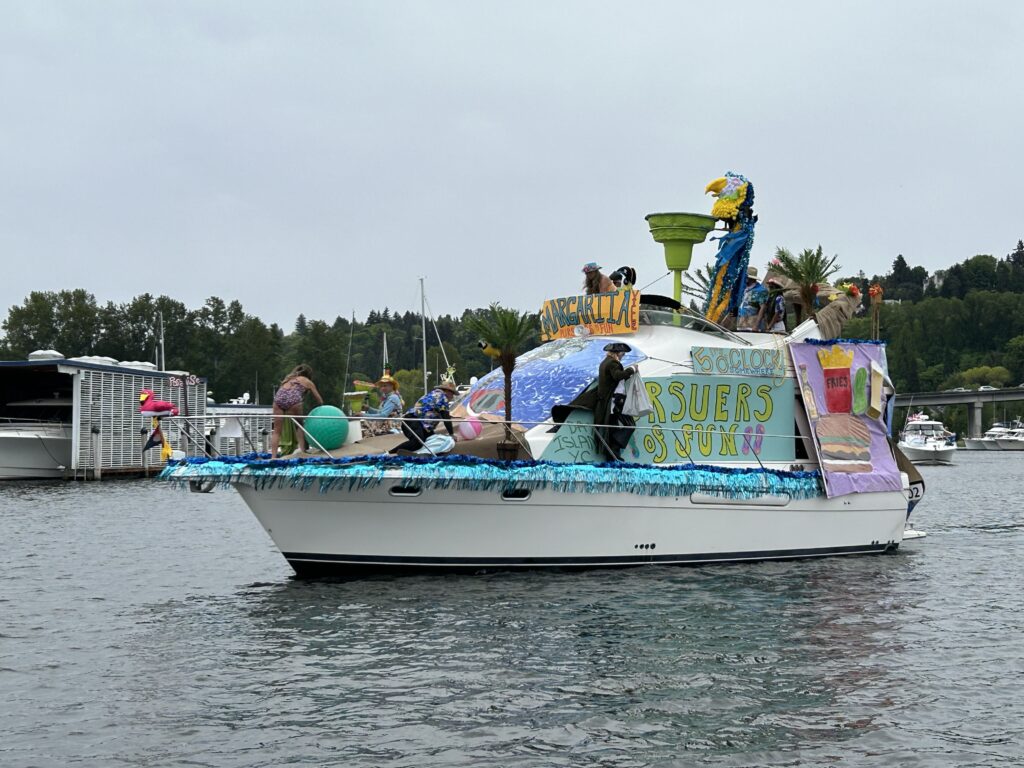
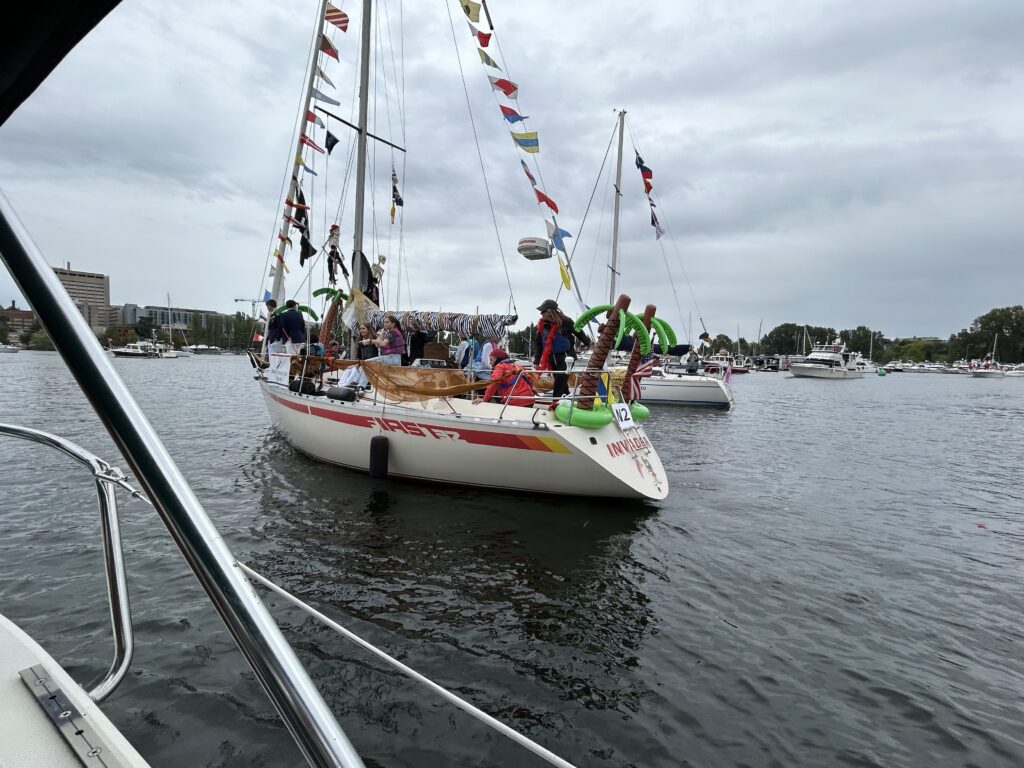
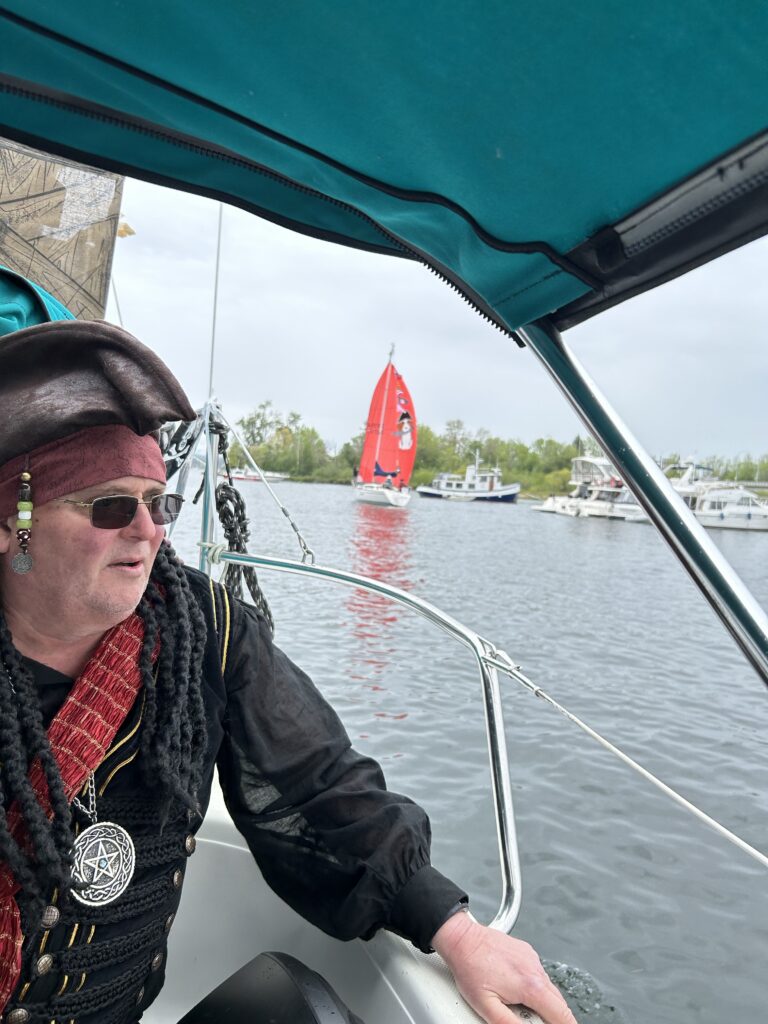
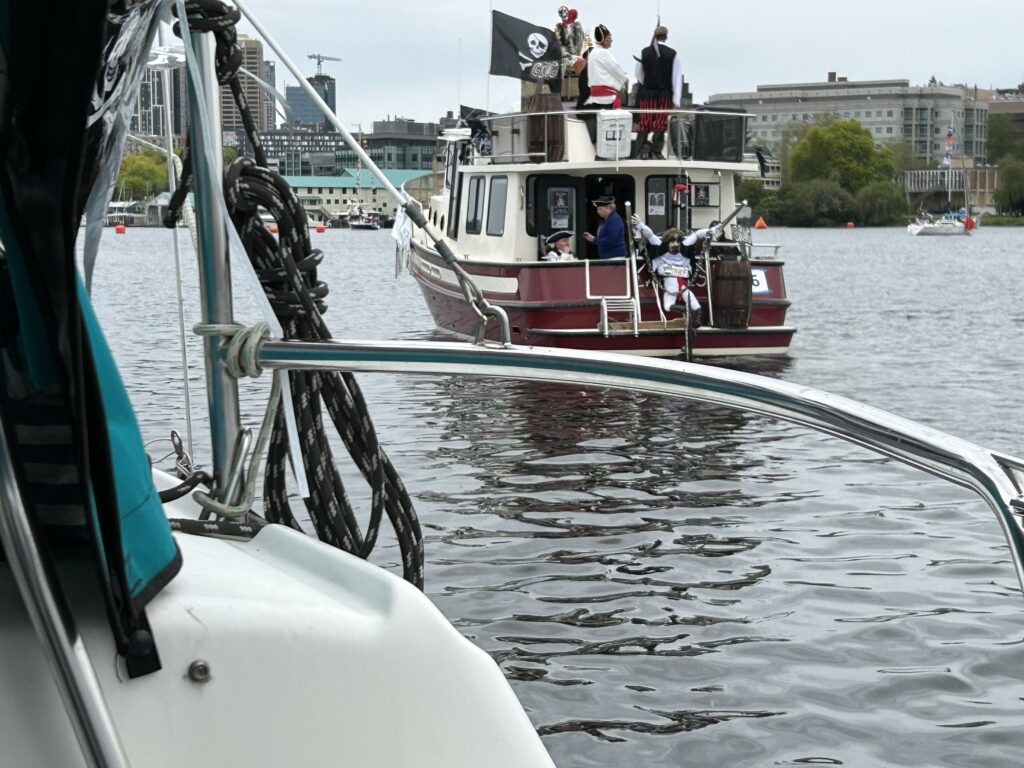
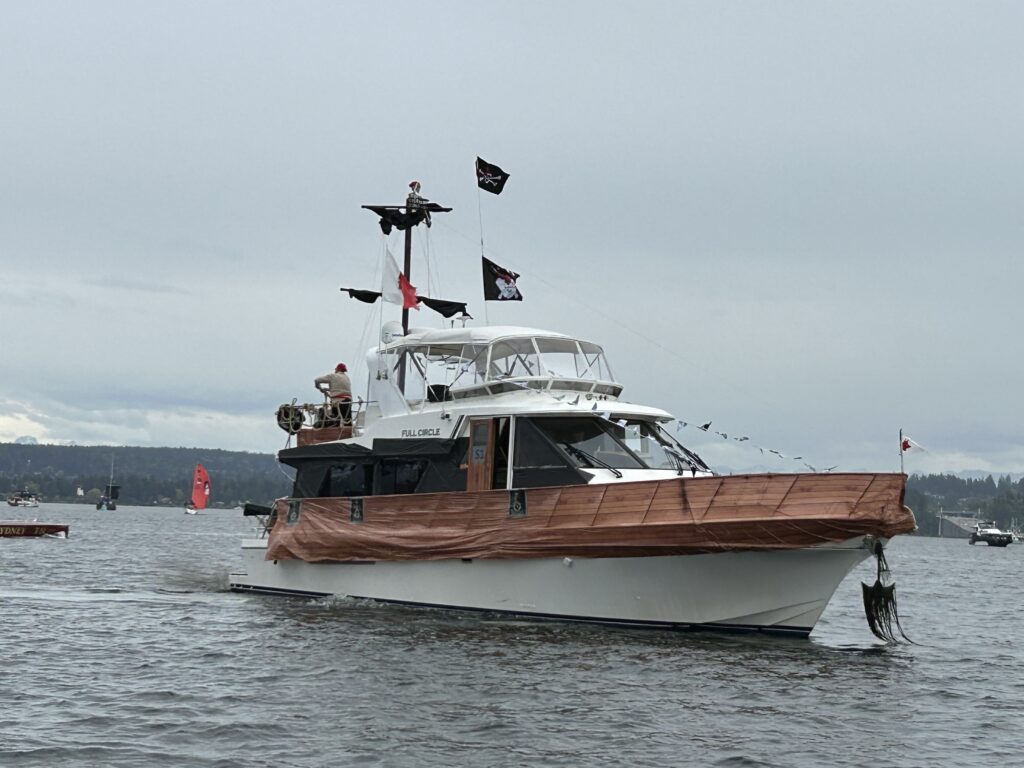
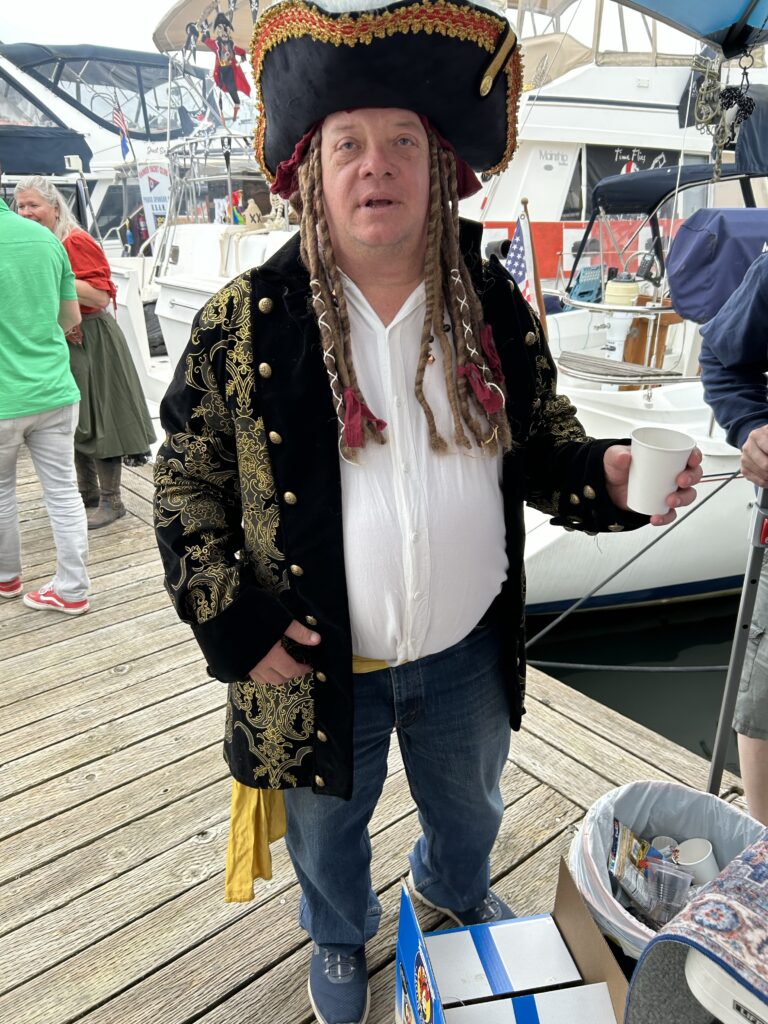
Cosplay enthusiast: Since 1959, when “Hell’s a Poppin’” introduced official themes, Opening Day has been a sanctioned excuse to costume boats and crews—from Roaring Twenties flappers to 1980s throwbacks—turning the parade into a floating cosplay convention.[9][1]
Environmentalist: The event now foregrounds safe handling of fuel, fire, and waste, prohibits overboard sewage discharge, and increasingly highlights sustainable boating practices, while the Arboretum backdrop and eagle sightings underscore the need to protect urban waterways.
An environmentalist would have strong reasons to care about both the bike trails and light rail options around Opening Day.
Separated bikeroutes like the Burke‑Gilman Trail give people a way to reach the Montlake/ UW area without driving, cutting car trips and tailpipe emissions. Studies in Seattle show that riding on off‑street paths such as the Burke‑Gilman exposes cyclists to lower black‑carbon pollution than riding in mixed traffic on nearby arterials, so these trails are better both for climate and personal health.
New infrastructure around Montlake—like the SR‑520 trail and the Montlake bike‑ped bridge—makes it easier to walk or bike into the Opening Day area from multiple directions, which directly supports “green commute” goals the city and advocates emphasize. There is also light rail.
Sound Transit’s own sustainability reporting stresses that when riders choose Link instead of driving, they avoid large amounts of greenhouse‑gas emissions—over 200,000 tons per year region‑wide, with transit avoiding several times more emissions than it produces to operate.
For an environmentalist, taking Link to University of Washington Station and then walking or biking to the Montlake Cut is a textbook example of low‑carbon travel that also reduces local air and water pollution in a sensitive shoreline area.
The combination of high‑quality bike routes feeding directly into light‑rail stations is exactly the kind of integrated, low‑emission access network climate advocates point to as a “free‑wheeling climate solution” for cities—so yes, both the trails and Link would be central interests for an environmentalist attending Opening Day.
Model boat builders: The model displays and dockside conversations give builders a dedicated forum to show their work, trade techniques, and even run demonstrations on calm stretches of water, while Opening Day itself becomes their natural “big reveal” to a large audience.
Yacht clubs that come to Opening Day
Seattle Yacht Club’s Opening Day now draws guest boats from a broad network of Pacific Northwest and international reciprocal clubs, many of which regularly appear in Dock Zero moorage and trophy lists.[10][11][12][13][1]
Examples of yacht clubs commonly represented
Royal Vancouver Yacht Club (Vancouver, BC)[11][13][10][1]
Royal Victoria Yacht Club (Victoria, BC)[12][13][1]
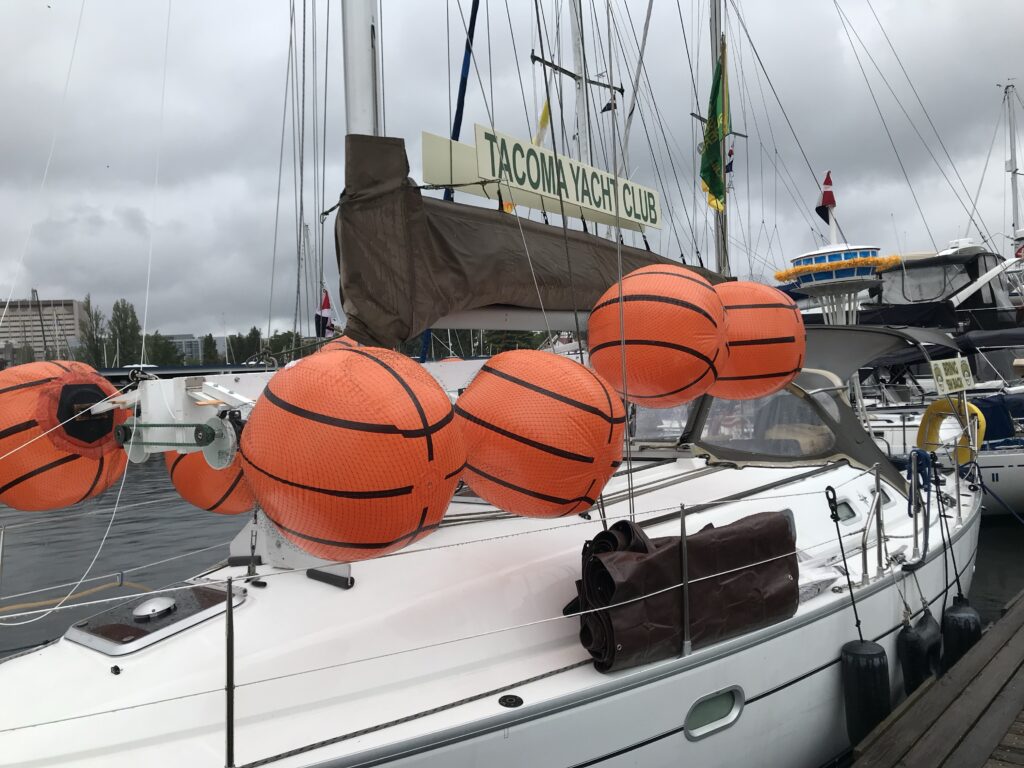
Tacoma Yacht Club (Tacoma, WA)[13][12][1]
Corinthian Yacht Club of Seattle (Seattle, WA)[13]
Corinthian Yacht Club of Tacoma (Tacoma, WA)[13]
Day Island Yacht Club (University Place, WA)[11][13]
Gig Harbor Yacht Club (Gig Harbor, WA)[6][13]
Orcas Island Yacht Club (Orcas Island, WA)[14]
Roche Harbor Yacht Club (San Juan Islands, WA)[13]
Capital City Yacht Club (Sidney, BC)[13]
West Vancouver Yacht Club (West Vancouver, BC)[13]
San Juan Island Yacht Club (Friday Harbor, WA)[13]
Classic Yacht Association (regional, with Opening Day participation noted by SYC guides)[10
Olympia Yacht Club
Navy Yacht Club Everet
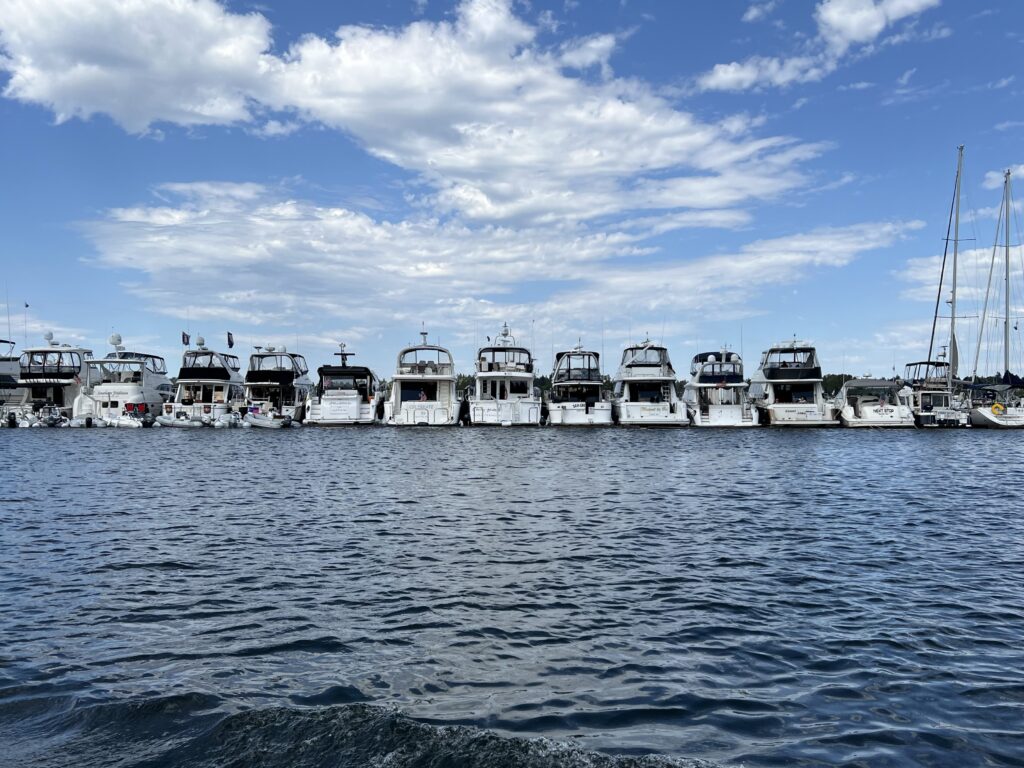
These clubs arrive not just from Puget Sound, but from Vancouver Island and the Strait of Georgia, rafted in tight along Dock Zero with each club running its own watch and hospitality, turning Portage Bay into a temporary international harbor.[6][10][1]
Themes for decorating boats
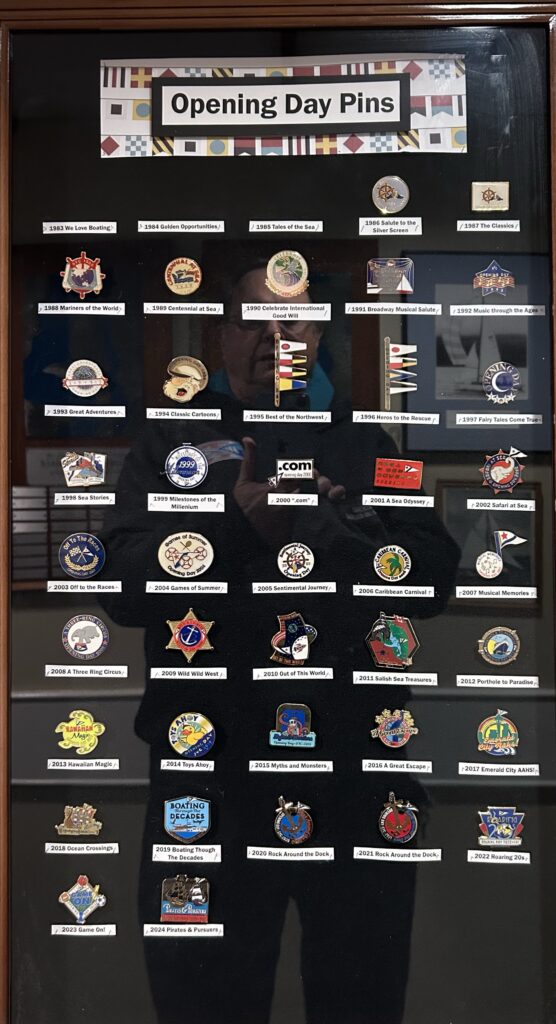
SYC first added an official Opening Day theme in 1959 with “Hell’s a Poppin’,” and every subsequent year has carried its own motif that drives decoration, music, costumes, and even choreography.[2][1] Boats competing in decorated classes are judged on adherence to the theme, originality, costumes, sound, and overall impact, so crews lean hard into the yearly concept.[1]
Examples of Opening Day boat‑decoration themes
1959 – “Hell’s a Poppin’” (first official theme)[2][1]
Various 1960s – early themed parades that leaned into Roaring‑Twenties and Mardi‑Gras‑style imagery (referenced in SYC’s historical timeline).[2]
2000s – “Roaring 20s” (used as a decoration theme in at least one recent year, inspiring Gatsby‑style costumes and jazz motifs).[9]
2019–2020s – Rotating concepts blending nostalgia and pop culture (e.g., decade‑based and cinematic themes, as reflected in club archives and local boating guides).[9][1]
2025 – “Back to the 80’s!” featuring neon color schemes, big‑hair costumes, and music from the 1980s woven into parade soundtracks.[1]
2025 (broader local boating framing) – “Maritime Horizons: Past, Present & Future,” used by charter and boating guides to encourage decorations that connect historic vessels to futuristic and eco‑friendly boat concepts.[15]
Because every hull becomes a stage, themes give naval architects a design brief, dancers and musicians a score, artists a giant mobile canvas, and cosplay enthusiasts a reason to turn the Montlake Cut into a moving theater, all while the rowers, historians, and environmentalists look on at a tradition that has grown from Seattle’s waterfront into an international celebration of life on the water.[3][2][1]