Mitchell Bay’s tranquil waters, the peaceful trails of English Camp, and the historic landscapes of American Camp together tell one of the most fascinating stories in Pacific Northwest history. A visit to San Juan Island’s west side offers far more than a resort getaway. It is an opportunity to experience world-class boating, wildlife, architecture, military history, and one of the most unusual international disputes ever settled without bloodshed.
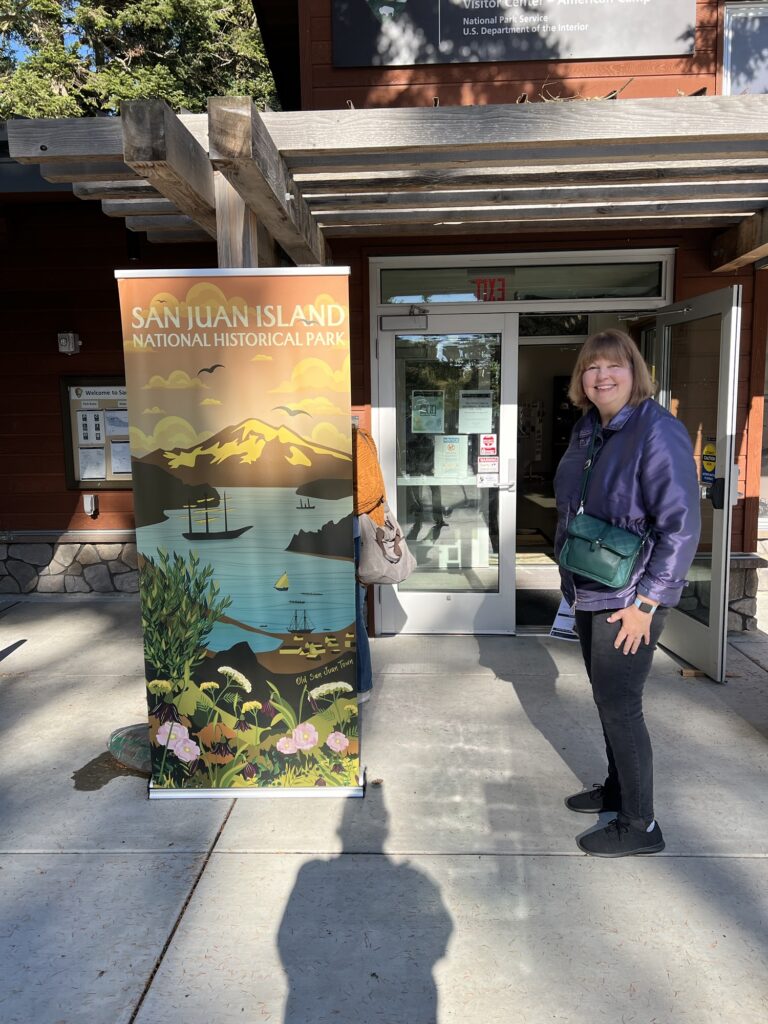
Snug Harbor Resort & Marina: A Hidden Gem on Mitchell Bay
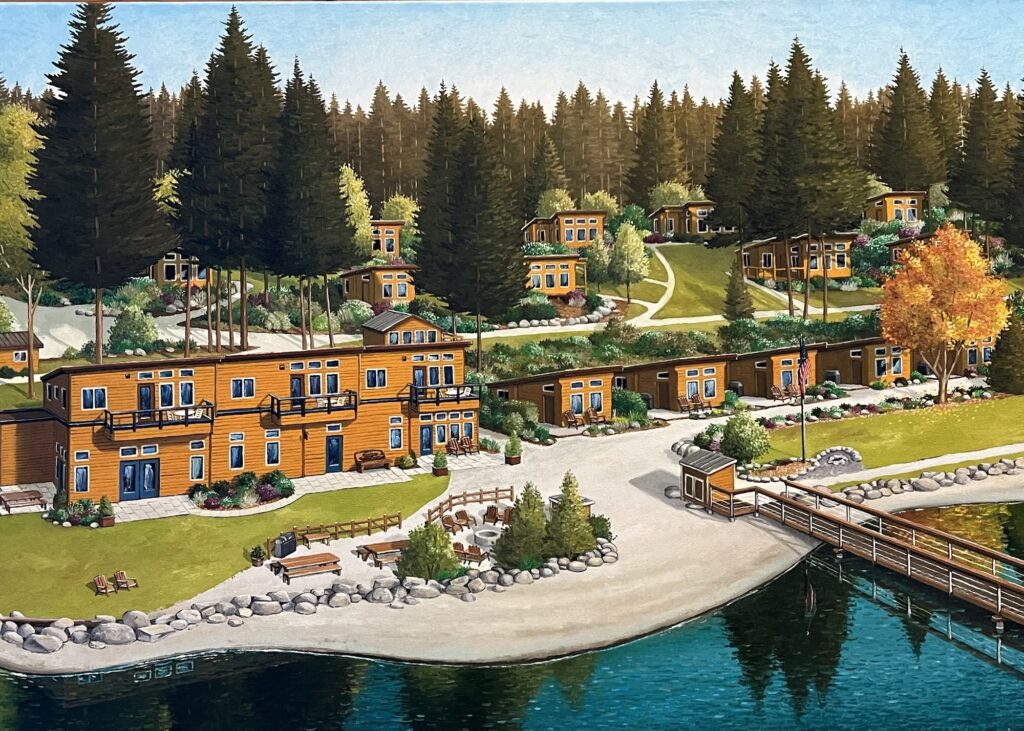
Located on the west side of San Juan Island, Snug Harbor Resort & Marina has been welcoming visitors since the early 1960s and remains one of the premier waterfront destinations in the San Juan Islands. The resort occupies a sheltered position on peaceful Mitchell Bay, offering private cabins, waterfront suites, a marina, kayak access, and immediate proximity to many of the island’s most significant historic and natural attractions.
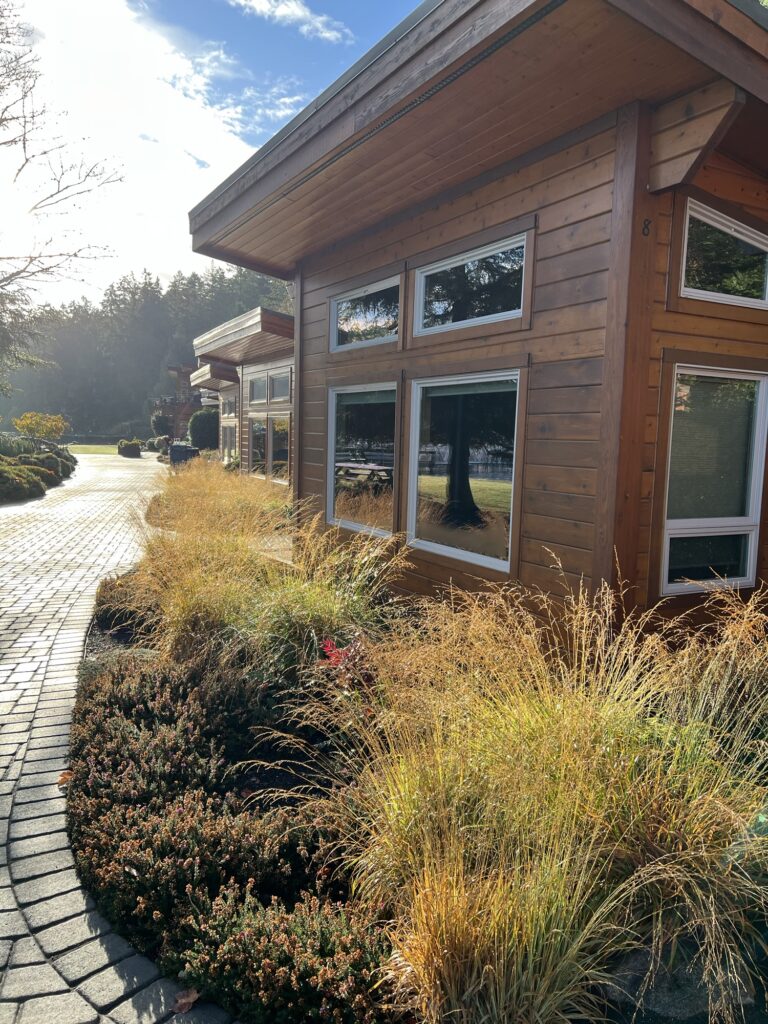
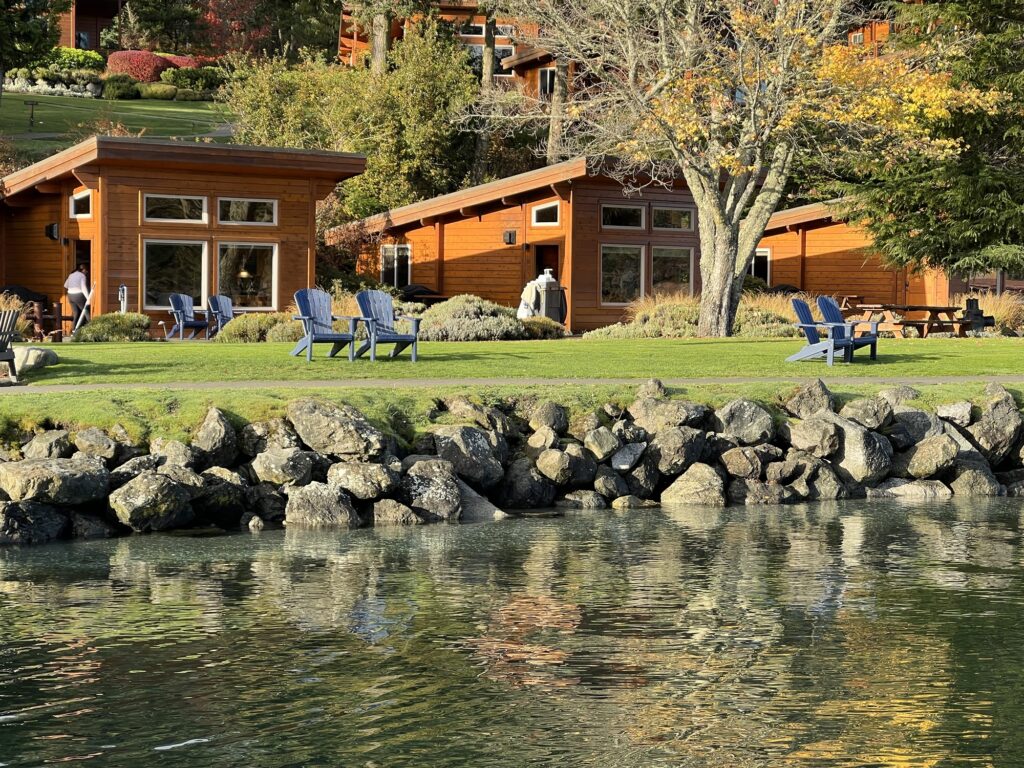
Today the resort presents a modern Pacific Northwest architectural aesthetic featuring extensive glass, vaulted ceilings, contemporary interiors, waterfront decks, and carefully landscaped grounds. Much of the property was comprehensively redeveloped during the early 2010s, with older rustic cabins replaced by newly constructed waterfront accommodations, a coffee shop, expanded marina facilities, and event spaces.
Why Visitors Love Snug Harbor
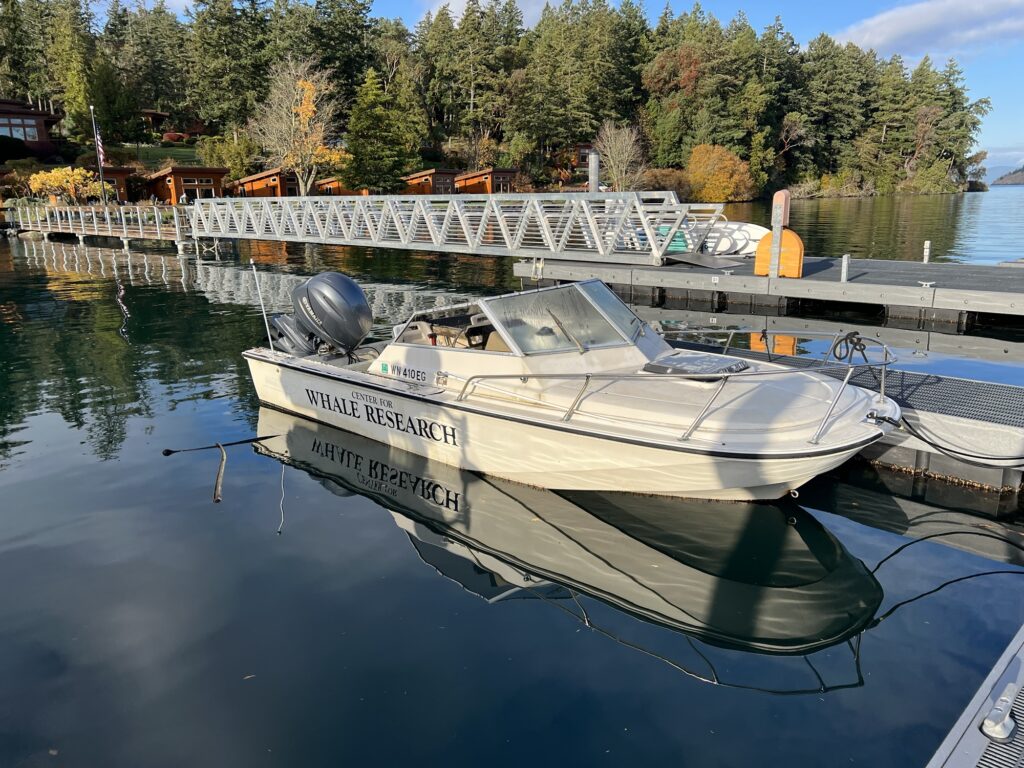
Boaters
One of only two marinas on San Juan Island’s west side. – Excellent access to whale-watching waters, fishing grounds, crabbing areas, and cruising routes toward Stuart Island and the Gulf Islands.
Kayakers
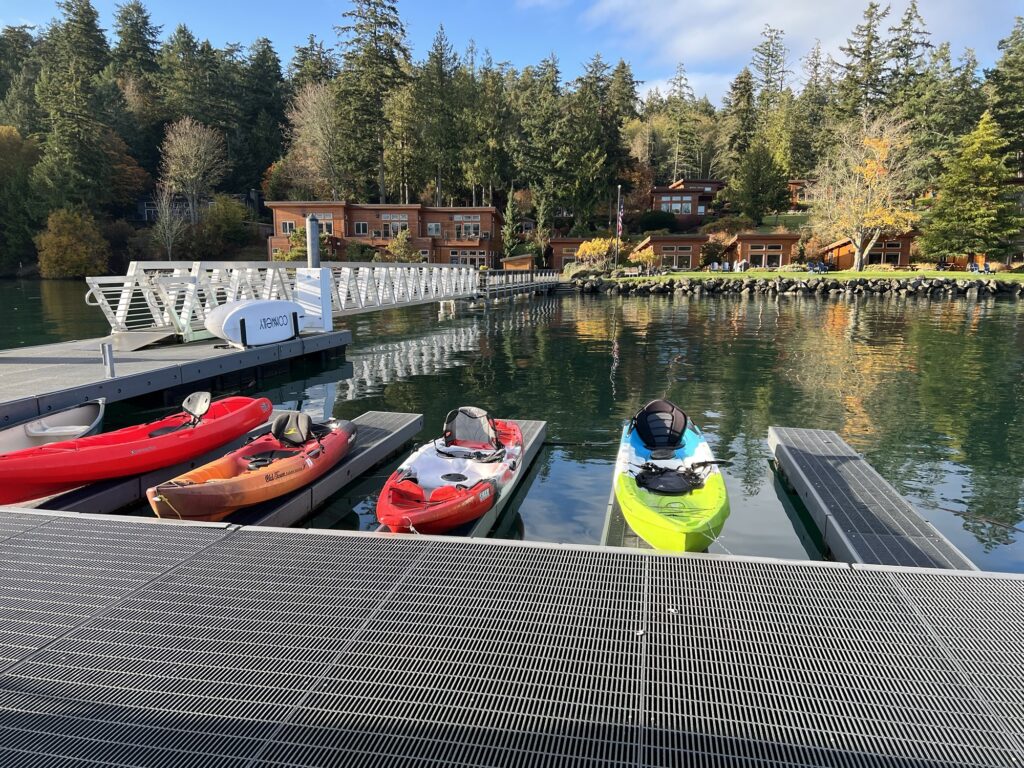
Complimentary kayaks and paddleboards are available for guests. – Mitchell Bay provides protected paddling conditions well suited for families and recreational kayakers.
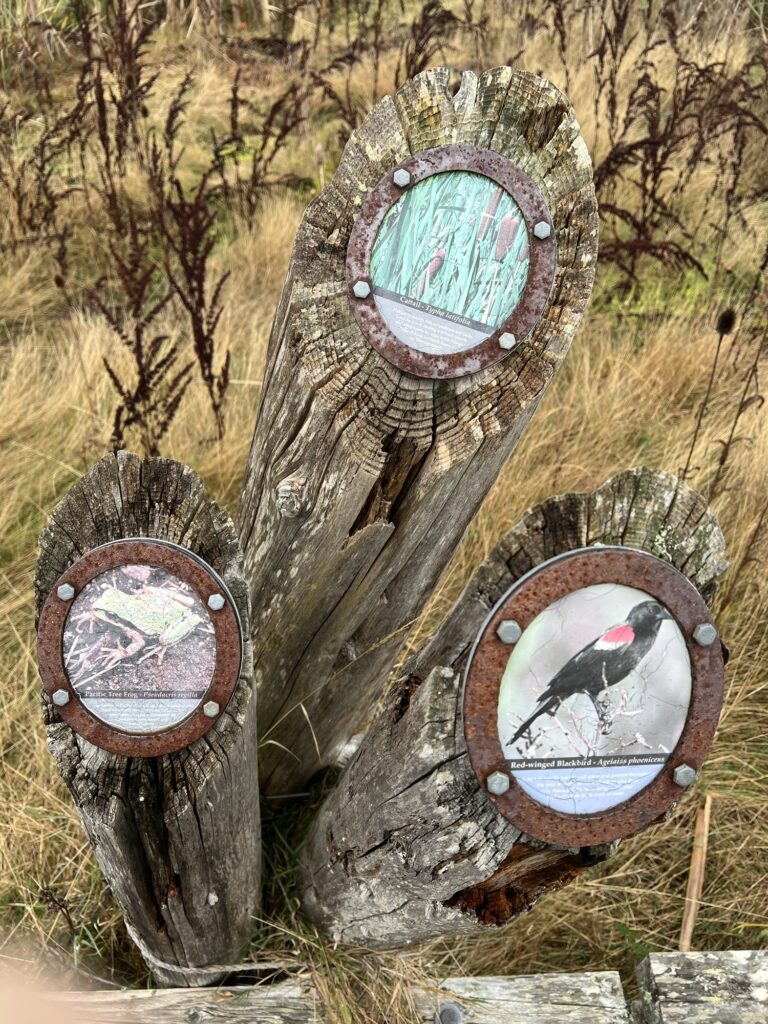
Birders and Naturalists
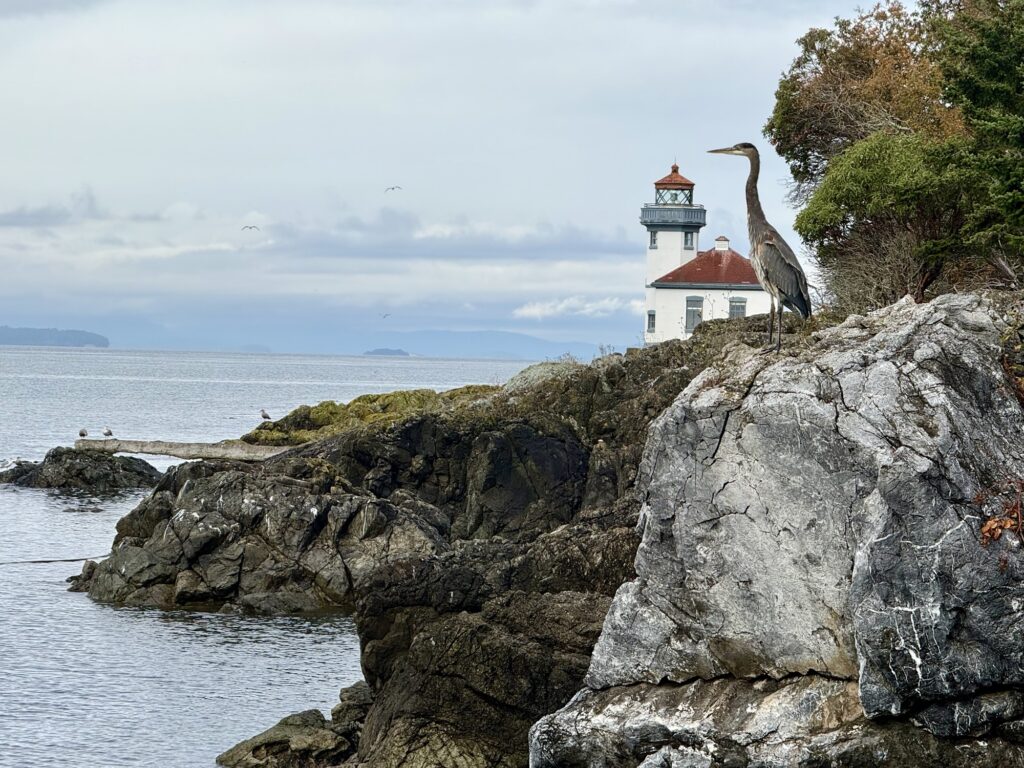
Bald eagles, great blue herons, kingfishers, cormorants, waterfowl, harbor seals, and occasional porpoises are regularly observed from the shoreline.
Architects and Artists
Contemporary cabin design is carefully integrated into the landscape. Soft marine light, forested ridges, tidal flats, and working boats create outstanding sketching and photographic opportunities.
Moonrise Over Mitchell Bay
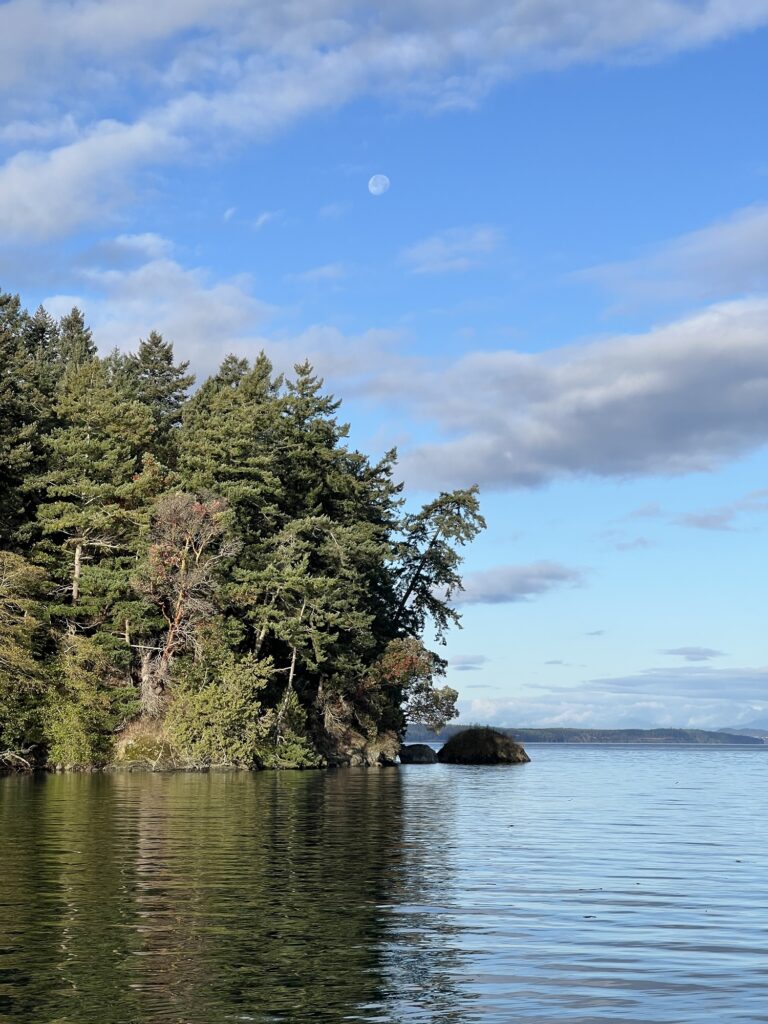
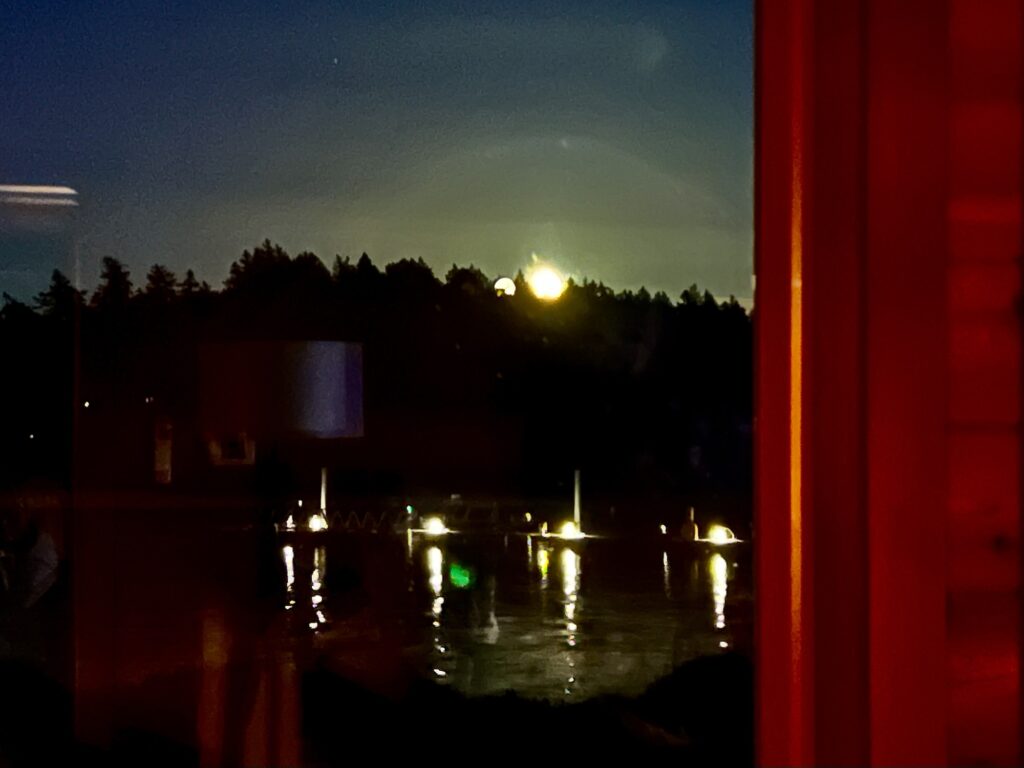
Because many accommodations face east across the bay, guests can enjoy spectacular moonrises, especially near the full moon. Reflections across the sheltered water often create some of the most memorable evening views on the island.
The Pig War
San Juan Island is home to one of North America’s most remarkable diplomatic stories. Following the 1846 Oregon Treaty, Great Britain and the United States agreed that their border would extend west along the 49th parallel and continue through “the channel” separating Vancouver Island from the mainland. Unfortunately, two channels fit the description: Haro Strait and Rosario Strait. As a result, both countries claimed the San Juan Islands. Tensions simmered for more than a decade. Everything changed on June 15, 1859.
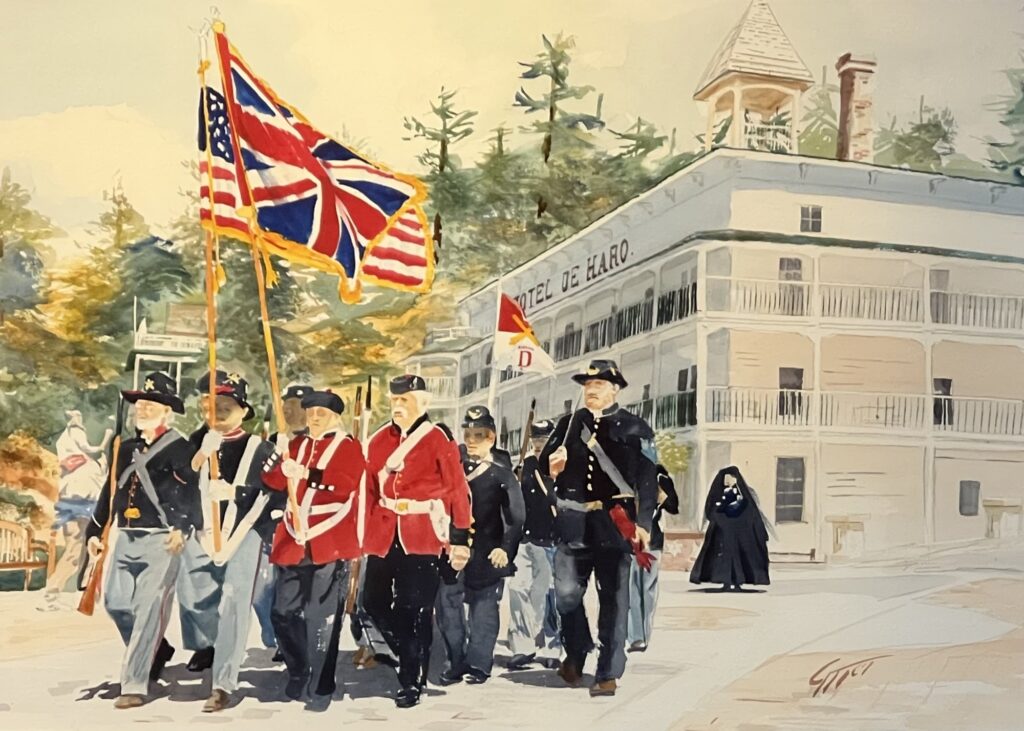
An American settler named Lyman Cutlar discovered a pig rooting through his potato patch and shot it. Unfortunately, the pig belonged to the British-owned Hudson’s Bay Company. What should have been a simple property dispute escalated into an international crisis. When British authorities threatened legal action, American settlers requested military protection. U.S. troops landed on the island, and British naval vessels soon arrived. Hundreds of soldiers and sailors faced one another while diplomats searched for a solution. Remarkably, no shots were fired.
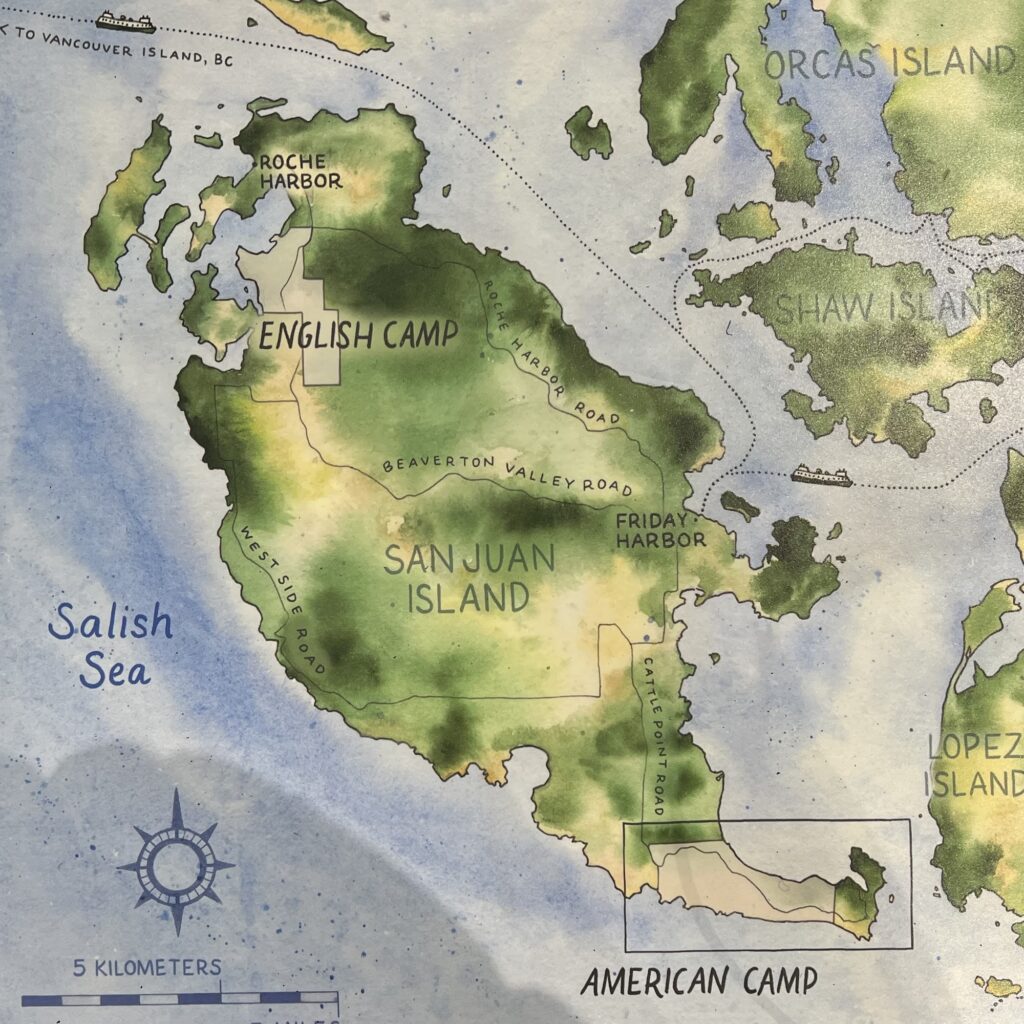
The only casualty of the entire Pig War was the pig itself. The two nations eventually agreed to jointly occupy the island while arbitration proceeded. In 1872, Germany’s Kaiser Wilhelm I awarded the San Juan Islands to the United States, peacefully ending the dispute.
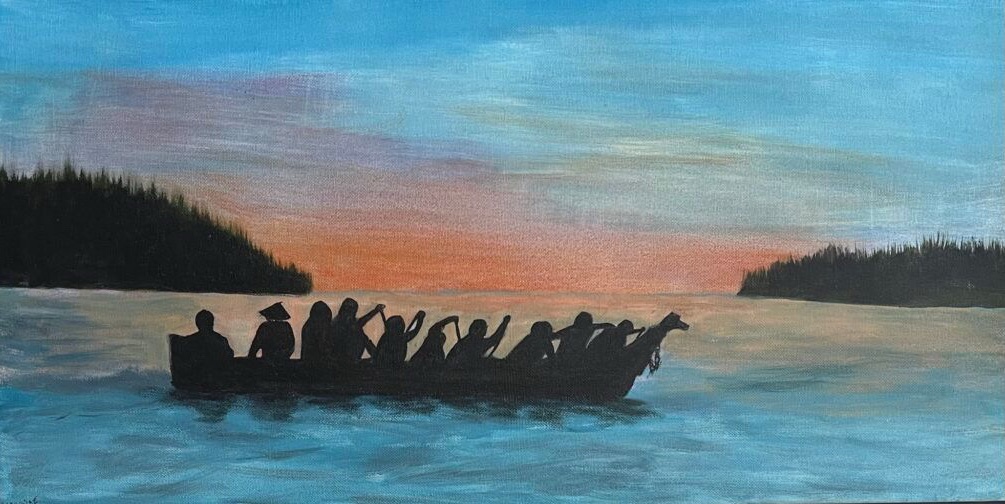
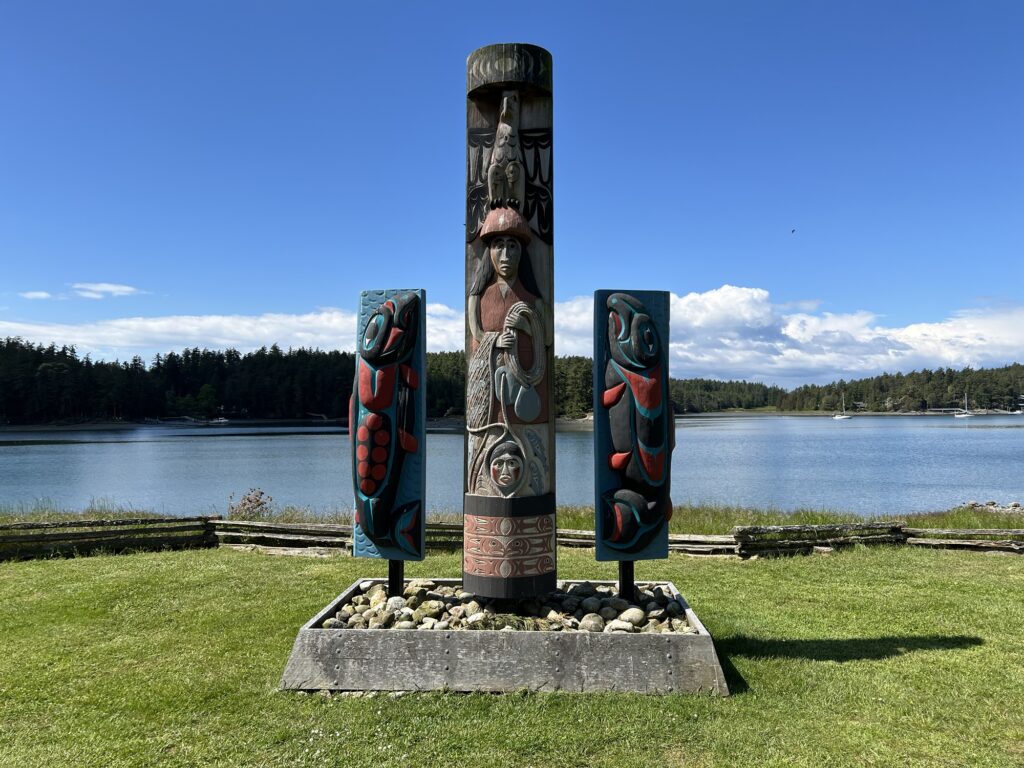
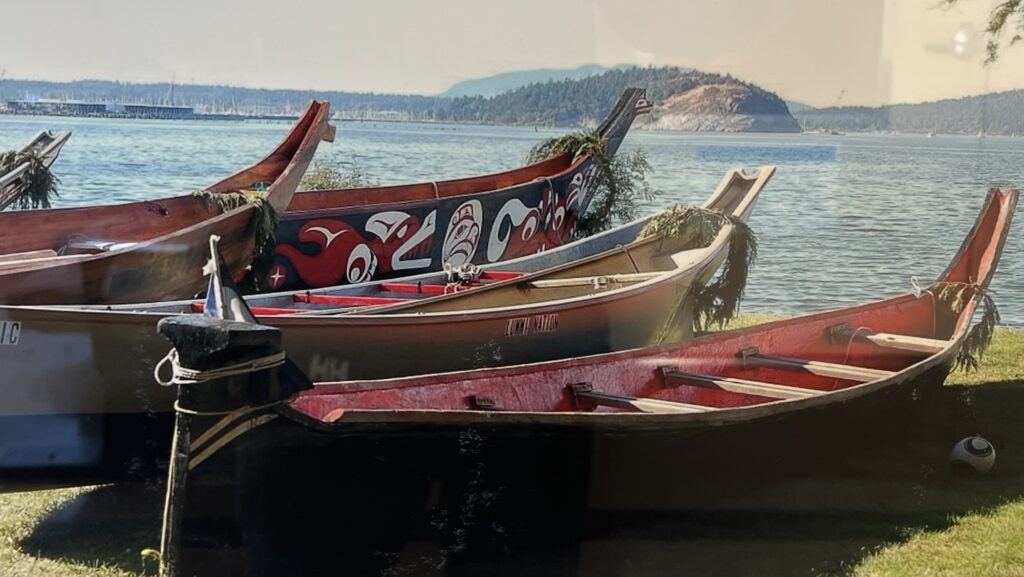
(Samish Indian Nation)
“Canoe”
Acrylic on Canvas
San Juan Island National Historical Park
Created by Congress in 1966, San Juan Island National Historical Park preserves both sides of the Pig War story through two distinct historic sites: English Camp and American Camp. What makes the park unique is that it commemorates a conflict resolved through diplomacy rather than combat. The park celebrates peaceful international relations and serves as a reminder that negotiation can be more powerful than military confrontation.
English Camp
Located on beautiful Garrison Bay, English Camp became the headquarters of the British Royal Marines during the joint occupation. British forces established the camp in 1860 and remained until the final boundary settlement in 1872.
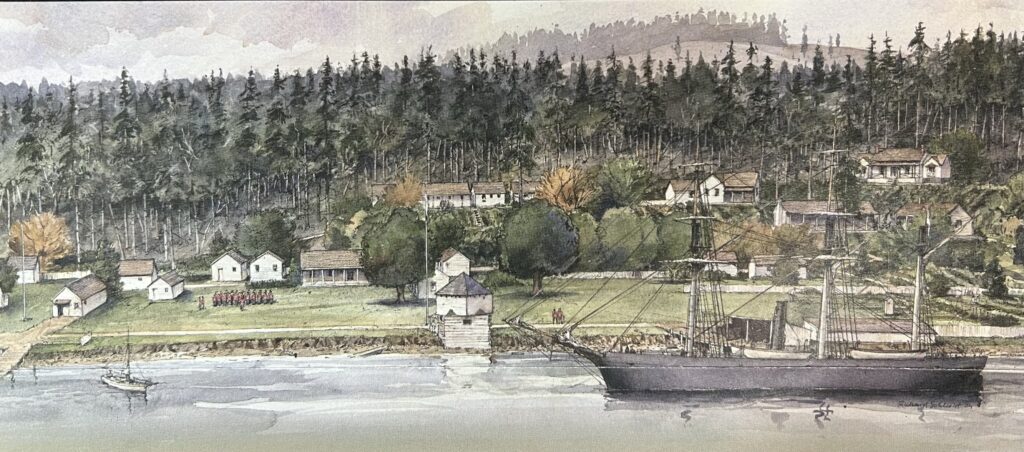
Highlights
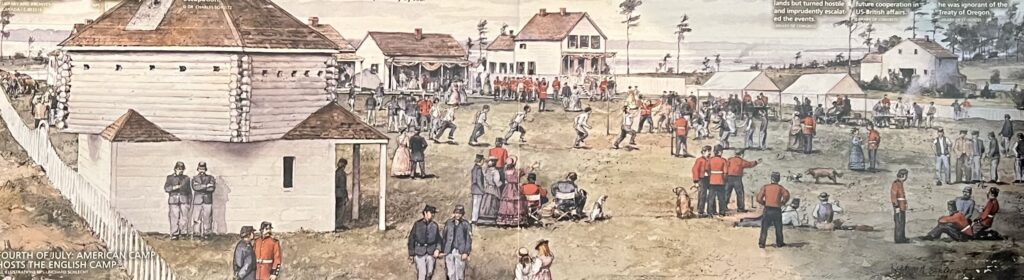
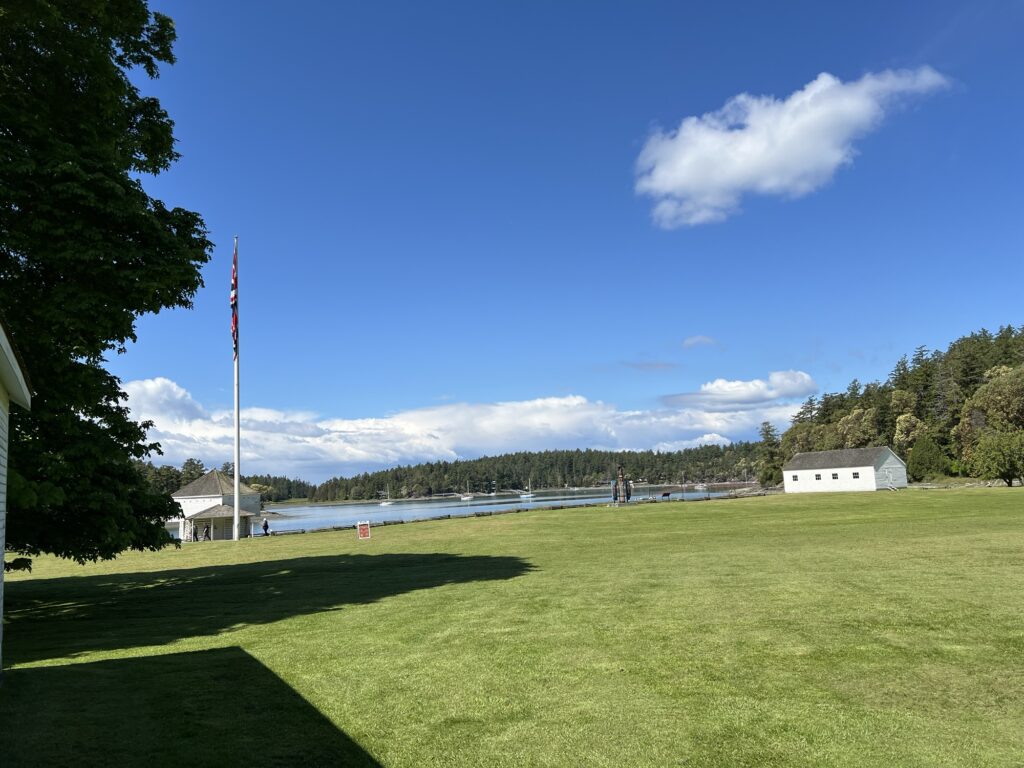
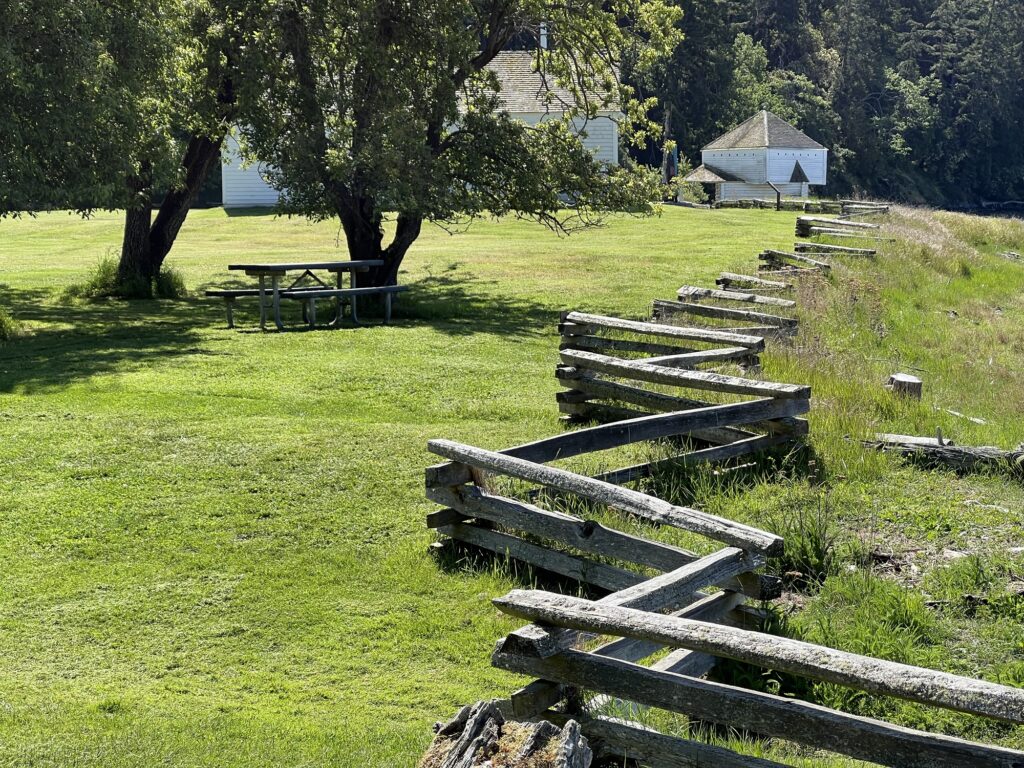
The Parade Ground
A broad lawn surrounded by forest and shoreline that once served as the center of Royal Marine activity.
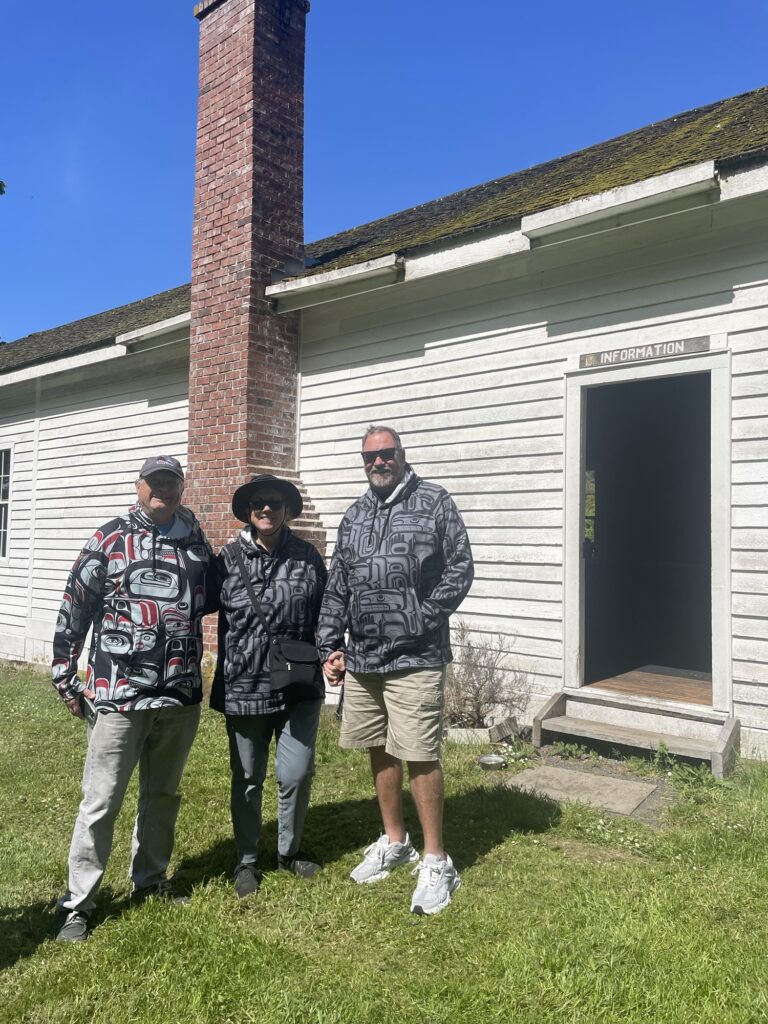
Historic Buildings
Several original structures remain, including:
- Commissary
- Barracks
- Blockhouse
- Officers’ quarters area
These buildings represent some of the best-preserved examples of British military architecture in the Pacific Northwest.
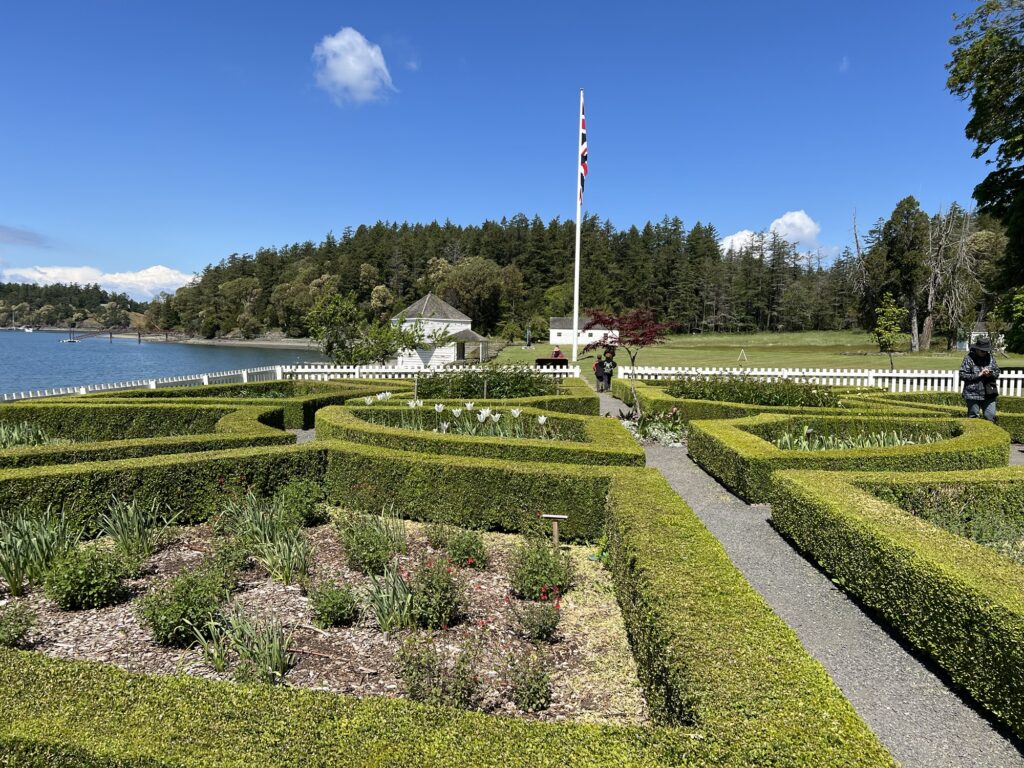
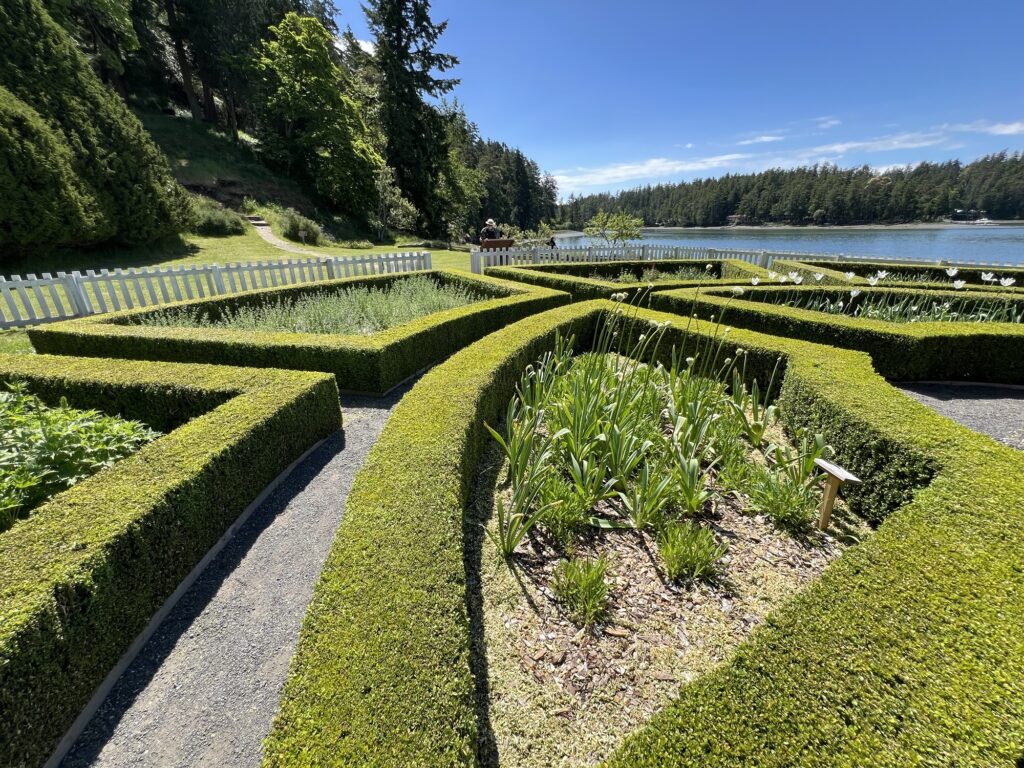
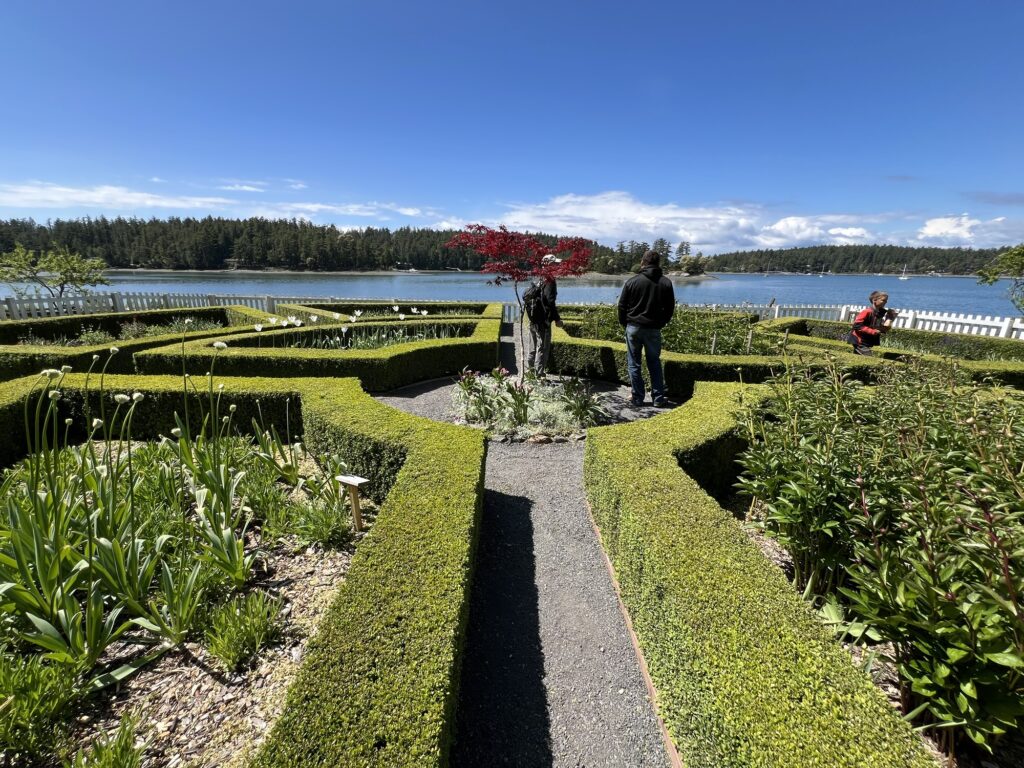
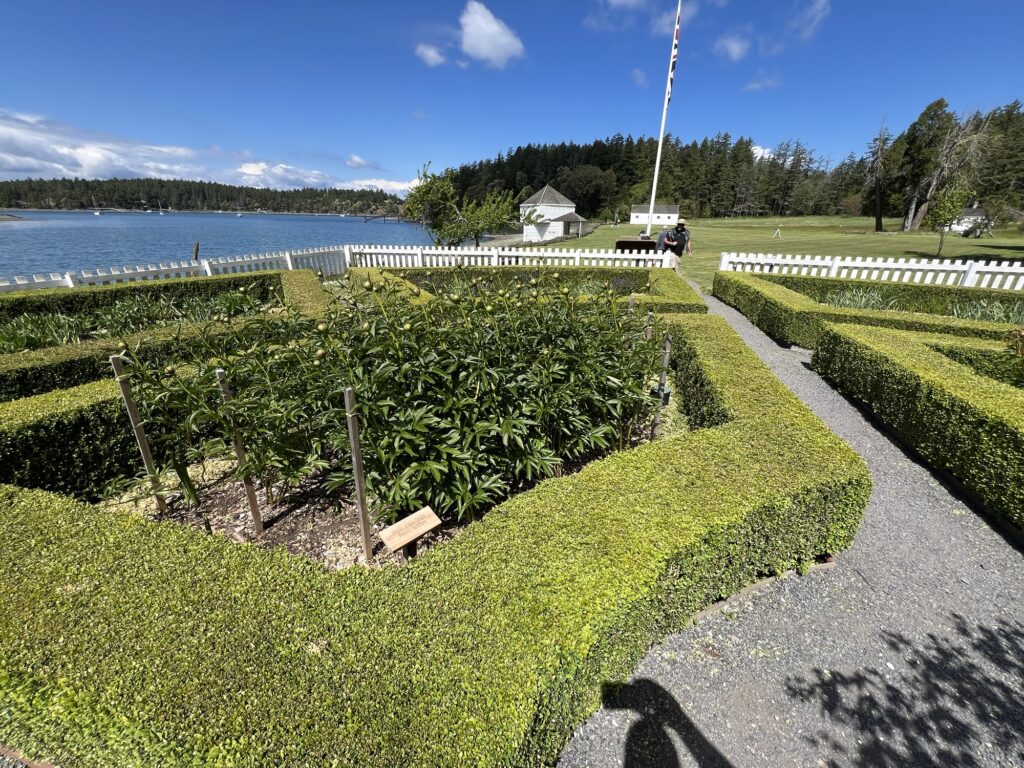
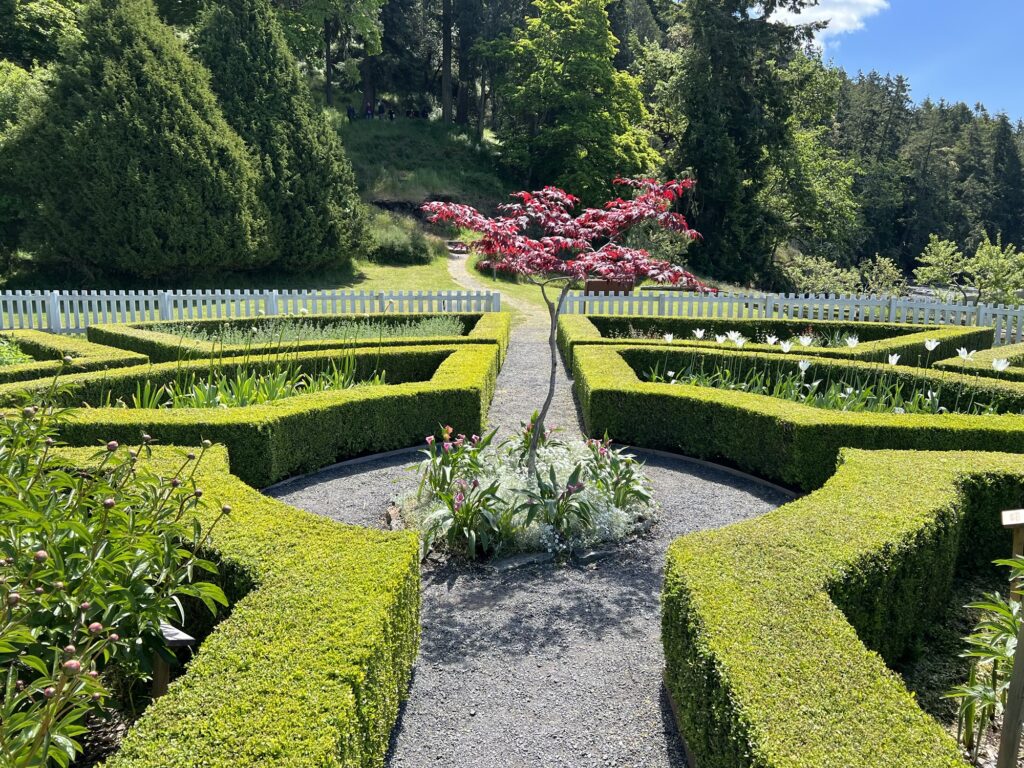
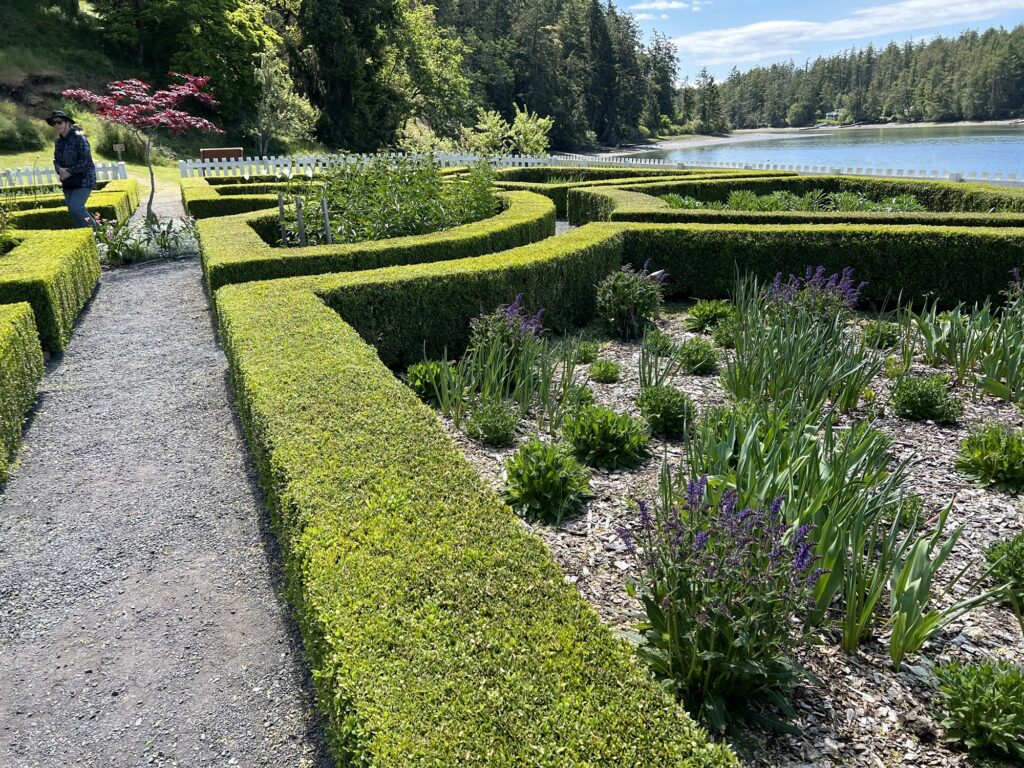
Formal Garden
Unlike the more utilitarian American Camp, British officers created decorative gardens intended to recreate a sense of home. The restored formal garden remains one of English Camp’s most charming features.
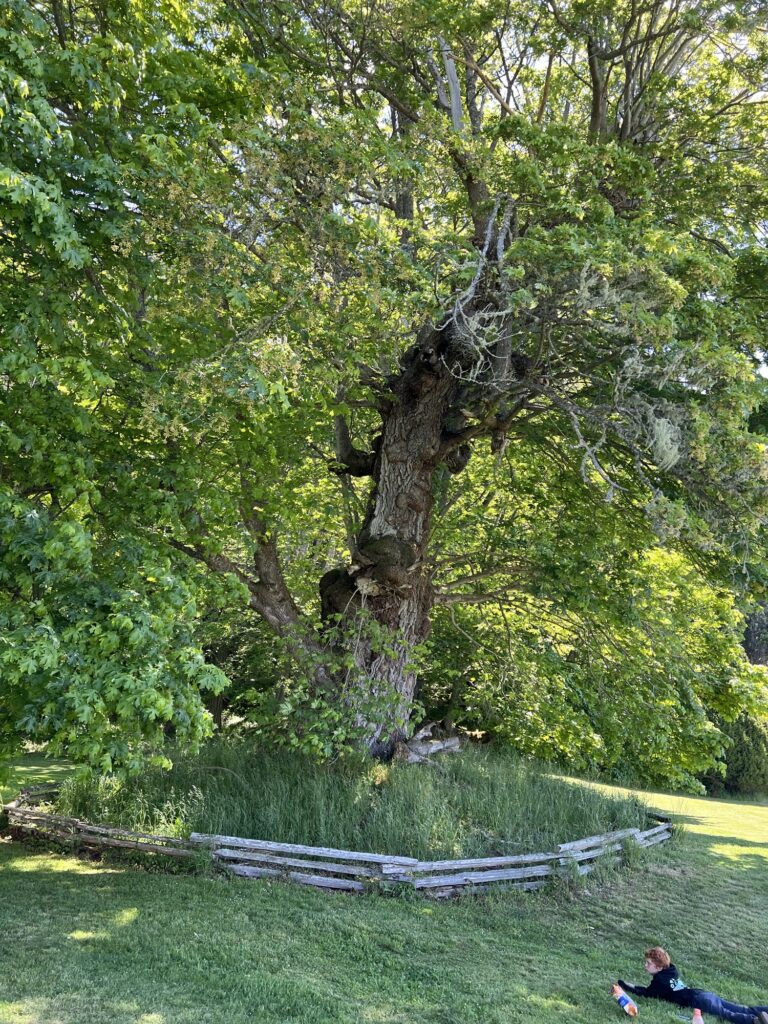
Young Hill Trail
A favorite walk from the camp climbs through mossy forest to Young Hill and the Royal Marines Cemetery. From the summit, visitors enjoy magnificent views toward Haro Strait, Vancouver Island, and the surrounding islands.
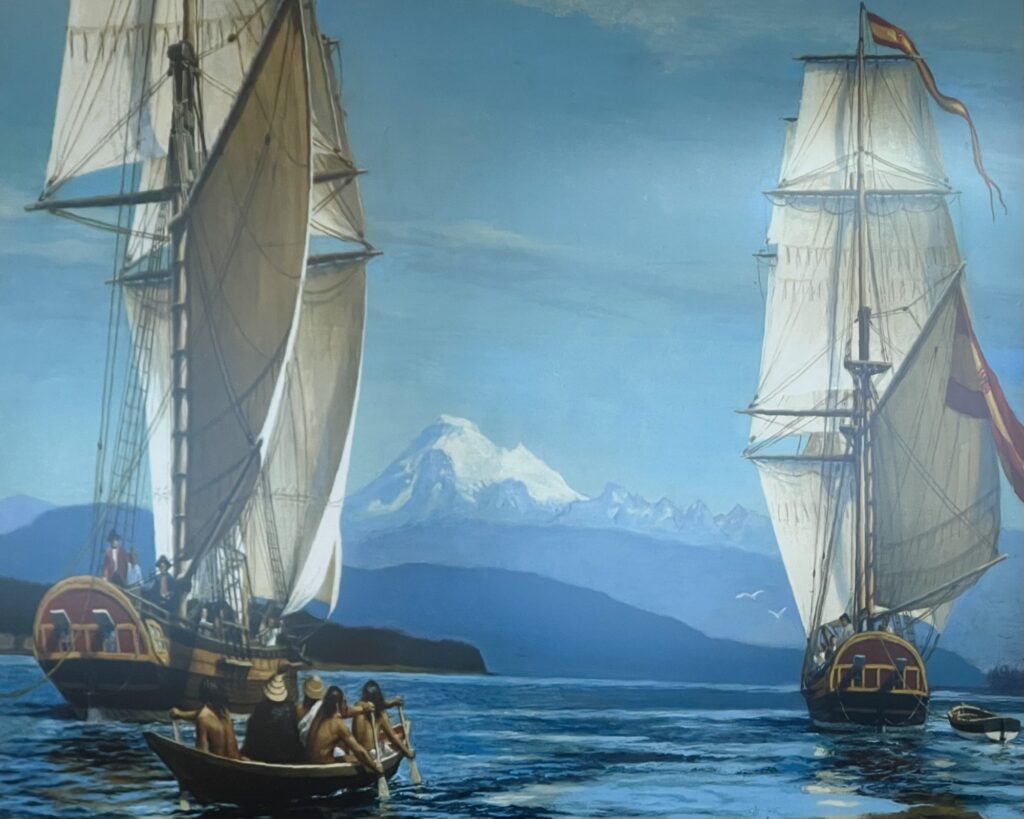
Near midday of June 11, 1792, two small Spanish ships, Sutil and Mexicana, under the commands of the young Frigate Captains Don Dionisio Alcalá-Galiano and Don Cayetano Valdés y Flores, sailed into Guemes Channel near the present city of Anacortes, Washington. Their mission was to explore and chart the waterways inside Juan de Fuca Strait and, if there would be such a channel, locate the fabled “Northwest Passage” to the Atlantic. The two little ships (about 45 feet on the waterline) had sailed here from Acapulco in southern Mexico, via Nootka Sound, where they had been refitted and provisioned. The evening before they had anchored off the southeast point of Lopez Island, and a party had gone ashore to observe the emergence of the first moon of Jupiter in order to correct their longitude. This observation was probably made on the artist’s property on Watmough Head, Lopez Island!
The light, following breeze was not strong enough to allow the two ships to buck the tidal current in the center of Guemes Channel, so they closed the south shore to take advantage of the side eddies along Fidalgo Island. Four young Indians and an older man from the village on Guemes Island paddled expertly out to the ships and traded blackberries, dried clams, and a dog-wool robe lined with feathers, for buttons and beads. The young artist on Mexicana, José Cardero, captured the incident in a spectacular painting now in the Museo Naval in Madrid. His view of the two ships in Guemes Channel, with Mount Baker looming on the horizon, was the inspiration for this painting of a setting very familiar to me. I am much indebted to Mark Myers, RSMA, F/ASMA, for detailed information on the two ships, and especially for his interpretation of José Cardero’s drawings of the unusual rigging of Mexicana’s main mast. Painting by Bill Holm
Indigenous Heritage
Long before British or American occupation, Coast Salish peoples lived on Garrison Bay. Archaeological evidence, shell middens, and reports of large Indigenous plank houses demonstrate thousands of years of human presence in the area.
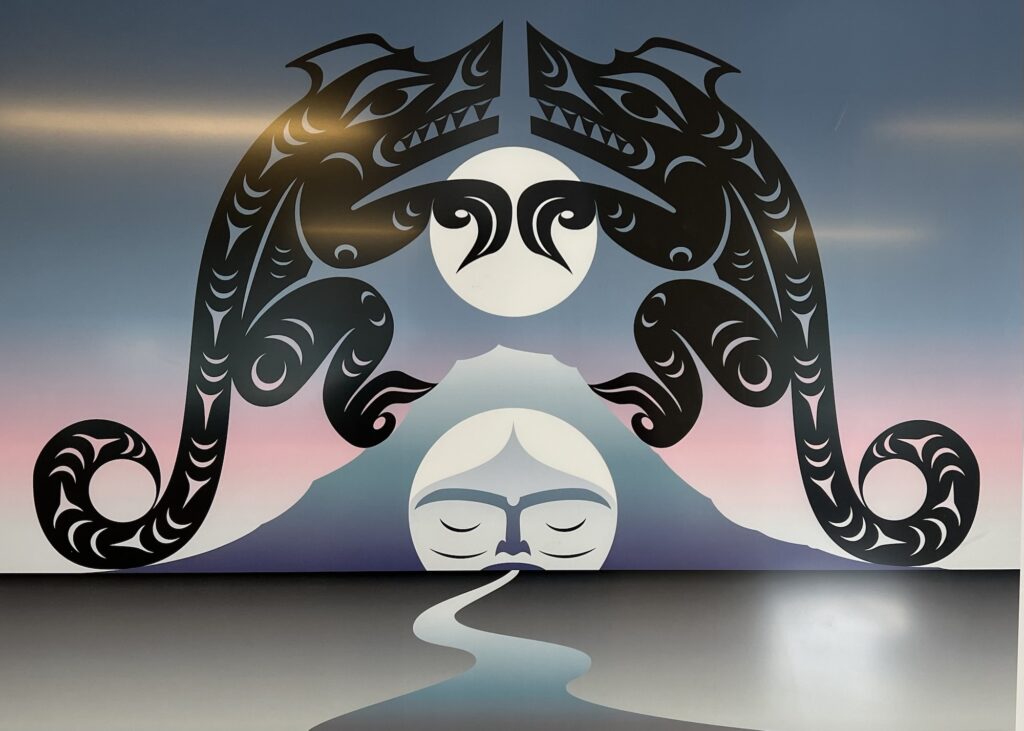
“Wolf Brothers”
Serigraph
American Camp
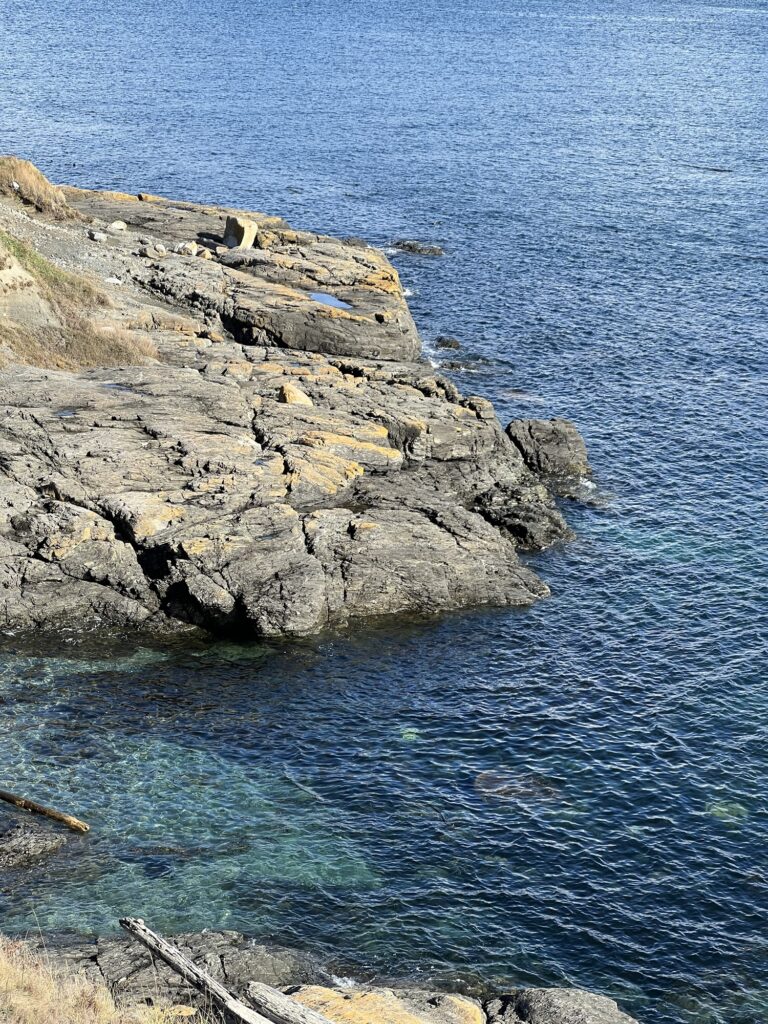
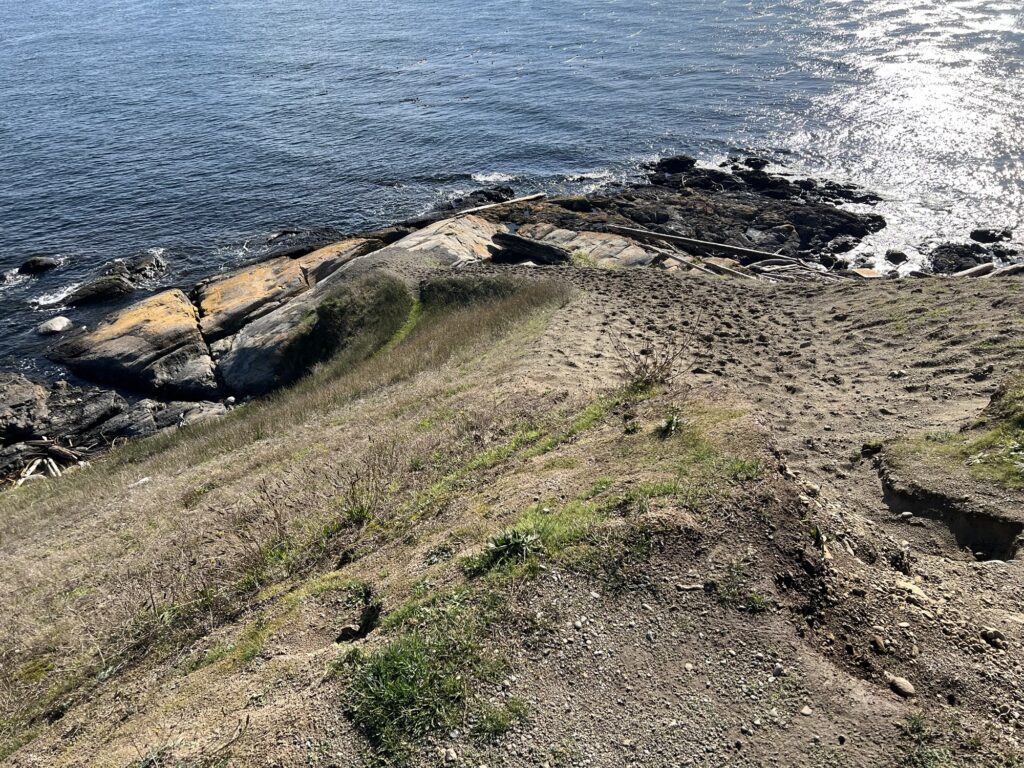
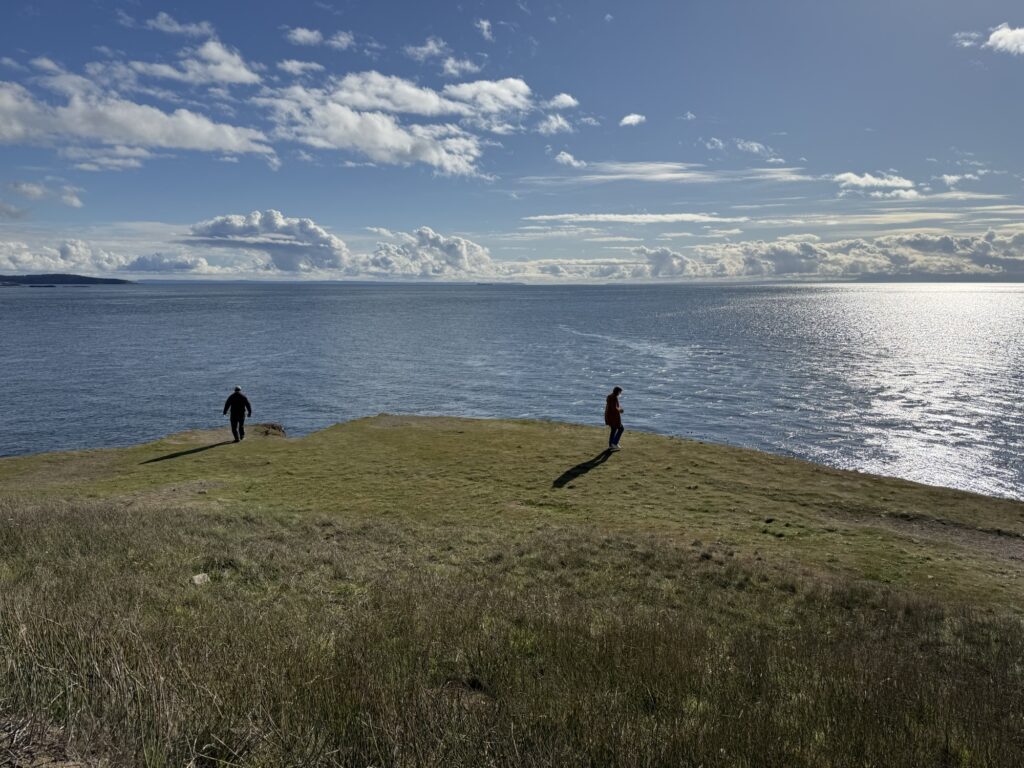
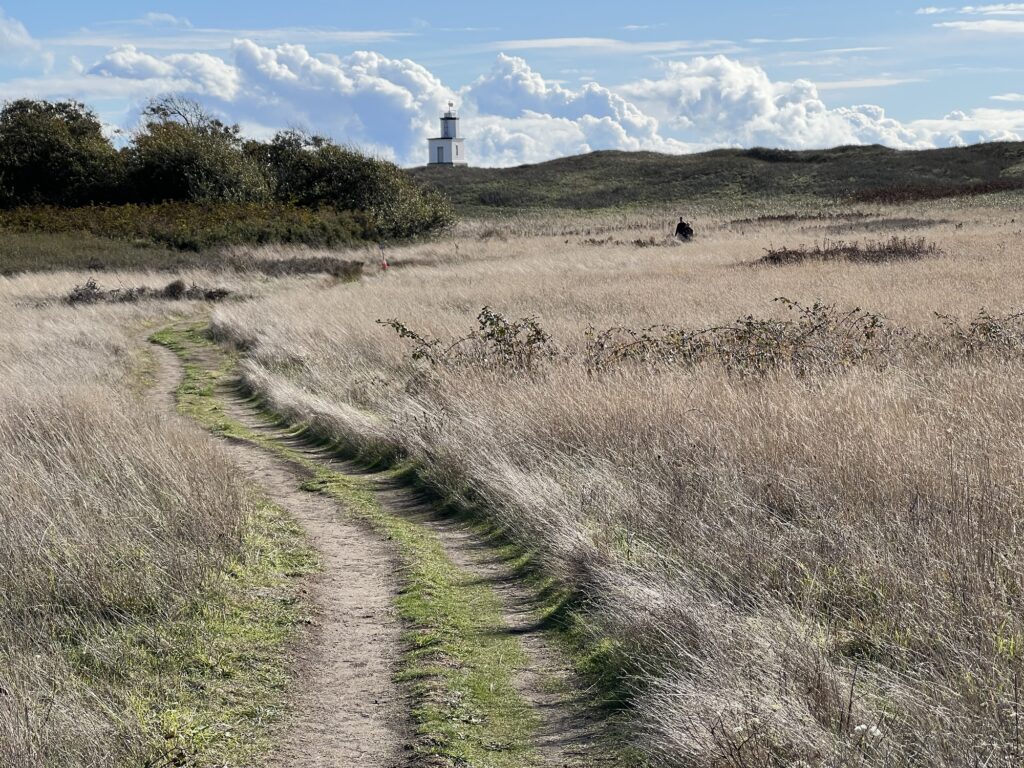
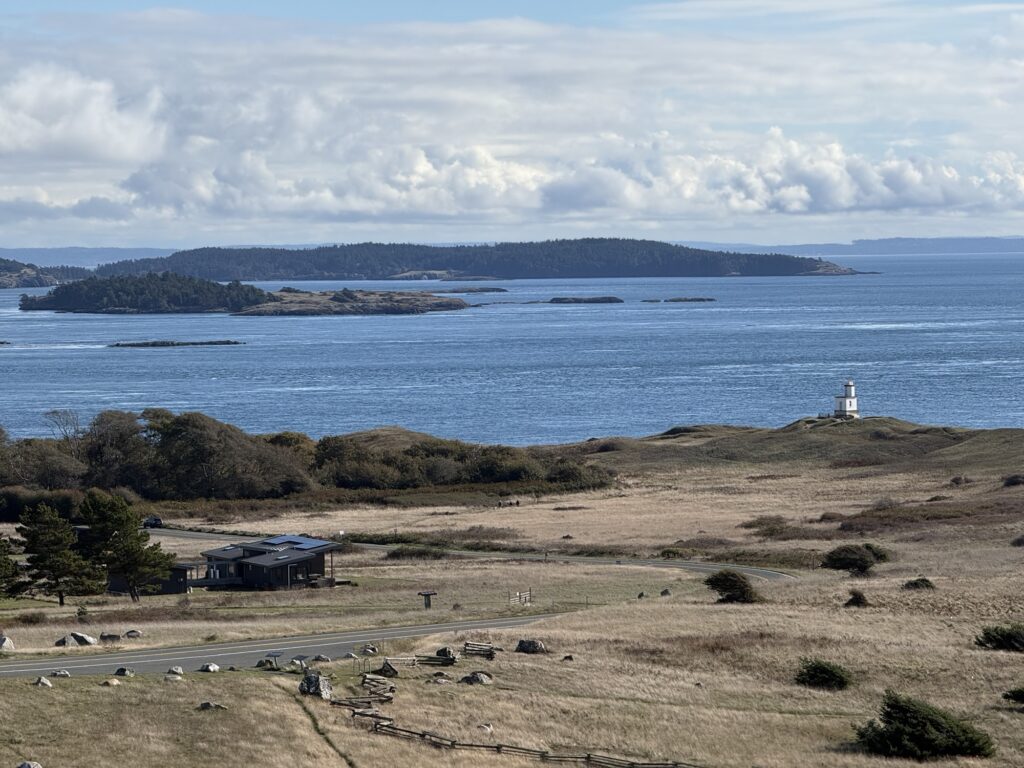
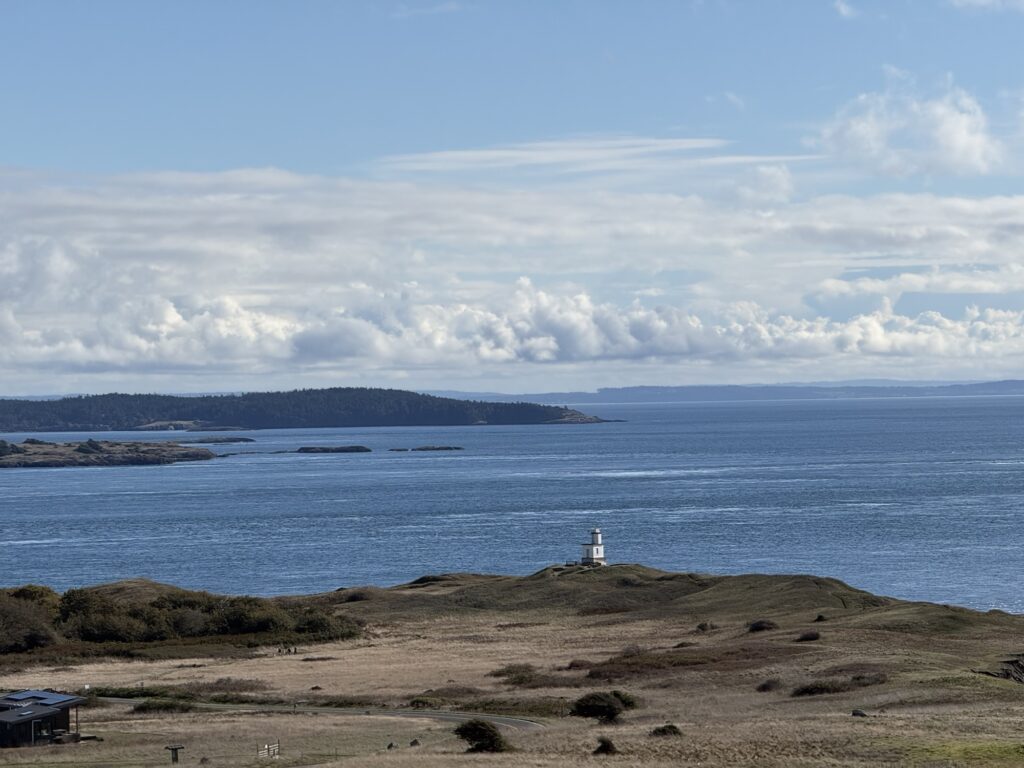
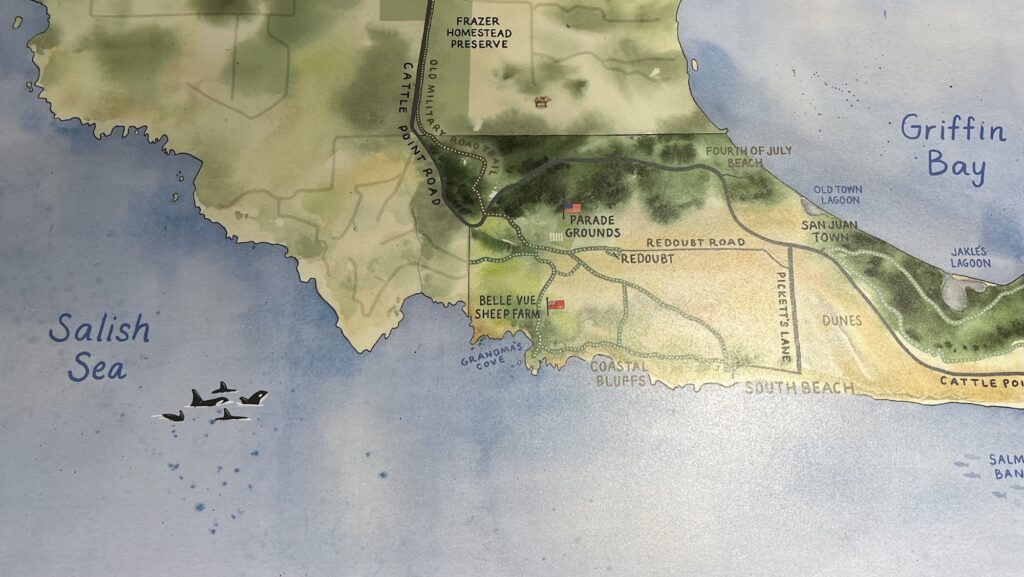
Located on the island’s southern end, American Camp housed U.S. Army forces during the joint occupation. The landscape differs dramatically from English Camp. Rather than sheltered forest and gardens, visitors encounter open prairie, coastal bluffs, and sweeping views of the Strait of Juan de Fuca and Olympic Mountains.
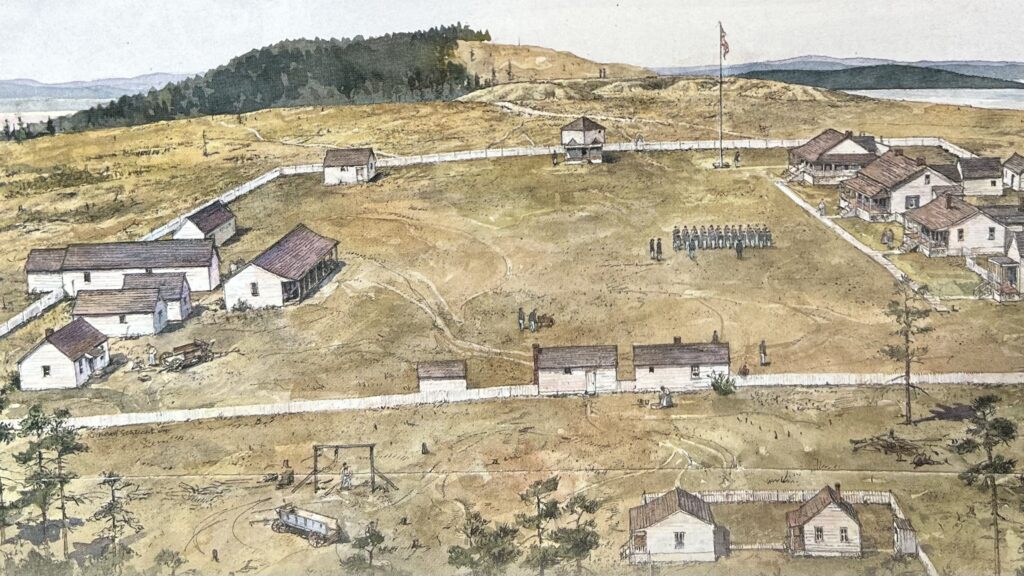
American Camp preserves the story of the U.S. military response to the Pig War and showcases one of the island’s most important historic earthworks.
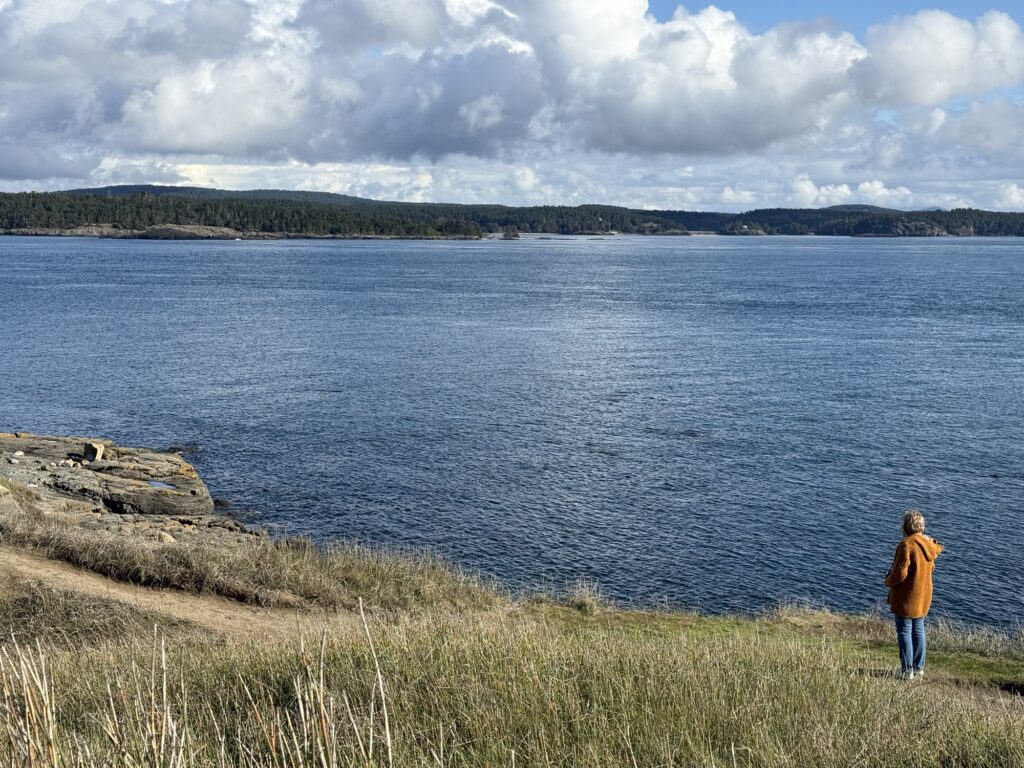
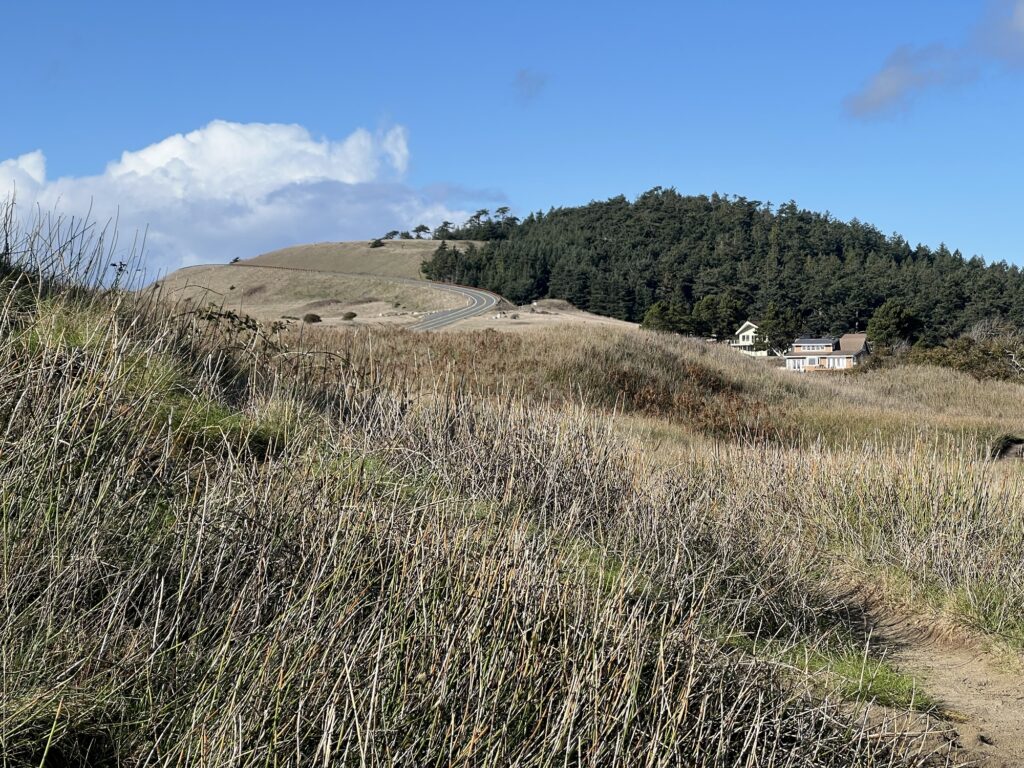
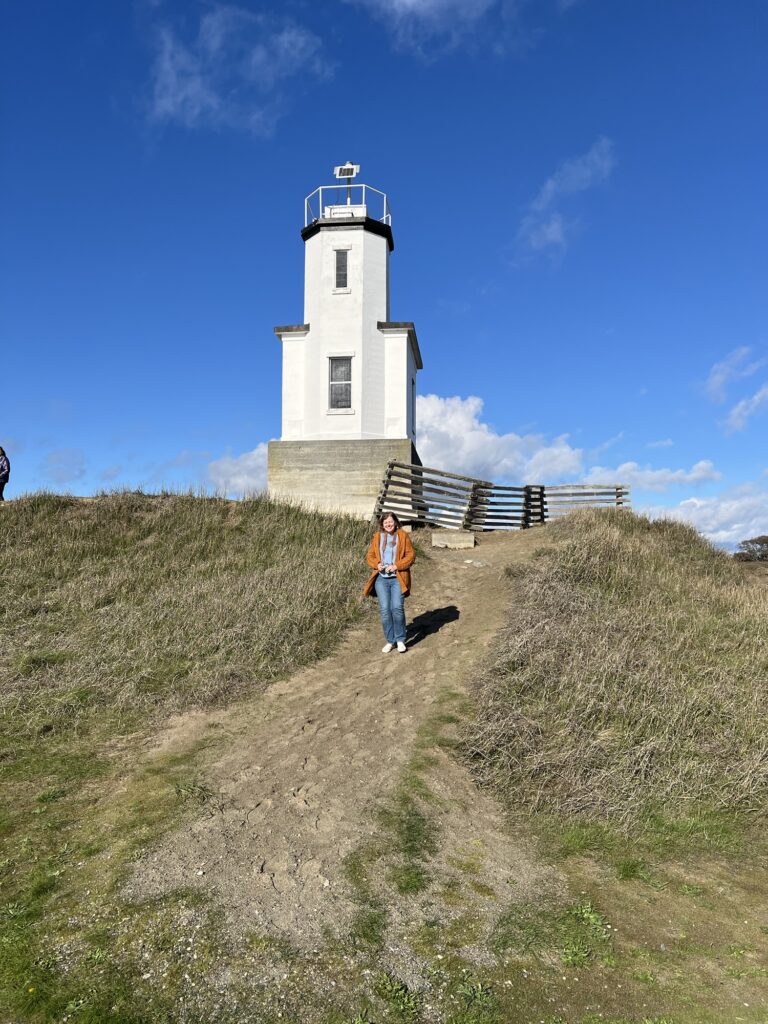
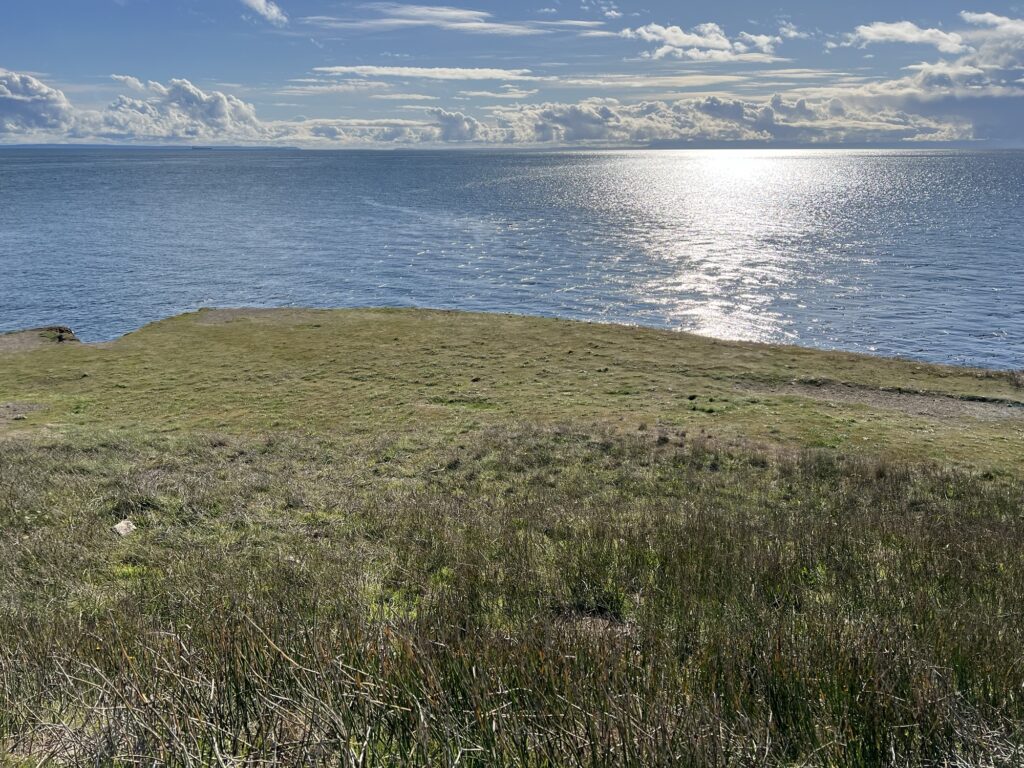
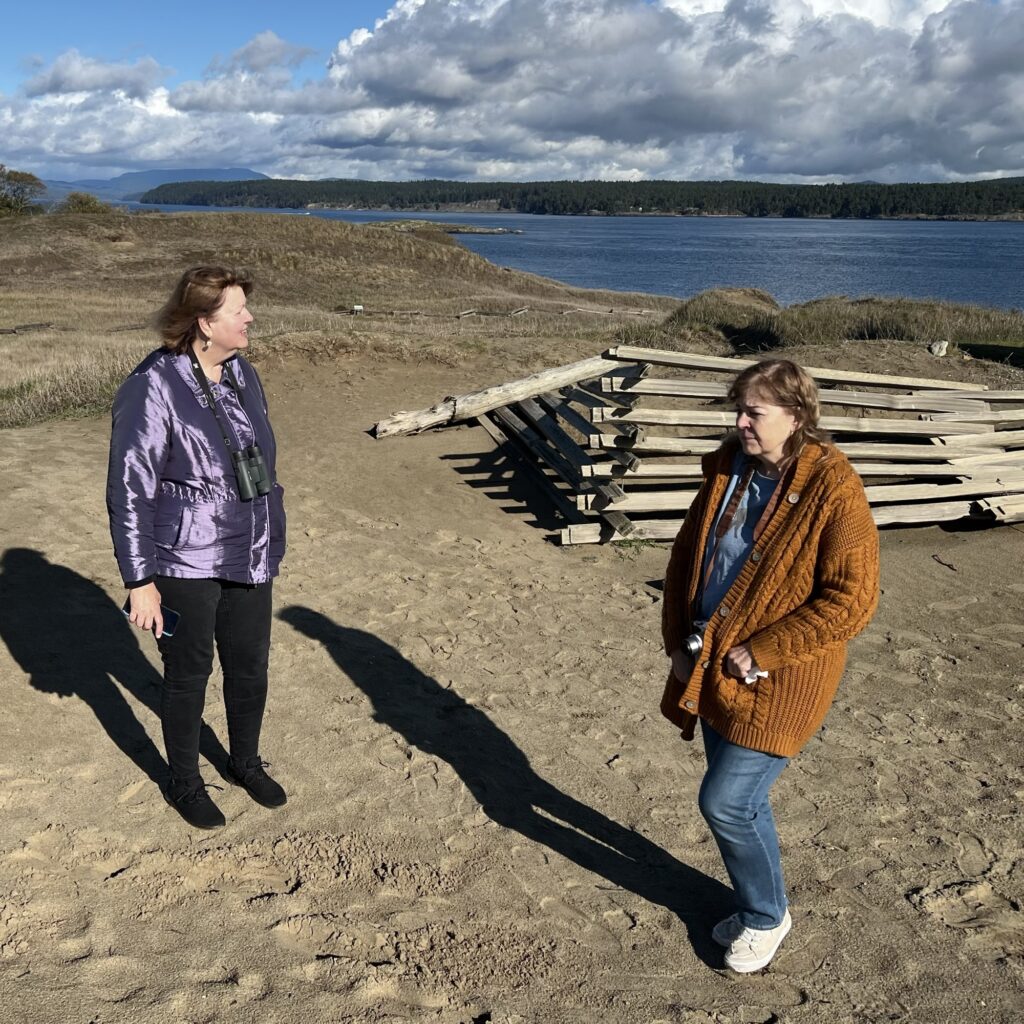
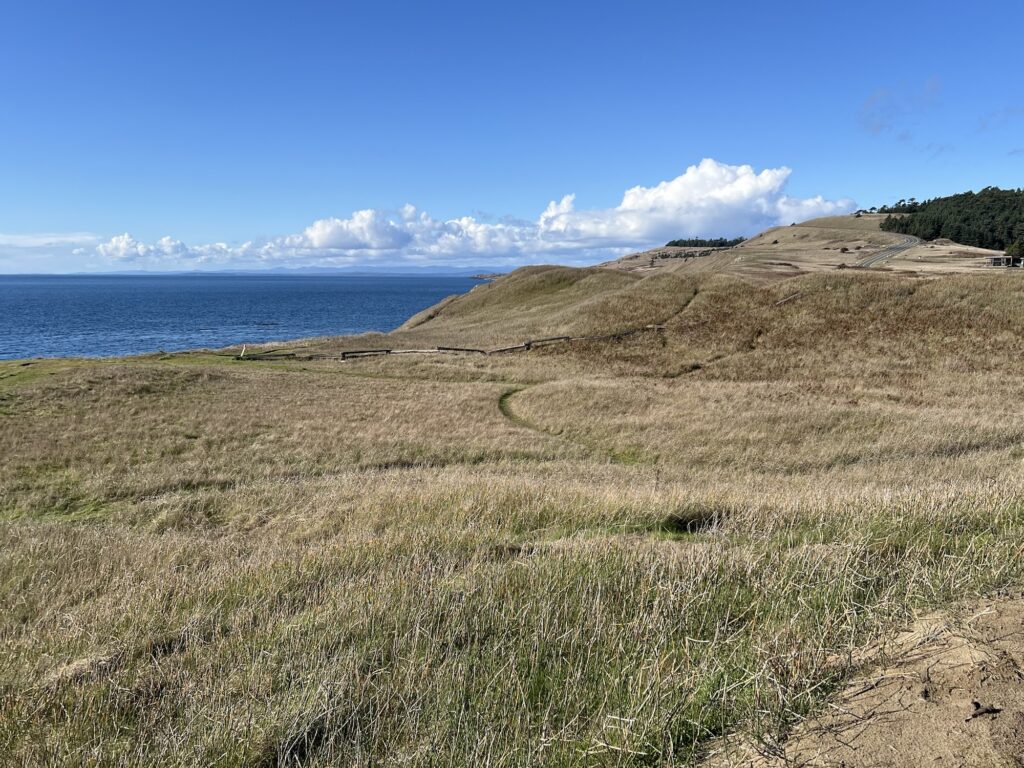
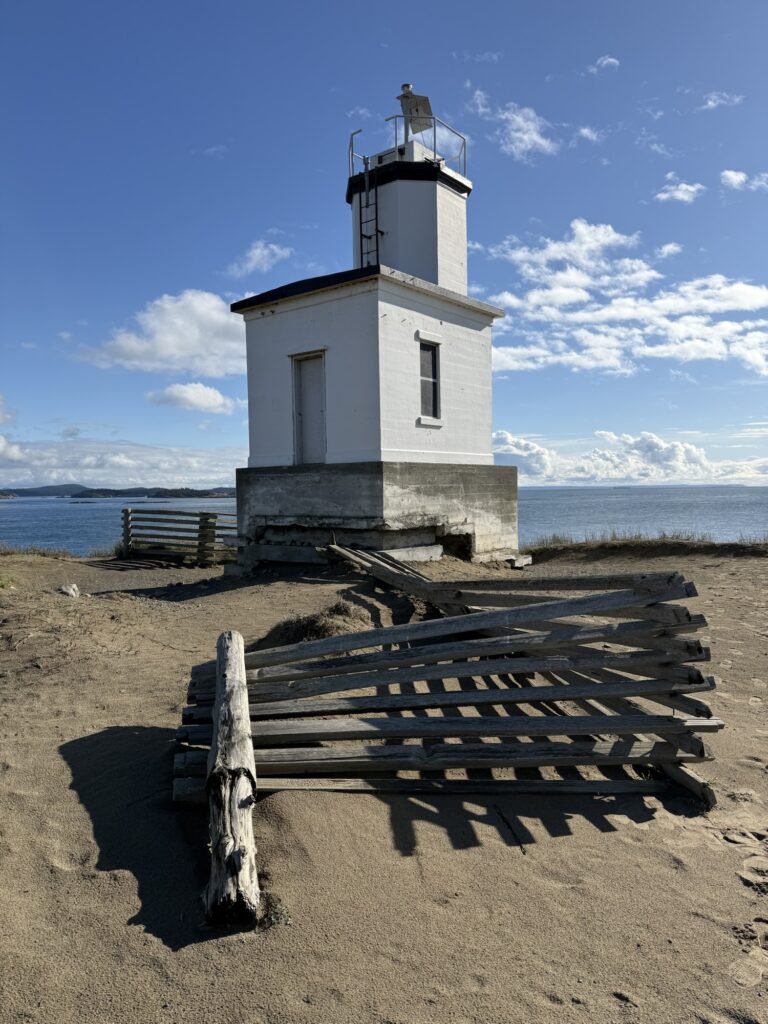
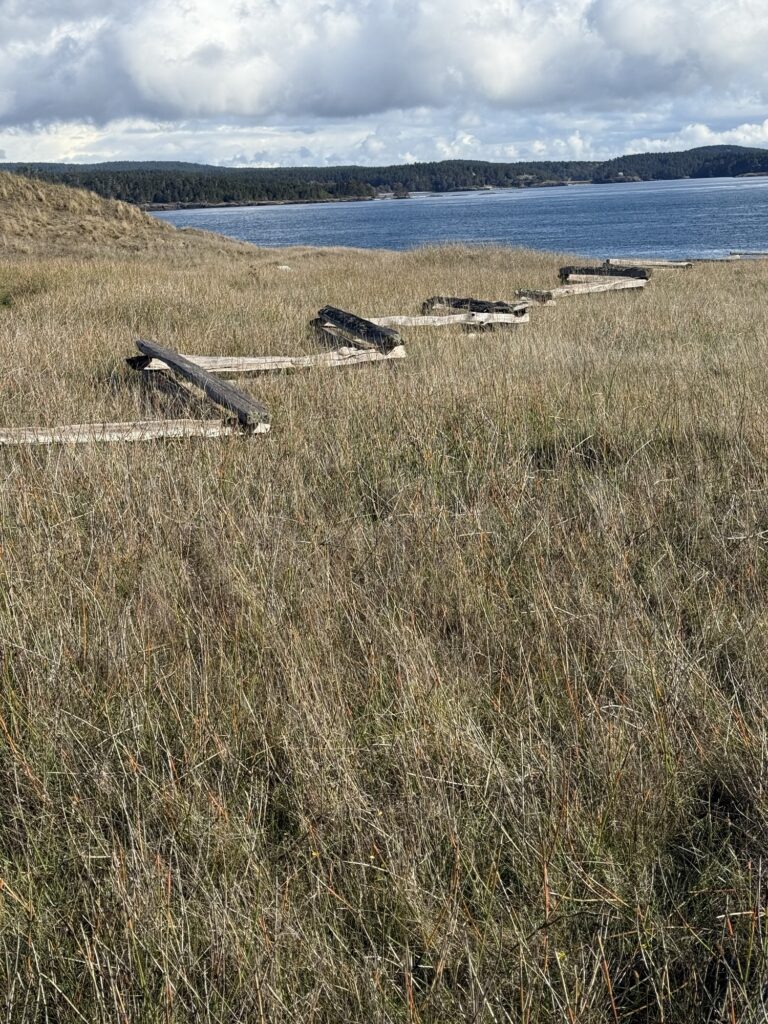
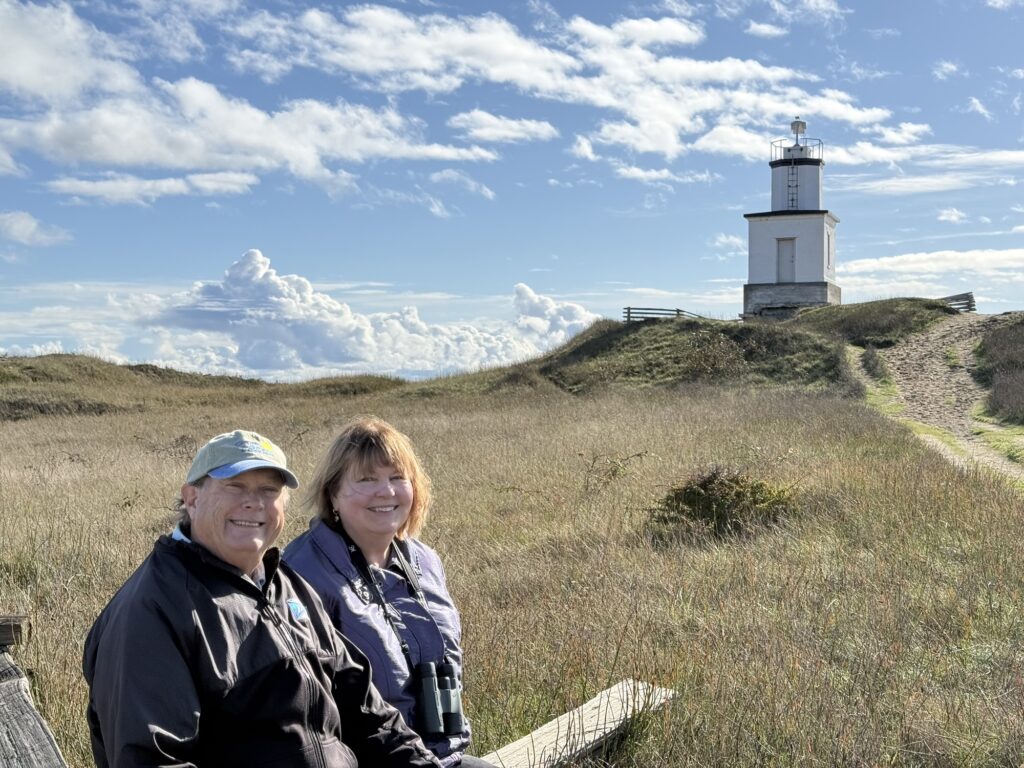
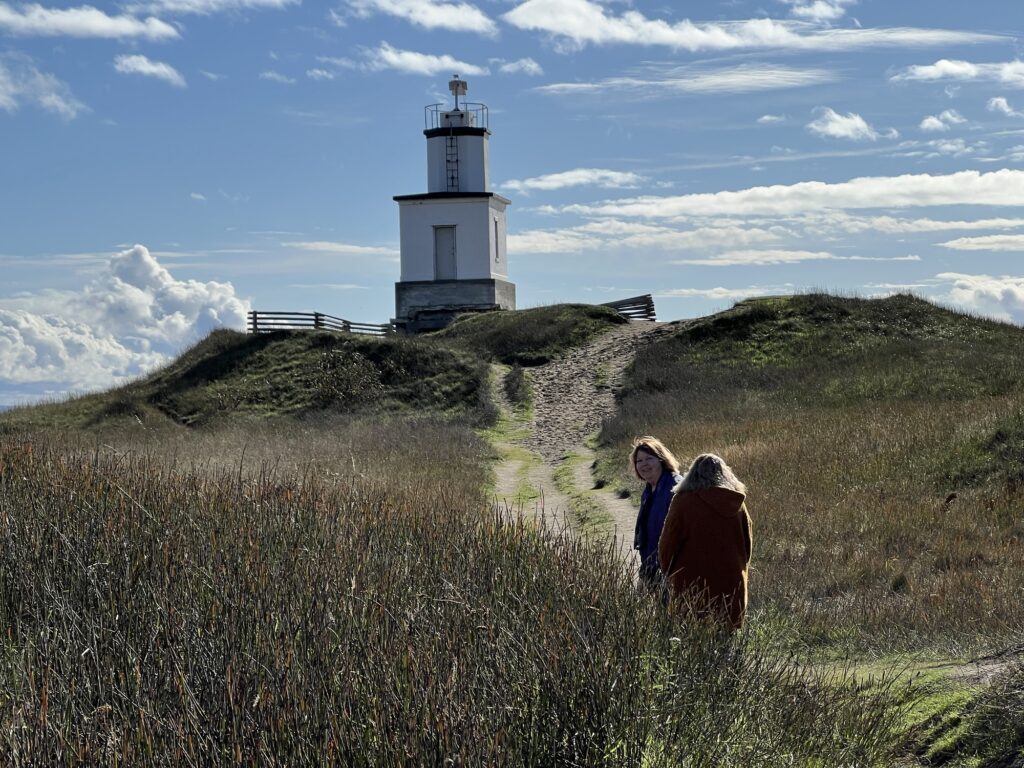
Robert’s Redoubt
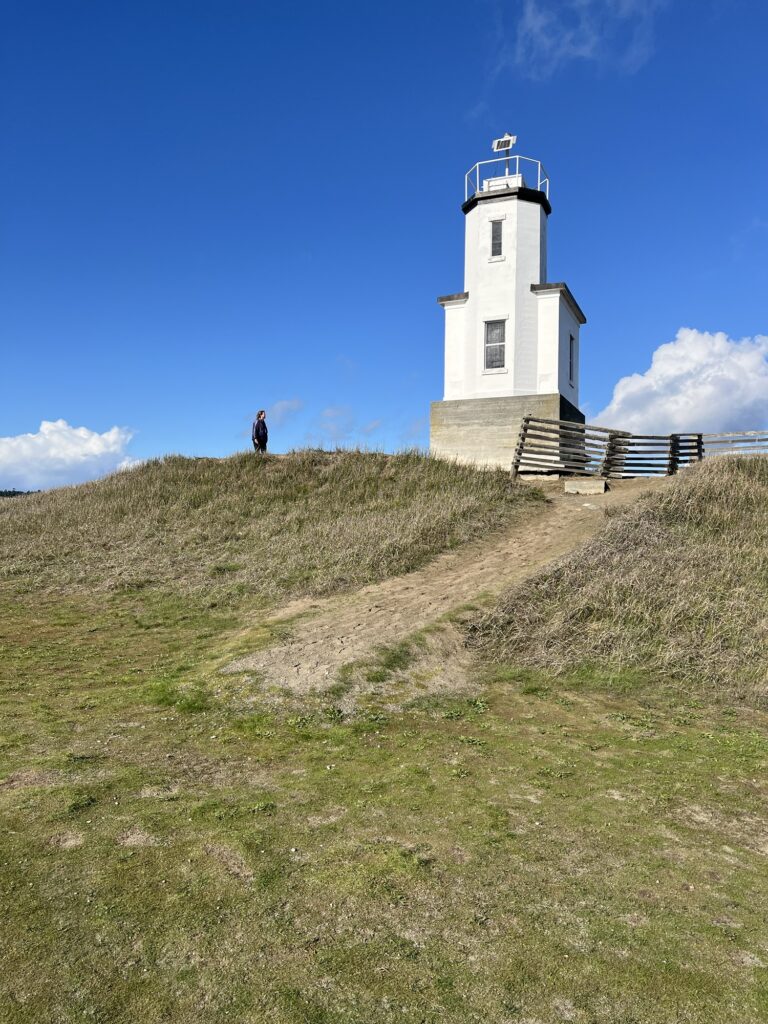
One of the camp’s most interesting features is Robert’s Redoubt, designed by young Army engineer Henry Martyn Robert. Robert later achieved national fame as the author of Robert’s Rules of Order, America’s most influential manual of parliamentary procedure.
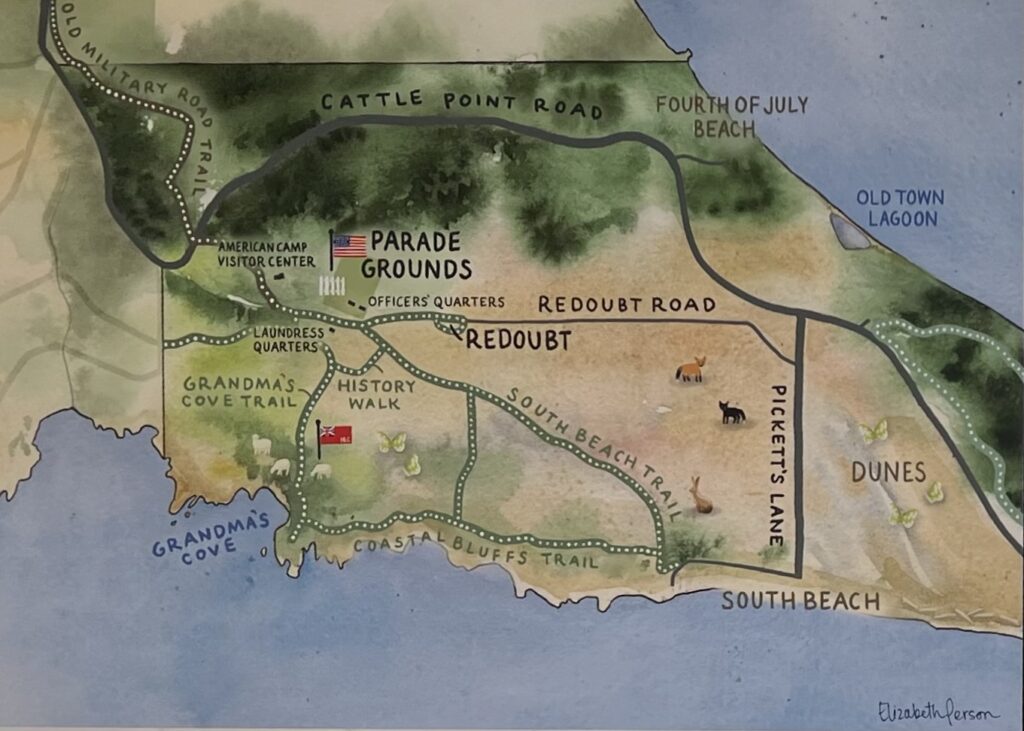
Although Robert’s Rules did not originate on San Juan Island, the future author gained valuable military engineering experience here while helping fortify American Camp during the Pig War crisis.
Dining Near Snug Harbor
Visitors have several exceptional nearby dining choices:
Westcott Bay Shellfish Co.
Fresh oysters and shellfish harvested directly from local waters. A uniquely San Juan Island dining experience.
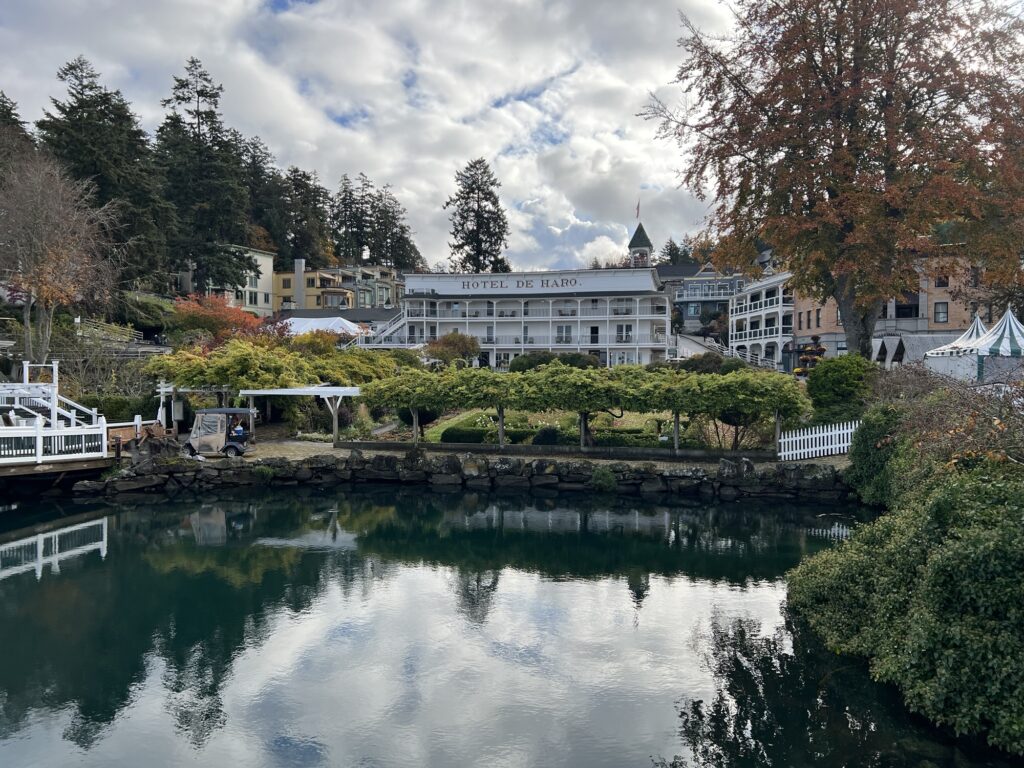
Roche Harbor
Only a short drive away:

- McMillin’s Dining Room
- Madrona Bar & Grill
- Lime Kiln Café
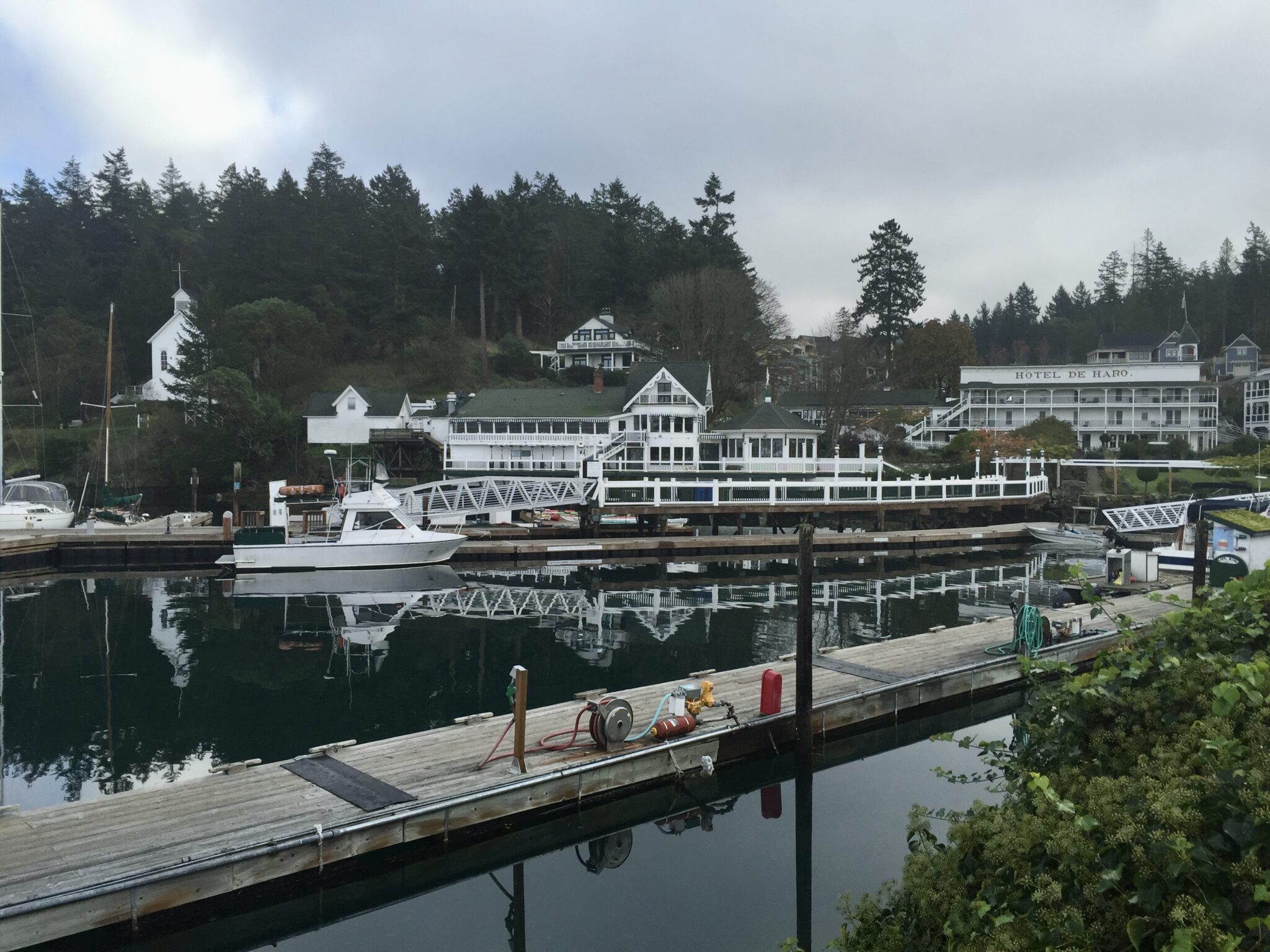
These establishments combine excellent dining with marina and harbor views.
Friday Harbor
Additional options include:
- Duck Soup
- Downriggers
- Coho Restaurant
- Friday Harbor House Restaurant
Getting to San Juan Island: Taking the Ferry from Anacortes
Most visitors arrive via the Washington State Ferry system.
Step 1: Drive to Anacortes
Travel to the Washington State Ferries terminal located west of downtown Anacortes at:
2100 Ferry Terminal Road
Anacortes, Washington
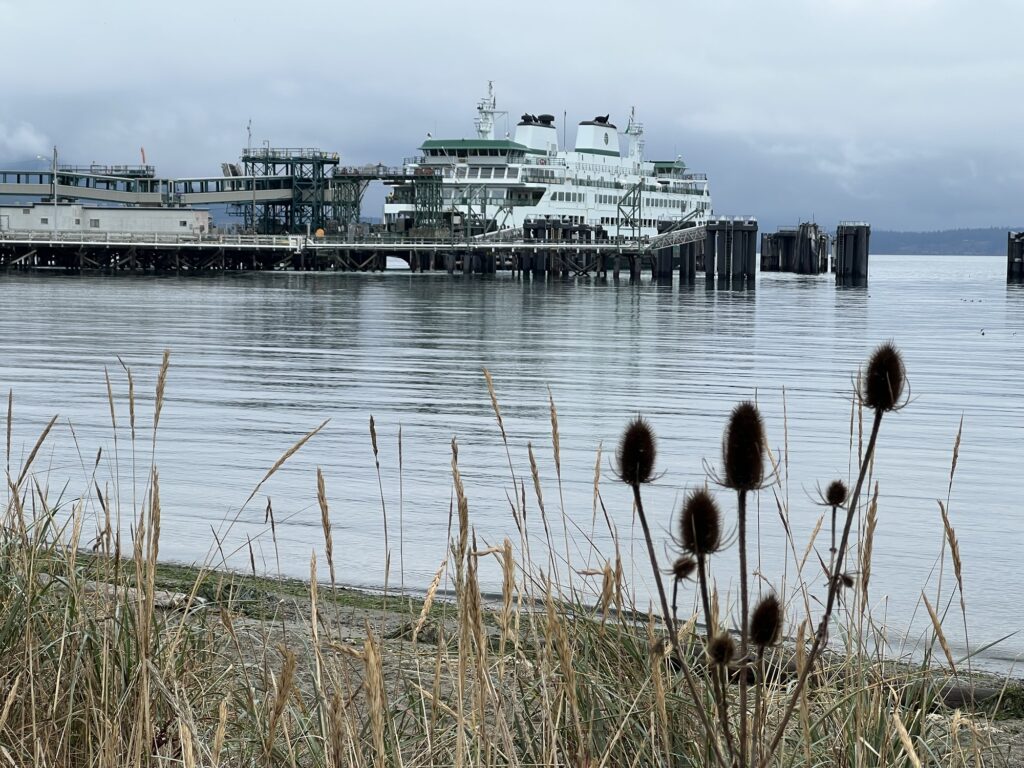
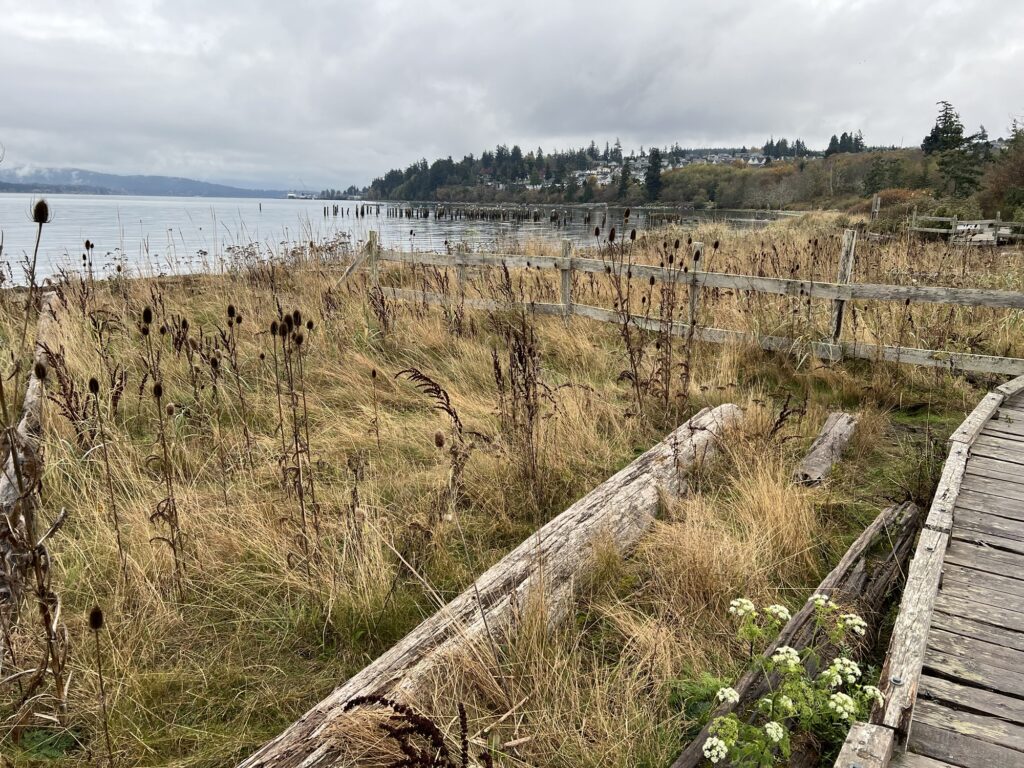
The route passes the historic Ship Harbor area and the location of the former Ship Harbor Cannery, an important feature of local maritime history.
Ship Harbor was the original name of the frontier settlement that became Anacortes, and home to the first mechanized salmon processing plant.
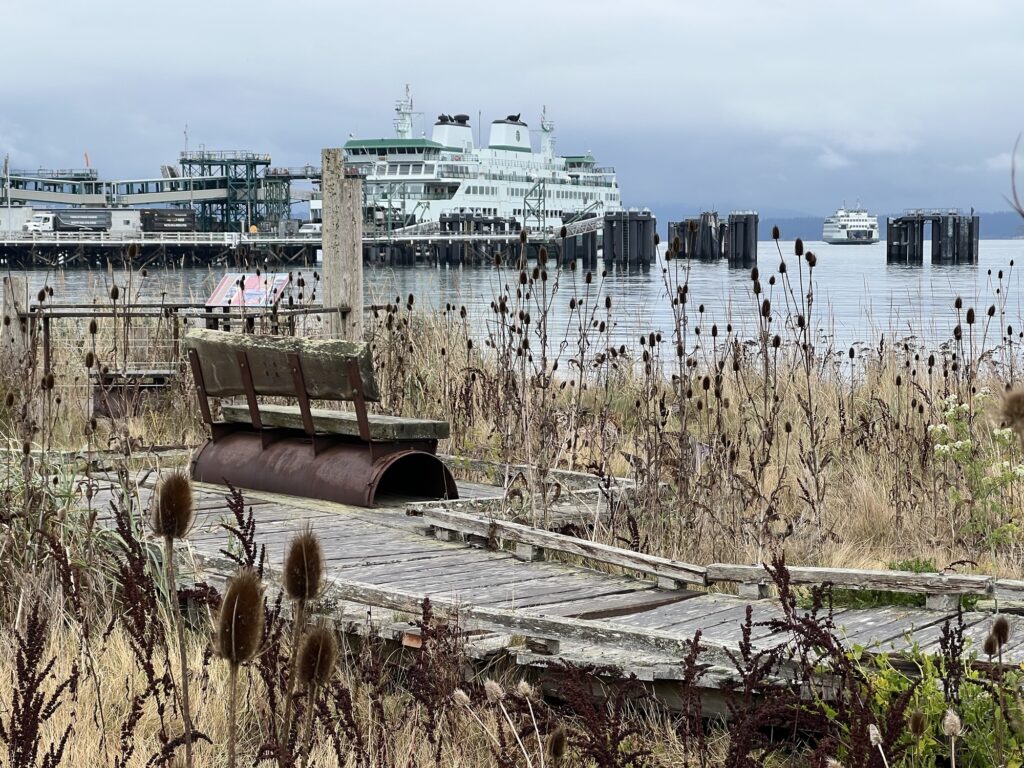
The Fidalgo Island Canning Company opened here in 1894, followed by Anacortes Canning Company in 1895, and by 1915 eleven canneries were operating along Guemes Channel. At the center of an exploding. industry, Anacortes could boast of being the “Salmon Canning Capital of the World!” Hundreds of workers cleaned and canned millions of salmon caught in company-owned fish traps or bought from a growing fleet of independent fishermen, many of them immigrants from Croatia and Scandinavia. Local Samish also sold fish to the canneries.
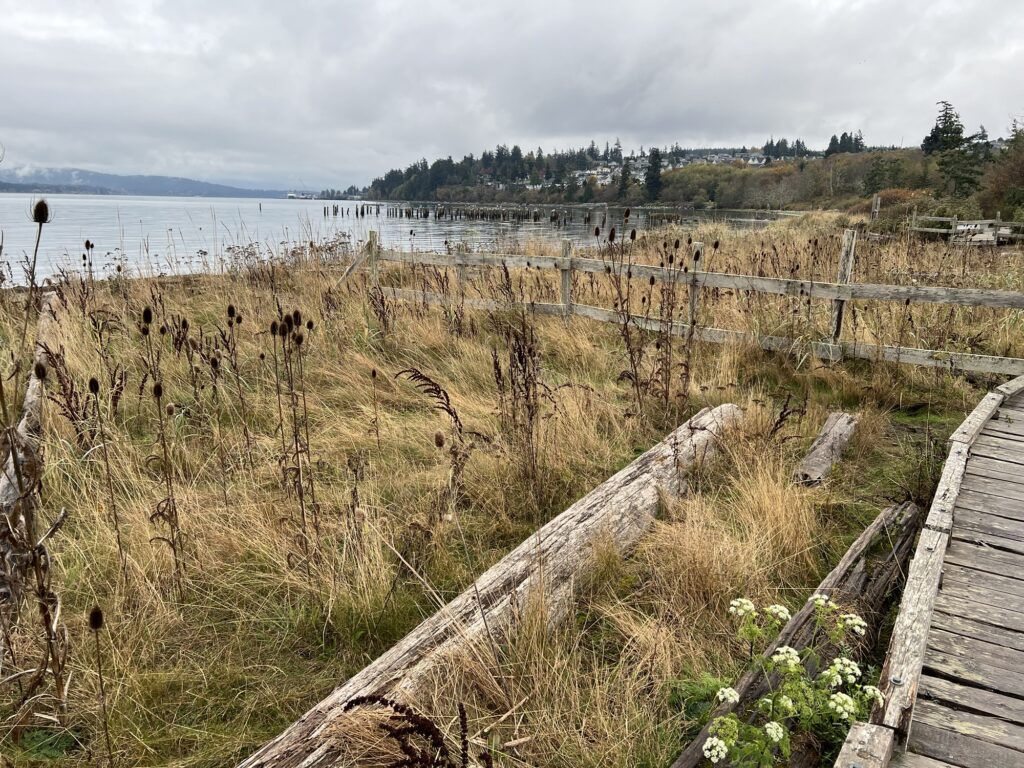
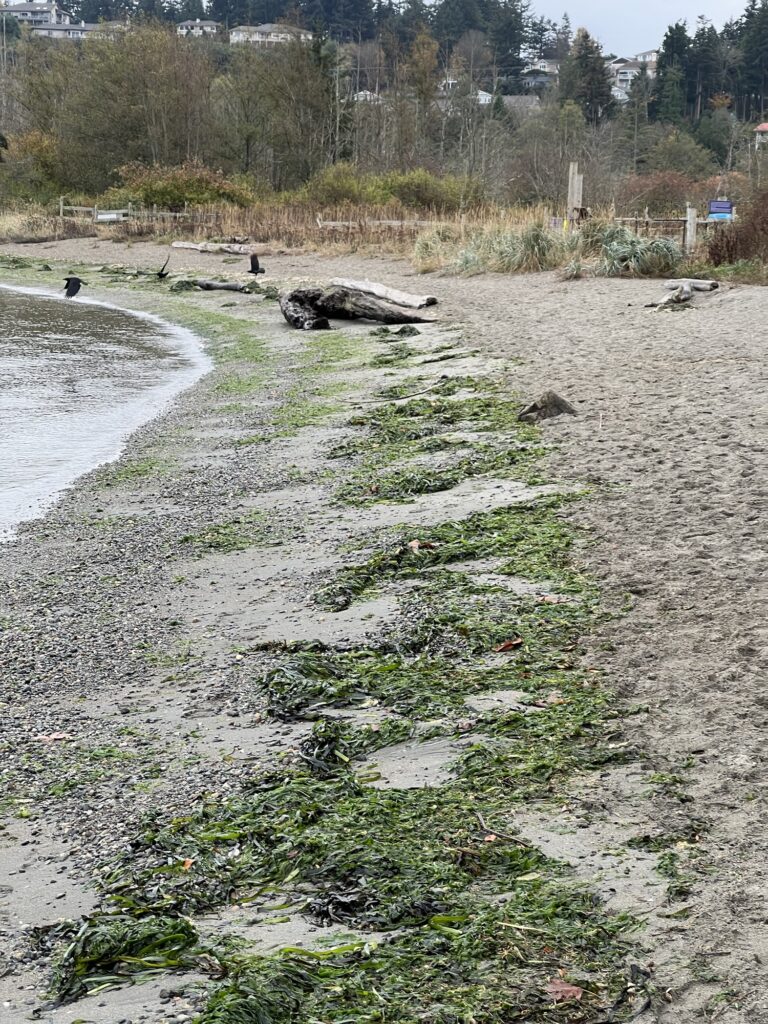
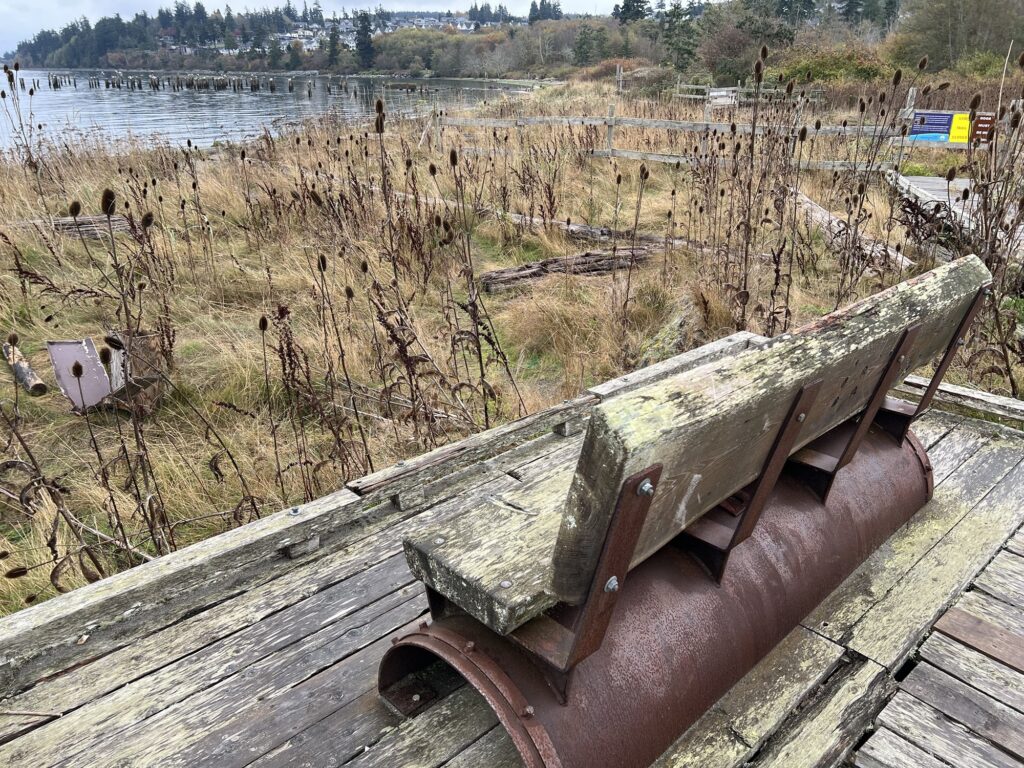
Cans were manufactured onsite and the scraps of metal spilled from the docks, where they can be seen today, hunks of rusting metal between the pilings.
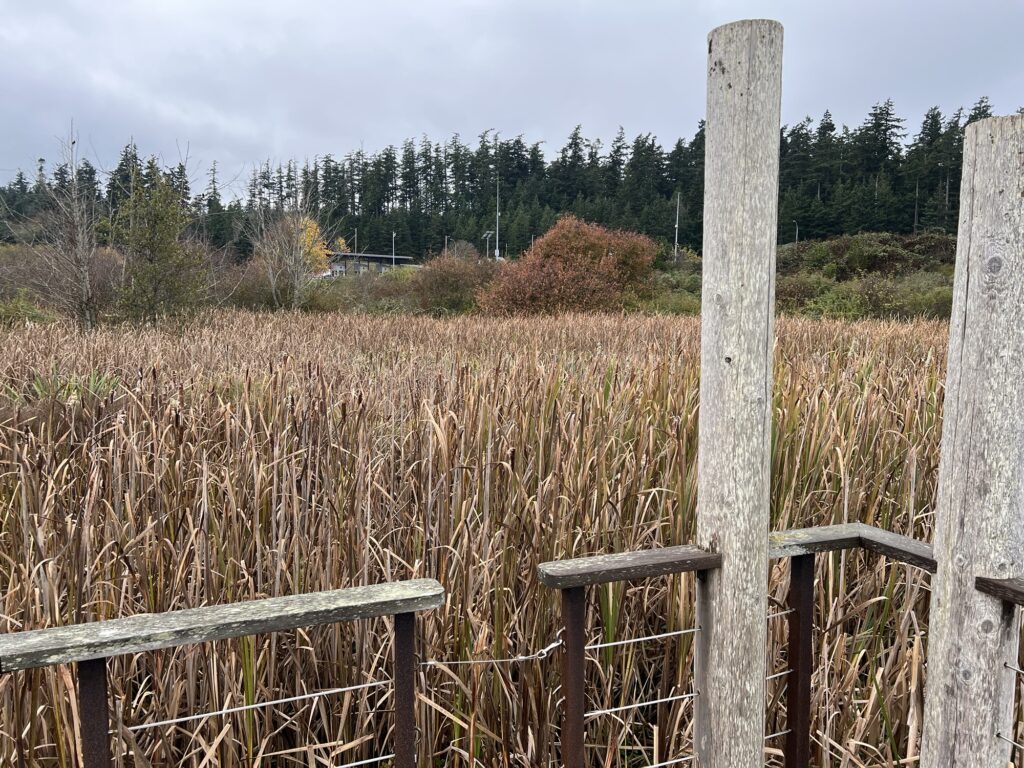
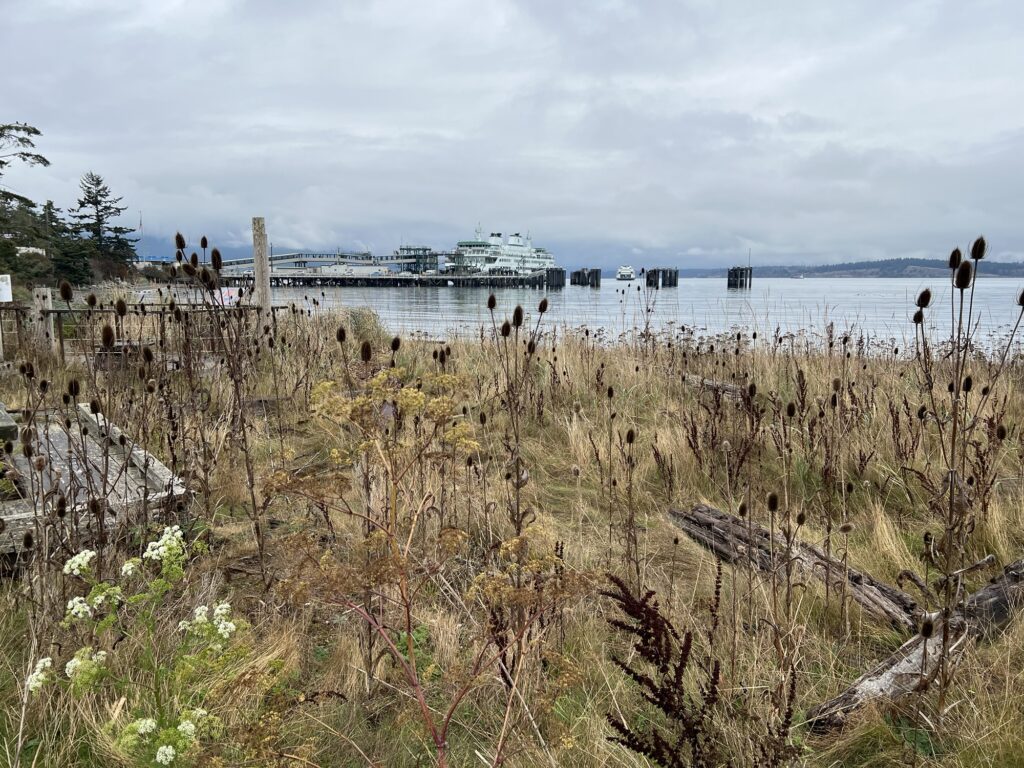
Chinese and Japanese cannery workers lived in bunkhouses on site, separate from cannery managers and their families, who planted the apple trees, hops, daffodils and fiyacinths that can still be seen here as a sign of the once busy community.
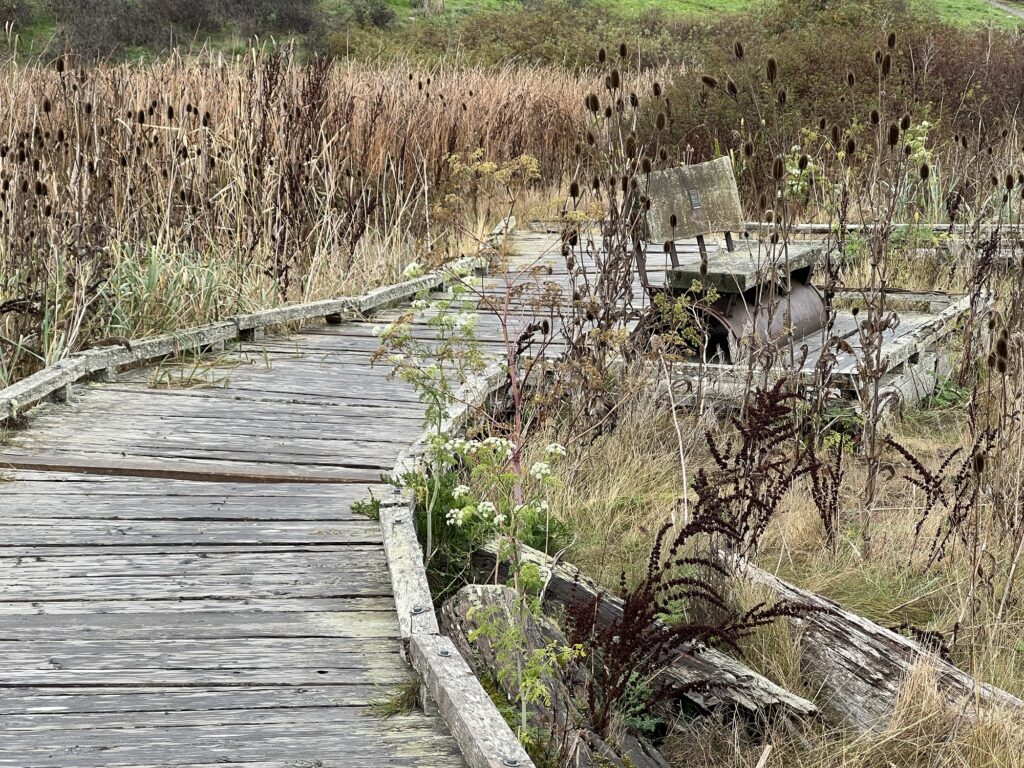
Declining salmon runs led to the decline of the canneries. Alaska Packers Association, which had taken over Anacortes Canning, closed the doors on the last cannery in Ship Harbor in 1934.
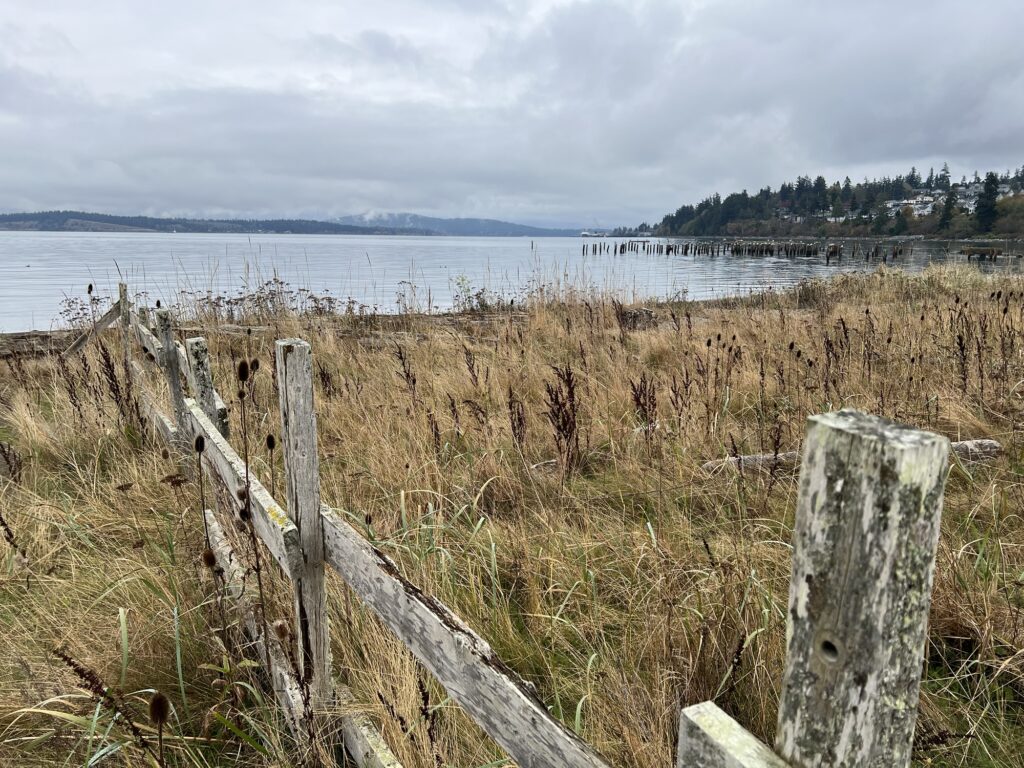
When the salmon canning boom was at its peak, refrigeration was hard to come by, so cans made it easy to transport food, and Puget Sound salmon travelled the world in colorful cans, some holding up to tour pounds orsh. nemgerators anarreezers along with several other factors, played an important role in the decline of canneries.
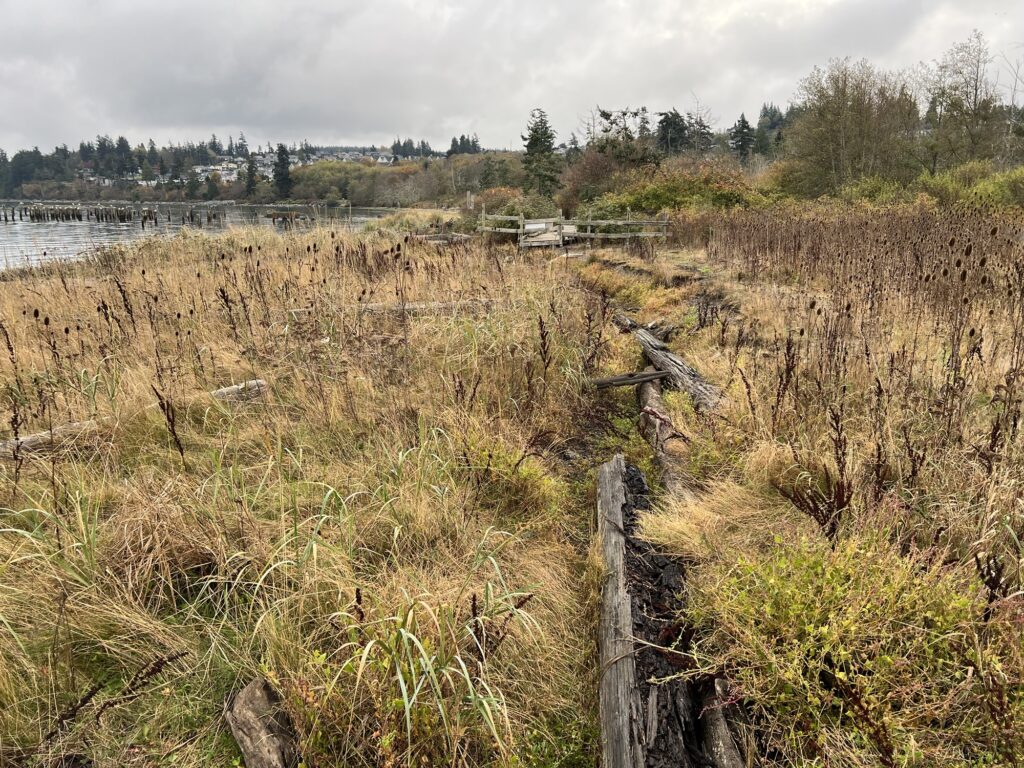
While fishing and seafood processing continue are all gone, but their legacy lives on, celebrated at this site and with the colorful sidewalk salmon trash receptacles that line the Anacortes waterfront.
Step 2: Reserve a Ferry
Vehicle reservations are strongly recommended, especially during summer.
Washington State Ferries operates regular service between:
- Anacortes
- Friday Harbor (San Juan Island)
- Orcas Island
- Shaw Island
- Lopez Island
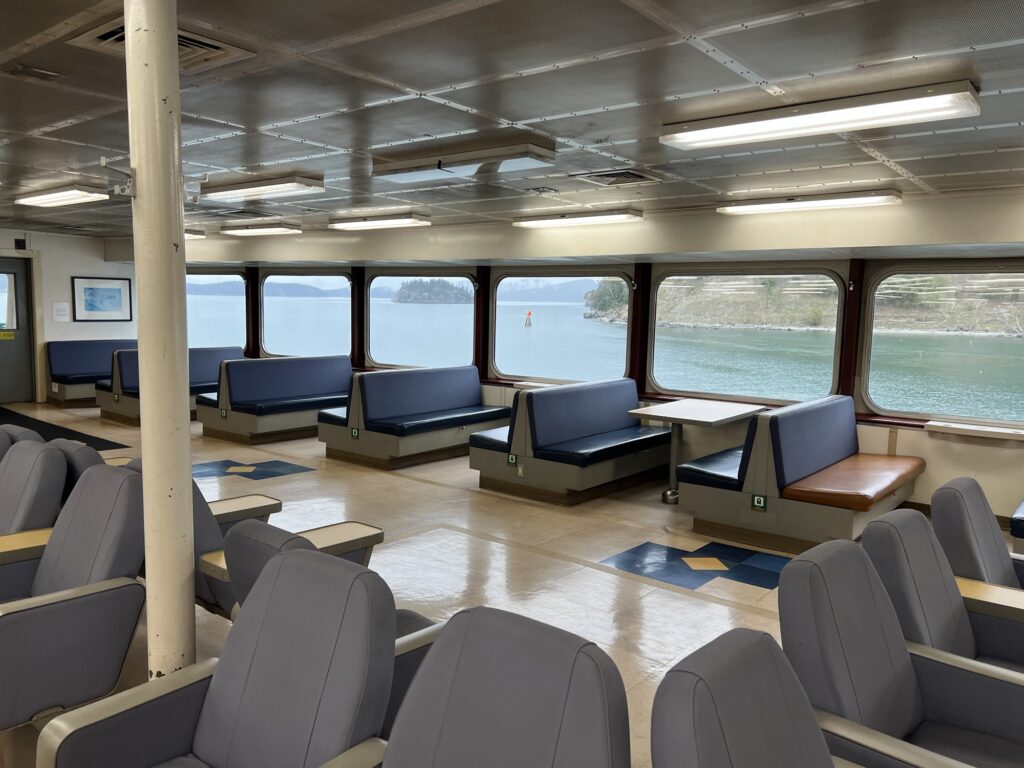
Step 3: Enjoy the Crossing
The voyage through Rosario Strait and the San Juan archipelago is one of the most scenic ferry journeys in North America, often featuring:
- Bald eagles
- Harbor seals
- Porpoises
- Occasional whale sightings
- Views of Mount Baker and the Olympic Mountains
Step 4: Drive to Snug Harbor
From Friday Harbor:
- Follow Roche Harbor Road northwest.
- Turn toward Mitchell Bay Road.
- Continue to Snug Harbor Resort & Marina.
Travel time from the ferry terminal is approximately 20 minutes.
Visitor Recommendations
For a two-day west-side San Juan Island experience:
Day One

- Ferry from Anacortes
- Check into Snug Harbor
- Afternoon kayak on Mitchell Bay
- Dinner at Roche Harbor
- Moonrise viewing from cabin deck
Day Two
- Explore English Camp and Young Hill
- Visit American Camp and Robert’s Redoubt
- Wildlife viewing and photography
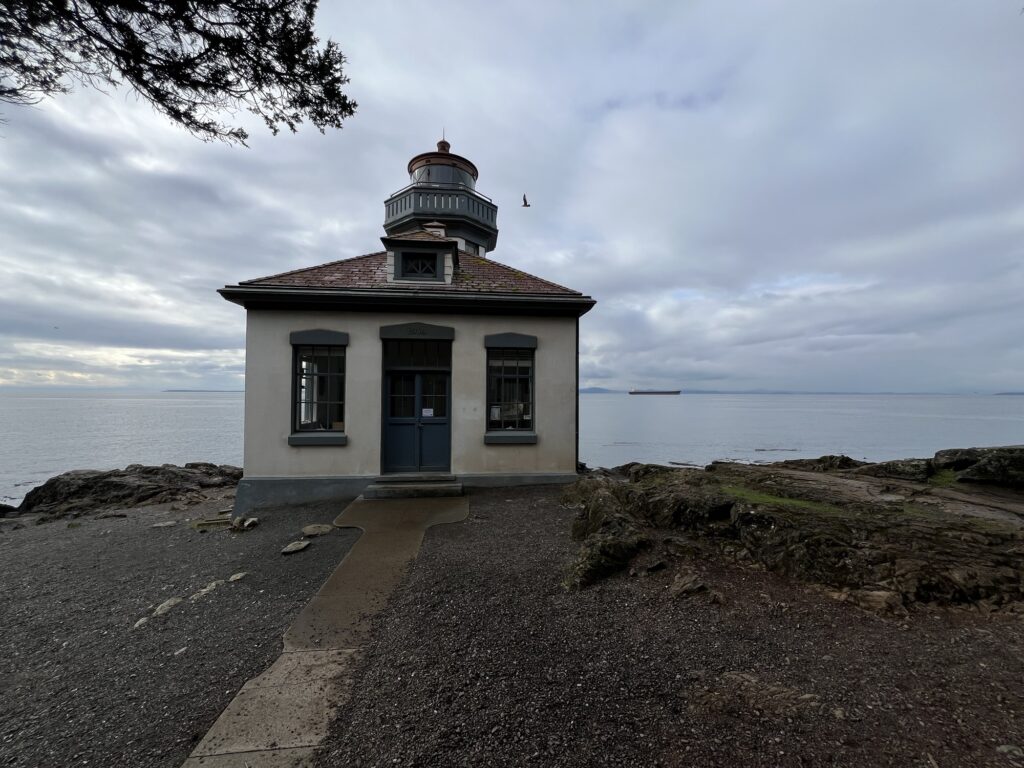
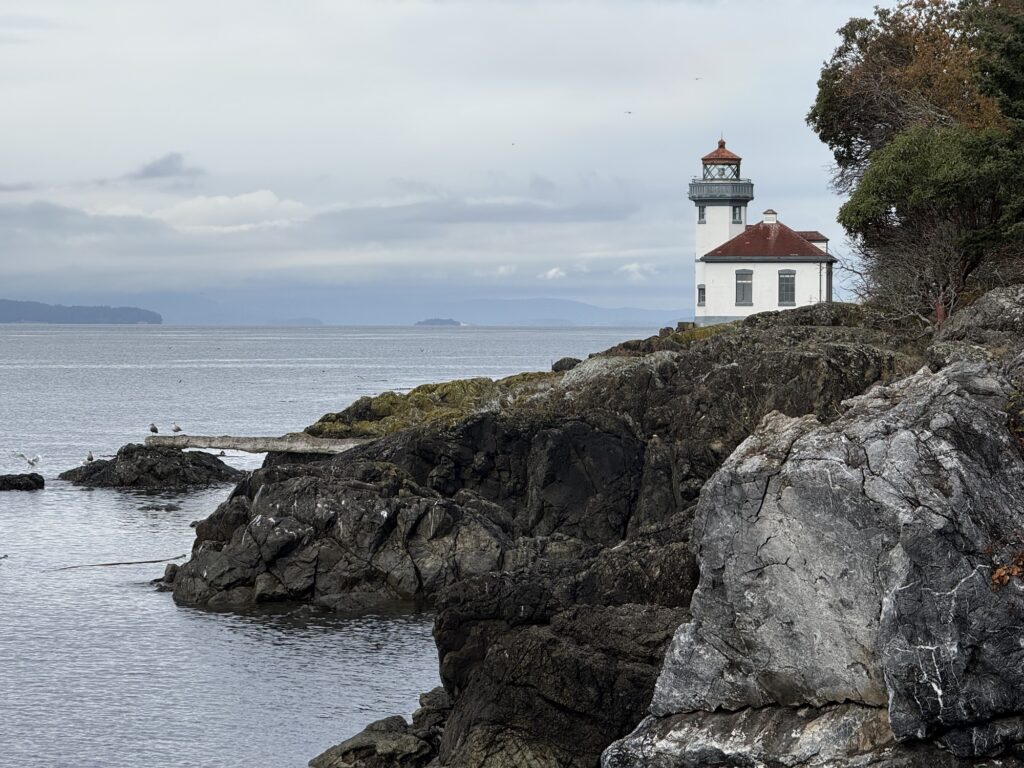
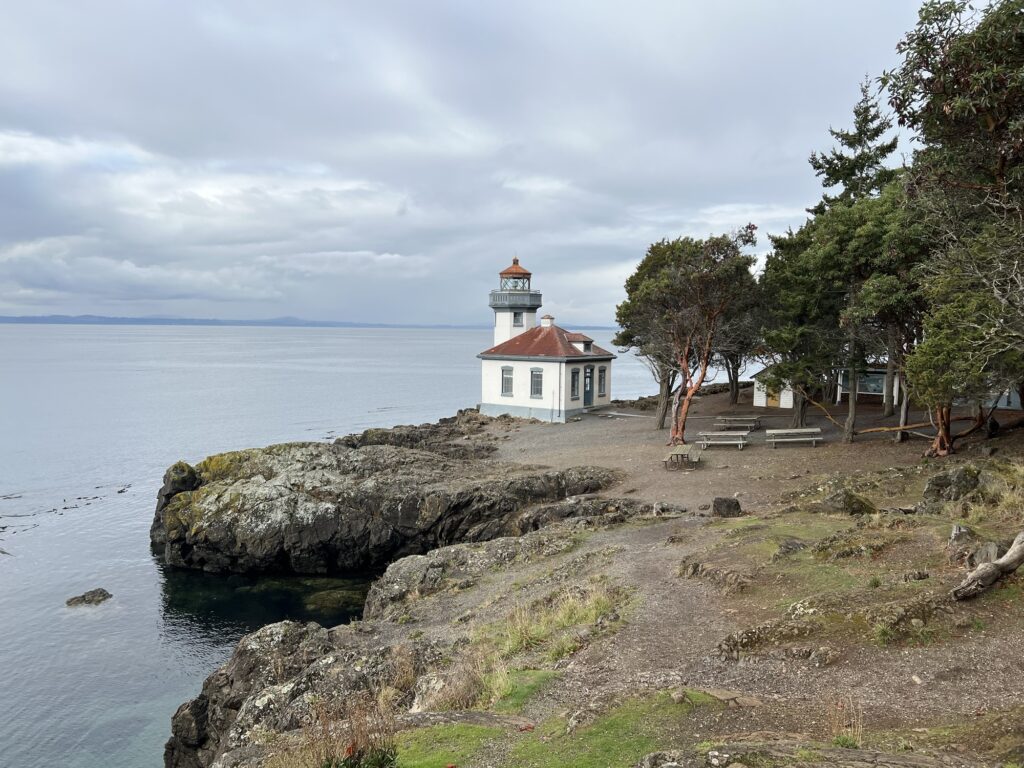
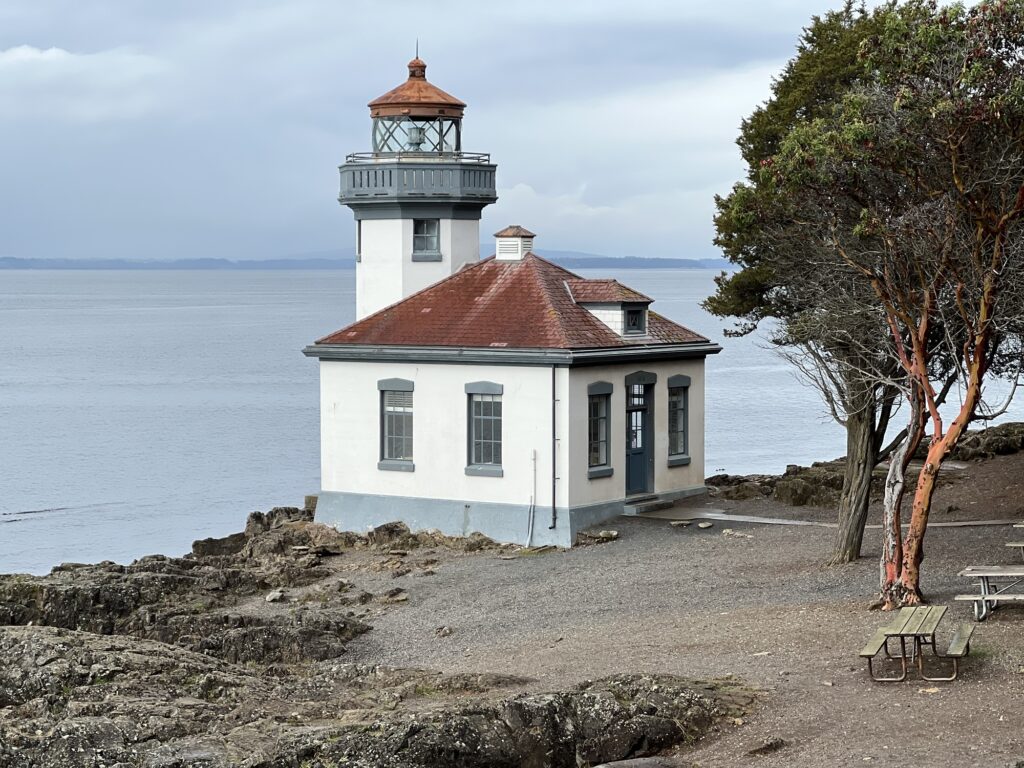
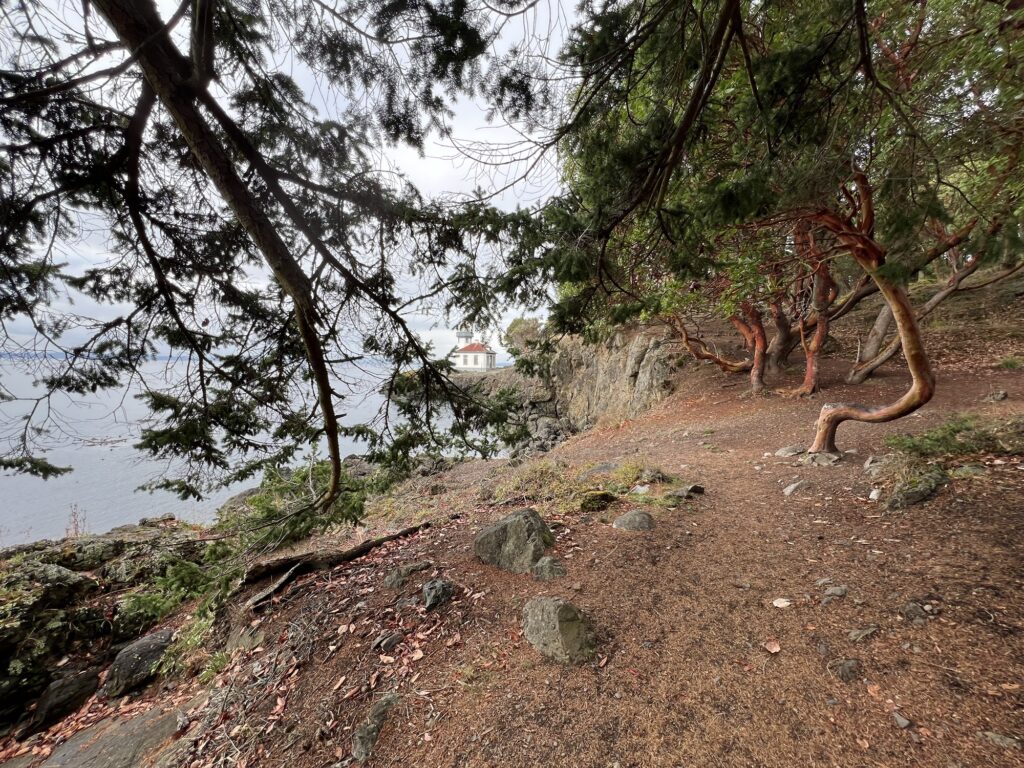
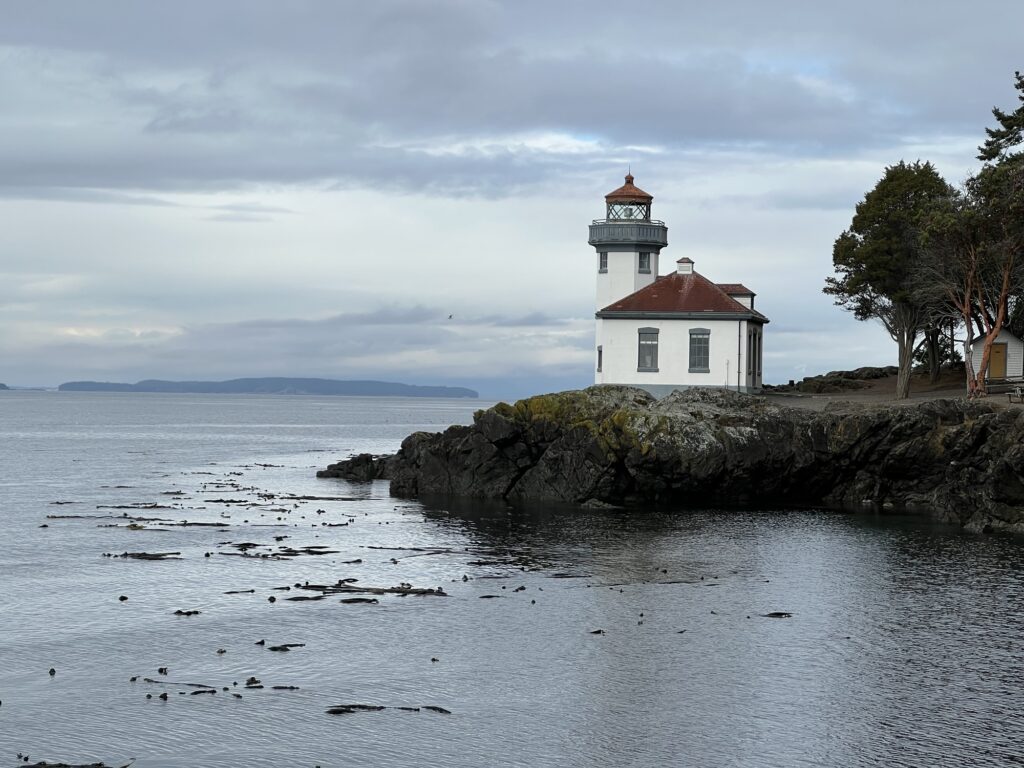
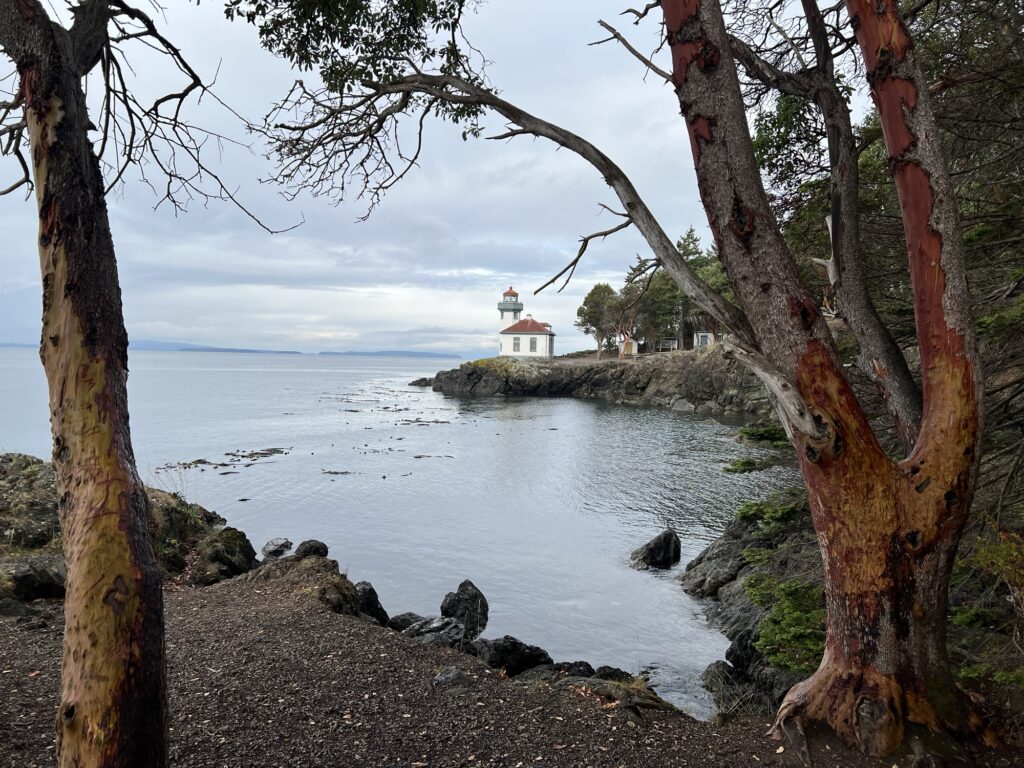
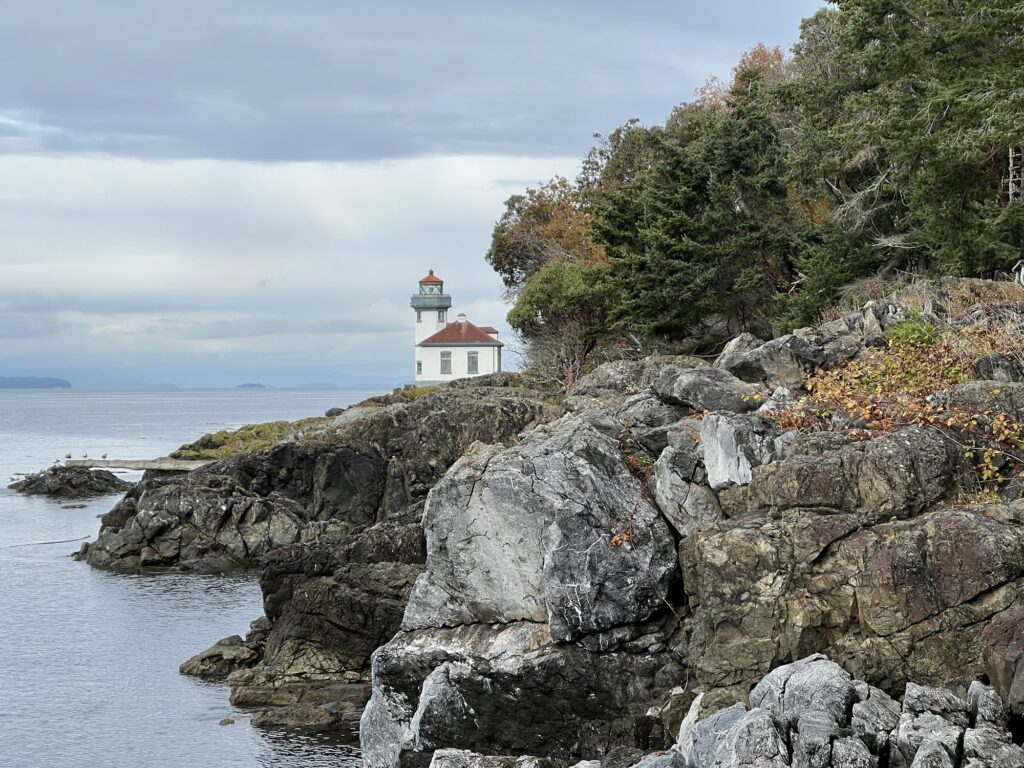
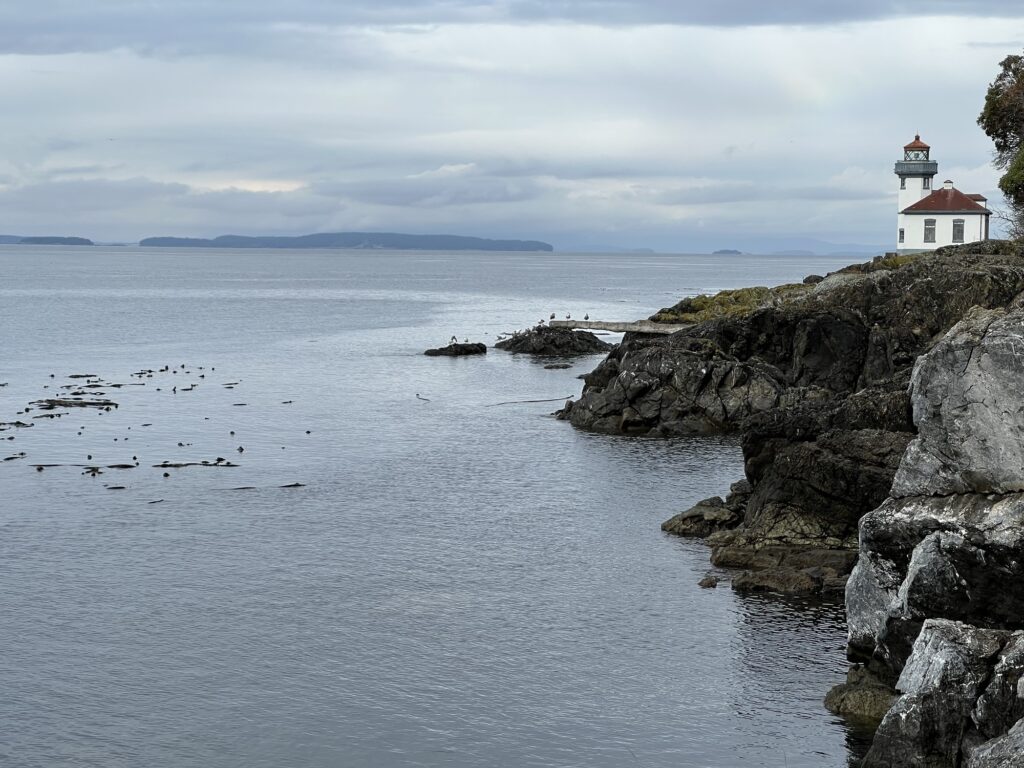
- Sunset at Lime Kiln Point State Park
- Fireside evening at Snug Harbor
Tarte Family
The Tartes were the family most responsible for transforming Roche Harbor from a fading industrial company town into the world-class marina resort we know today.
In 1956, Reuben Tarte and his son Neil Tarte purchased Roche Harbor after the lime industry had largely collapsed and the village had become largely vacant. They acquired approximately 4,000 acres and 12 miles of coastline and set about creating what they called a “boatel” for Pacific Northwest boaters.
What did the Tartes actually do?
When the Tartes arrived, Roche Harbor was no longer the thriving company town built by John S. McMillin‘s lime works. The Tarte family saw potential where others saw a collection of aging industrial buildings. Over the following decades they:
- Restored the historic Hotel de Haro. – Preserved many of the original village buildings. – Built guest moorage docks and expanded marina facilities. – Added condominiums, swimming pool, tennis courts, and an airstrip. – Transformed Roche Harbor into a destination for recreational boaters from Washington and British Columbia. The facilities modern visitors enjoy are largely rooted in the vision established during the Tarte era.
Clara Tarte’s contributions
If Reuben provided the vision, his wife Clara Tarte gave Roche Harbor much of its character.
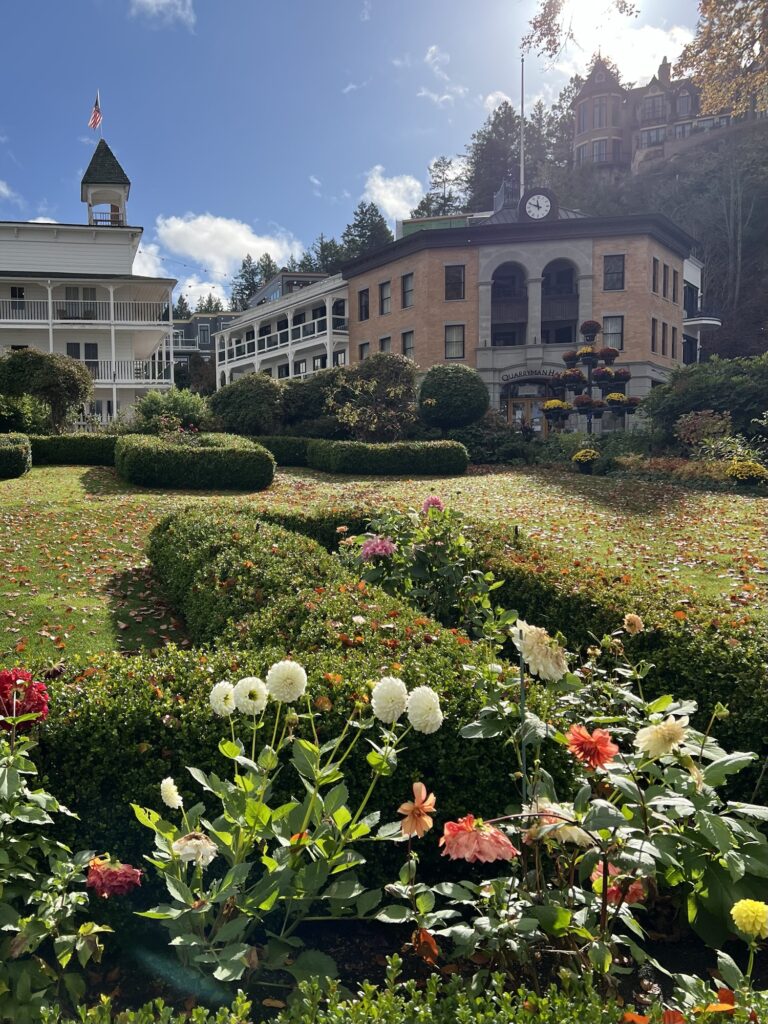
She helped restore the famous gardens, spearheaded the conversion of a former Methodist church into Our Lady of Good Voyage Chapel, and became one of the resort’s most influential figures.

Many longtime visitors believe the resort’s welcoming atmosphere and attention to beauty owe much to her efforts.
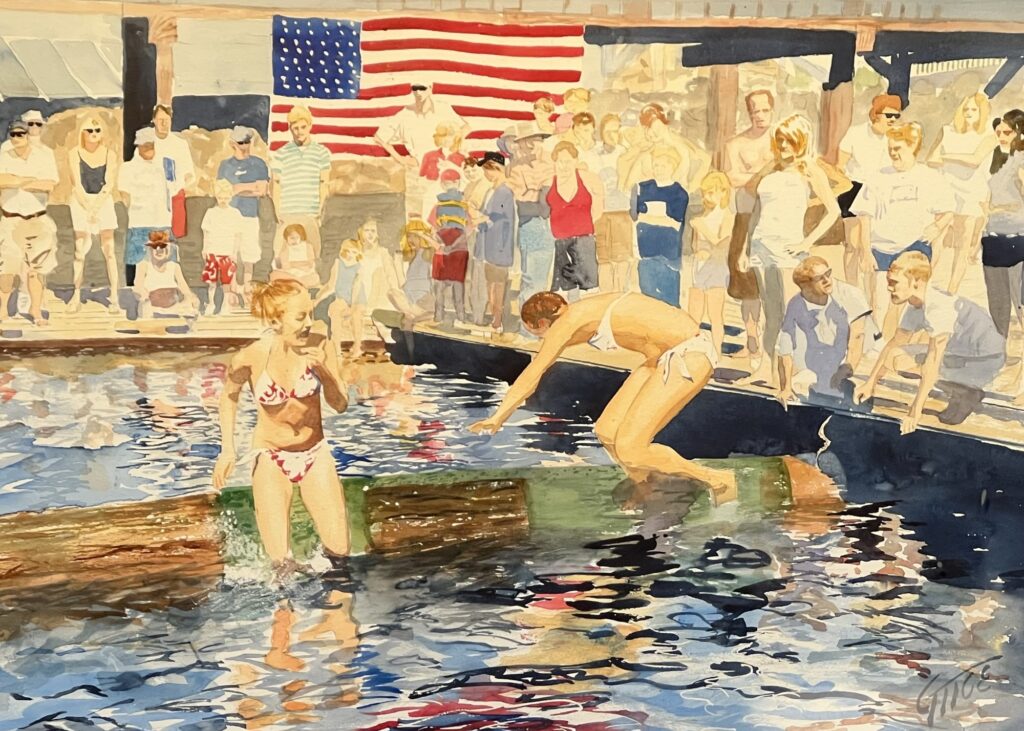
What traditions did the Tartes establish?
According to Roche Harbor’s official history, the Tarte family:
- Encouraged gatherings on docks and boats.
- Fostered a strong boating-community culture.
- Created the tradition of guests and staff socializing together.
- Established traditions that helped define Roche Harbor’s identity as a boating destination.
- Created a culture where visitors returned year after year and felt like part of a community. Most importantly:
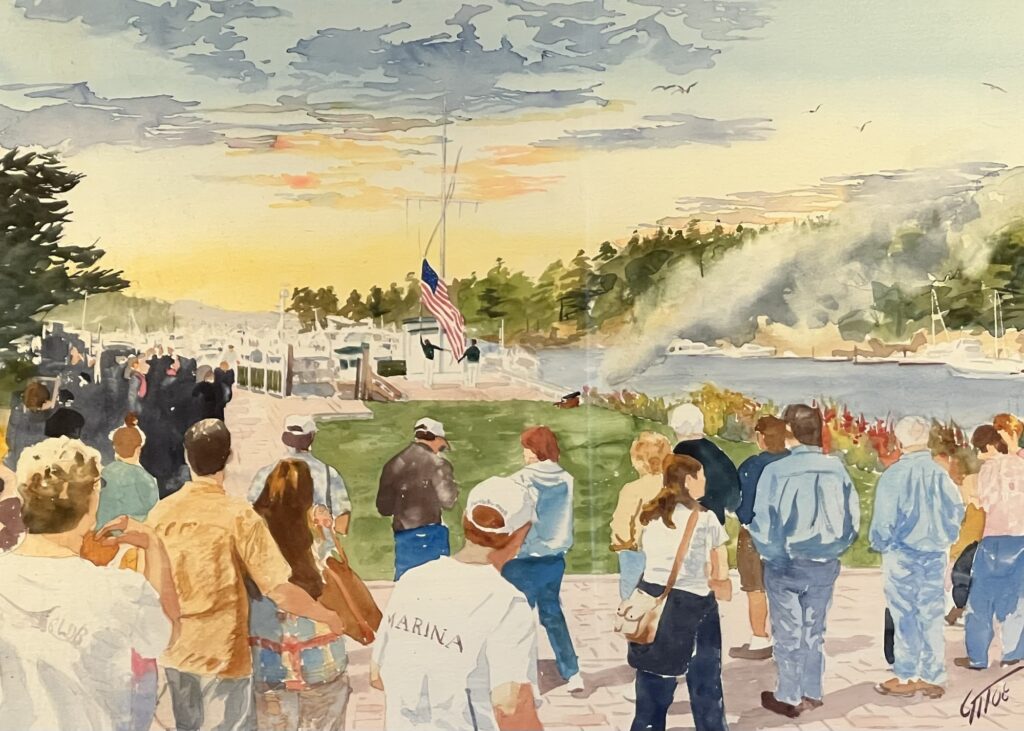
The famous Colors Ceremony was established by the Tartes.
Roche Harbor’s official timeline specifically notes: “Colors Ceremony – The 1st colors ceremony is held” during the Tarte era. The resort’s history further states that the Tartes “established traditions like the colors ceremony.” Every evening during the boating season, the marina pauses for a formal lowering of the flags.
The ceremony typically includes:
- Lowering of the United States flag.
- Lowering of the Canadian flag when flown.
- Patriotic and maritime music.
- Cannon firing.
- Gathering of boaters along the docks.
While many visitors assume the ceremony dates back to the lime company era or even the Pig War period, it is actually a Roche Harbor resort tradition developed during the Tarte family’s stewardship as part of creating a memorable boating culture.
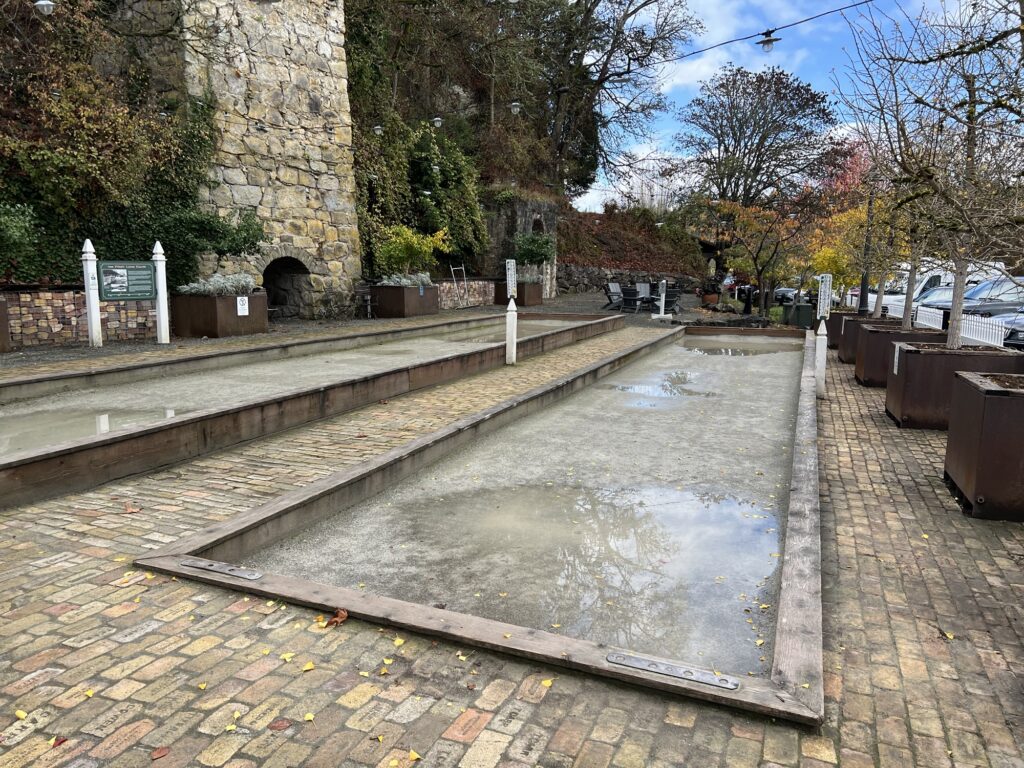
Why the Tartes Matter
For maritime historians, the Tartes occupy a place somewhat similar to preservation pioneers elsewhere in the Pacific Northwest.
Without them:
- The village might have been demolished.
- The Hotel de Haro could have disappeared.
- The historic lime works landscape might have been lost.
- Roche Harbor might never have become the boating mecca it is today.
Instead, they preserved enough of the historic company town that today’s visitors can experience layers of history in one place:
- Coast Salish heritage.
- Pig War-era British and American presence.
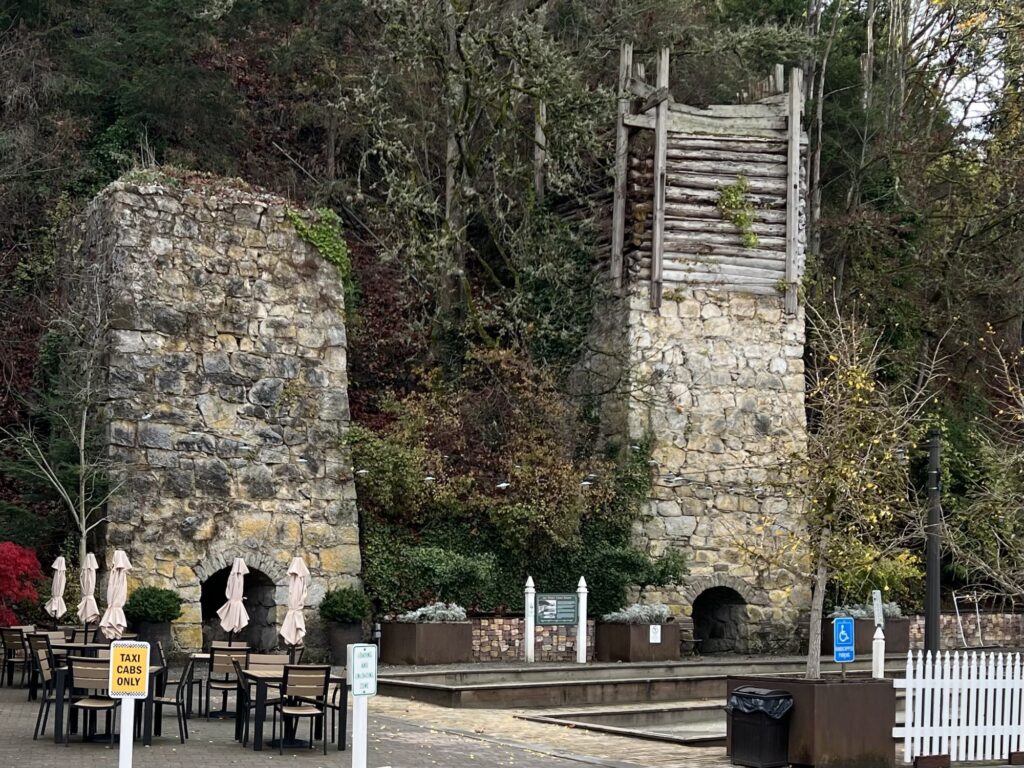
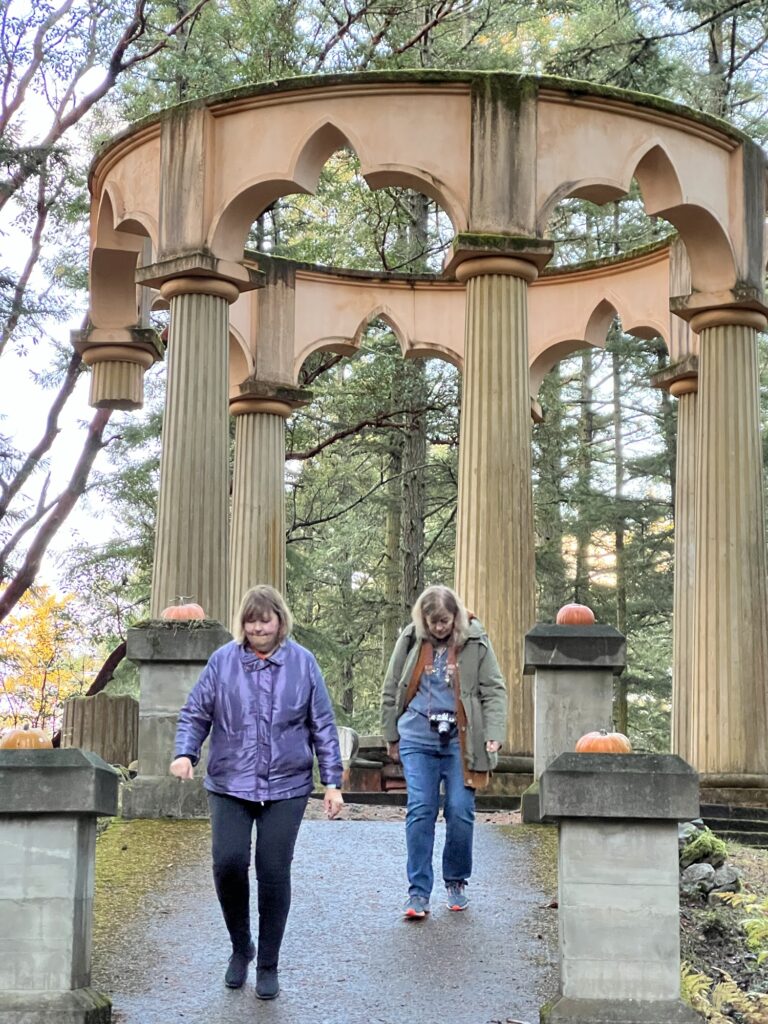
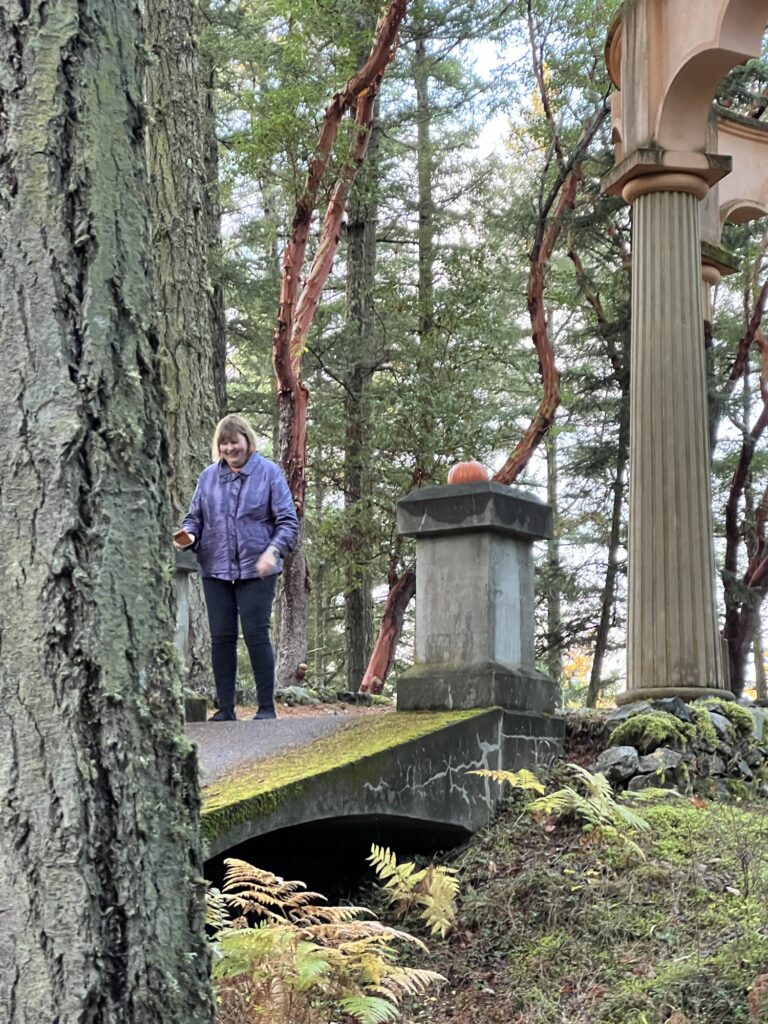
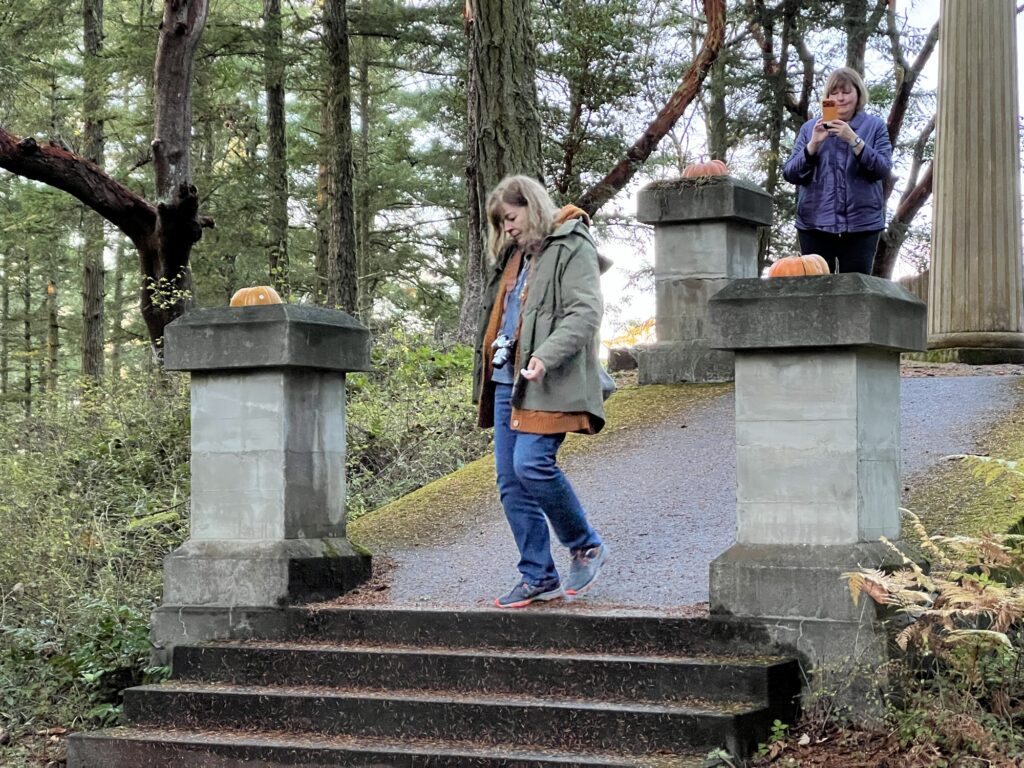
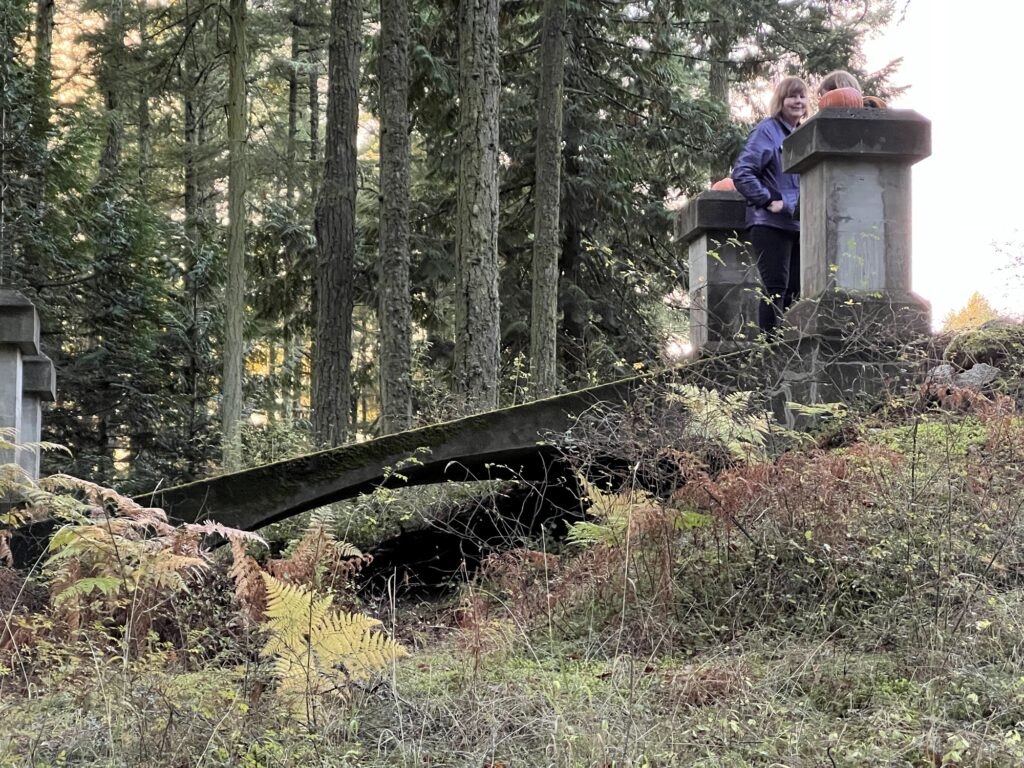
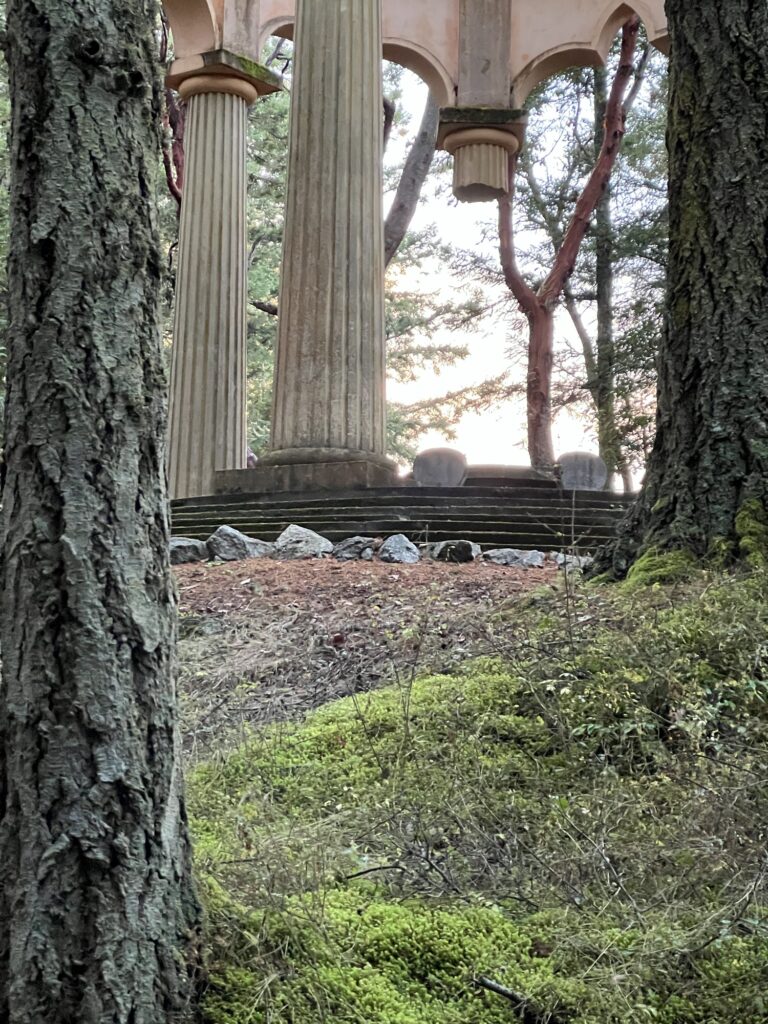
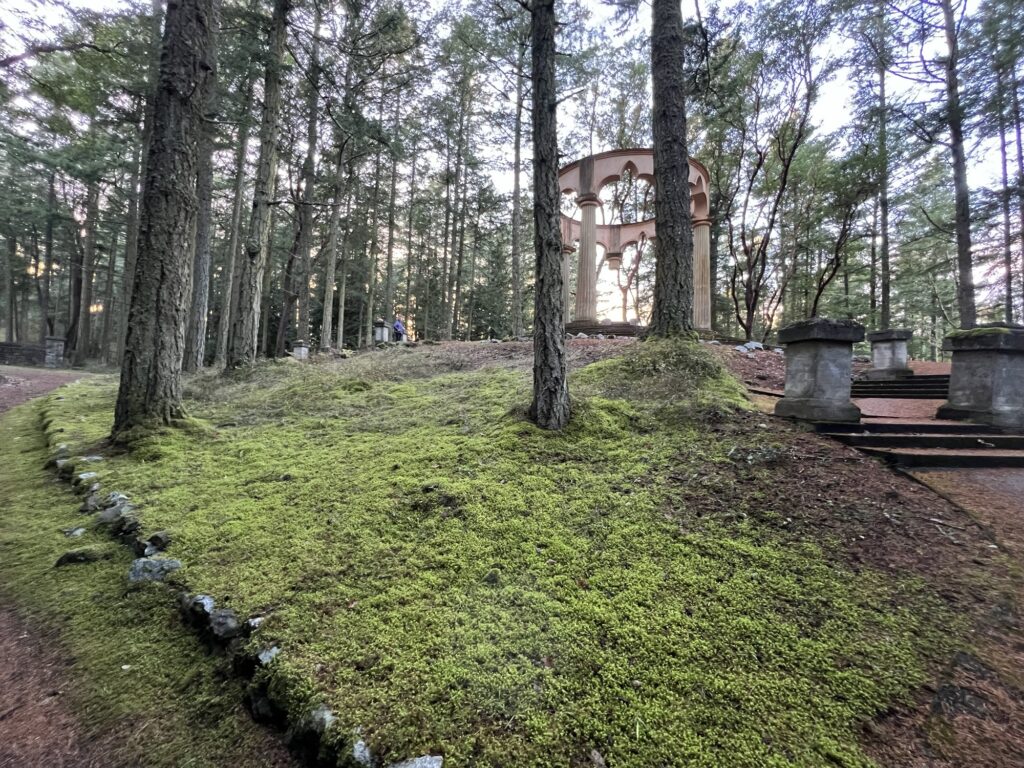
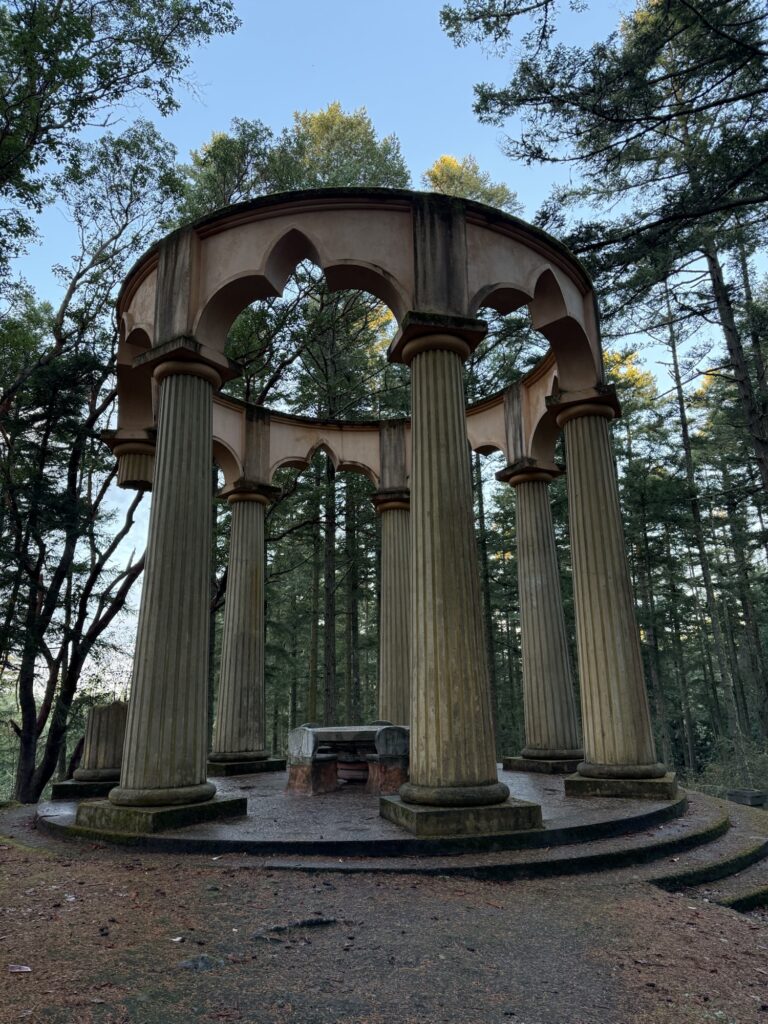
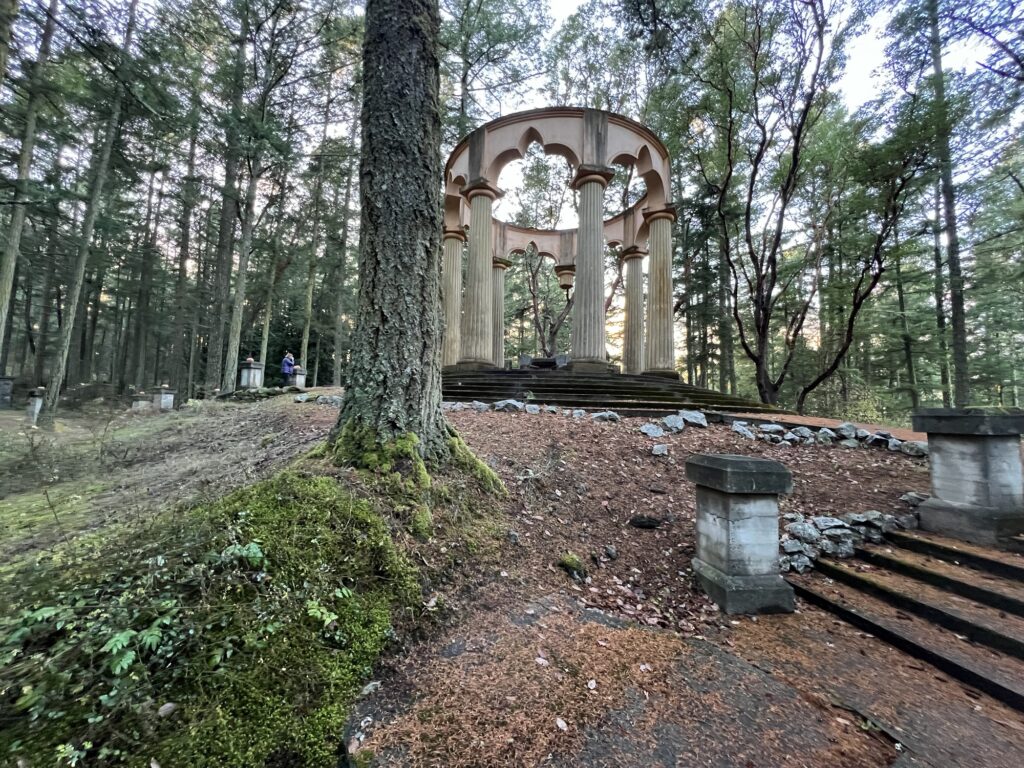
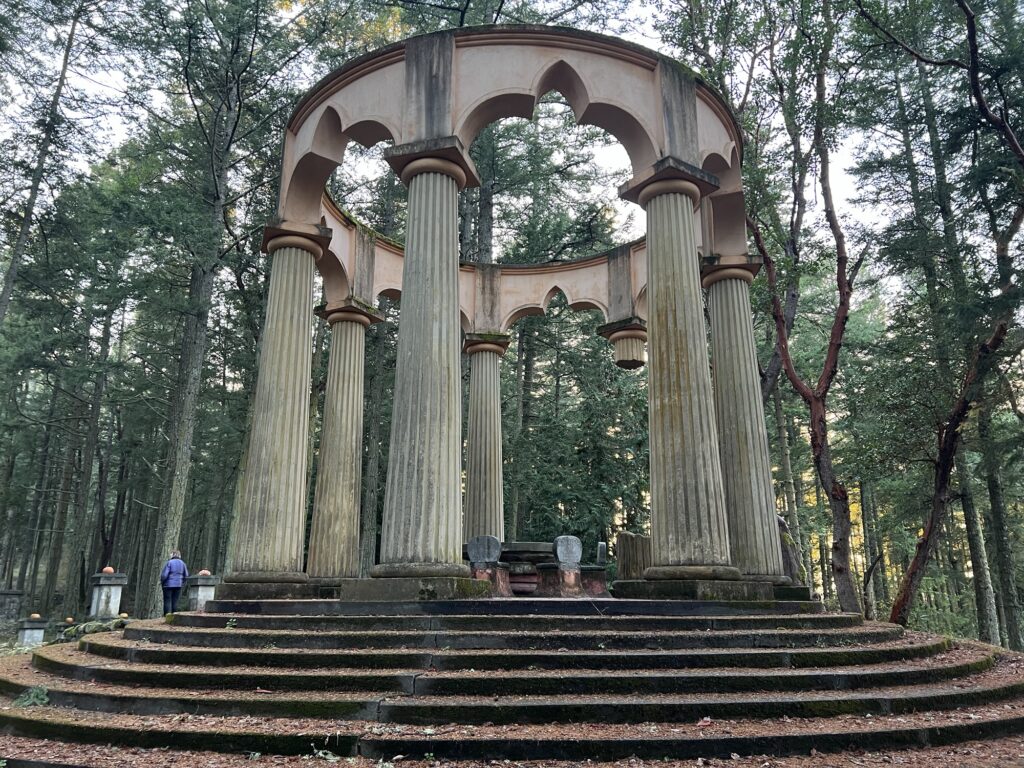
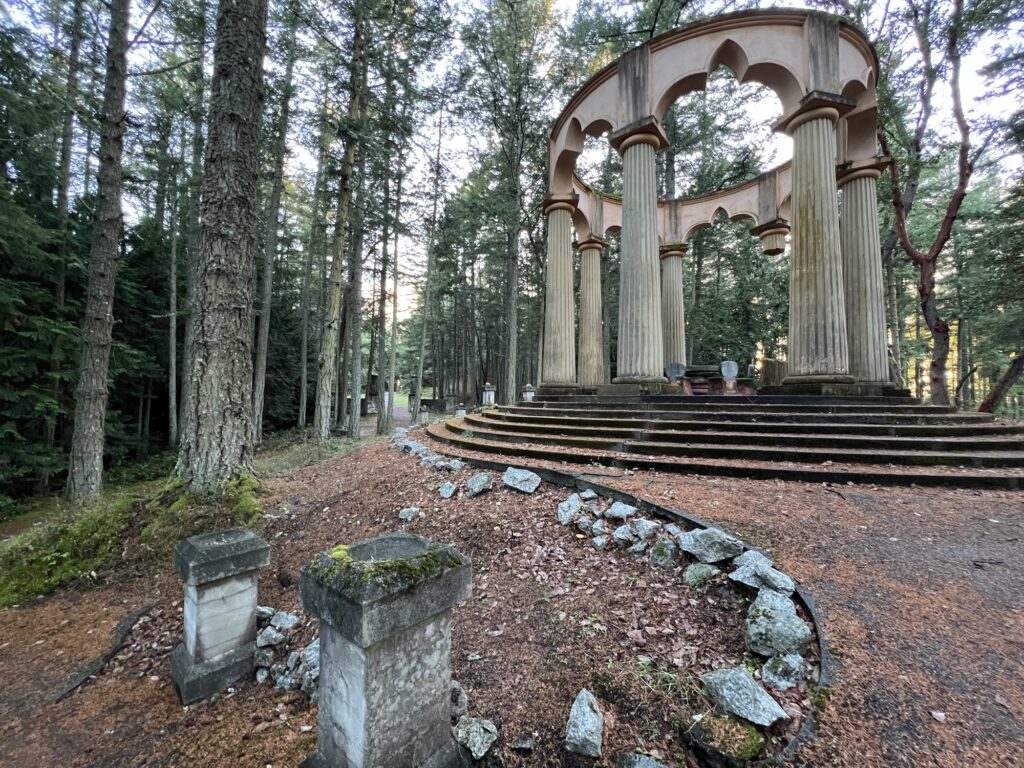
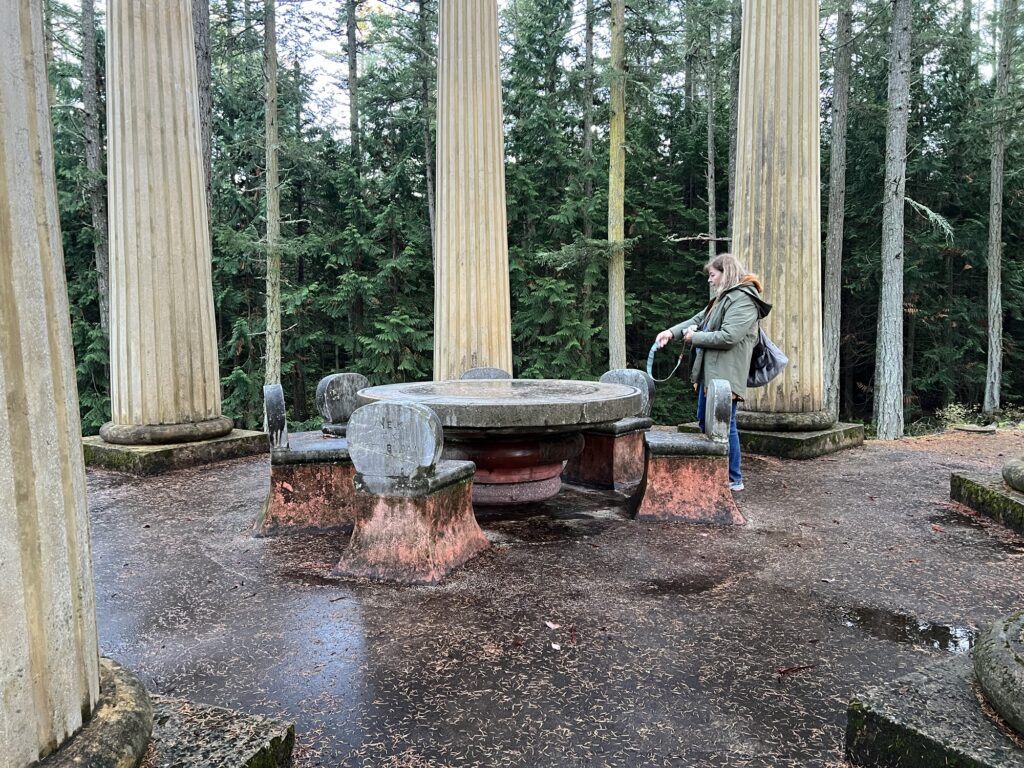
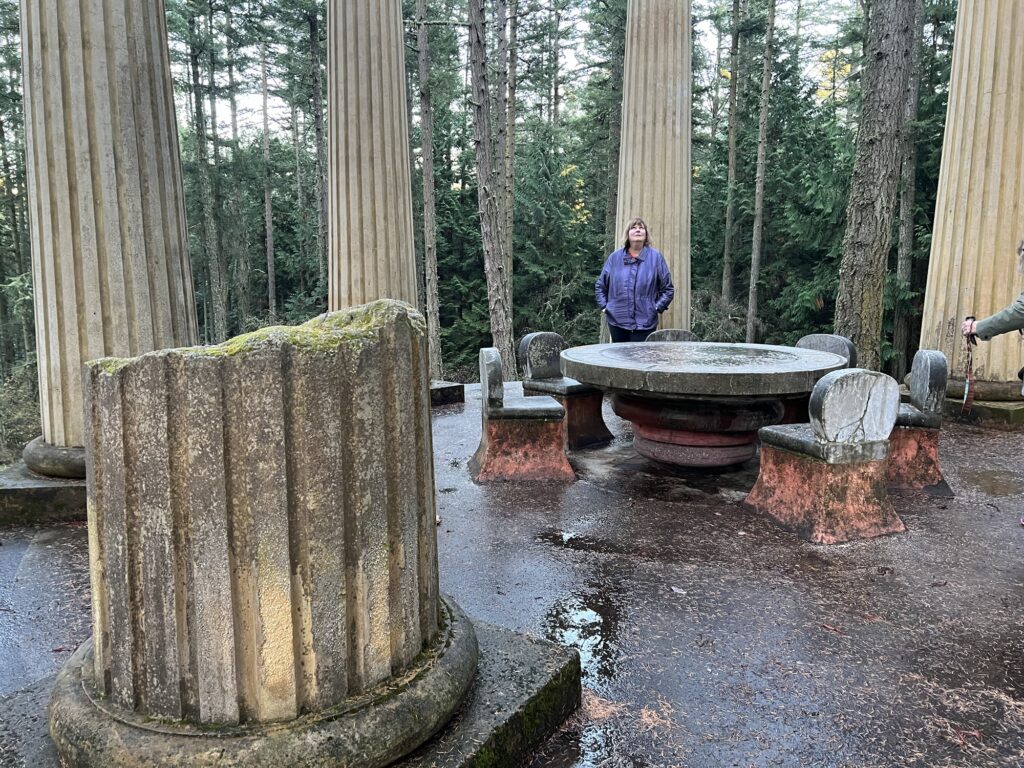
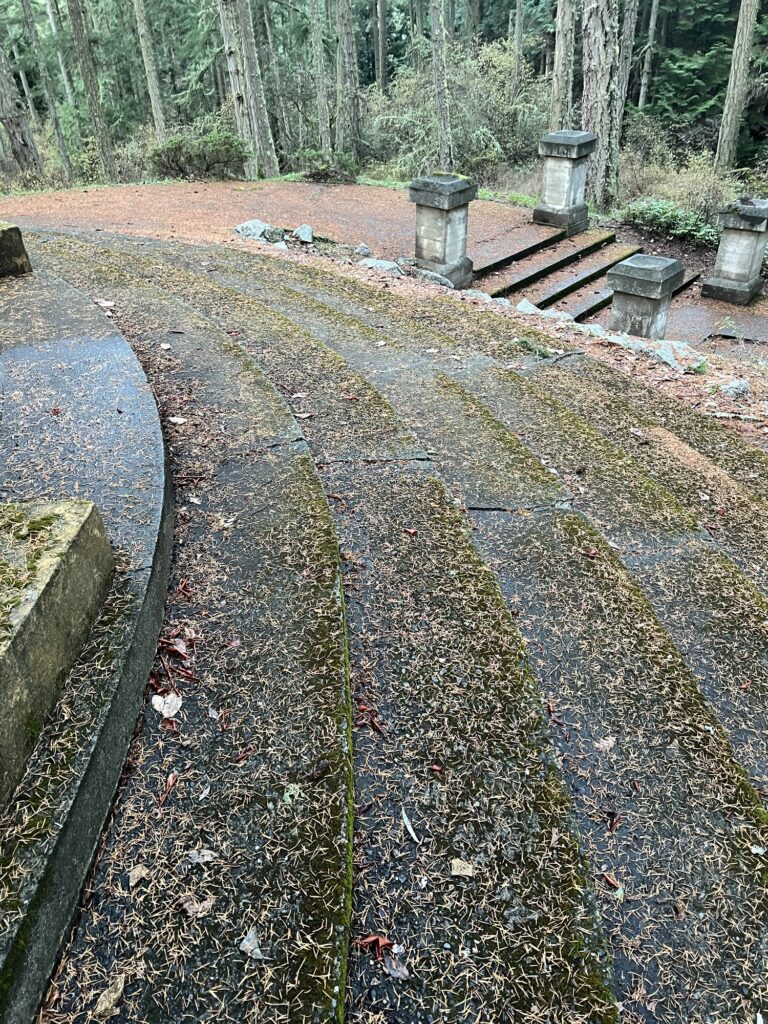
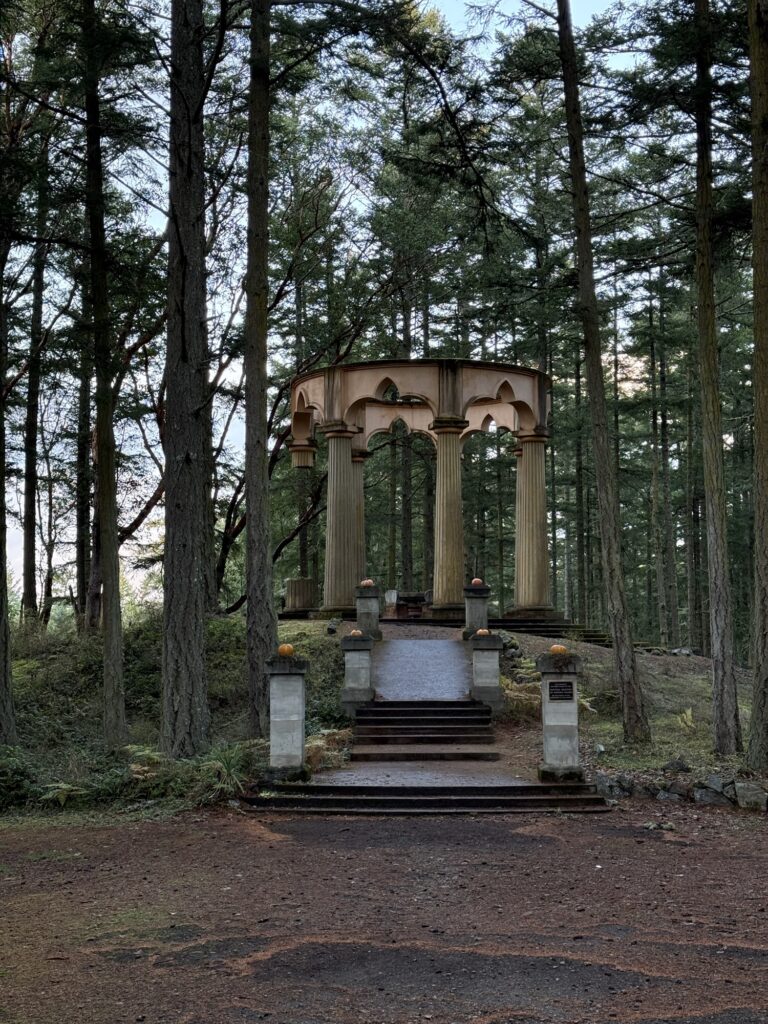
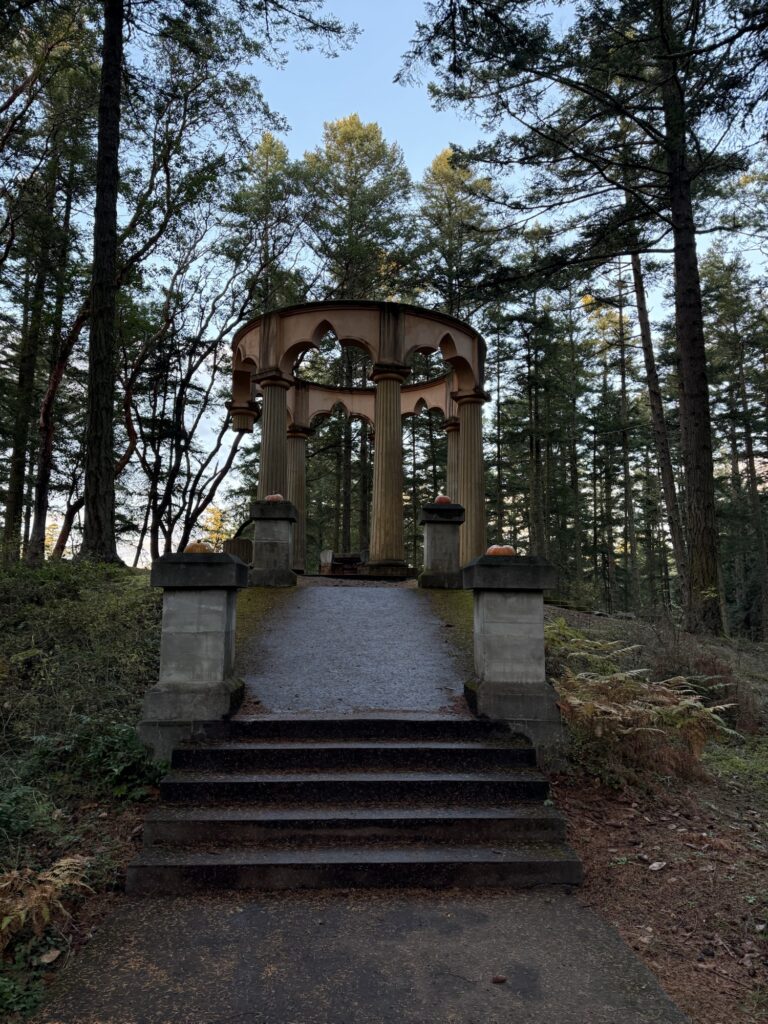
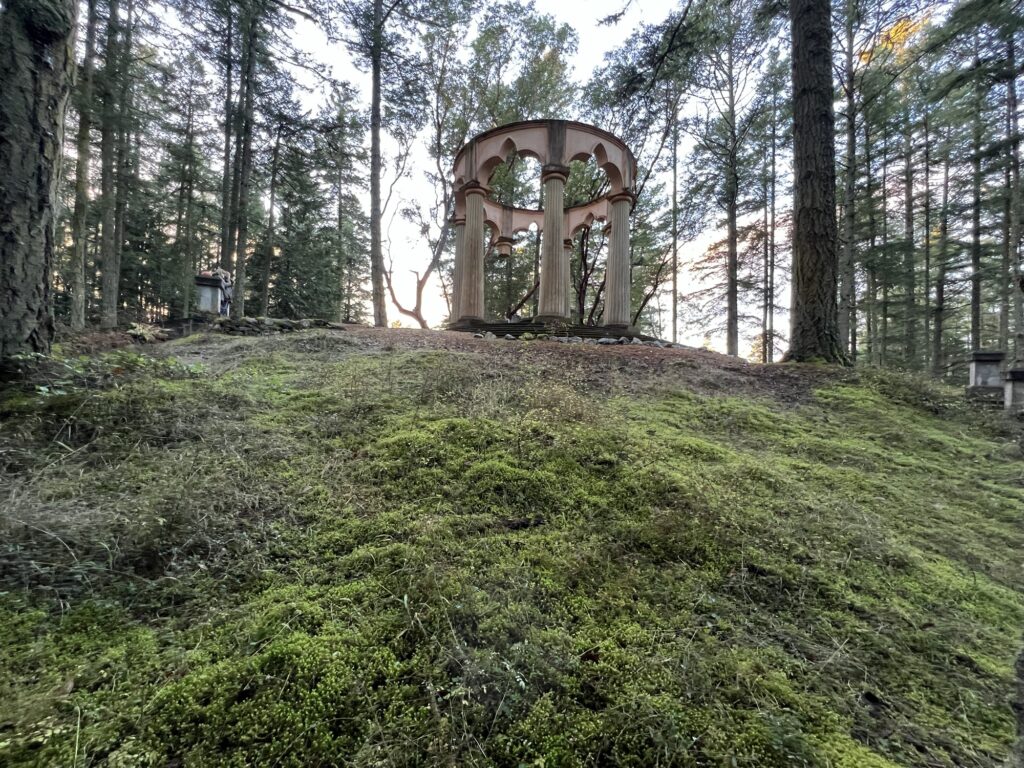
- The McMillin lime works company town and Mausoleum.
- The Tarte family’s boating resort.
- The modern marina village. For someone cruising from Snug Harbor to Roche Harbor today, the evening Colors Ceremony is arguably the Tartes’ most visible legacy: a tradition that turns an ordinary sunset into a daily celebration of maritime community.
References & Links
Snug Harbor Marina Information
San Juan Island National Historical Park
Pig War History (National Park Service)
English Camp History
English Camp Visitor Information
Robert’s Redoubt and Henry Martyn Robert
Washington State Ferries
Footnotes
- Snug Harbor Resort redevelopment and marina information.
- Pig War chronology and international boundary dispute.
- English Camp history and Royal Marine occupation.
- Establishment and purpose of San Juan Island National Historical Park.
- Biography of Henry Martyn Robert and Robert’s Redoubt.
- Origins of Robert’s Rules of Order.