Blake Island, Cultural Representation, and the Legacy of Tillicum Village
Blake Island is one of Puget Sound’s most storied landscapes—a place where hikers wander quiet salal forests, boaters tie up at a rustic marina patrolled by bold raccoons, and historians trace the island’s ties to Chief Seattle and to the 1993 APEC summit hosted by President Bill Clinton inside the Tillicum Village longhouse.
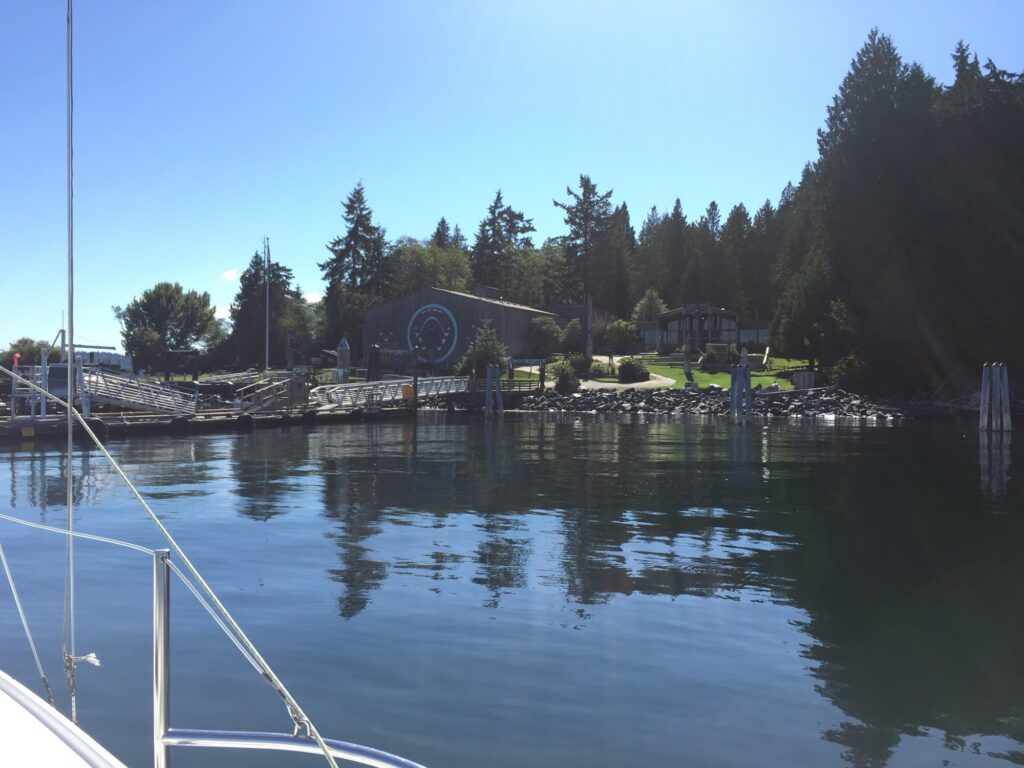
Blake Island is a short distance from the city of Seattle in Puget Sound. It is part of Kitsap County and is managed by Washington State Parks.
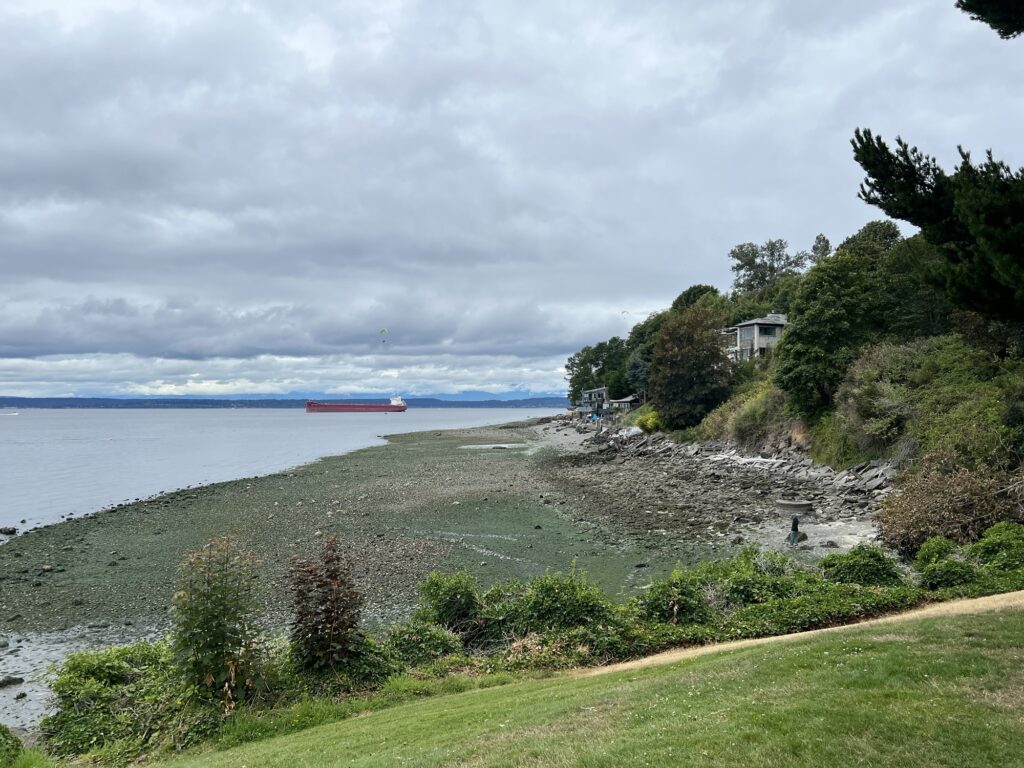
Puget Sound is cupped by two dominant mountain ranges. In the depiction below, to the left, the rugged Olympics give way to the densely wooded Kitsap Peninsula and Bainbridge Island. To the right, the Cascades frame your view of Seattle’s ever-evolving skyline. These mountains drain immense volumes of fresh water into the Puget Sound basin through thousands of rivers, streams, and creeks.
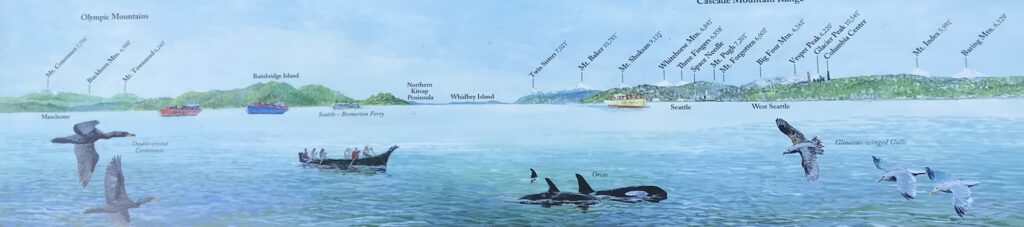
Blake Island lies near the center of this vital body of water. Thousands of species-including humans-depend on Puget Sound for food and sustenance. Ihese waters are among the most productive habitats for salmon and shellfish on the Pacific Coast, though pollution, urban development and overharvesting are growing threats.
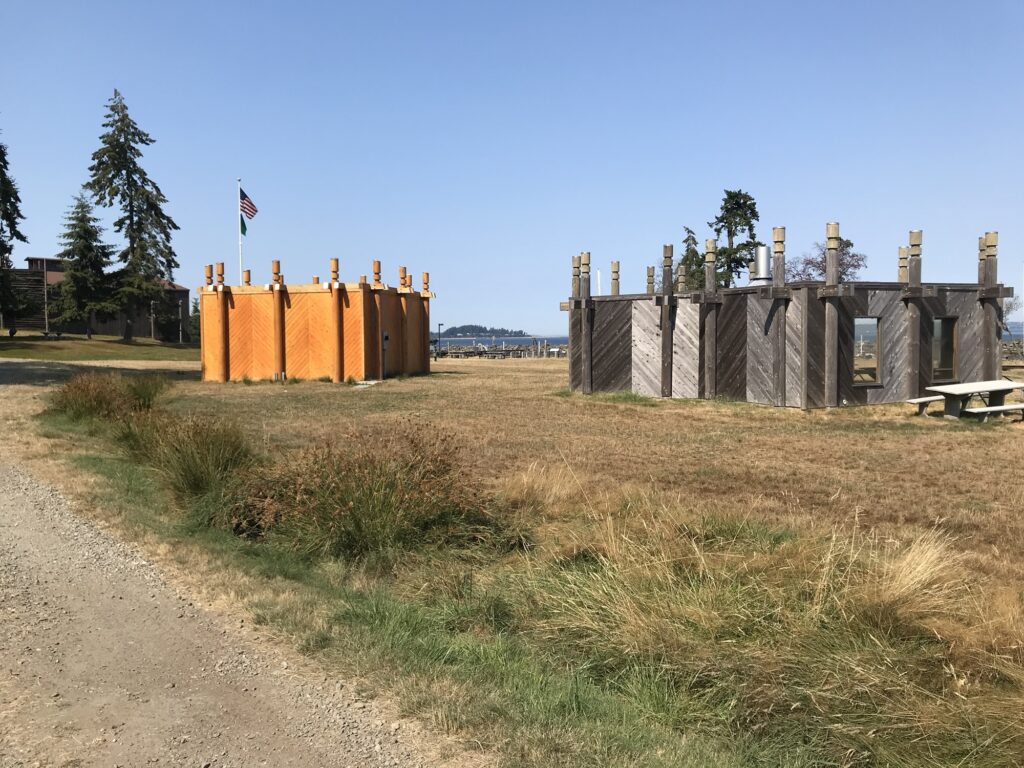
Campsites range from $12 to $71.53 per night, depending on site type and season. This includes standard sites, marine trail sites, and group sites
For decades, the Blake Island’s most visible attraction was Tillicum Village, a privately operated cultural‑tourism site offering salmon‑bake dinners and Native‑inspired performances. Its closure in 2021 marked not only the end of a beloved Seattle excursion but also a turning point in how Coast Salish nations expect their cultures to be represented—and how the public understands cultural appropriation.
Cultural Appropriation and Tillicum Village
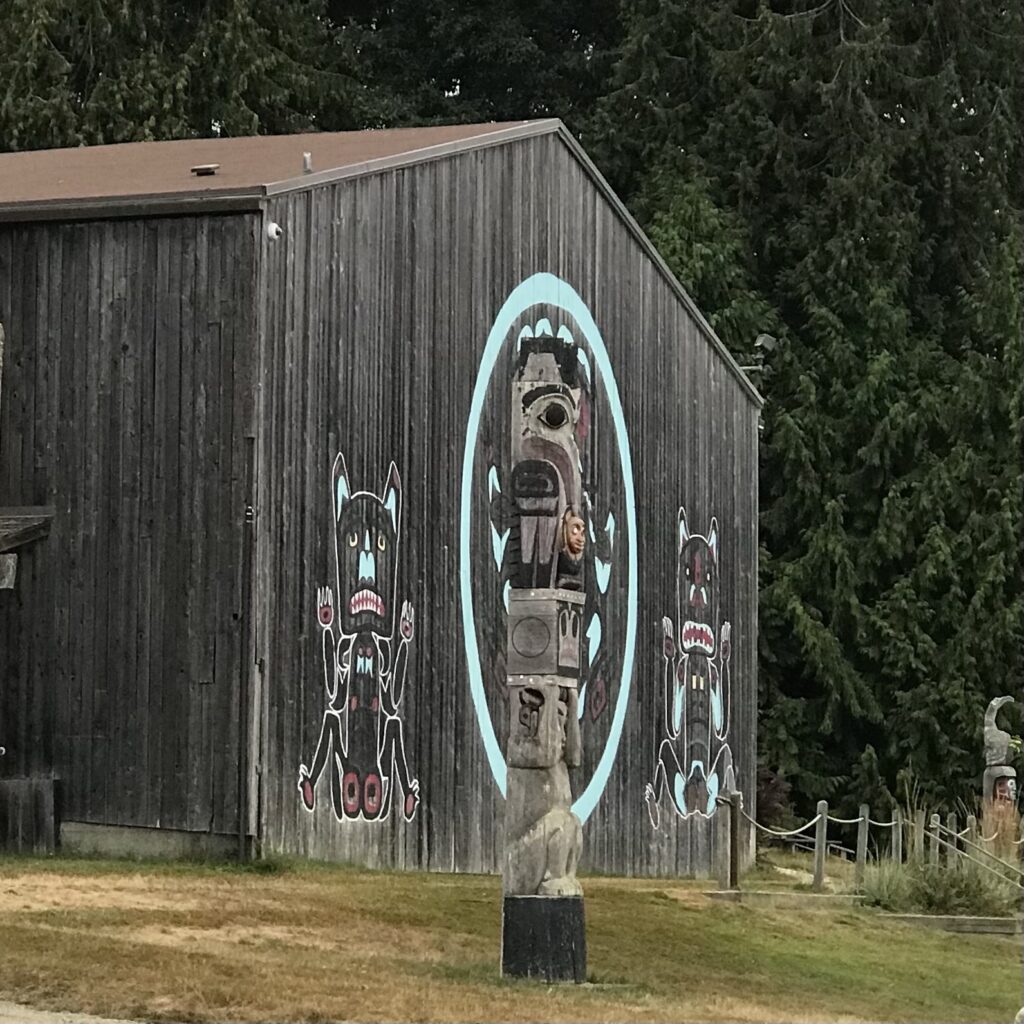
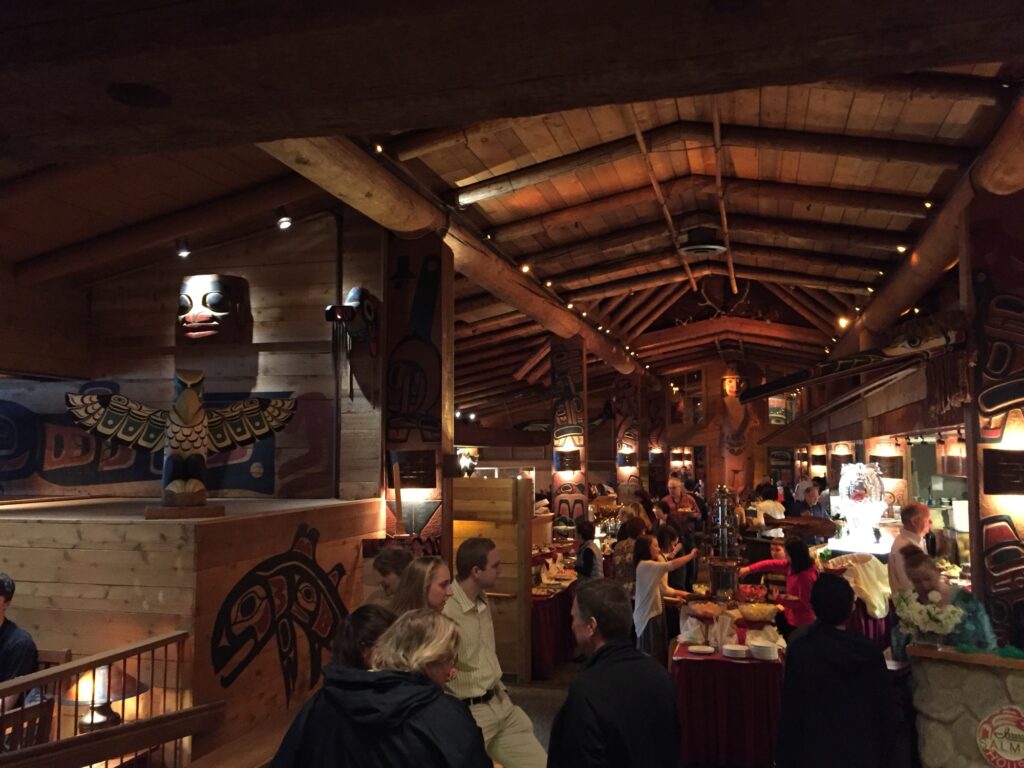
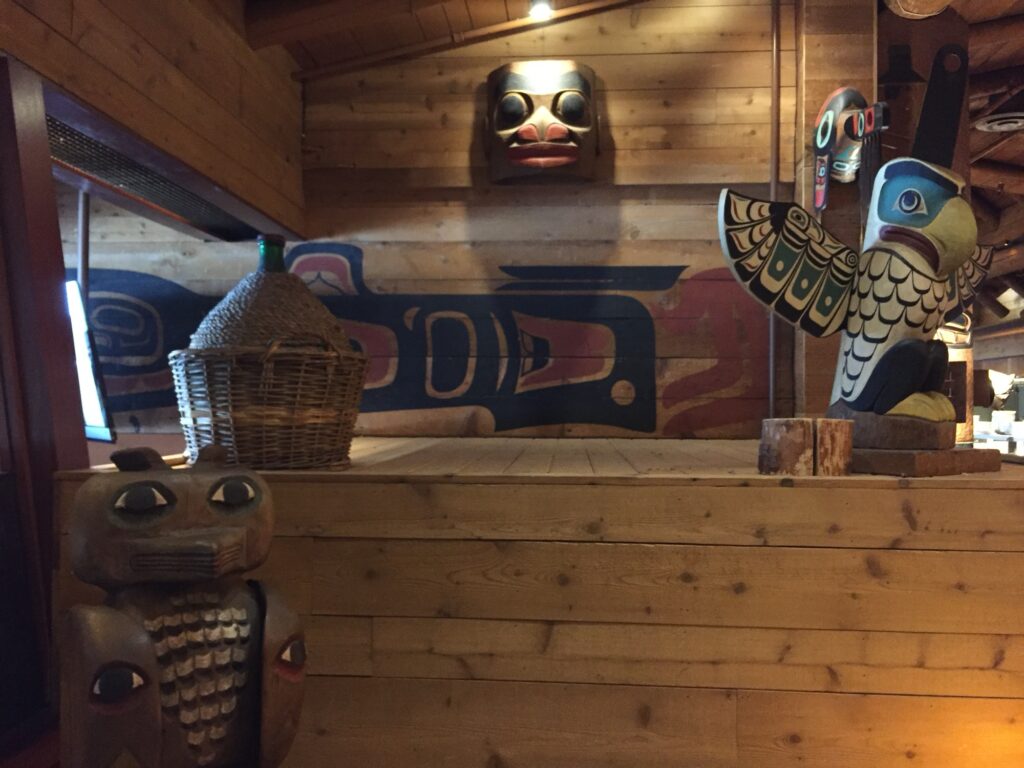
Tillicum Village was founded in 1962 by a non‑Native restaurateur. Its longhouse architecture, carvings, masks, and performances drew heavily from Northern Northwest Coast art traditions (Haida, Tlingit, Kwakwaka’wakw), even though Blake Island sits in the homelands of Coast Salish peoples such as the Suquamish and Duwamish.
The Coast Salish and Northern Northwest Coast mismatch is the core of the cultural‑appropriation critique:
- The attraction used Indigenous imagery without tribal governance.
- It blended multiple tribal traditions into a pan‑Indigenous aesthetic, erasing cultural specificity.
- It presented Native culture through a commercial tourism lens, not a sovereign tribal one.
- It shaped public understanding of “Northwest Native culture” in ways that were visually compelling but not culturally accurate.
Was the State guilty of cultural appropriation?
The answer is more nuanced than a simple yes or no.
- Tillicum Village itself was a private concession, not a state‑run cultural program.
- Washington State Parks leased the land but did not design the art or performances.
- The state’s role was primarily regulatory and logistical, not interpretive.
However, by hosting a non‑tribal cultural attraction on tribal homelands for decades, the state participated indirectly in a system that allowed cultural appropriation to flourish.
But Coast Salish artistic exchange is real
It is also true that Coast Salish nations have long exchanged artistic ideas with neighboring tribes. Canoe journeys, trade networks, intermarriage, and shared ceremonial spaces created a fluid artistic landscape. Even today, Coast Salish artists draw inspiration from other Northwest Coast traditions.
The difference is agency:
- Tribal artists choose how and when to incorporate outside influences.
- Tillicum Village imposed a blended style without tribal authority.
This distinction—sovereign artistic exchange vs. commercial appropriation—is central to understanding why Tillicum Village became controversial.
The village founder was Bill Hewitt, a Seattle restaurateur and entrepreneur. Hewitt owned restaurants and food‑service businesses in Seattle in the early 1960s. He saw an opportunity during the 1962 Seattle World’s Fair to create a “Northwest Native cultural experience” for tourists. He leased land on Blake Island from Washington State Parks and built the Tillicum Village longhouse, salmon‑bake pits, and performance hall.
Hewitt’s vision was well‑intentioned but not tribally governed, which is why the attraction later drew criticism for cultural appropriation and pan‑Indigenous blending.

Tribal governance has its own set of issues. Chief Seattle (Si’ahl) was a leader of both the Suquamish and Duwamish peoples, reflecting his Suquamish father and Duwamish mother. The Suquamish Tribe is federally recognized, with sovereignty affirmed since the Treaty of Point Elliott (1855). The Duwamish Tribe is not federally recognized, though their petition is under federal reconsideration. The Suquamish casino is one of the major tribal economic engines in the central Puget Sound region and is fully compliant with the Indian Gaming Regulatory Act (IGRA), which requires federal recognition. The Suquamish Tribe owns and operates the Clearwater Casino Resort in Suquamish, Washington. The not recognized Duwamish do not have a casino.
What Art and Totem Poles Remain on Blake Island?
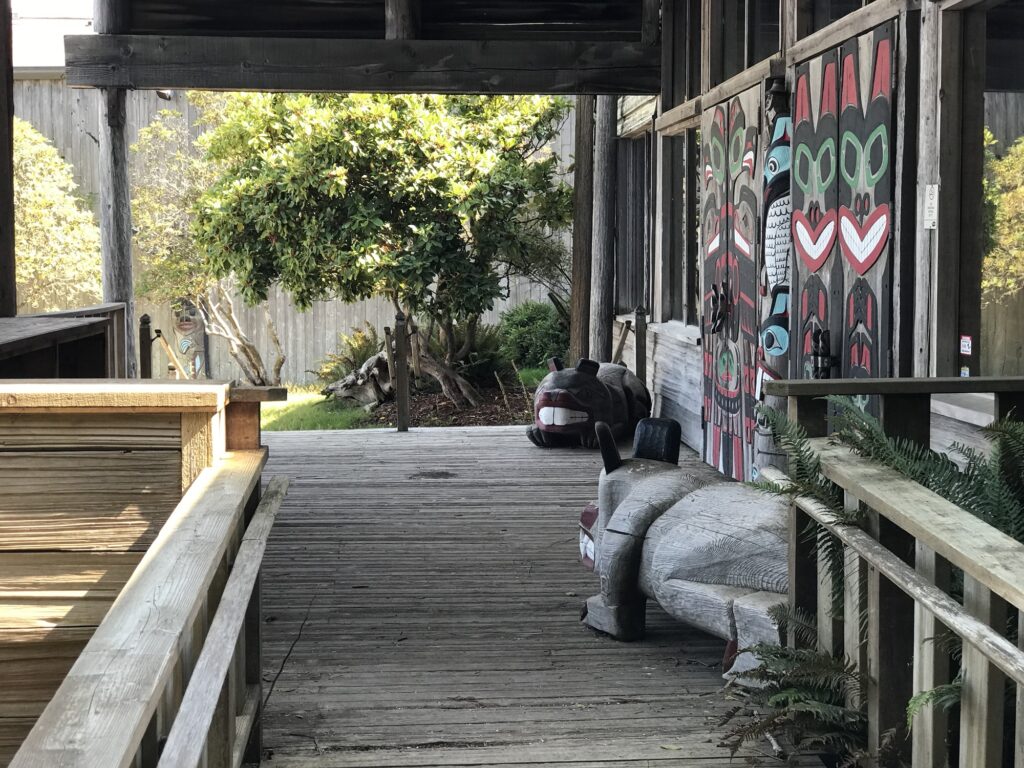
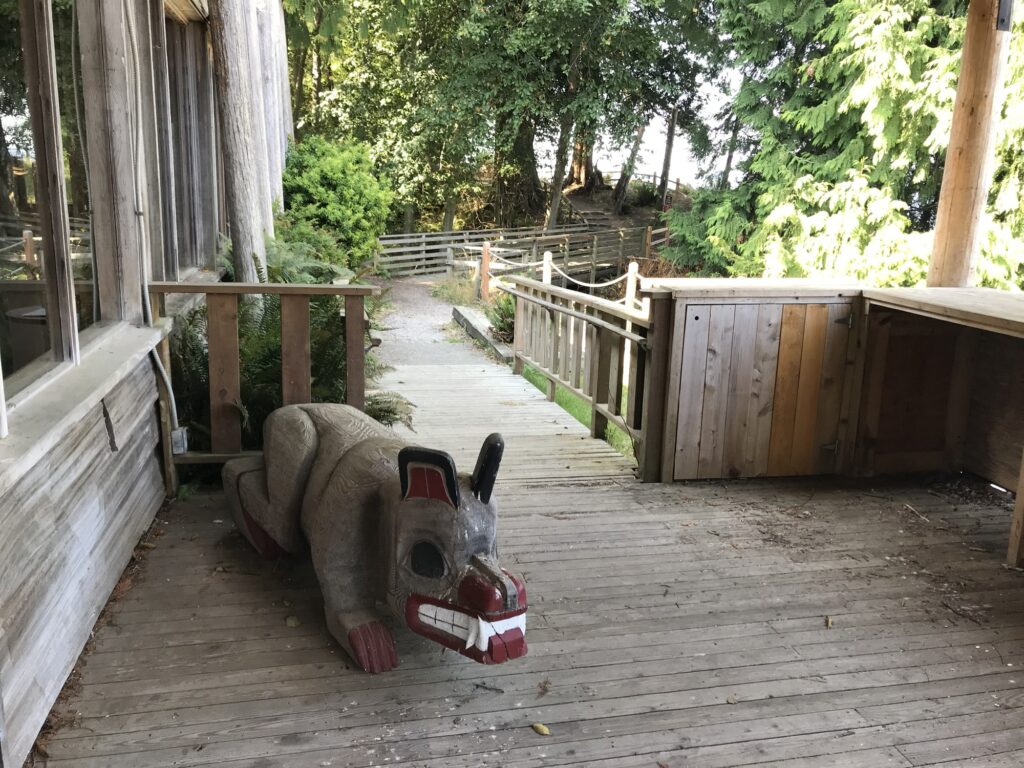
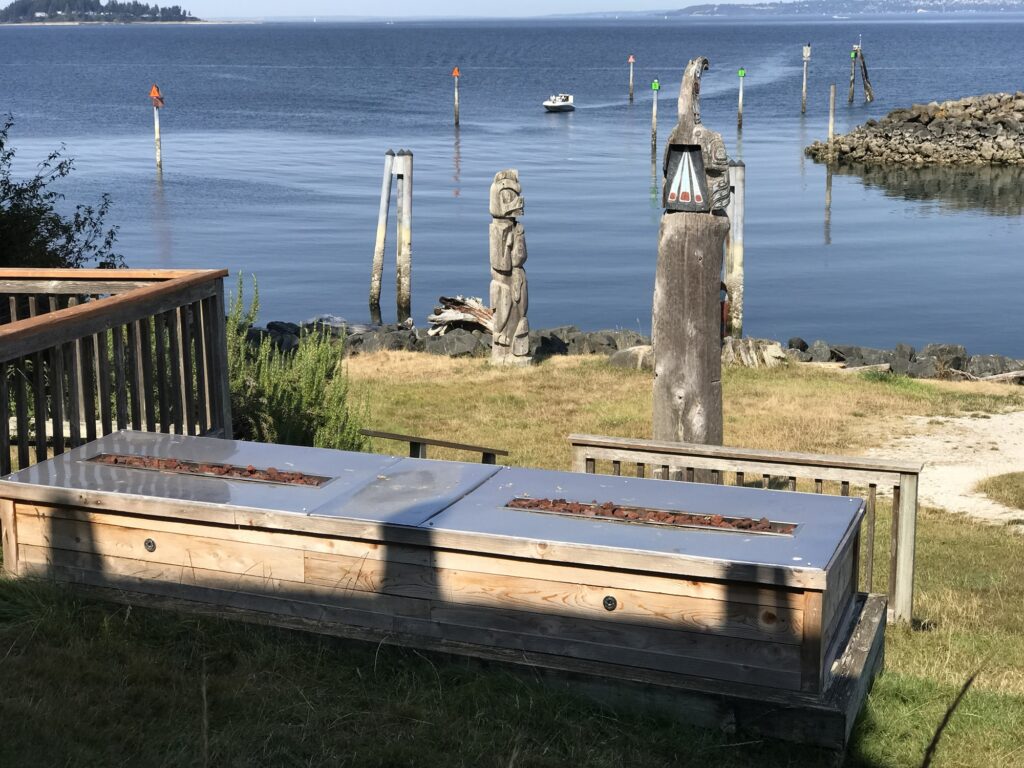
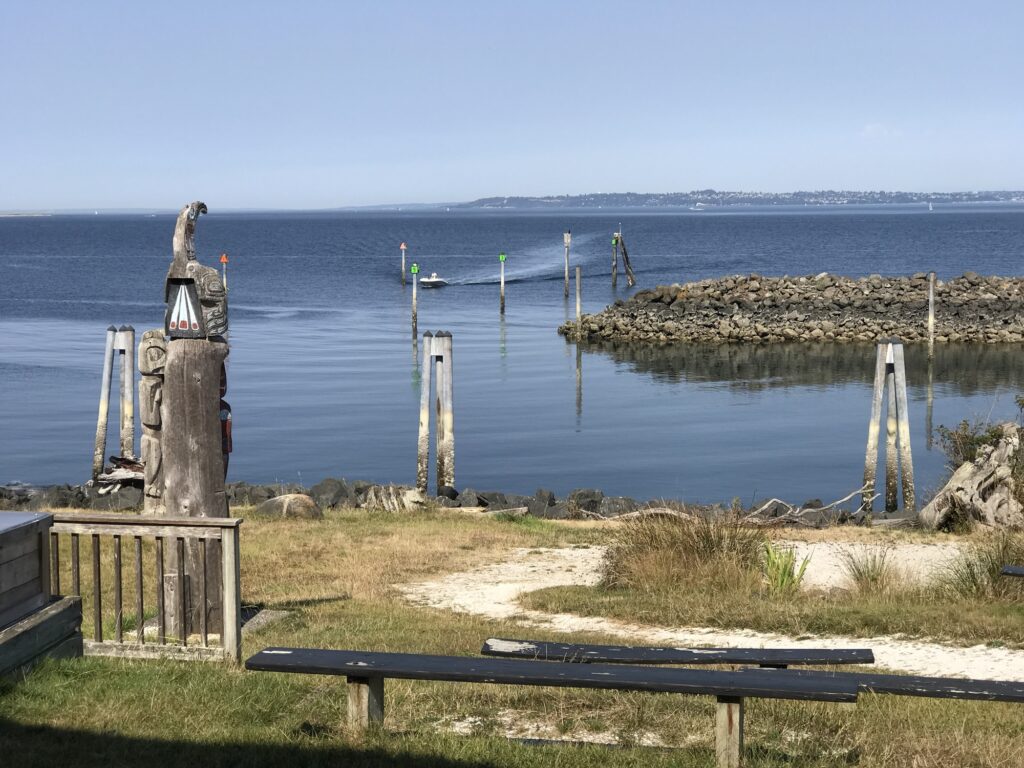
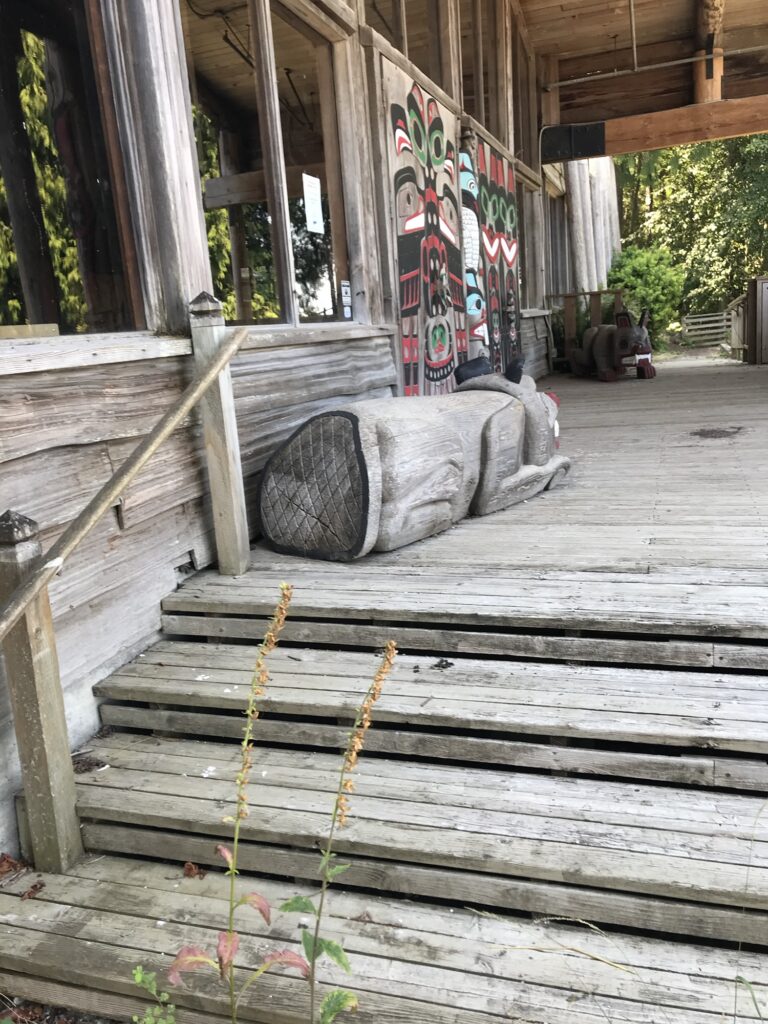
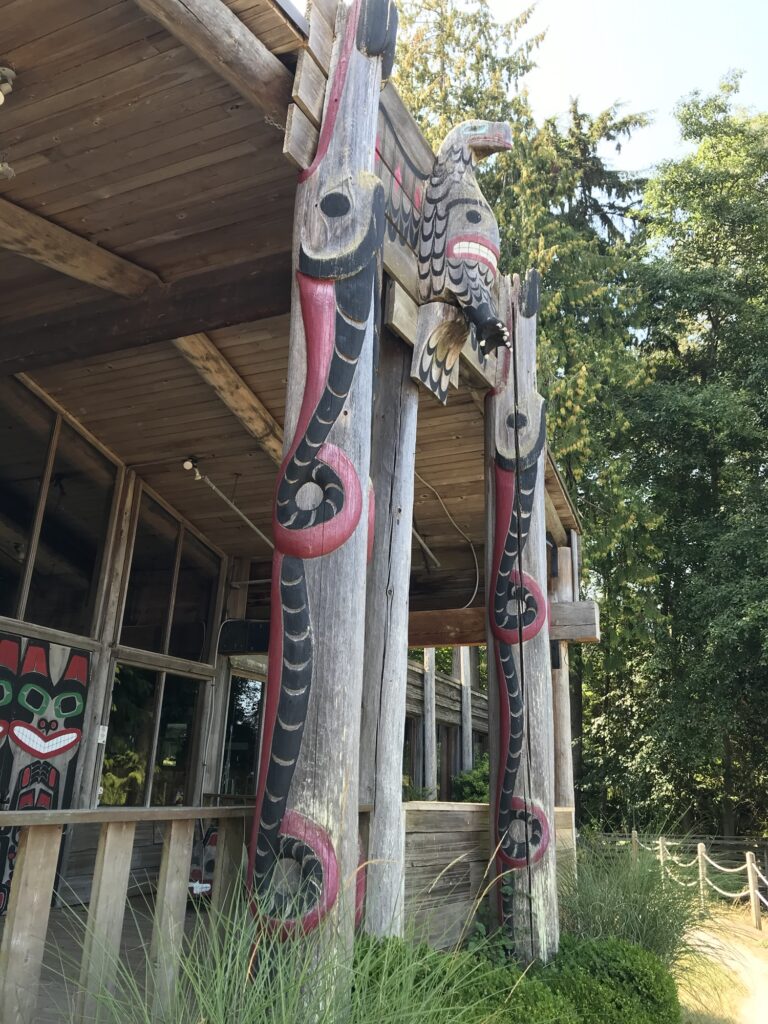
Several carved elements from the Tillicum Village era remain on the island, though the longhouse is closed:
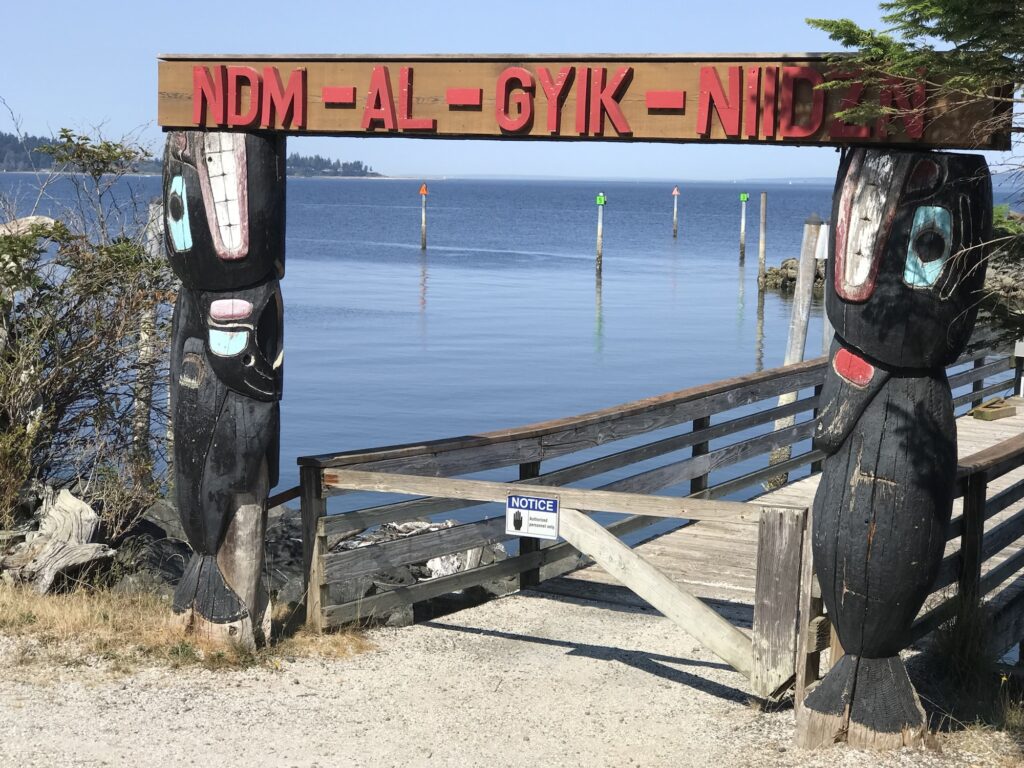
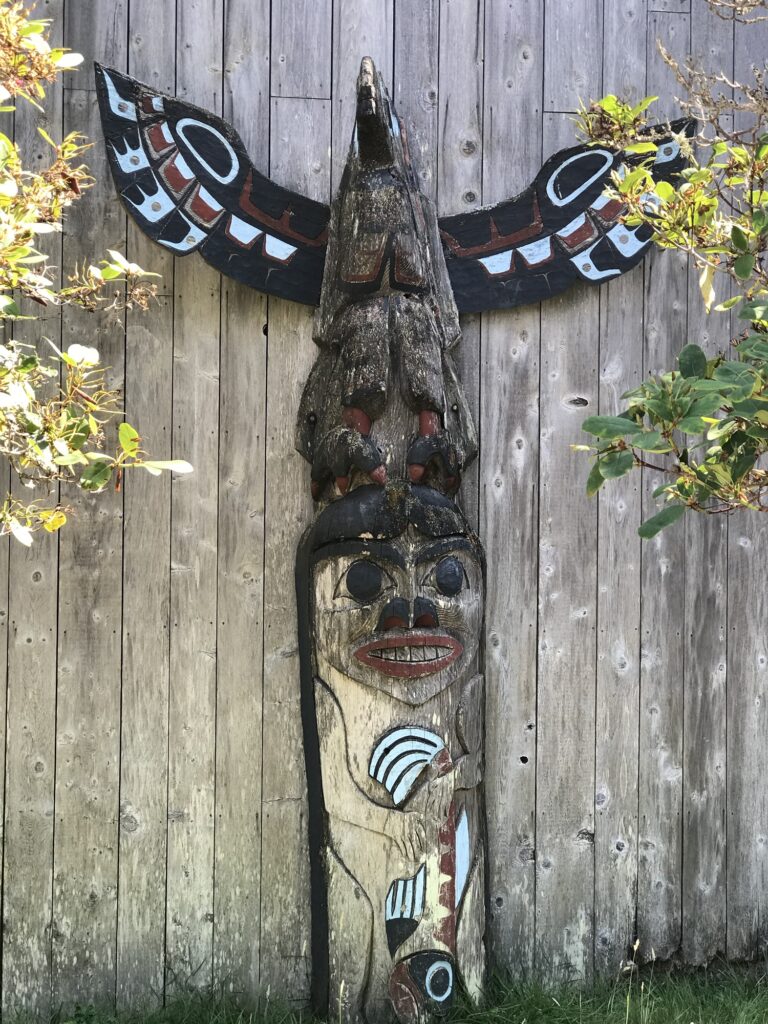
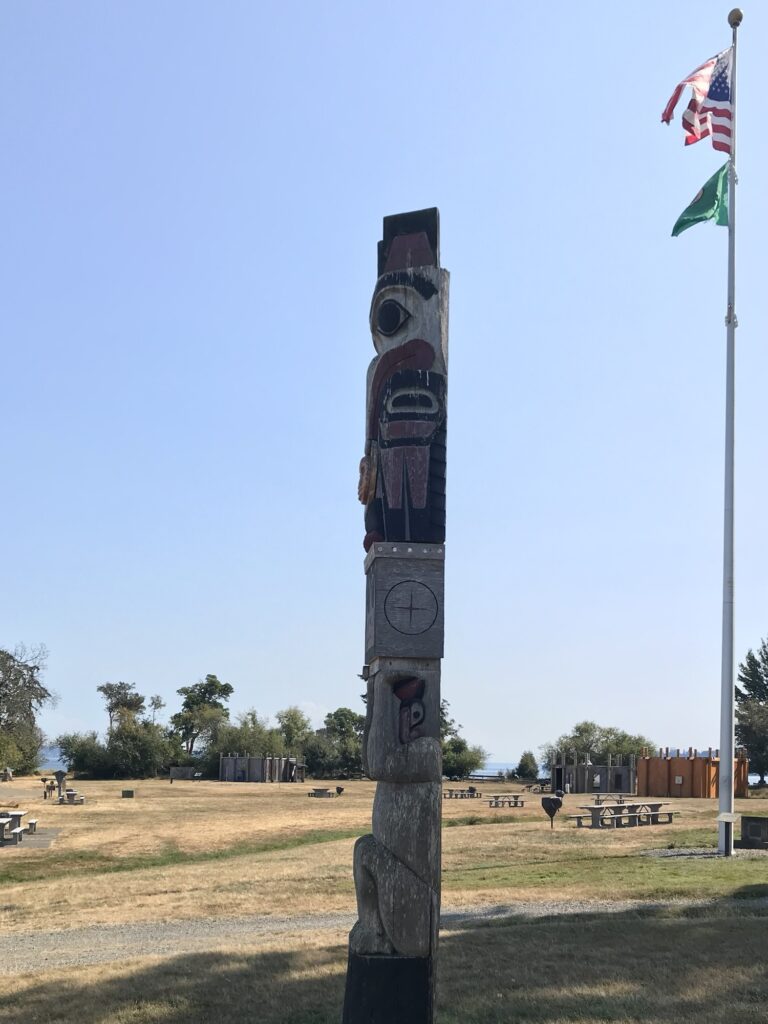
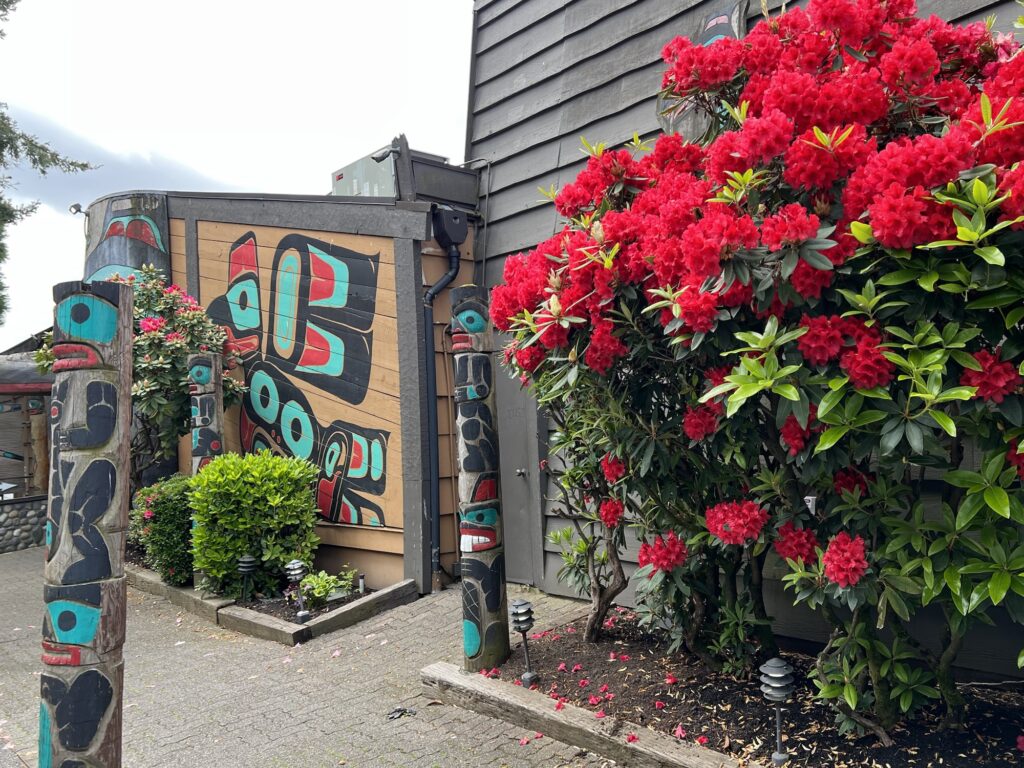
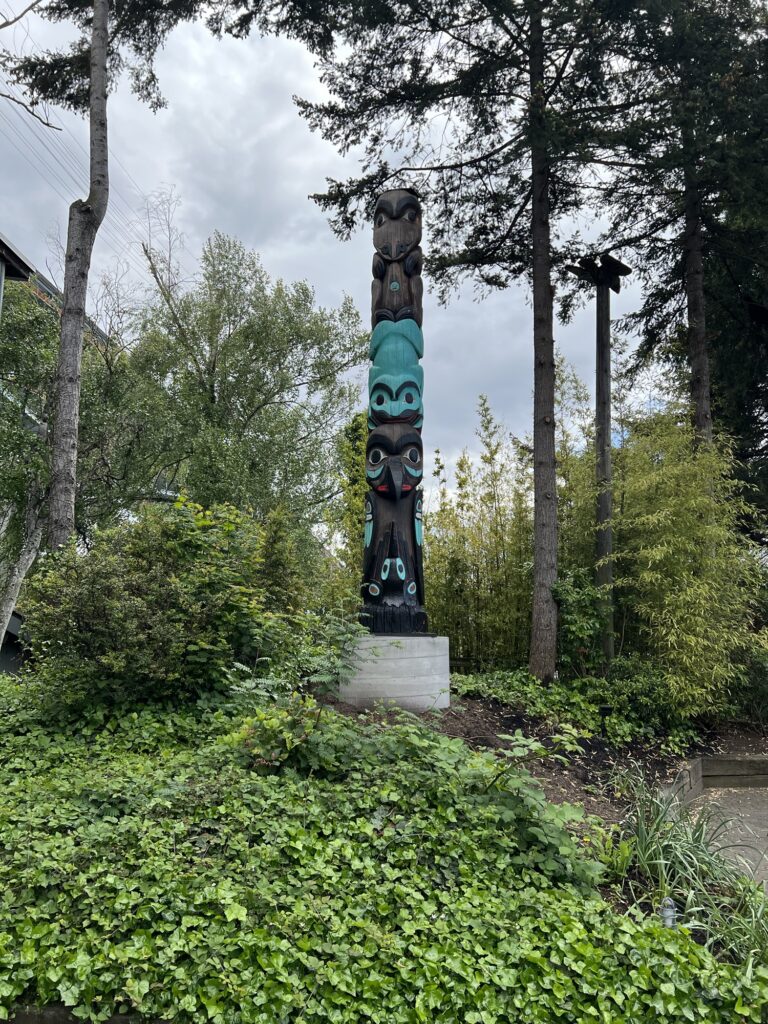
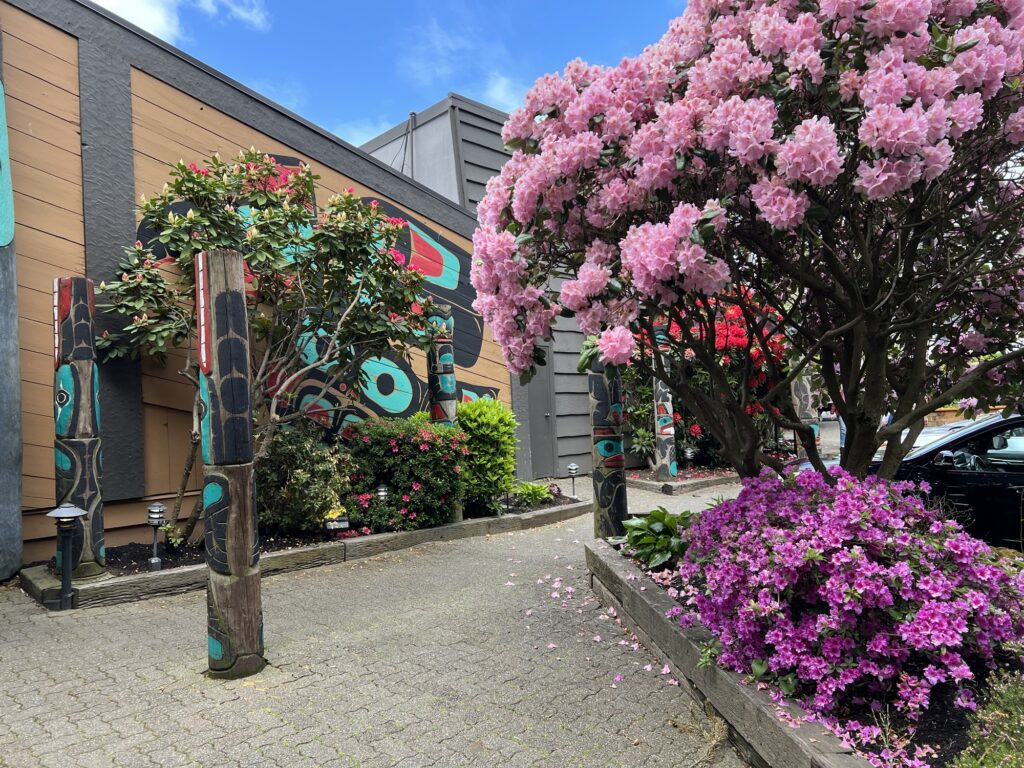
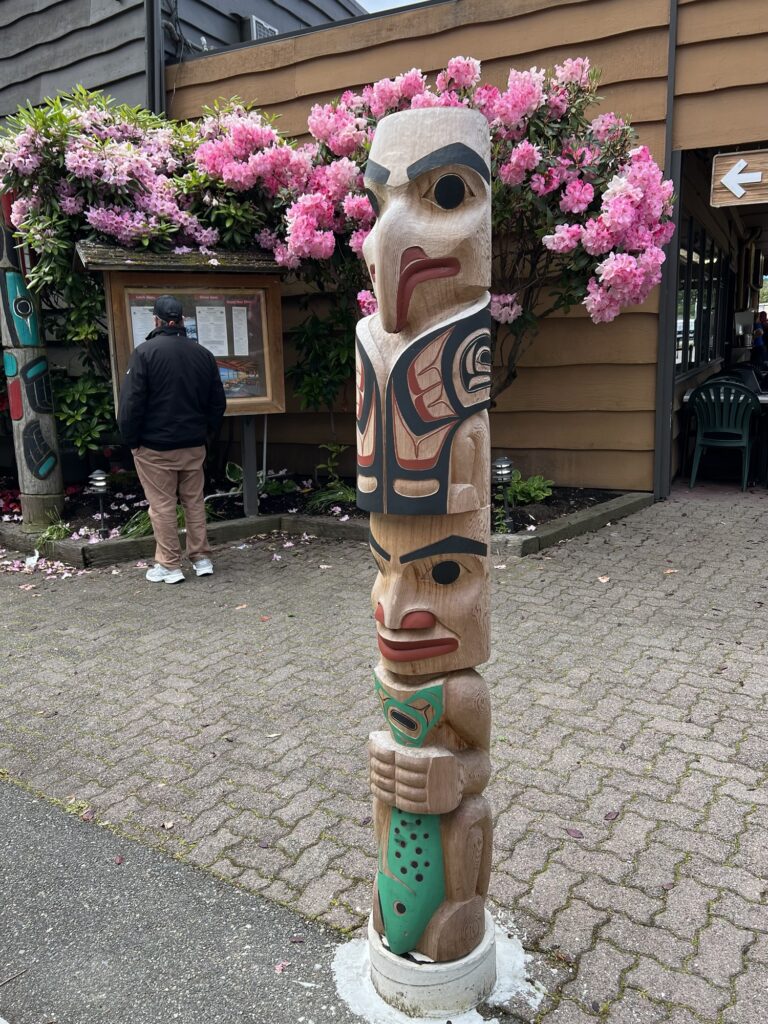
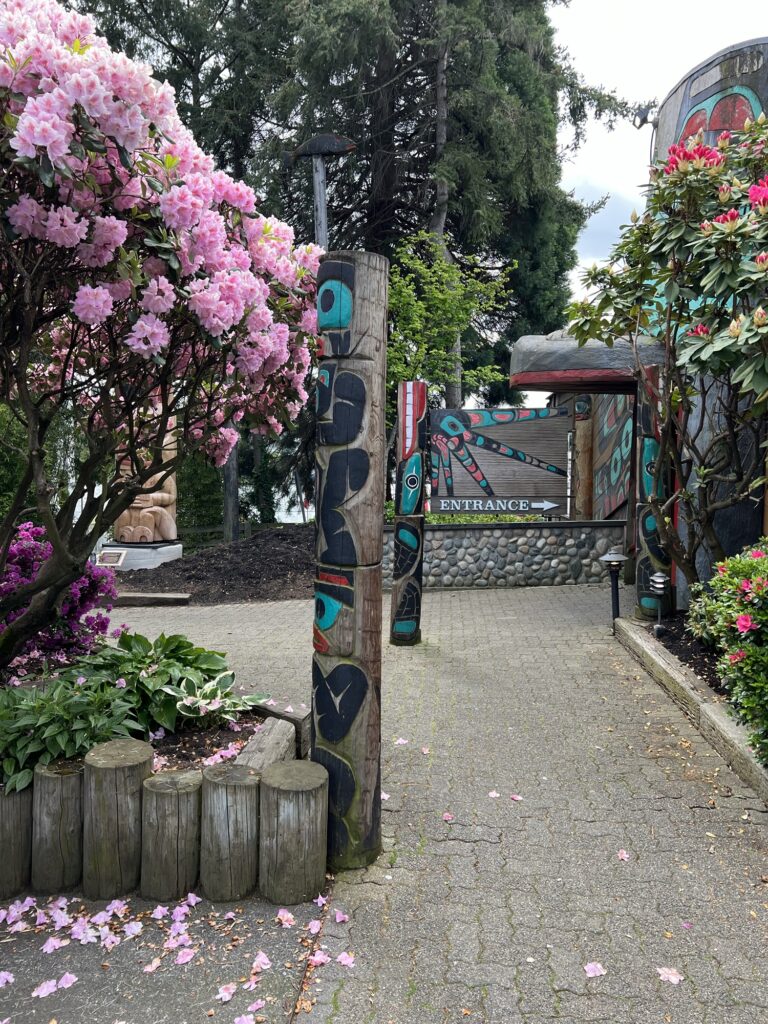
- Totem poles near the longhouse exterior
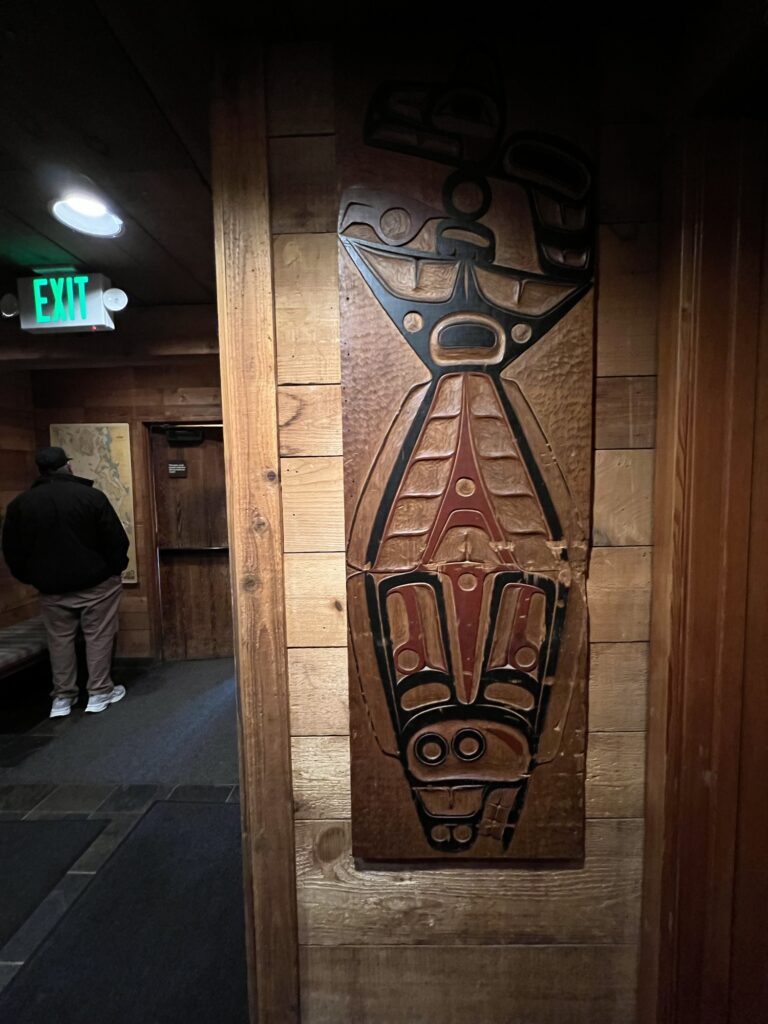
- Carved house posts and decorative panels
- Masks and interior carvings (not publicly accessible)
- Northern‑style formline artwork on the longhouse façade
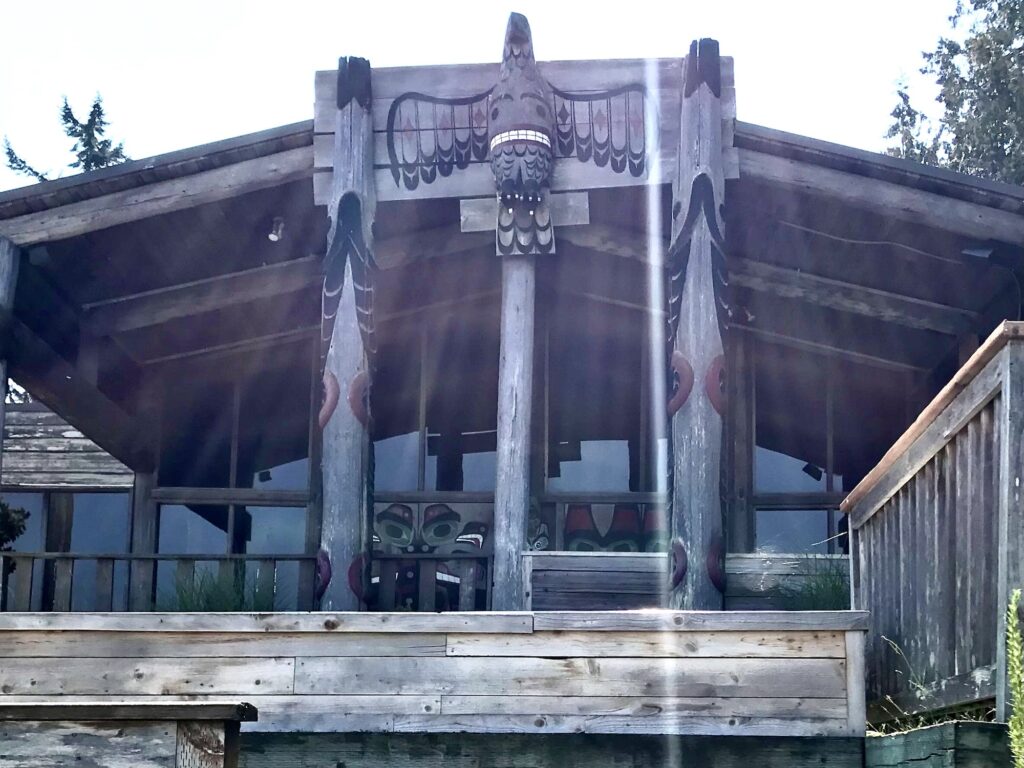
These state-owned pieces are preserved but not interpreted, pending decisions in the ongoing Blake Island Master Plan.
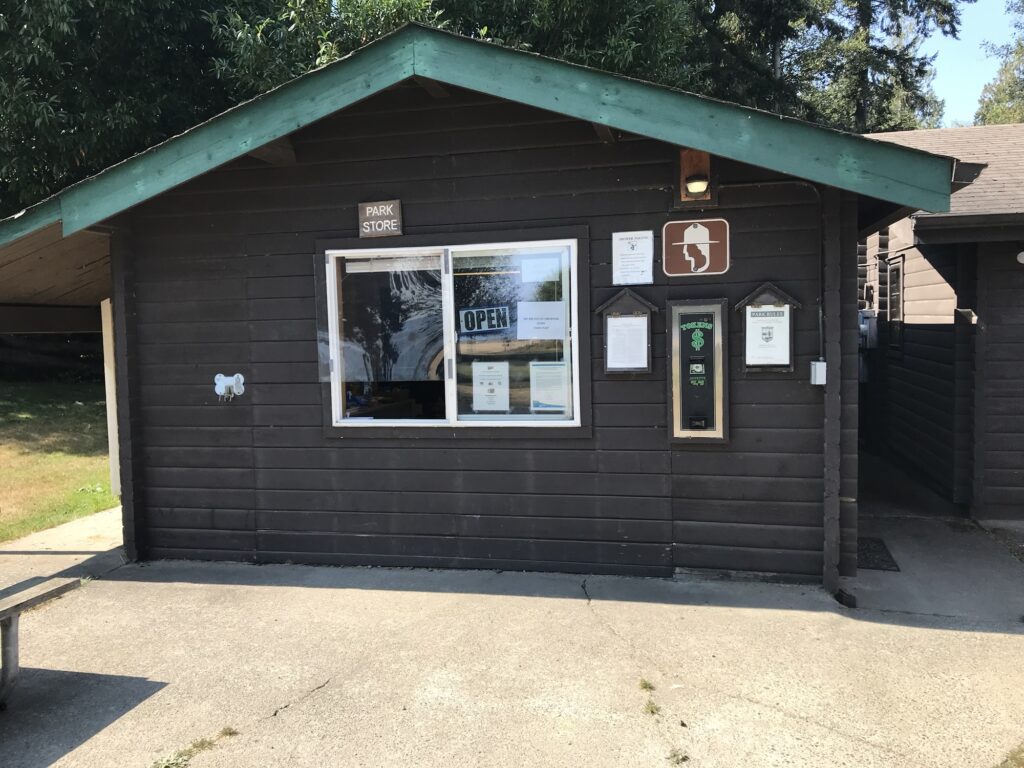
Is There Still a Store or Ice Cream?
The Tillicum Village gift and snack shop is closed. Visitors must bring their own food—or arrive by private boat with supplies. On a Sunday in July of 2026, when we visited, the state park service had a snack shack serving ice cream and candy.
Where Cruise‑Ship Passengers Go Now
With Tillicum Village closed and no ferry service to Blake Island, cruise passengers seeking an Indigenous cultural experience now visit tribally owned and operated cultural centers, including:
- Suquamish Museum
The closest cultural successor to what Tillicum Village should have been. Authentic Coast Salish art, history, and interpretation.
- Duwamish Longhouse & Cultural Center
A modern Coast Salish longhouse offering exhibits, markets, and guided interpretation.
- Hibulb Cultural Center (Tulalip Tribes)
A major museum with galleries, gardens, and educational programs.
- Tribal art galleries and studios
Carvers, weavers, and printmakers across the Salish Sea welcome visitors.
- Canoe Journey hospitality sites
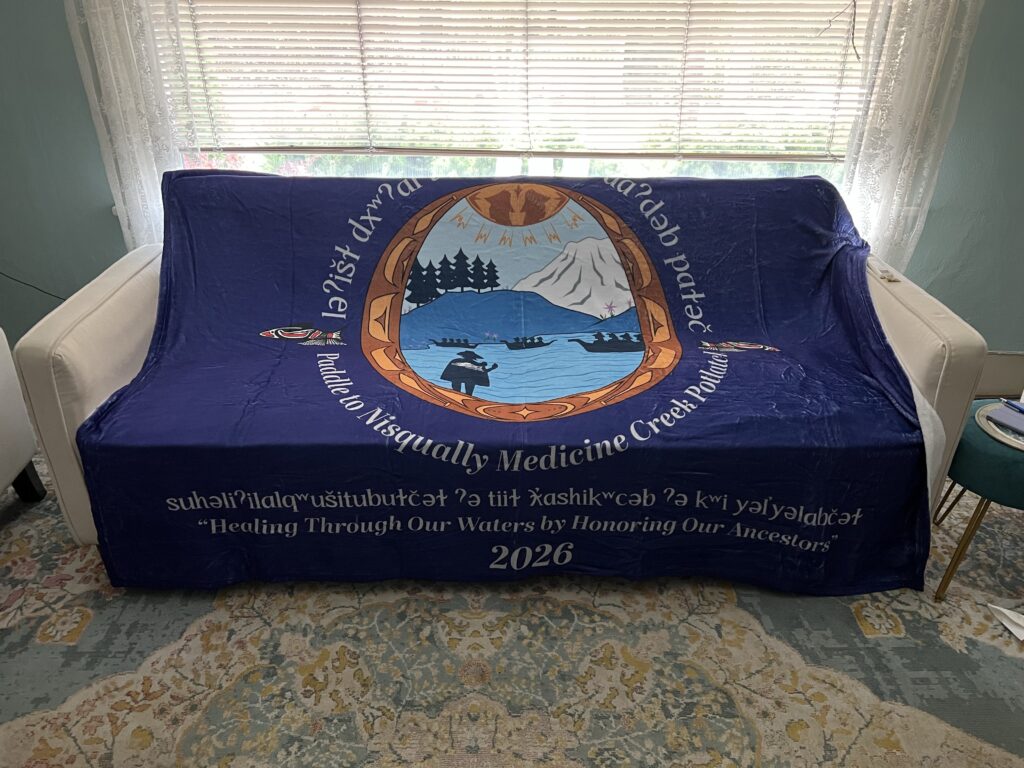
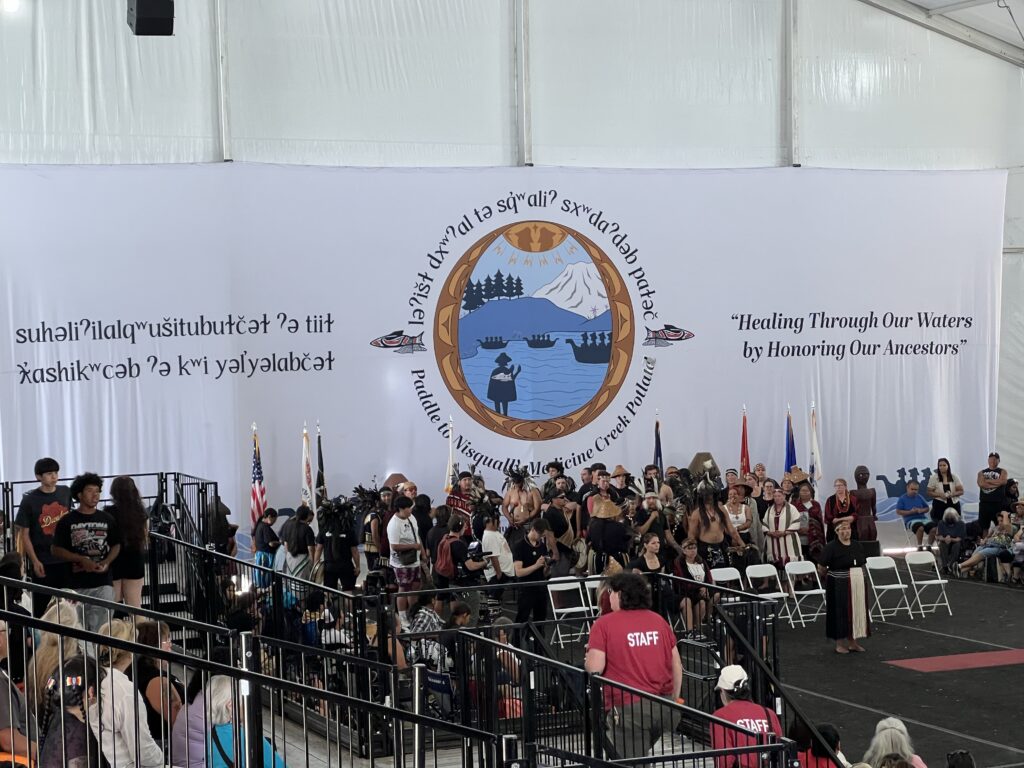
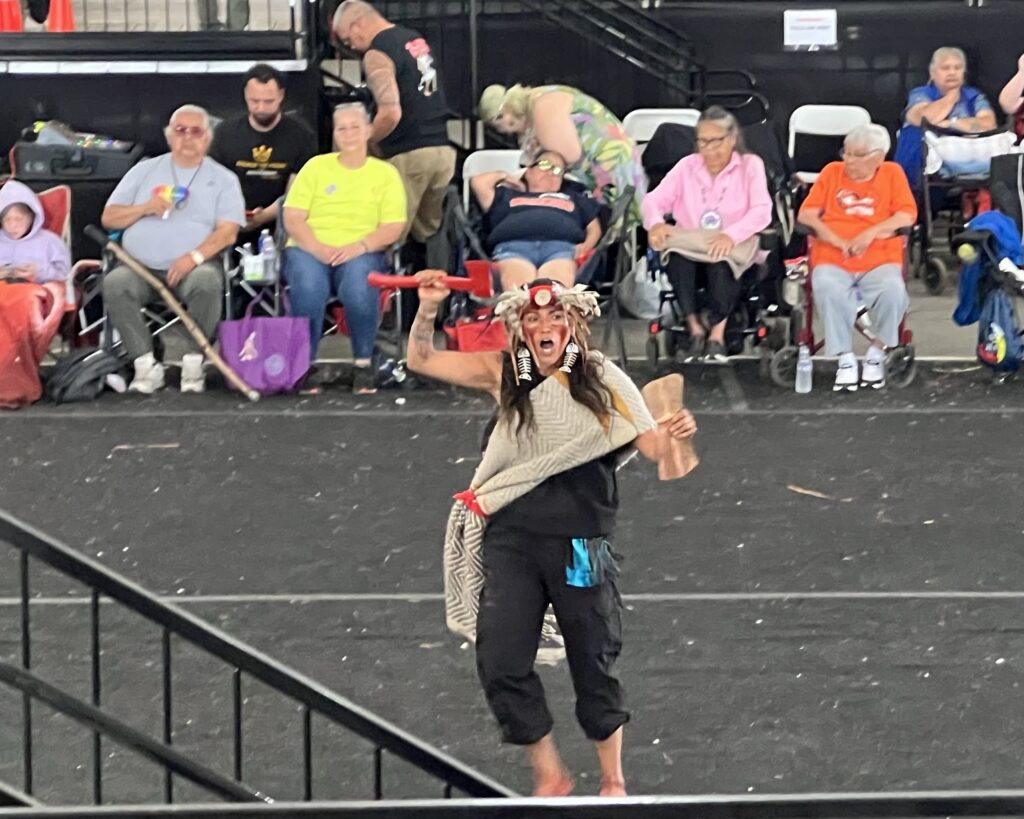
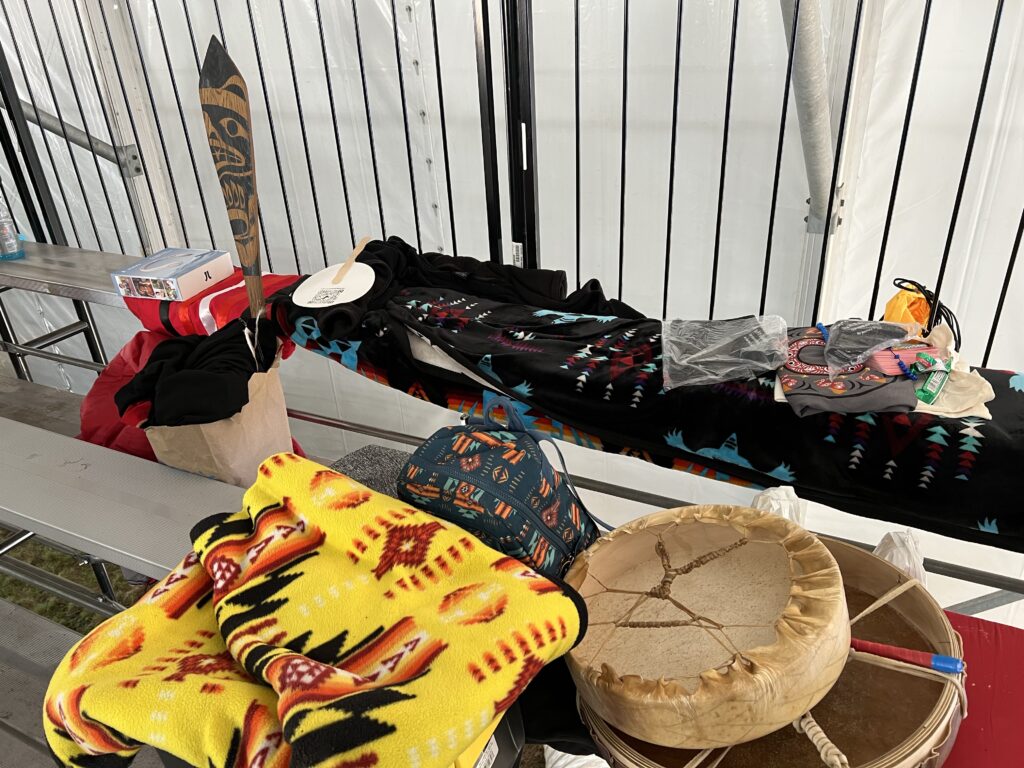
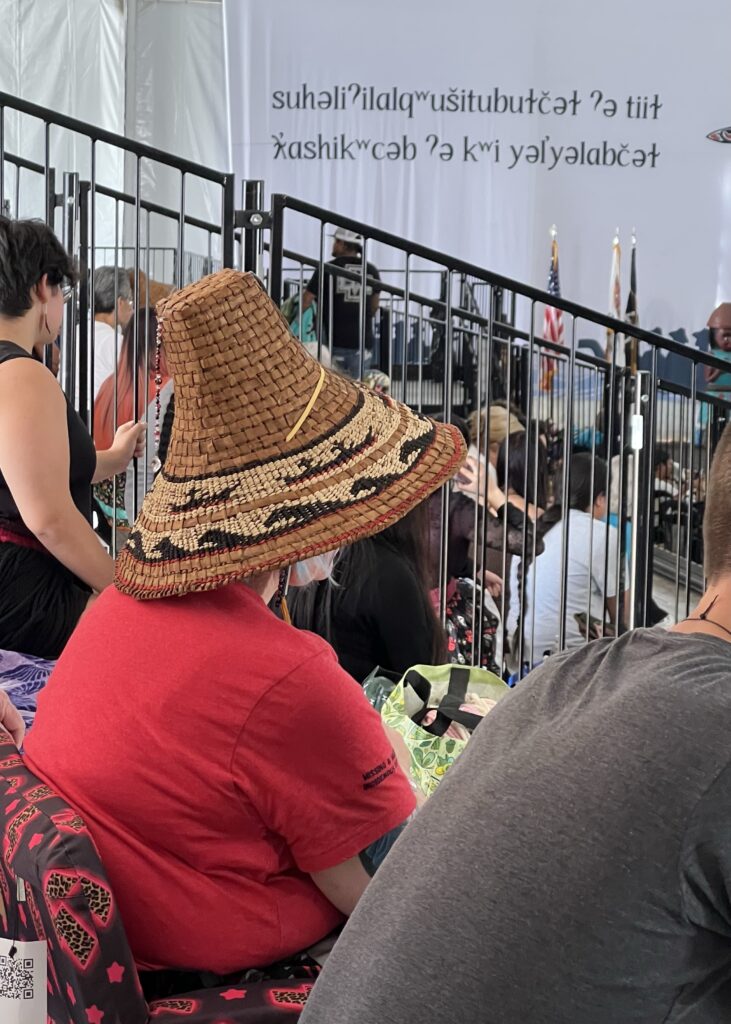
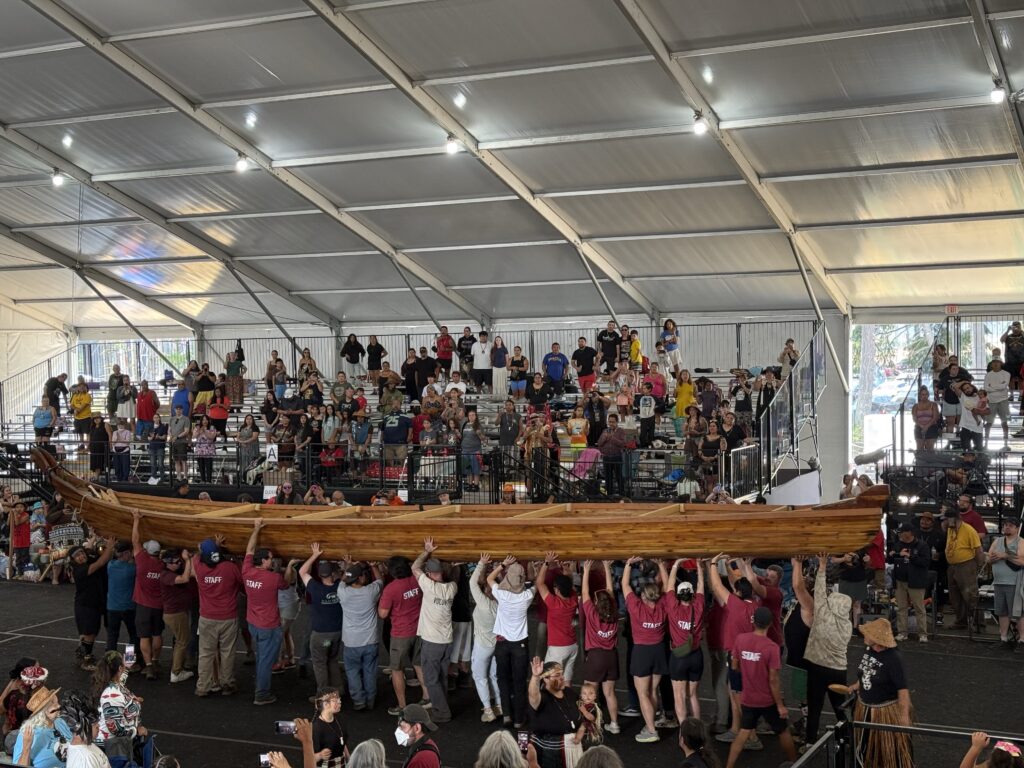
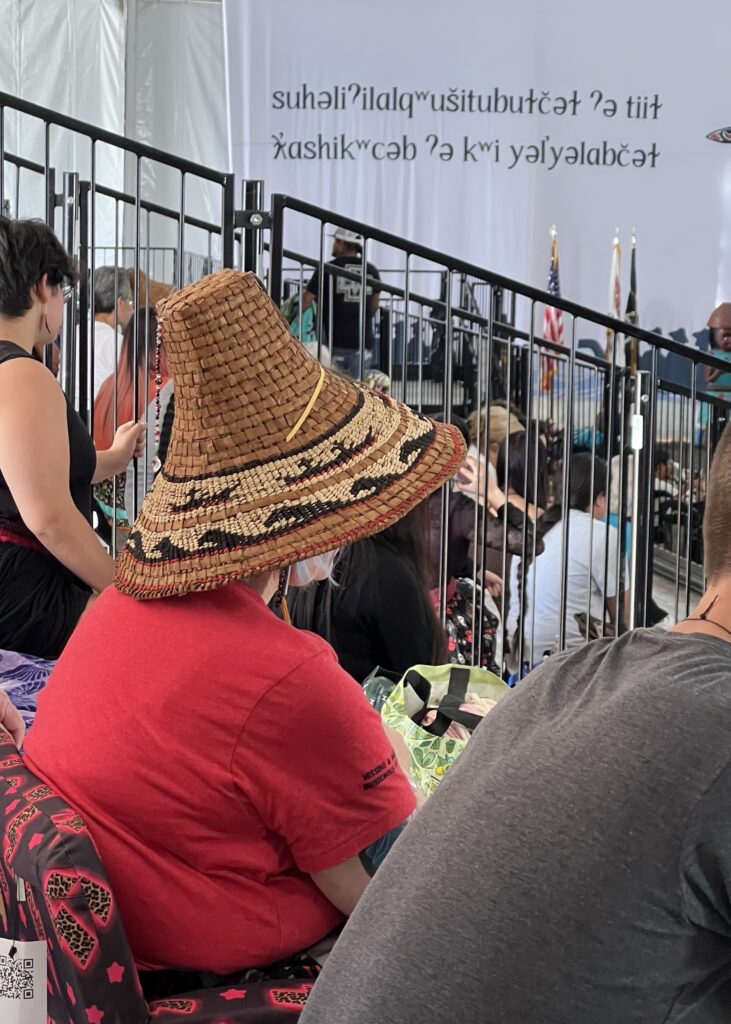
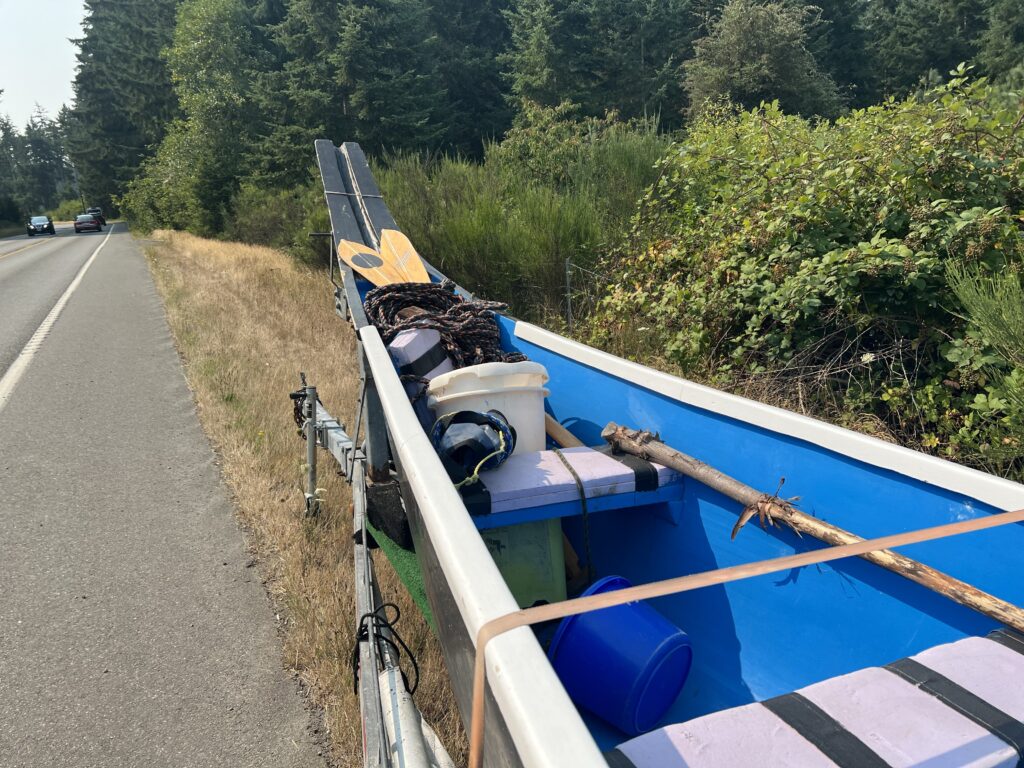
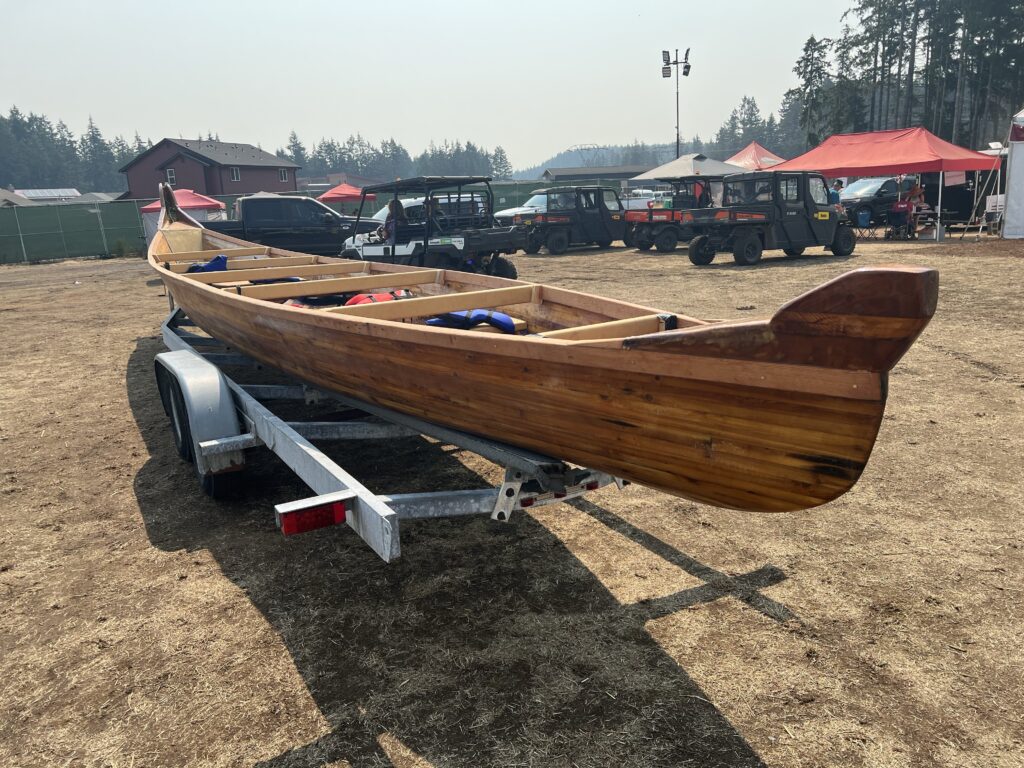
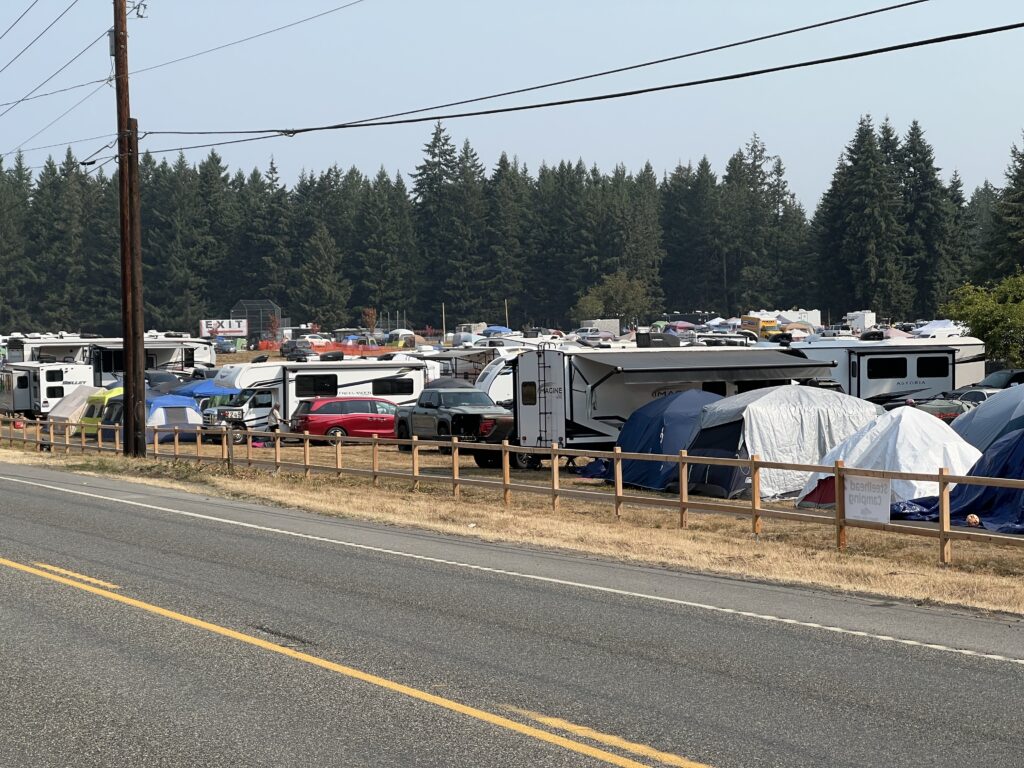
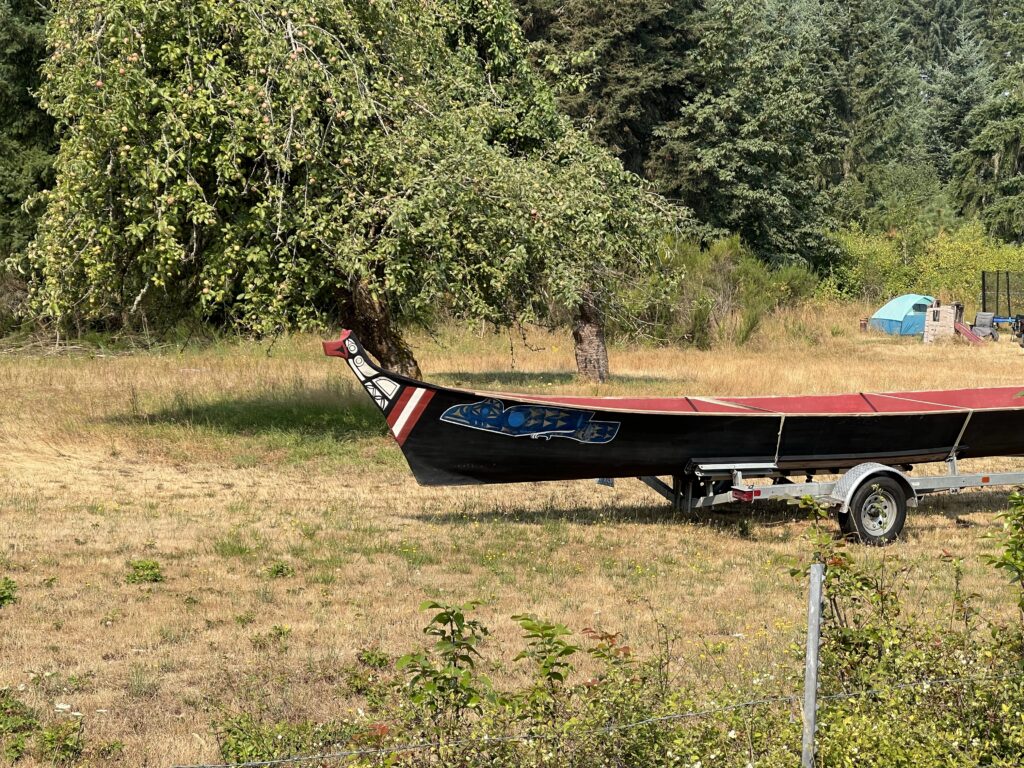
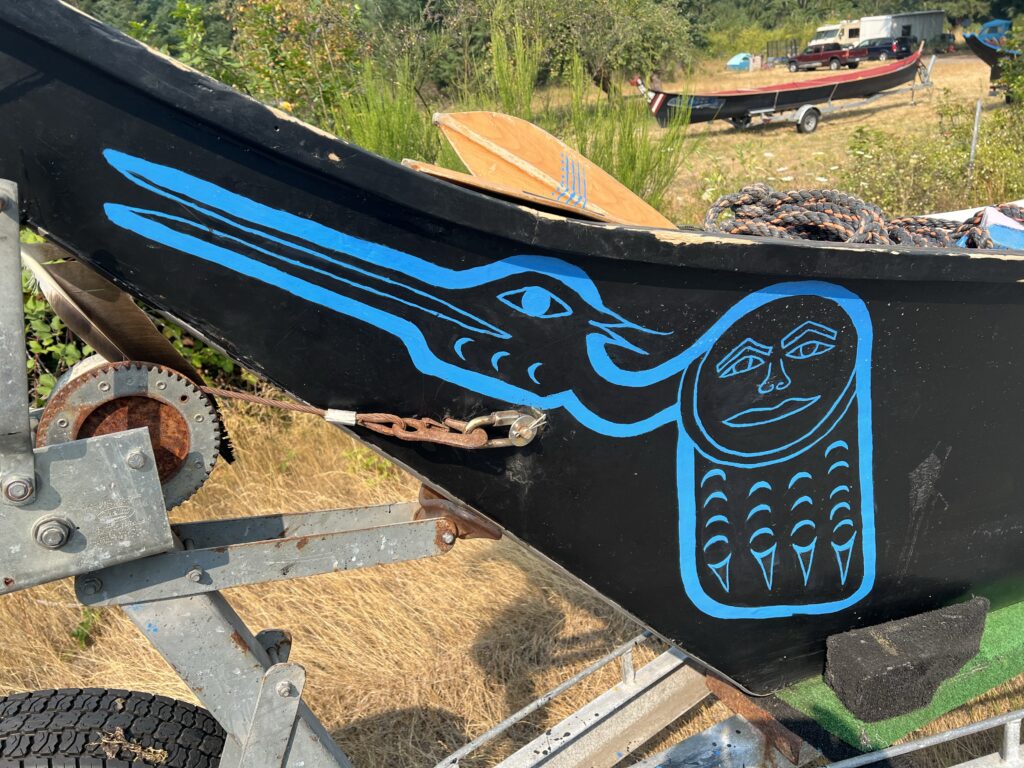
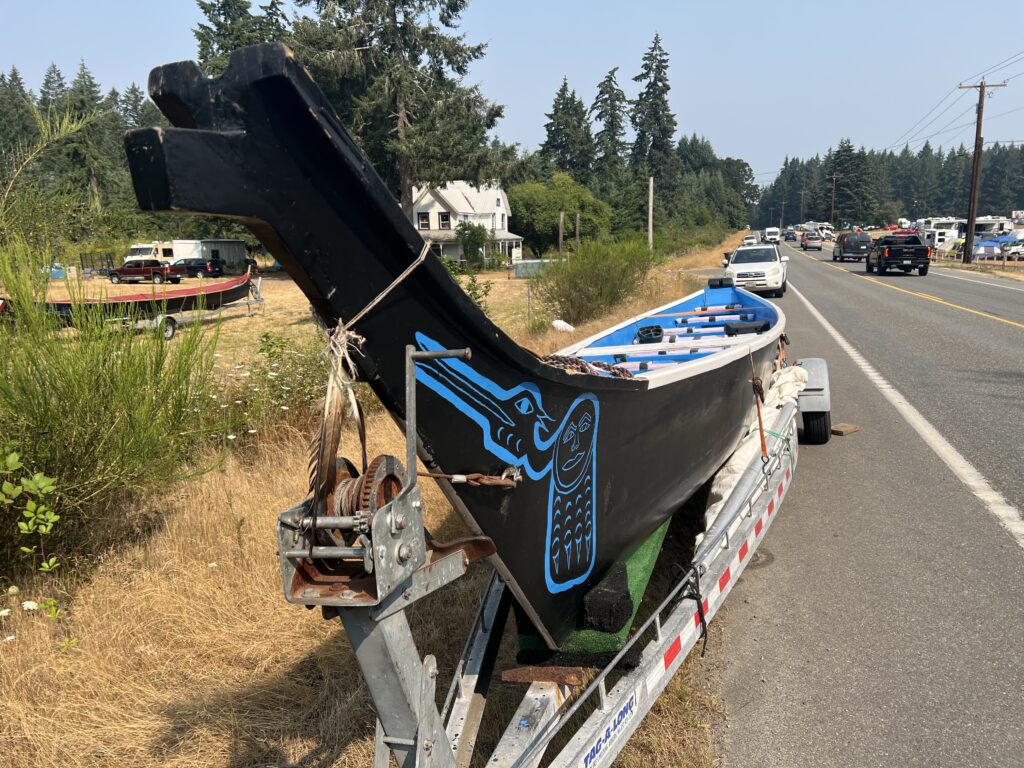
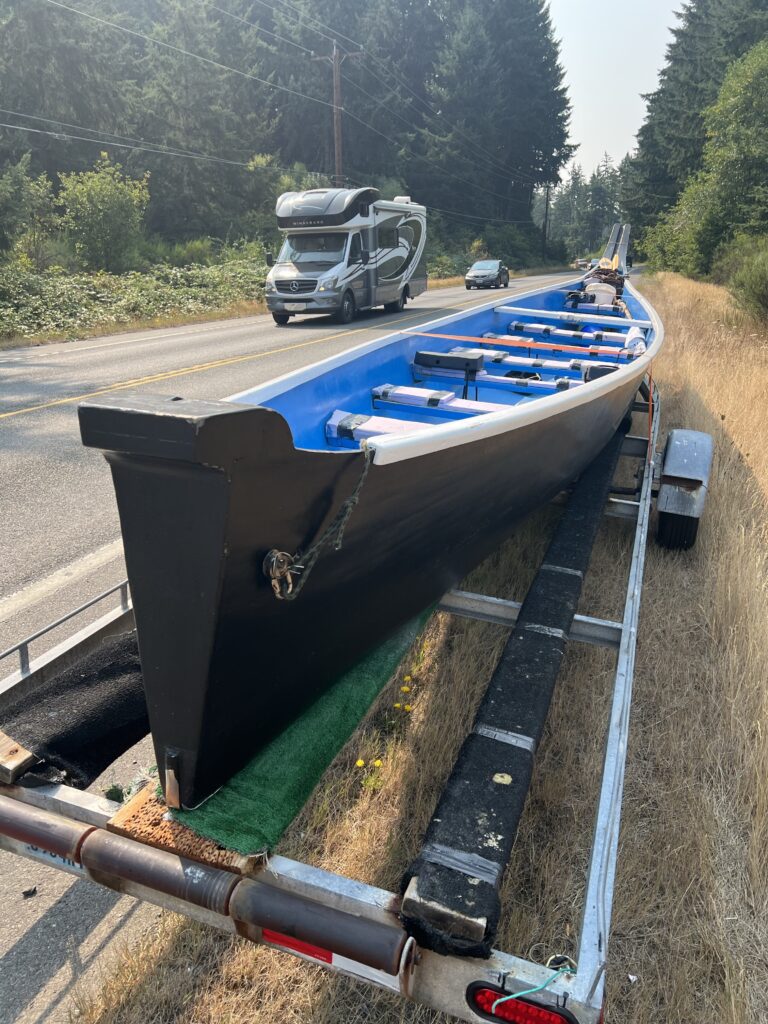
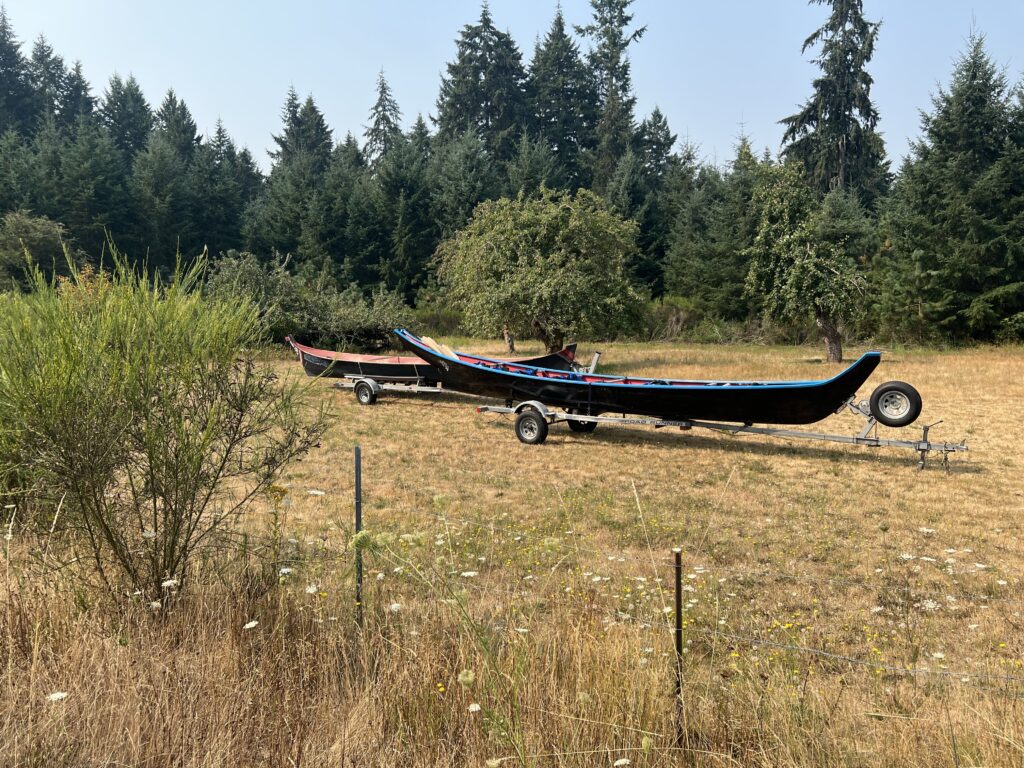
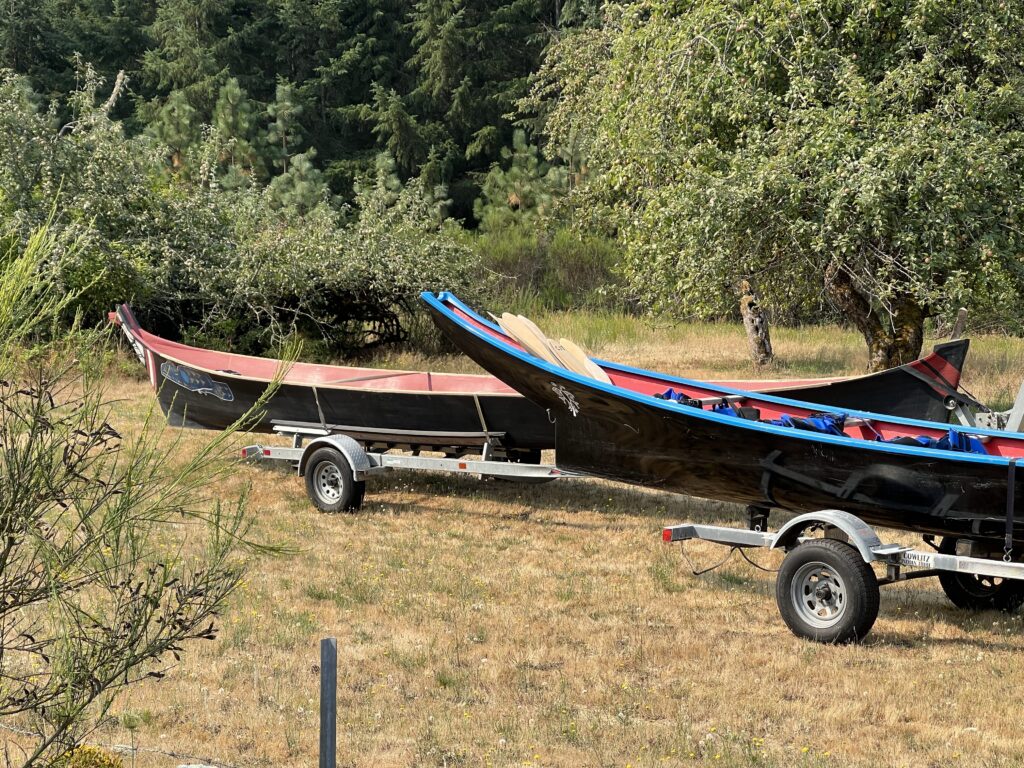
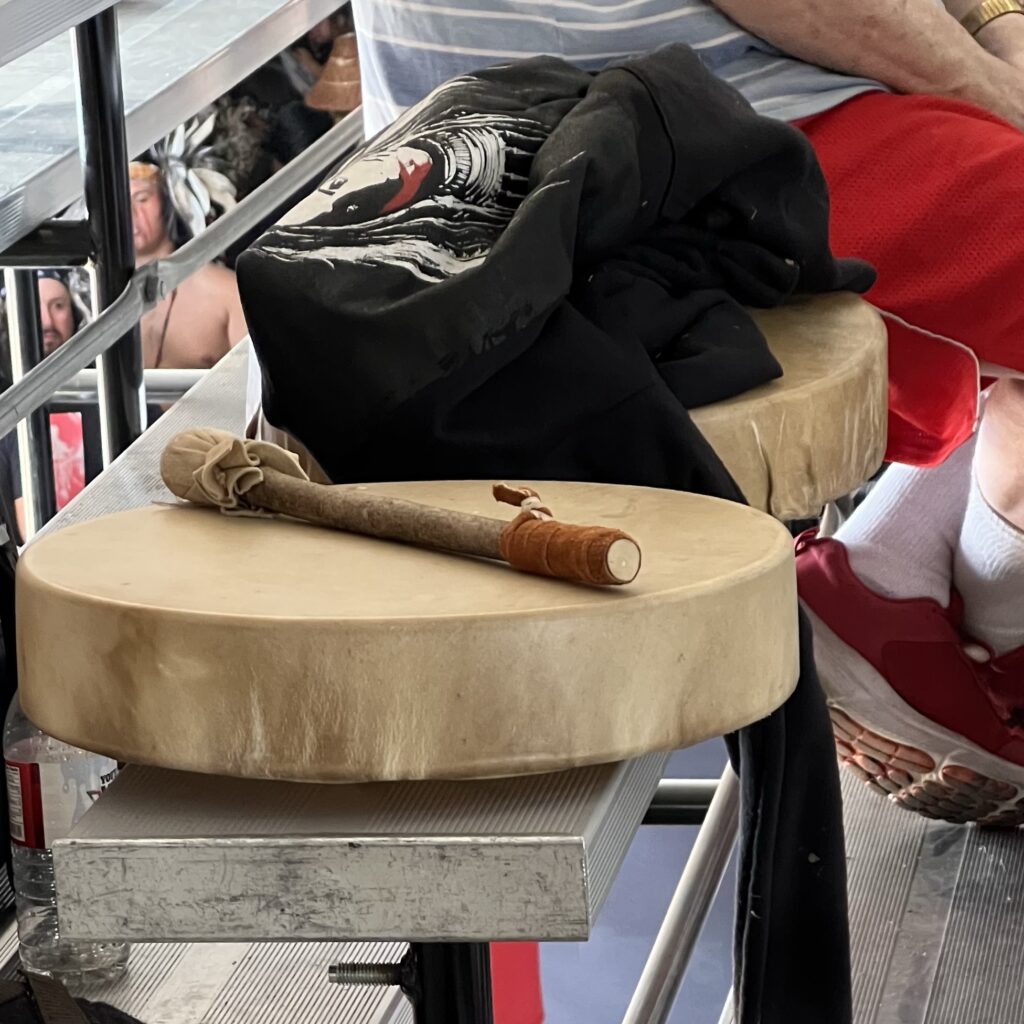
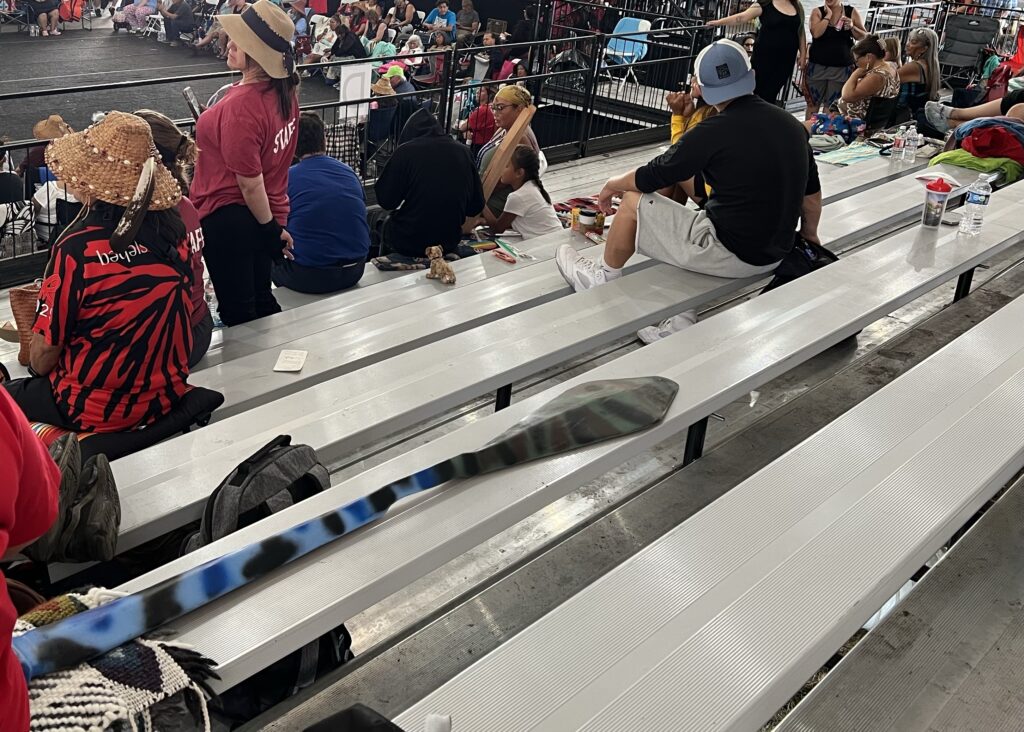
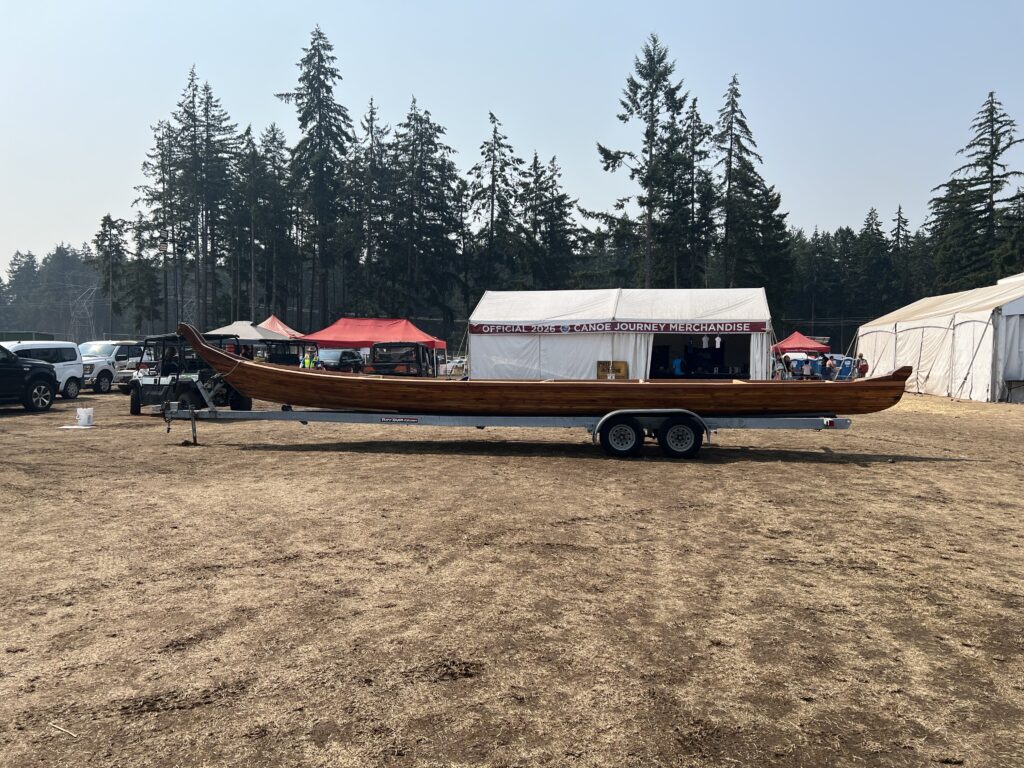
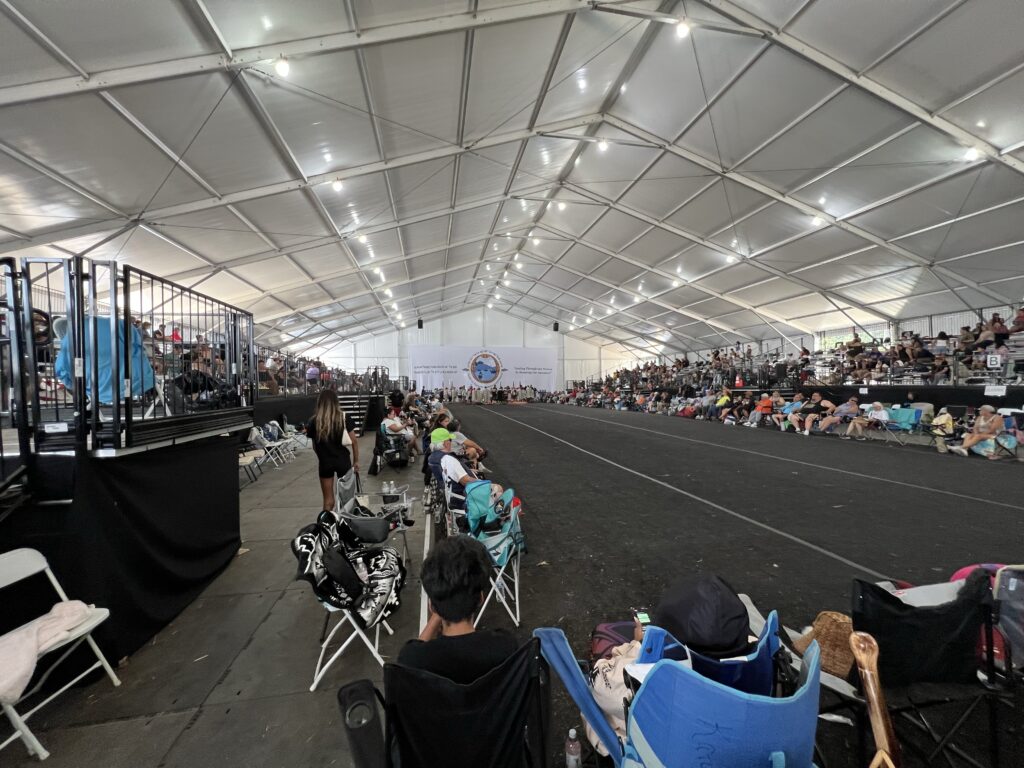
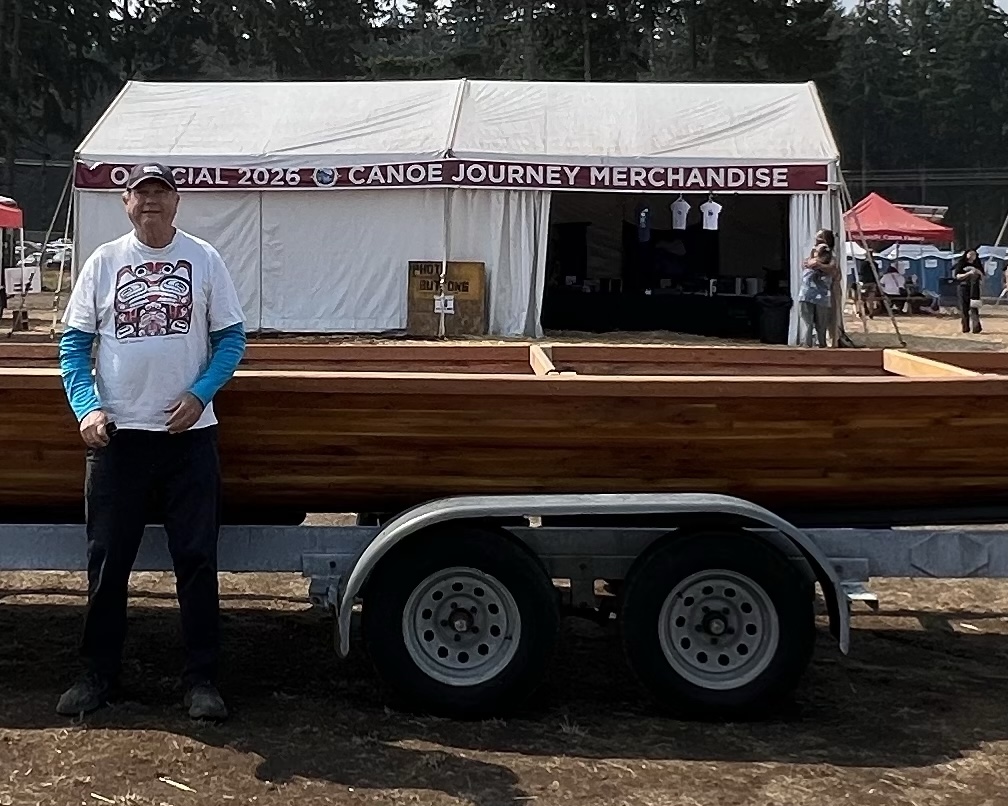
Rotating tribal hosts welcome thousands of paddlers and visitors during the annual Tribal Canoe Journey—one of the most authentic cultural experiences in the region.
These destinations provide what Tillicum Village could not: tribal authority, cultural specificity, and living tradition.
The Future of Blake Island
Washington State Parks is evaluating four master‑plan alternatives, including a tribal partnership model that could revive cultural programming on the island. Whether the longhouse is restored, repurposed, or removed, any future cultural experience must be tribally led, tribally designed, and tribally governed.
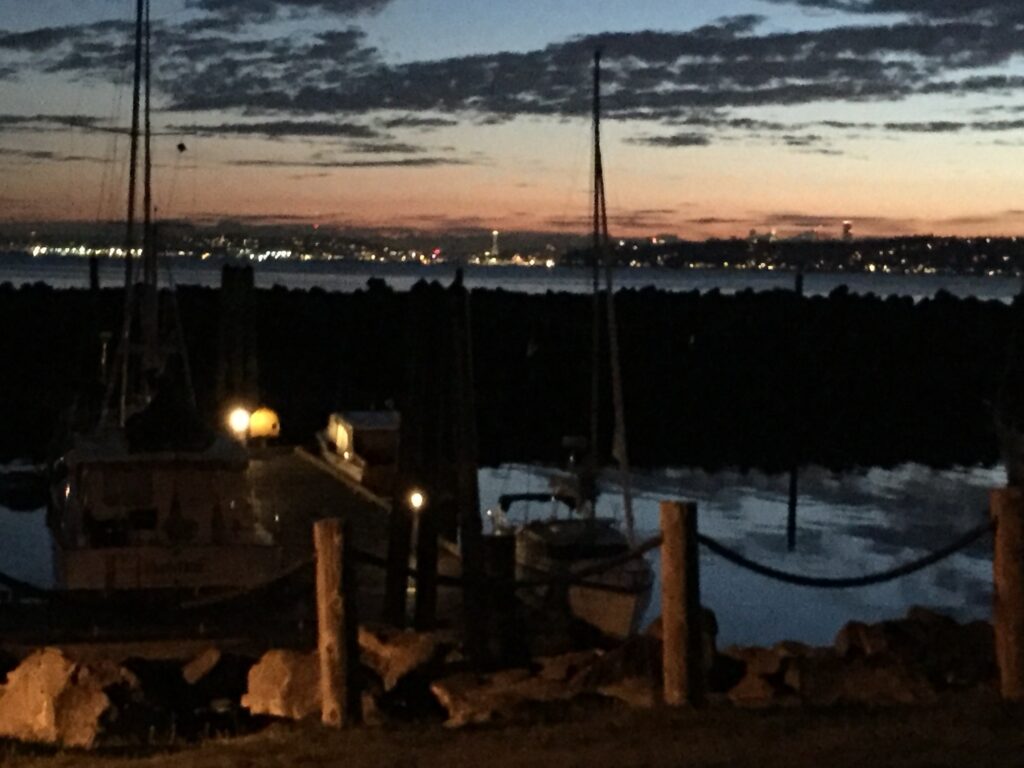
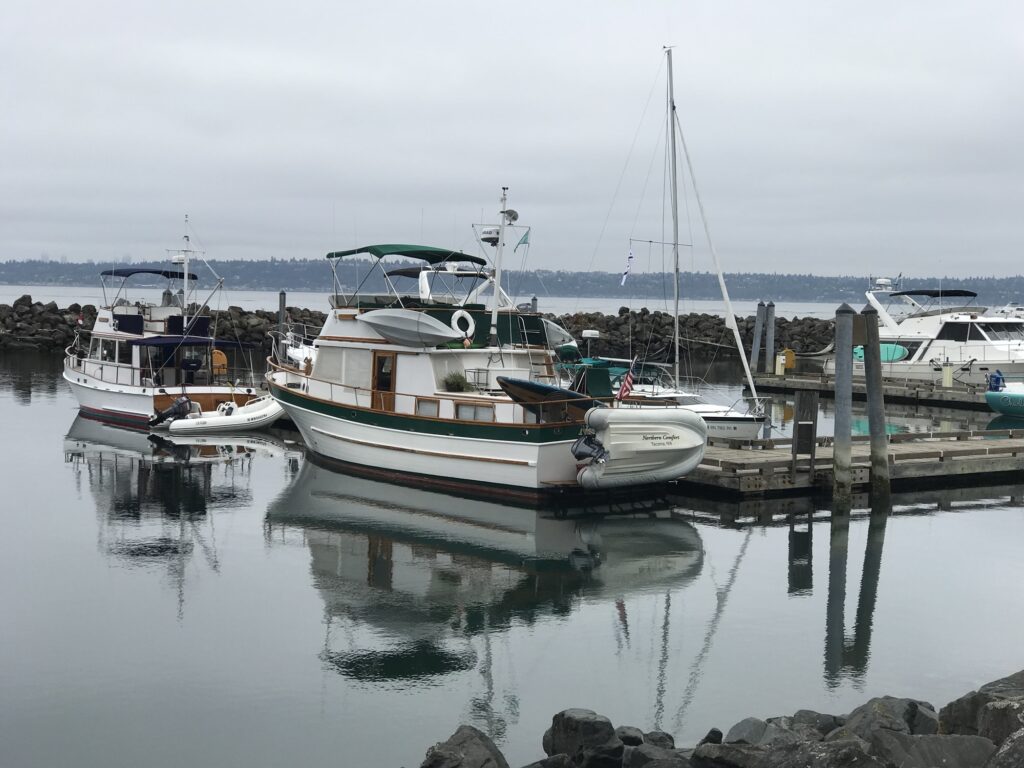
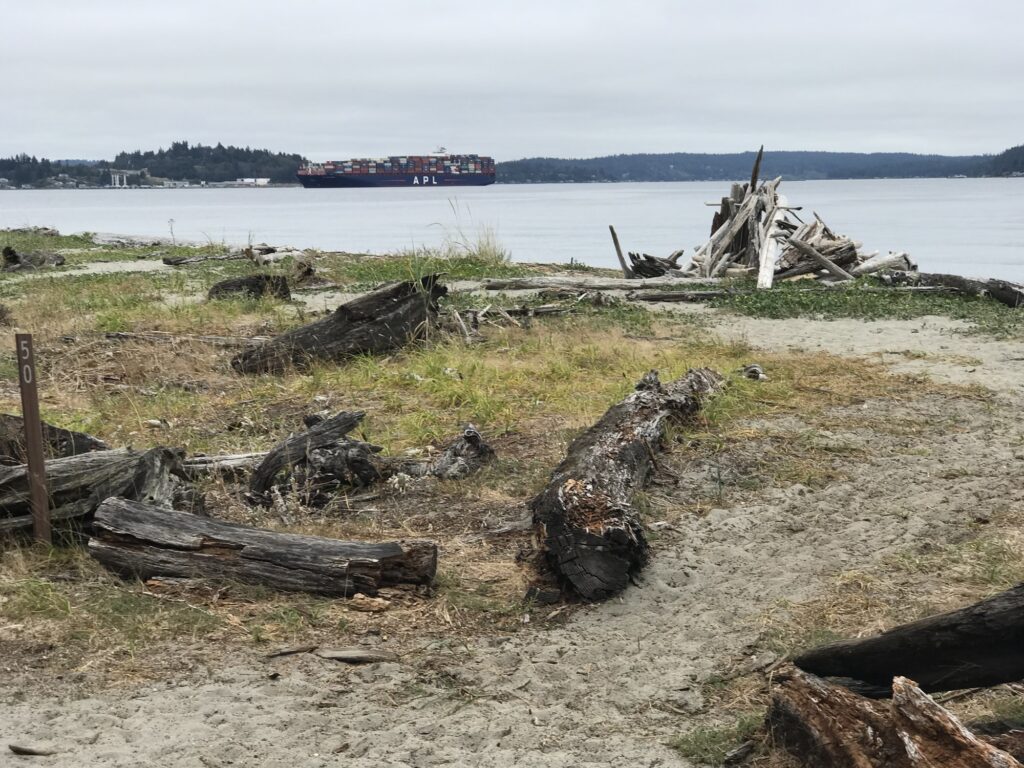
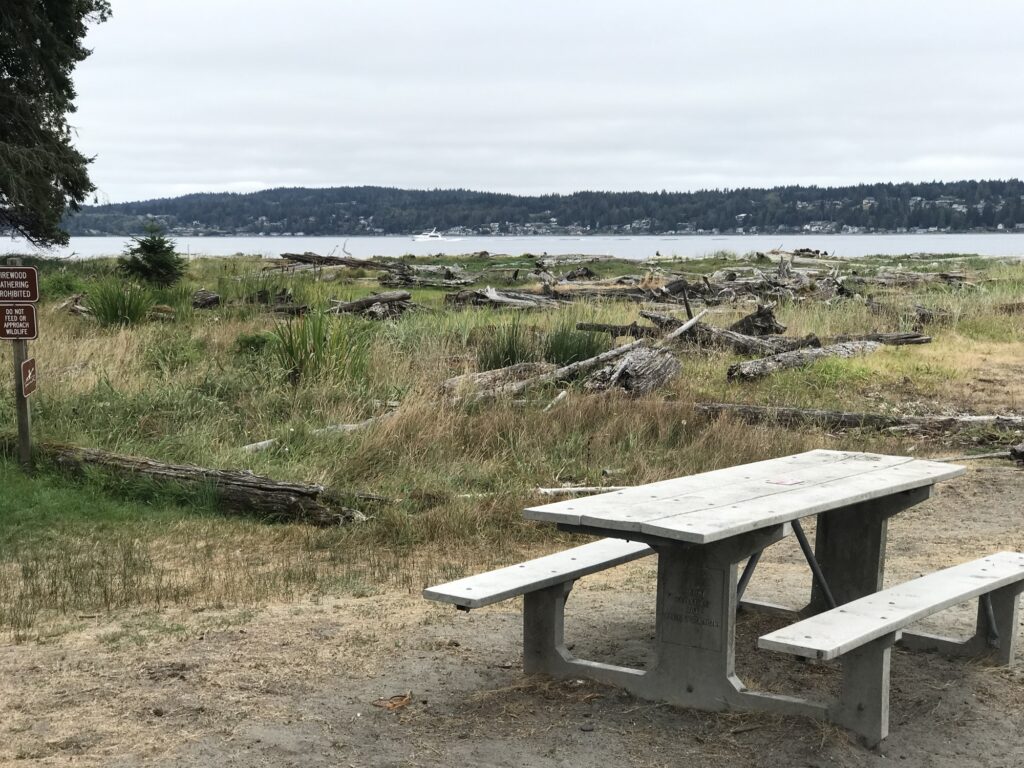
Blake Island remains open for hiking, boating, camping, birding, and beachcombing—but its cultural future will depend on how Washington State Parks and Coast Salish nations choose to reinterpret the island’s past.
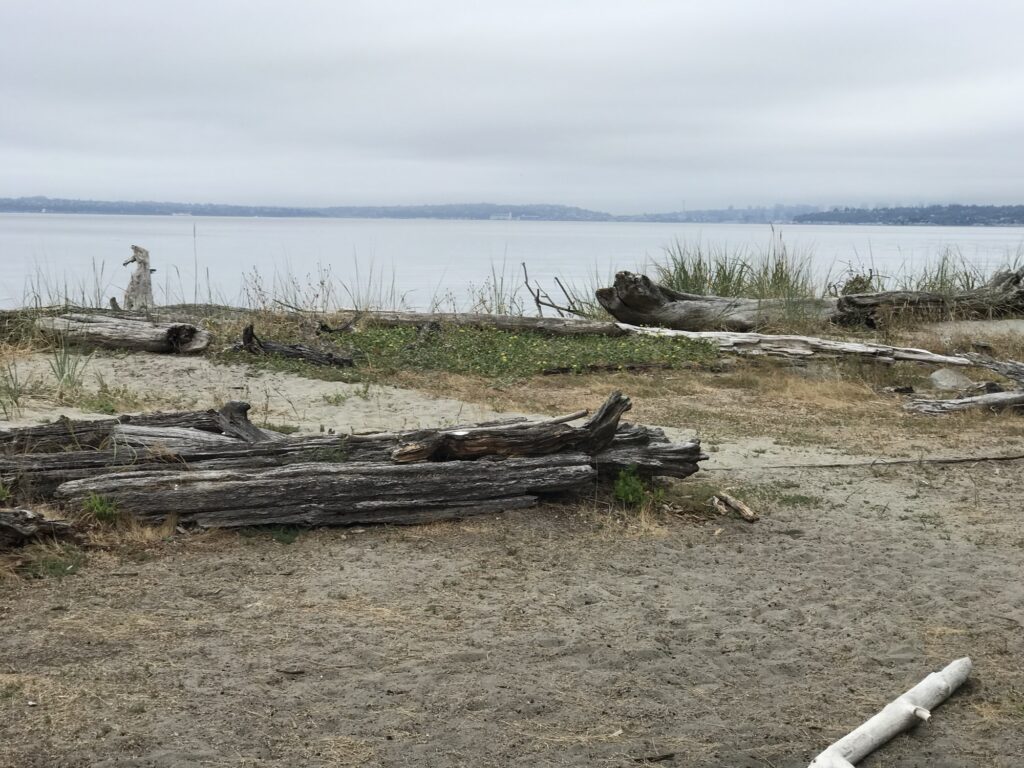
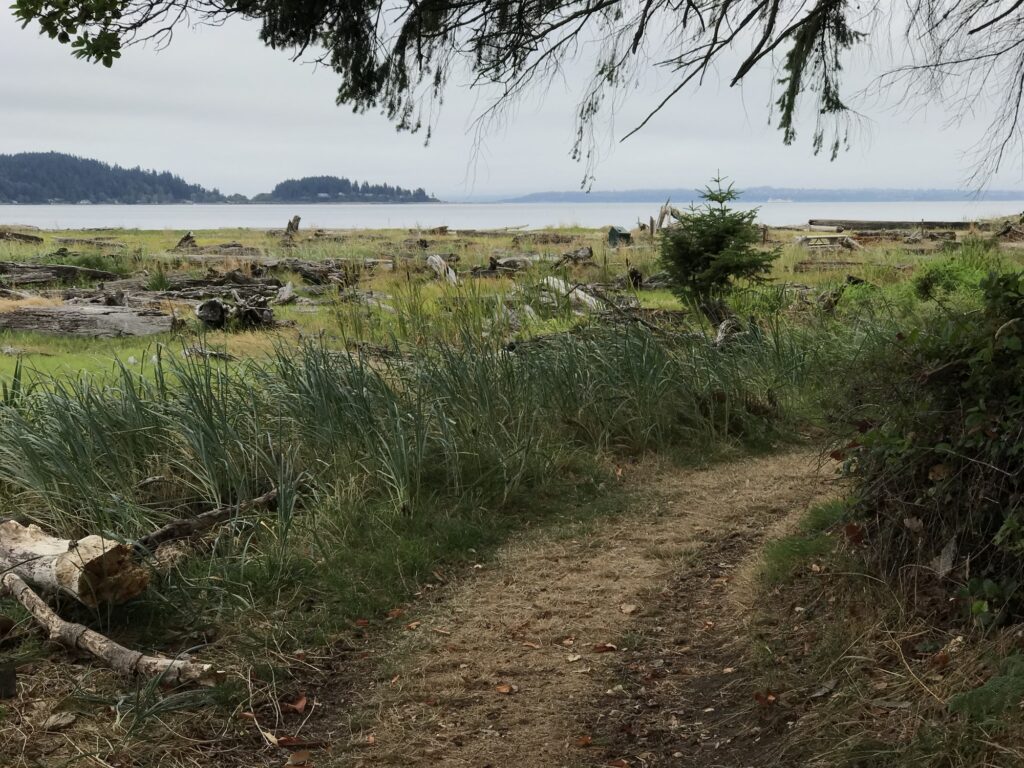
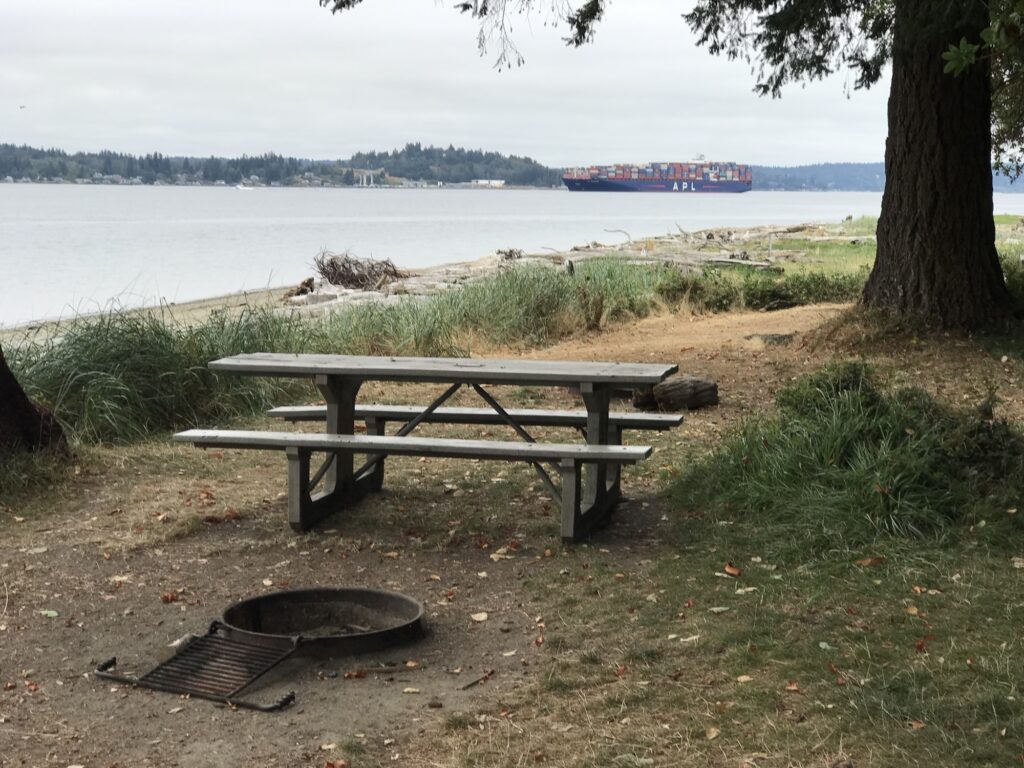
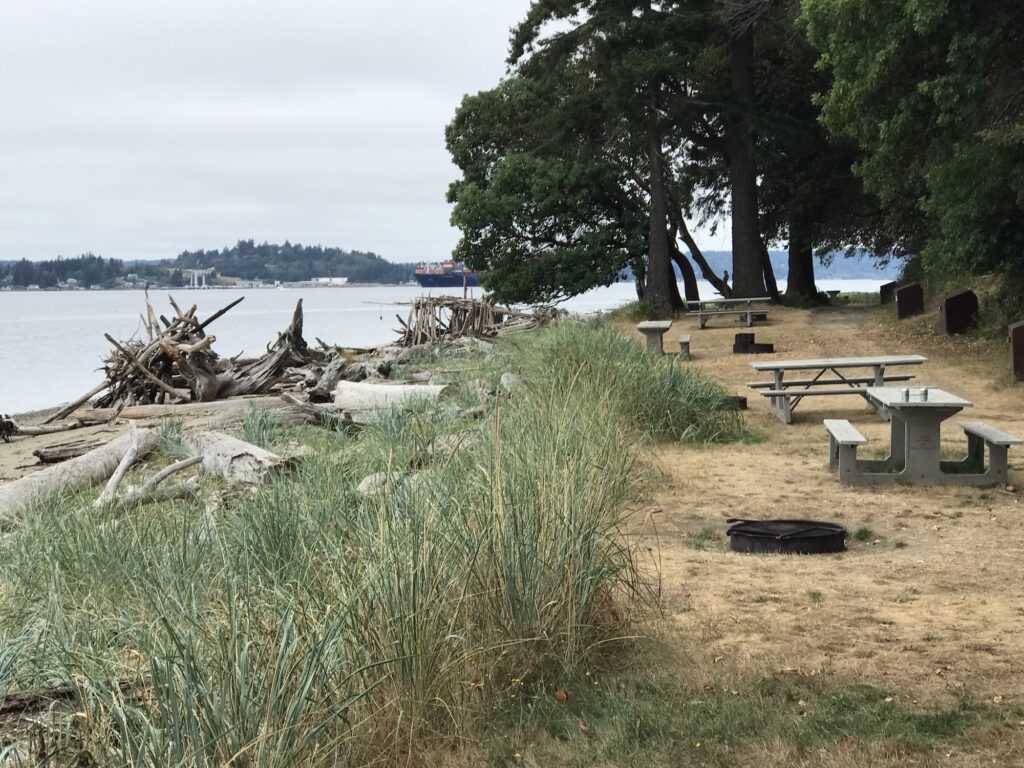
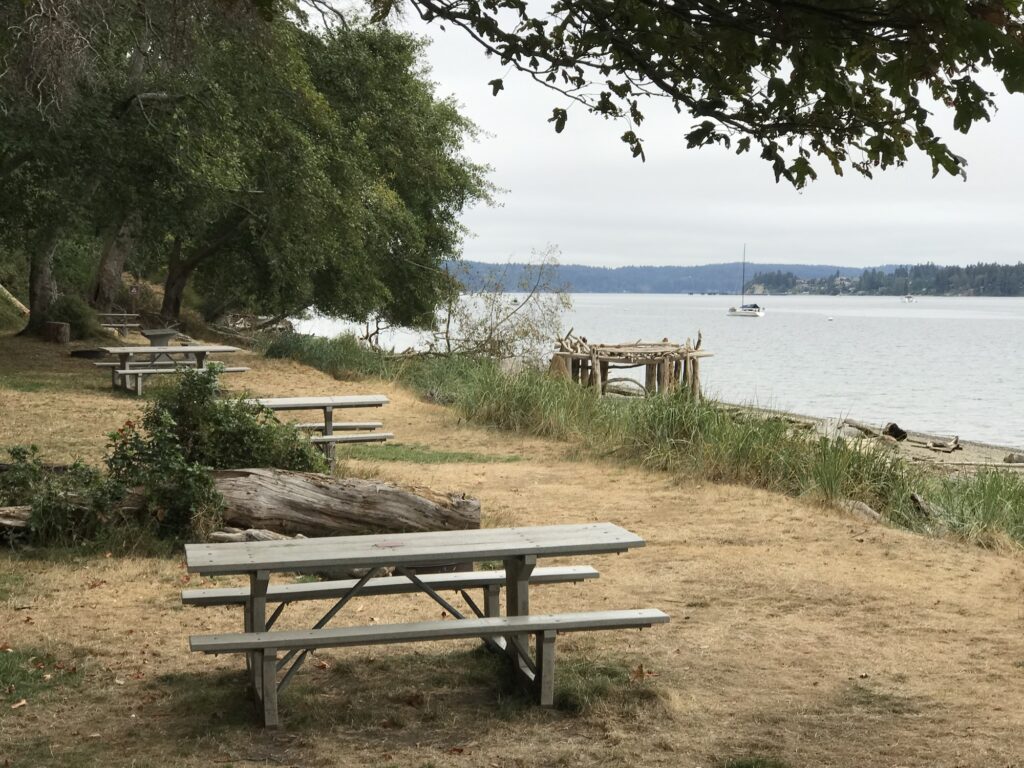
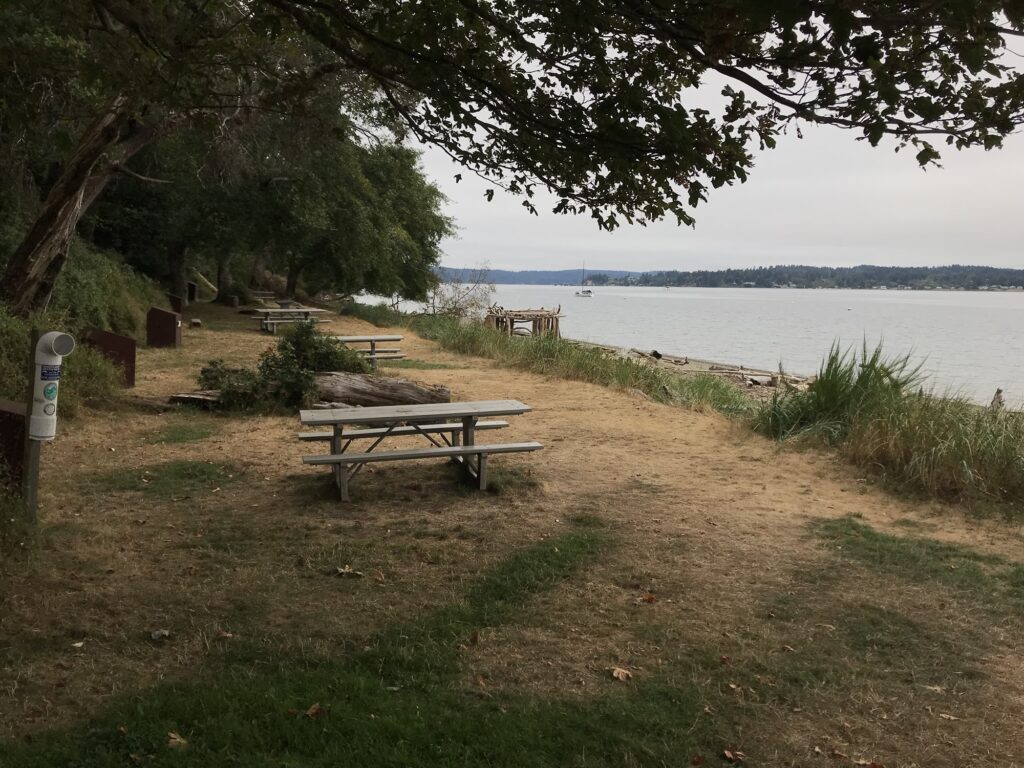
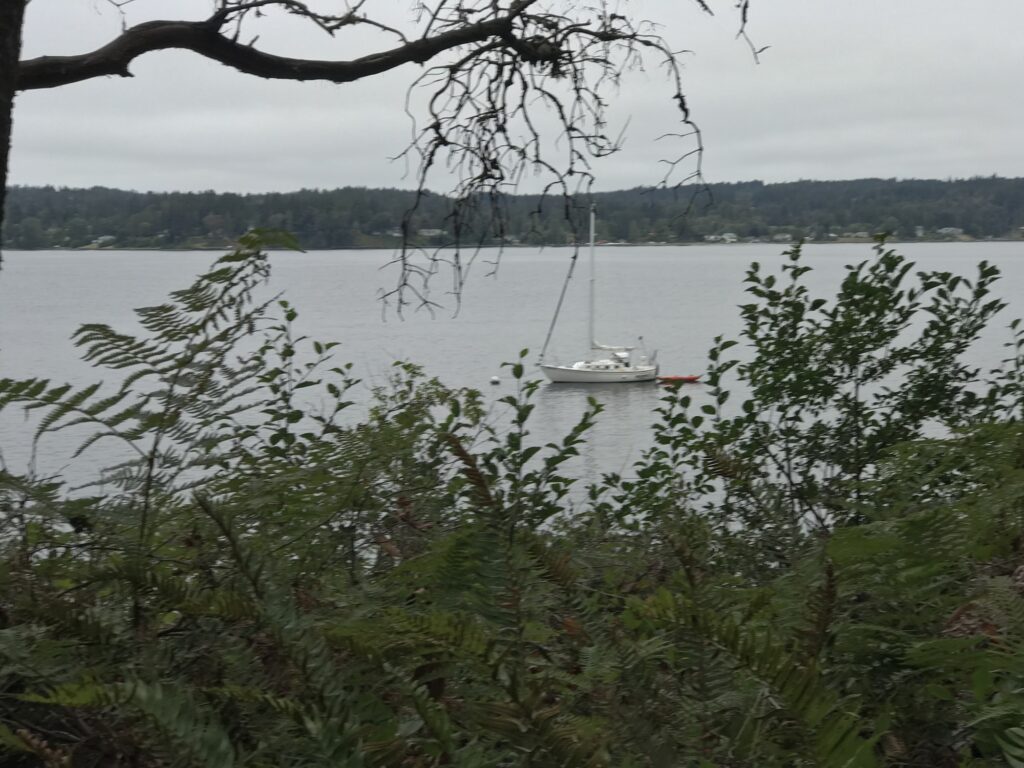
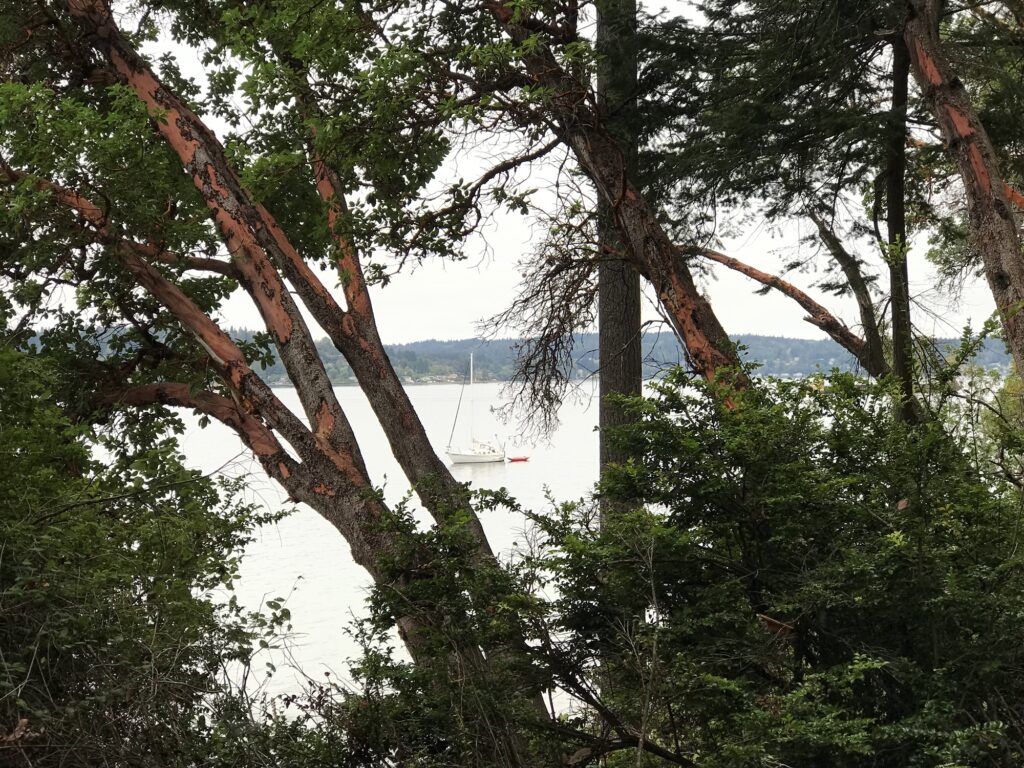
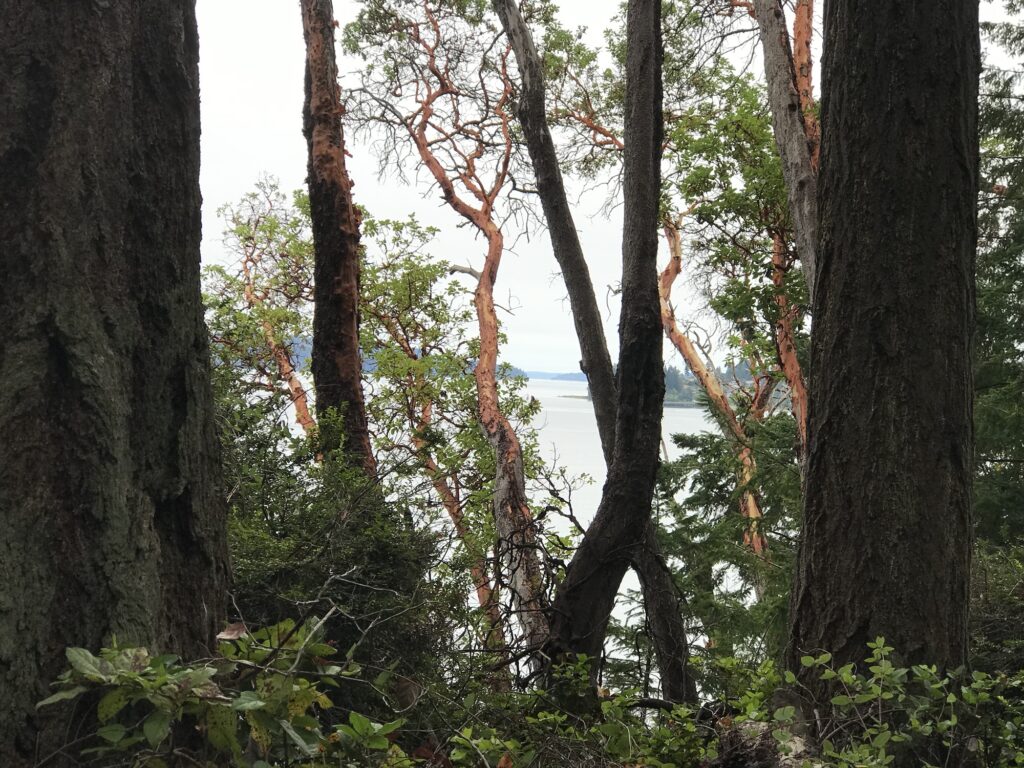
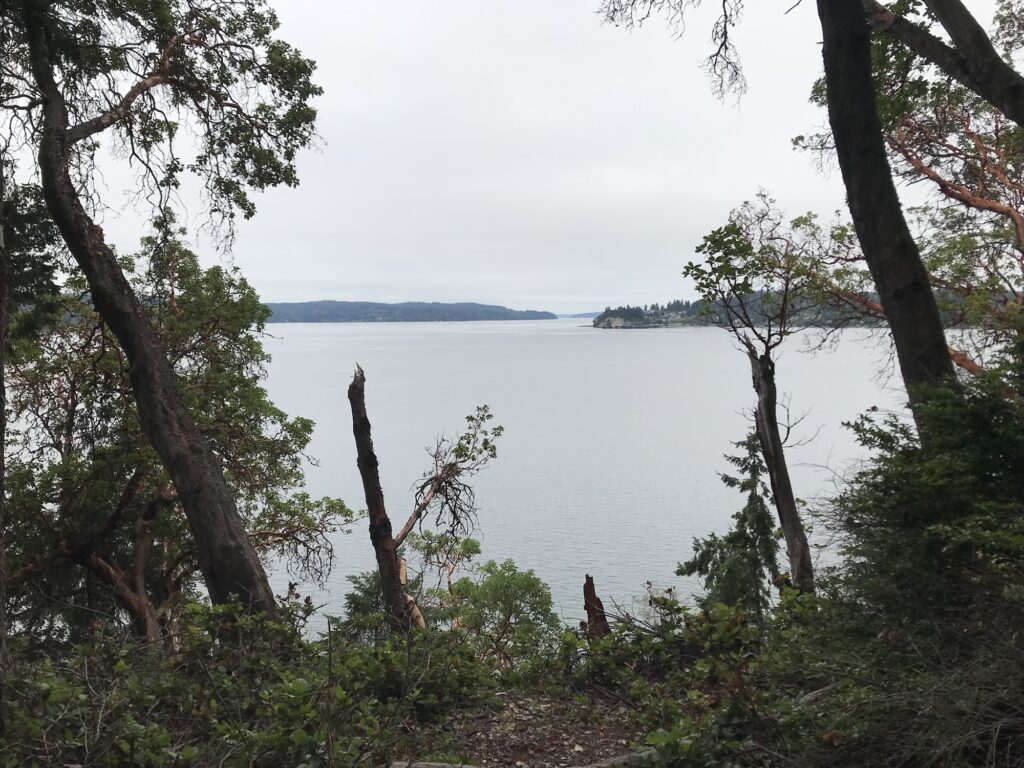
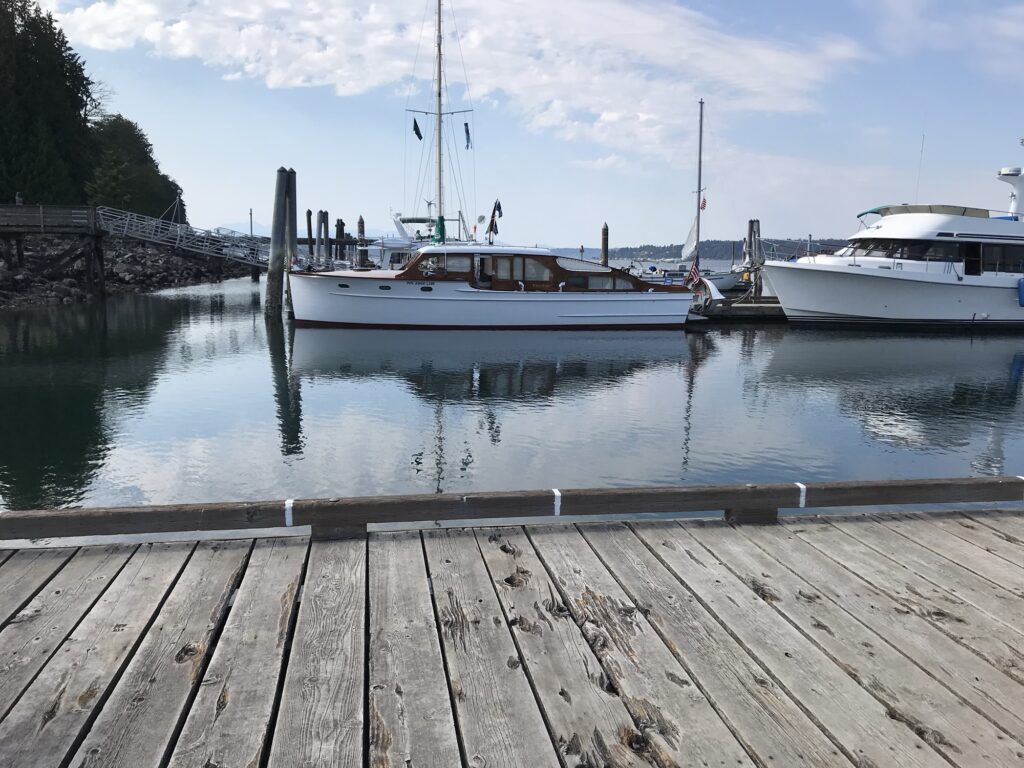
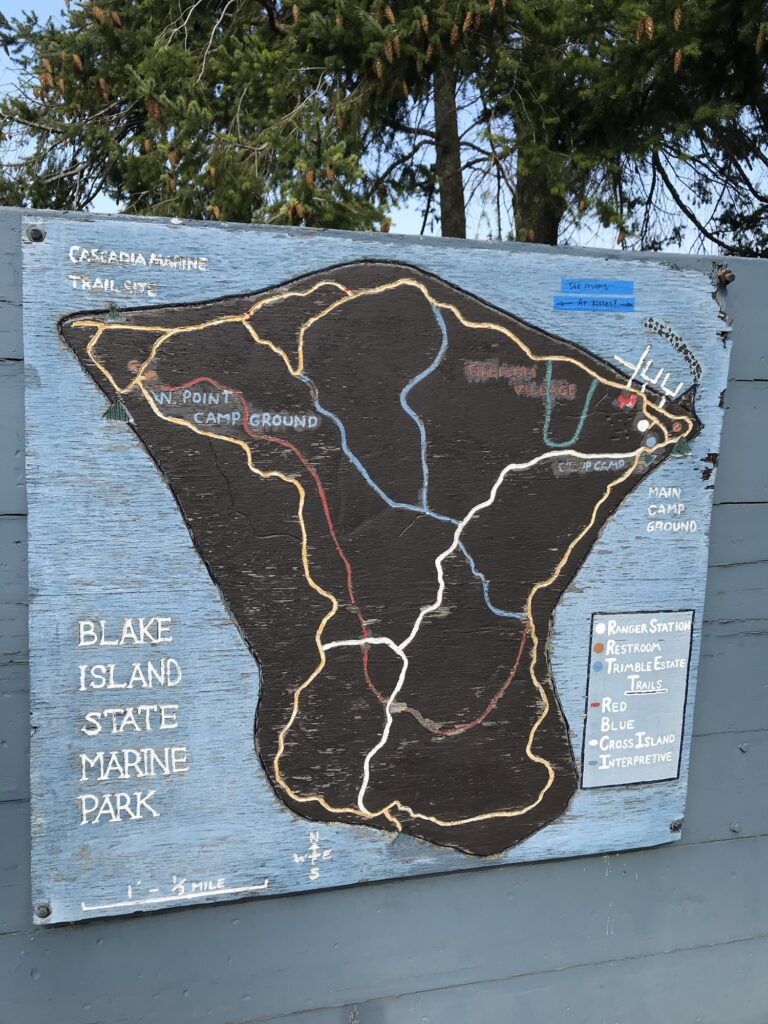
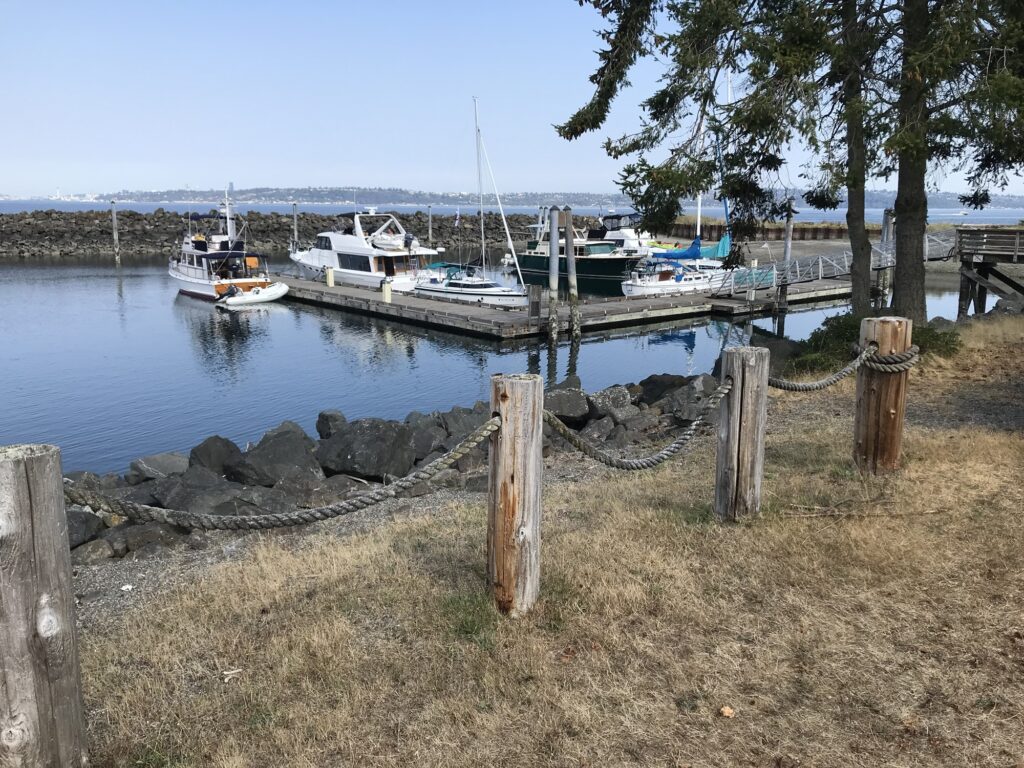
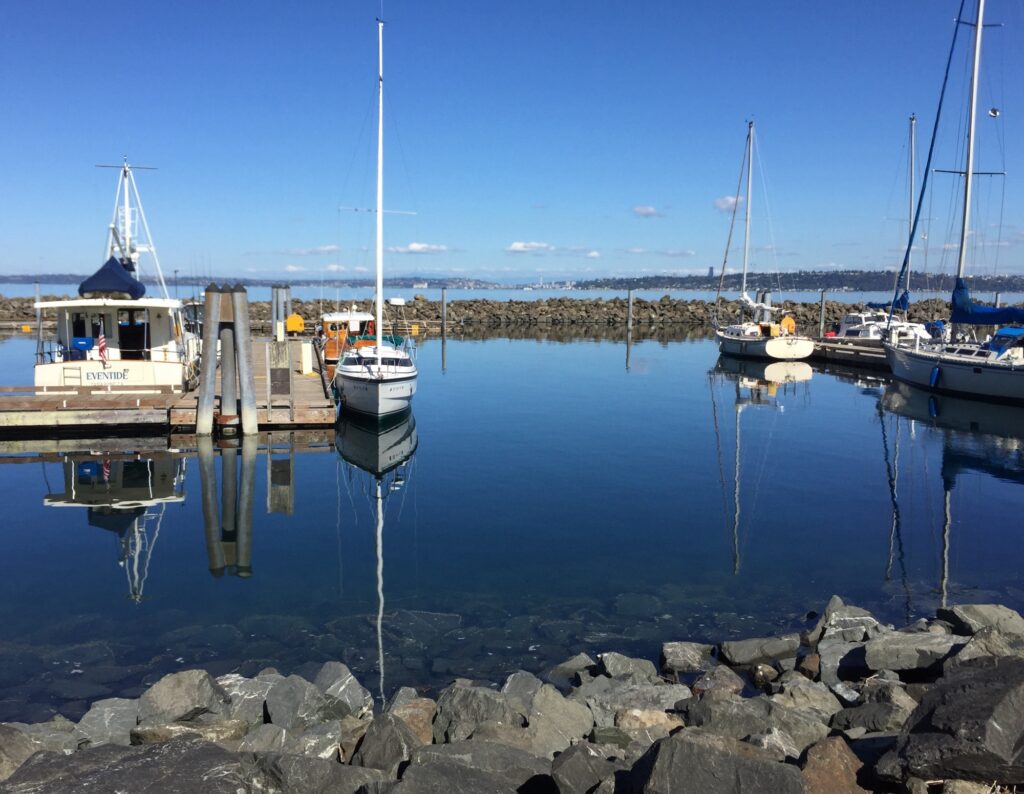
Caption: William Pitt Trimble’s early‑20th‑century estate once stood on Blake Island.
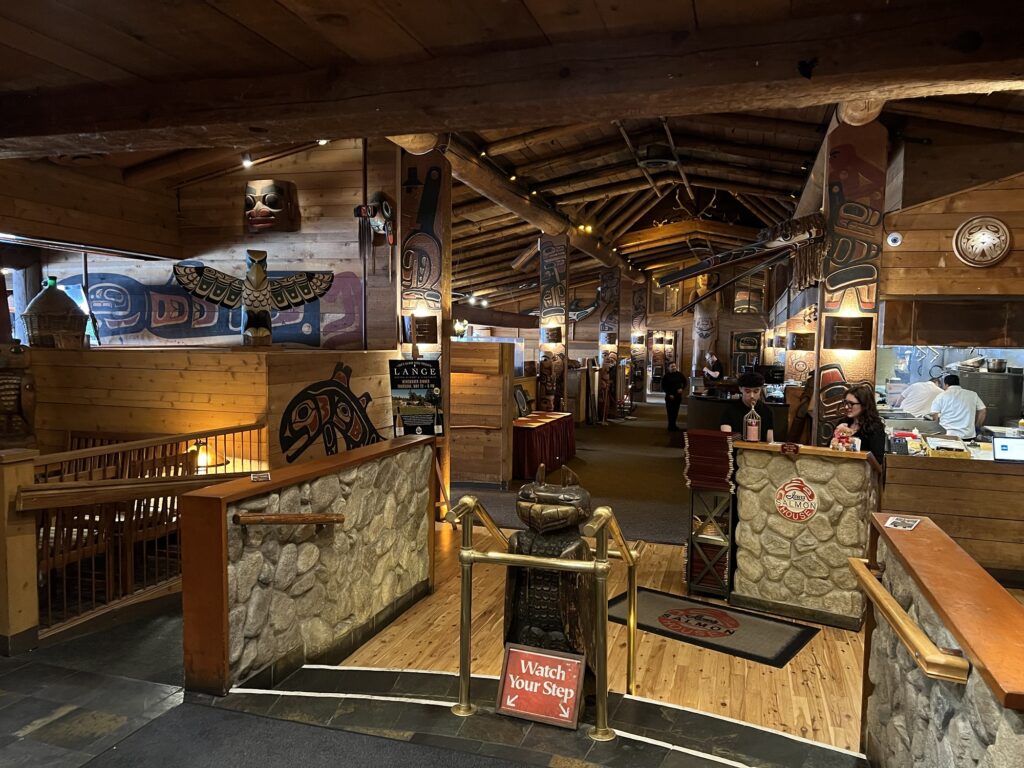
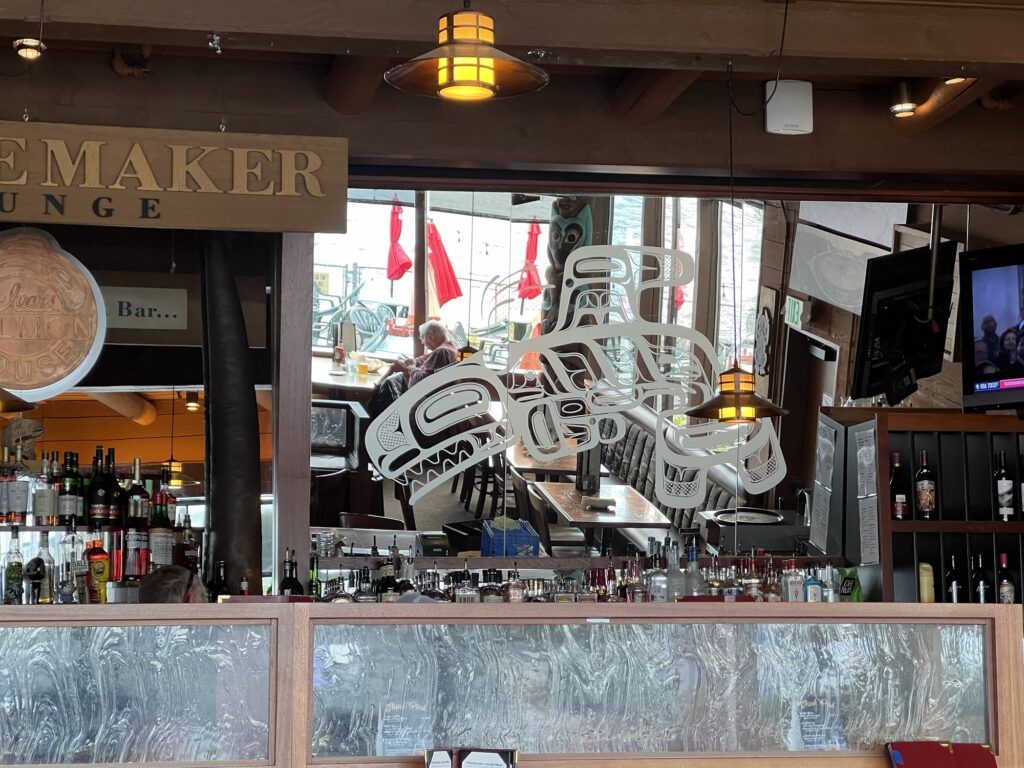
Ivar Haglund and Ivar’s Salmon House
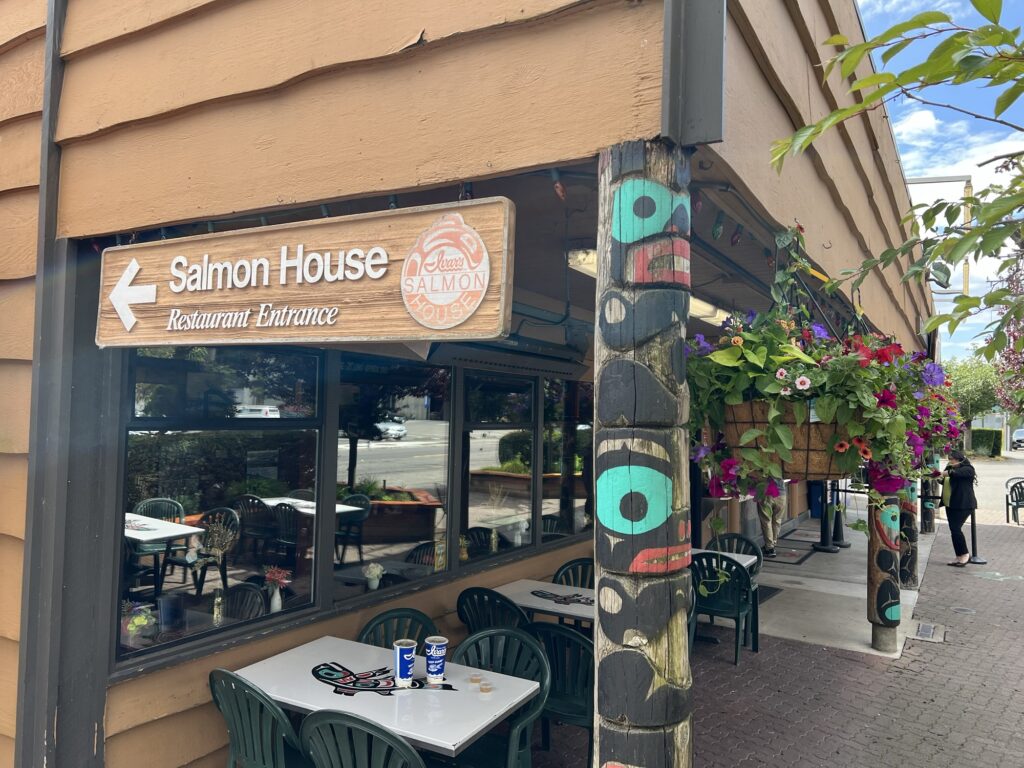
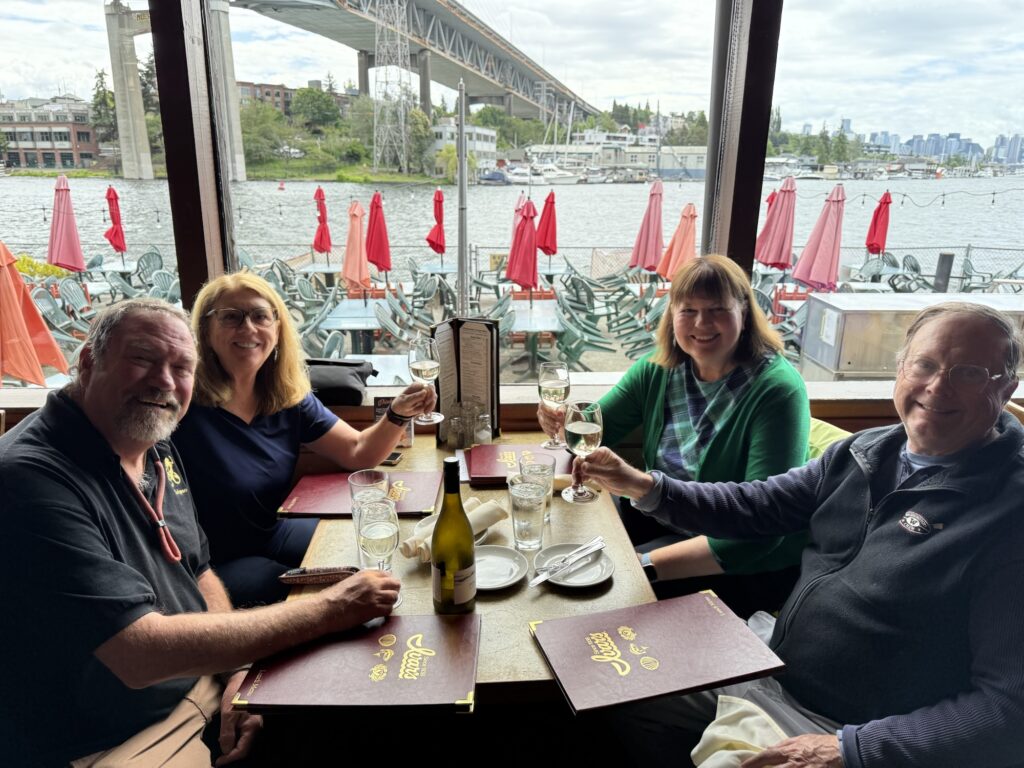
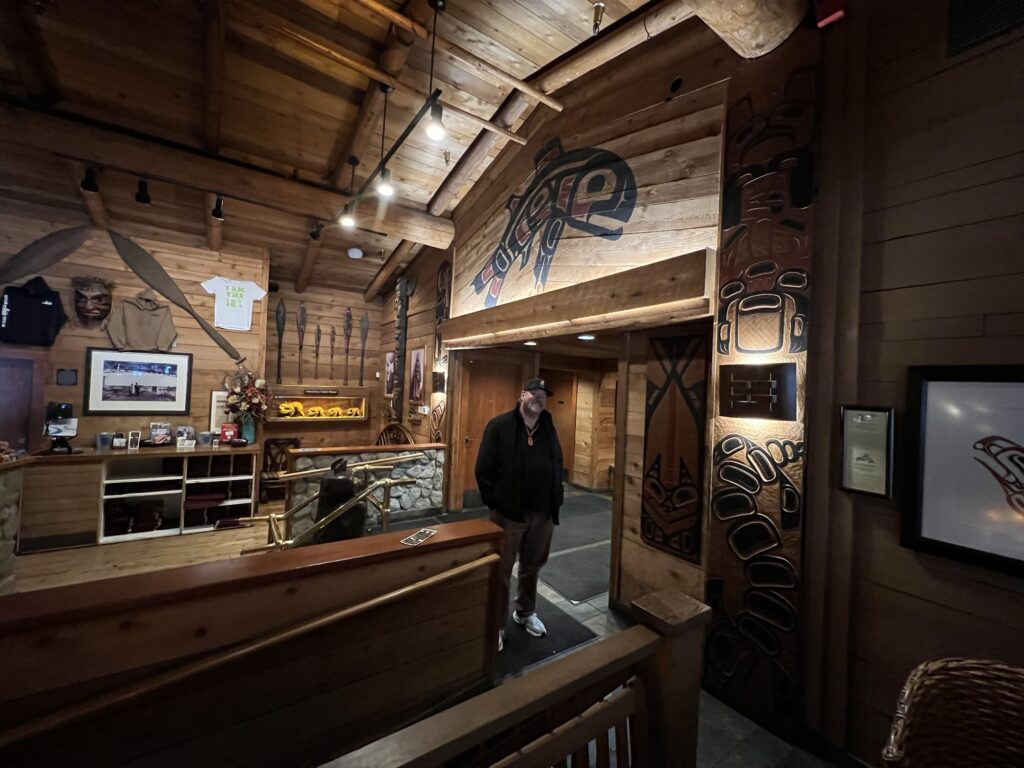
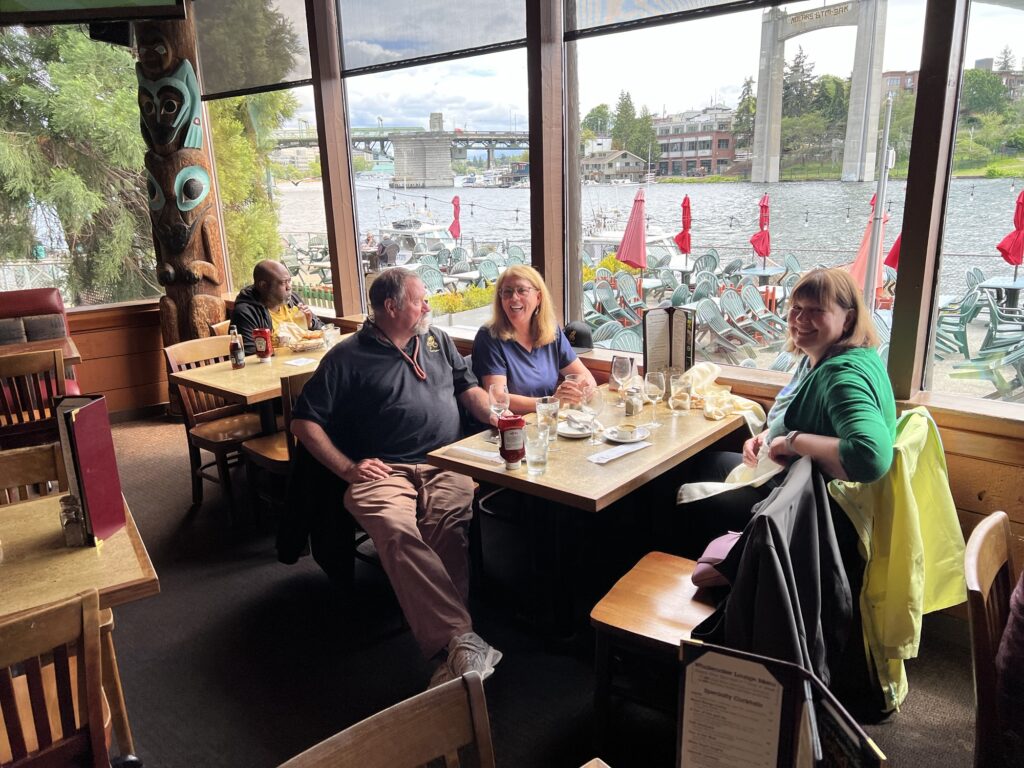
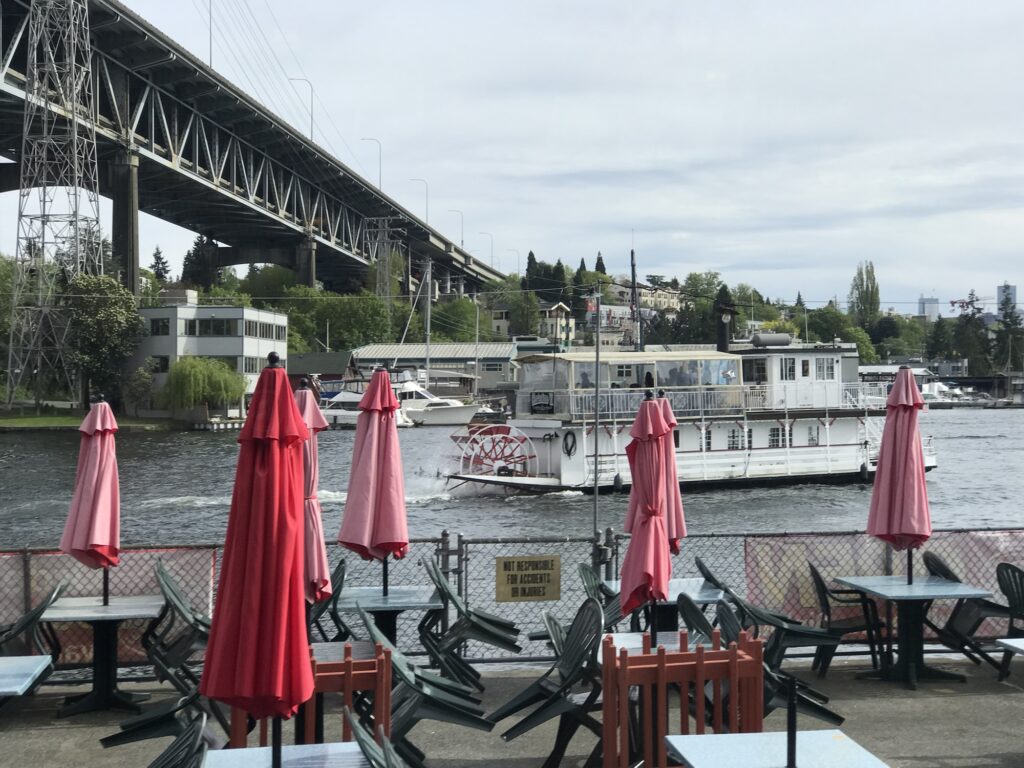
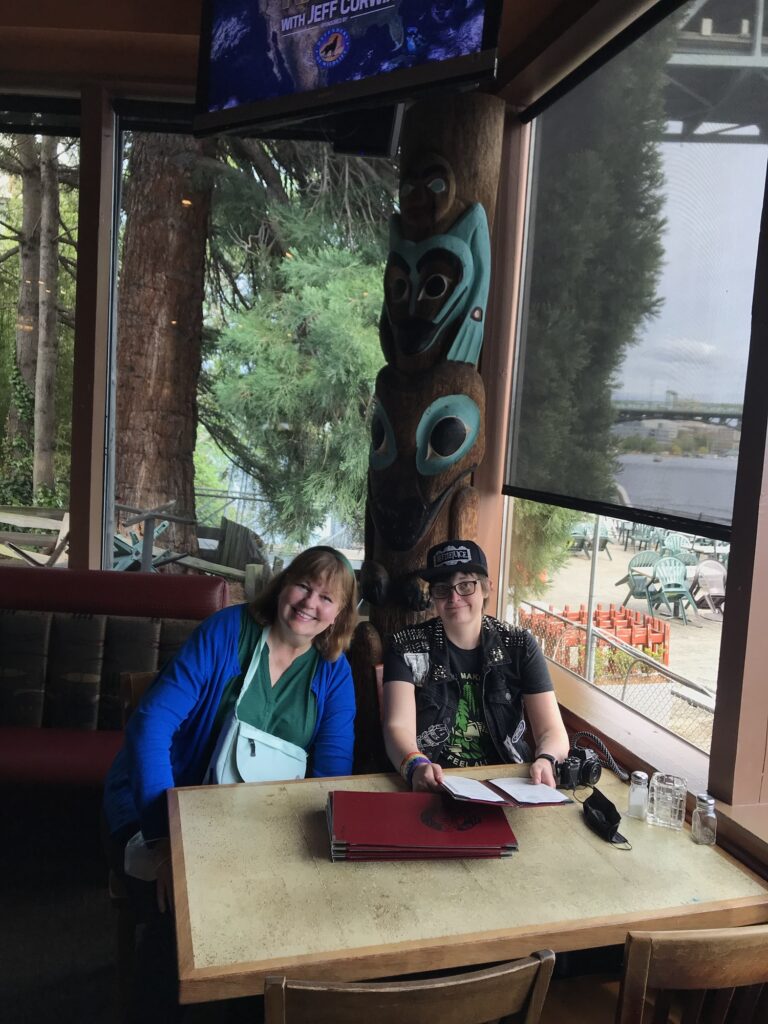
Ivar Haglund (1905–1985) was a Seattle folk singer, aquarium owner, showman, and founder of the Ivar’s restaurant chain. He opened Ivar’s Salmon House on Lake Union in 1971.
Coast Salish People Praised Ivar’s Salmon House
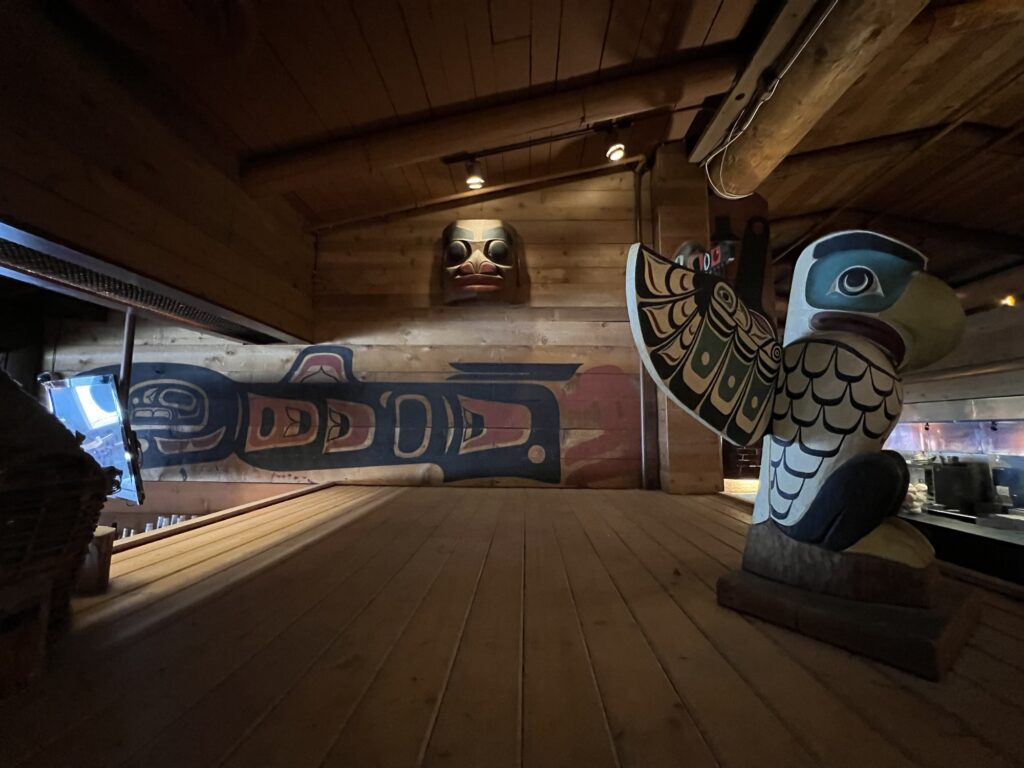
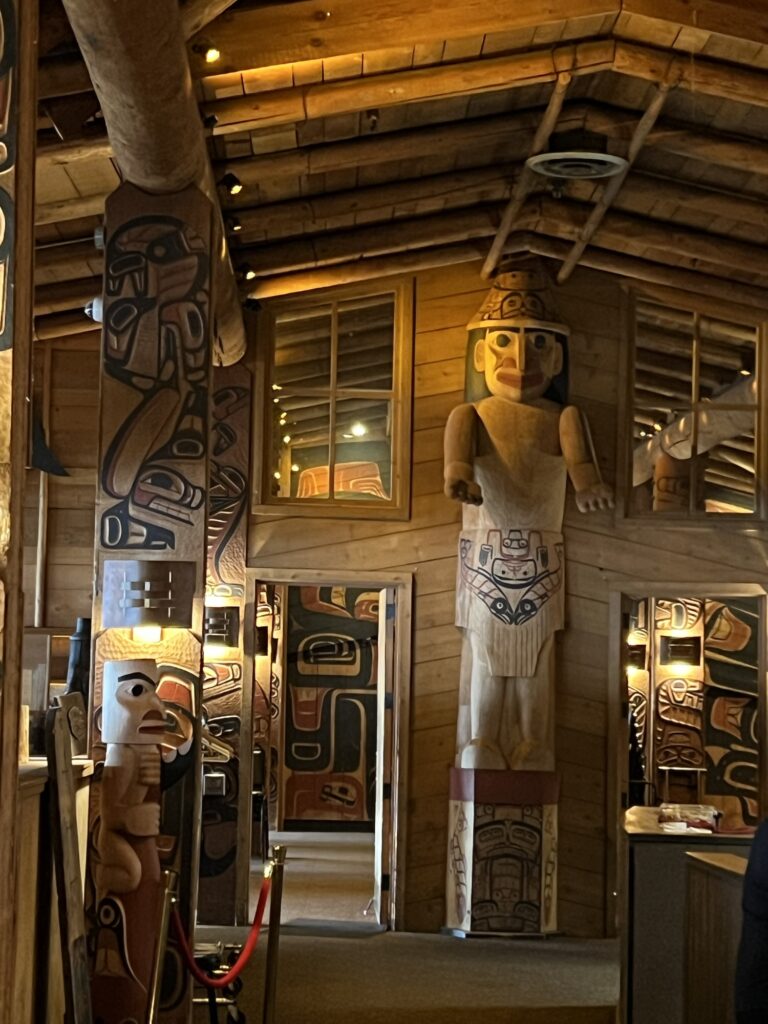
Unlike Tillicum Village, Ivar’s Salmon House was created through direct collaboration with Native cultural experts:
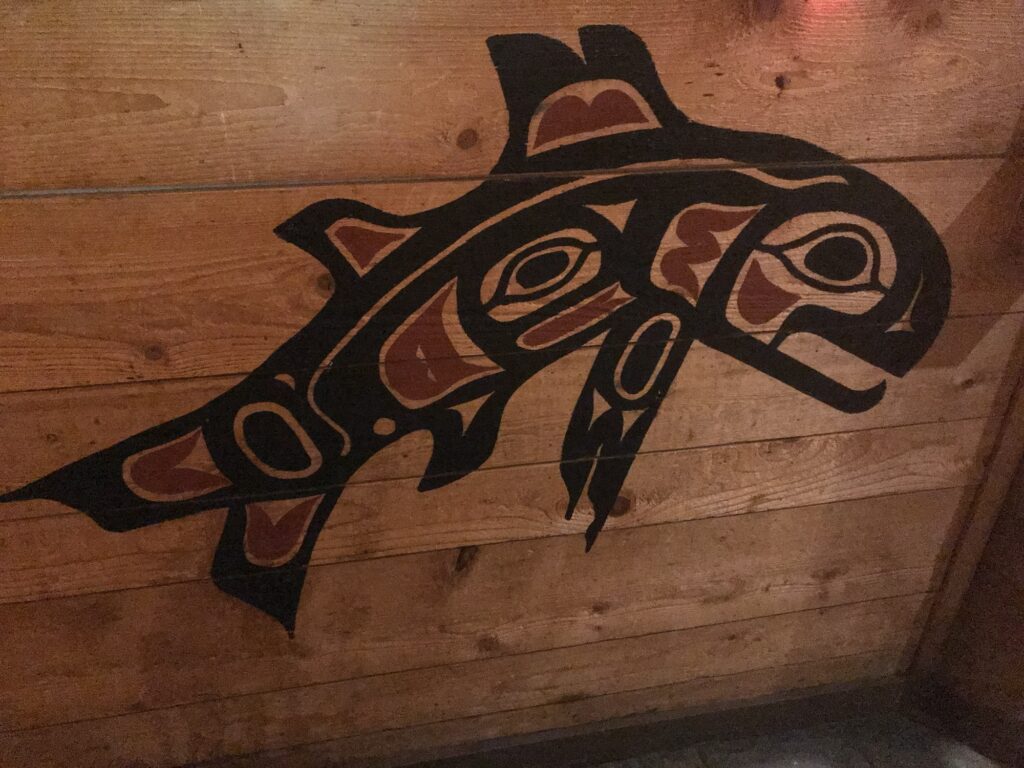
✔️ He worked with the Burke Museum
Ivar consulted scholars and students of Bill Holm, the leading authority on Northwest Coast art.
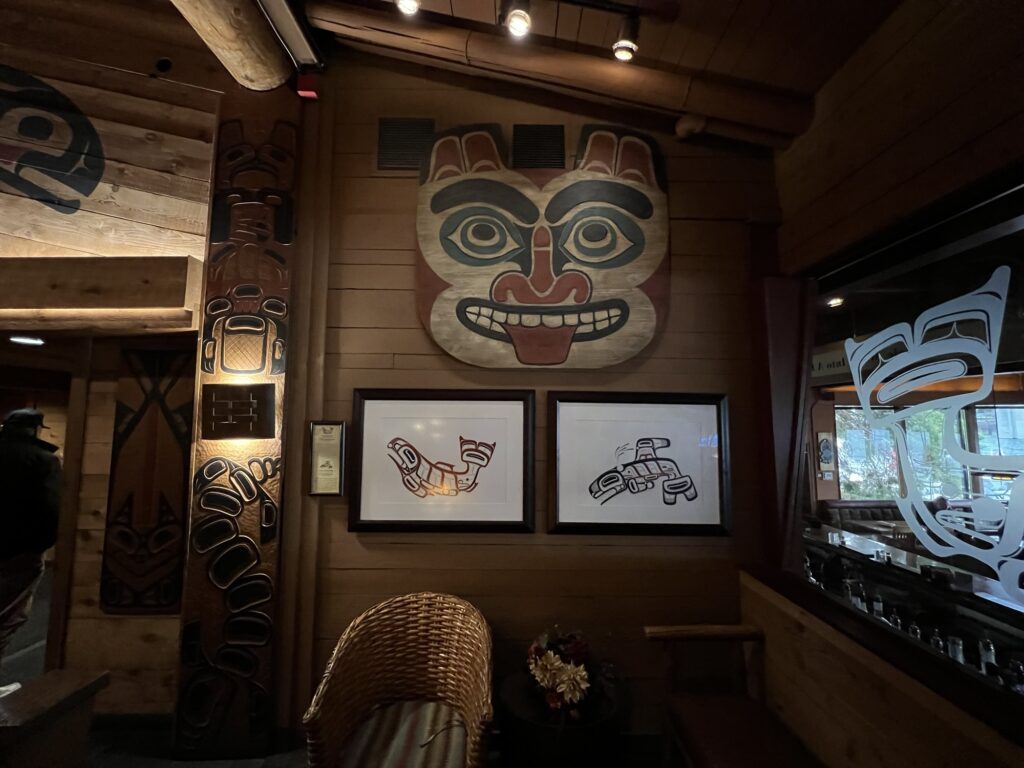
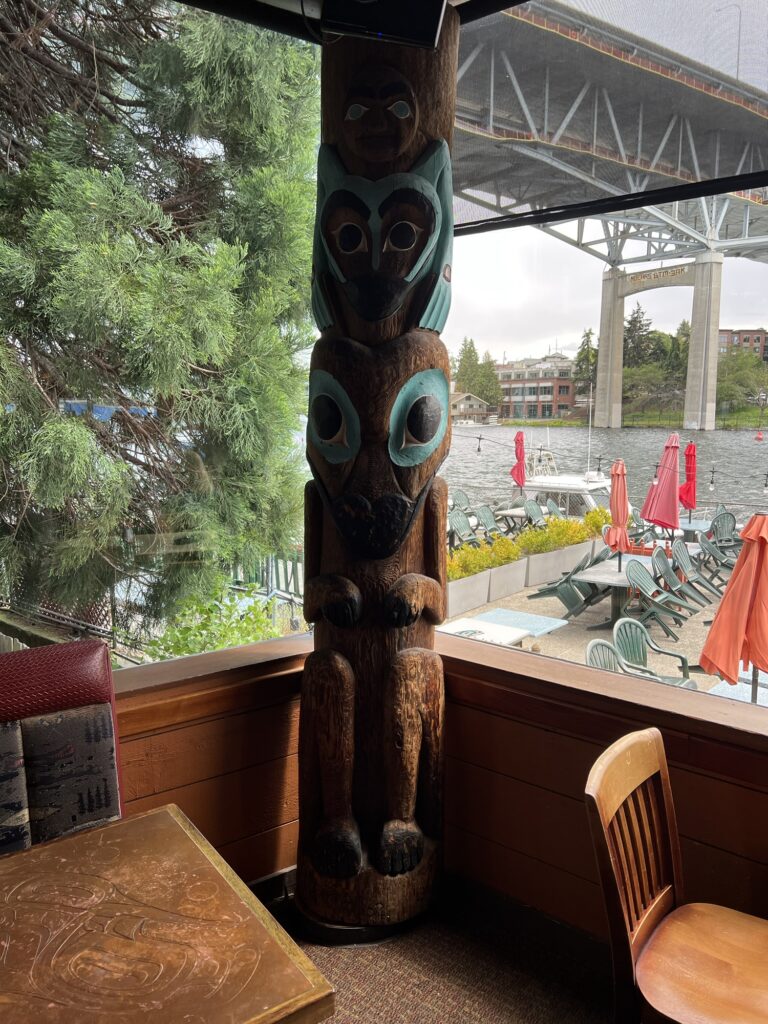
✔️ He commissioned Native‑style carvers
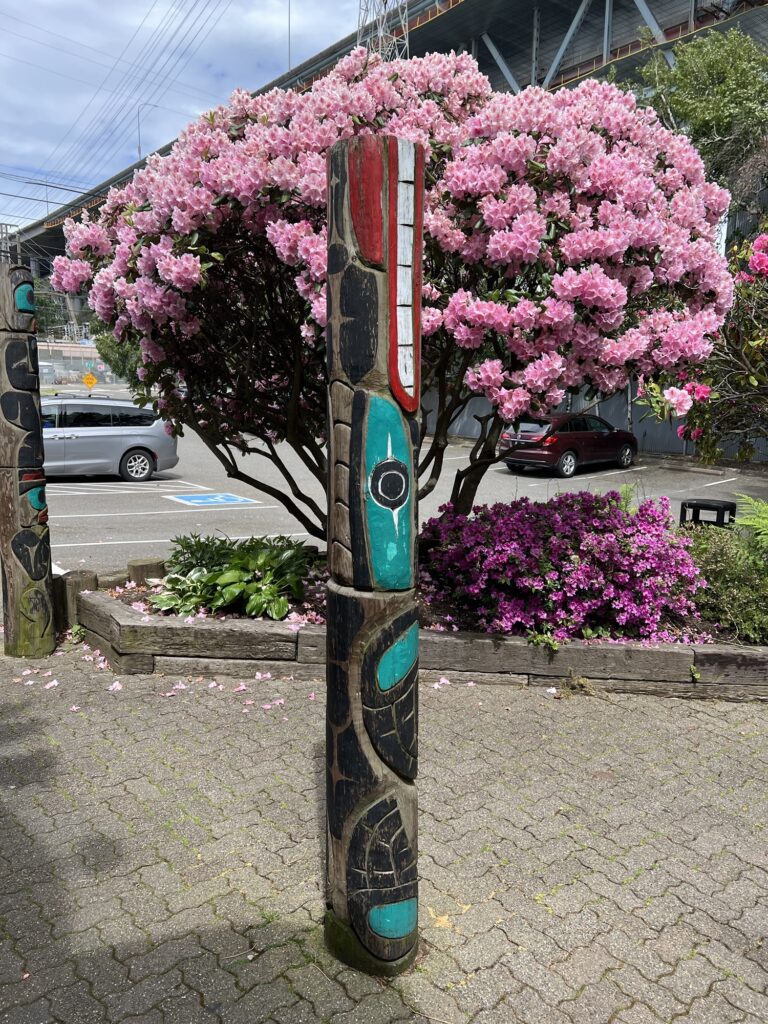
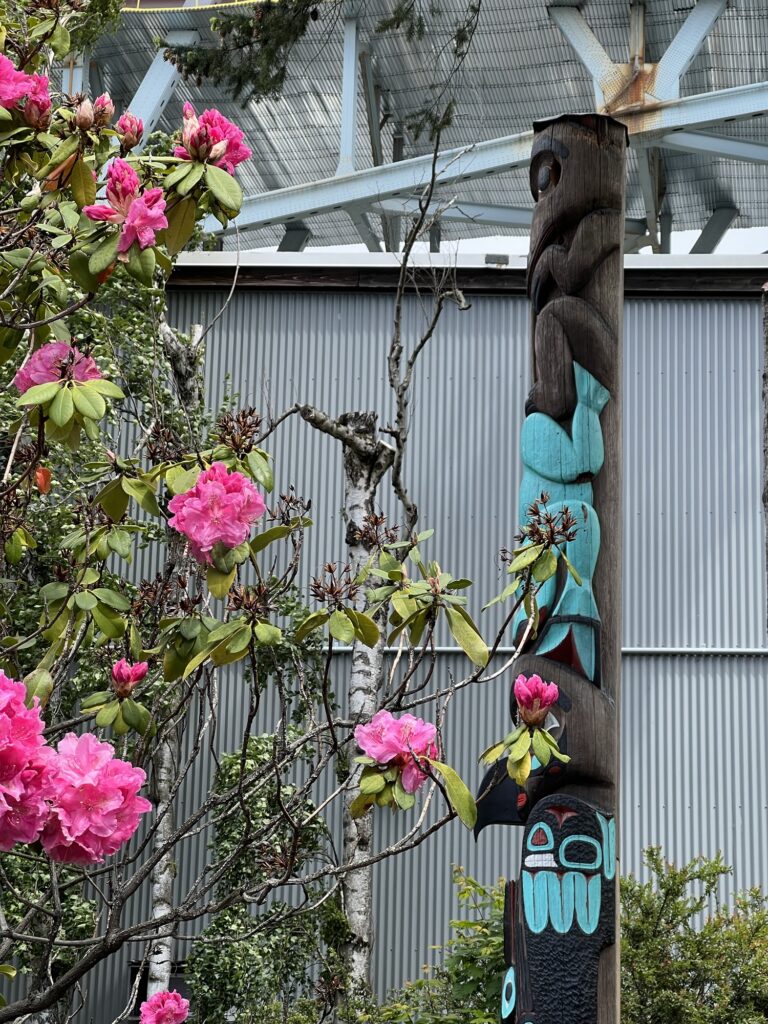
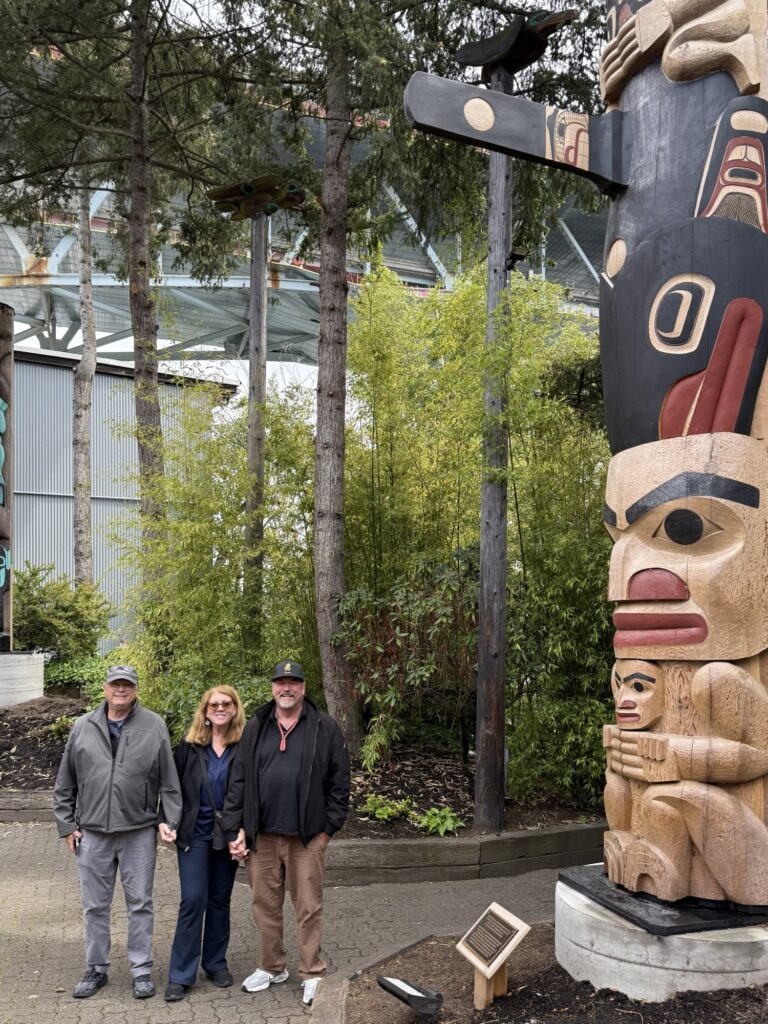
Artists such as Duane Pasco created the house posts and carved elements.
✔️ He honored Indigenous heritage
He abandoned an earlier Hong‑Kong‑themed concept after learning the site had been a Native gathering place.
✔️ He hosted a Potlatch‑style opening
The 1971 opening event raised scholarship funds for Native students.
When Did Bill Holm Write His Book?
Bill Holm published Northwest Coast Indian Art: An Analysis of Form in 1965. It became the foundational text for understanding formline design and influenced both museum practice and commercial collaborations like Ivar’s Salmon House.
In the early 1900s, the Coast Salish were thousands of people living in dozens of communities, sustaining themselves through fishing, shellfish harvesting, canoe travel, seasonal labor, and emerging wage economies, while navigating the pressures of colonization, land loss, and federal policy. Today, they are tens of thousands of citizens across multiple sovereign nations, with thriving governments, cultural revitalization, economic enterprises, and global influence.
The Coast Salish in the 1900s and Today
Population, economy, culture, sovereignty, and identity across two centuries
Who the Coast Salish Were in the 1900s
The Coast Salish are the Indigenous peoples of the Salish Sea—Puget Sound, the Strait of Georgia, and the Strait of Juan de Fuca. In the early 20th century, they were living through one of the most difficult periods in their history.
Population in the 1900s
By 1900, Coast Salish populations had declined sharply due to:
- Smallpox epidemics (late 1700s–1800s)
- Measles and influenza
- Land dispossession
- Forced relocation
- Residential schooling
Approximate population estimates for the early 1900s:
- Puget Sound tribes combined: ~5,000–7,000
- Strait of Georgia tribes: ~8,000–10,000
- Total Coast Salish region: ~15,000–20,000
These numbers are approximate because federal census categories often erased tribal identities.
Economy in the 1900s
The Coast Salish economy in the early 20th century was a hybrid of traditional and imposed systems:
- Fishing (salmon, herring, smelt)
- Shellfish harvesting (clams, oysters, geoduck)
- Canoe‑based trade
- Seasonal wage labor• Logging camps
- Canneries
- Hop fields (especially Puyallup Valley)
- Fishing fleets
- Basketry and carving sales to tourists
- Domestic work in settler towns
Despite federal restrictions, Coast Salish people maintained communal fishing sites, winter ceremonial gatherings, and longhouse traditions.
Political status in the 1900s
Most Coast Salish tribes:
- Had signed treaties (1854–1855)
- Were federally recognized (Suquamish, Tulalip, Puyallup, Lummi, Swinomish, etc.)
- Were subject to federal assimilation policies
- Were not allowed to practice ceremonies until the 1930s
- Had limited land bases due to allotment and dispossession
The Duwamish, notably, were not federally recognized, despite being signatories to the Treaty of Point Elliott.
Cultural life in the 1900s
Even under pressure, Coast Salish communities maintained:
- Winter dances
- Canoe carving traditions
- Salmon feasts
- Potlatch‑style gatherings
- Oral histories
- Weaving and basketry
- Place‑based knowledge
Their cultural continuity is one of the most remarkable stories in the Pacific Northwest.
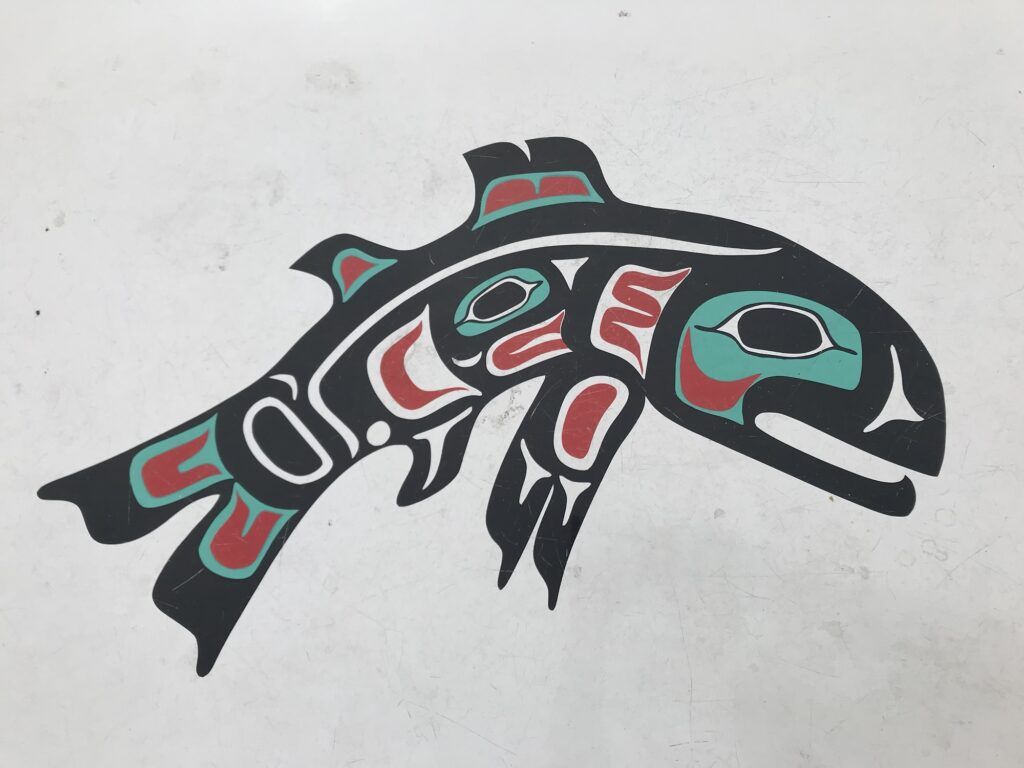
It is not a Coast Salish symbol.
Who the Coast Salish Are Today
Today, the Coast Salish are thriving, sovereign nations with growing populations, strong economies, and cultural revitalization.
Population Today
Across the Salish Sea, Coast Salish peoples number well over 60,000:
- Washington State tribes: ~35,000+
- British Columbia First Nations: ~25,000+
Individual nations include:
- Suquamish
- Duwamish (unrecognized)
- Tulalip
- Puyallup
- Lummi
- Swinomish
- Saanich
- Cowichan
- Musqueam
- Squamish
- Tsleil‑Waututh
- And many more
Economy Today
Modern Coast Salish economies are diverse and powerful:
- Tribal casinos (Suquamish, Tulalip, Puyallup, Lummi, etc.)
- Hotels and resorts
- Marinas
- Construction companies
- Fisheries and aquaculture
- Cultural tourism
- Art markets
- Renewable energy projects
- Government services
- Healthcare systems
- Education programs
The Suquamish Tribe’s Clearwater Casino Resort is one of the largest employers in Kitsap County.
Sovereignty Today
Coast Salish nations today:
- Operate tribal governments
- Maintain tribal courts
- Manage natural resources
- Run schools and language programs
- Hold treaty fishing rights (Boldt Decision, 1974)
- Lead environmental restoration
- Host Tribal Canoe Journeys, one of the largest Indigenous gatherings in North America
Cultural Revitalization Today
Coast Salish culture is experiencing a renaissance:
- Language revitalization (Lushootseed, Halkomelem, Saanich, Squamish)
- Canoe carving
- Weaving and regalia making
- Longhouse ceremonies
- Public art installations
- University partnerships
- Youth cultural programs
The Coast Salish are shaping the cultural identity of the entire Pacific Northwest.
Ivar’s Salmon House No Longer Serves Cornbread?
Ivar’s Salmon House originally served sweet cornbread as part of its salmon‑bake menu. It was removed because:
- The restaurant shifted toward a more Northwest‑focused menu
- Cornbread was not considered part of traditional Coast Salish foodways
- Customer preference moved toward seafood‑centric sides (e.g., rice, vegetables, chowder)
In short: menu modernization + cultural alignment.
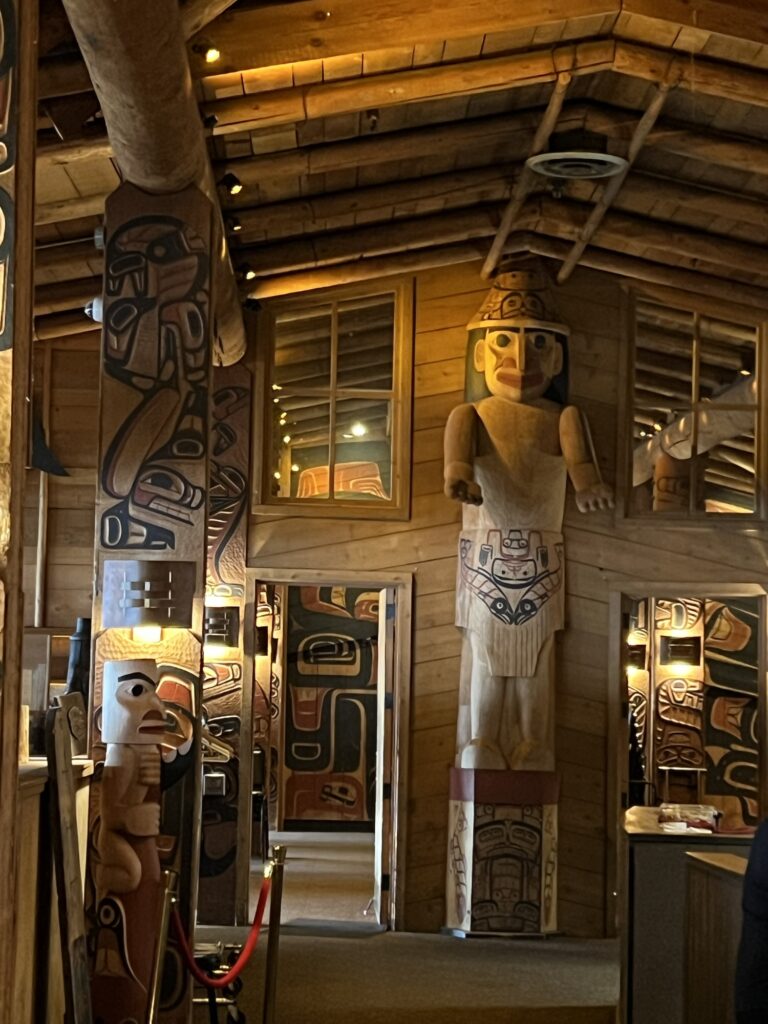
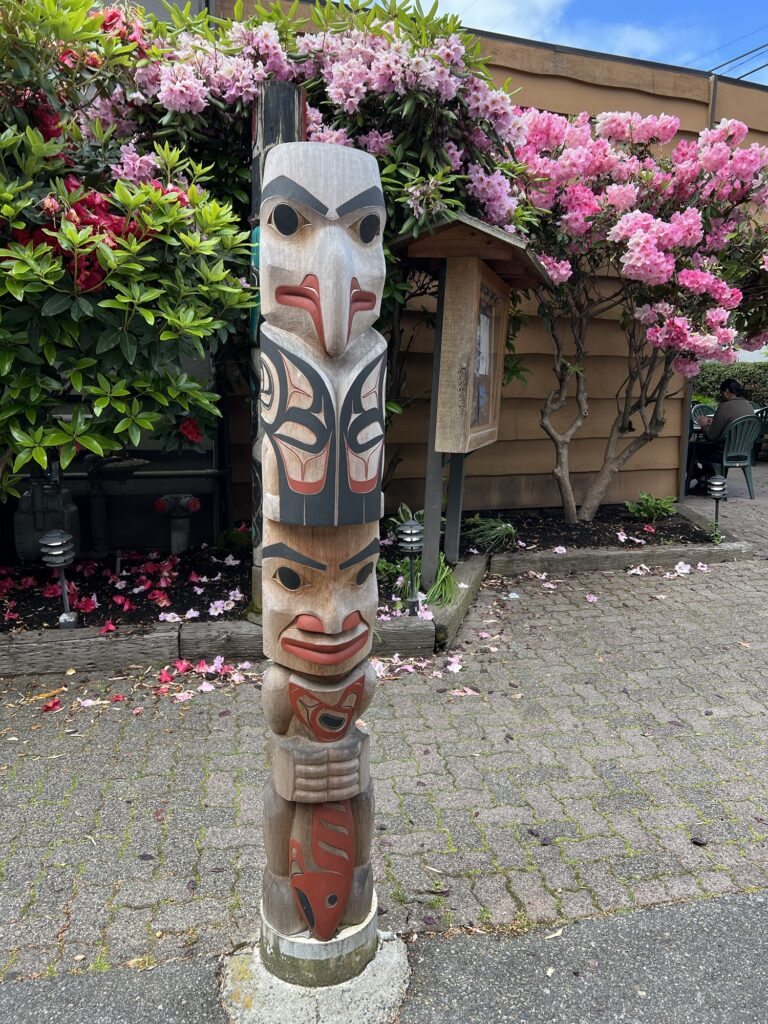
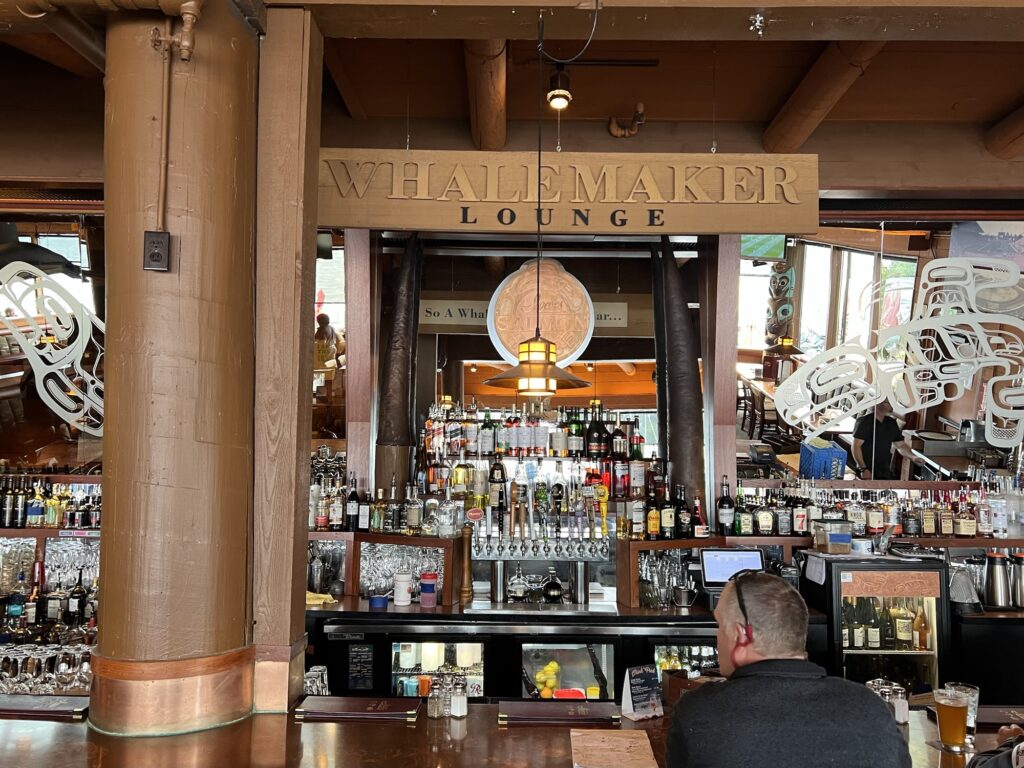
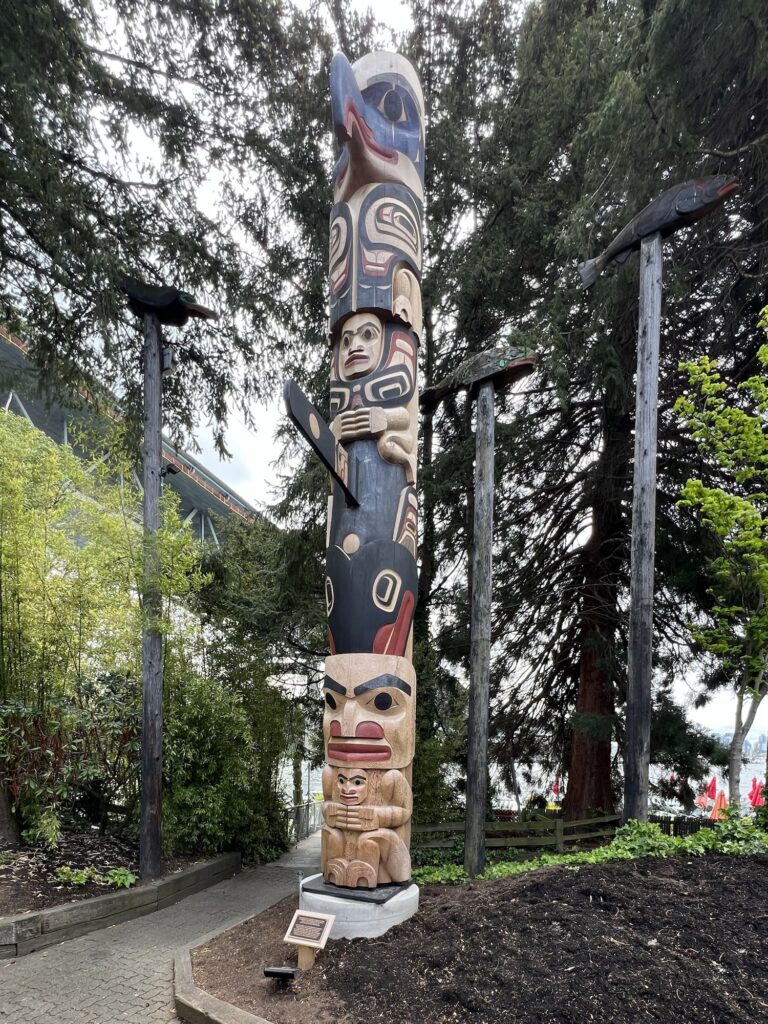
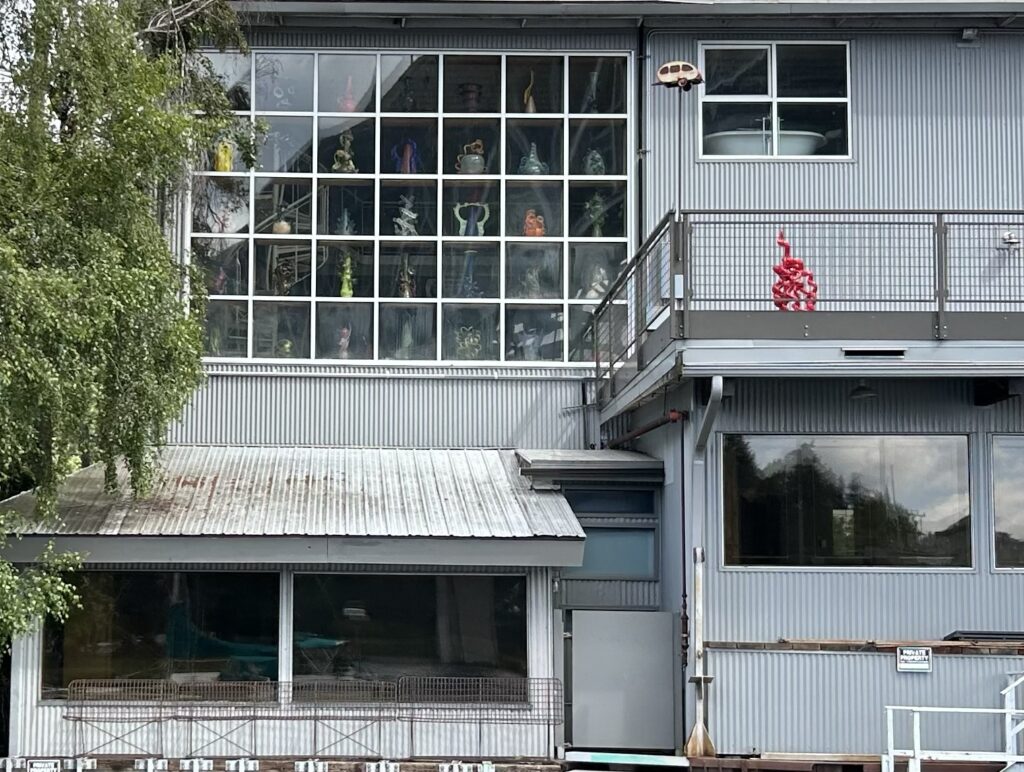
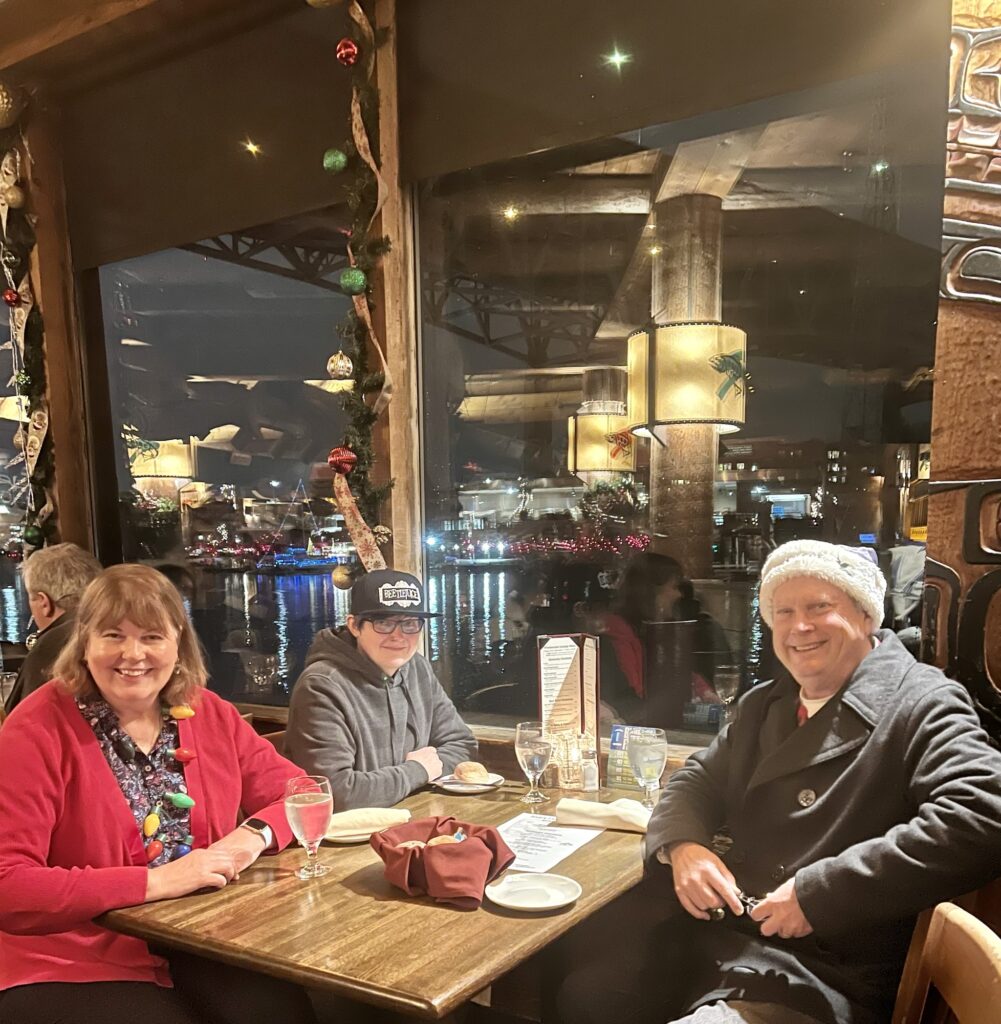
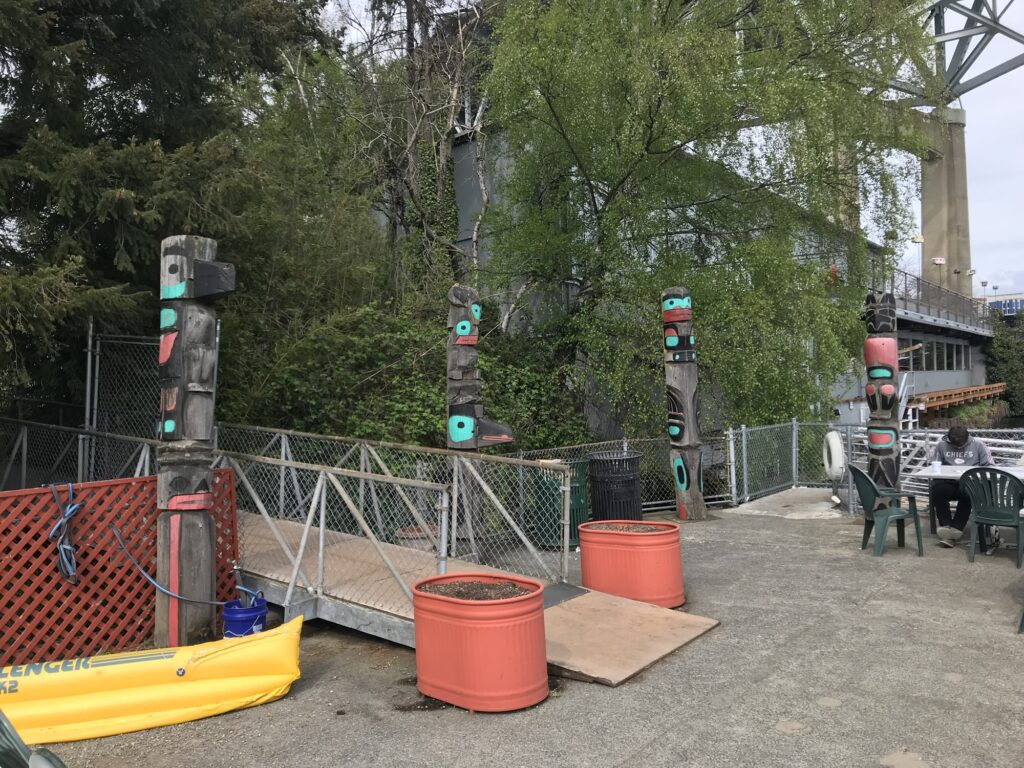
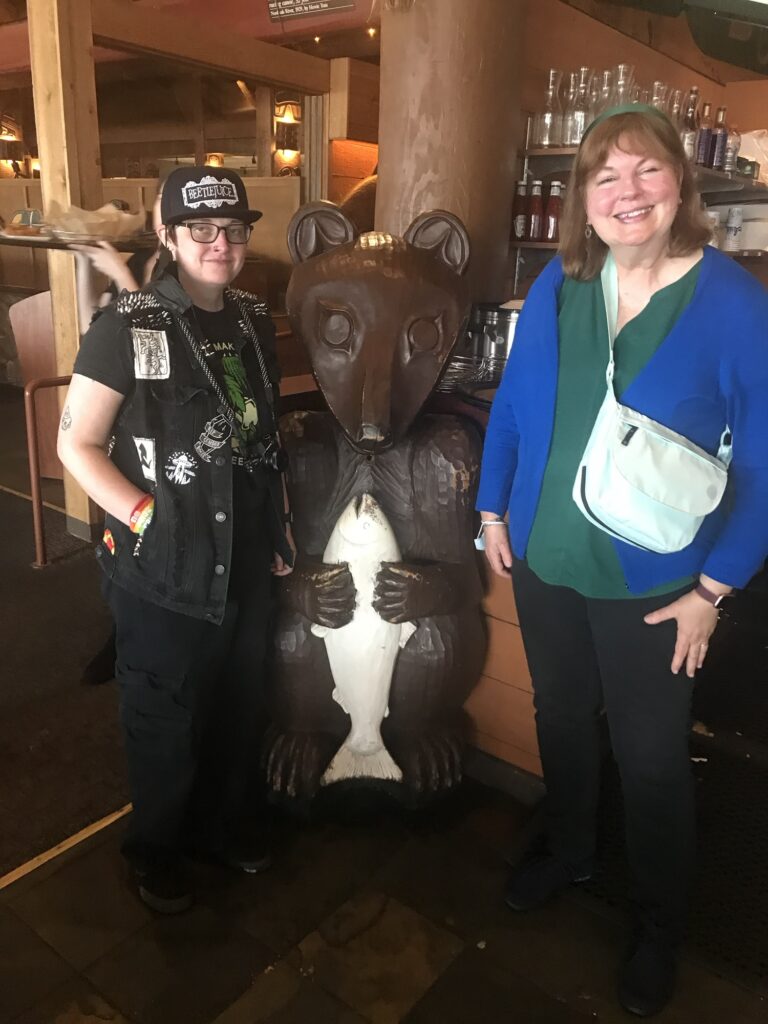
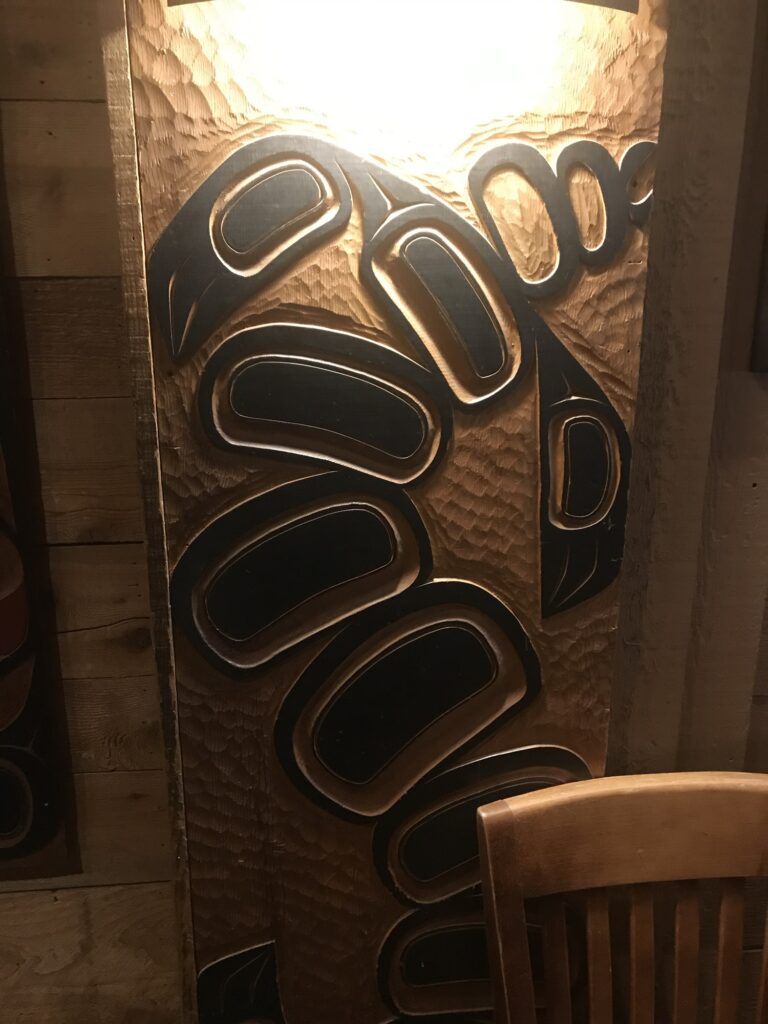
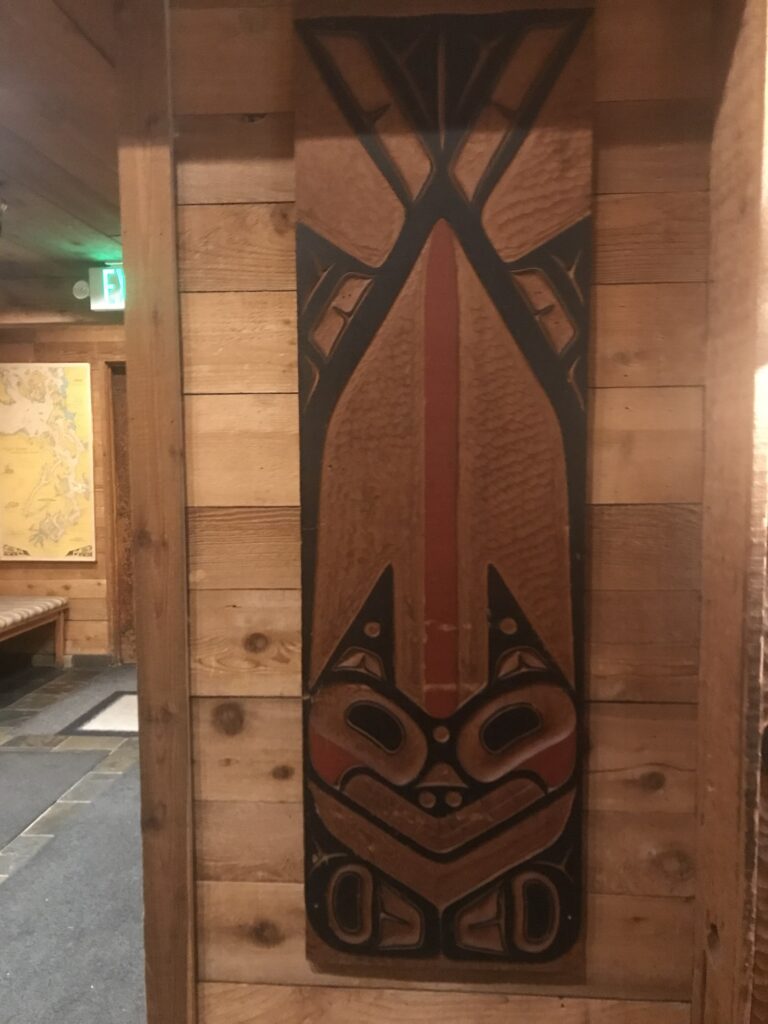
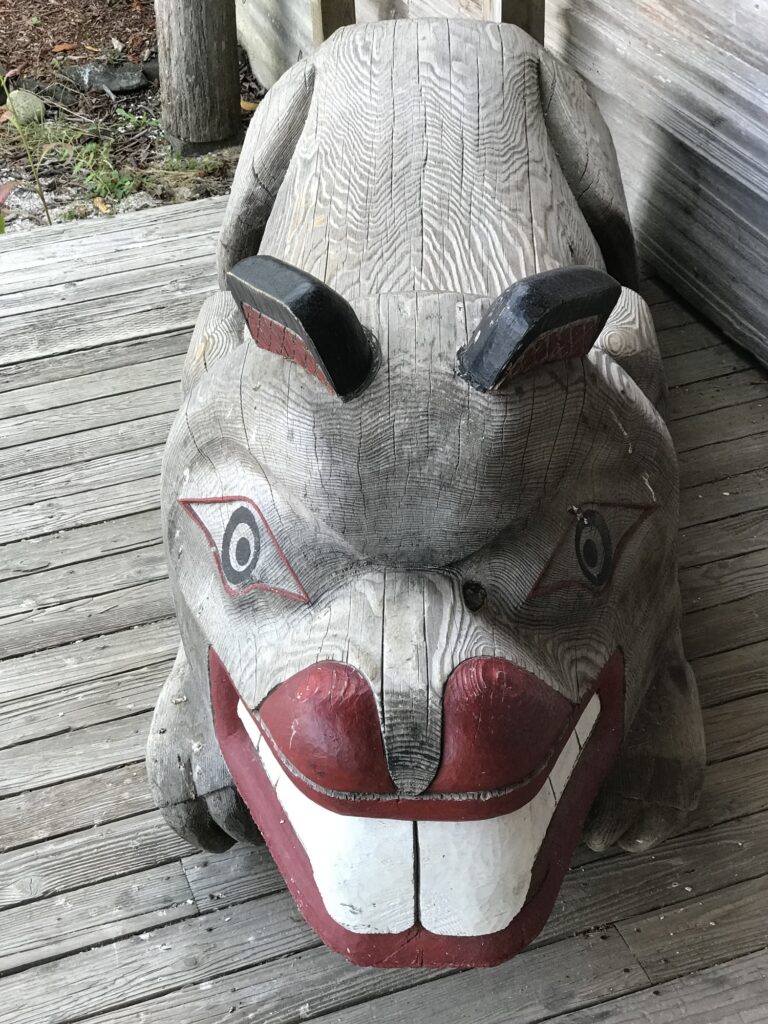
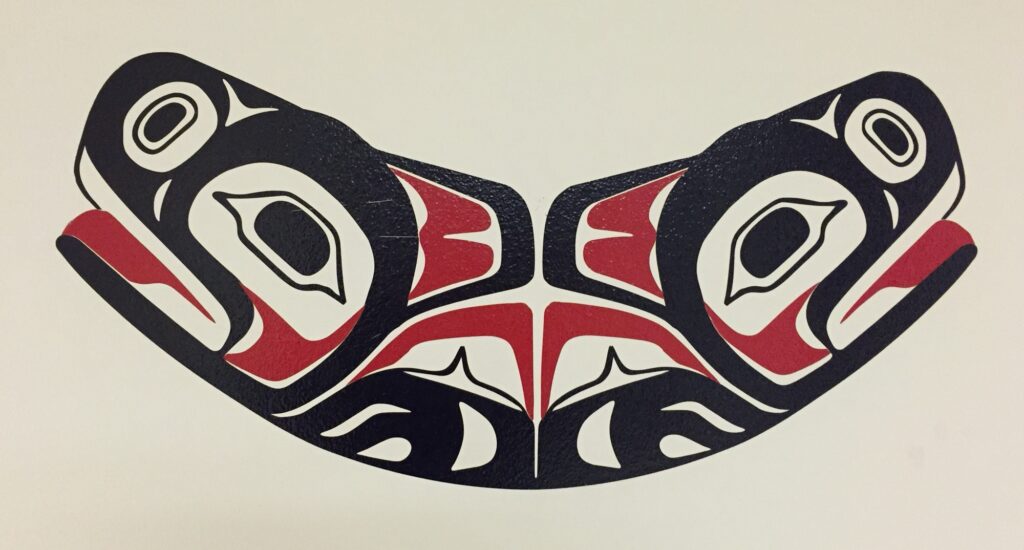
Story of the Beaver and Bear Crest
A Coast Salish Clan Legend of Creation and Guardianship inspired by visit to Blake Island in 2026
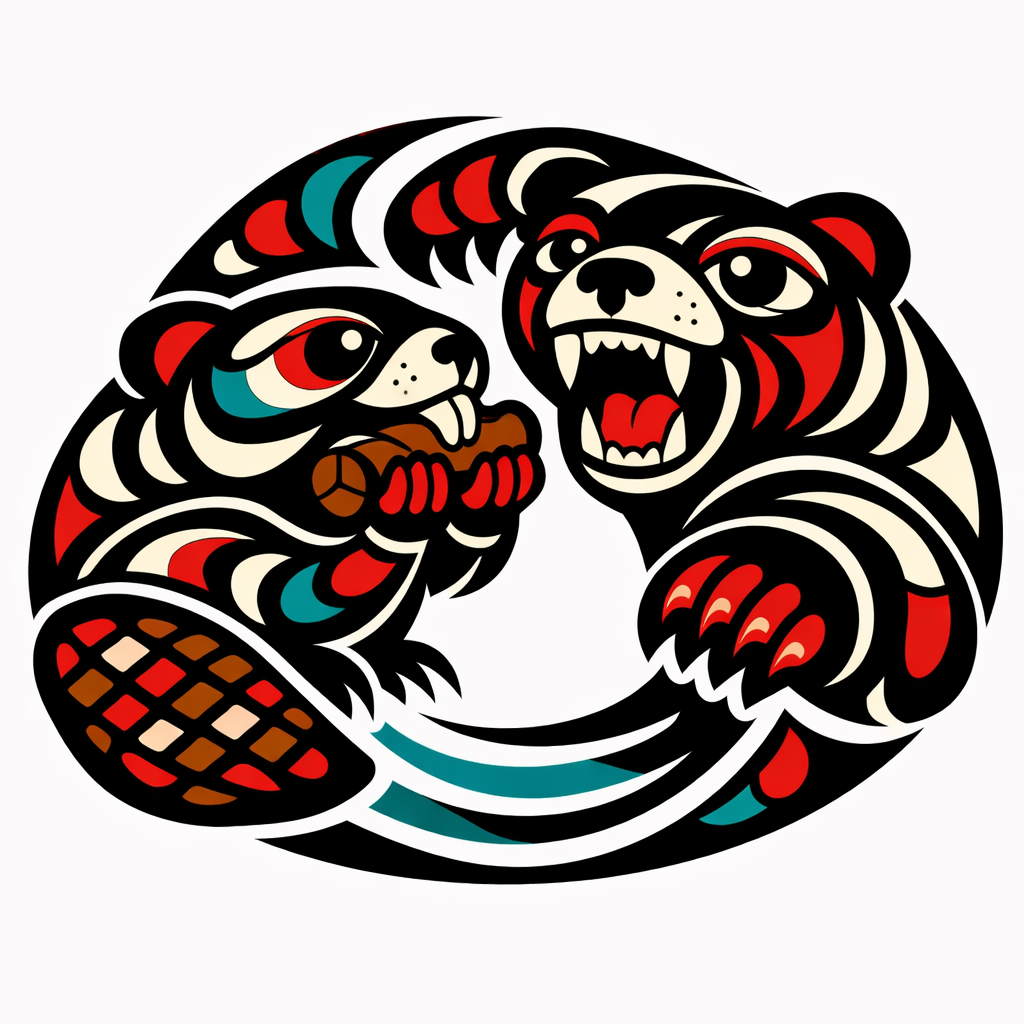
Long ago, when the Salish Sea was still young and the mountains were soft with mist, the Bear and the Beaver lived as neighbors along the river that fed the tide. The Bear was strong and proud, keeper of the forest’s heart. The Beaver was patient and clever, builder of homes and shaper of waterways.
One season, the river began to vanish — swallowed by silence. The salmon could no longer find their way, and the cedar roots began to dry. The Bear roared to the sky, demanding the water’s return, but his strength alone could not summon it. The Beaver listened to the earth and discovered that the river’s spirit had hidden deep beneath the stones, frightened by the noise of the world.
Together they worked: the Bear lifted the heavy rocks, and the Beaver carved channels with his teeth. When the spirit of the river saw their unity, it flowed again — stronger than before. The Bear promised to guard the waters, and the Beaver vowed to keep them moving.
From that day, their bond became sacred. The Bear stands for protection and courage, the Beaver for creation and persistence. Their forms interlock in a circle — the Crest of Balance — reminding every Salish clan that strength and craft must live together.
Cultural Meaning
- Bear (Upper Arc): Guardian of the forest, symbol of leadership and defense.
- Beaver (Lower Arc): Builder of life, symbol of community and renewal.
- Circle Form: Represents the eternal cycle of cooperation between land and water.
- Colors: Black for earth, red for life, teal for water, white for spirit — the four harmonies of the Salish world.
Haida Soul Catcher inspired by the above
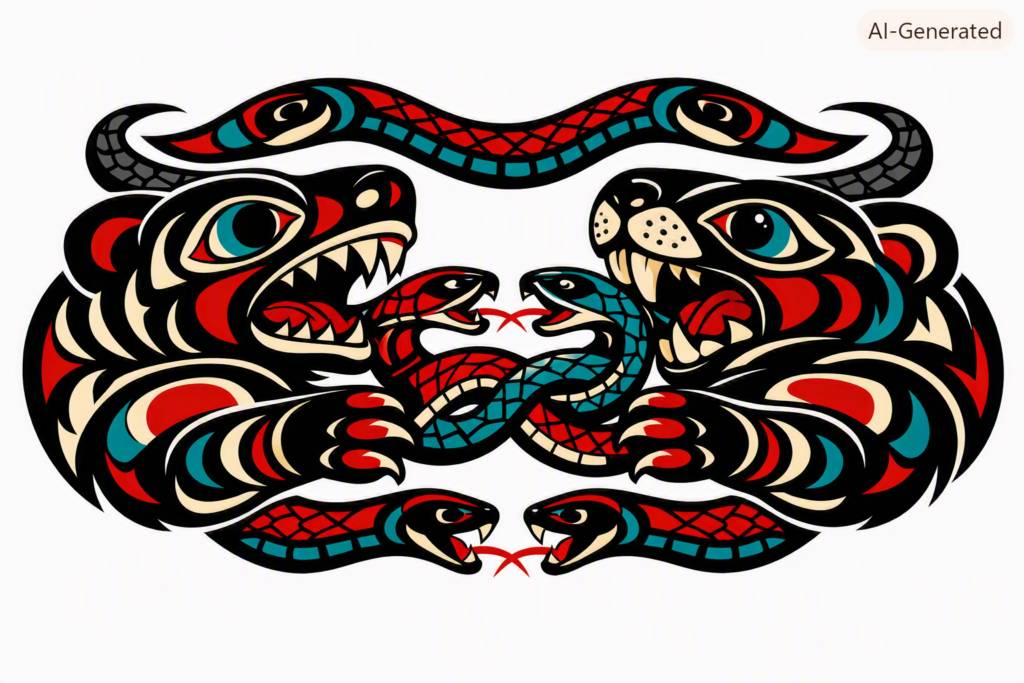
Formline cosmology: Spirit is structure – every being is defined by the continuous flow of the formline, symbolizing life’s interconnected rhythm.
Soul containment: The Soul Catcher represents the shaman’s vessel for capturing and restoring lost souls, often carved from bone or rendered in symmetrical formline.
Transformation: Animals morph into humans and vice versa, showing the permeability between worlds.
Color logic: Black (structure), red (energy), and blue-green (spirit) – a triad that defines balance.
Symmetry and density: Every space is filled; the spiritual world is complete and ordered.
The visit inspired Haida Soul Catcher with Bear and Beaver mouths releasing two serpents as the soul carries a striking spiritual intensity:
- The Bear exhales a red serpent, its formline jaw acting as a portal of strength.
- The Beaver releases a turquoise serpent, symbolizing creation and persistence.
- The two snakes meet and coil at the center, forming the dual soul — life and death, body and spirit, creation and release.
- The composition is dense, symmetrical, and unmistakably Haida, with black primary formlines, red secondaries, and blue‑green tertiaries.
Coast Salish did not have shamans that utilized soul catchers for healing.
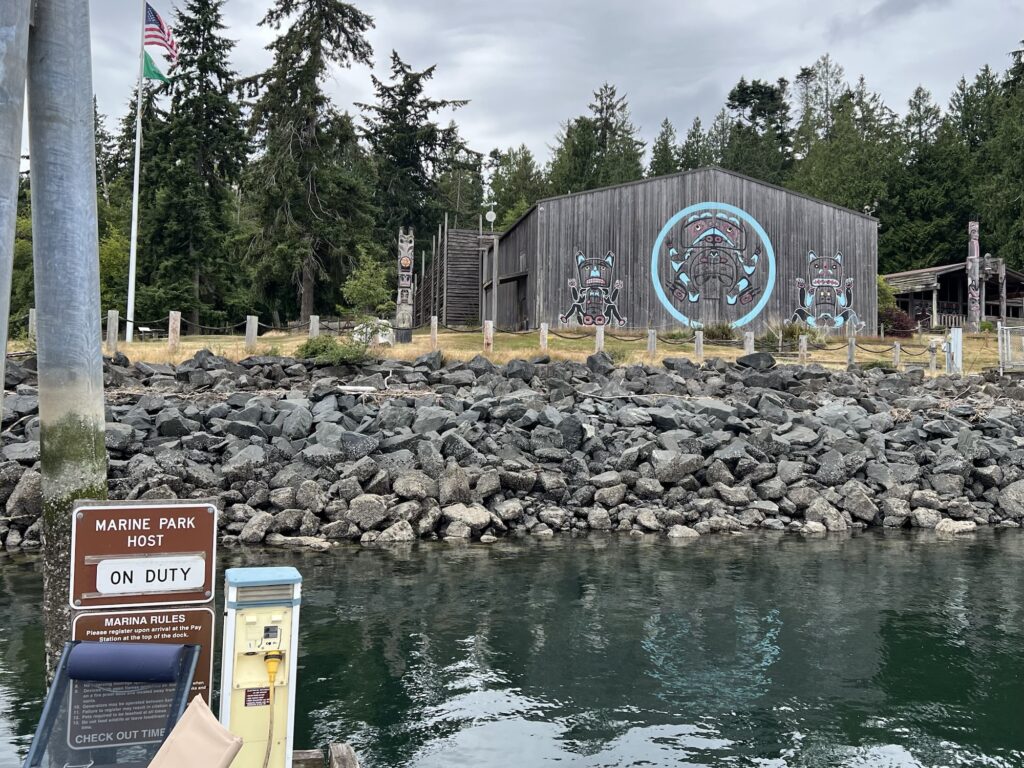
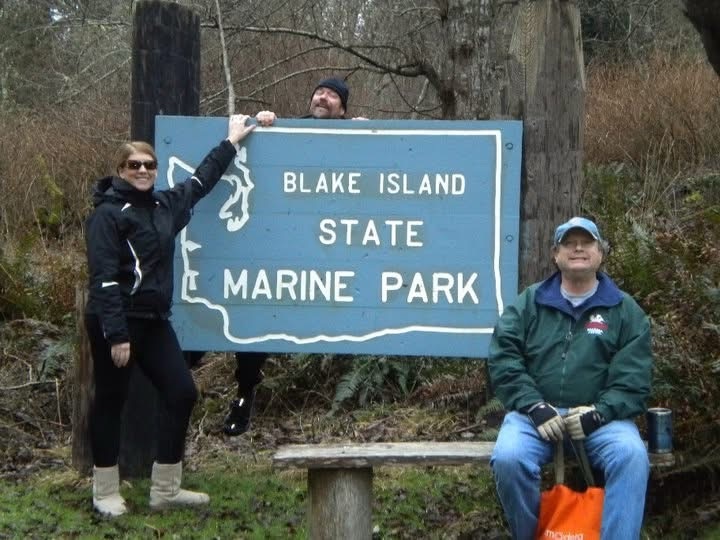
The following provided by Marine Park Host Lyle?
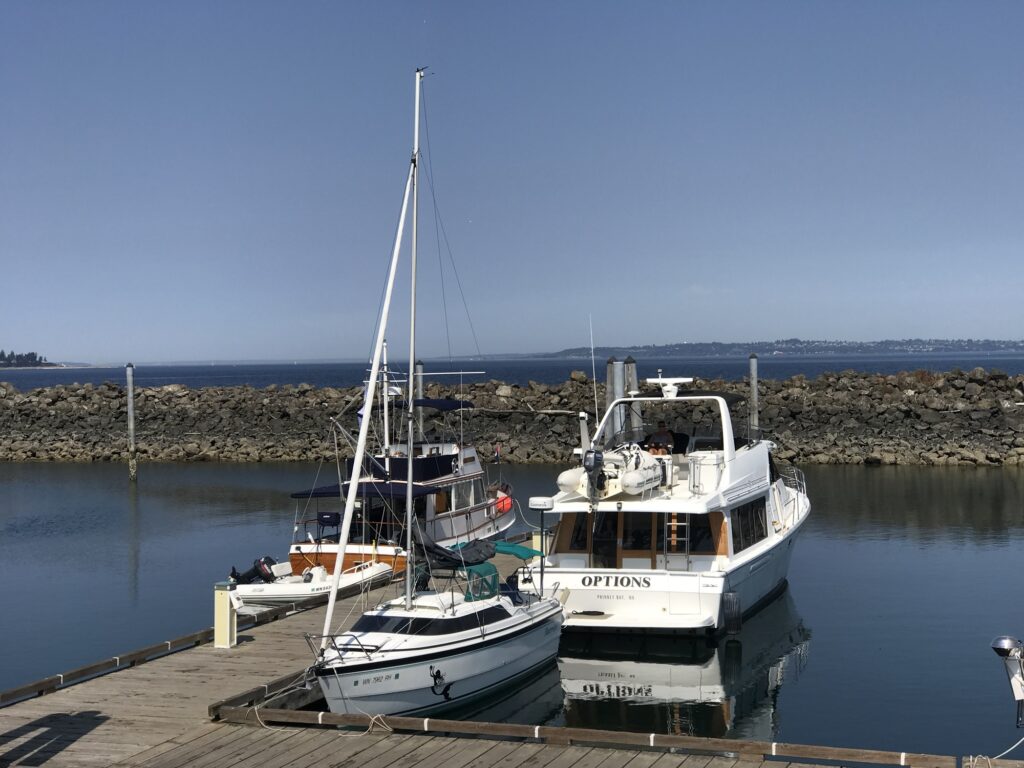
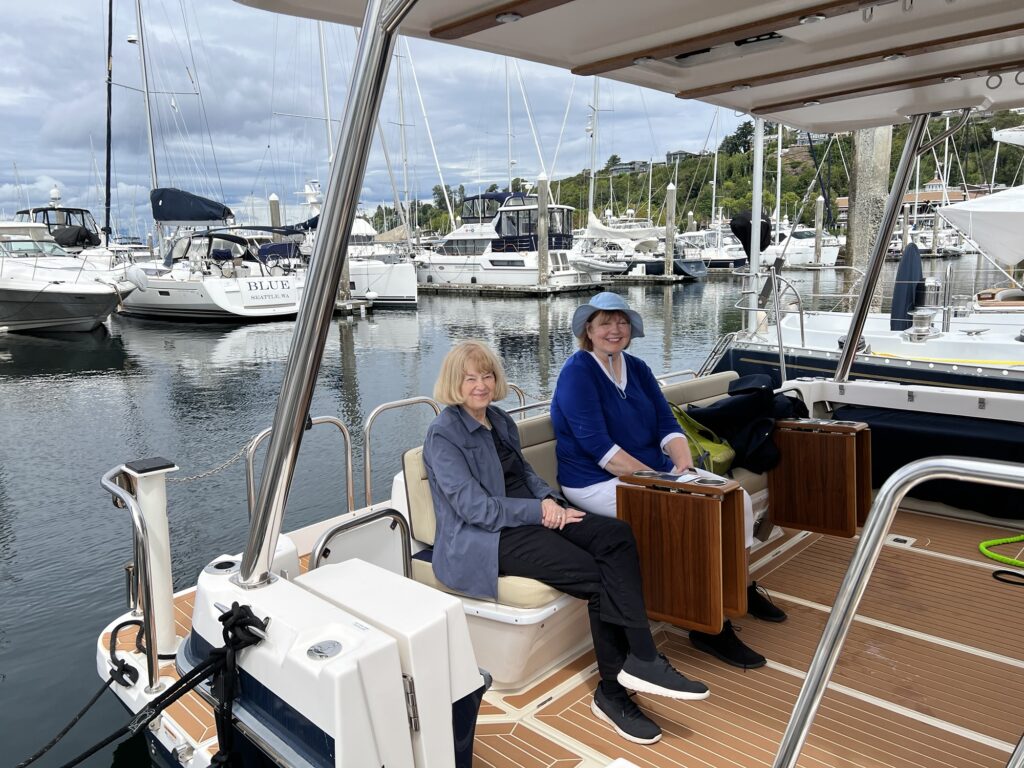
Blake Island, a 1,127-acre Washington State Park, lies in Puget Sound approximately eight miles from downtown Seattle.
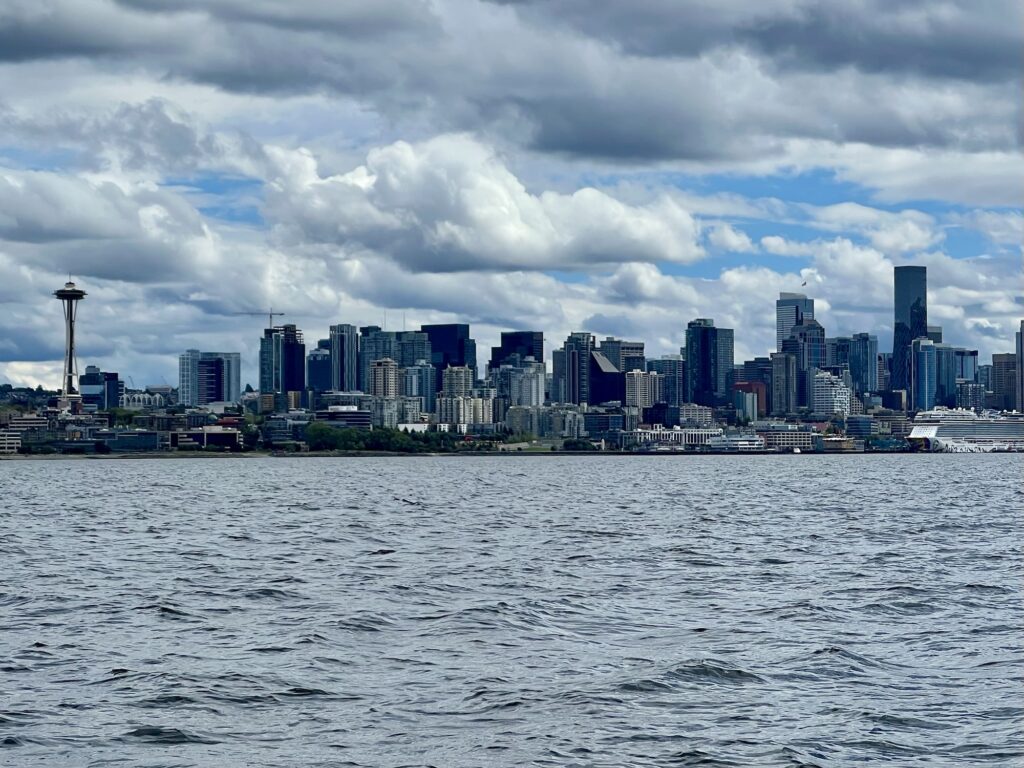
It is in east central Kitsap County, four miles off Alki Point, between the south end of Bainbridge Island and the north end of Vashon Island.
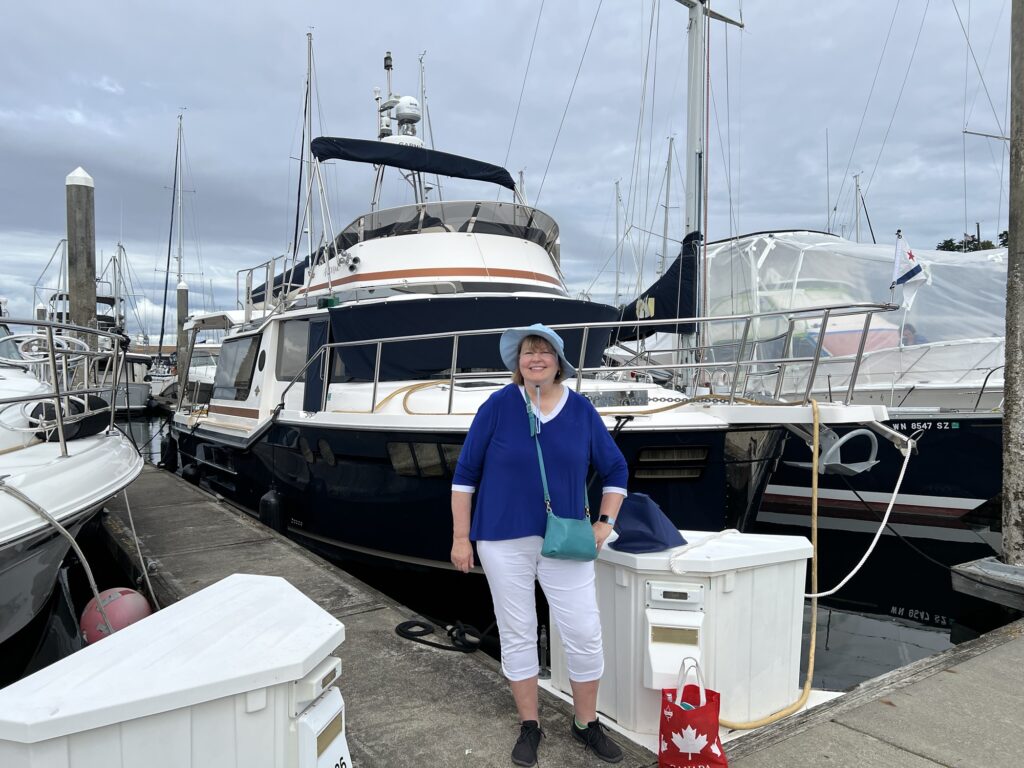
Blake Island, with its five miles of beach shoreline and magnificent views of the Olympic Mountains and Seattle skyline, is only accessible by boat.
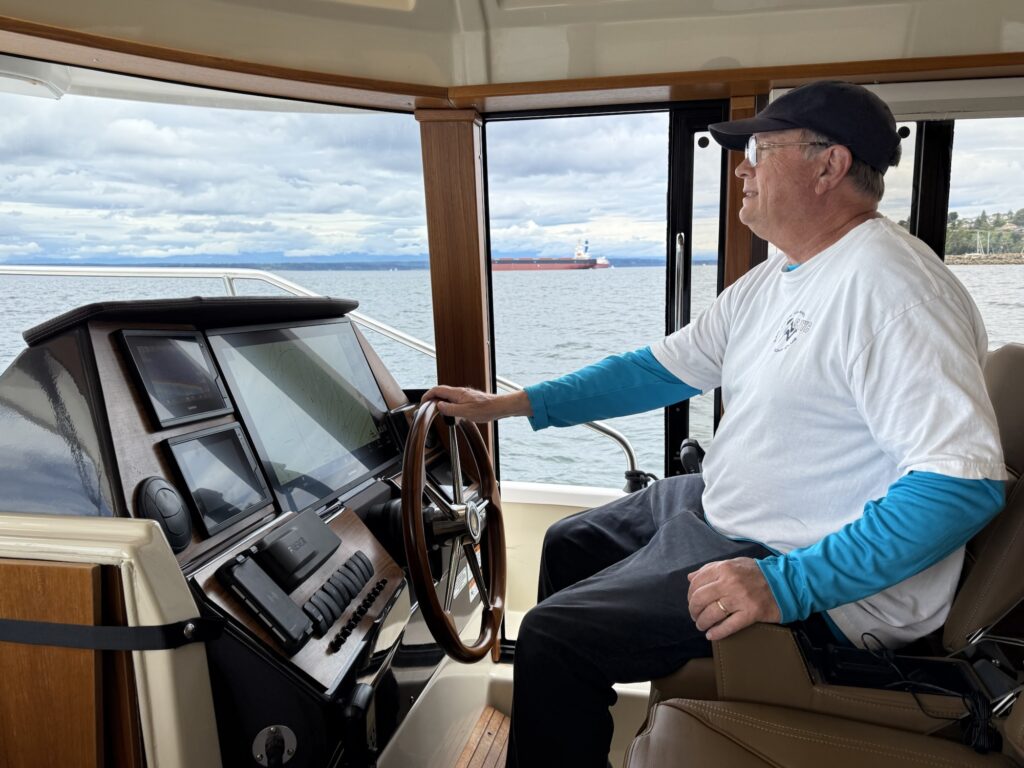
The island was an ancestral camping ground of the Suquamish Indian tribe. Later, it was logged and eventually sold to William Trimble and his family. Tragedy ended the Trimble family’s interest in Blake Island. After years of neglect, the property became a marine state park in 1959.
The Explorers
In 1792, Captain George Vancouver of the British Royal Navy was in the Pacific Northwest, exploring and charting Puget Sound, when he noted “a small, round island” in his journal but neglected to give it a name. Early inhabitants called it High Island, although the island’s maximum elevation is only 260 feet.
In 1841, Lt. Charles Wilkes of the United States Exploring Expedition, charted and officially named Blake Island, probably in honor of George Smith Blake who oversaw the United States Coast Survey (1837-1848) during the time of the Wilkes expedition.
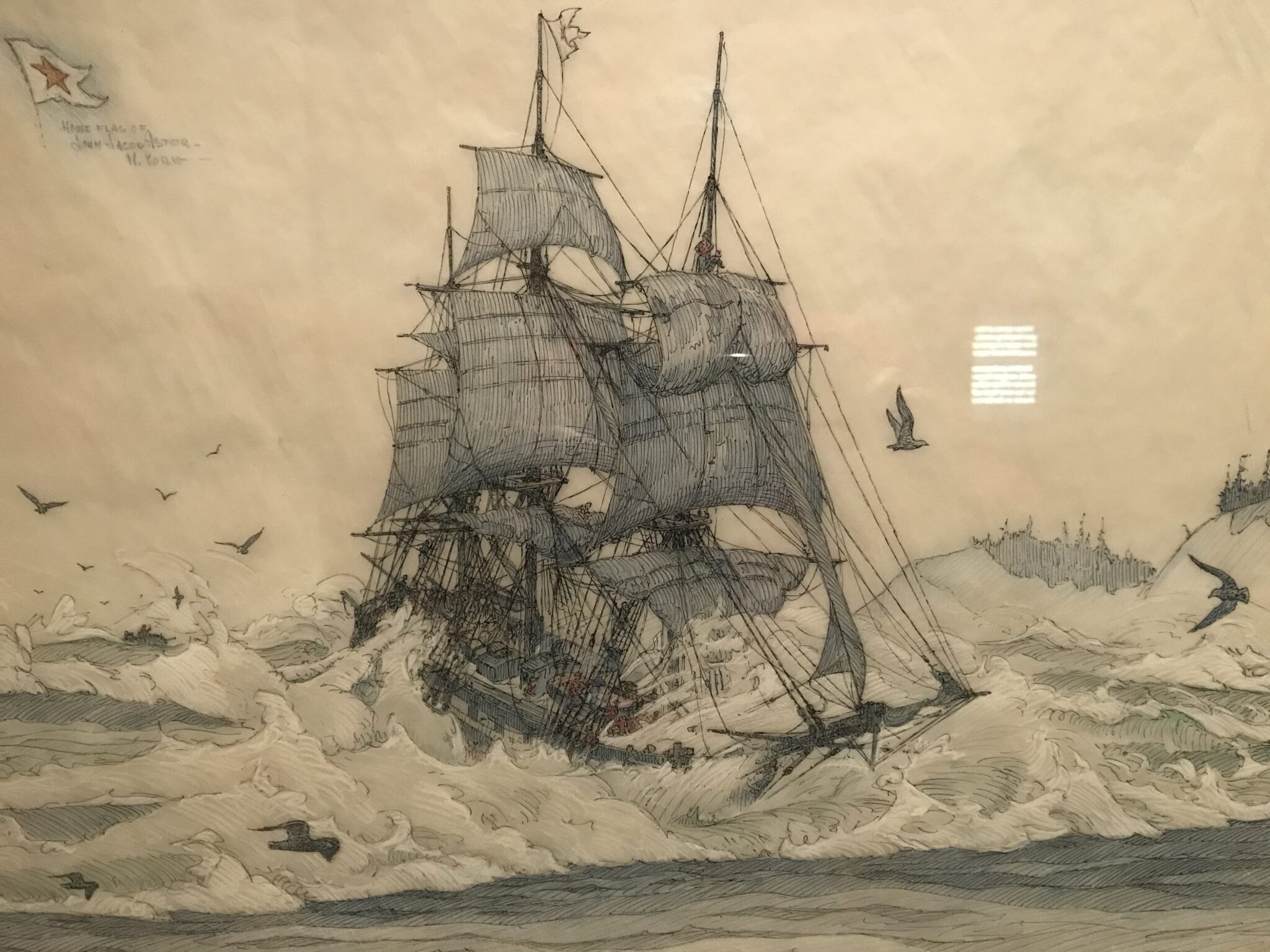
final moments of the U.S. Exploring Expedition vessel Peacock as it attempted to cross the Columbia River bar in 1841. Captain Hudson and crew were saved through their heroic efforts but the Peacock was a total loss. Later, the Commander of the expedition, Charles Wilkes stated: “there is one difficulty that will ever exist in passing over the bar, and this, nothing but an intimate acquaintance with the locality will remove. I allude to the cross-tides, which are changing every half-hour. These tides are at times so rapid, that it is impossible to steer a ship by her compass, or maintain her position… the safest time to cross the bar is when both tide and wind are adverse; and this is the only port, within my knowledge, where this is the case.”
The local settlers referred Blake Island to it as Smuggler’s Island.
Blake Island was an ancestral camping ground of the Suquamish Indian tribe and legend has it Chief Seattle (178?-1866) was born there.
Cutting Down the Trees
In the mid-1800s, the island was owned and logged by G. A. Meigs and W. P. Sayward, who operated a big sawmill at Port Madison on Bainbridge Island. Most of the timber produced in the Puget Sound region was being shipped to San Francisco, the largest market for forestry products on the West Coast.
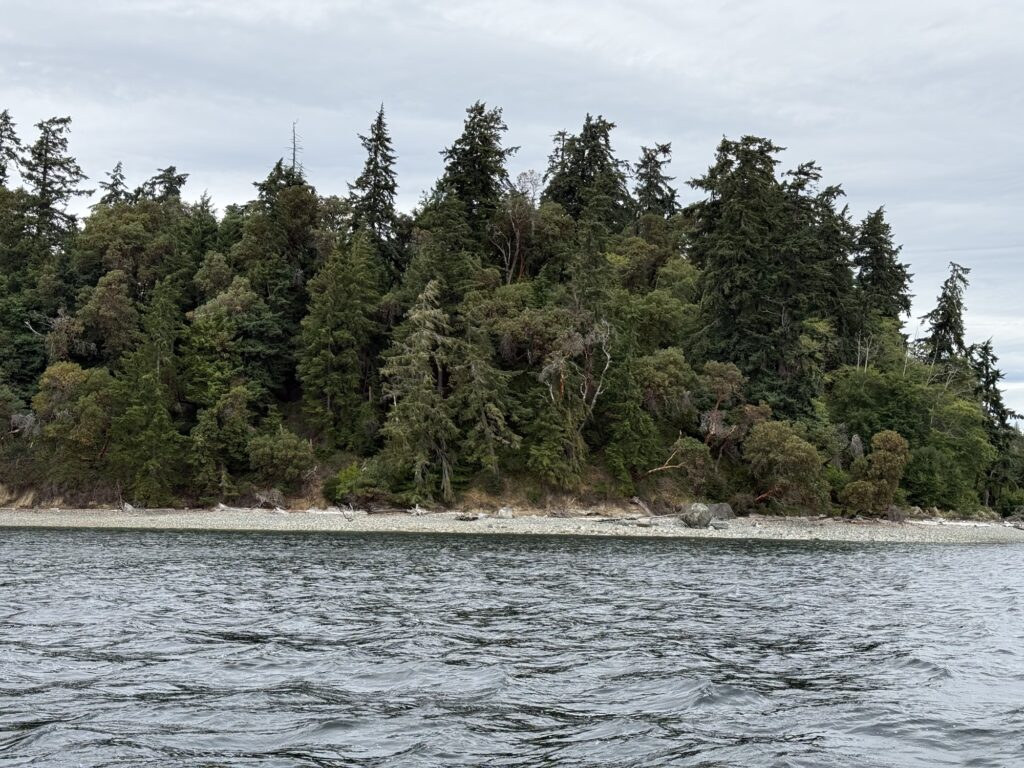
After the timber supply was exhausted, and the island was no longer a source of revenue, Meigs stopped paying property taxes to Kitsap County. Eventually, the taxes became so far delinquent that Kitsap County, to avoid taking over the property, forgave approximately $2,000 in interest, to secure settlement. Apparently Meigs was having other difficulties meeting his financial responsibilities. A Seattle bank finally foreclosed against Meigs and took possession of Blake Island, along with other properties.
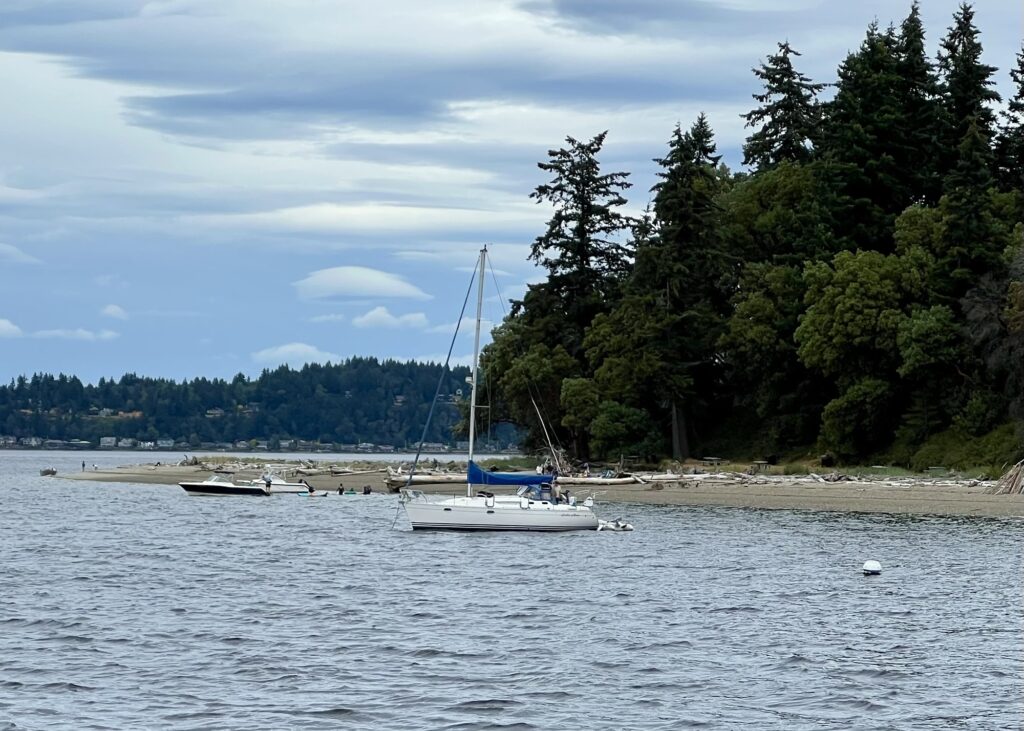
The Trimble Era
Around the turn of the twentieth century, William Pitt Trimble (1863-1943), an attorney and real estate financier, purchased Blake Island. Born in Cynthiana, Kentucky, Trimble came to Washington state in 1890 from Cincinnati, Ohio, making his home in Seattle in 1892. He married Cannie Webb Ford (1871-1929) of Covington, Kentucky, in 1897 and they had five children: Ford, William Jr., Mary, Augusta, and Webb. Trimble was a genius in real estate promotion and became a millionaire. By 1920, he was one of then wealthiest men in Seattle, with extensive commercial real estate holdings in the central business district.
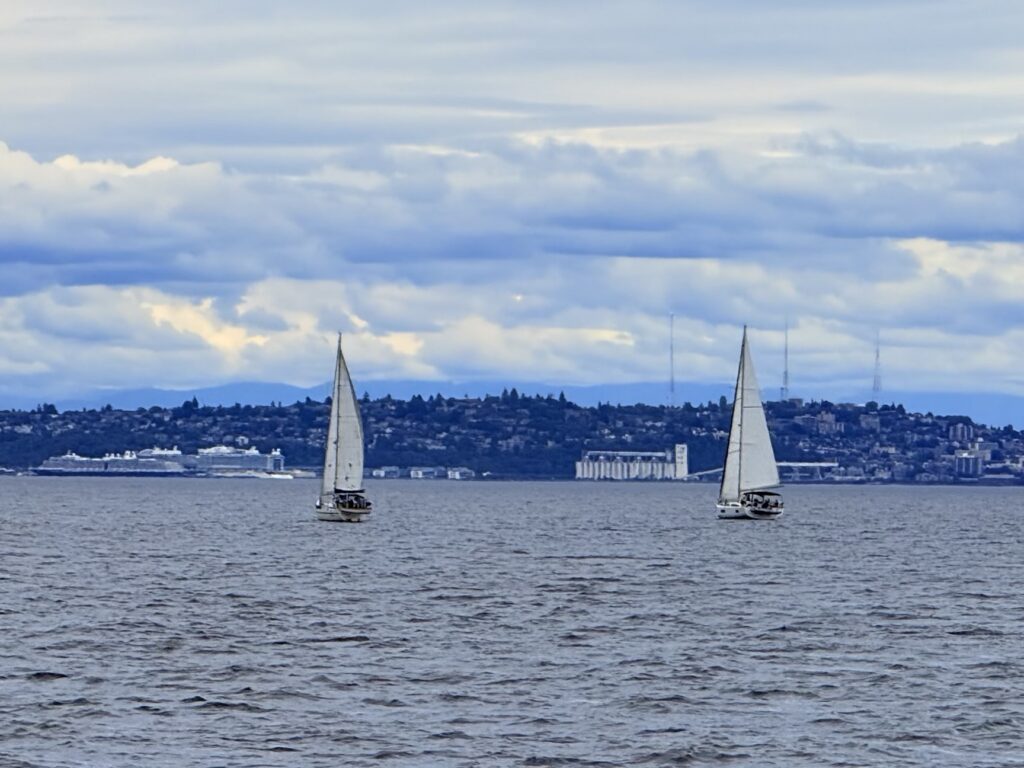
After acquiring the property, the Trimble’s renamed it Trimble Island. They were the first to build a house and lived there continuously from 1917 through 1923, spending these years making Trimble Island one of the most beautiful private estates in the country.
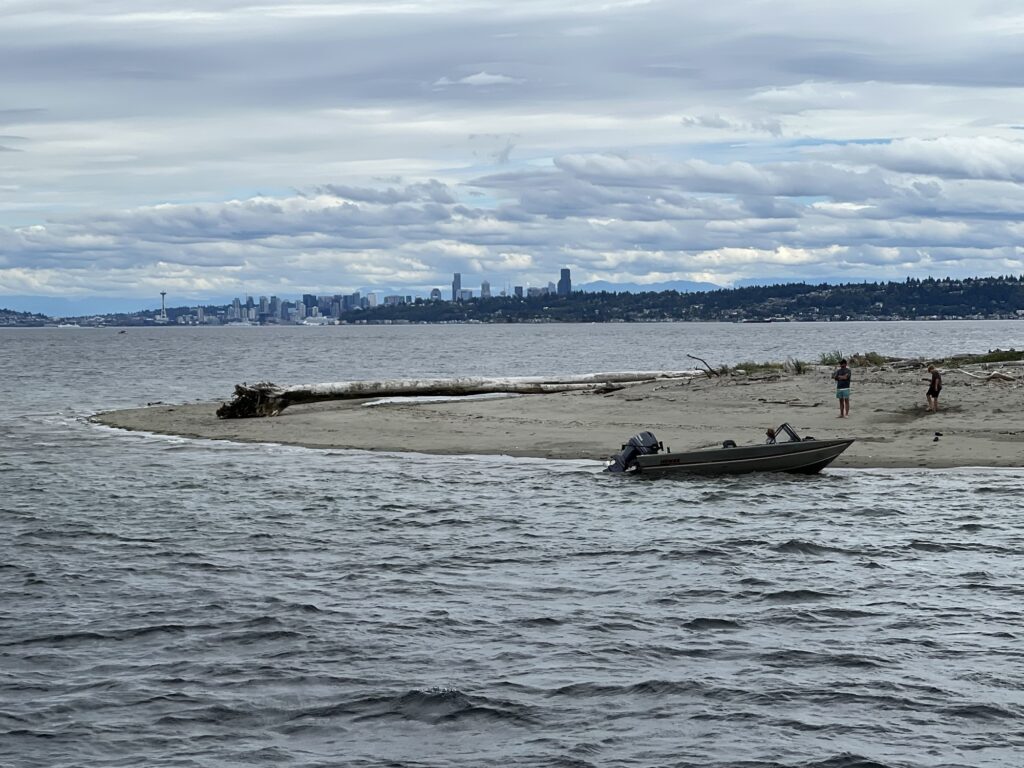
William Pitt Trimble planned ultimately to give the island to Seattle as a municipal park, “a green fragment of nature surviving in a world of progress and subdivisions.” The Trimble’s also had a splendid house at 1019 Terry Avenue and maintained year-round residences in New York and Washington D. C.
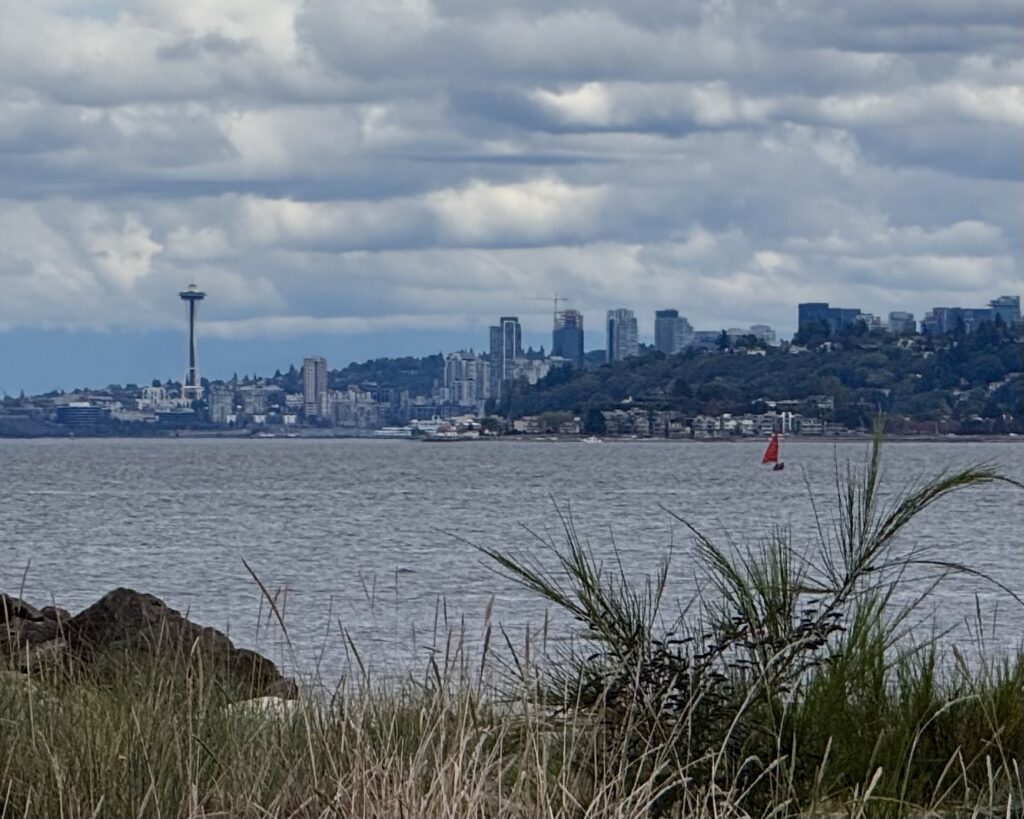
The Trimble “mansion” was a rambling two-story house of 12 rooms, with five fireplaces on the main floor. The living room was 35 by 40 feet, with large Douglas fir ceiling beams. Across the front of the house was a broad verandah that overlooked the large front lawn and extensive formal gardens sloping gently toward the water. The estate also had a vegetable garden, a large pasture for horses, and a cement tennis court. Three caretakers-maintained Trimble Island all year-round.
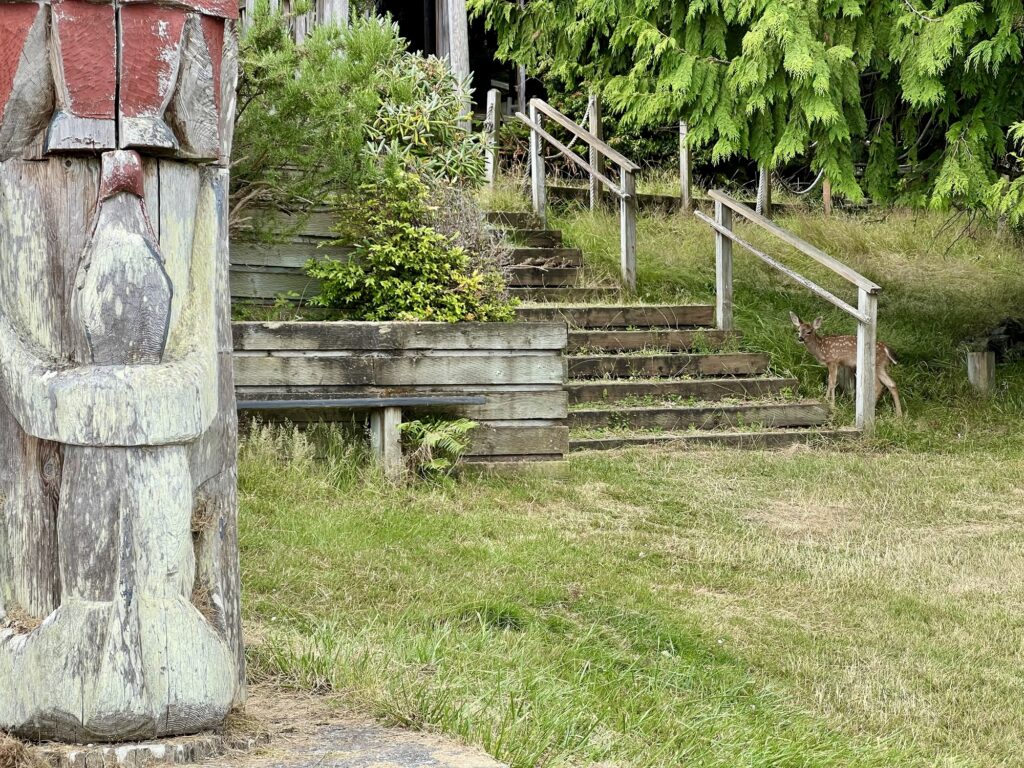
An Island Garden
Cannie Trimble established the island as an ad hoc bird and wildlife sanctuary. The discharge of firearms was forbidden. Local residents claimed that during hunting season, deer would swim to the island from the Kitsap Peninsula, seeking refuge. In the summer, when the family was living on the island, William Trimble commuted daily from his private boat landing to Seattle aboard his 50-foot yacht, Athena.
Trimble Island even had its own post office, with William Pitt Trimble duly appointed as postmaster. The boats that plied the waters of Puget Sound, picking up and delivering mail, stopped regularly at Trimble’s Landing. Potable water, food, and other supplies were delivered to the island every week.
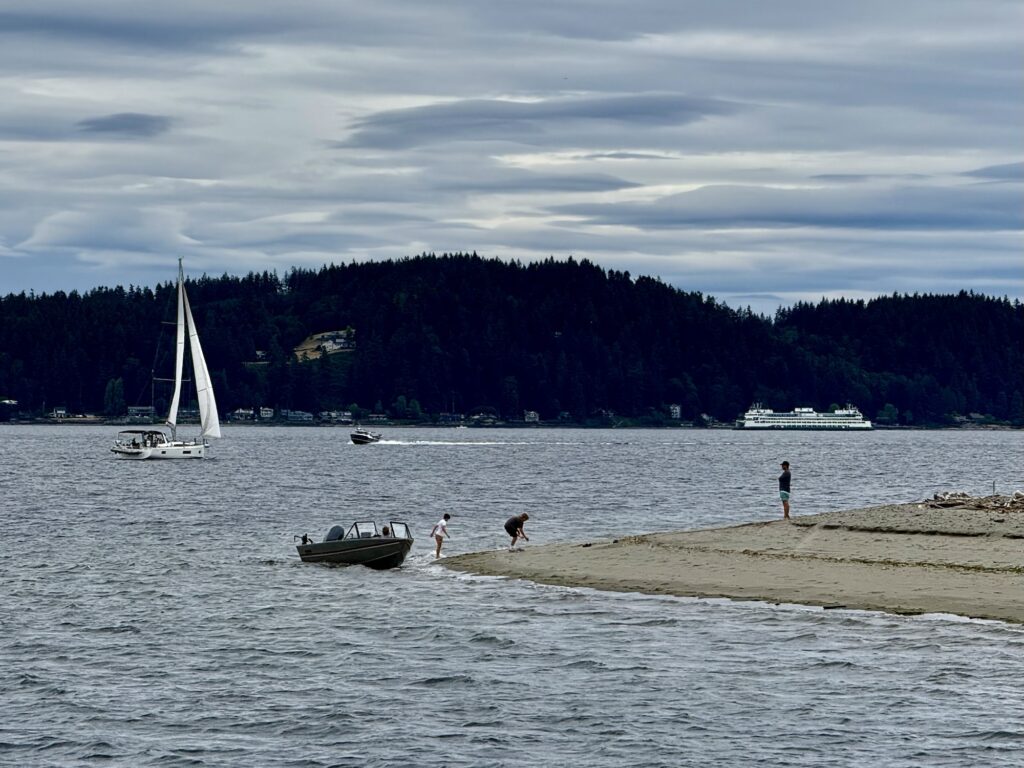
During the Prohibition era in Washington state (1916-1933), bootleggers and rumrunners sometimes tried to take refuge on the island. The Trimble’s would often hear the subdued sound of powerboats, probably from Canada, traveling at night, without lights. Occasionally, they heard the muffled sound of a rowboat; squeaking oarlocks and a keel grating on the beach rocks. It was the three caretaker’s job to make sure these nocturnal visits did not occur too often.
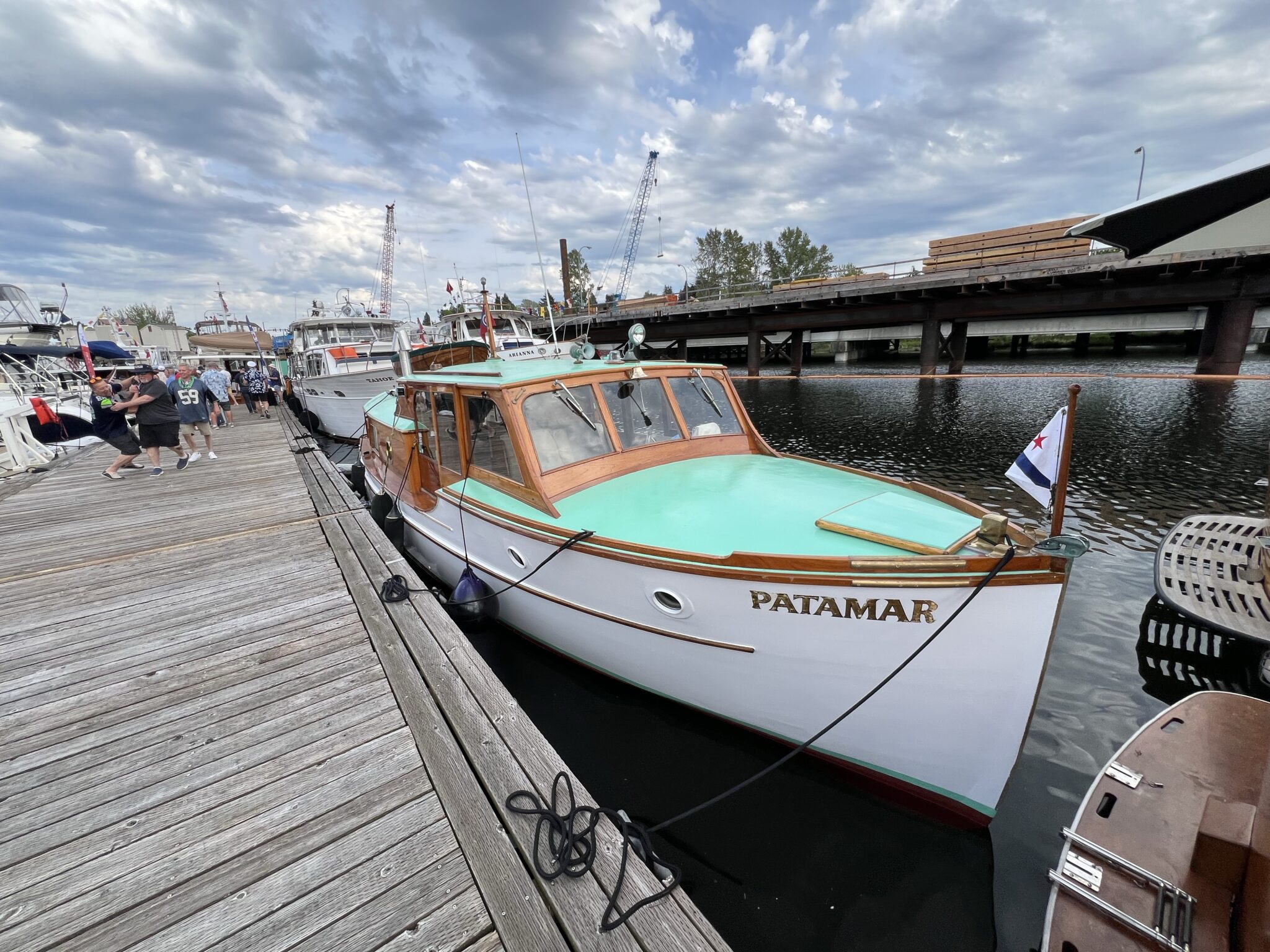
In 1924, the Trimble’s moved back to Seattle, establishing their residence at 1206 University Street, but maintained Trimble Island as their private summer retreat.
Tragedy and Misfortune
On December 7, 1929, tragedy struck the Trimble family. Cannie Trimble was drowned in a freak accident when the family automobile plunged off the King Street Pier into Elliott Bay. Her husband, William Trimble, and sons Ford and William Jr. survived the mishap but the family never went back to Trimble Island to live.
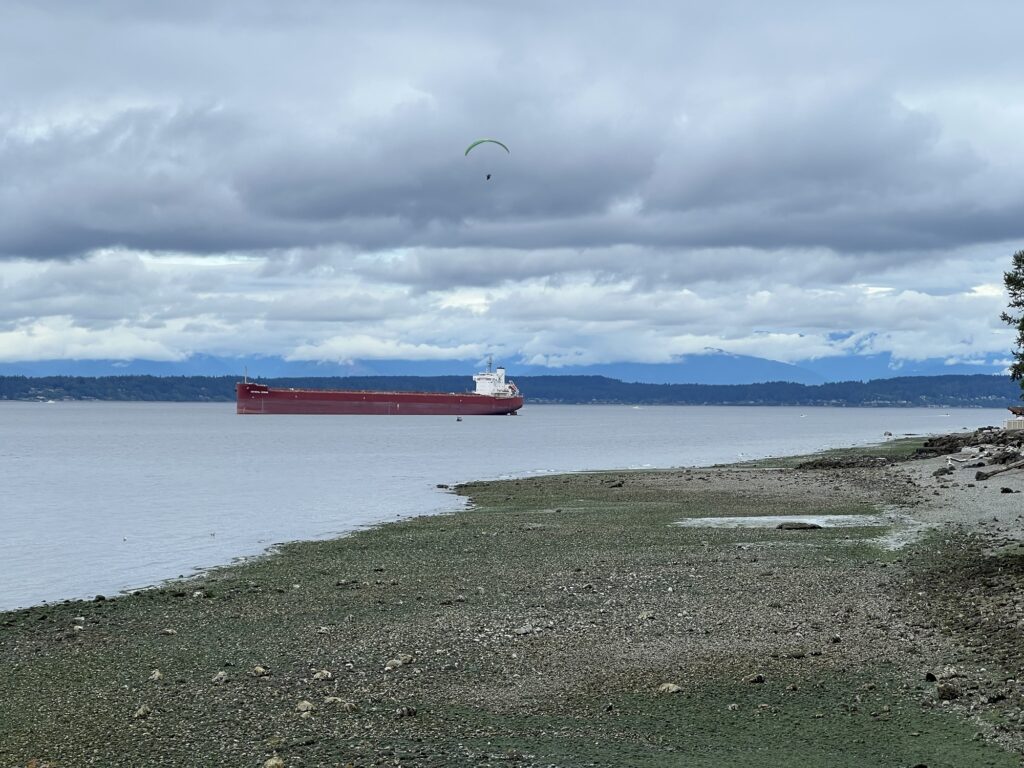
The estate was abandoned and, over the years, was systematically vandalized and plundered. On a chilly afternoon in the late 1940s, Don Winslow and Keith Williams, two South Kitsap High School students, landed on the island in a 16-foot homemade boat.
The boys visited the deteriorating Trimble house and built a fire in the massive fireplace to warm up. They left after a couple of hours and returned to the mainland. During the night, the old house burned to the ground, most likely caused by a smoldering chimney fire or errant embers.
The Great Depression (1929-1939) added to William Trimble’s misfortune. Real estate lost much of its value, and he found himself “property poor.” In 1936, to recoup some of his fortune, Trimble traded the island to the United National Corporation, an investment company, for the Medical-Dental Building in Tacoma. Most of his fortune gone, Trimble retired to a small house on Capitol Hill where he lived alone until his death on March 19, 1943.
The Decades of Neglect
After the Trimble family left, the island reverted to its original name, Blake Island. The property, untended during the next two decades, became a tangle of natural vegetation in a forest of second (and perhaps third) growth alder and hemlock trees. Only the enormous stumps remained of the giant cedar and fir trees that had covered the island in the 1800s. On May 11, 1954, the United National Corporation, owners of Blake Island, changed its name to the United Pacific Corporation.
Blake became a forbidden island, ringed with “Private Property-Keep Off,” and “No Trespassing” signs. Even so, small boats prowled around the island, landing on the beach for picnics and minor exploration. During World War II (1940-1945) there was an unsubstantiated rumor that Blake Island was being used for an ammunition dump. Navy cargo ships were sometimes anchored offshore, leading people to believe the whole center of the island was stacked with explosives. Plus, the Manchester Naval Supply Depot and the Bremerton Naval Shipyard were only a short distance away.
In 1958, controversy arose when a private concern showed an interest in developing an exclusive housing project, luxury resort-hotel, and yacht harbor on Blake Island. Washington State Land Commissioner Bert Cole believed the island, adjacent to such a populated region, should be preserved and developed for the use of the general public. He proceeded to gather all the details for acquiring the property from the United Pacific Corporation. During the early planning stages, Blake Island was even considered as the site for Seattle’s “Century 21 Exposition” (1962) but ruled out as impractical.
An Island Park for Washington
In January 1959, the Kitsap County Auditor’s office recorded a deed transferring title to 355 acres of property, with 14,000 feet of tideland, from the United Pacific Corporation to Washington state. The state traded timber in Mason County valued at $250,000 for the Blake Island property valued at $300,000. The state already held title to 120 acres on the southern end of the island as common school land.
On August 4, 1959, the Washington State Board of Natural Resources, acting on the recommendation of Commissioner Cole, set aside all of Blake Island for a park. The Washington State Parks and Recreation Department immediately set about developing the island into a state park, creating camping facilities, installing sanitary facilities, and developing a water supply from underground springs.
Tillicum Village
In 1961, Seattle caterer William “Bill” Hewitt (1917-2002) came up with an idea for Blake Island State Park: Tillicum Village, a tourist attraction to showcase Northwest Coast Indian arts, culture, and food. Hewitt built a giant cedar-lined longhouse with a restaurant, a performance area for Northwest Indian dancing, and a gift shop on the northeast side of the island. Since the village was only accessible by boat, he also built a 324-foot public pier with a 180 foot float.
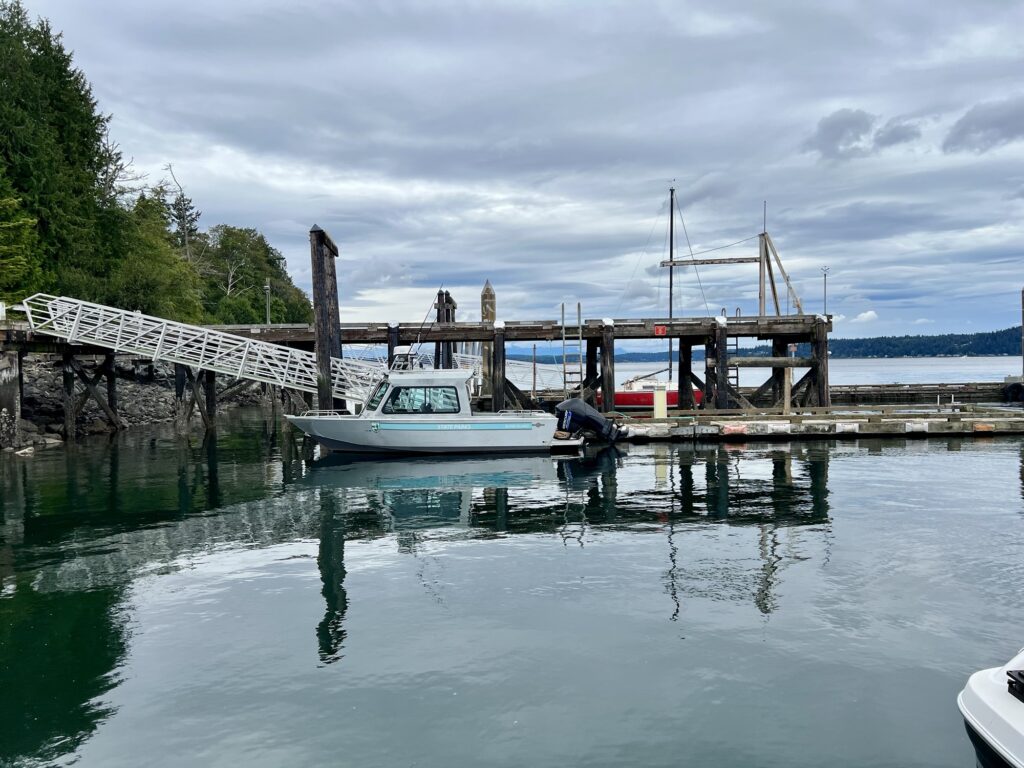
When completed, Hewitt turned ownership of the facility over to the Washington State Parks and Recreation Department, with the understanding he would be allowed operate Tillicum Village as a concession. The entire Tillicum Village complex was operational in June 1962, in time for the Century 21 Exposition. Although not affiliated with any tribal entity, 70 percent of the Tillicum Village’s employees were of Native American ancestry.
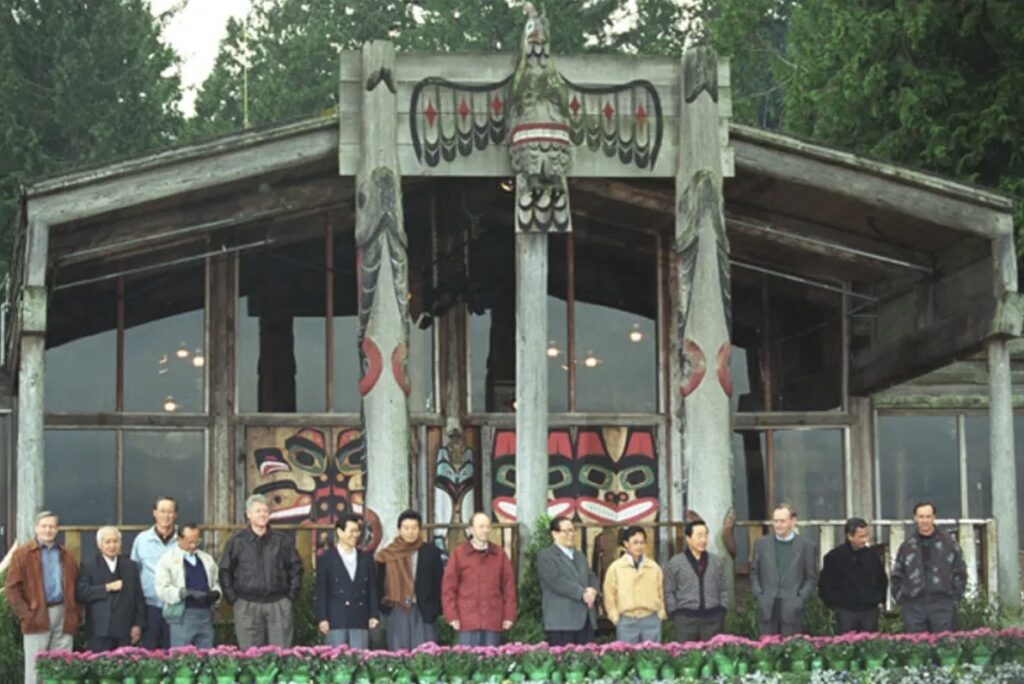
Approximately 50,000 people visited Tillicum Village every year, arriving mostly on the tour boats from Seattle waterfront piers 55 and 56, just eight miles (about 45 minutes) away. Meetings and conferences are held in the longhouse, most importantly the November 1993 “summit” of the Asia-Pacific Economic Cooperation conference (APEC), attended by United States President Bill Clinton and the Presidents or Prime Ministers of the People’s Republic of China, Australia, Brunei, Canada, Indonesia, South Korea, The Philippines, Japan, New Zealand, Singapore, and Thailand, plus high officials from Taiwan and Hong Kong.
Most visitors use the State Park for outdoor recreation. There are 8 miles of hiking trails on the island, mostly old service roads, the longest trail, 3.5 miles, circumnavigates the island on the bluffs above the beach. Located above the day use area, the foundations of the Trimble family home, and a few other remnants of the estate, can still be seen. Blake Island is truly the most unique state park in the Puget Sound region. Argosy Cruises operated Tillicum Village from 2009 until 2021.