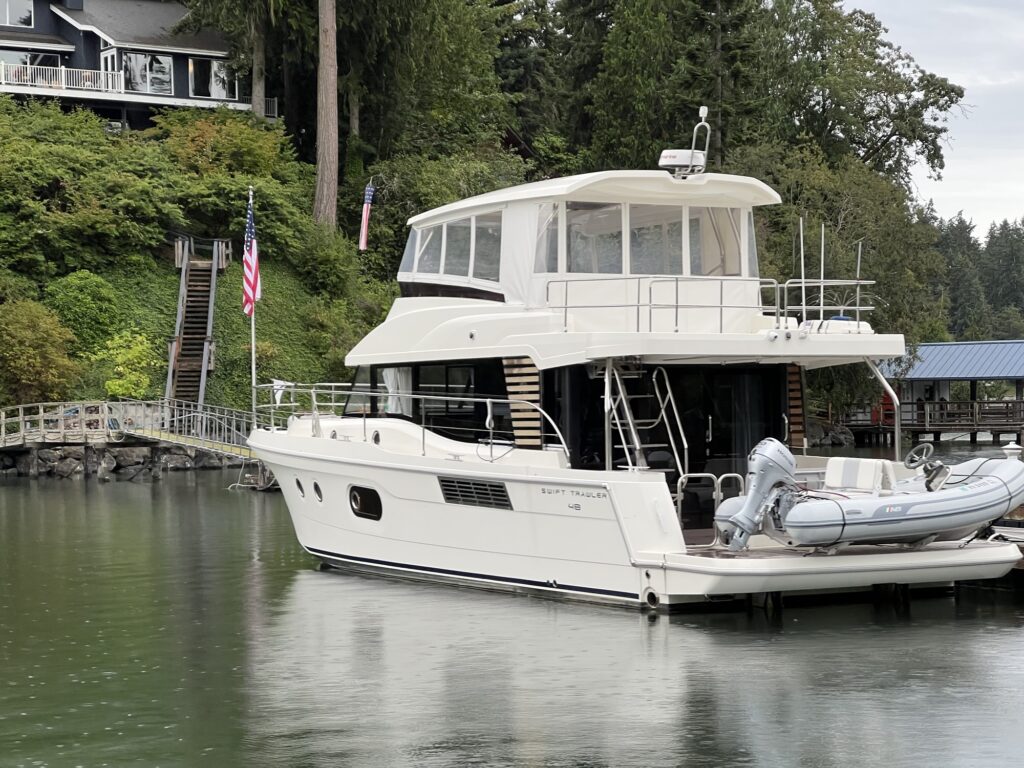
In the Pacific Northwest, summer feels like a season designed for boats. Morning fog lifts slowly off the water, revealing glassy passages between islands. Bald eagles circle overhead. The tide shifts, the light changes, and the day becomes a long invitation to wander. For many boaters, this is the beginning of a transformation: the shift from weekend cruising to the trawler lifestyle — a way of living defined not by speed, but by rhythm.
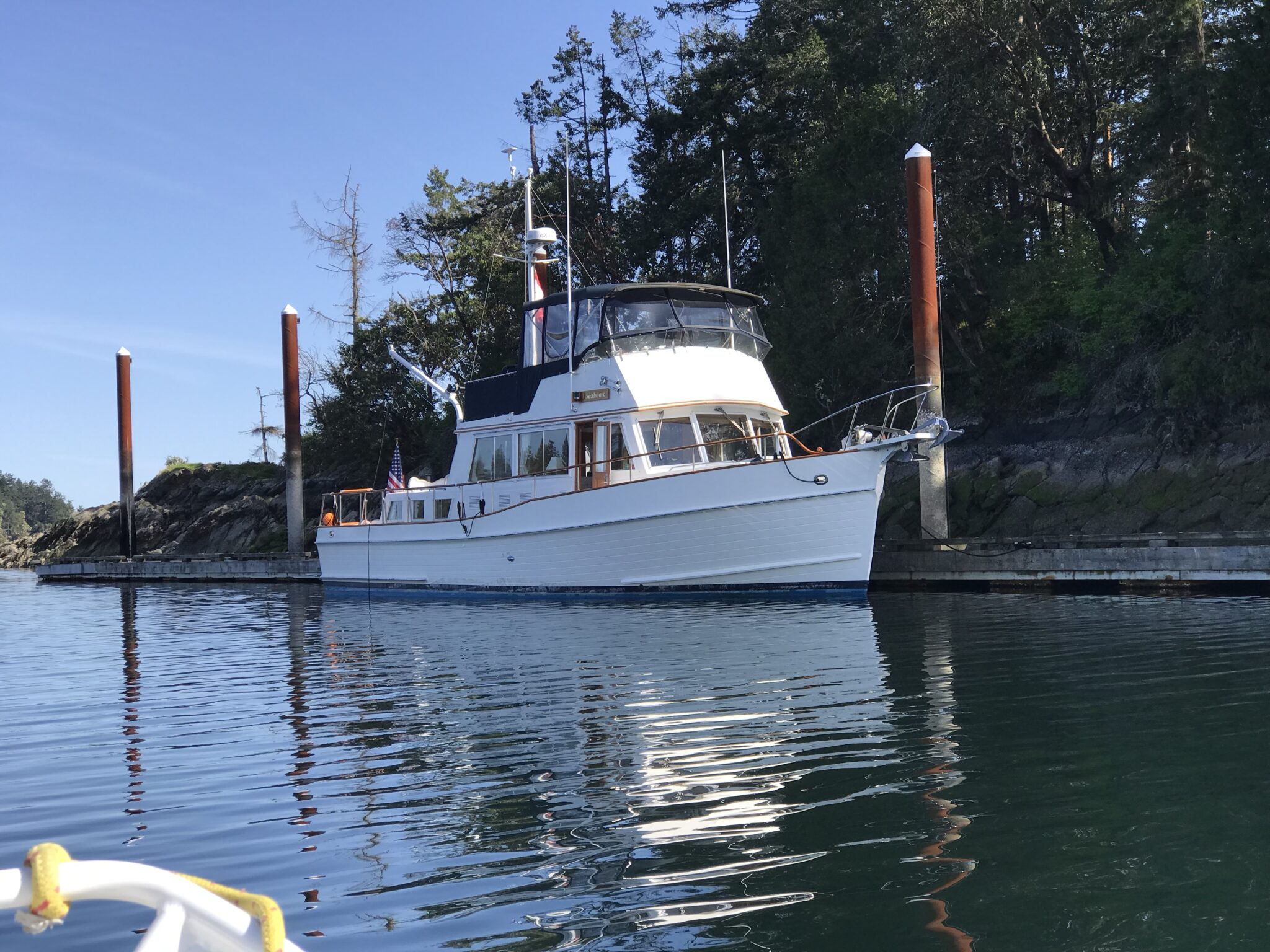
A trawler is a boat you can live on for weeks: real galley, real storage, real beds, real showers. You travel slowly enough to see everything. You stay at anchor long enough to forget what day it is. You treat your boat as a home — one that moves.
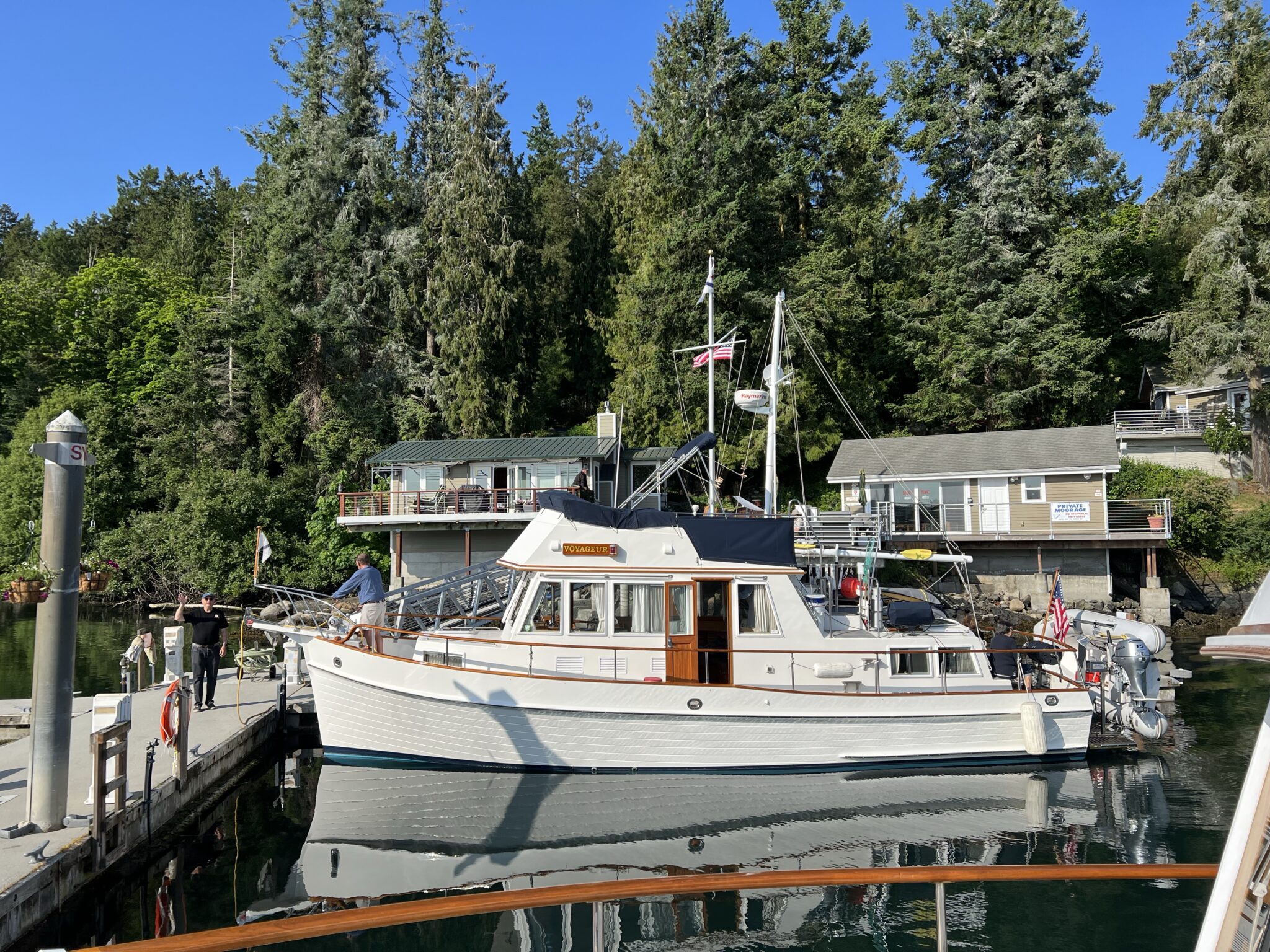
And in the Pacific Northwest, where the San Juan Islands, Gulf Islands, and Desolation Sound form a protected cruising paradise, the trawler lifestyle becomes a kind of seasonal migration. A summer afloat.
THE MODERN TRAWLER FLEET
The PNW is home to some of the most respected trawler builders in the world. Each interprets the lifestyle differently.
Nordic Tug 44
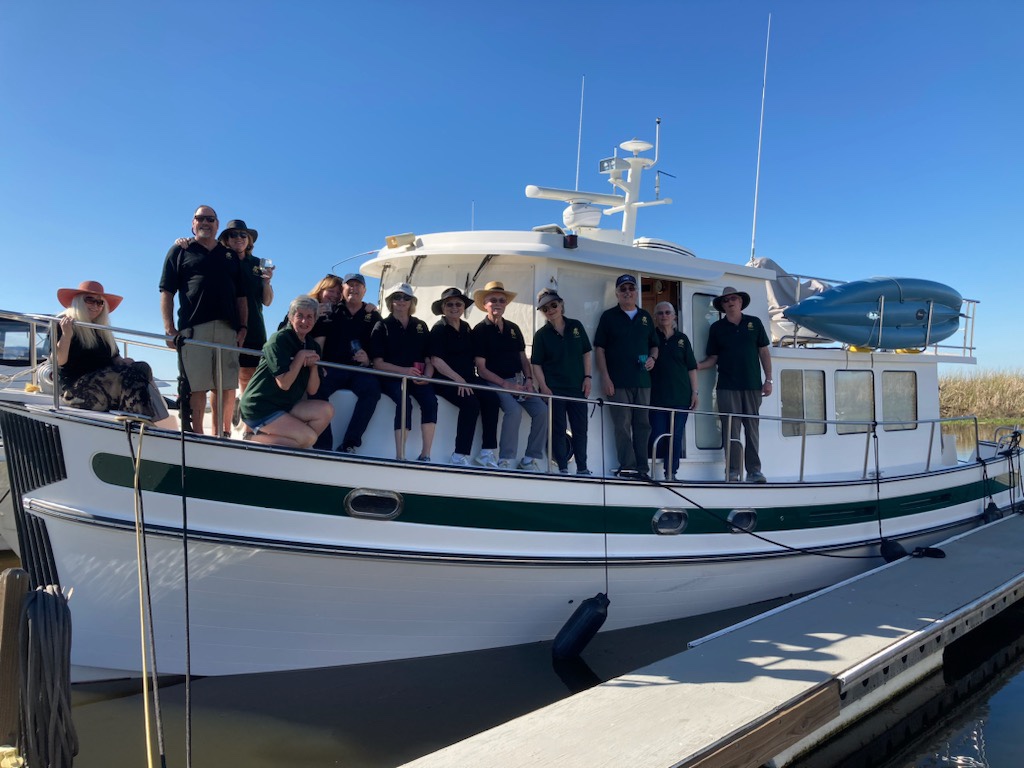
A semi‑displacement icon with a pilothouse silhouette recognized from Bellingham to Ketchikan. Built for long coastal passages, it’s the quintessential PNW trawler.
Kadey‑Krogen 44 AE
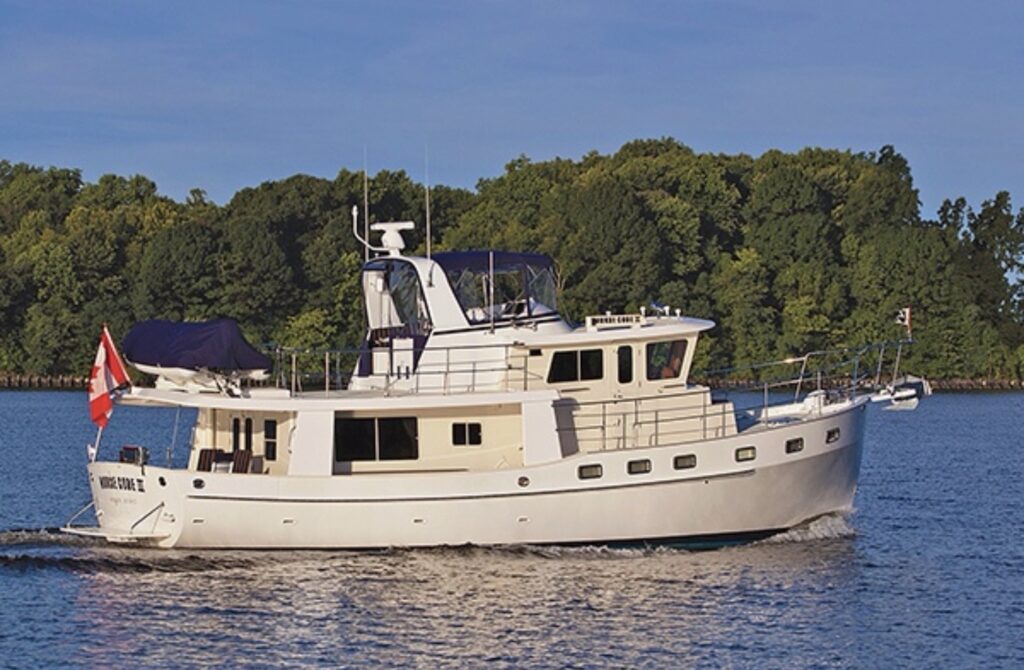
A full‑displacement, ocean‑crossing vessel — slow, steady, and capable of crossing oceans. For some, it’s the purest expression of the trawler ideal.
Grand Banks 43
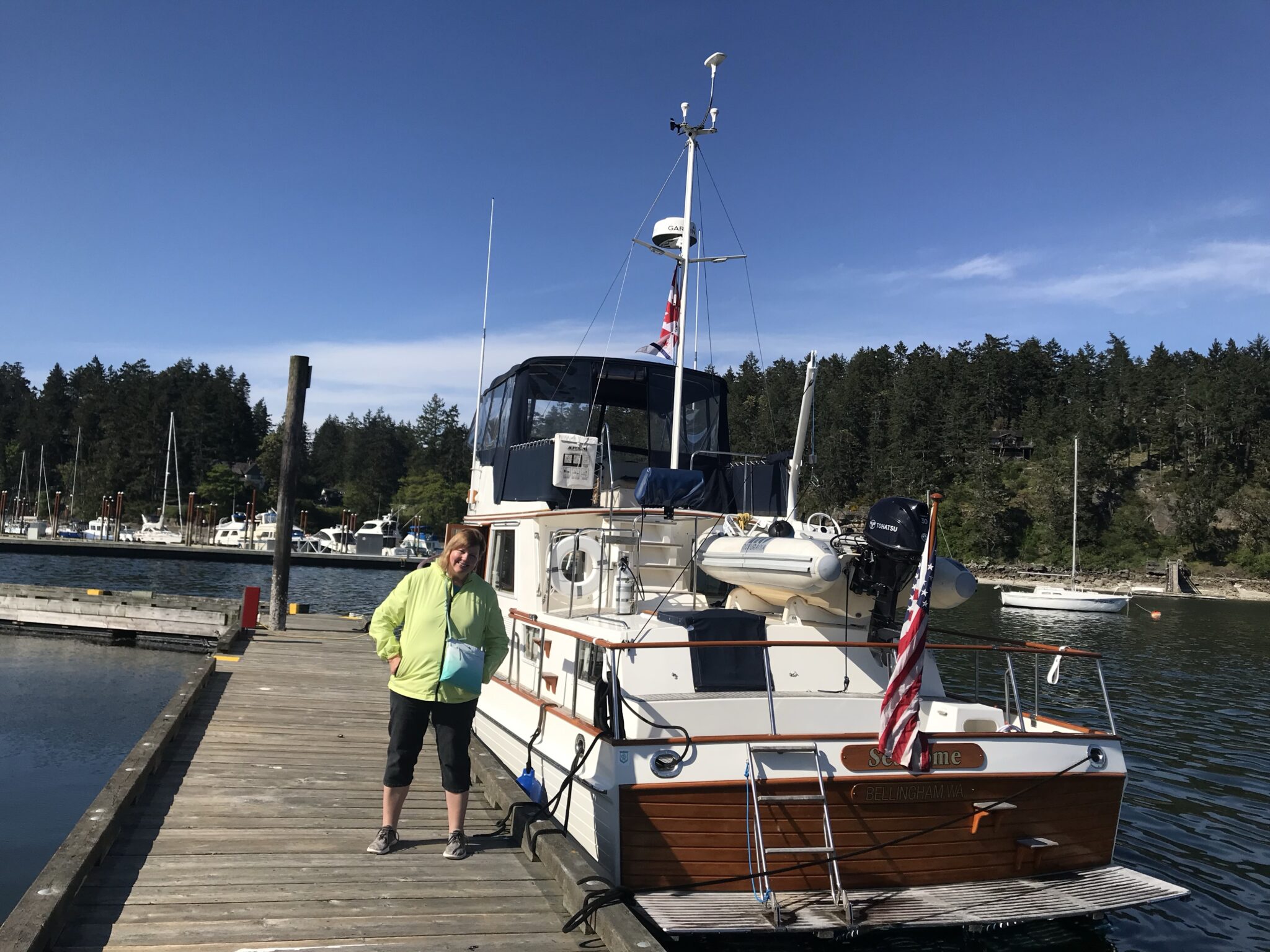
A luxury fast trawler with teak interiors and semi‑displacement performance. A yacht that happens to be a trawler.
Ranger Tugs R‑43 CB
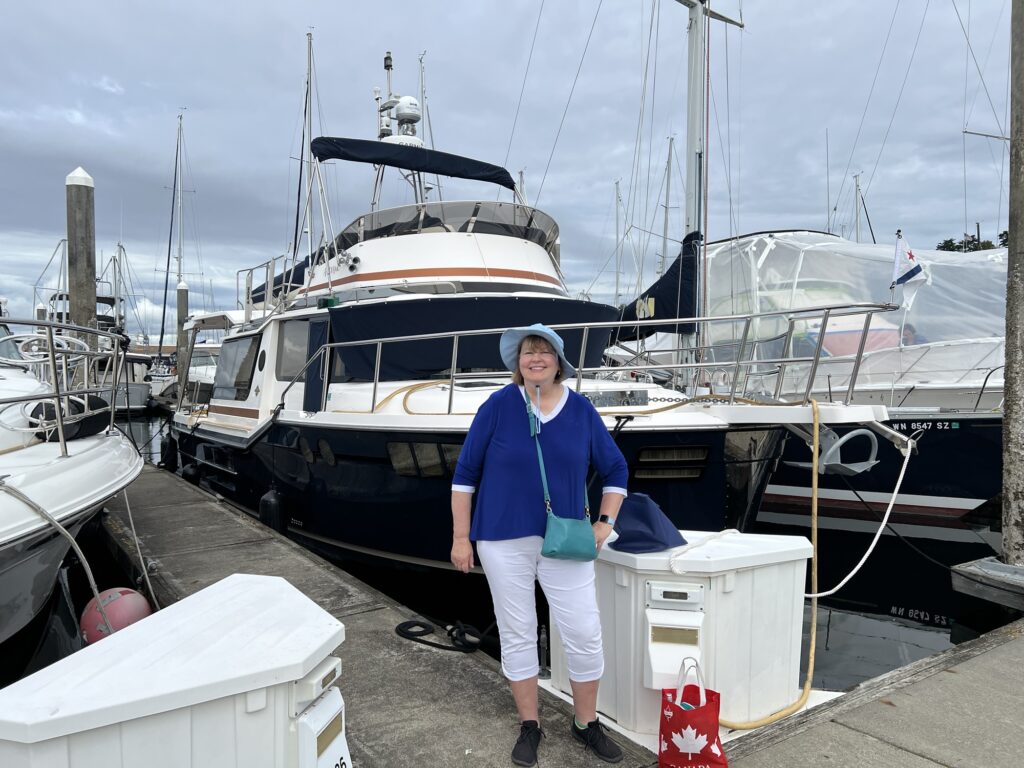
The newest interpretation: a fast trawler with modern propulsion, a social command bridge, and a layout built for extended living aboard.
THE RANGER TUGS R‑43 CB: A FLAGSHIP FOR A THE CALL OF THE TRAWLER LIFENEW ERA
The R‑43 CB (Command Bridge) is not a traditional trawler. It’s a fast trawler, a hybrid that blends the comfort and range of a trawler with the maneuverability and speed of a modern cruiser.
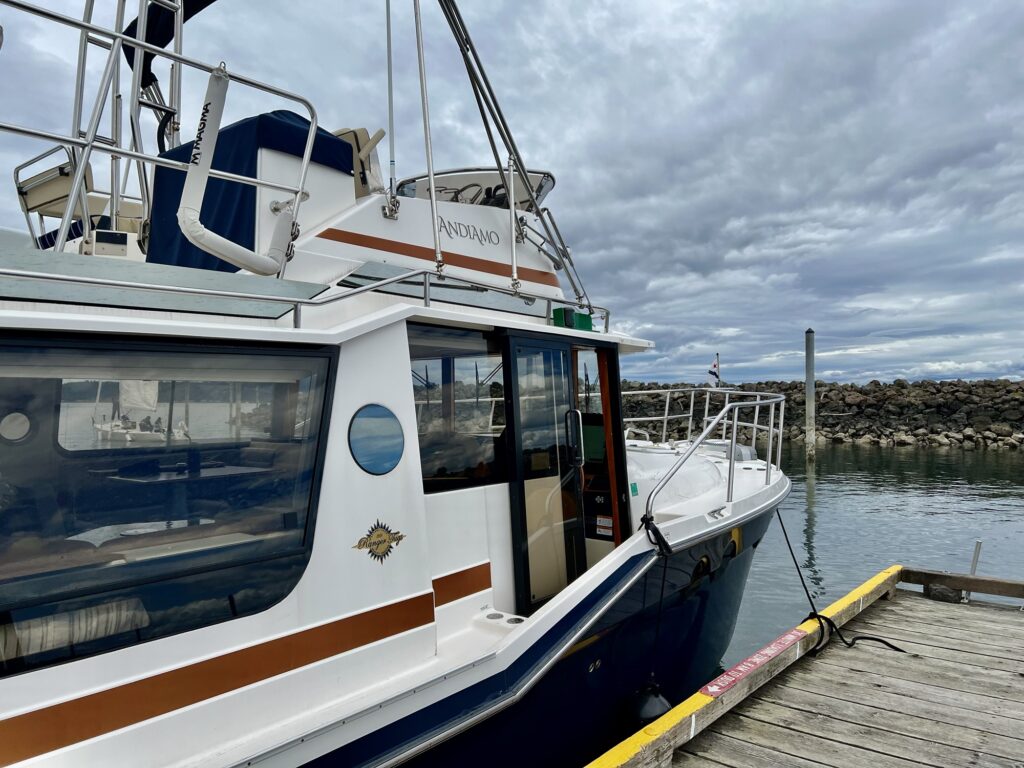
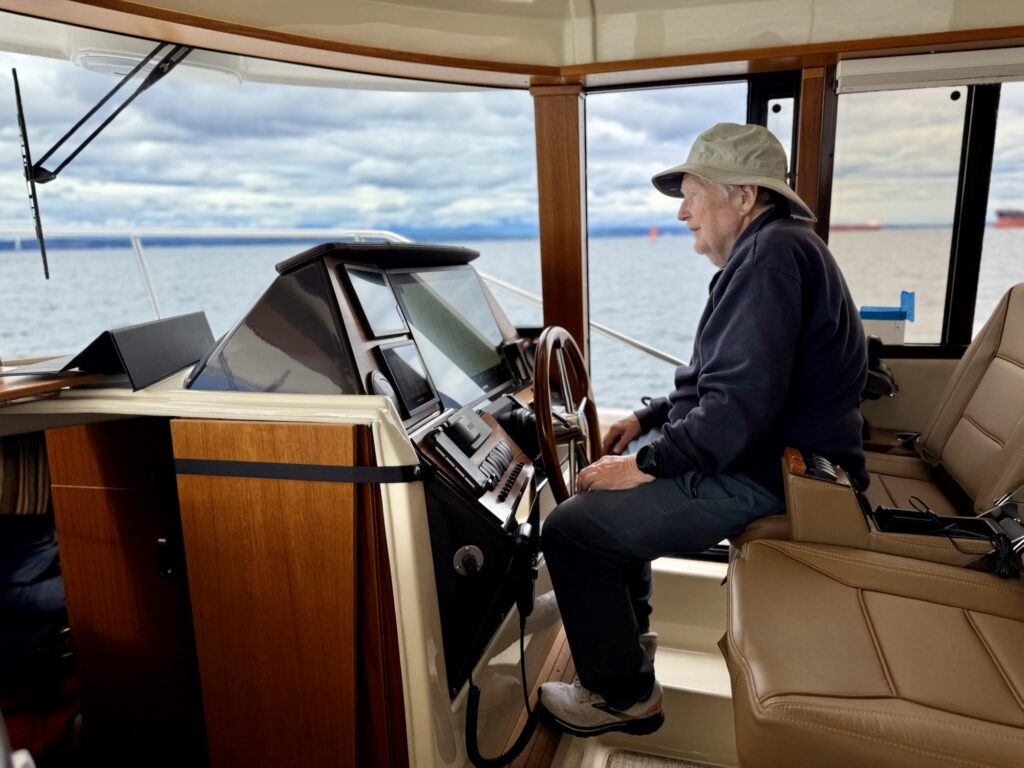
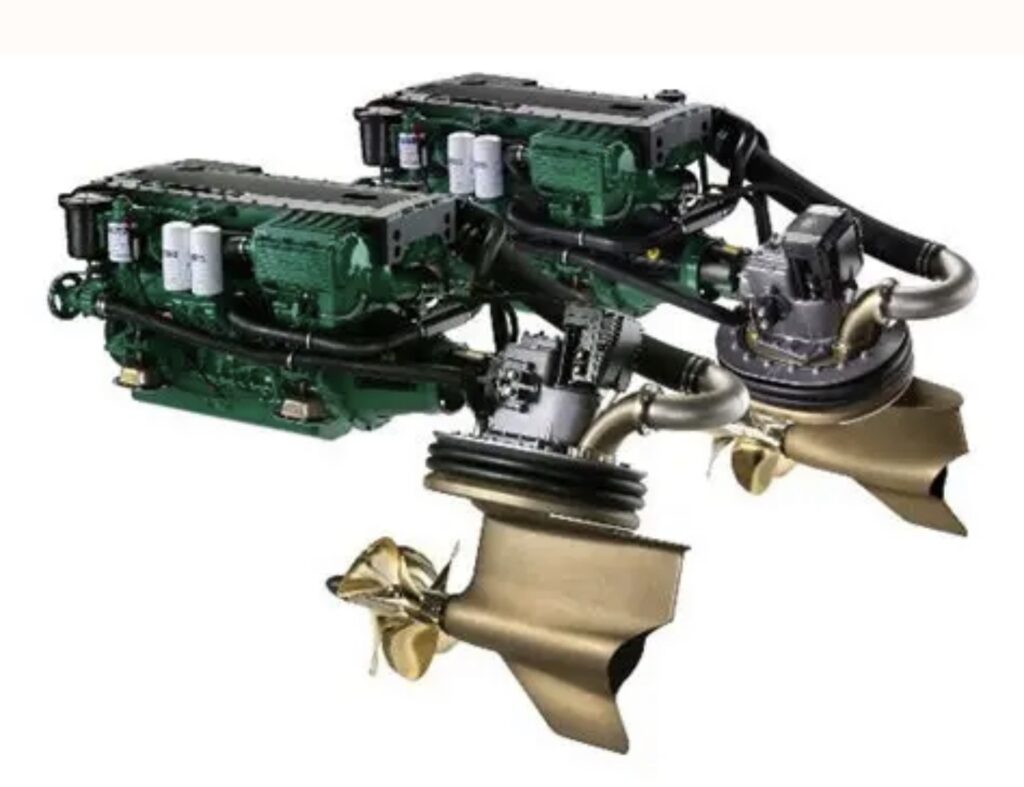
Twin Engines & IPS Pod Drives
Where Nordic Tug, Kadey‑Krogen, and Grand Banks rely on straight shafts, the R‑43 CB uses:
- Twin Volvo IPS450 or IPS500 diesel pod drives
- Joystick docking
- Sideways movement
- Dynamic positioning
- No bow thruster required
IPS pods pull the boat through the water with forward‑facing props, reducing vibration and noise — ideal for long days underway.
Stabilization Options
The R‑43 CB can be equipped with a Seakeeper gyro, giving it:
- Dramatic roll reduction
- Better comfort at anchor and when fishing
- Smoother motion in the Strait of Georgia or Haro Strait
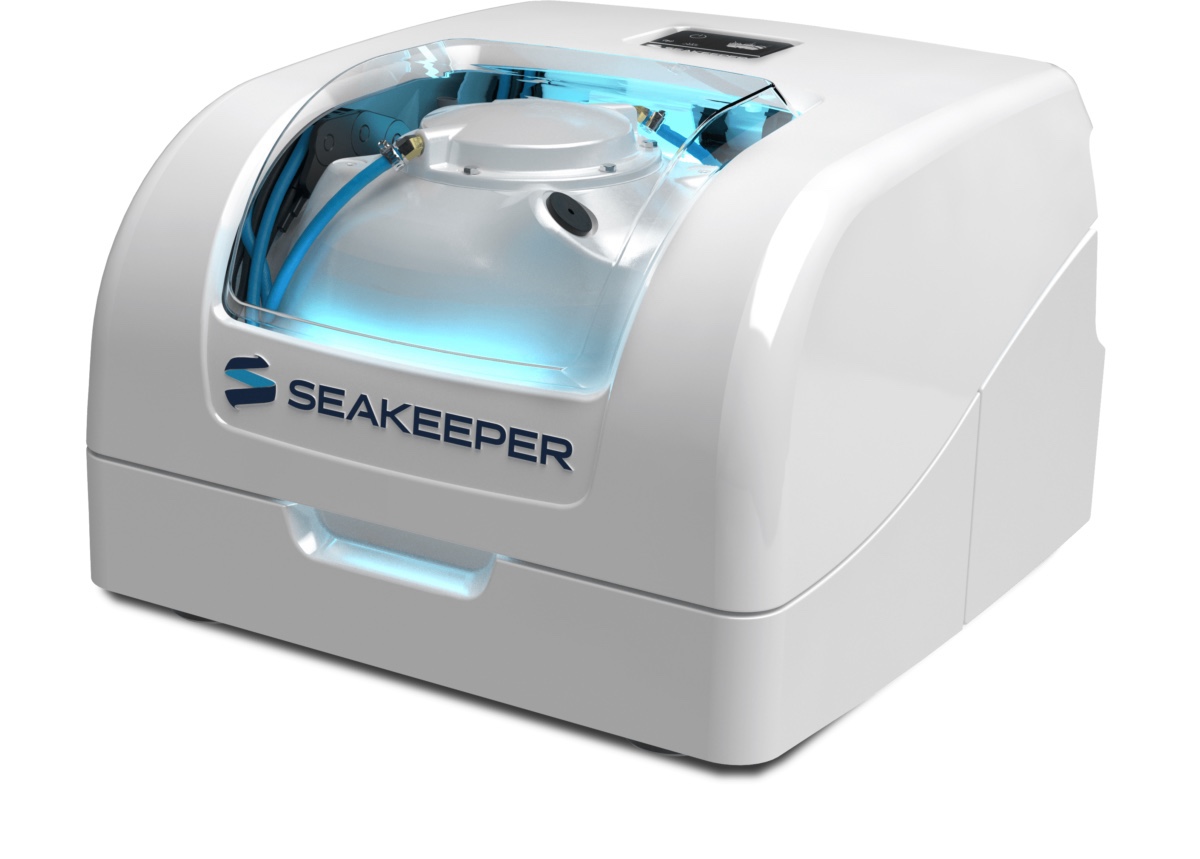
For extended summer living aboard, stabilization is a meaningful upgrade.
A HOME THAT MOVES: INTERIOR BUILT FOR LIVING ABOARD
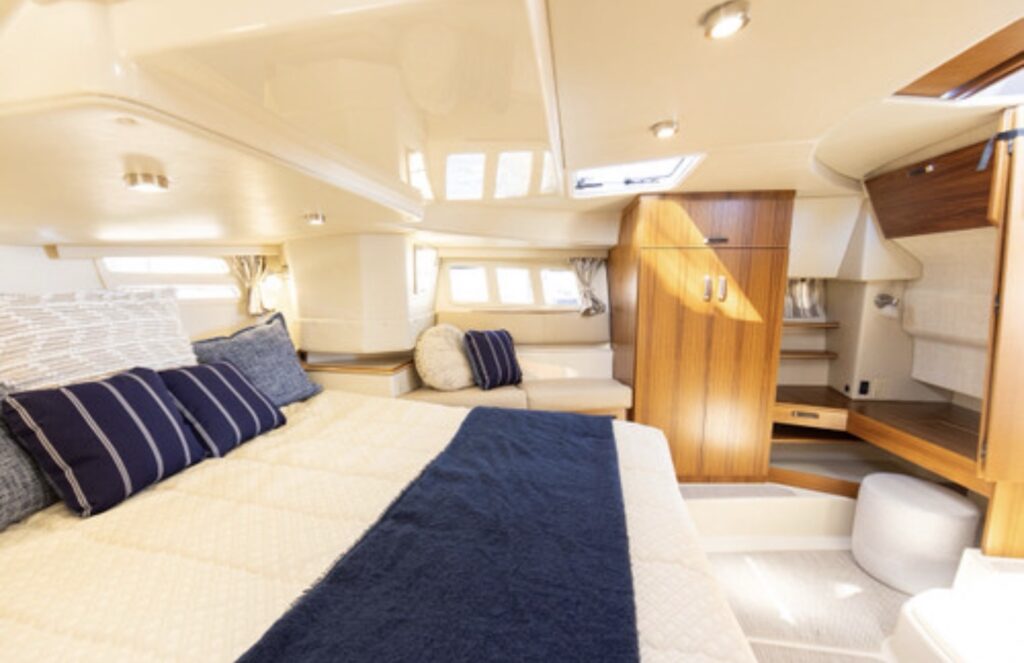
The R‑43 CB’s interior is designed for weeks or months aboard, not just weekends.
Two Private Staterooms, Each with its own head and shower — rare in a boat under 50 feet.
Full Galley, Three refrigerators, wine cooler, oven, microwave, and deep storage. This is a boat where you cook real meals.
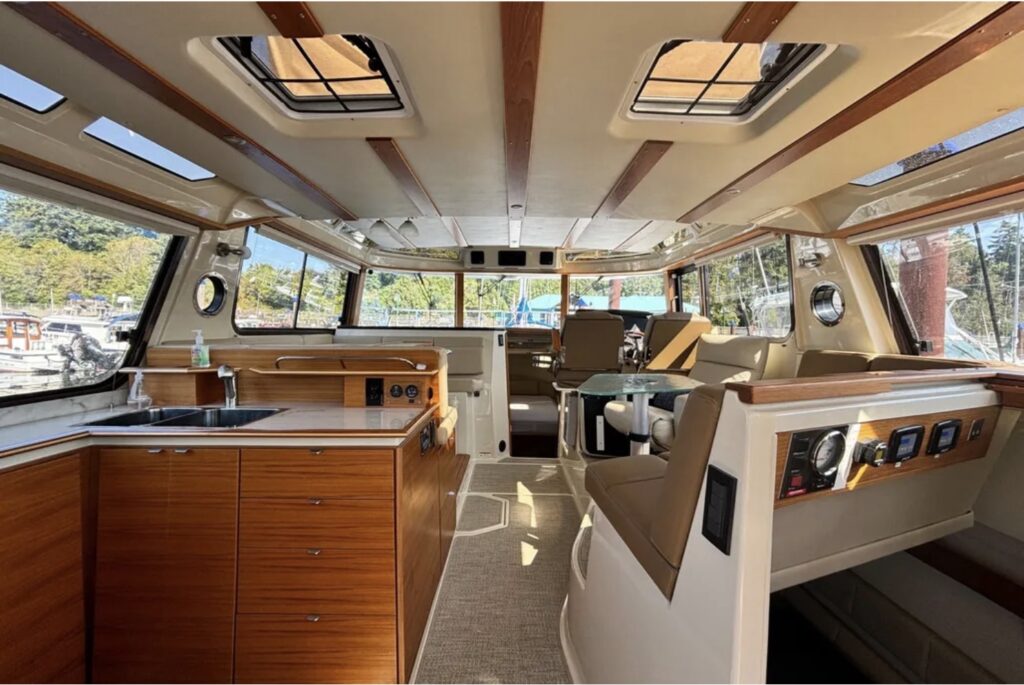
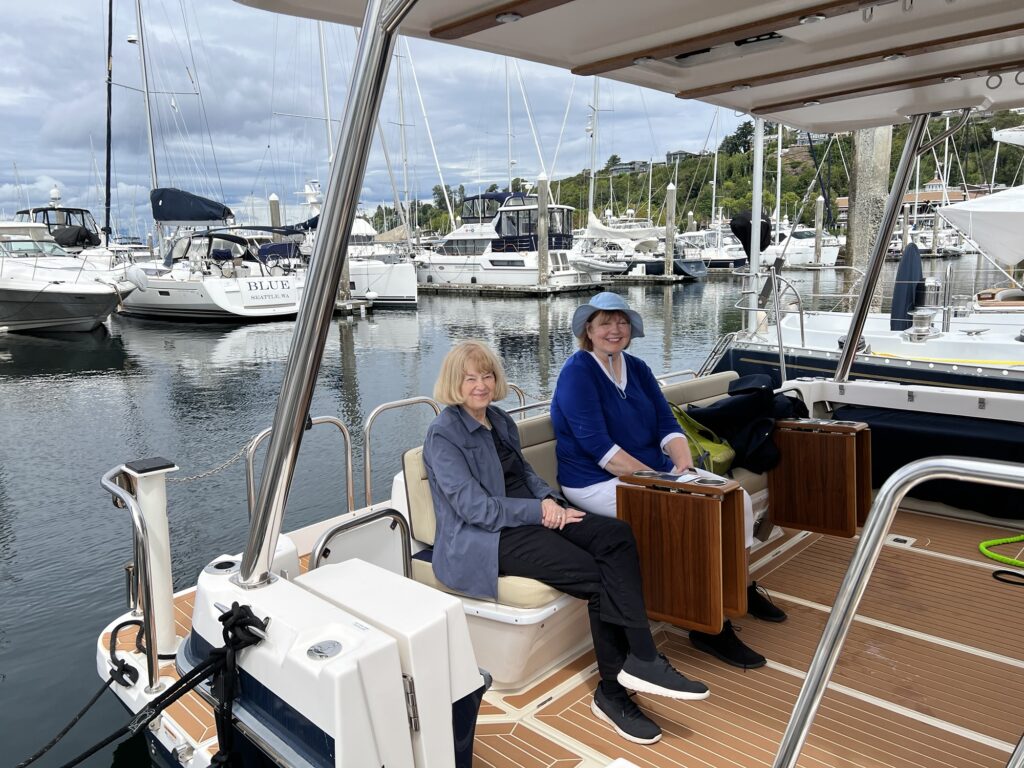
Opening Glass Bulkhead, The salon and cockpit merge into one indoor/outdoor living space — perfect for summer evenings in Reid Harbor or Montague Harbour.
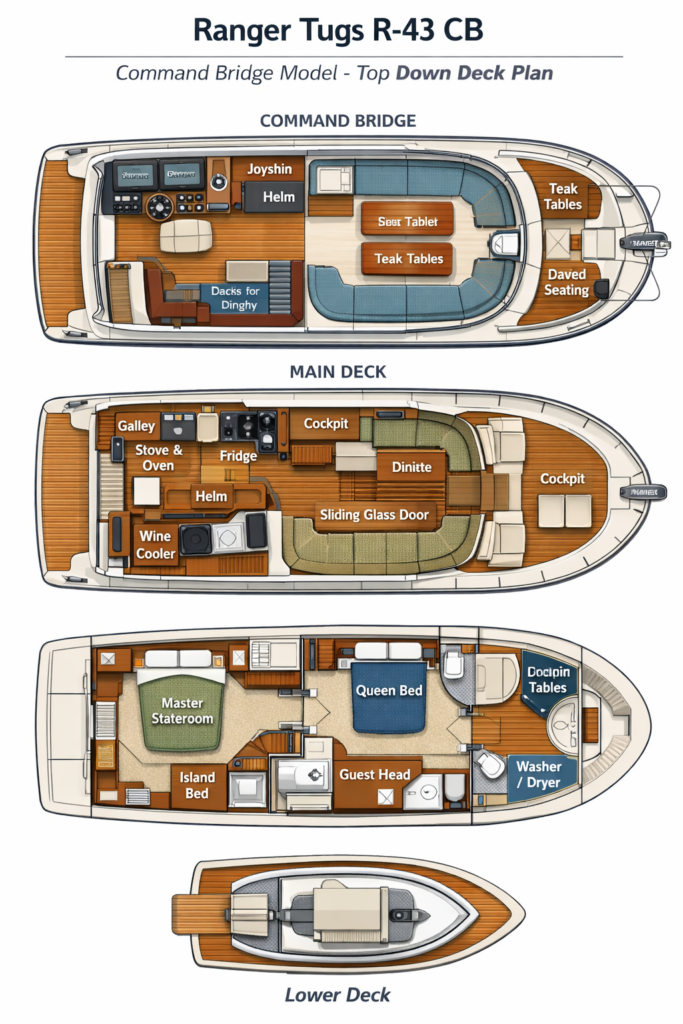
Command Bridge, A social space with seating for eight, grill, sink, and fridge. It becomes the summer living room.
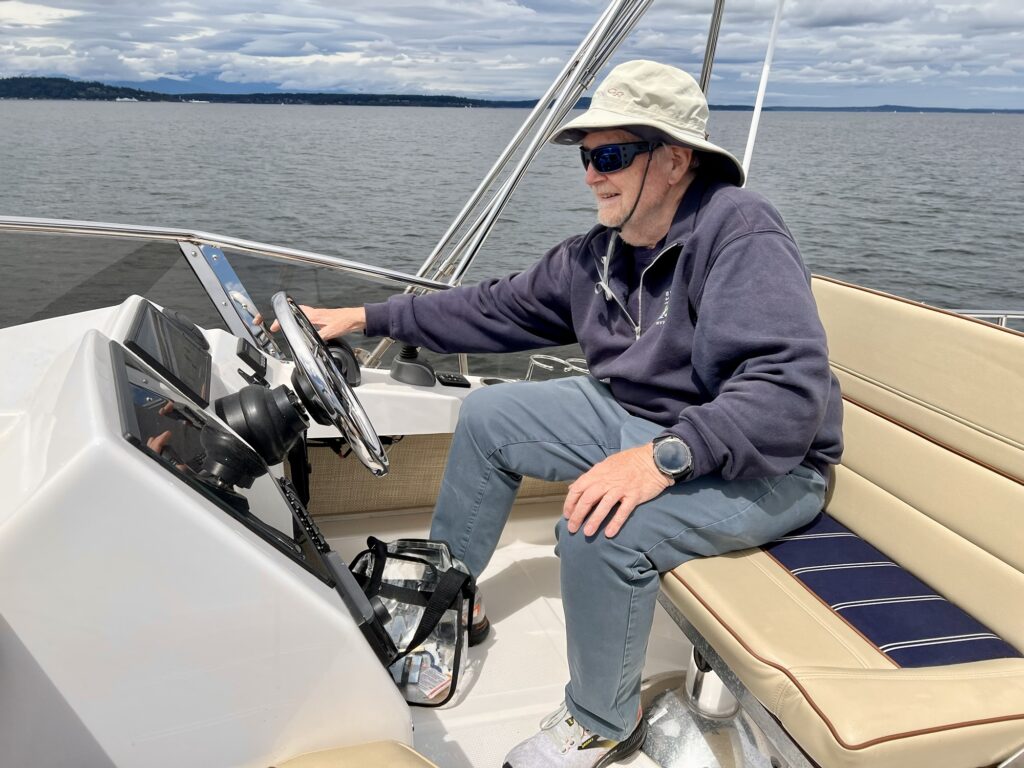
Washer/Dryer – A small detail that becomes a big deal after week three aboard.
HOW IT COMPARES TO THE CLASSICS
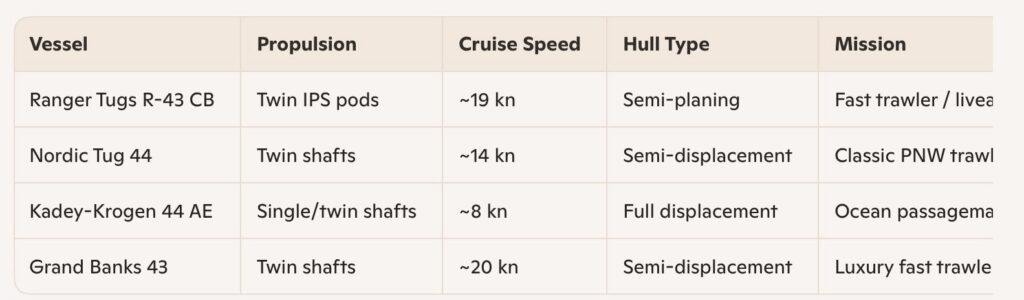
Nordic Tug 44
A traditional PNW trawler — slower, heavier, and more classic.
Better for long coastal passages; less modern than the Ranger.
Kadey‑Krogen 44 AE
A true ocean passagemaker.
Perfect for crossing oceans; overbuilt for island‑hopping.
Grand Banks 43
A luxury fast trawler with traditional shafts.
More yacht‑like; less maneuverable than IPS.
Ranger Tugs R‑43 CB
A modern fast trawler with pod drives, a social command bridge, and a layout optimized for extended summer living aboard.
THE PNW SUMMER CRUISING EXPERIENCE
The R‑43 CB is built for the geography of the Pacific Northwest:
- Short hops between islands
- Long passages up the Inside Passage
- Protected anchorages
- Strong currents in marinas
- Variable weather
IPS pods make docking in Friday Harbor or Roche Harbor almost effortless. The command bridge makes summer evenings unforgettable.
The interior makes extended living aboard comfortable. And the boat’s size — 43 feet with a 14‑foot beam — hits a sweet spot: large enough to live aboard, small enough to handle without crew.
An explanation of how the Twin Volvo IPS engines and pod drives work on the Ranger Tugs R‑43 CB follows
How Twin Engines & IPS Pod Drives Work on the Ranger Tug 43CB
The R‑43 CB uses twin Volvo Penta D6‑380 engines paired with IPS500 forward‑facing pod drives. These pods steer themselves, vector thrust, and allow the boat to move in any direction—forward, reverse, sideways, or pivot in place.
You can put one engine in reverse and one forward to pivot, like on a Grand Banks but you don’t usually do it manually; the IPS system does it for you. IPS pods can and do use opposing thrust (one forward, one reverse) to pivot the boat. However:
- You do not manually set one throttle forward and one reverse.
- The joystick commands the pods to rotate and apply thrust automatically.
- The system calculates the exact thrust needed to pivot, slide, or rotate.
In other words, you can pivot the boat, but you let the IPS system handle the mechanics. You do not have to use the joystick, but almost everyone does. Owners report they use joystick 95% of the time because it is dramatically easier and more precise. Volvo IPS offers multiple control modes:
- Joystick Driving
- Joystick Docking
- Joystick Steering
- Traditional wheel + throttle
You can run the boat with traditional throttles and wheel, but:
- You lose sideways movement
- You lose pivot‑in‑place
- You lose dynamic positioning
- Docking becomes like a traditional twin‑shaft boat
Joystick is optional—but it’s the whole point of IPS. Engines are synchronized for efficiency and fuel savings. The R‑43 CB includes digital fuel flow data, electronic shift/throttle, and cruise control RPM stepping. The IPS system automatically synchronizes the engines for:
- Balanced load
- Optimal fuel burn
- Smooth acceleration
- Reduced vibration
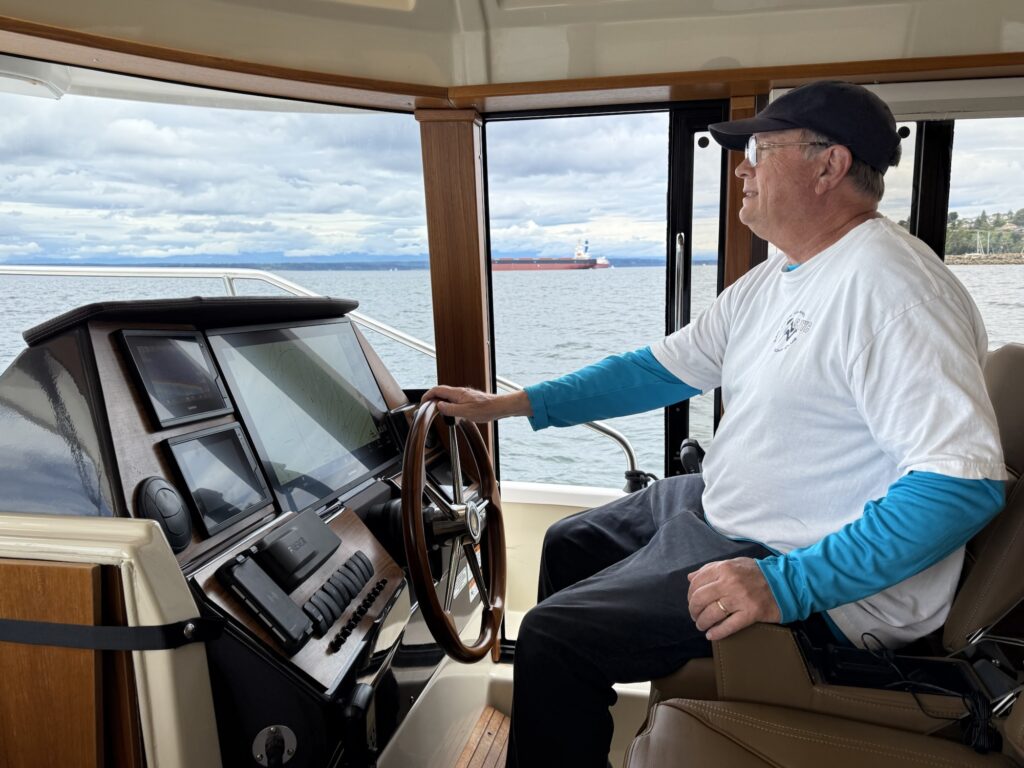
This synchronization is part of Volvo’s integrated IPS control system. motor. The controls are on the starboard side, Because the R‑43 CB is designed for starboard‑side docking with the joy stick as far to starboard as possible. Ranger Tugs places the helm on the starboard side because:
- Most PNW marinas favor starboard‑side tie‑ups.
- The R‑43 CB has a starboard boarding door for easy dock access. You have to board from the swim platform if tied to port.
- Visibility to the dock is better from starboard.
- IPS joystick docking is most intuitive when the helm is closest to the dock.
This is a deliberate design choice across the entire Ranger Tugs line.
Volvo IPS engines are not designed for single‑engine operation underway:
- The pods are optimized to work as a pair.
- Running one engine reduces steering authority.
- Fuel savings are negligible under a single engine because IPS pods are efficient only when both are active.
- Volvo does not recommend single‑engine cruising except in emergency situations.
So: You can limp home on one engine, but you should not cruise that way. Regarding fuel-efficiency, two efficiency zones exist: displacement mode and fast‑cruise mode. Based on verified fuel‑economy testing on the R‑43 with IPS500 engines:
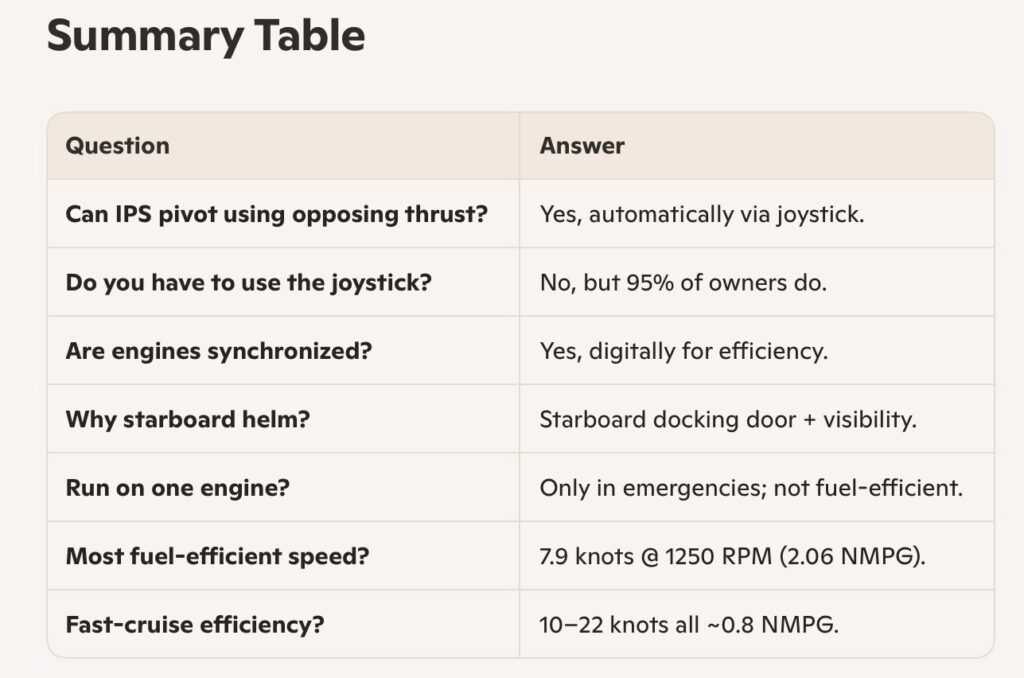
Most fuel‑efficient speed (displacement mode)
- 1250 RPM
- ~7.9 knots
- ~2.06 NMPG
- ~3.8 gallons/hour total burn
This is the “trawler mode” — extremely efficient and long‑range.
But there is also a shockingly efficient fast‑cruise zone
From 2200 to 3000 RPM, fuel economy stays nearly identical:
- ~0.8 NMPG
- Speeds from 10 to 22 knots
- Range is essentially unchanged
This is a unique IPS characteristic: You may as well go 22 knots as 10 knots — fuel economy is the same.
C. Wide‑open throttle (least efficient)
- 3400–3600 RPM
- ~0.68 NMPG
THE FUTURE OF THE TRAWLER LIFESTYLE
The trawler lifestyle is evolving. Some boaters still want the slow, steady rhythm of a displacement hull that sits heavily at anchor for rocking to sleep. Others want the comfort of a trawler but the agility of a modern cruiser.
The Ranger Tugs R‑43 CB sits at the center of that evolution — combining:
- Trawler comfort
- Modern propulsion
- Social spaces
- Efficient systems
- Extended‑cruising capability
It’s a boat built for the way people actually use the Pacific Northwest today: long summers aboard, exploring the islands, living slowly, moving freely.