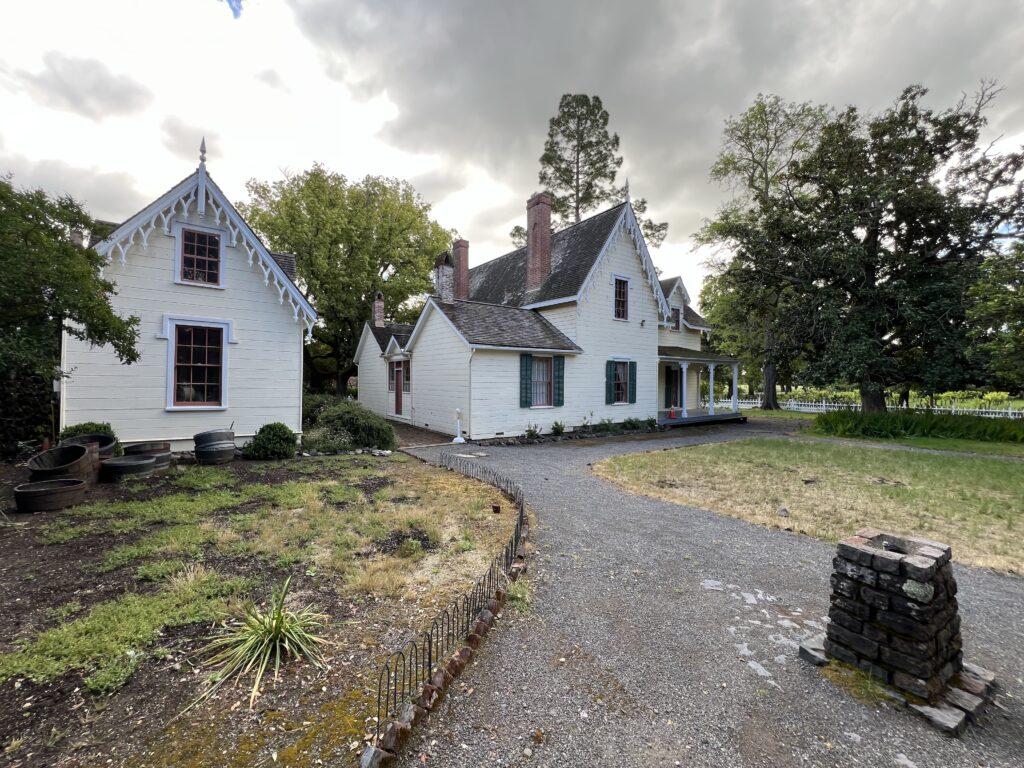
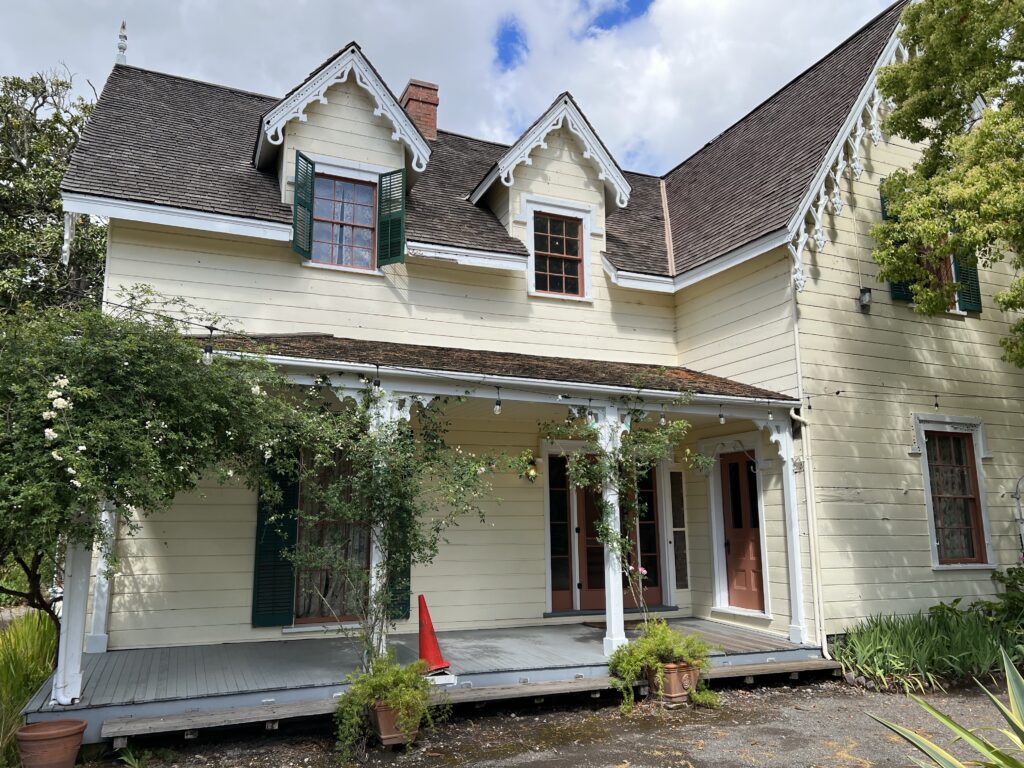
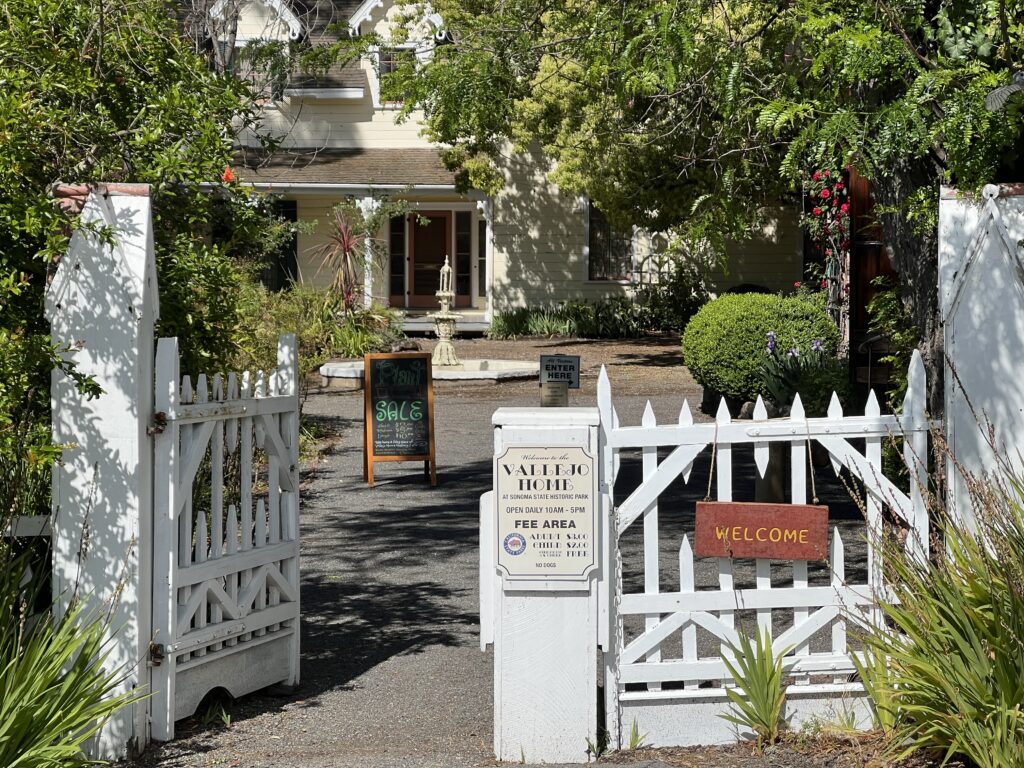
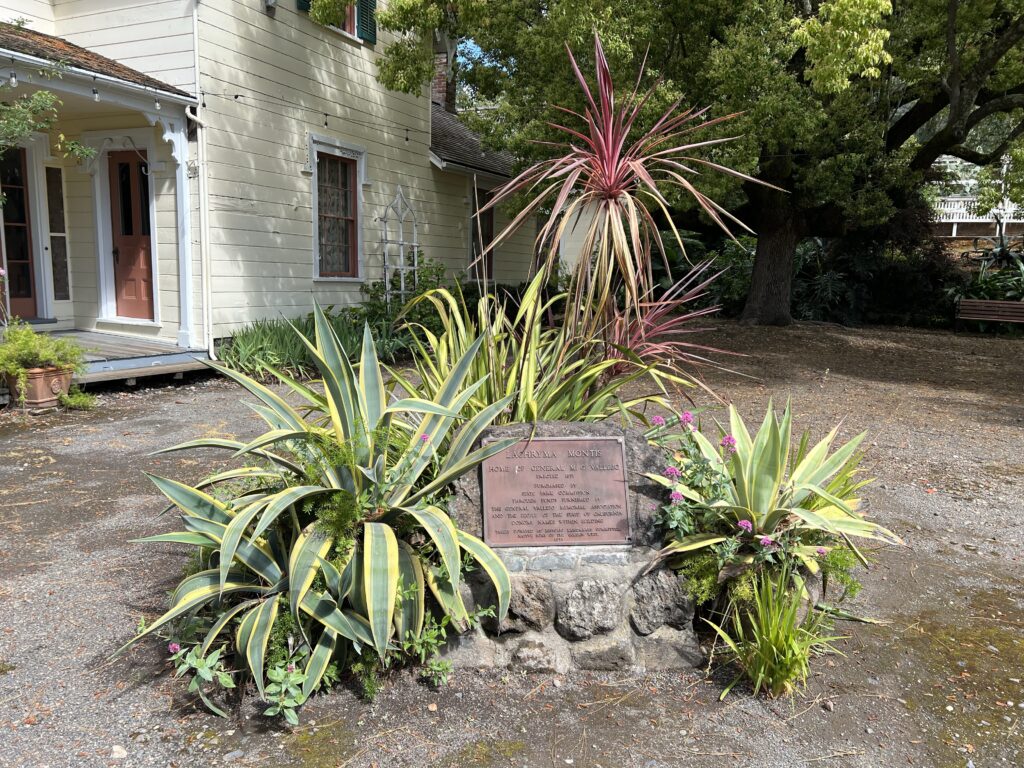
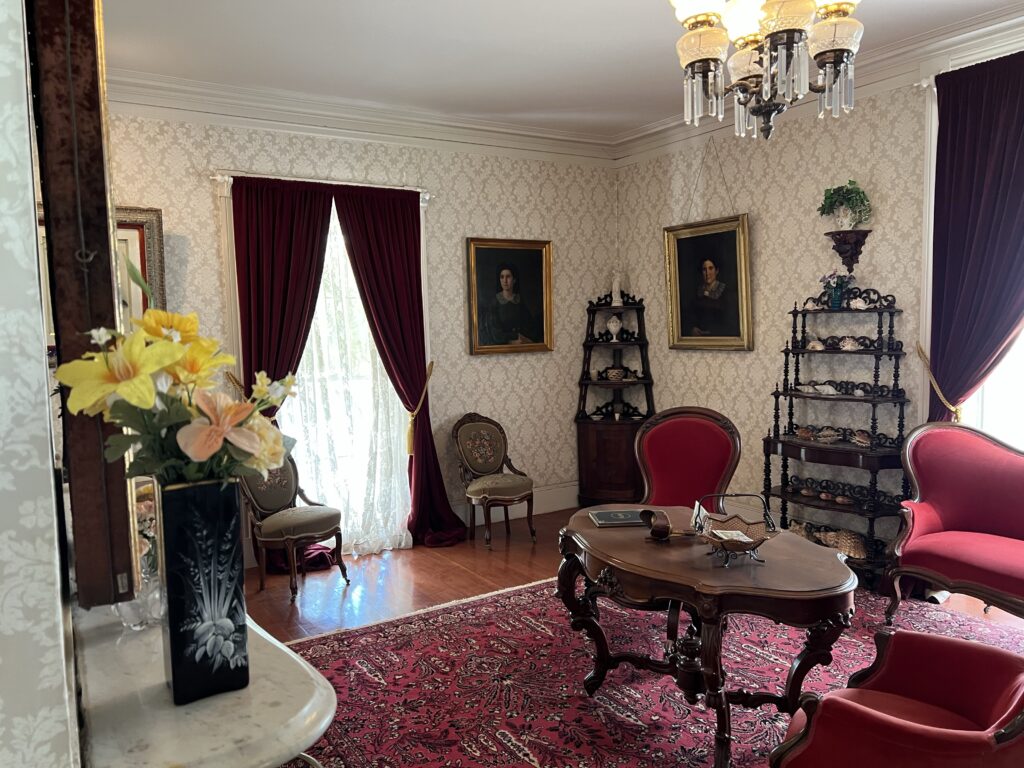
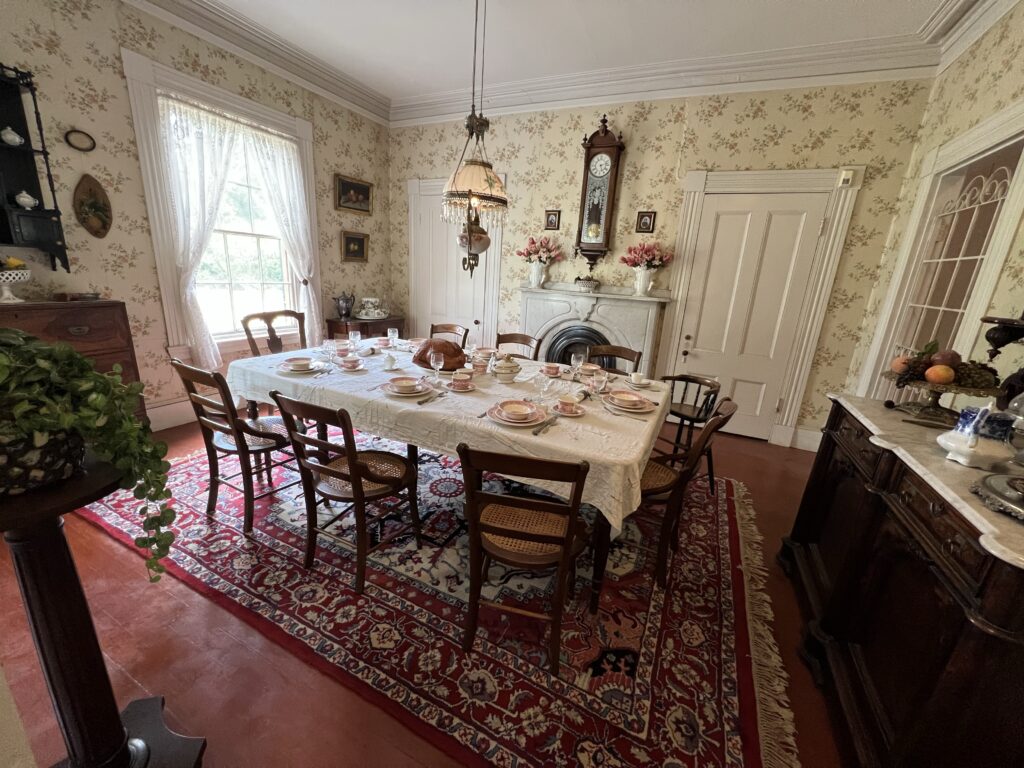
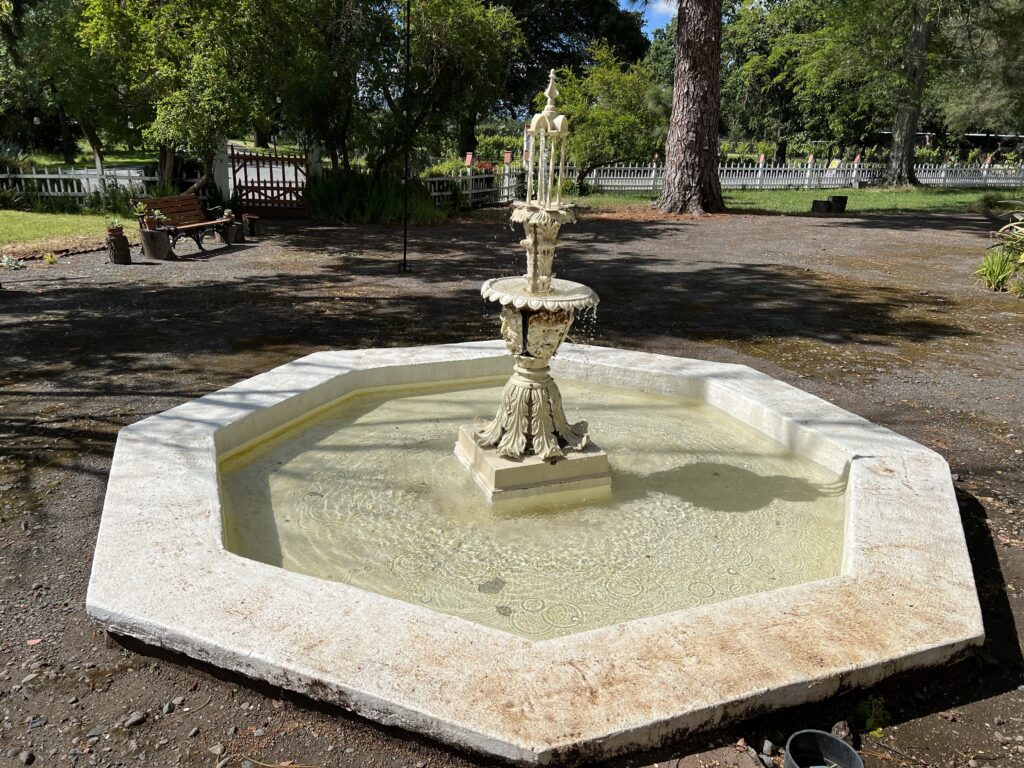
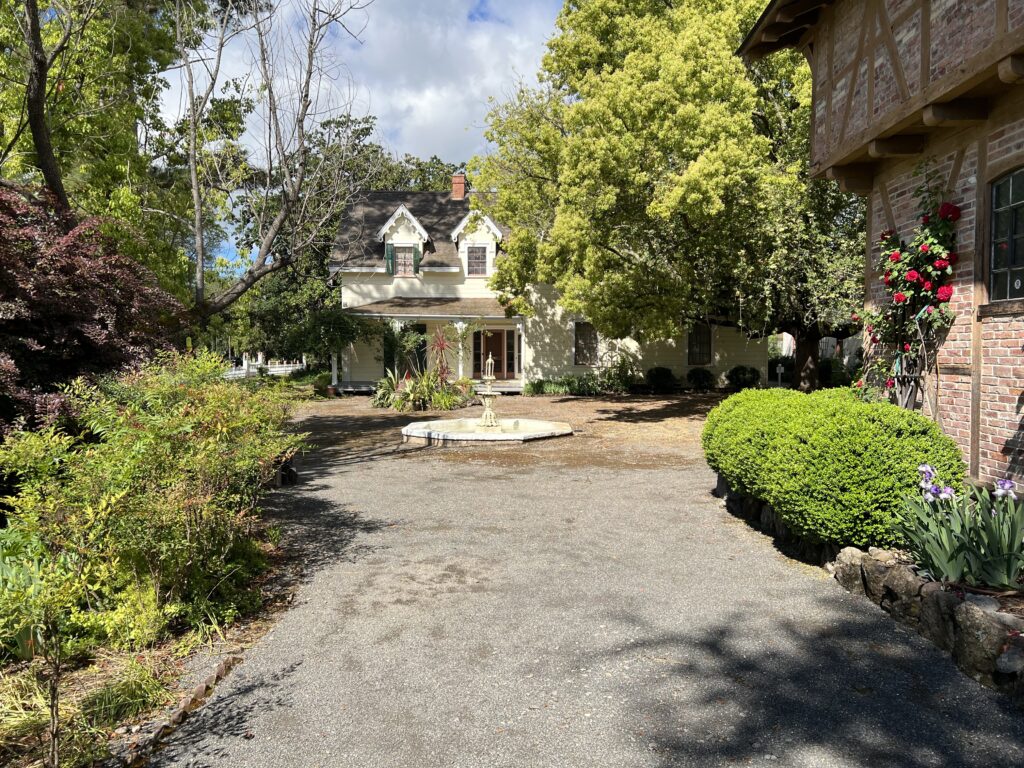
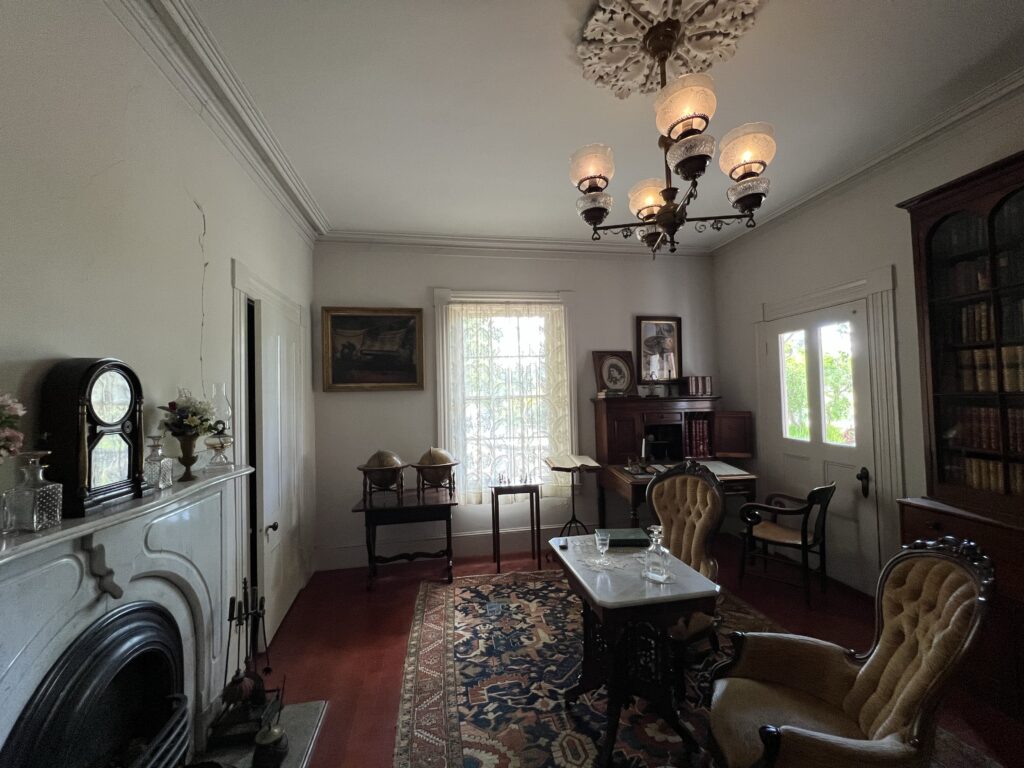
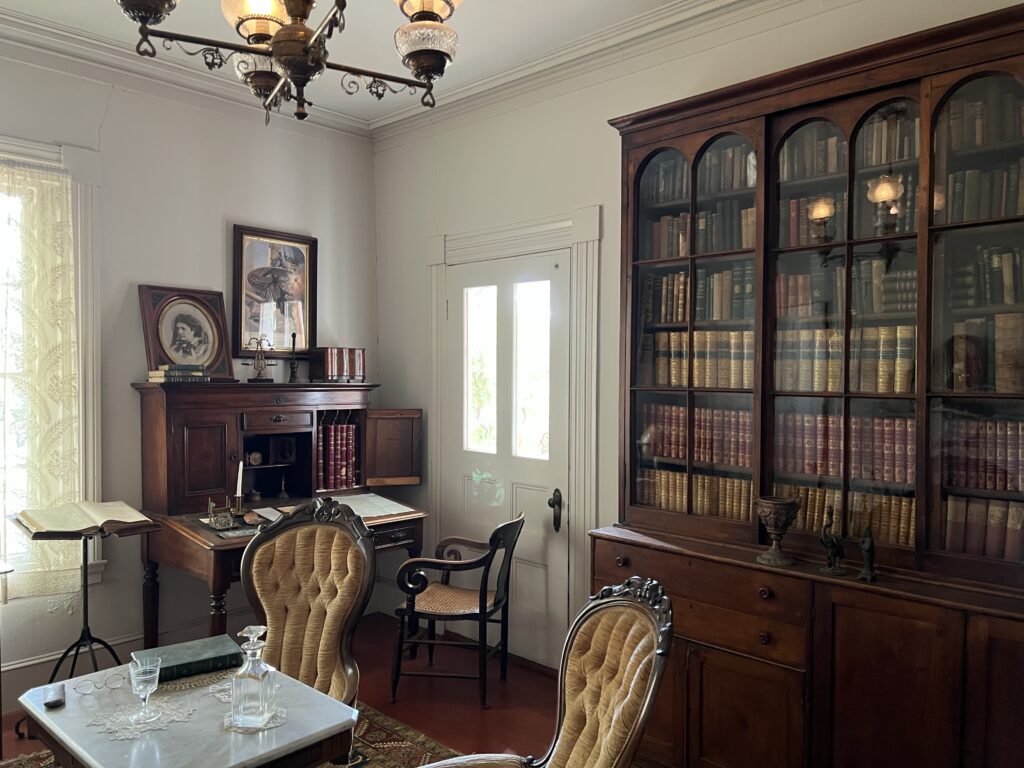
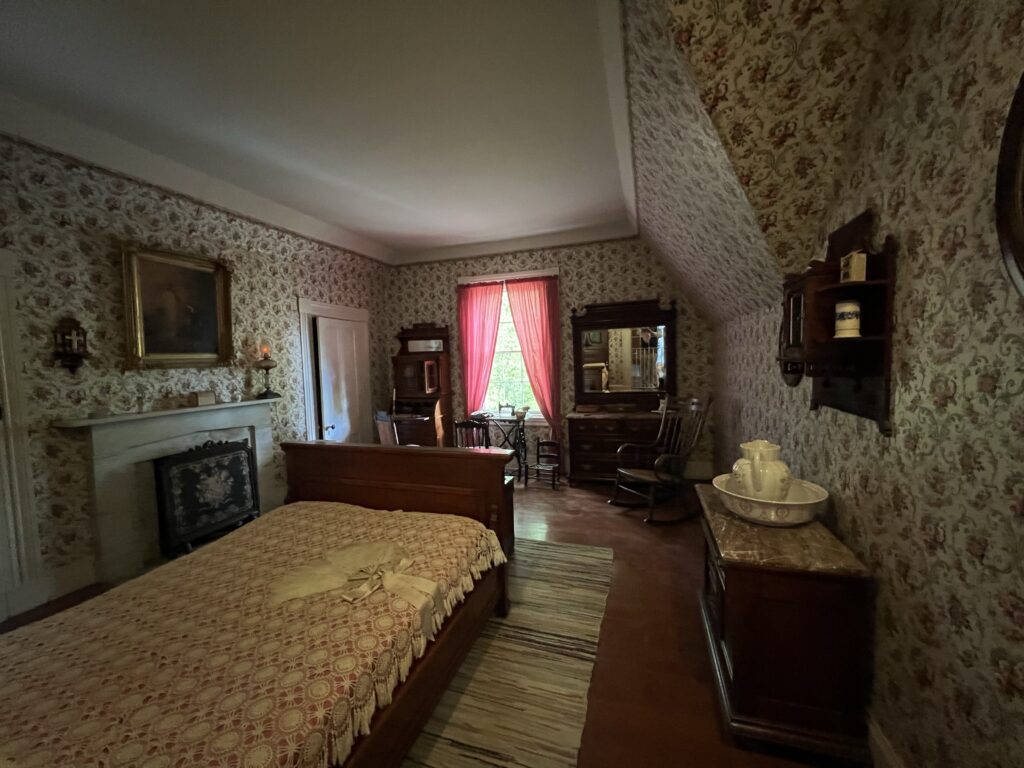
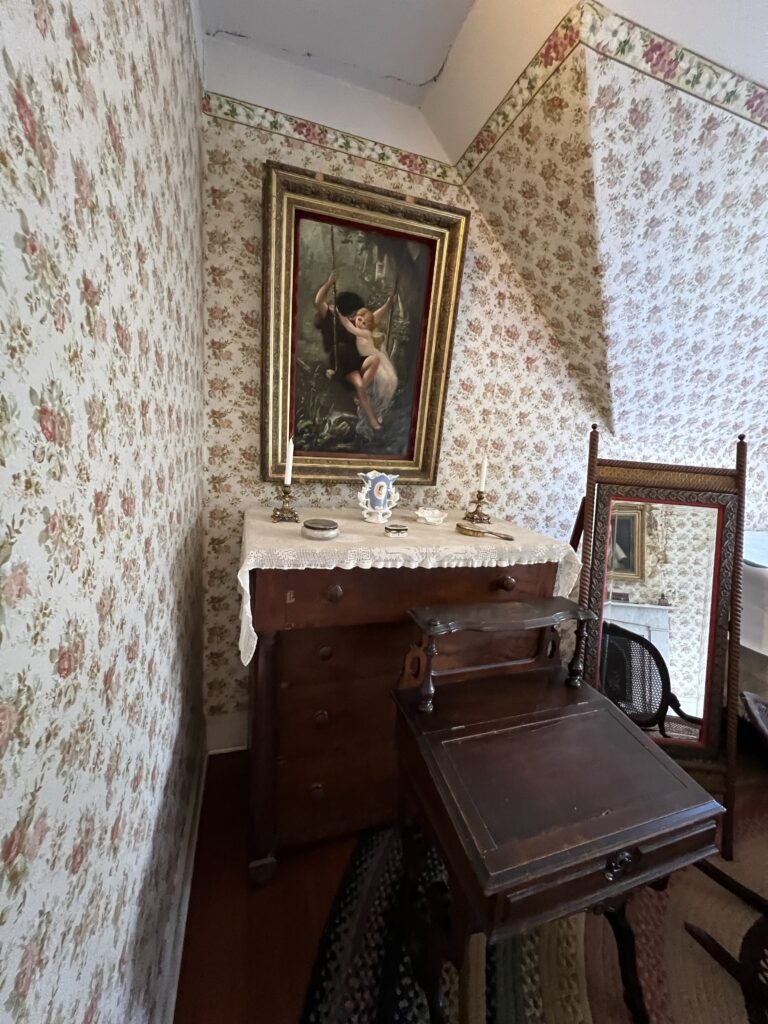
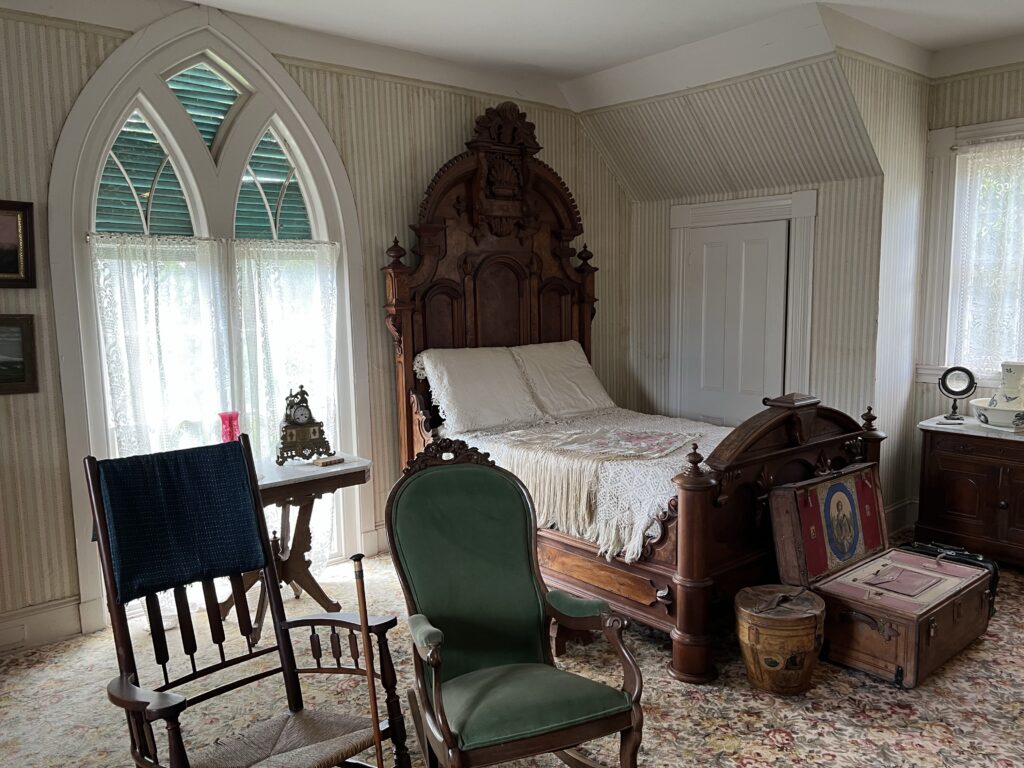
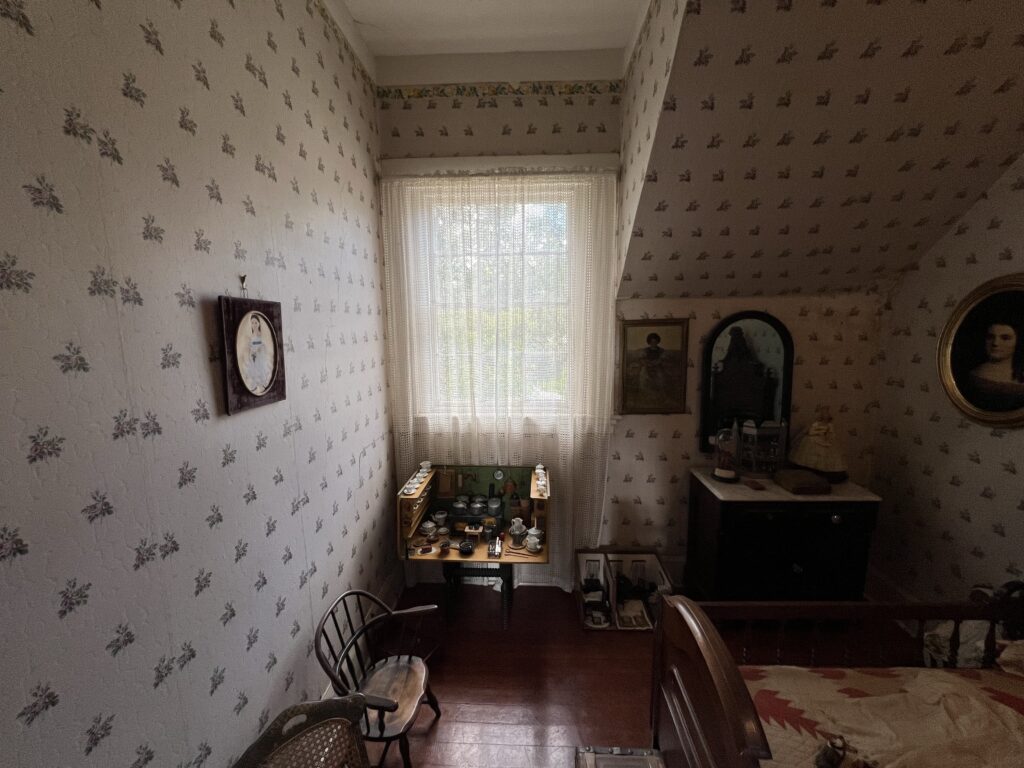
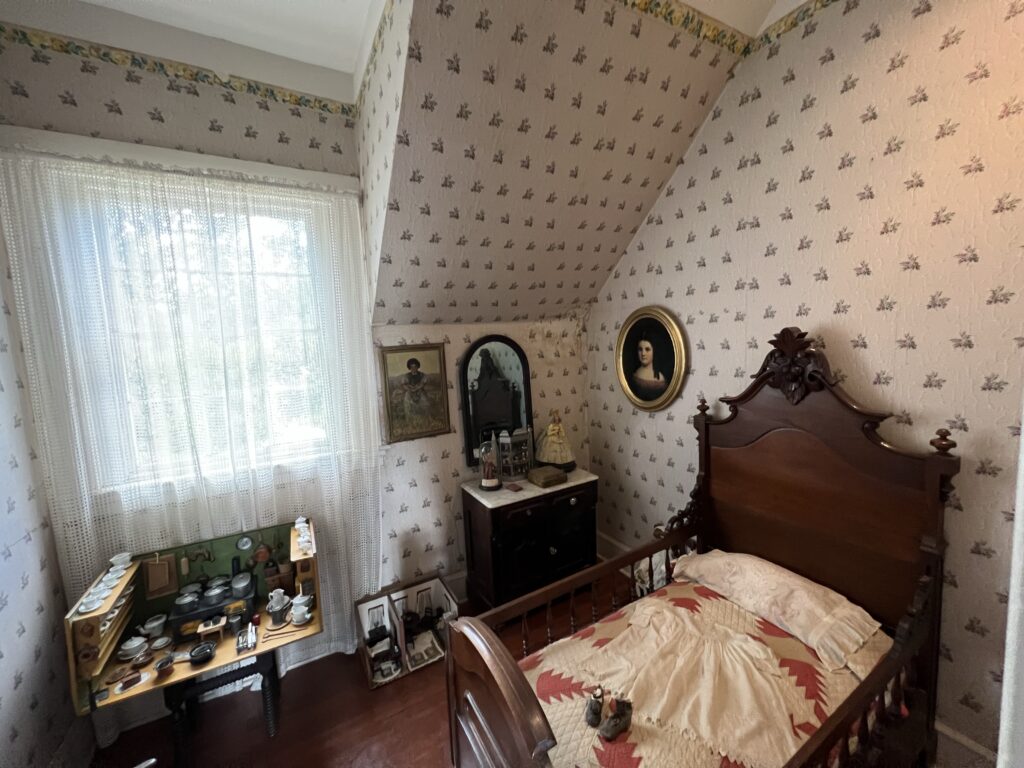
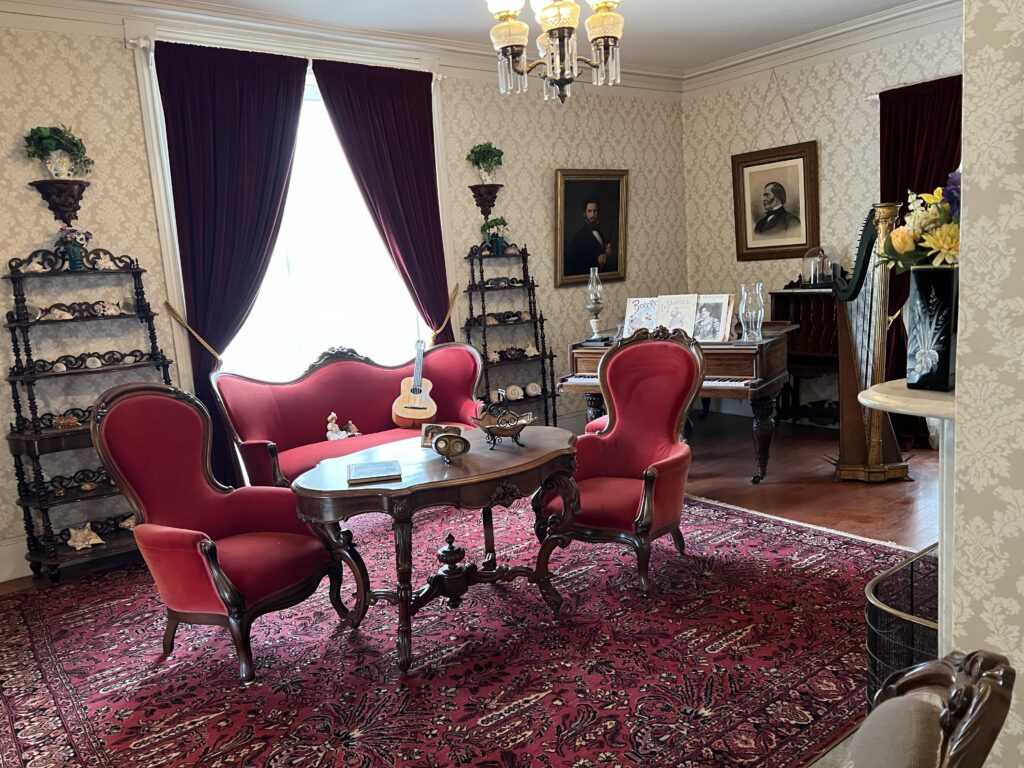
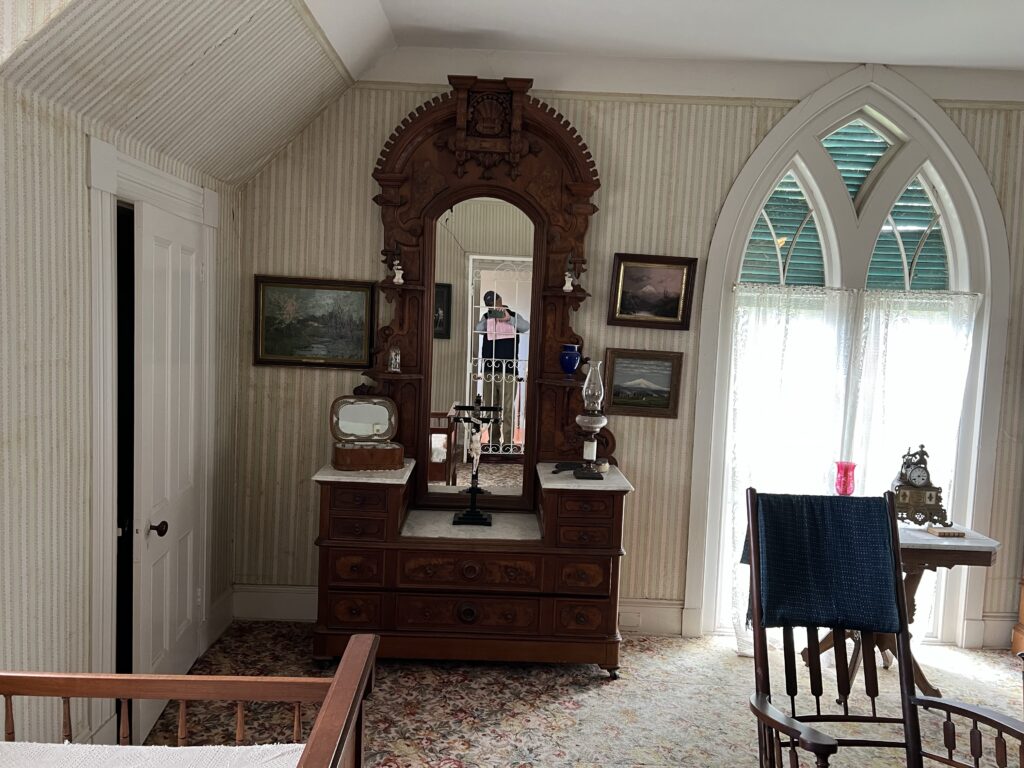
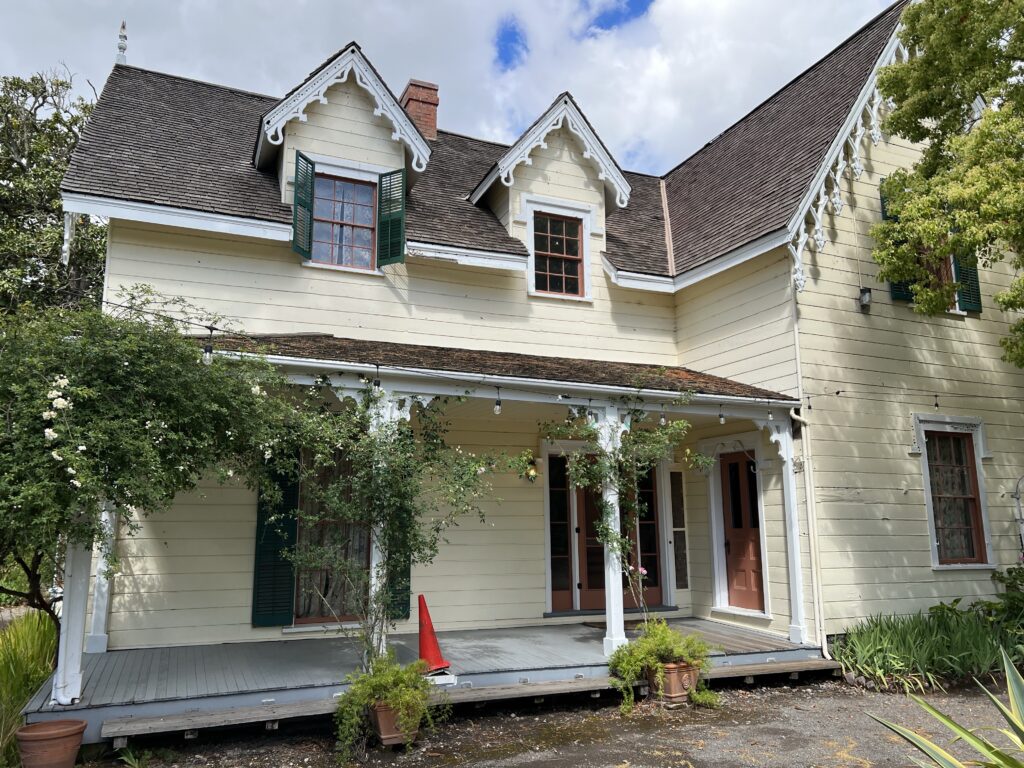
General Vallejo’s Home in Sonoma is interesting because it combines architecture, politics, landscape, and memory: the house is a prefabricated 1851–52 Carpenter Gothic residence with ornate trim, twin porches, dormers, a large Gothic bedroom window, and imported furnishings that reflect Vallejo’s Spanish/Mexican background, the China trade, and American tastes. It also sits beside spring-fed grounds and garden-like estate features, so it appeals not just to architects and historians but also to hikers, birders, gardeners, boaters exploring the region, and visitors interested in California’s early military and Californio past.[1][2][3][4]
Why different visitors care
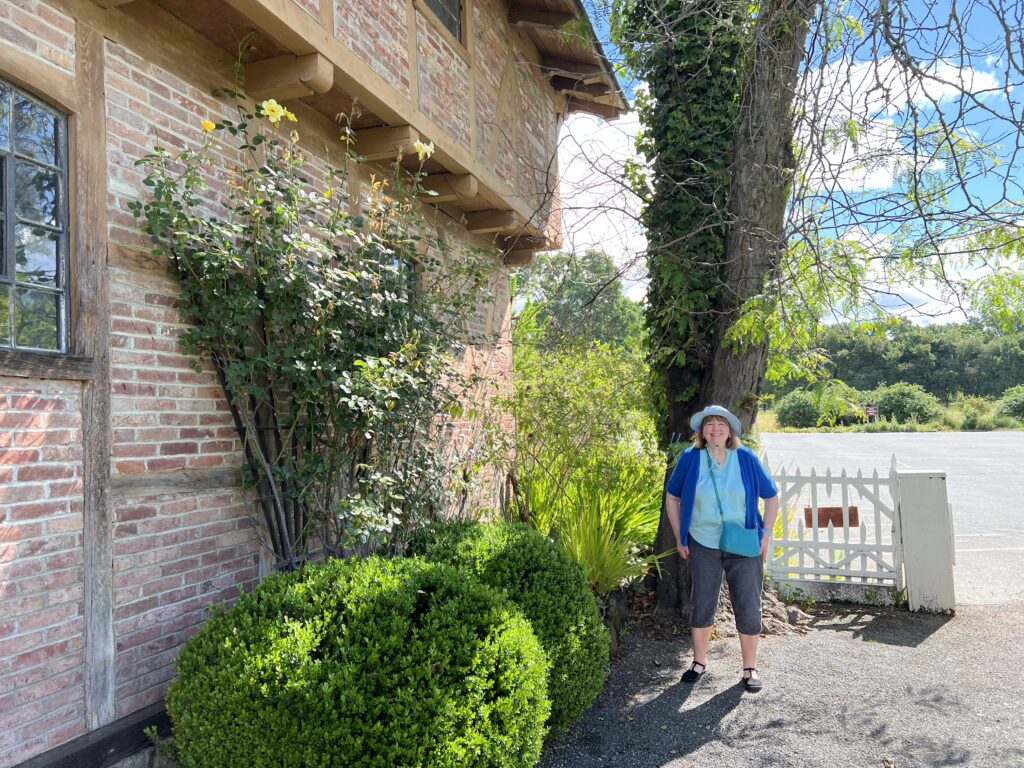
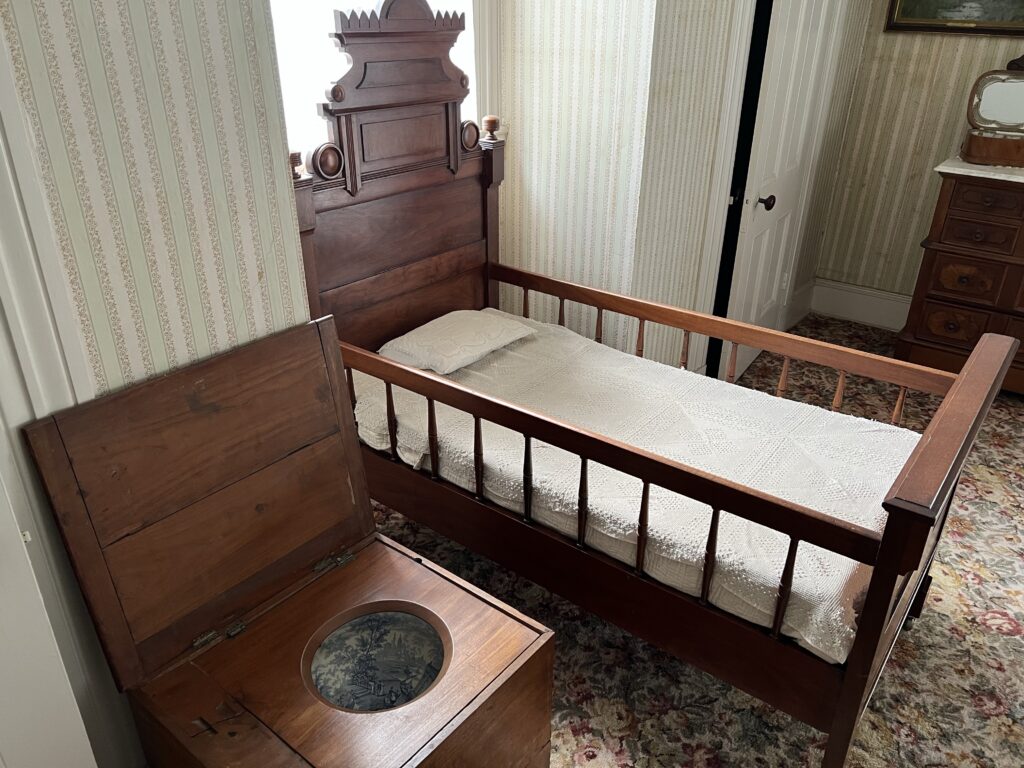
An architect will notice the house’s prefabricated East Coast construction, Carpenter Gothic detailing, use of brick in the walls for insulation, and the way the site blends house, spring, outbuildings, and landscape into one estate. There is no kitchen or plumbing in the house. Chinese servants did all the cooking at a separate structure and portable latrines (like today’s portapoties) were used at the house.
A hiker or outdoors visitor gets a walkable historic landscape near Sonoma State Historic Park, and the broader area connects to trails, shoreline preserves, and birding around San Pablo Bay.[1][2][3][5]
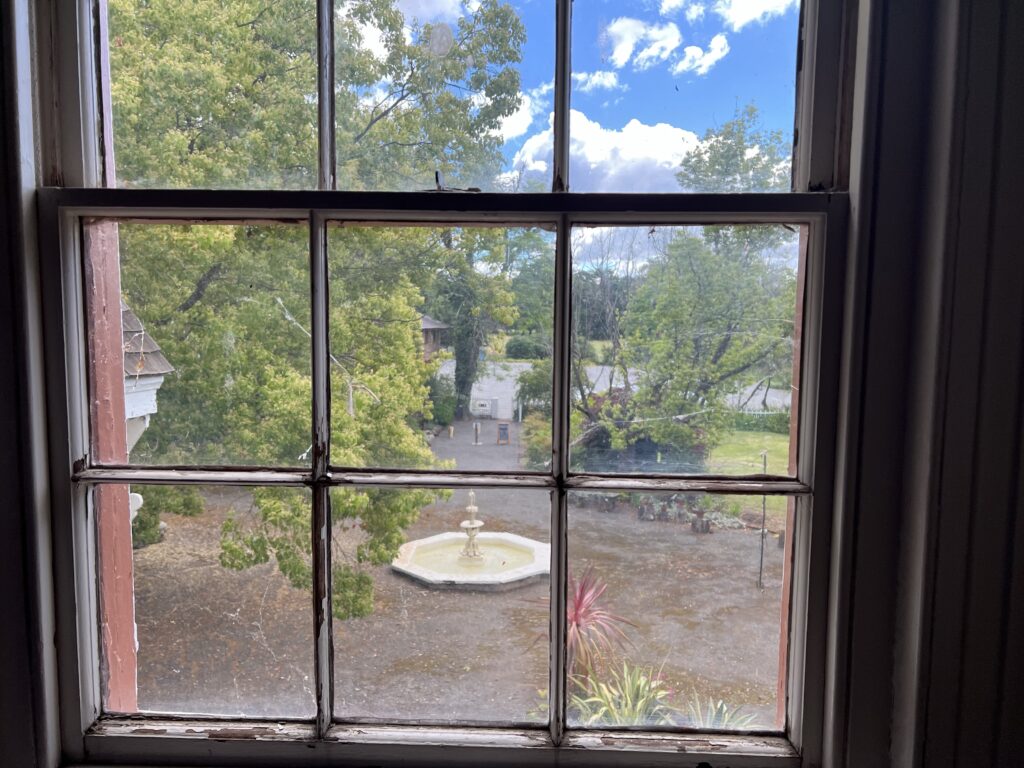
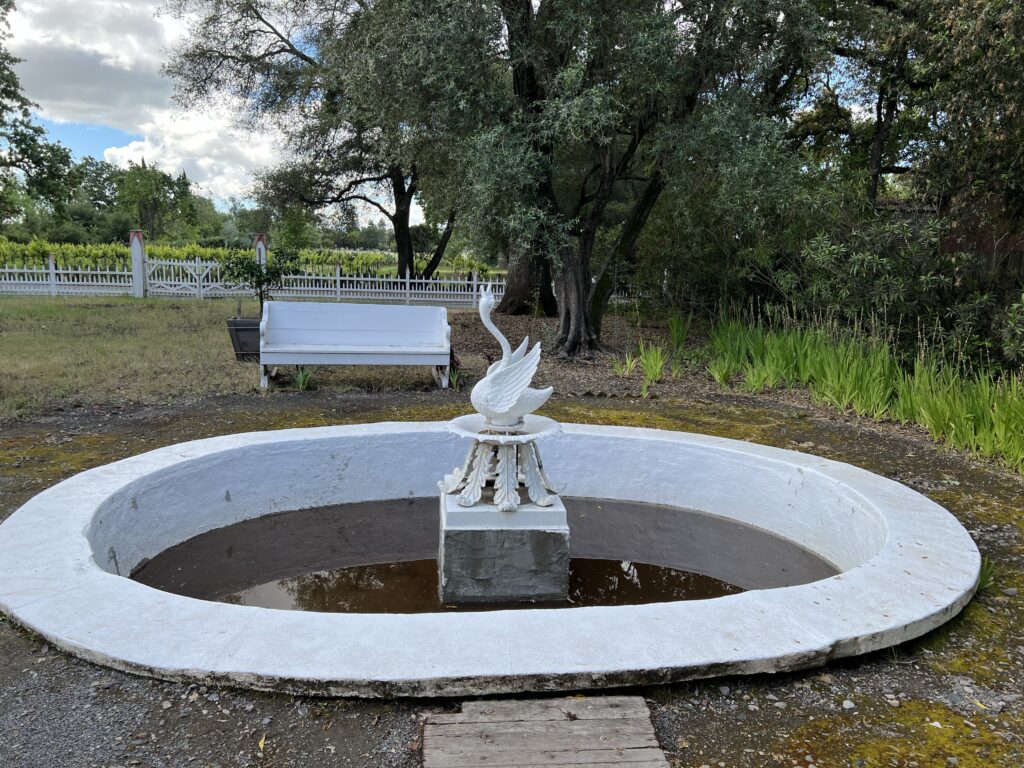
When Vallejo’s fortune dwindled in the 1870’s, he sold water to the city of Sonoma, forming one of California’s first water companies. Native Americans gathered here to partake of the free-flowing springs they called “Chiucuyem” (mountain tears). Drawn by the same fine waters, General Mariano G. Vallejo chose this site for his estate which he named Lachryma Montis, “mountain tear”, in Latin. Sonoma continued to use water piped from the pure springs of Lachryma Montis until the 1930’s.
A boater may care less about the house itself than about Vallejo’s maritime setting, since the region is tied to bay travel, Mare Island, and the broader water routes that shaped Solano County history.
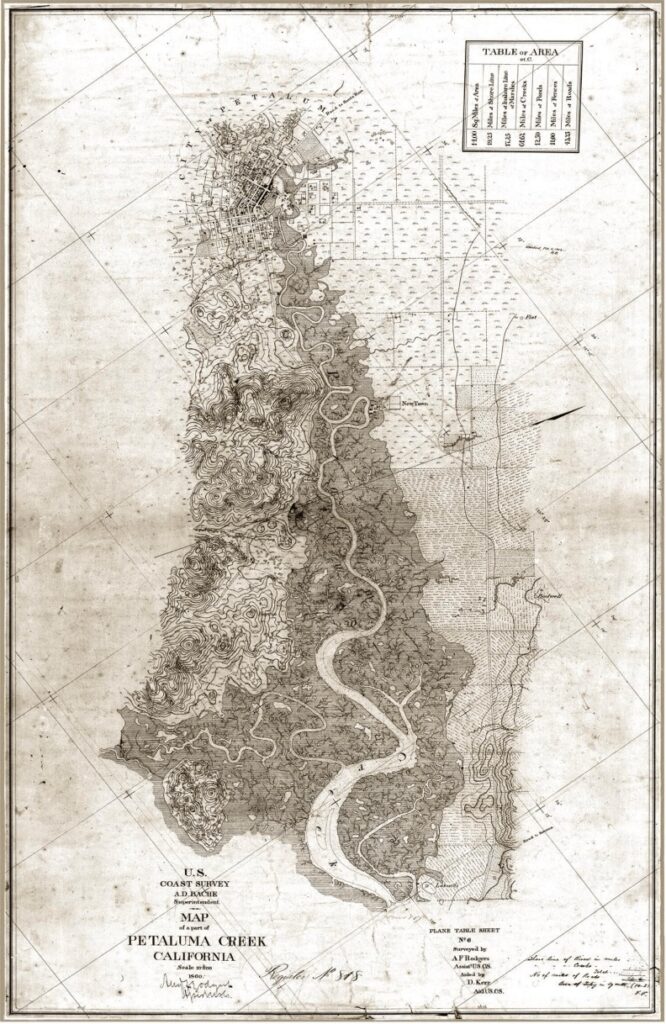
Shortly after the town of Sonoma in Solano County was founded in 1852, the steamer Red Jacket began making trips three times a week to and from San Francisco on the tidal slough then known as the Petaluma Creek. By 1854, Petaluma had developed into a bustling agricultural river port of 400 residents with steamers and schooners navigating the creek’s 19 narrow, winding miles daily.[4]
1860 Coast Survey Map of the Petaluma Creek (public domain)
A Californio or historian will focus on Vallejo as a major Mexican-era military commander, colonizer, and founder of Sonoma, whose career bridged Spanish, Mexican, Bear Flag, and U.S. rule.
Vallejo’s close relative, Juan Bautista Alvarado was his strong political ally, and in 1836 Alvarado organized an insurgent force, besieged the Presidio at Monterey, and the movement overthrew Governor Gutiérrez with support from Vallejo and other Californios.
Gutierrez’s was unpopular. His unpopularity was political rather than personal in a simple sense: he represented distant central authority in Mexico while local Californios wanted more regional control. Nicolás Gutiérrez was not born in California; he was a Mexican military officer appointed governor of Alta California, and he may have looked down on elite Californio natives like Alvarado and Vallejo.
Juan Bautista Alvarado was born in Monterey, Alta California, in 1809. He was born under Spanish rule, in a territory that was then part of the Spanish/Mexican Californio world. Mariano Guadalupe Vallejo was also born in Monterey, Alta California, in 1807. So yes, he was also born in Spanish colonial California .
Vallejo did not publicly support the 1836 uprising at first, because he initially declined to join, but after the revolt succeeded he aligned himself with the new regime and accepted the role of military commandant under the Alvarado government. One source also says he later pledged the garrison to support the revolution, showing that he eventually backed it in practice even if he was cautious at the outset.
The Bear Flag was not raised after Alvarado’s 1836 victory. Alvarado’s revolt was a successful push for increased autonomy within Mexico, not independence. He raised a lone red star flag (not the Bear Flag) to signal Californio control, and Mexico eventually recognized him as legitimate governor by 1839. Mexico continued to claim authority over Alta California, with Alvarado governing as its Mexican provincial leader.
After Alvarado became governor and Vallejo went public by supporting the revolt, Vallejo rose in status under his government and Alvarado later served as one of the most powerful military figures in Alta California. The relationship between Alvarado and Vallejo was therefore both familial and political: Alvarado was the rebel leader and governor, while Vallejo was a key supporter, commandant, and later sometimes a rival in policy.
The Bear Flag Revolt came a full decade later in June 1846, led by American settlers against Mexican rule (after Alvarado’s second term), declaring the short-lived “California Republic” before U.S. forces took over. Alvarado’s flag inspired the Bear Flag’s star design, but the events and goals were entirely separate.
Note that in March, 1845, Governor Pio Pico ordered all missions to be sold and the money was to be used to defray the expenses of the war with the United States.
A military-minded visitor will especially note that Vallejo was Commandante General of the northern frontier and built Sonoma’s barracks and defenses.[2][3][4][6][7][8]
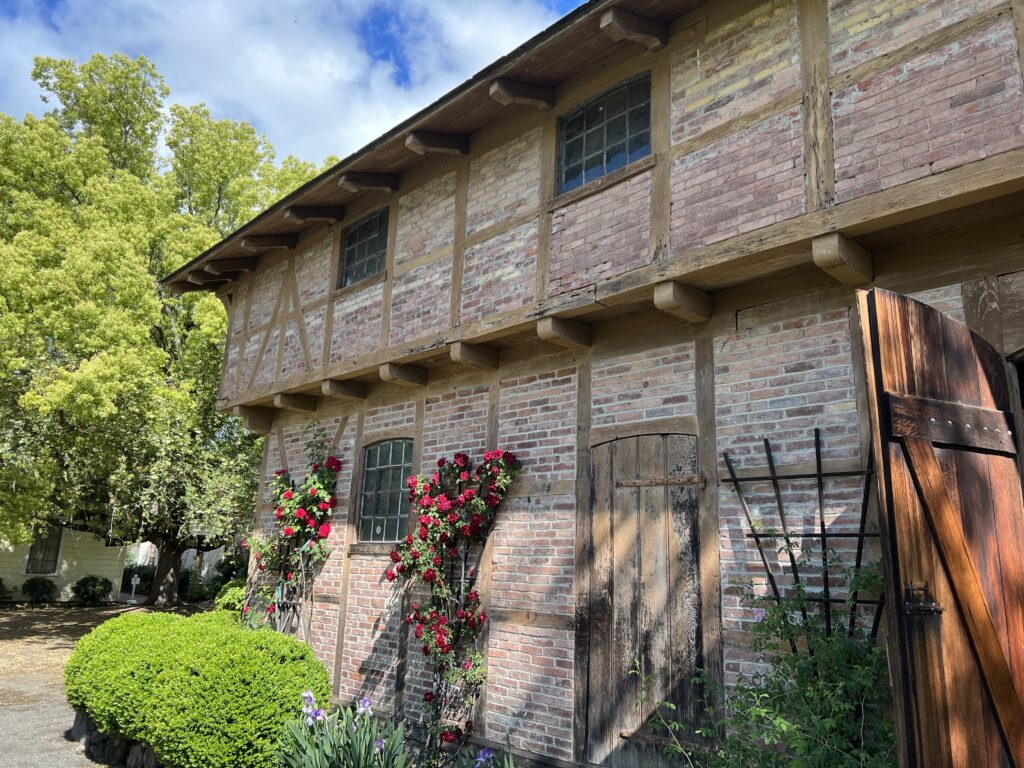
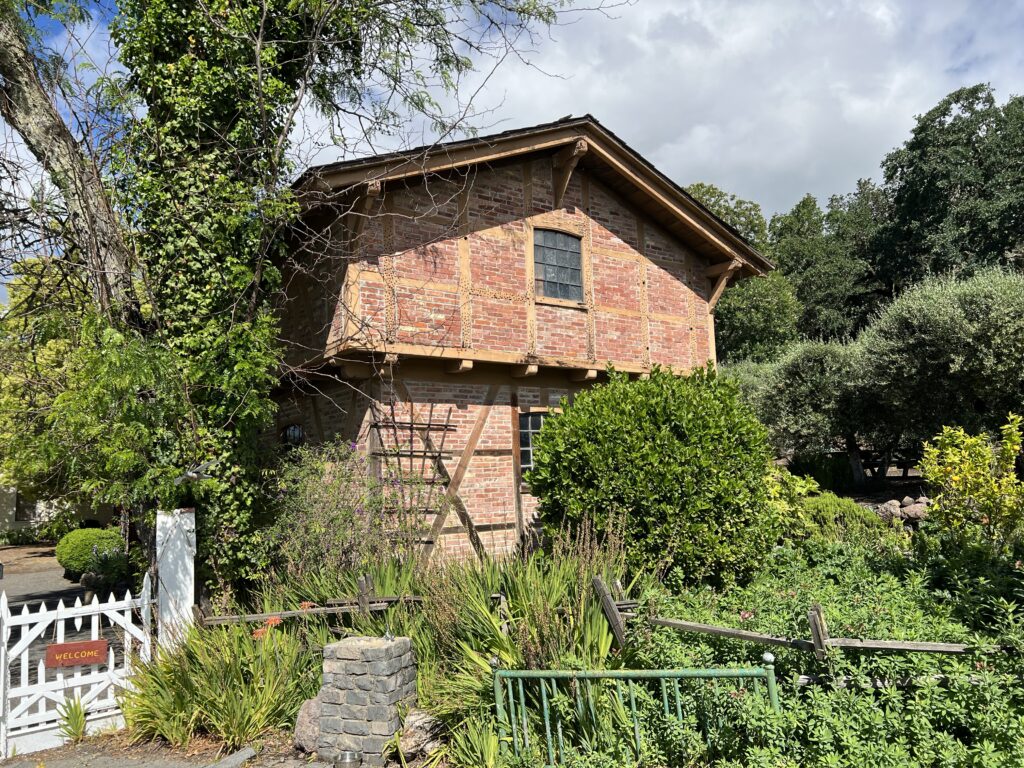
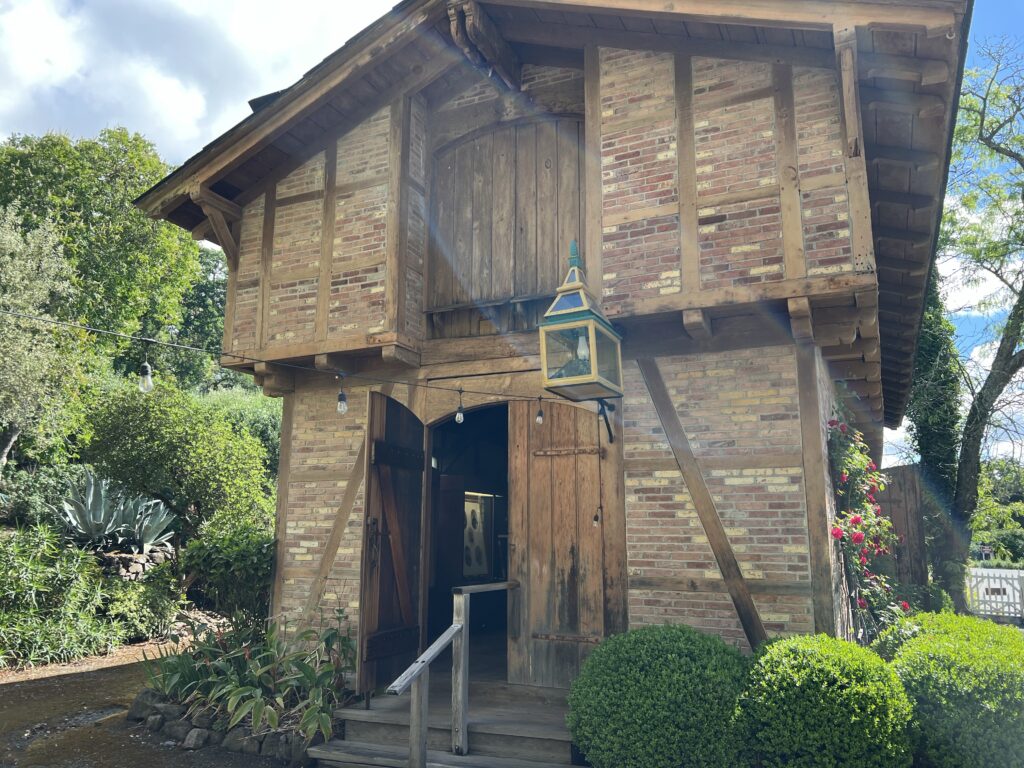
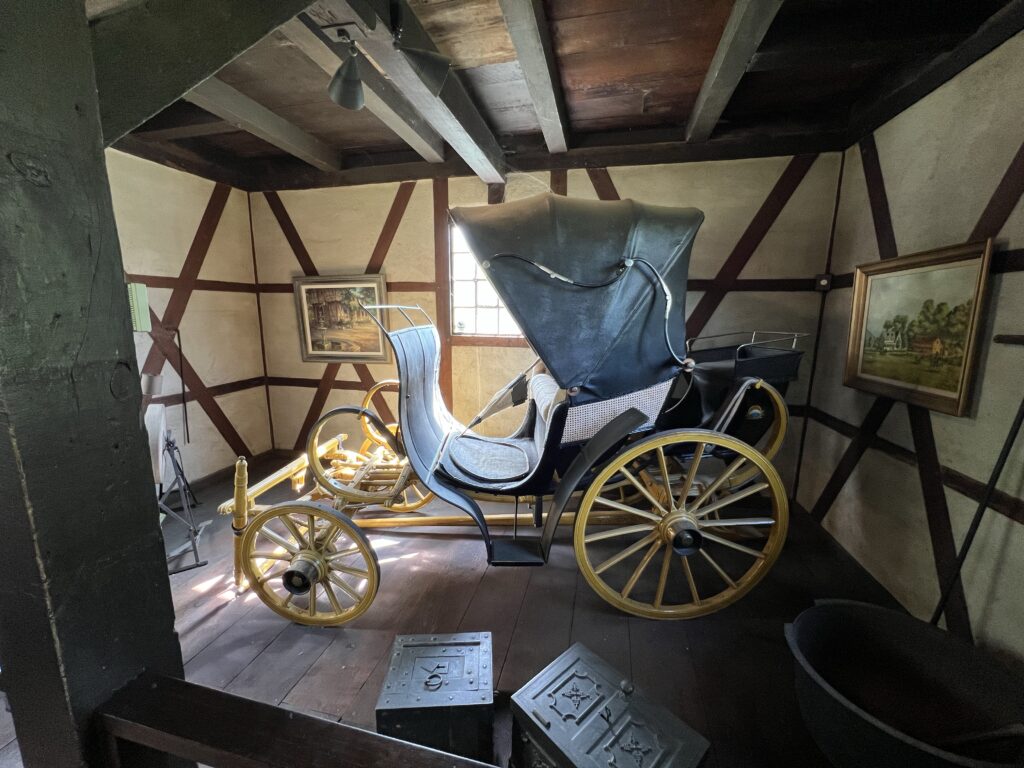
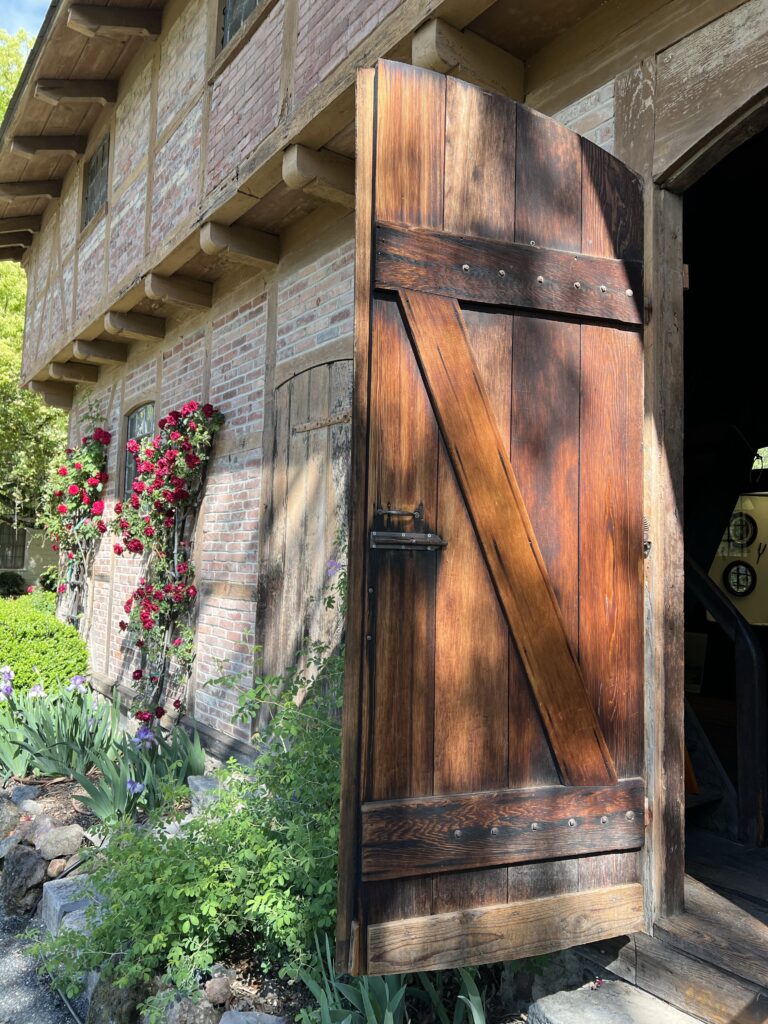
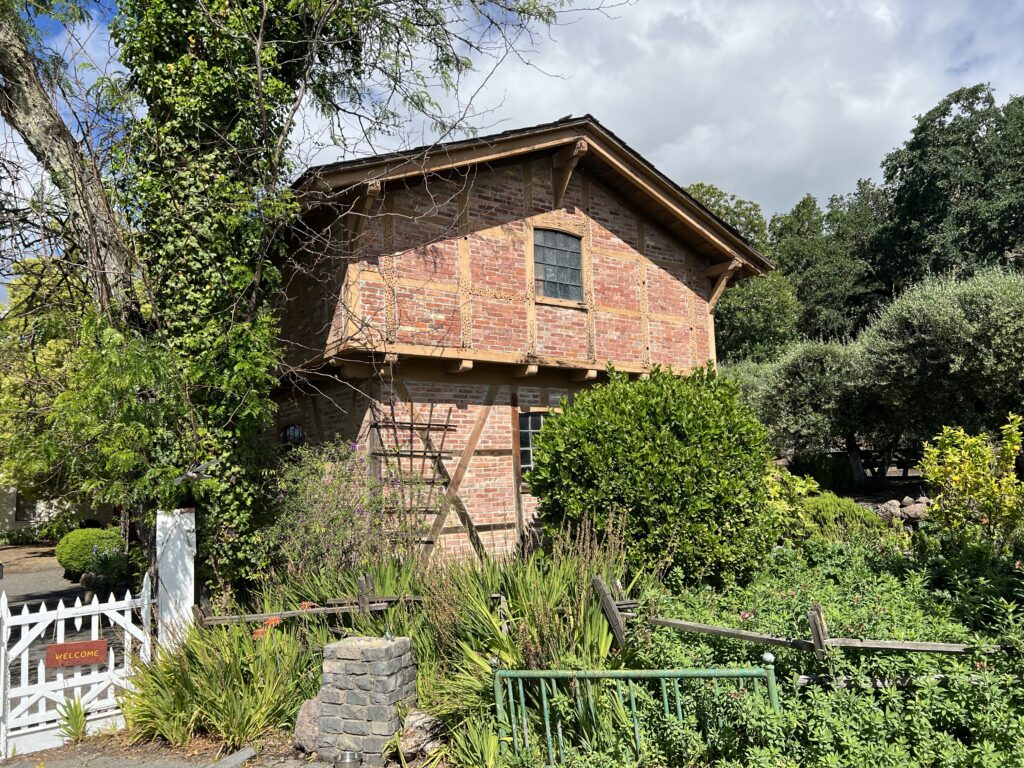
SWISS CHALET The original timbers of this building were cut and numbered in Europe and shipped bere during the Gold Rush. The bricks came around the Horn as ballast in sailing ships. General Mariano G. Vallejo crected the building in 1852 for use as a warehouse in which to store supplies Some restoration work was done in 1935 to bring the building up to its present condition
Chinese and aristocracy
The estate’s furnishings are explicitly described as mixing Vallejo’s Spanish and Mexican heritage, the China trade, and American styles, so the Chinese connection is real and visible in the household’s material culture. As mentioned, Chinese servants did the cooking and laundry in a separate structure and when cleaning the house, the family would retreat into cottages. More broadly, Vallejo and his circle are often portrayed in romanticized terms as “aristocratic” Californios, but the home and his life also show a practical frontier elite trying to look refined while managing military power, land, and changing regimes. That tension is part of what makes the site historically rich: it is both an elegant domestic setting and evidence of how upper-status Californios wanted to be seen.[1][3][7]
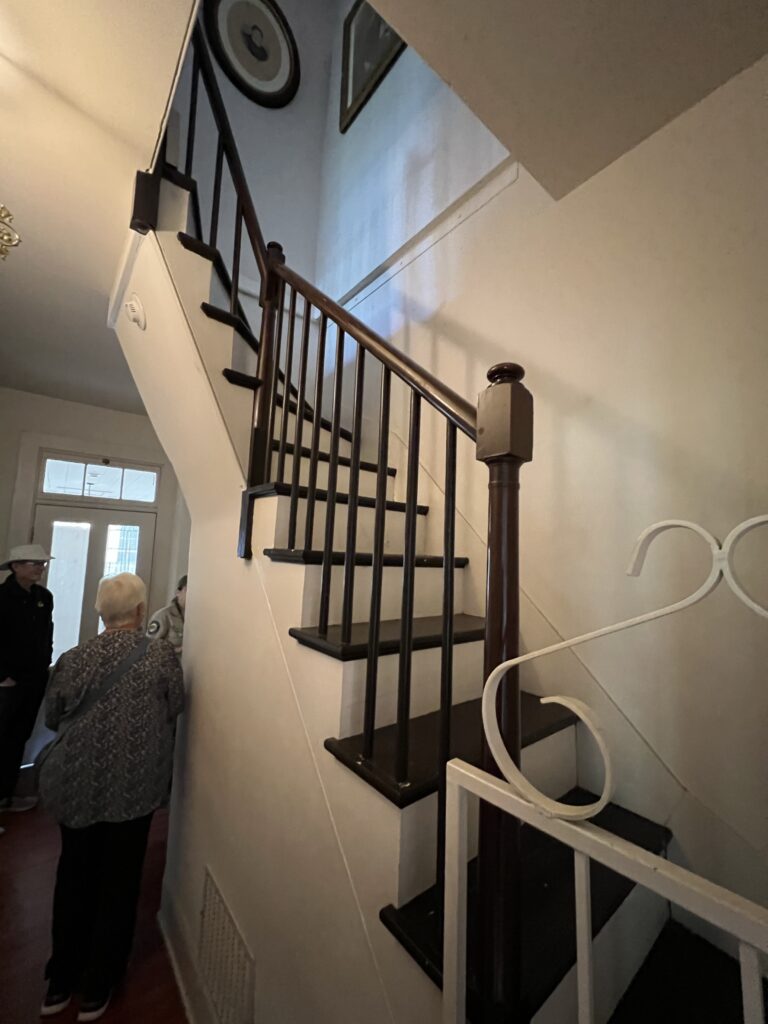
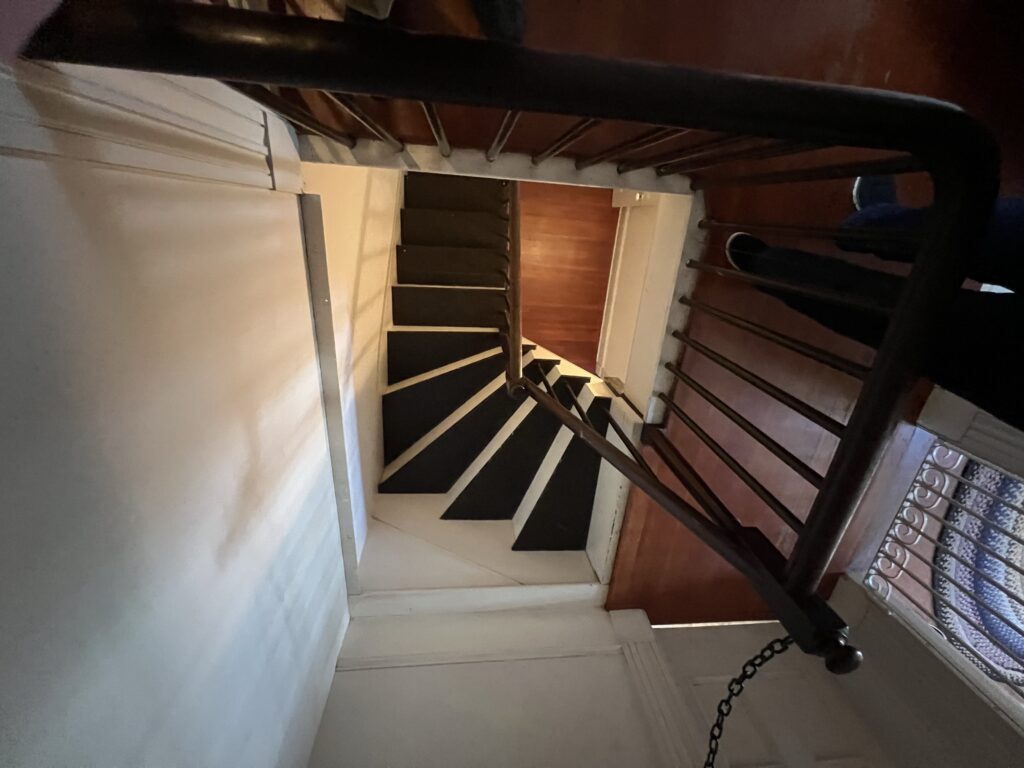
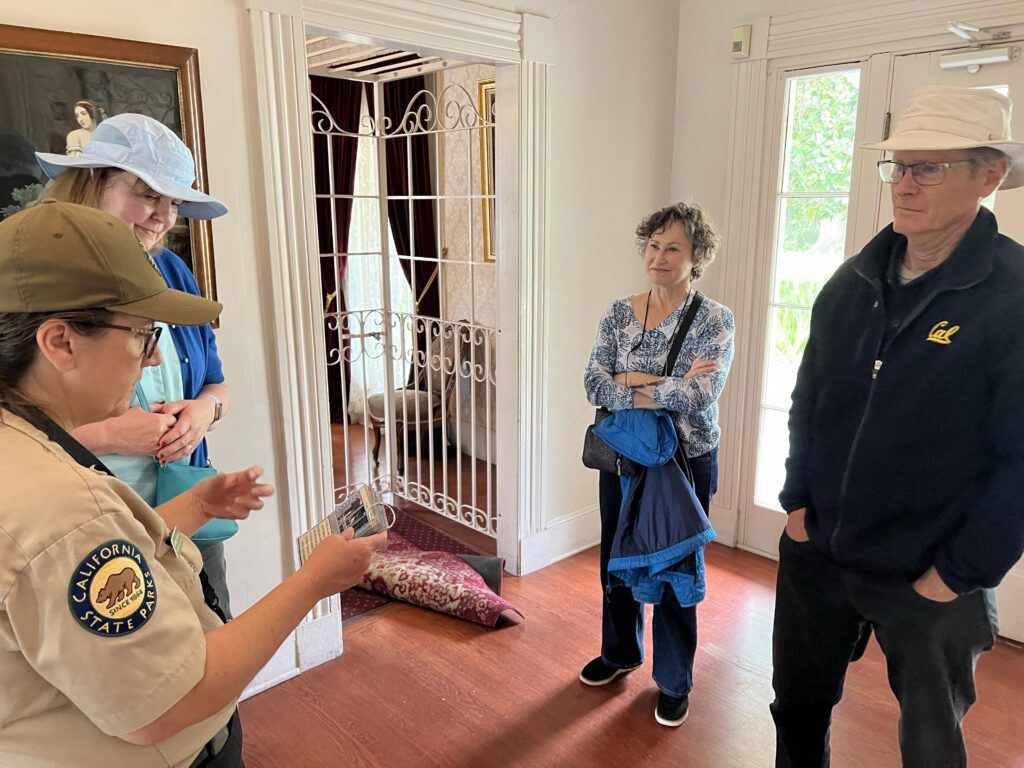
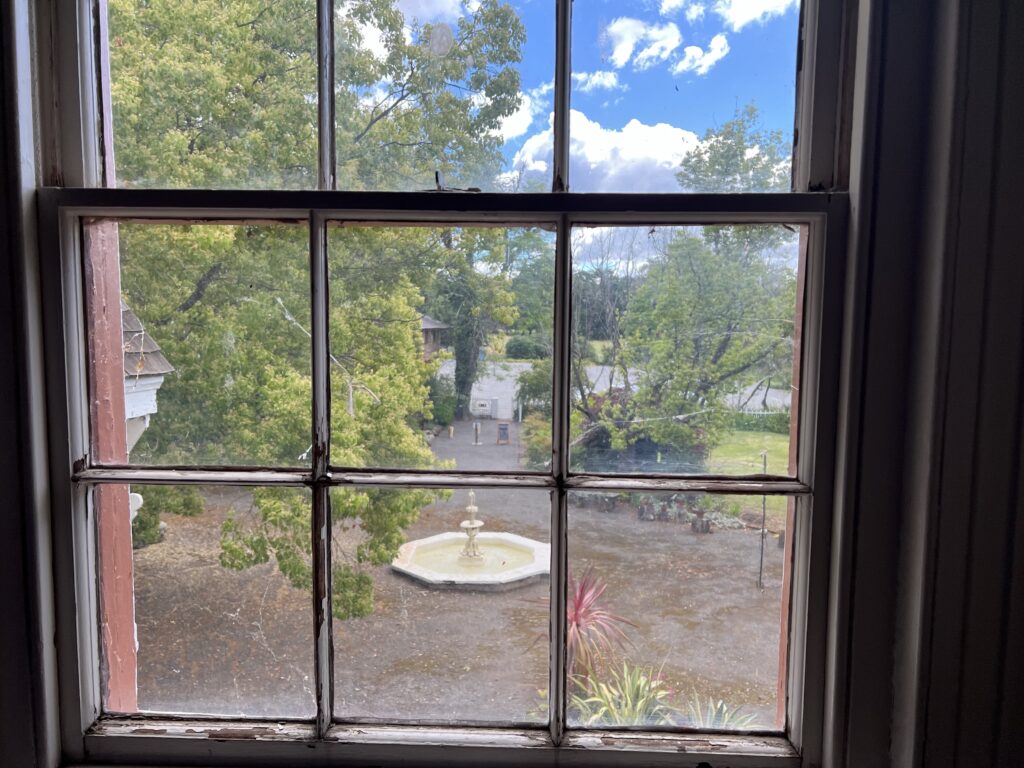
Servants used this staircase.
Children and family
Vallejo and his wife raised 16 children, and one of them, Salvador Vallejo, was later associated with embezzlement in historical accounts of the family’s financial decline. The family story matters because the home was not just a monument to one man’s career; it was also the center of a large household that lived through political loss and economic contraction.[1][6][9]
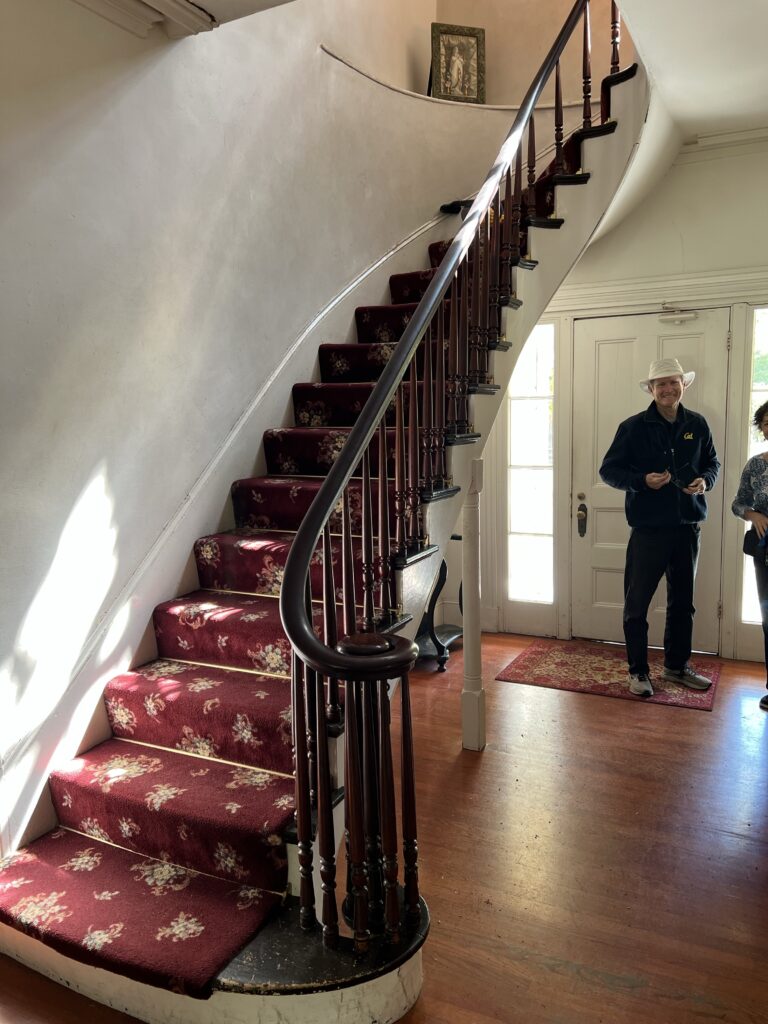
Family and visitors used this stare case.
Flags and loss
A Mexican flag would have flown in Vallejo’s era, but no flags were flown at Vallejo’s House because the site was not a political residence and the Bear Flag Revolution had taken place 3 years earlier. Vallejo had to juggle his affairs during the transition to USA rule. He did lose most of his wealth over time, with sources noting repeated economic setbacks and the sale of “nonessential” estate acreage. He also had already given or transferred land connected to the founding of Vallejo and Benicia in the broader family history of the region, though the city names honor him and his wife rather than indicating a simple single deed from the home itself.[1][6][10][11]
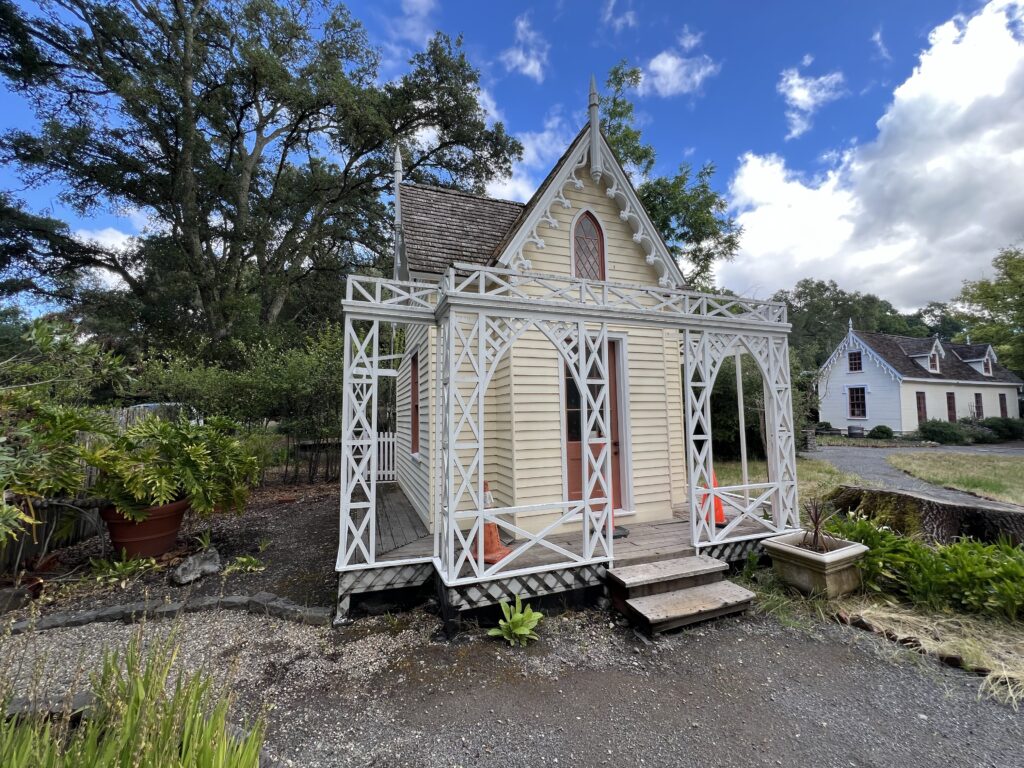
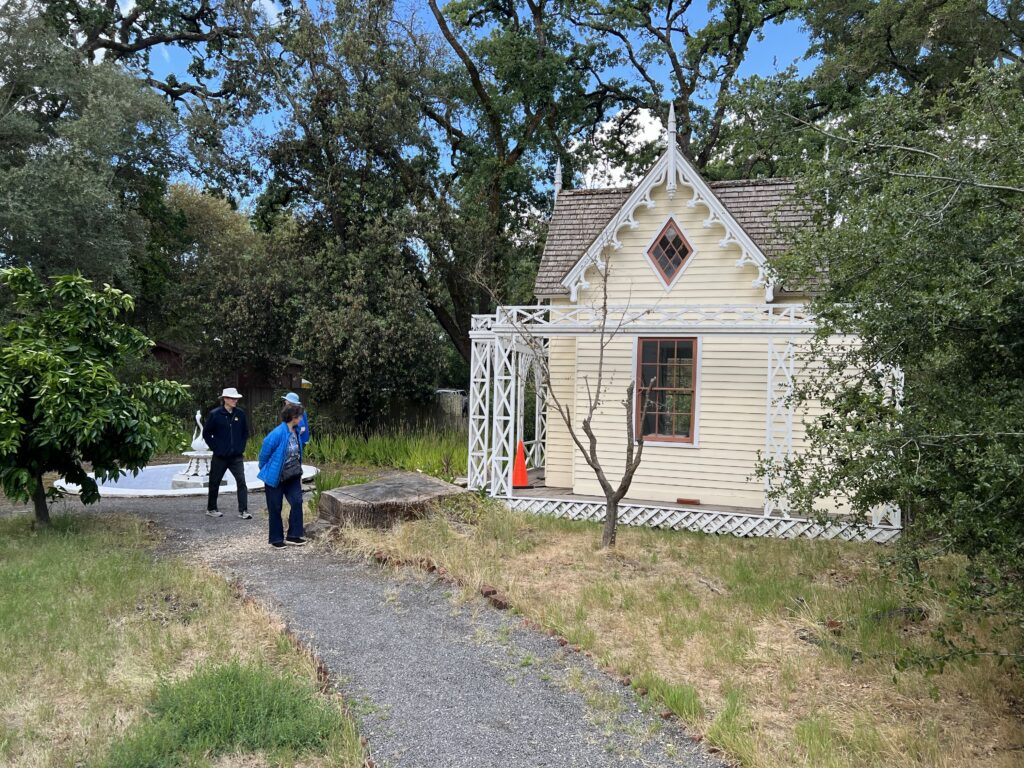
Retreat structure near house.
Distance to the mission
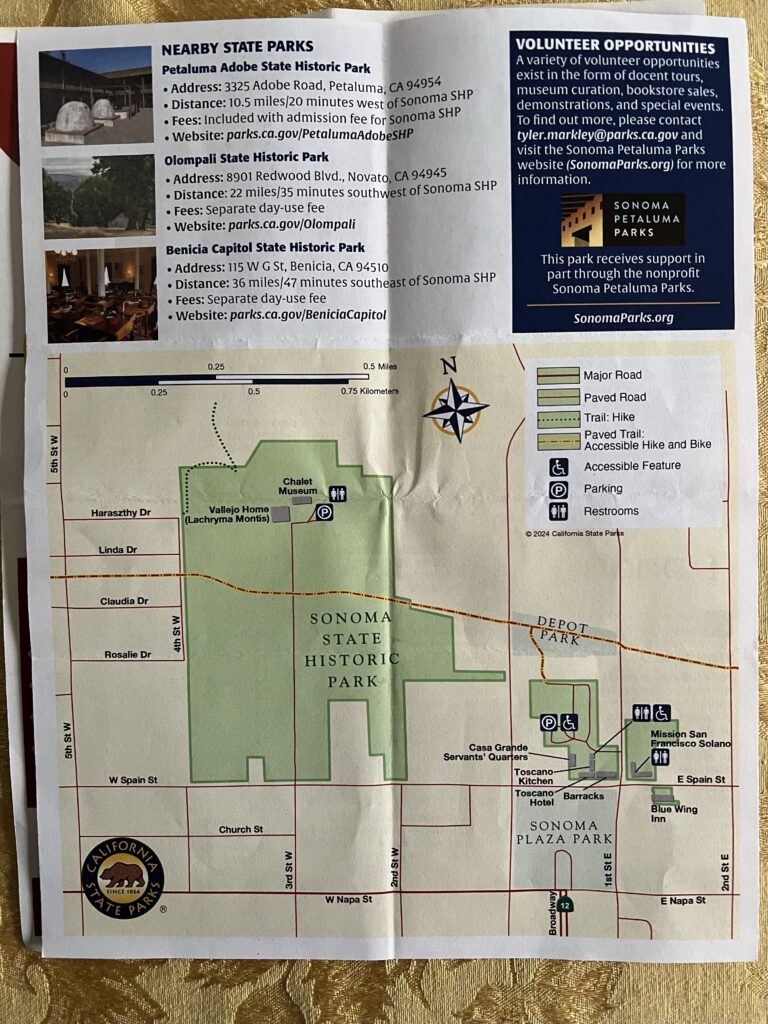
The home is about a mile from Mission San Francisco Solano, according to a contemporary Sonoma travel account, and park materials group the mission and Vallejo’s Home together as linked historic sites. One fee gains entrance to both. That short distance helps explain why the home belongs to a clustered historical landscape rather than an isolated mansion.[7][11]
General Vallejo
Mariano Guadalupe Vallejo was one of the key Californios of 19th-century California: soldier, administrator, colonizer, and political bridge across empires. He was instrumental in founding Sonoma, commanding the northern frontier, and shaping the transition from Mexican rule to U.S. statehood. His later poverty and diminished circumstances make him a more tragic figure than the grand public myth suggests.[1][3][4][6]
A brief eulogy: Vallejo was a builder of towns, institutions, and memory, a man who lived through the collapse of one world and the creation of another. He was not merely a military officer but a California founder whose life embodied ambition, adaptation, pride, loss, and endurance. His house still stands as a reminder that California history was shaped not only by conquest and gold, but by families, labor, diplomacy, and the uneasy passage from Mexican frontier to American state.[3][6][7][1]
Rail service in Sonoma County began in the 1860s and 1870s, with later local lines in the early 1900s. It helped hasten Petaluma’s port decline and was part of the larger economic transition that weakened Vallejo’s old landed world, but it was not the sole reason for his loss of wealth.
Rancho Petaluma – the fertile, sprawling 66,000 acre, 100-square-mile agricultural empire that helped make General Mariano Guadalupe Vallejo one of the richest, most powerful men in the Mexican Province of Alta California, 1834-1846.
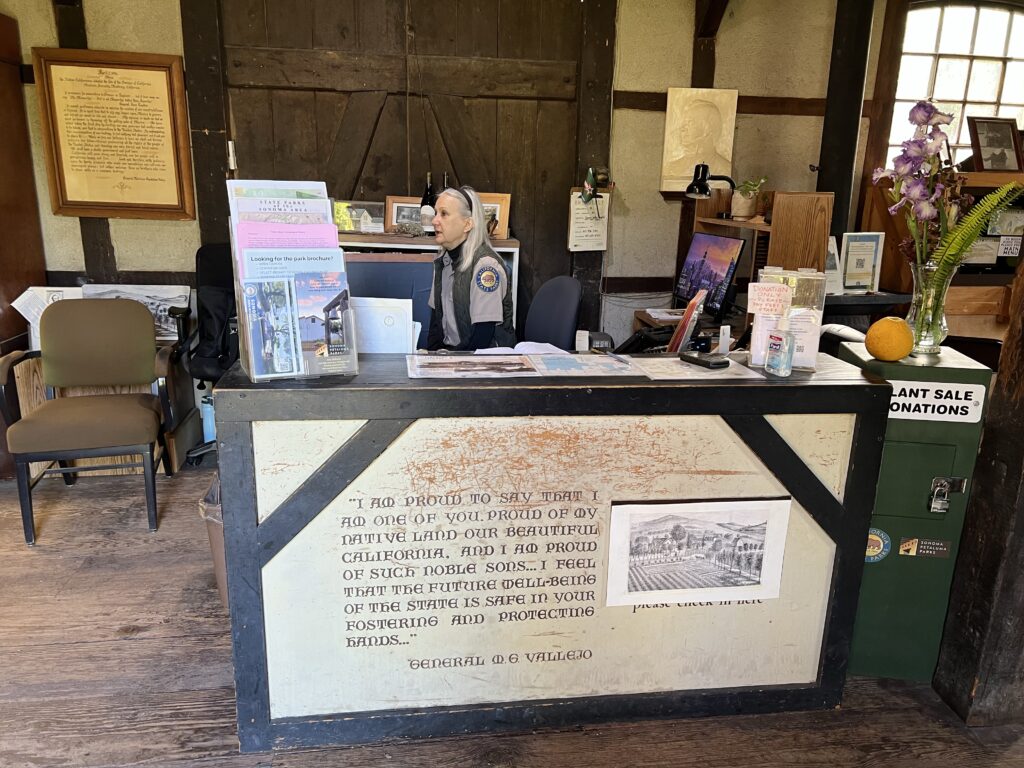
State of California • The Resources Agency Department of Parks & Recreation
Petaluma declined as a shipping port mainly because the river became harder to navigate: shoaling and siltation made the channel shallower, so boats increasingly needed dredging and could not rely on easy access. That physical problem was compounded by transportation change, especially the rise of railroads and then highways, which shifted freight away from river shipping and made overland transport more efficient.[1][2][3][4][5]
Main causes
The first cause was geography and sediment: the Petaluma River naturally filled with silt over time, reducing the depth available for shipping. The second was competition from rail, especially after Sonoma County rail connections expanded, which undercut the old steamboat and creek-port system. The third was the broader 20th-century shift to trucks and highways, which made river freight less competitive.[2][3][4][5][1]
What changed locally
Petaluma had thrived when agricultural goods could move easily by water to San Francisco, and for decades it was a major inland shipping point. But as roads improved and rail lines spread, the city’s economic center of gravity moved inland and away from the waterfront. By the modern era, the river required continued maintenance dredging just to preserve what remained of navigability.[3][5][6][7][1]
In one sentence
Petaluma did not vanish as a port because of one disaster; it slowly lost its edge because the river silted in while rail and highway transport made water shipping less important.[5][1][2]
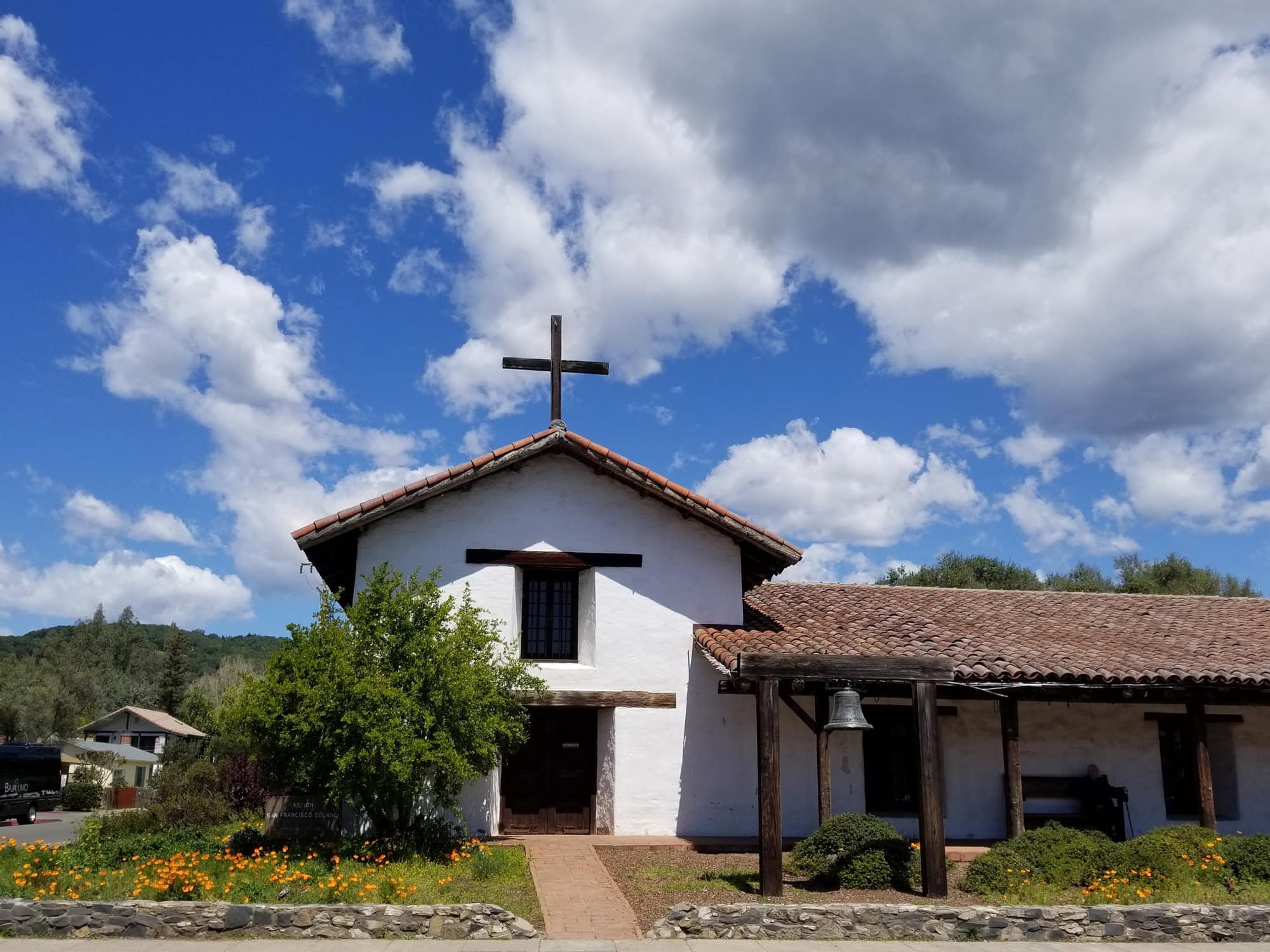
Mission San Francisco Solano was founded on July 4, 1823, by Father José Altimira as the last and northernmost of the California missions, and it was created under Mexican rule partly because authorities wanted a mission presence farther north in Sonoma. It was also intended to replace or relieve pressure on older missions, and early plans were shaped by politics, frontier defense, and competition for control of northern California.
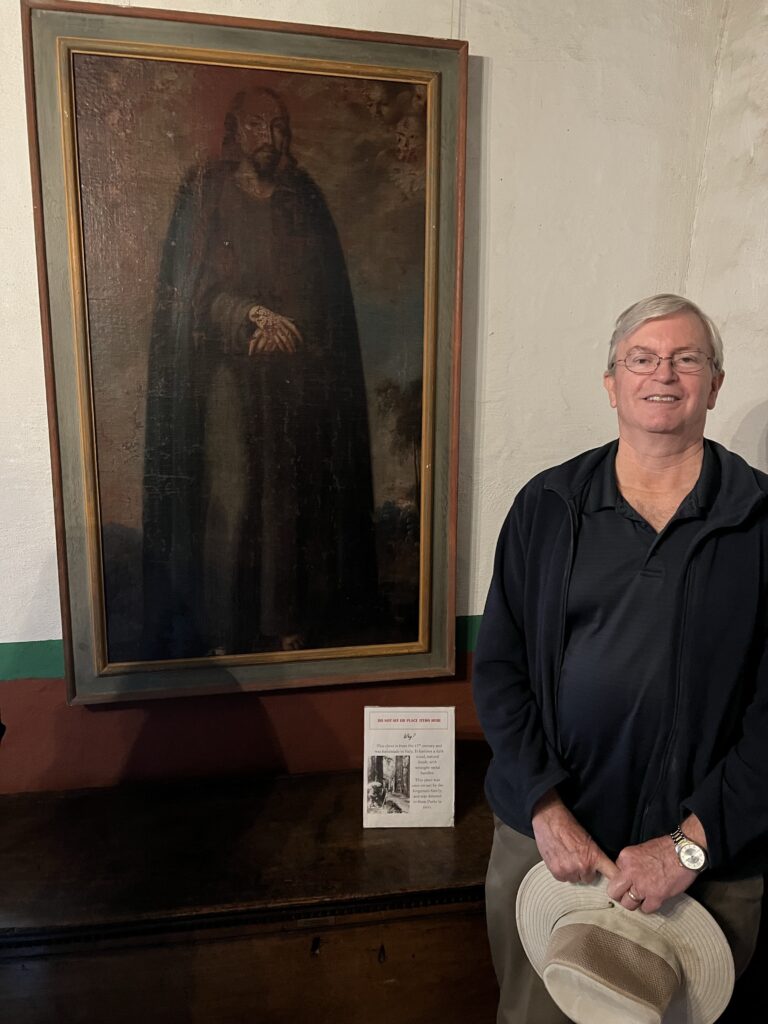
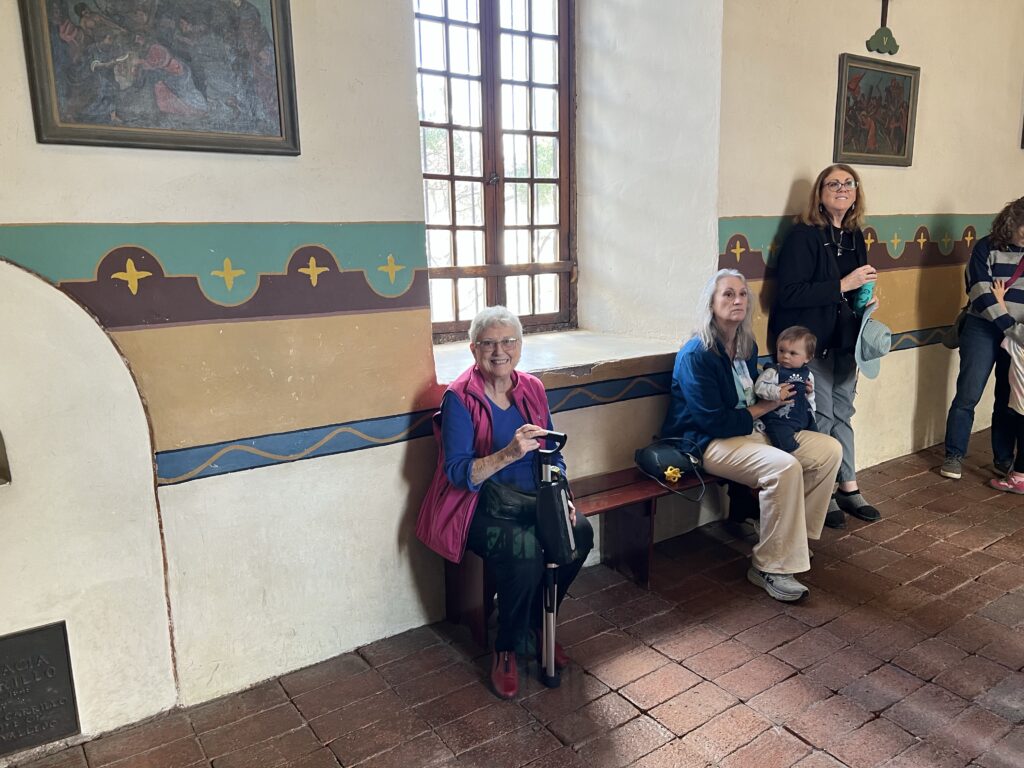
Fifth generation Californio, David Mighetto is related to Juan Bautista Alvarado and stands next to a portrait of the founder of Mission San Francisco de Solano.
The mission was effectively closed as a mission in 1834, after which the buildings fell into disuse and parts of the site were stripped for materials by the growing town of Sonoma. Ounce the roof was gone and maintenance ceased, weathering and erosion caused the exposed adobe walls to fail (melt) over time.
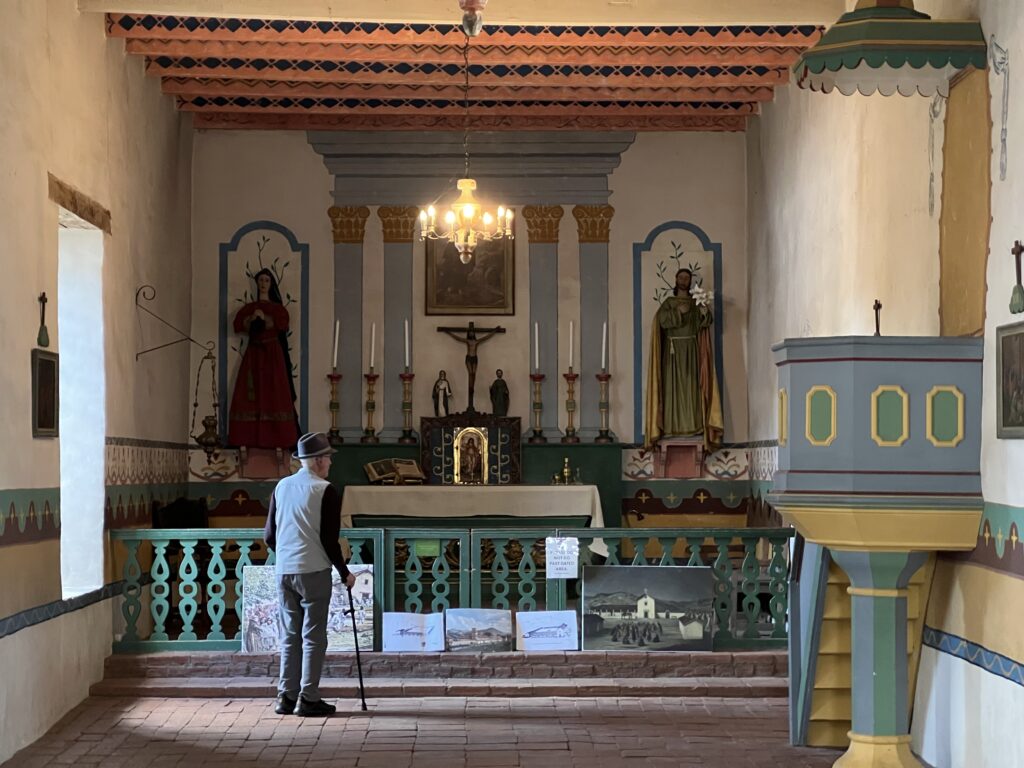
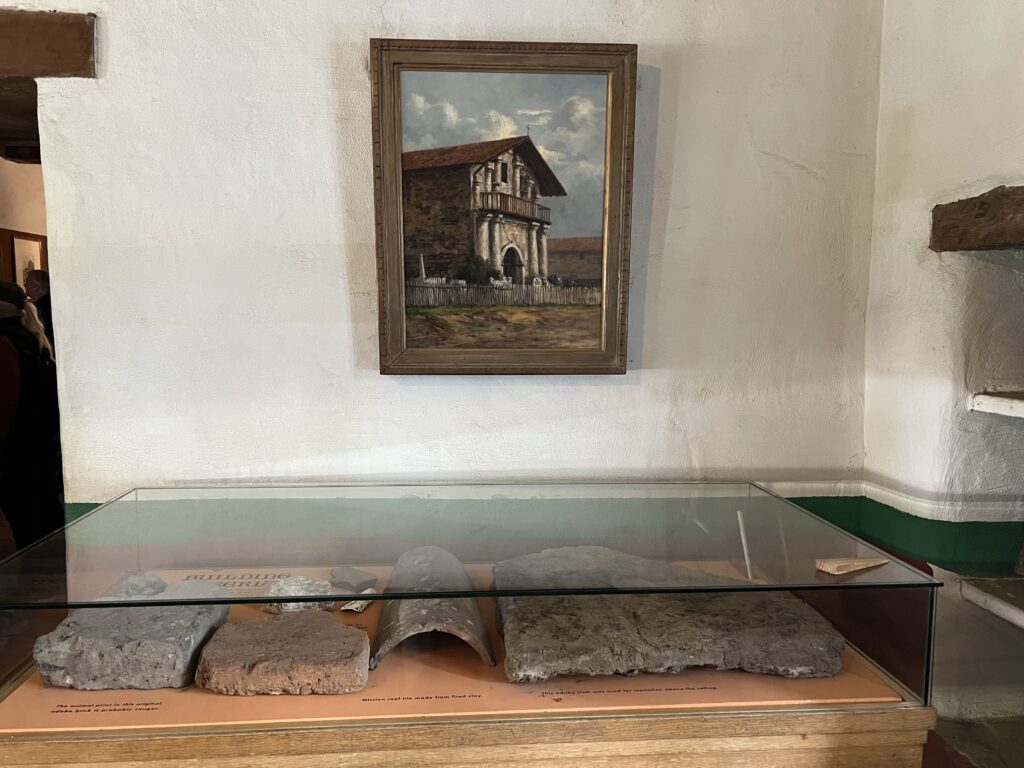
In 1841, Mariano Vallejo ordered a new adobe chapel built on the site of the original wooden chapel, and that chapel became the parish church. A barrack housed military command by Vallejo and some of the old missions tiles are said to have been used to construct the mission.
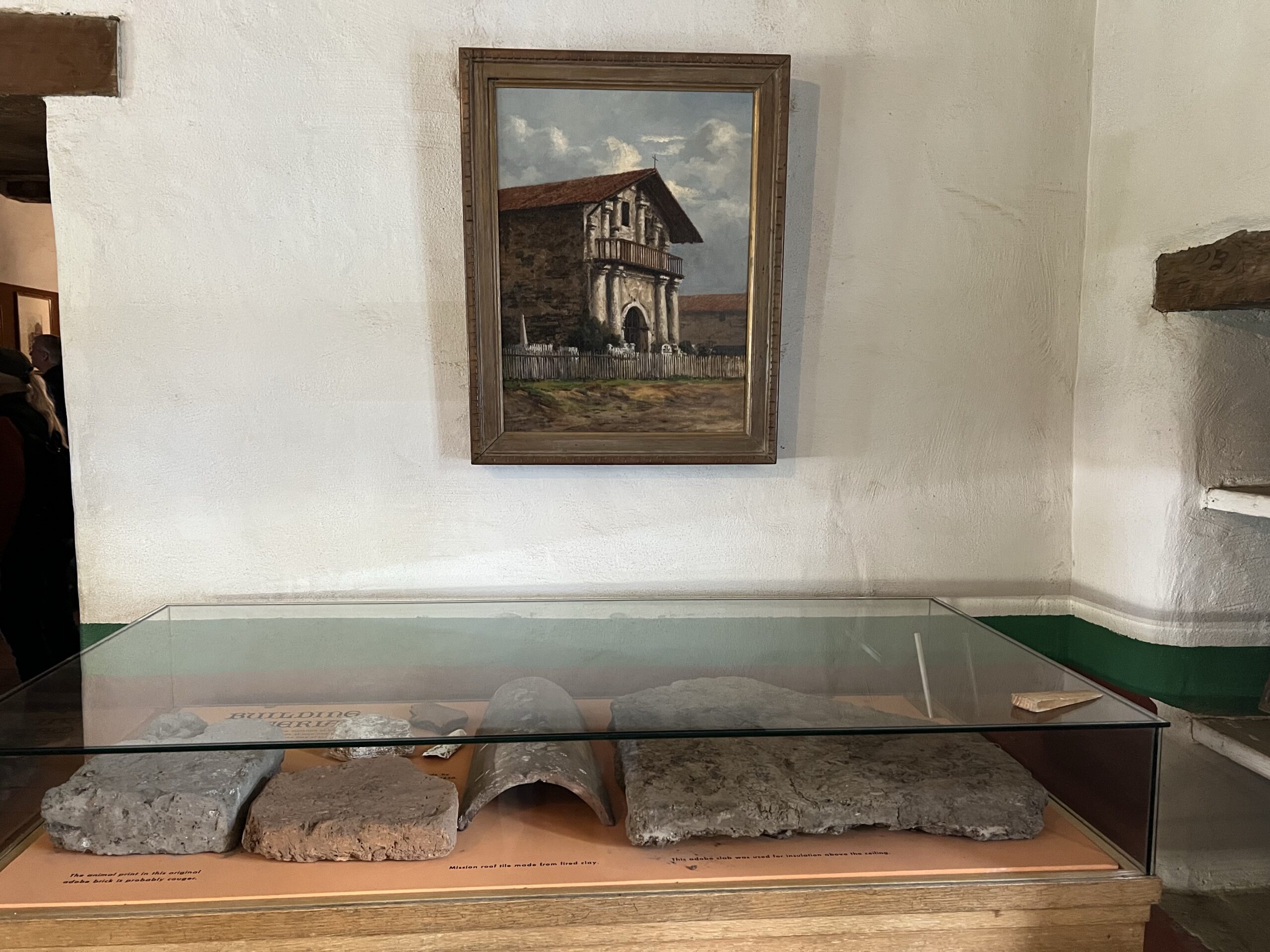
Old Mission Tiles
Later, after damage from time and the 1906 earthquake, restoration work began in the early 20th century, and by 1913 the chapel and associated mission buildings had been reconstructed. The current appearance is therefore a blend of reconstruction and preservation rather than a fully untouched original mission. It is a short walk from Vallejo’s Home. The jewels of the mission are paintings .
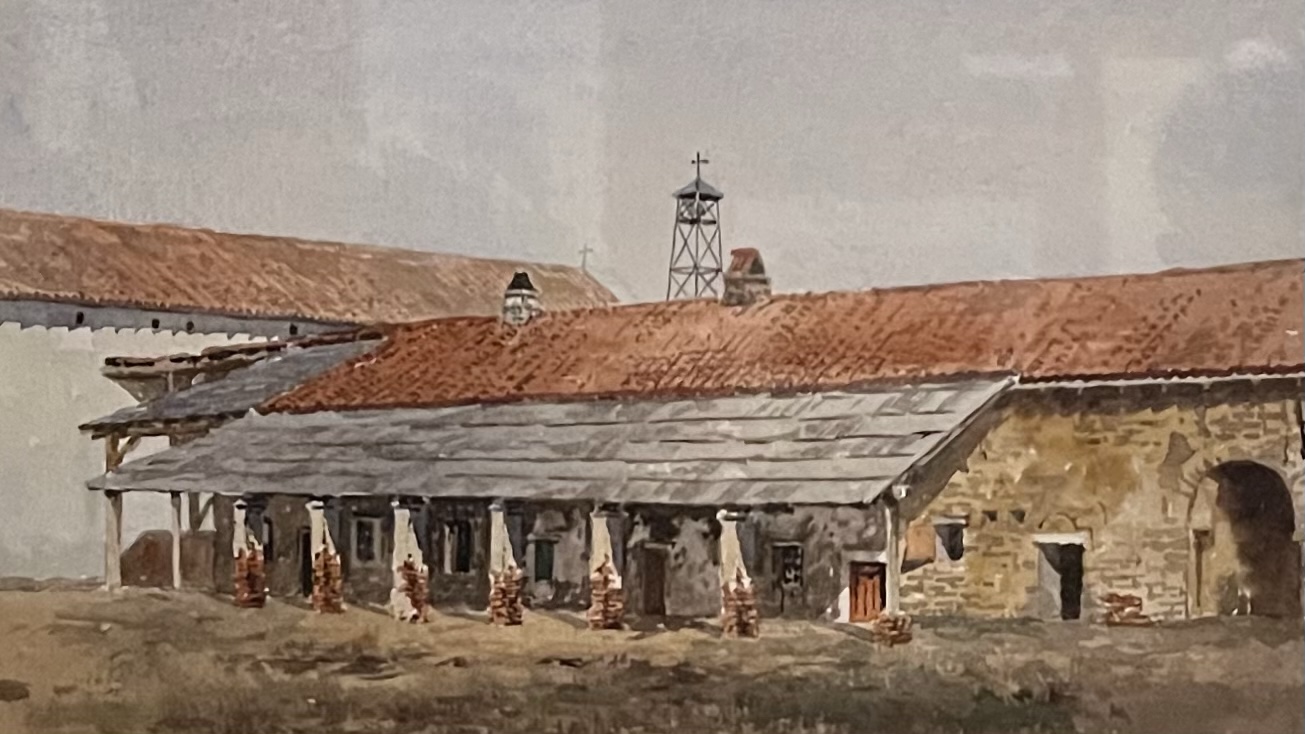
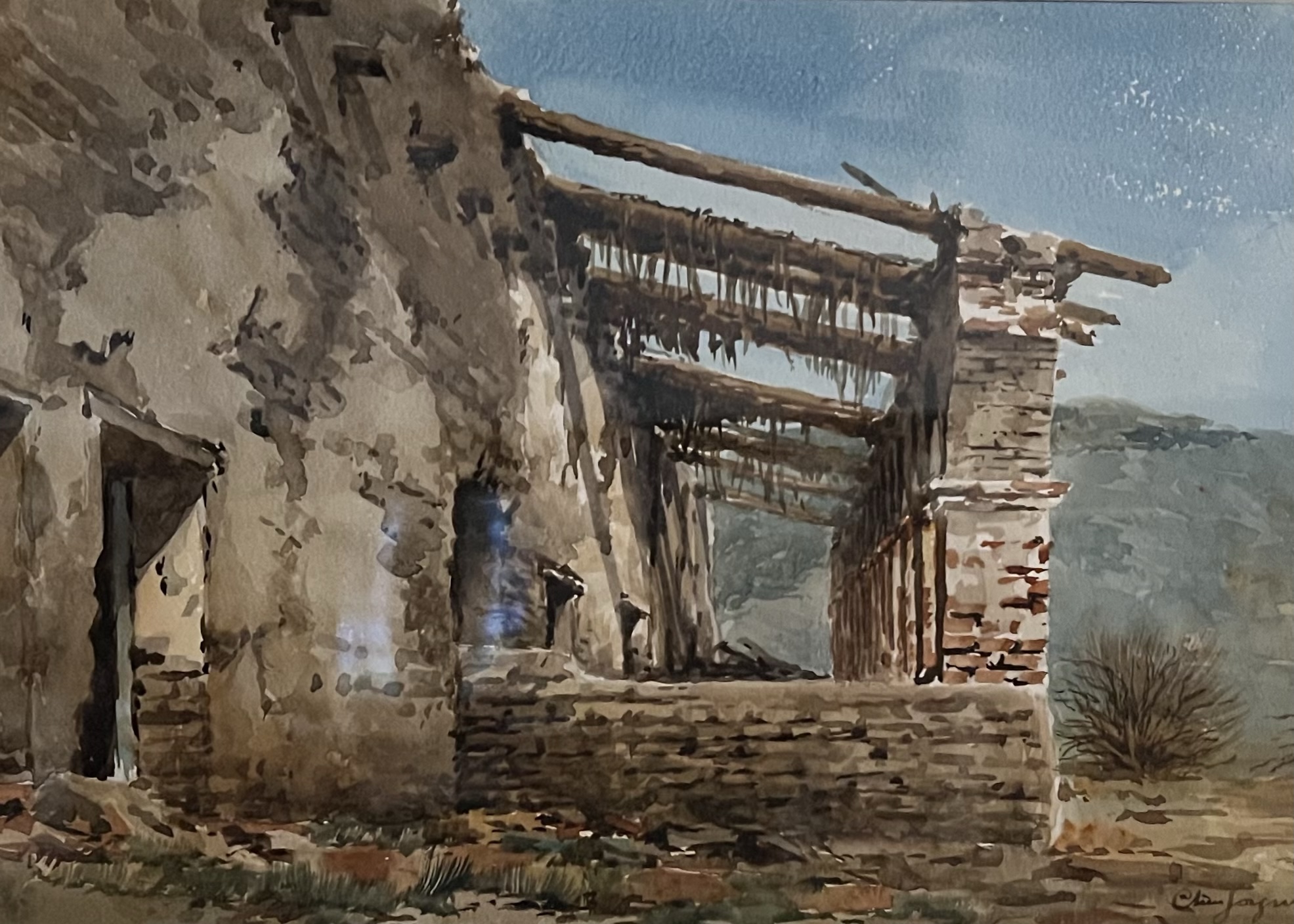
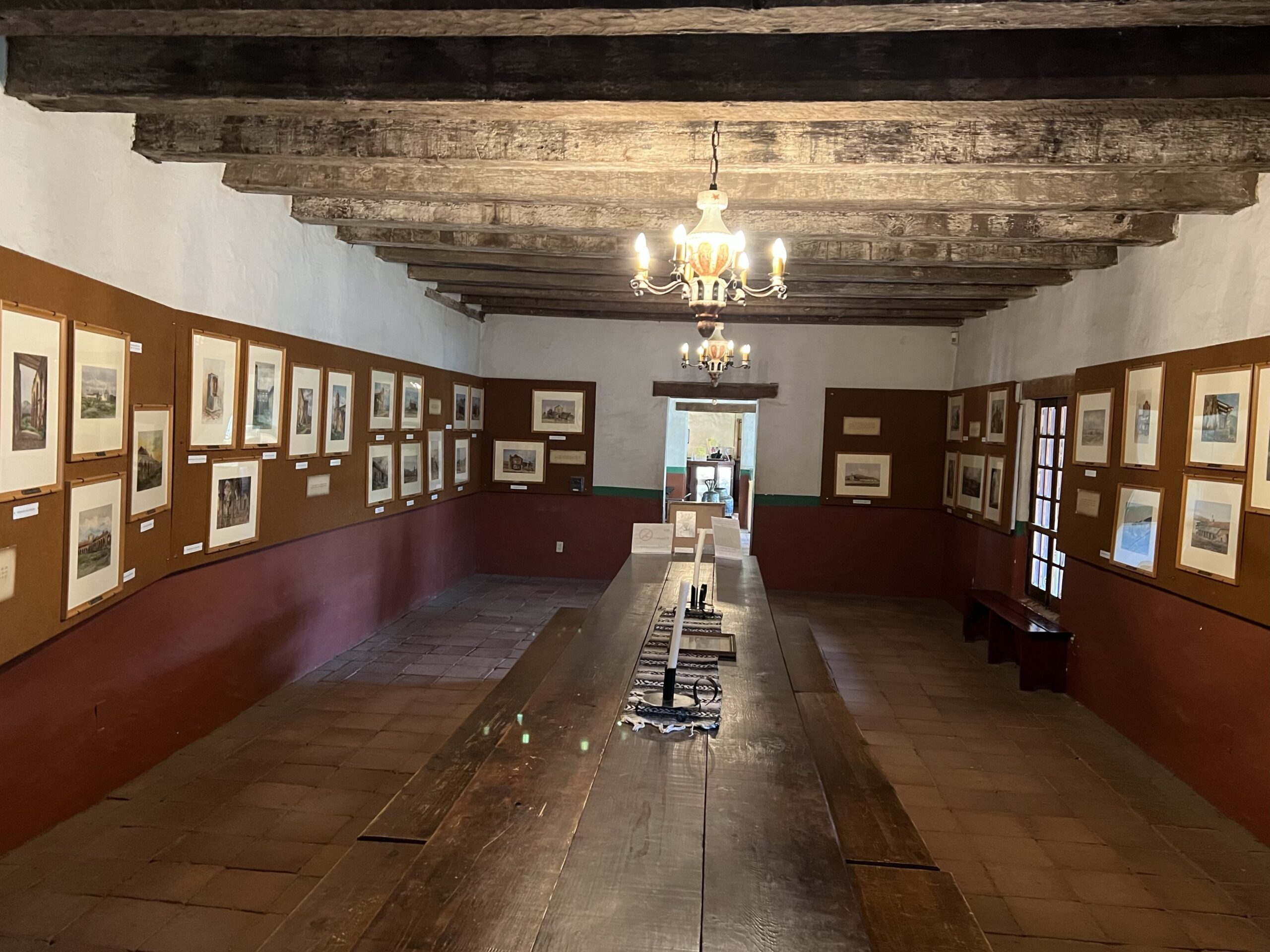
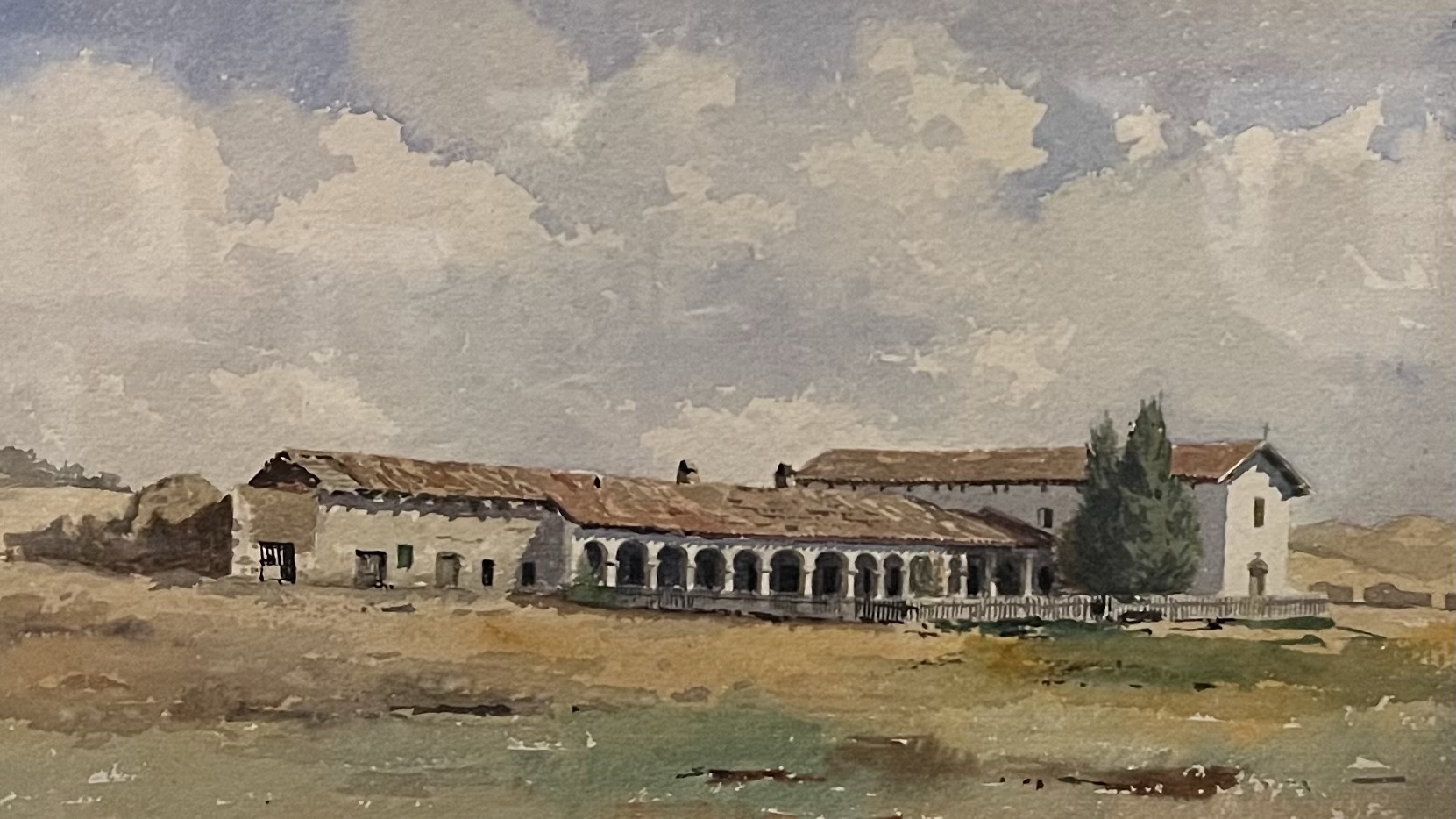
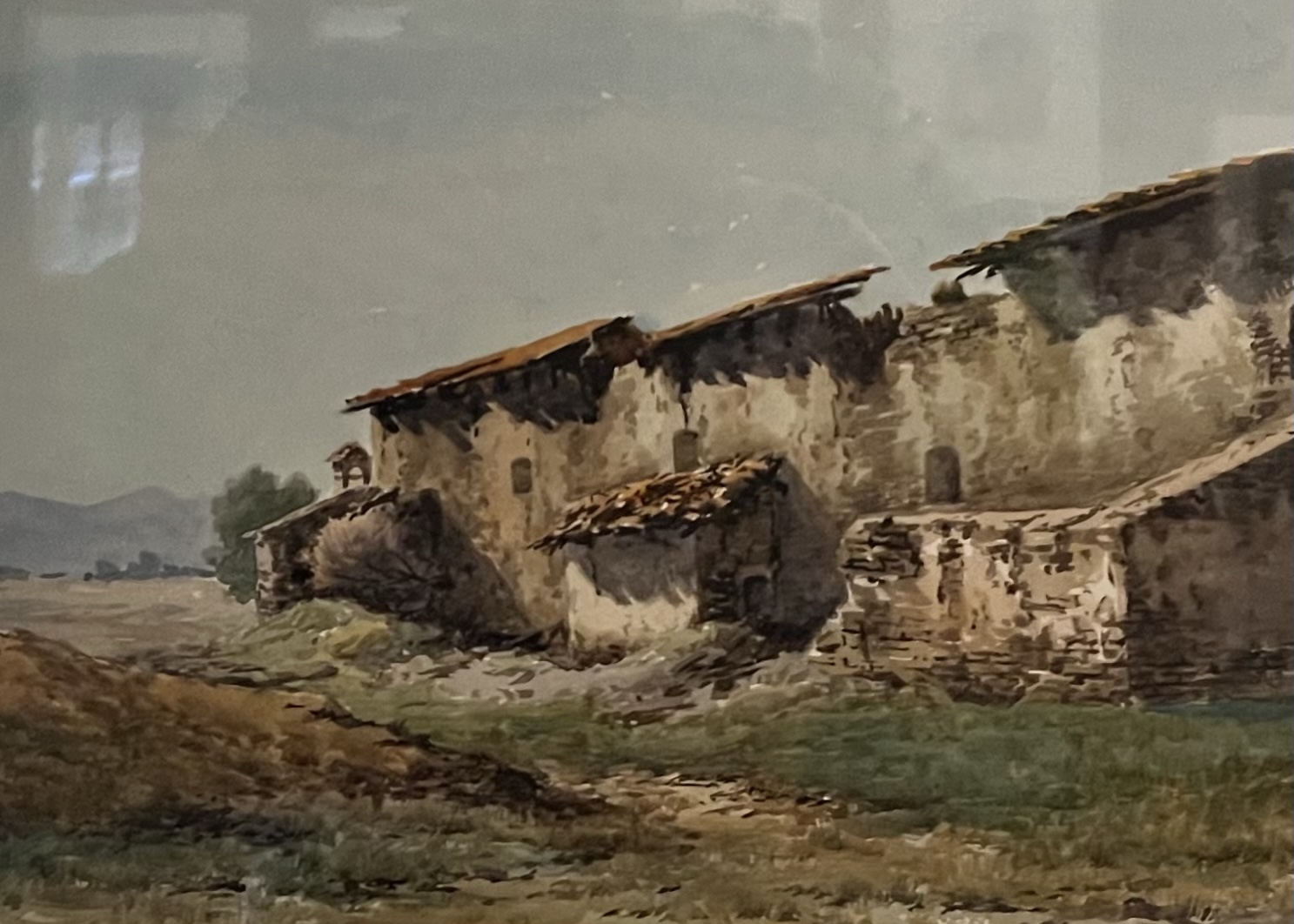
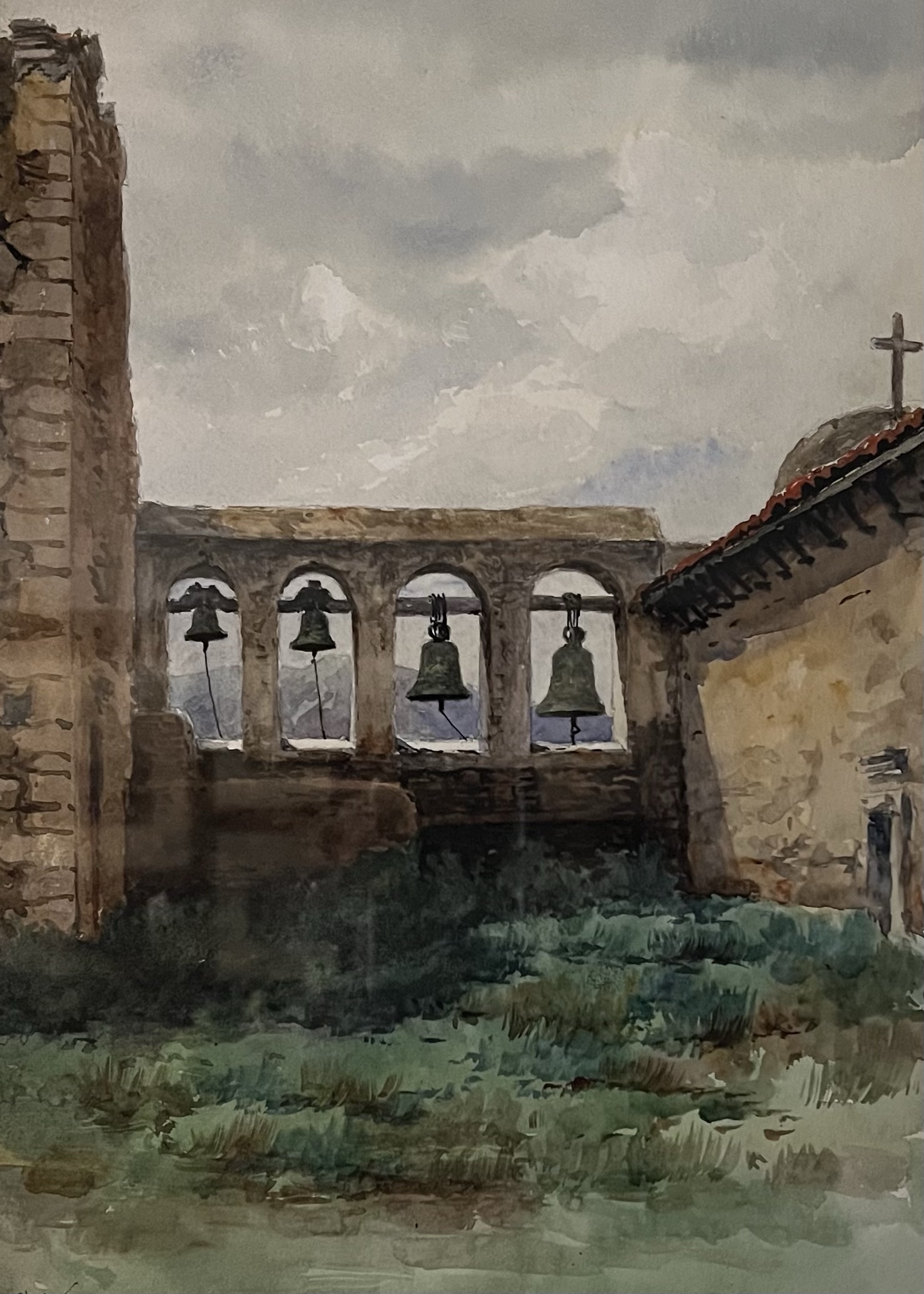
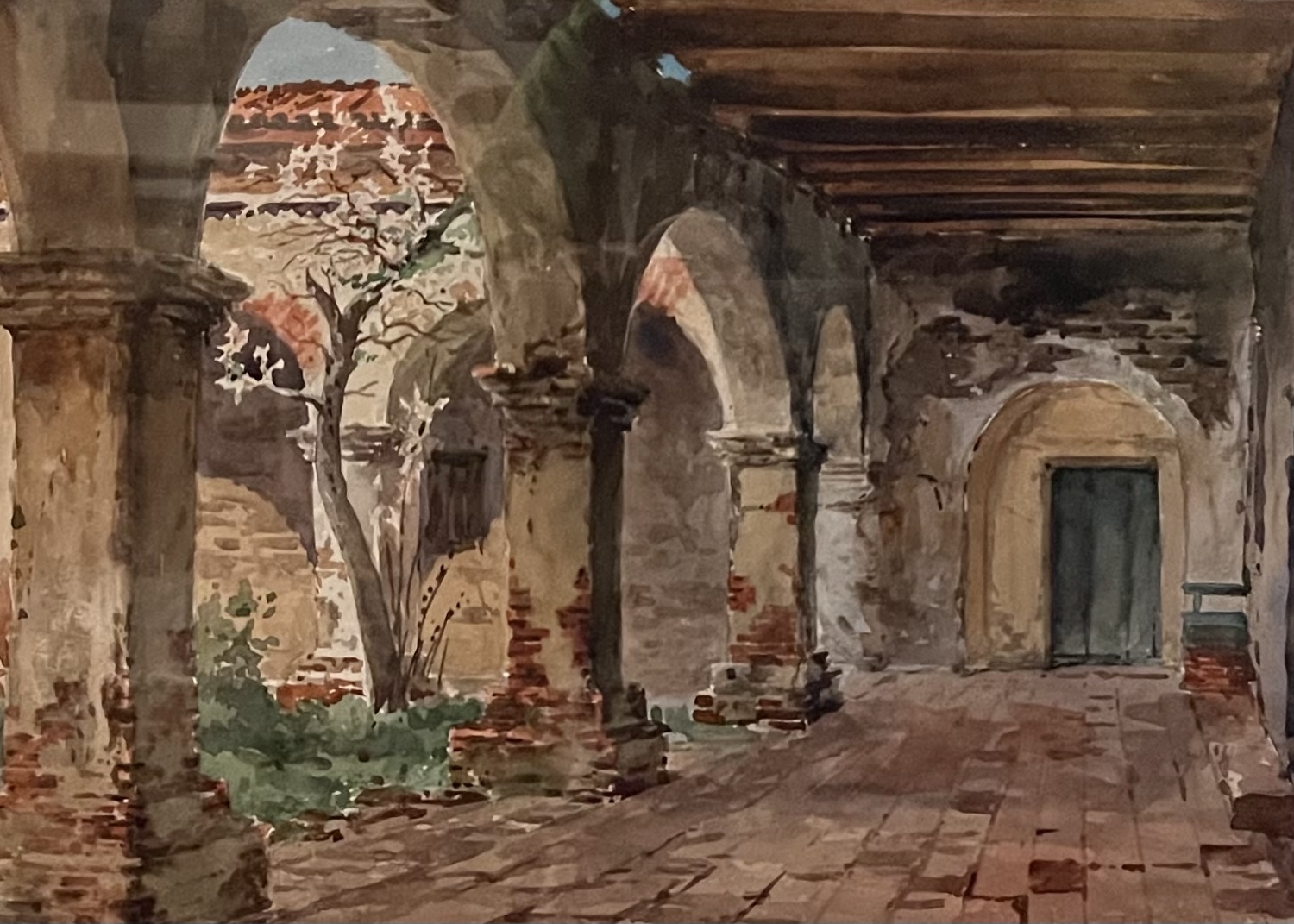
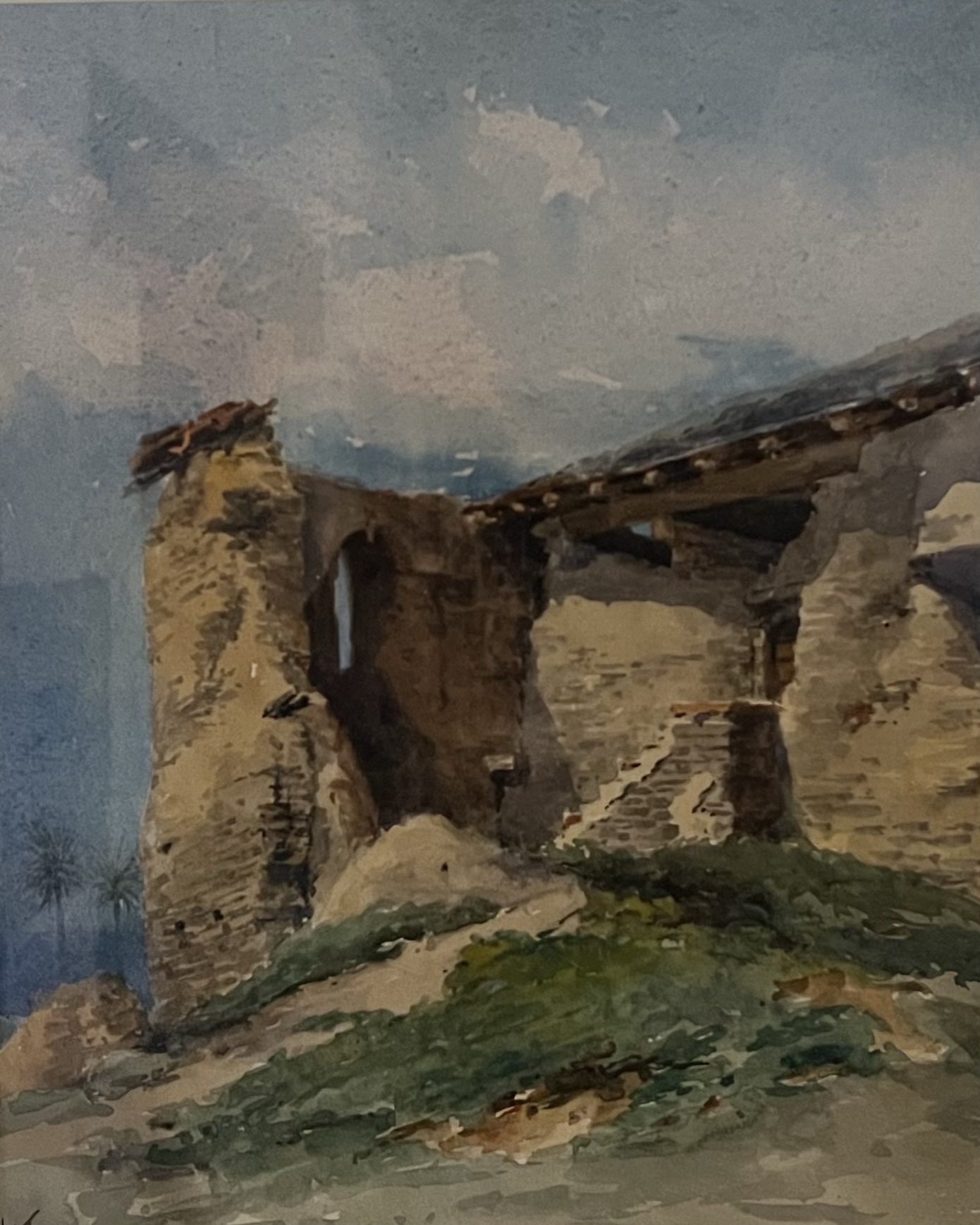
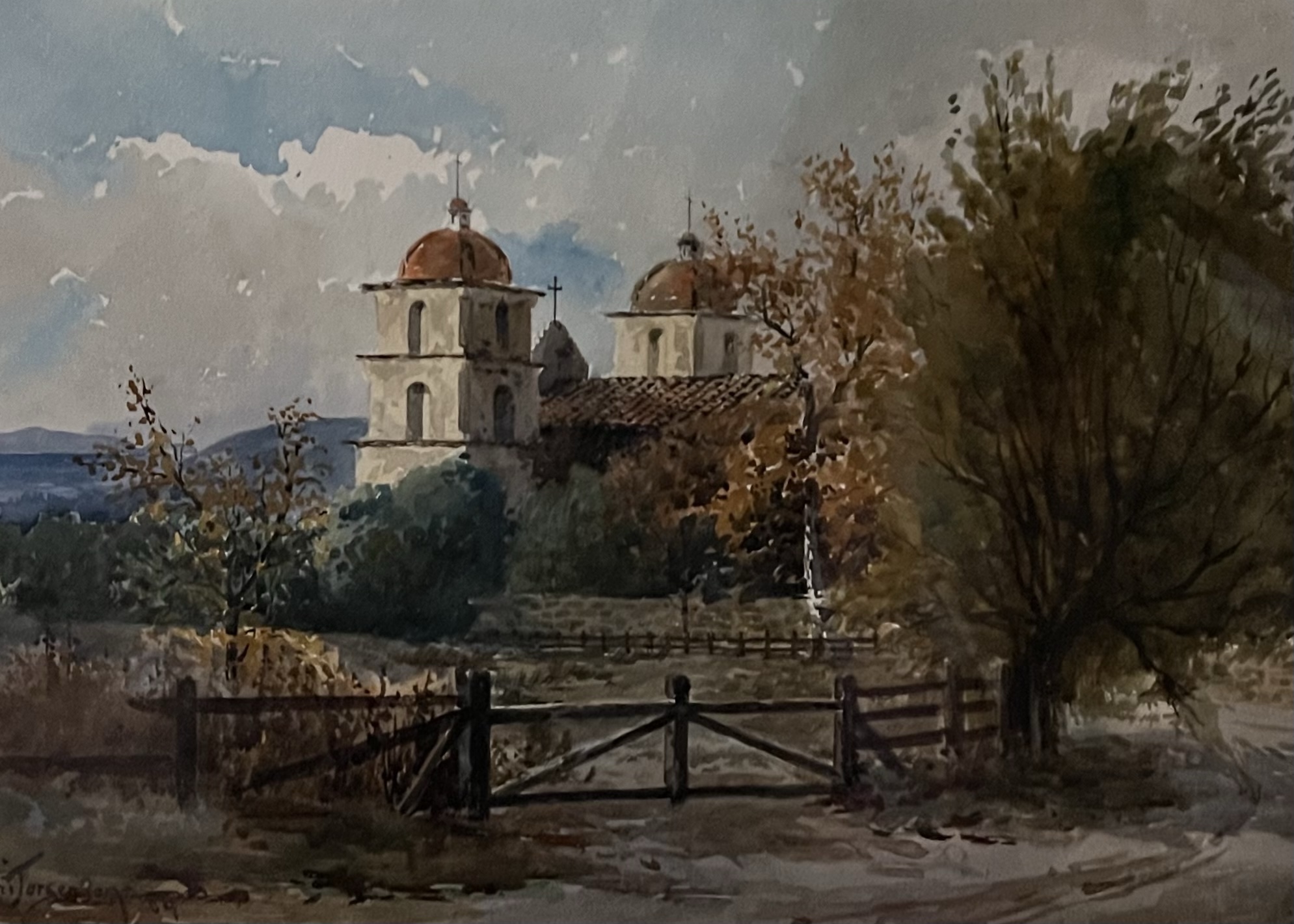
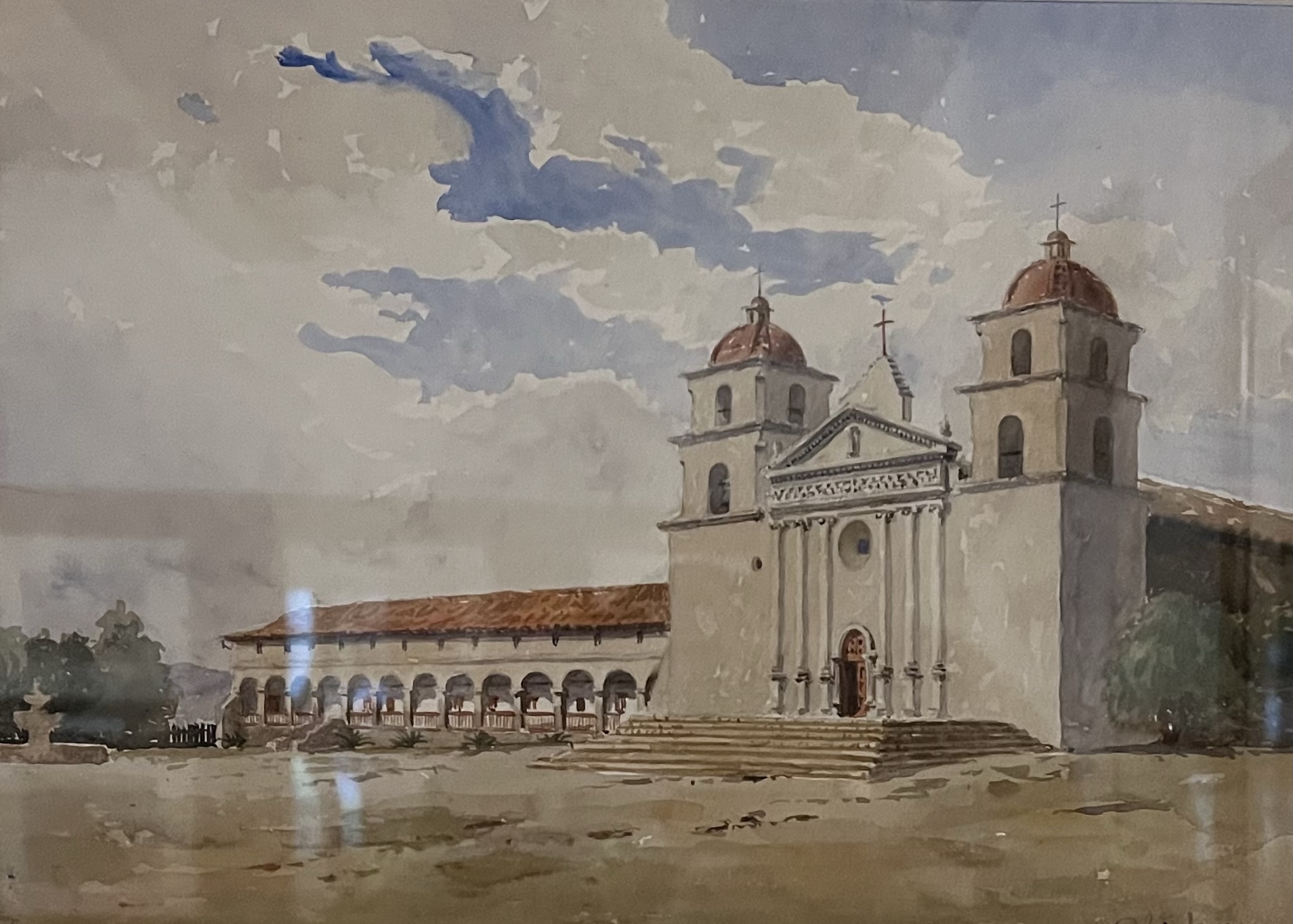
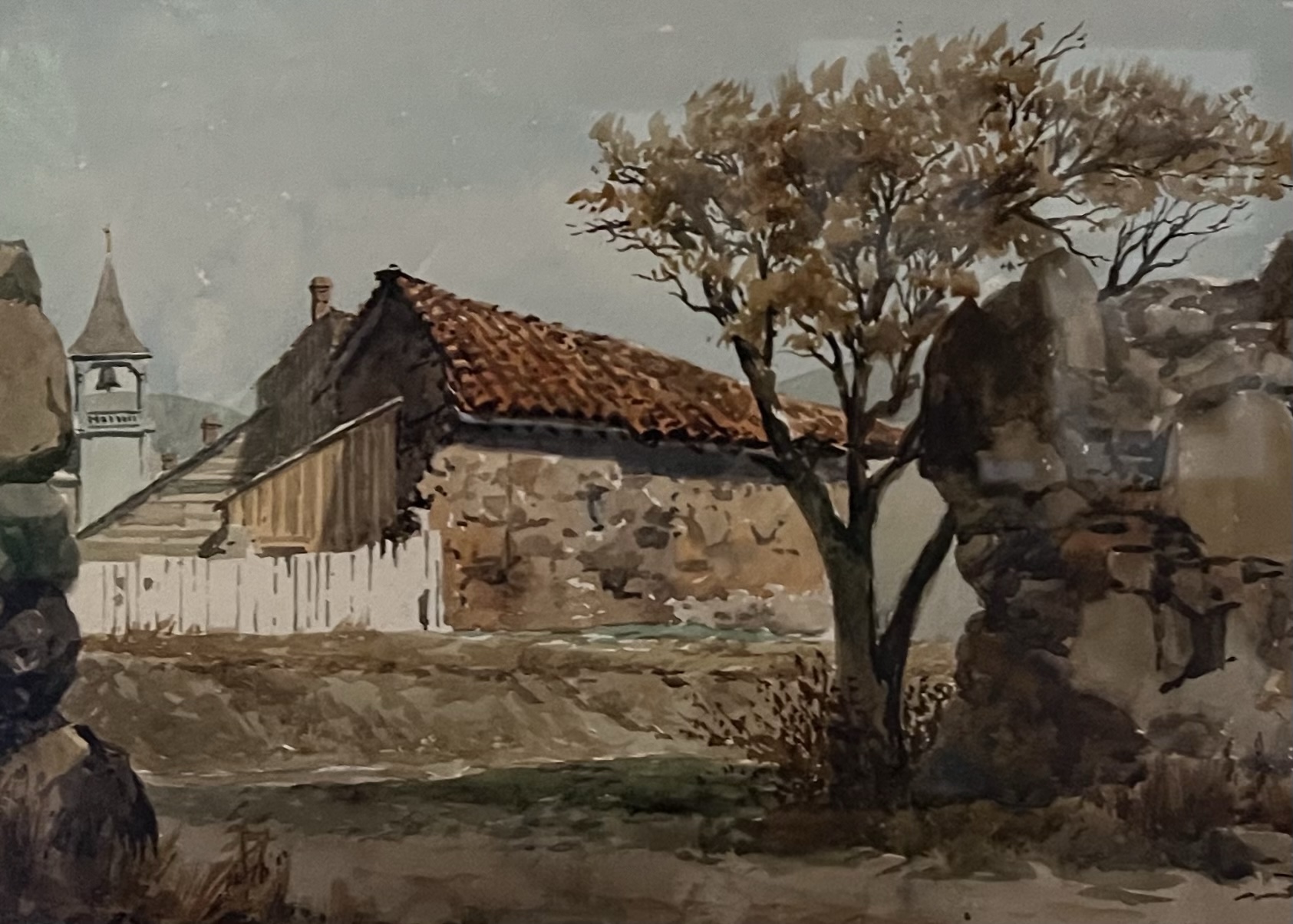
In 1874 The California school of Fine arts was opened, and Chris JORGENSEN was the first pupil to receive a scholarship. His work has been shown at the Bohemian Club and at many well-nown galleries throughout America. Water-colors shown at Mission San Francisco Solano were painted on a journey taken by the artist and his wife in 1903 to 1904 prior to any restoration work.
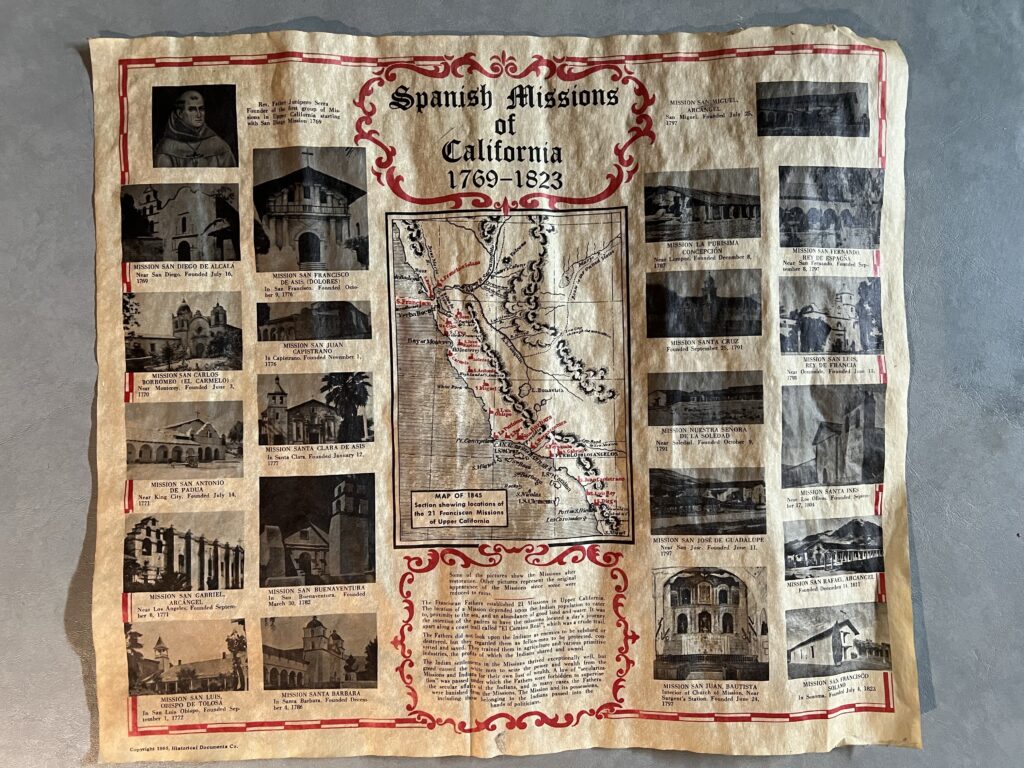
Mission San Rafael, ArcangleRoof Tiles Mission San Francisco SolanoMISSION SAN ANTONIO do PADUAChris Jorgensen exhibitMission San Miguel ArcangelMISSION SAN ANTONIO de PADUAMission San Juan CapistranoMission San Juan CapistranoMISSION SAN FERNANDO REY DE ESPANAMission Santa BarbaraMission Santa BarbaraMISSION SAN LINS OBISPO de TOLOSA
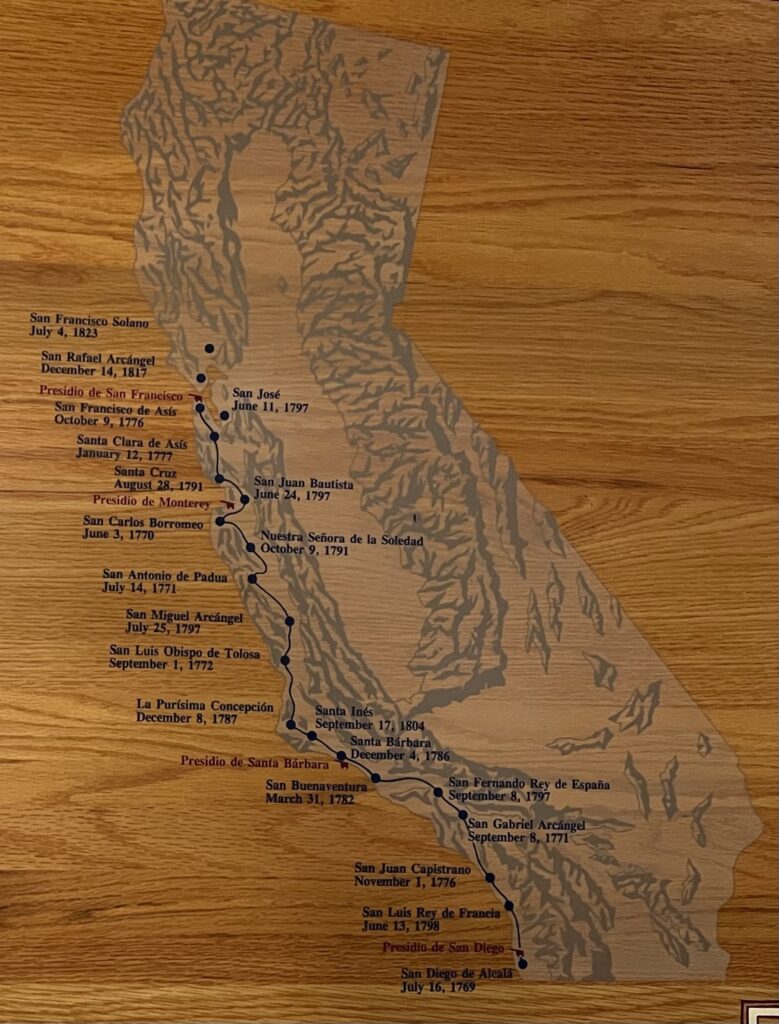
In 1769 a small group of Spanish soldiers and Franciscan priests set out to accomplish a momentous task — the expansion of Spain’s empire into Alta California. They trekked northward from the Baja peninsula to establish small colonies and convert native inhabitants to Catholicism. By 1823 a chain of 21 missions stretched from San Diego to Sonoma. For the first time, the mission system brought European culture to coastal California, drastically affecting the lives of the Native Americans.
Today the legacy of the Spanish missions is found throughout California. Several mission sites grew into large cities — San Diego, Los Angeles, Santa Barbara, and San Francisco. Many California cities, towns, and streets bear Spanish names. Mission-style architecture can be seen in almost every community.
Perhaps most important, the mission fathers introduced such crops as wheat, cotton, peaches, and grapes, laying the foundation of California’s vast and vital agricultural industry.
State of California • The Resources Agency Department of Parks & Recreation
Regular Mass times occur at St. Francis Solano Catholic Church location with services in both English and Spanish. The mission’s grounds host tours and historical exhibits documenting colonial California and Native American neophyte experiences.
Sonoma State Historic Park
WELCOME! Nestled in the heart of California’s picturesque wine country, this park offers a unique experience spread across multiple historic sites near Sonoma Plaza, including Mission San Francisco Solano, Blue Wing Inn, Sonoma Barracks, Toscano Hotel, Casa Grande Servants’ Quarters, and Toscano Kitchen. San Francisco Solano was founded on the traditional homeland of the Coast Miwok people. The only mission founded under Mexican rule, it was also the northernmost and most short-lived of all the California missions. Immerse yourself in Lachryma Montis, the home of General Vallejo. Discover the birthplace of the California Bear Flag at the Sonoma Barracks. Sonoma State Historic Park (SHP) offers the opportunity to explore California’s storied past in the scenic setting of a historic plaza surrounded by charming shops and restaurants. Extend your visit to Vallejo’s Petaluma Adobe, included with admission to Sonoma SHP.
The roughly 59 acres that currently comprise the nearly 200 year old home and surrounding grounds of Lachryma Montis are part of Sonoma State Historic Park (SSHP). This was the residence of General Mariano Guadalupe Vallejo and his wife Francisca Benicia Vallejo, as well as their children and various grandchildren. Prior to the Vallejo’s coming to live here, the area was the site of a Native American village. Native American servants worked at the property and the Vallejo’s also employed Chinese cooks and houseboys.
The Vallejo’s named Lachryma Montis using a Latin translation of the Native American name for the property called Mountain Tear (or Tears of the Mountain). The home was named after the natural springs on the hillside which provided the water for the family’s purposes and which later served as a source of the Town of Sonoma’s first water company. Over the years, the Vallejo’s grew a wide variety of fruits, vegetables and nuts, including grapes, cherries, peaches, pears, plums, almonds, apples, apricots, nectarines, figs, oranges, mulberries, olives, lemons, limes, pomegranates, pomelos, quince, and chili peppers. They even had a banana tree. SSHP is fortunate in that the home and grounds came into the Park system in 1933 directly from the family without interim owners living in the home and modifying it.
In November of 1849, 3 years after about 30 American settlers rebelled against the government and took over the town of Sonoma hoisting the Bear Flag, Vallejo purchases land that forms the beginning of the Lachryma Montis estate. Note that different sources list the acreage of Lachryma Montis variously as 500 acres, 257.5 acres, 59 acres, or some other figure. The differing size of the estate seems to depend on whether the acreage of certain features of Vallejo’s property, such as the vineyard named Quiquiriqui, are included as part of the home and grounds, and whether the acreage number reflects property sales by Vallejo’s heirs. Given that Vallejo purchased additional property over the years and also gave away some land to his children, the stated estate acreage varies with time. 257 acres is generally considered to represent the size of Lachryma Montis during Vallejo’s life.
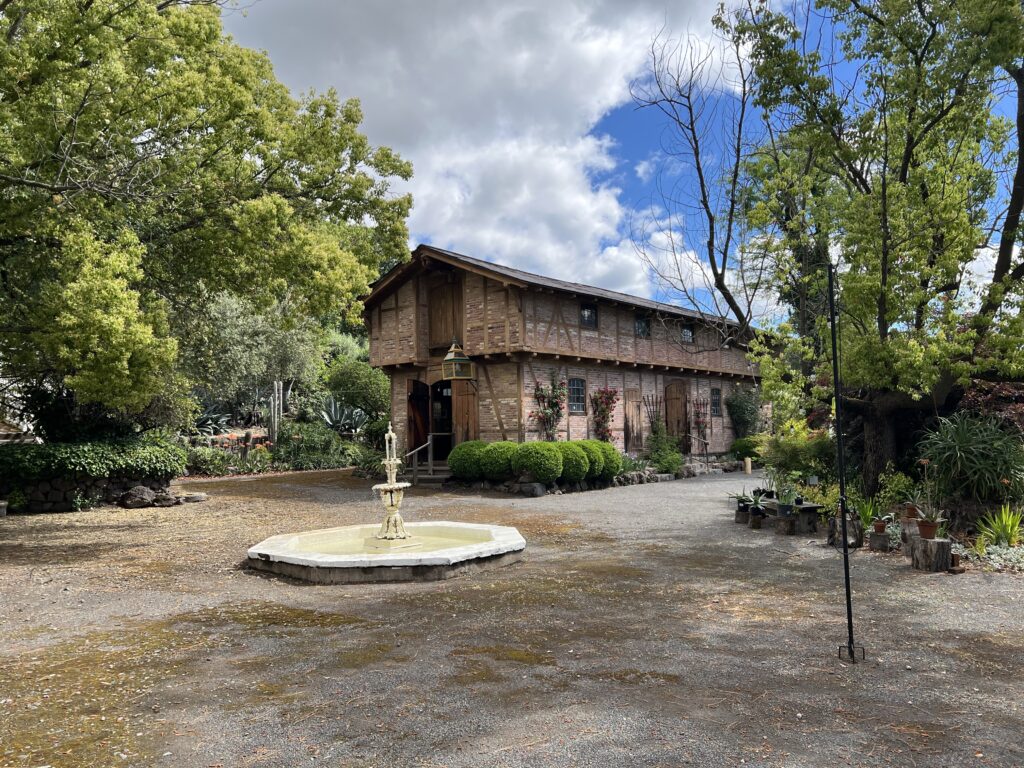
In May of 1850 Vallejo purchases the land where the Swiss chalet is built. The chalet was brought over from Switzerland and reassembled on the property. The brick facade was added, utilizing bricks that were used as ballast in sailing ships abandoned as the captains and crew raced off to the Gold Rush from the Bay Area. The downstairs of the chalet was utilized for crop and other storage while the upstairs served as a guest dormitory.
In 1850, The home, chalet and reservoir are built. The Vallejo’s move in around 1852. The construction dates of the kitchen, Delirio, and Hermitage are not known for certain although the kitchen and Delirio were probably built in the 1850s. The Delirio, which loosely translates from Spanish as wild and crazy, was anything but that. Today we would call it a man cave, one in which Vallejo was able to achieve some peace and quiet to work on his writings. The kitchen was a separate structure from the house because at that time people cooked with fire and if there was a kitchen fire, you didn’t want the flames burning down the rest of the home. The Hermitage was built around 1860, and was where Vallejo’s teenage son Napoleon lived with his 14 dogs (pointers, setters and hounds), 2 monkeys, 3 cats and a parrot. It is likely that there were kennels behind the Hermitage to house some of his pets. The current Hermitage is a reconstruction of the original and is located slightly to the east of its original location on the hill.
There was no plumbing or electricity in the house during the Vallejo’s lifetime, hence the need for the (now non-existent) bath house which was located near the southwest corner of the chalet leading into the courtyard. The barn (which burned down in 1956) was located at what is now the far end of the parking lot; remains from the building foundation are still visible. An ornate, octagonal metal pavilion was once located north of the barn.
As a side note, Vallejo commissioned New England architect Andrew Jackson Downing to design and ship three similar prefabricated homes. One is Lachryma Montis in Sonoma, one is still located in Benicia (it was a wedding gift to his daughter Epifania and son-in-law John B.Frisbie), and one was originally owned by a Captain Schillibar in San Francisco but was destroyed in the great 1906 earthquake and fire.
1852: In August of this year Vallejo purchases land along 3rd Street West (what is now the long driveway leading to the house). In later years he owned the lots on both sides of the street and successfully purchased from the City the 3rd Street West roadway itself.
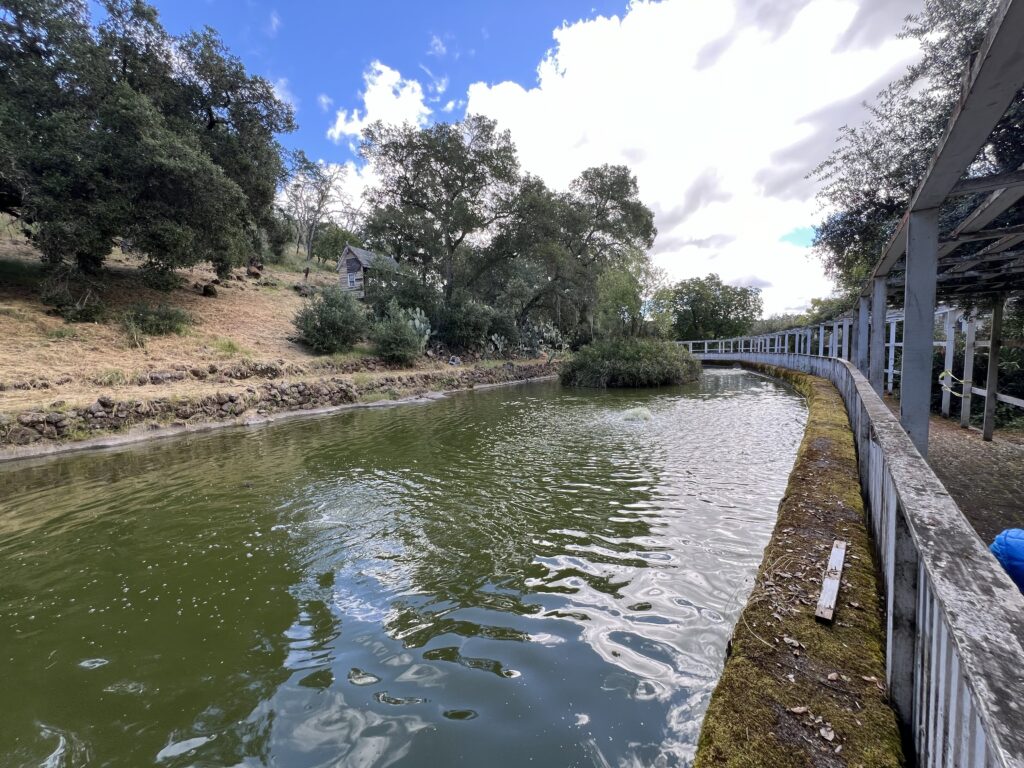
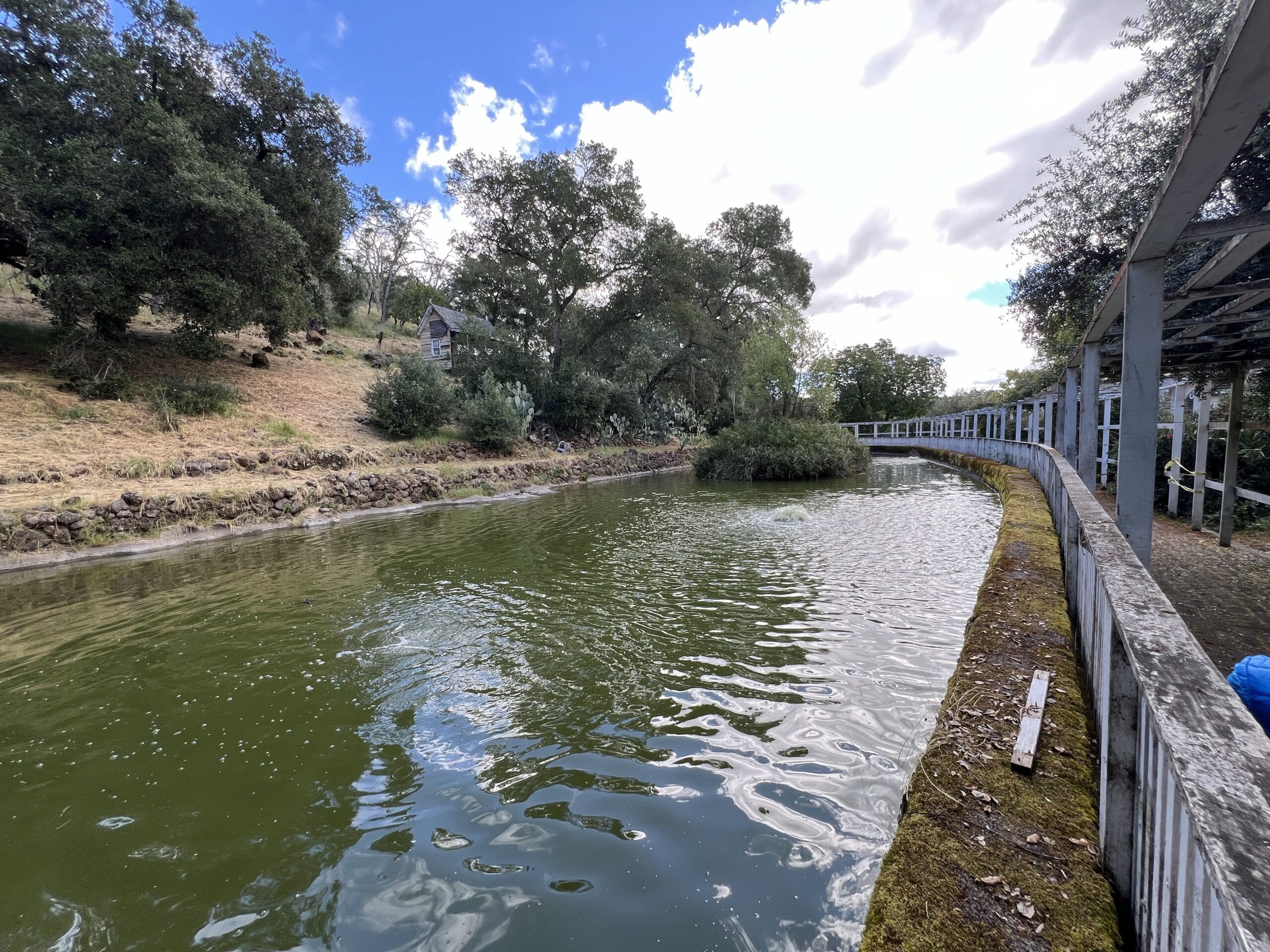
1856: Luisa Vallejo is born at Lachryma Montis on 1/27/1856. She is one of two of the Vallejo children born at Lachryma Montis, along with Maria in 1857. Their older brothers teased them and called them “Little Yankees” as they were born after California became part of the United States. It is at this time that Vallejo constructs a large pond on the hillside to serve as a storage basin for the spring waters.
1857: Maria Vallejo, the Vallejo’s last child, is born at Lachryma Montis on 05/08/1857. Many years later, Luisa and Maria are the driving forces within the Vallejo family in efforts to turn the homesite into a State Park.
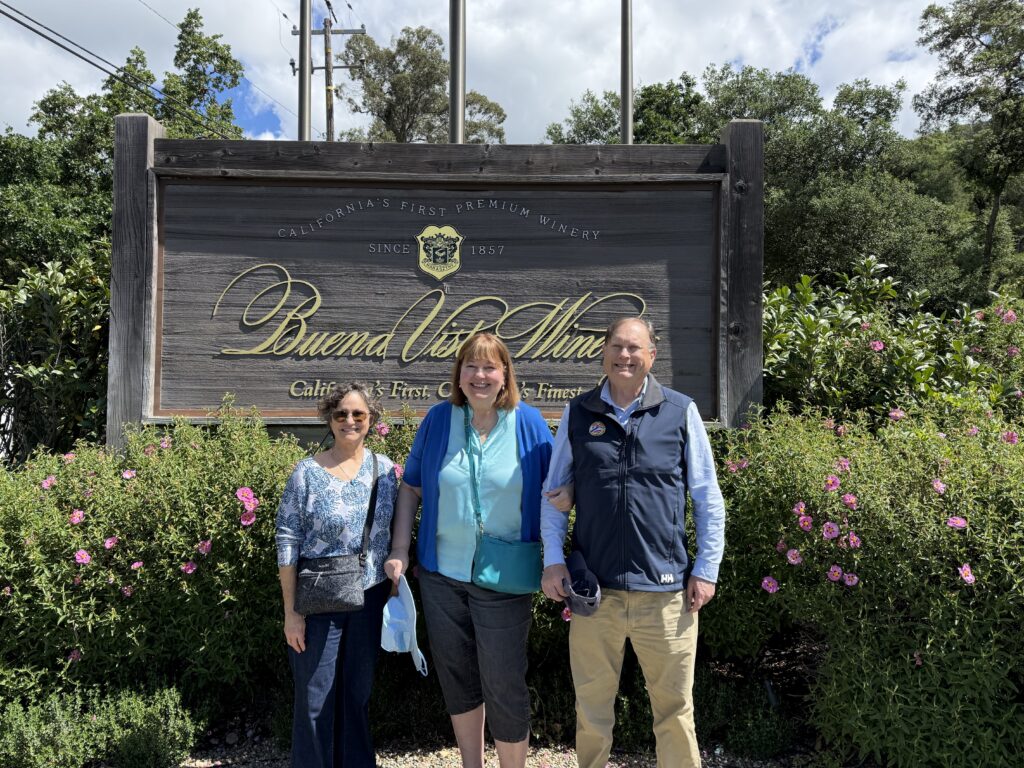
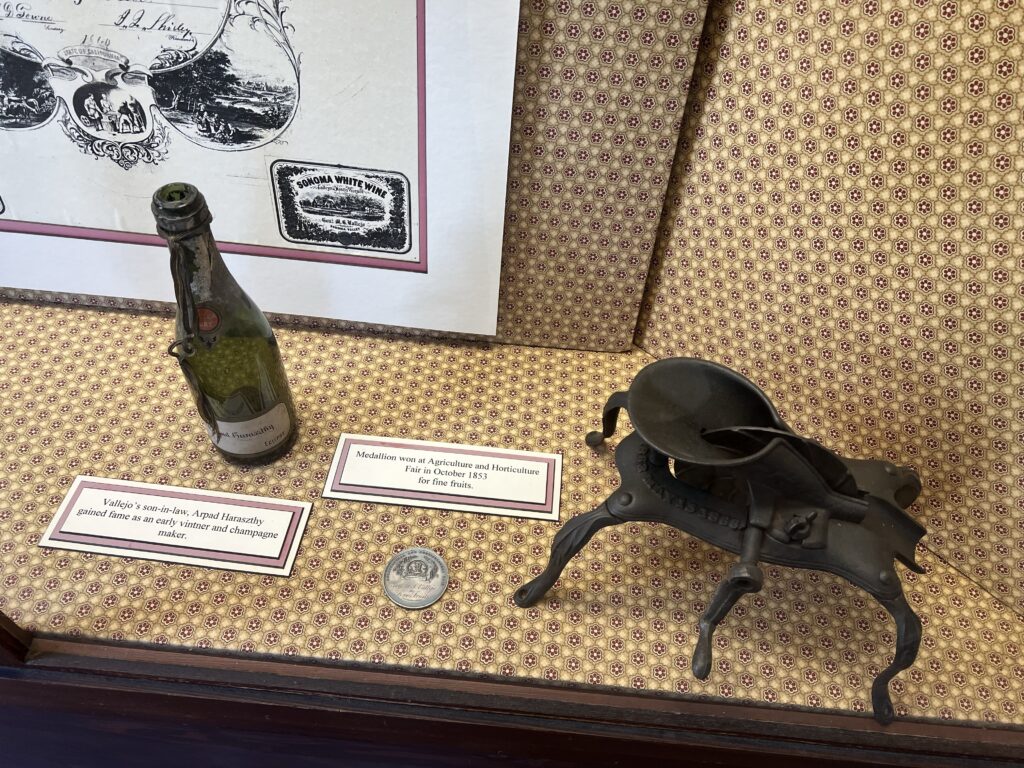
1860: By this year Vallejo has established a vineyard at Lachryma Montis which was located on the east side of the 3rd Street driveway entrance. Three years earlier the nearby Buena Vista Winery, the first winery in California, had been established by Agoston Haraszthy.
1860s: Francisca helps with the family struggling finances by selling produce from the property (grapes, apples, figs, dried fruit, olives, chili peppers, various vegetables) and eggs.
July 1862: Vallejo mortgages Lachryma Montis (59.9 acres at that time) and the adjoining vineyard to Thomas Madden, a lawyer friend of his son-in-law John Frisbie. Needing income, he turns to leasing out the vineyards, orchards and cultivated lands.
1864: Upon a portion of 122 acres adjoining Lachryma Montis that Vallejo gave his daughter Natalia, her husband Attila Haraszthy built the house which today is called “The General’s Daughter” but which was known back then as “Willows Wild”. The reason that it looks so similar to Lachryma Montis is that Haraszthy borrowed that home’s blueprints to use as the inspiration for this home.
1866: Unable to repay his loan to Madden, Vallejo deeds over Lachryma Montis and the adjoining vineyard to him. Madden agrees to rent Lachryma Montis back to the Vallejo’s for 5 years and to return the property within the same 5 years if Vallejo pays back the money owed him.
1871: Vallejo’s son-in-law, business partner and financial advisor (to whom he had given power of attorney John Frisbie redeems the property in 1871.
1872: On 04/12/1872, Frisbie transfers ownership of the Lachryma Montis and the Quiquiriqui vineyard properties to Vallejo’s wife, Francisca.
1873: The Town’s first water company is created, utilizing water from Lachryma Montis’s springs, which is stored in an expanded, previously existing pond (where the reservoir is now located) on the hill behind the home. The Vallejo family operates the Sonoma Water Works, providing a portion of the town’s water supply, for the next 50 years. The original boundaries of the
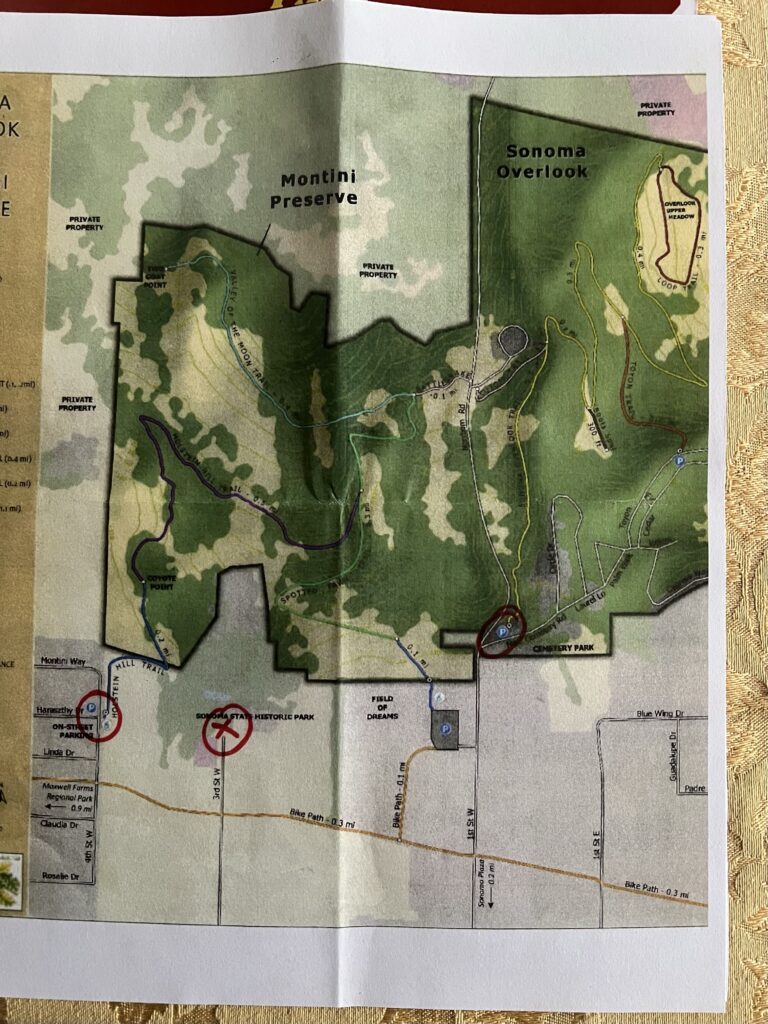
1936: Montini who had previously rented it from Vallejo as pasture for Montini’s dairy cows. This land eventually grows into the Montini Open Space Preserve. Park restoration work on the property begins. Lachryma Montis acreage also contain Vauejo’s quarry, which is currently part of the Montini Preserve property and not a part of the land the State Park acquired. Basalt blocks from this quarry were used in paving the streets of San Francisco.
1876: The Vallejo’s take in boarders to help make ends meet.
1881: In an effort to raise funds, Vallejo sells a swath of land running across his property to the local railroad, the railroad having come to Sonoma in 1879. Today, this land is part of the walking and bicycle trail in front of the house.
1890: Mariano Vallejo dies on 1/18/1890 at age 82. He is buried at Mountain Cemetery.
1891: Francisca Vallejo dies a year later on 1/30/1891 at age 75. She is buried alongside her husband at the nearby Mountain Cemetery. The two youngest daughters, Luisa Vallejo Emparan and Maria Vallejo Cutter, inherit the family home and surrounding property.
1902; Needing the income, Luisa and Maria sell off some of the land surrounding Lachryma Montis.
1910’s: Two water tanks are built on the hill above the springs and the reservoir goes dry as it is no longer used to store water for the town.
1919: Luisa, as President of the Sonoma Valley Woman’s Club, opens the gardens of Lachryma Montis for Club meetings and begins showing off some of Vallejo personal items for a small fee, the proceeds of which went to the Woman’s Club.
1923: Luisa begins operating a small museum on the property, providing visitors with a look inside the home and a look at a growing number of the Vallejo’s heirlooms that she has gathered together.
1925: Maria and Luisa sell Lachryma Montis’ water system to the Sonoma Water and Irrigation Company. The Vallejo’s retain ownership of the (now dry) reservoir. A 1921 inventory lists the reservoir as 10 feet deep at that time (a physical survey in 1949 found the masonite bottom to be at an average 5 foot depth). At some point in time between 1913-1925 the west (left) end of the reservoir is removed and a concrete wall built that forms the new end of the reservoir that visitors see today.
1932: On 3/10/1932 Maria dies. On 6/1/1932, Lachryma Montis (under the name General M.G. Vallejo Home) is designated as California Registered Historical Landmark No. 4.
1933: A little over 19 acres of the Vallejo estate is purchased from Luisa and from Maria’s heirs by California State Parks on 6/05/1933. This acreage includes the Main House, Kitchen, Chalet, Reservoir and some of the hillside together with the Hermitage, the entrance road along 3ra Street West, plus a narrow strip of land on both sides of the road. Additional land purchases in 1947, 1959, 1972, 1974, and 1978 bring the total acreage of the State Park’s Lachryma Montis holdings to 58.9 acres.
1933-1943: Luisa continues to live at the Park in the Chalet which functions as a museum of family artifacts, serving as its first curator in her 70’s and 80’s until her death in 1943. As of 1950, the house was being used as Park District headquarters.
1934: 238 acres of land surrounding the Park, including the barn, are sold by Luisa to William Montini who had previously rented it from Vallejo as pasture land for dairy cows.
1936: Park restoration work on property begins.
1943-1950: Luisa’s son, Ricardo Raoul Emparan (Vallejo’s grandson), serves as temporary curator at Lachryma Montis until 1947 and then as custodian at the Park until he retires in 1950. His wife, Madie Brown Emparan, serves as curator from 1947 until 1962.
1950s: The Reservoir and the Delirio are rebuilt and the lath house is constructed in the location of the old hennery. In 1950, the Herz concert grand-piano, reportedly one of the first three pianos to arrive in California, is returned to its home at Lachryma Montis, courtesy of a granddaughter of Vallejo’s daughter Fannie, whose name was Juana Sequeira de Carral. This piano had originally been purchased by Vallejo from Stephen Smith of Bodega and was used by the German musician Andrew Heoppner, to teach the Vallejo children piano at Vallejo’s previous residence in Sonoma, the Casa Grande.
1956: The old barn burns down.
1962: A new vineyard is planted, to visually represent to visitors the vineyards of old that previously existed at Lachryma Montis.
2026: California State Parks continues to manage the property, with assistance from local volunteers who help maintain the grounds and members of the Sonoma Petaluma Parks (SPParks) Organization that helps coordinate and present community events.