Yes, the United States is a maritime nation. Its geography, economy, security, and culture have been molded by the sea from the beginning. The Atlantic and Pacific coasts, the Great Lakes, and the vast river systems did not just edge the country; they helped build it, connecting regions, moving people and goods, and enabling the nation to grow into a global power. Maritime history did not simply support the U.S.—it helped create the nation it is today.
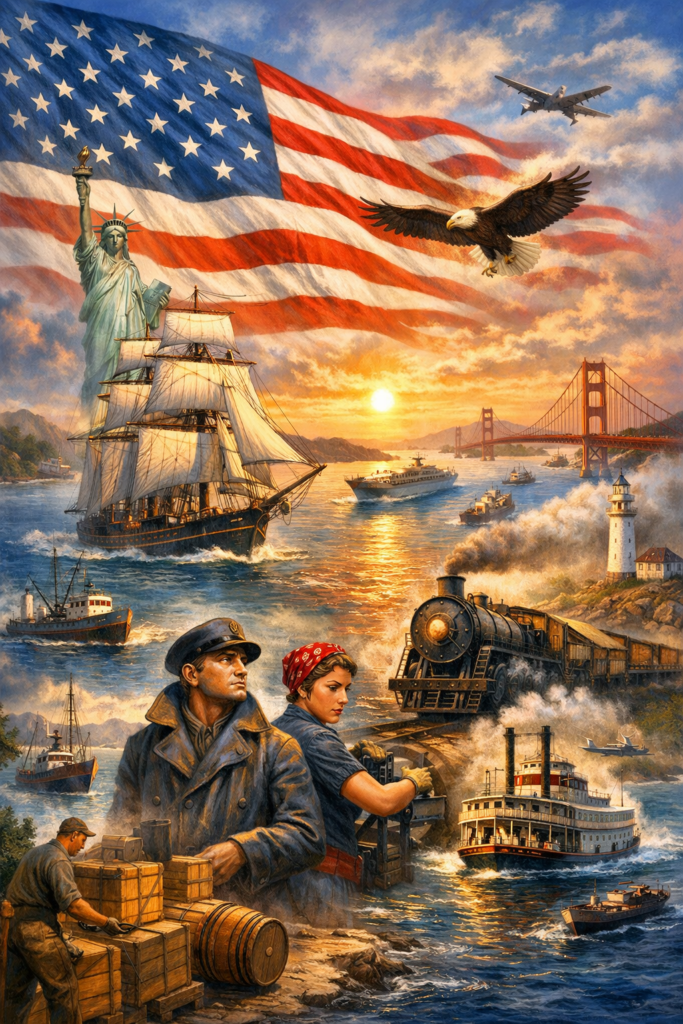
The Sea as Engine of Development
Lincoln Paine, in The Sea and Civilization: A Maritime History of the World, argues that the sea is one of the main engines of civilization. Civilizations rise or fall in relation to their ability to move people, goods, languages, and institutions across water. In the American case, maritime systems tied the colonies into Atlantic trade networks, tied the growing republic together internally, and later linked the nation to the Pacific and global markets. The United States grew not only by crossing land but by using water—rivers, coasts, ports, shipyards, and ocean routes—as the backbone of national development.
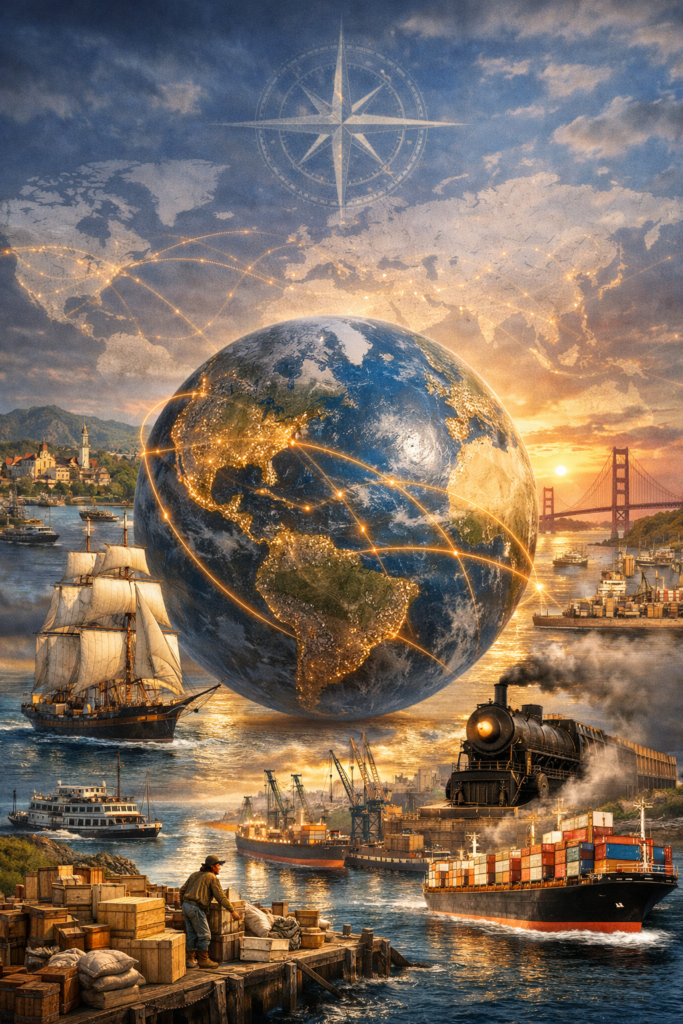
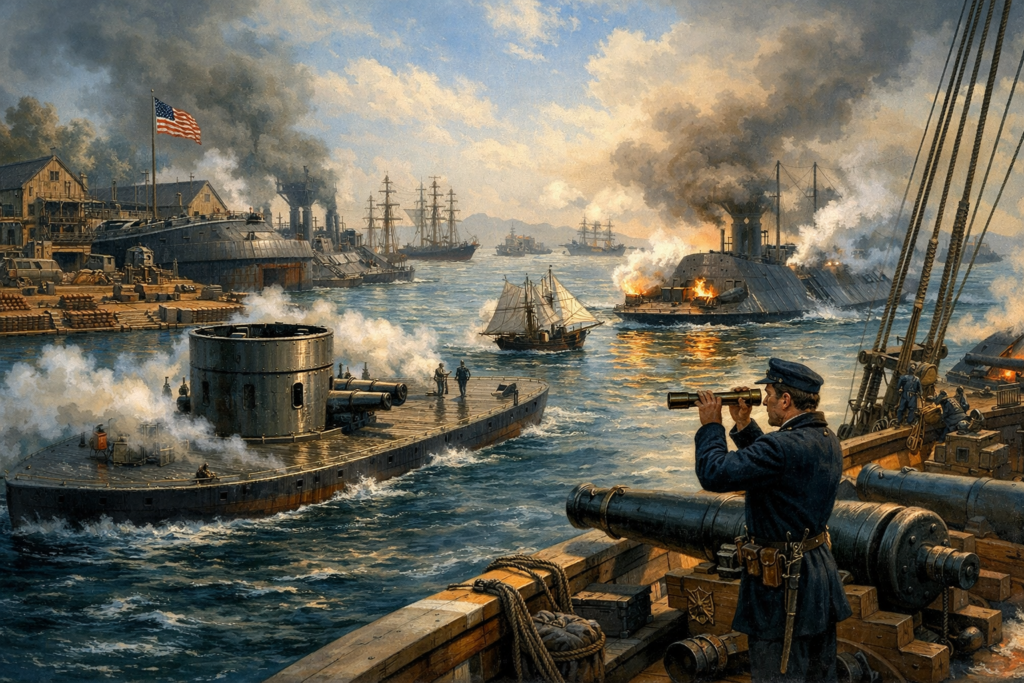
Civil War and Shipbuilding
The Civil War demonstrated how decisive maritime power could be for national survival. The Union used its industrial and shipbuilding capacity to construct warships, enforce blockades, and control rivers and coastal waters. Ironclads like the USS Monitor marked a new era of naval warfare, showing that industrial shipbuilding had become a core national capability. Control of waterways, shipyards, and naval logistics mattered as much as battlefield victories because they determined supply, mobility, and strategic advantage. In Paine’s framework, the war confirmed that maritime power could shape the outcome of a national conflict.
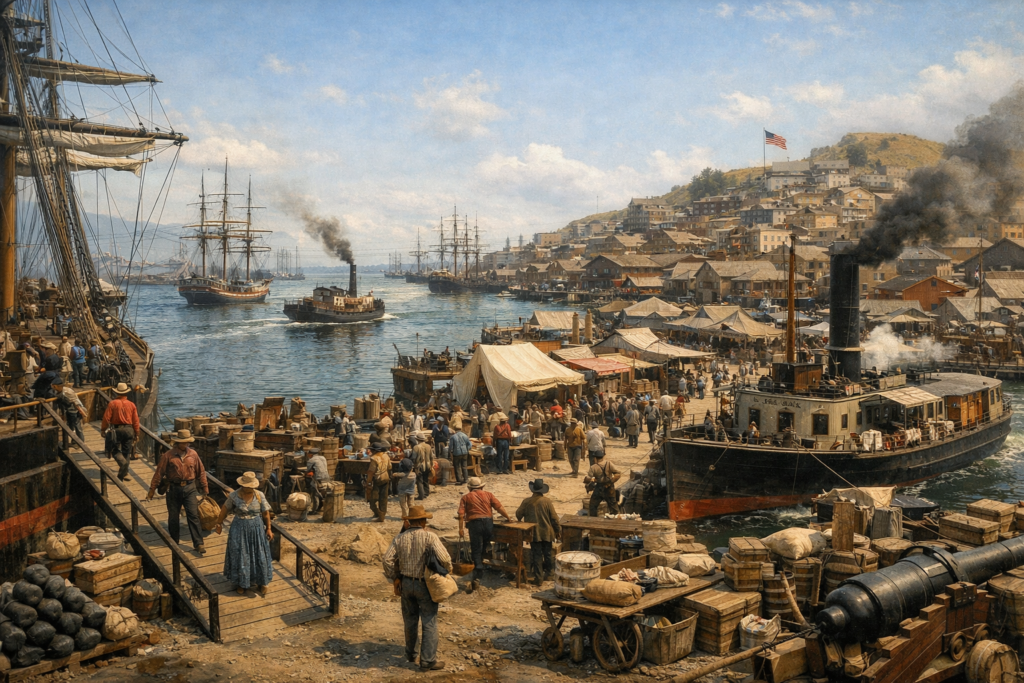
The Gold Rush and Westward Expansion
The California Gold Rush shows how maritime access enabled rapid westward growth. Ships carried thousands of migrants, supplies, and capital around Cape Horn or across Panama, turning San Francisco into a maritime gateway rather than a remote frontier town. Ports and shipping accelerated territorial consolidation and made the Pacific coast economically legible to the nation. In this sense, maritime routes were not just a side effect of the Gold Rush; they were a primary reason it could transform the American West so quickly.
Immigration and the Nation’s Diversity
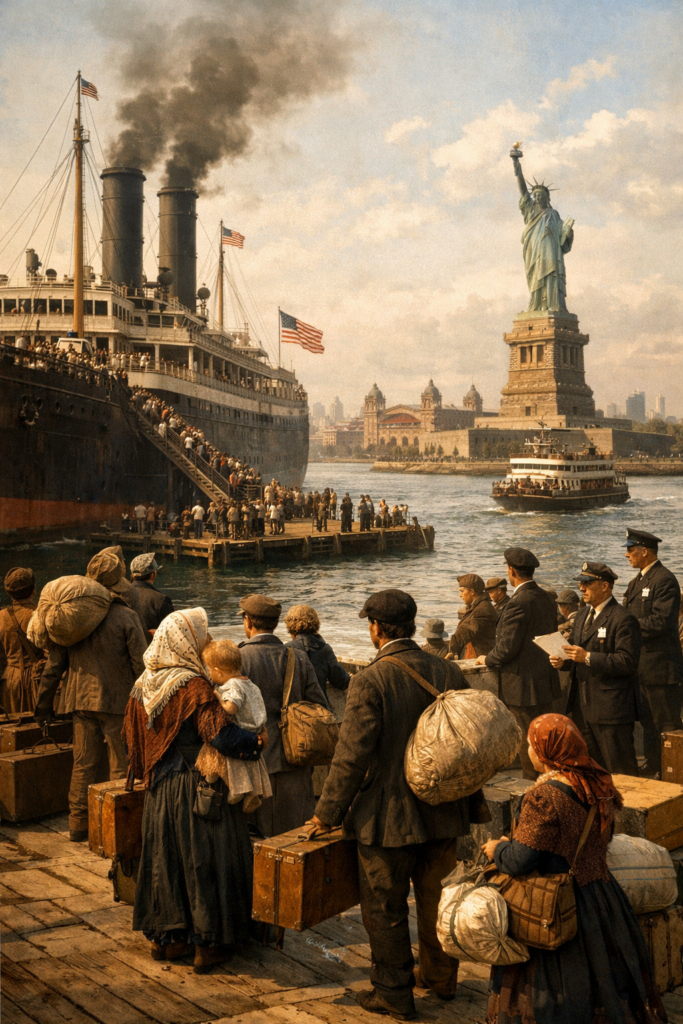
Maritime transport was central to immigration. Millions of newcomers reached the U.S. by ship in the 19th and early 20th centuries, especially through Atlantic ports. Steamships shortened voyage times and made migration more frequent and reliable. Ports like New York and San Francisco became gateways through which labor, culture, and ideas entered the country. The result was not just population growth but a more diverse social and cultural order. The United States became a nation of many people because the sea brought them together.
Pleasure Boating and Everyday Life
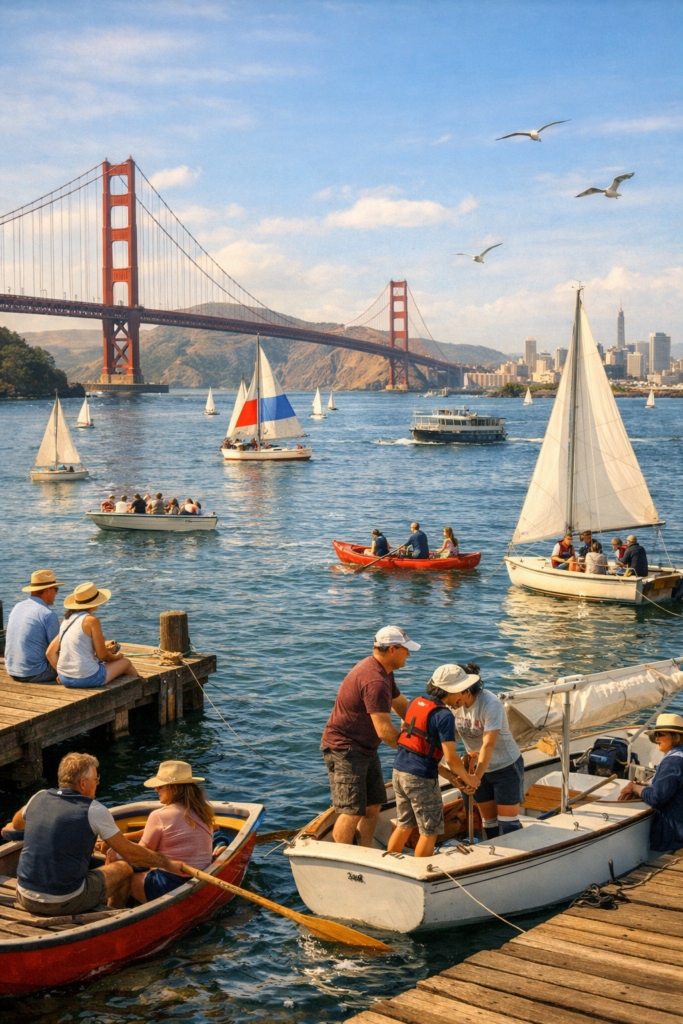
Maritime life also shaped American recreation and culture. As coastal cities, harbors, and inland waterways grew, boating became part of American leisure and identity. The same waters that carried trade and migrants also supported a long boating culture. In places like the San Francisco Bay area, maritime life became part of everyday experience, reflecting a relationship with water that went beyond commerce and war. Americans came to live with water, not merely use it.
Submarine Warfare and Modern Power
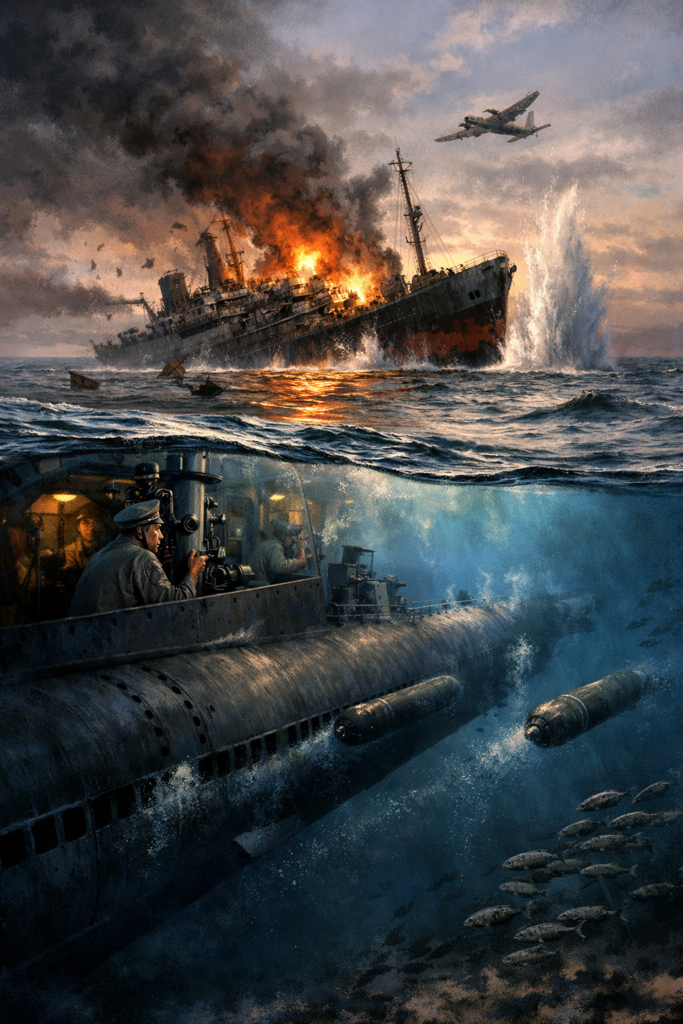
Submarine warfare extends this maritime story into the modern era. The U.S. Navy’s submarine campaign in World War II devastated Japanese shipping and became a central force in Pacific victory. Submarines showed that maritime power includes not only visible fleets but also the ability to deny the enemy their use of the sea. This undersea campaign demonstrated how maritime technology could damage an enemy’s logistics system far from the battlefield. In Paine’s terms, maritime power shapes national destiny through trade denial, mobility, and technological adaptation.
American Maritime Commercial Law and Global Trade
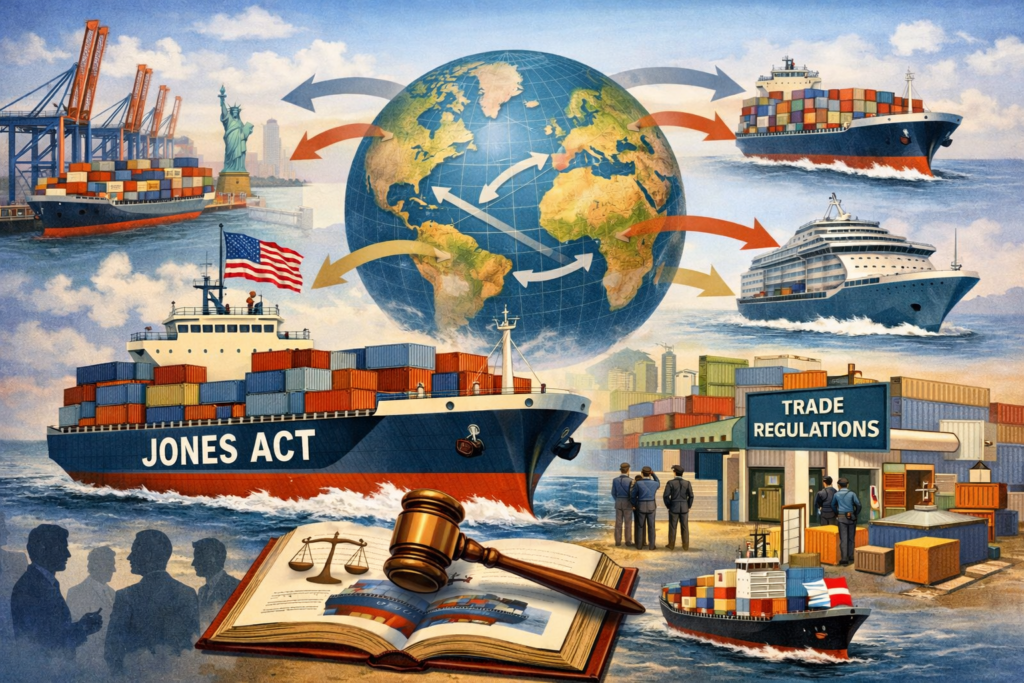
U.S. maritime commercial law also shaped world trade. The Jones Act, which requires cargo moving between U.S. ports to travel on U.S.-built, U.S.-owned, and U.S.-crewed ships, is one of the best-known cabotage laws in the world. It has influenced global shipping debates, cruise itineraries, and freight planning in connected markets. U.S. maritime law became influential because the United States is such a large consumer market and port system that rules for entering U.S. waters often affect vessel design and trade compliance across international shipping networks. In this way, maritime law helped normalize the idea that trade flows are shaped by port access rules, vessel nationality, and coastal shipping rights.
Pirate Democracy and the Waterside of Freedom
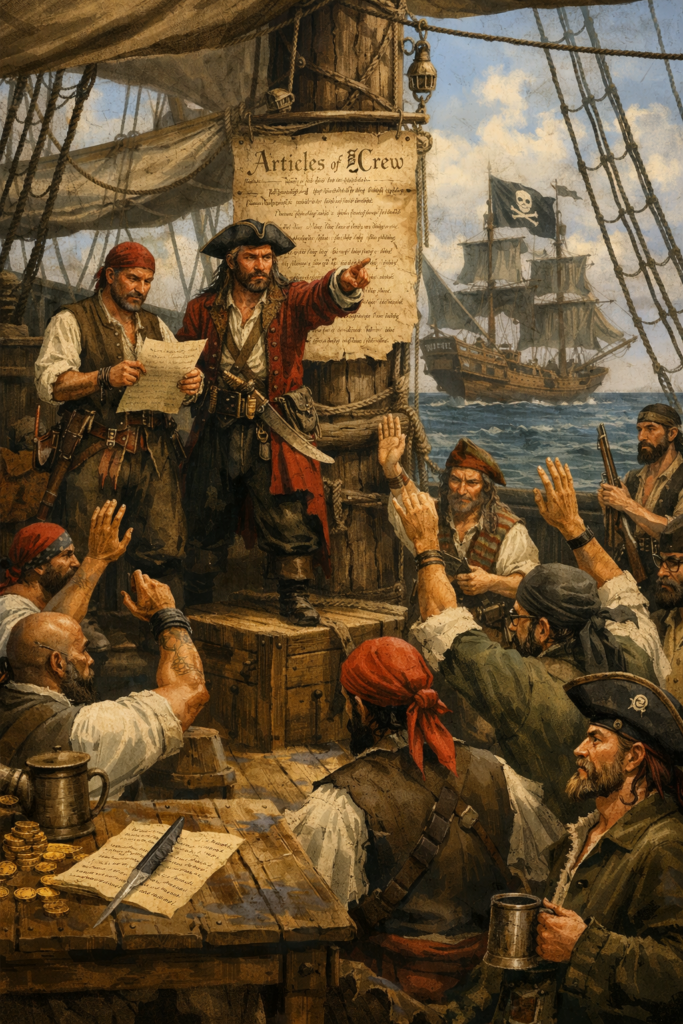
Pirates practiced shipboard democracy—electing captains, using written articles, limiting command power—but this was governance inside outlaw crews, not a national constitutional order. Pirates are better understood as an interesting example of maritime self-governance that sits alongside, rather than underneath, the American democratic tradition. U.S. democracy came much more directly from British constitutional traditions, colonial self-government, Enlightenment political thought, and the Revolution.
The Language of the Sea in American Speech
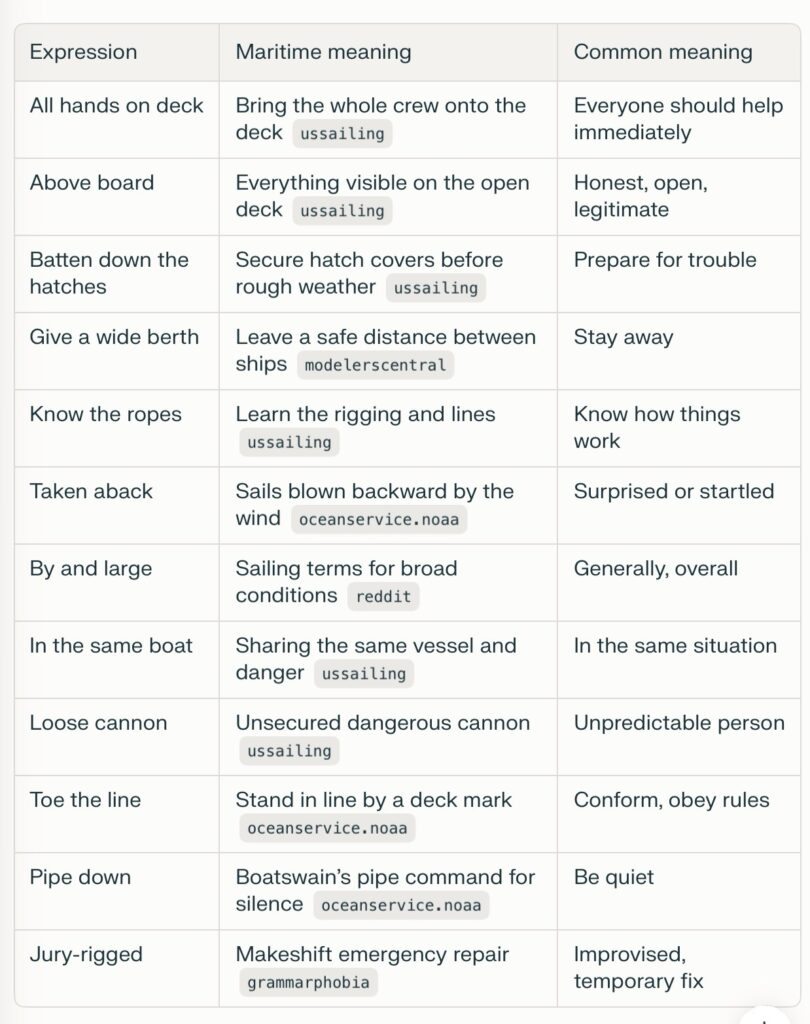
The maritime legacy is also visible in everyday American English. Many common phrases come from ship maintenance, rigging, and emergency repair work. Examples include: Expression Maritime meaning Common meaning All hands on deck Bring the whole crew onto the deck [1] Everyone should help immediately Above board Everything visible on the open deck [1] Honest, open, legitimate Batten down the hatches Secure hatch covers before rough weather [1] Prepare for trouble Give a wide berth Leave a safe distance between ships [2] Stay away Know the ropes Learn the rigging and lines [1] Know how things work Taken aback Sails blown backward by the wind [3] Surprised or startled By and large Sailing terms for broad conditions [4] Generally, overall In the same boat Sharing the same vessel and danger [1] In the same situation Loose cannon Unsecured dangerous cannon [1] Unpredictable person Toe the line Stand in line by a deck mark [3] Conform, obey rules Pipe down Boatswain’s pipe command for silence [3] Be quiet Jury-rigged Makeshift emergency repair [5] Improvised, temporary fix
The few rougher expressions, like “son of a gun” and “hell to pay,” are mild expletives or idioms about trouble rather than profanity. “Son of a gun” is a naval-era euphemistic insult, and “hell to pay” comes from the difficult job of sealing a ship’s seams with pitch. Even “the devil to pay” is tied to ship caulking, not religious punishment.
Several common idioms come directly from ship maintenance, rigging, and emergency repair work, not just general sailing.
- Batten down the hatches: literally, secure hatch covers with battens and tarpaulins before bad weather; figuratively, prepare for trouble.
- The devil to pay / hell to pay: originally tied to the difficult job of sealing a ship’s seams with pitch or tar; figuratively, serious trouble or consequences.
- At a loose end: originally about unsecured rope ends that still needed finishing or fastening; figuratively, idle or without a clear purpose.
- Bitter end: originally the end of a rope or anchor cable attached to the ship; figuratively, the final stage of something, especially a hard process.
- Pay out: originally to let rope or line run out gradually; figuratively, to distribute money or rewards in installments.
- Flake out: originally to lay anchor chain out flat for inspection or handling; figuratively, to collapse, tire out, or fall asleep.
- Jury rig: originally a temporary emergency repair to a mast, sail, or rudder; figuratively, a makeshift fix.
- Shipshape: originally in proper working order for a vessel and its gear; figuratively, neat and well organized.
- Above board: originally everything visible on deck, not hidden below; figuratively, honest and legitimate.
- Loose cannon: originally a cannon that broke free from its lashings and became dangerous; figuratively, a reckless or unpredictable person.
These phrases lasted because maritime work was once a major part of everyday life, so the language of ropes, hulls, hatches, and repairs became a shared source of metaphor. Even people who have never been on a ship still understand the image of something being “tightened,” “secured,” or “temporarily patched,” which makes these expressions durable in modern American English.
Jury-Rigged vs. Jerry-Rigged
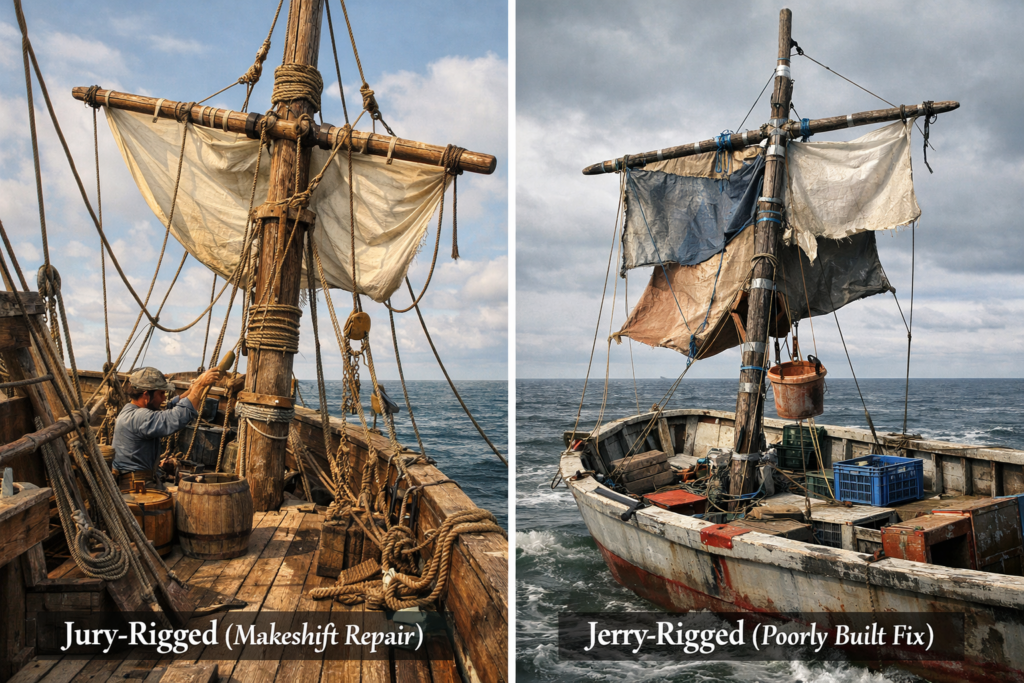
The distinction between jury-rigged and jerry-rigged reflects how maritime language evolves. Jury-rigged is the original, nautical term for a makeshift, temporary repair, with jury meaning “makeshift” or “temporary for emergency use.” Jerry-rigged is a later blend of jury-rigged with jerry-built (meaning poorly built), and it carries a more negative connotation. Neither is a swear word, and both are widely accepted in modern English.
Conclusion
The United States is a maritime nation, and Lincoln Paine’s framework helps show that maritime history is one of the main reasons it became the country it is today. Civil War shipbuilding, the Gold Rush, immigration, pleasure boating, submarine warfare, maritime law, and everyday language are not separate topics; they are all expressions of the same maritime foundation. The sea connected regions, brought people, sustained trade, enabled defense, and shaped culture. So yes, the U.S. is a maritime nation, and its story is not only a land story—it is also a sea story.
Sources
[1] How Sailing Has Shaped the Way We Speak
[2] 116 Naval Sayings – The Ultimate List of Nautical Sayings
[3] Common Phrases with a Nautical Origin
[4] Nautical terms that have become commonly understood? – Reddit
[5] A jerry-rigged etymology – The Grammarphobia Blog
Notes
[1] America is a maritime nation, and we need to start acting like it
[2] US Maritime History: From Colonial Trade to Modern Defense
[3] National Security Contributions of the U.S. Maritime Industry | CSBA
[4] Civil War Ironclads: An Overview – The Mariners’ Museum and Park
[5] The Navies of the Civil War | American Battlefield Trust
[6] Historical Impact of the California Gold Rush | Norwich University
[7] Boating in SF-history – Bay Lights Charters
[8] U.S. Immigration in the 1800s | Ancestry® Family History Learning Hub
[9] Immigration – The Steamship Historical Society of America
[10] Immigration Records | National Archives
[11] Submarine Warfare Played Major Role in World War II Victory
[12] Submarines in World War II (U.S. National Park Service)
[13] Submarine Force – Naval History and Heritage Command
[14] How America Lost Control of the Seas – The Atlantic
[15] [PDF] A Maritime Nation by Necessity
[16] Rise and Fall and Rise: South Carolina’s Maritime History


