A historical and geopolitical essay connecting U.S. financial hegemony, the oil-dollar system, and its shifting foundations today.
The Cracks in the Petro-Dollar Empire
When missiles explode across the Persian Gulf, their shockwaves travel far beyond the desert — they ripple through global finance. A decisive defeat in Iran, whether political or military, doesn’t just mark a regional setback. It strikes at the foundations of the oil-dollar system that has sustained American power since the 1970s. The logic of this system is both simple and profound: control over oil pricing equals control over global liquidity.
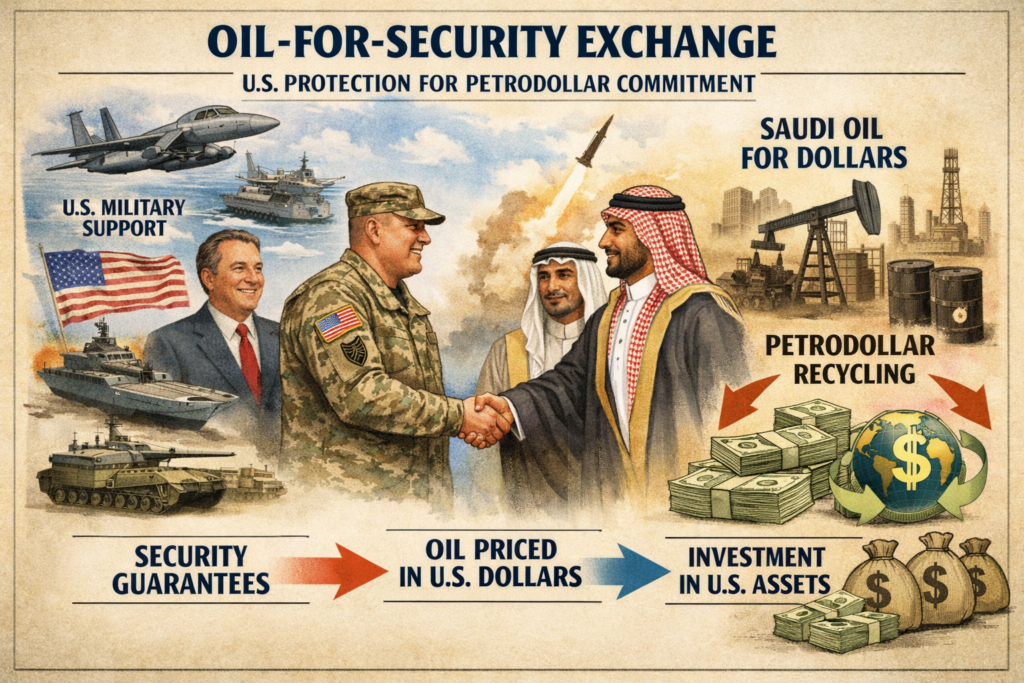
In the aftermath of the 1973 oil crisis, U.S. officials confronted a world where oil was the new chokepoint of economic power. Henry Kissinger, acting as architect of U.S. strategy, negotiated a pivotal deal with Saudi Arabia that quietly reshaped international finance. In exchange for U.S. security guarantees and military support, the Saudis agreed to price their oil exclusively in dollars and to recycle their oil revenues — roughly 80 percent of them — into short-term U.S. Treasury securities. That arrangement not only stabilized America’s deficits but also created a vast, artificial demand for dollars around the world. Oil-importing nations were required to hold dollar reserves, giving Washington a tool of extraordinary reach: the ability to cut off adversaries from the very bloodstream of global commerce through sanctions and banking controls.
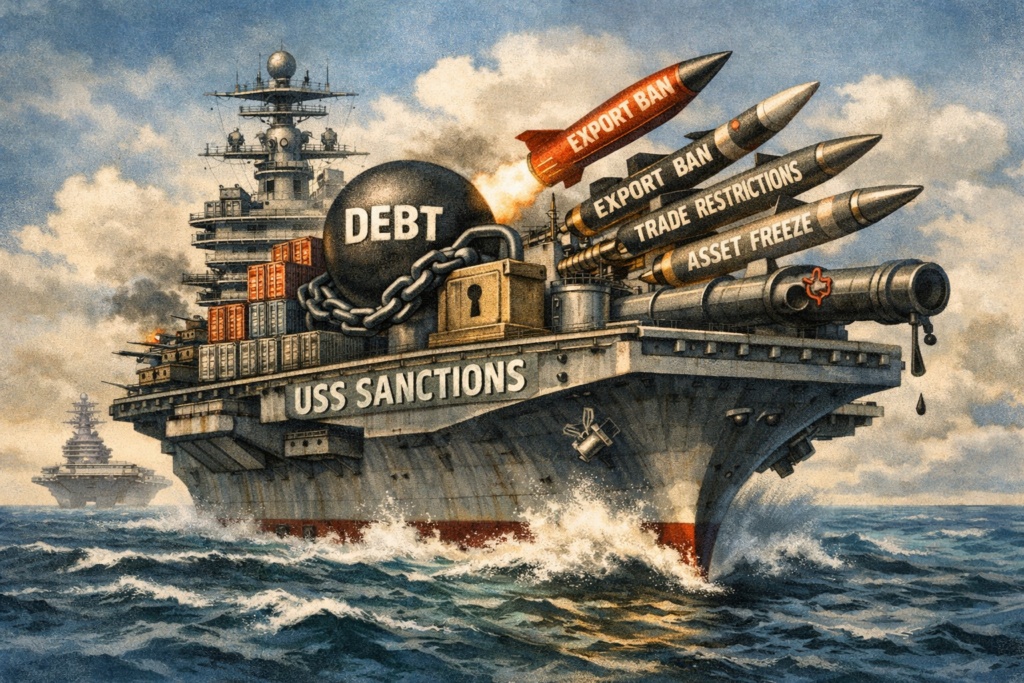
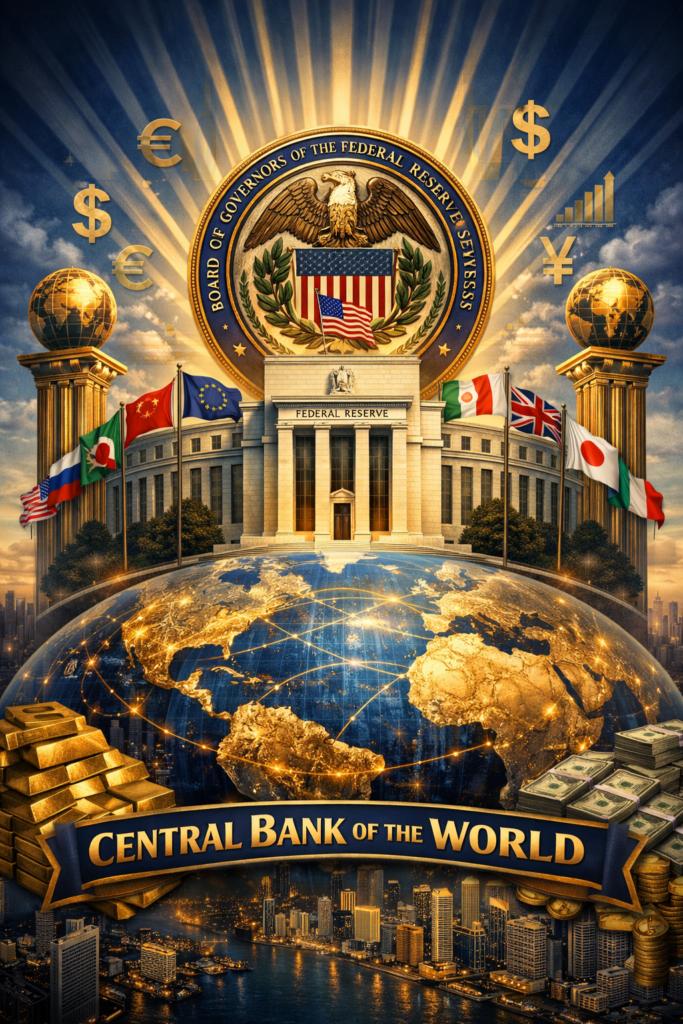
This “petro-dollar” system underpinned U.S. dominance for nearly half a century. It financed wars, underwrote global credit expansion, and made the Federal Reserve effectively the central bank of the world. Sanctions became as powerful as aircraft carriers — silent instruments of coercion that could cripple entire economies without a shot fired. But like all hegemonic structures, it depended on mutual interest and faith in stability. Once those began to erode, alternatives emerged.
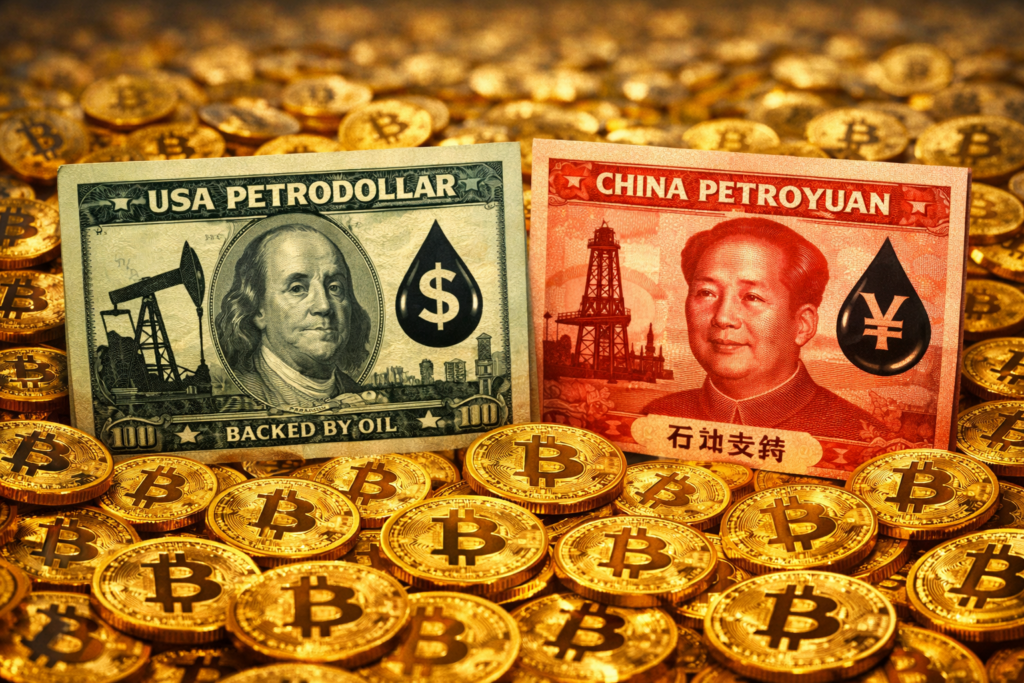
Enter China. As Beijing’s industrial rise transformed it into the world’s largest importer of oil, it began to challenge the dollar’s centrality. Through its “petro-yuan” initiatives, long-term energy contracts settled in renminbi, and digital currency experiments within the Belt and Road framework, China has advanced a gradual but persistent campaign to internationalize its own currency. Its objective is strategic as much as economic: to reduce vulnerability to U.S. sanctions and dilute Washington’s global leverage. Each yuan-denominated oil deal subtly chips away at a system designed to ensure perpetual dollar demand.
The picture is now fracturing further. The rise of electronic and decentralized currencies — from central bank digital currencies (CBDCs) to blockchain-based settlements in trade — offers fresh channels for countries seeking to bypass dollar intermediaries. Russia, Iran, and even U.S. allies are experimenting with bilateral trade in local or digital currencies, a reflection of growing unease with the West’s financial chokehold. Fifty years after Kissinger’s deal, the once-universal oil-dollar standard covers only about 60 percent of global petroleum transactions, and that share is shrinking as Asia and the Global South diversify payment mechanisms.
In this new landscape, a blow against U.S. interests in Iran is symbolically more than a battlefield loss — it represents the weakening gravitational pull of the dollar itself. The shift from a world anchored on a single reserve currency to one of competing monetary spheres marks the slow unwinding of an empire built not on colonies, but on credit. The petro-dollar is dying a quiet death, and with it, the architecture of American primacy is beginning to tremble.
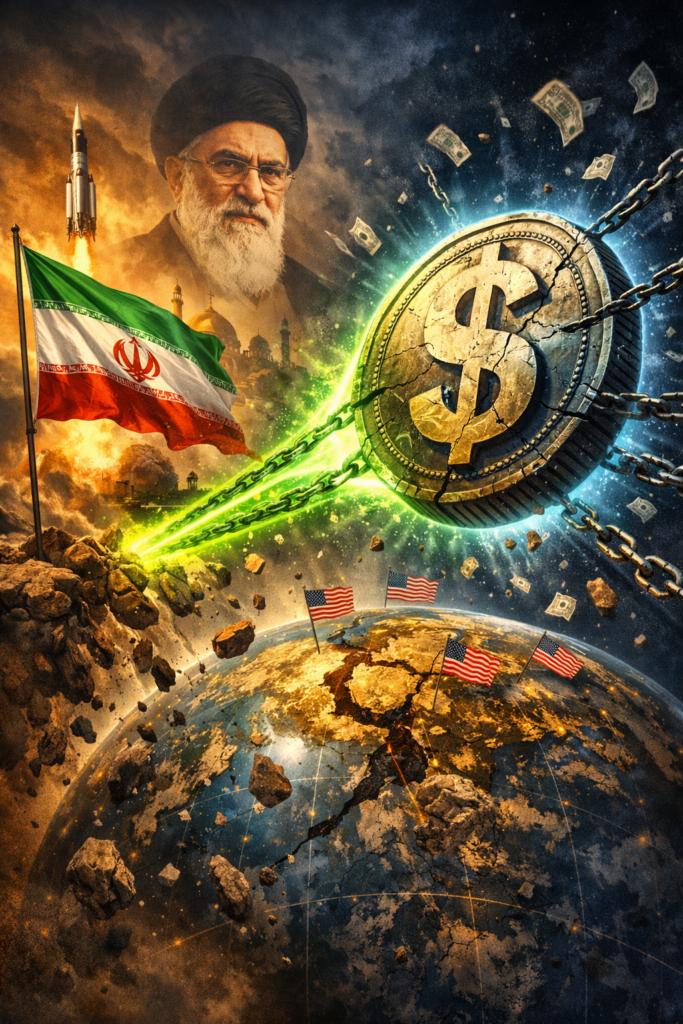
Trump has signaled comfort with a weaker dollar, but the public evidence does not show a clear, explicit plan to deliberately crash the currency; rather, he and his advisers have framed a weaker dollar as useful for exports, manufacturing, and the trade deficit. Reuters reported that Trump called the dollar’s value “great” while also saying he was not seeking further depreciation, even as other coverage and analysts noted that his administration seems to view a softer dollar as compatible with its economic agenda.[1][2][3]
What Trump appears to want
Trump’s stated preference is for a dollar that is not “too strong,” because that can make U.S. goods more competitive abroad and narrow the trade deficit. At the same time, a weaker dollar can help U.S. exporters and firms with foreign earnings, which is why markets read his comments as tolerant of decline rather than indifferent to it. That is different from saying he wants a dollar collapse.[3][4][1]
Billionaires and currency
It is plausible that some billionaire supporters benefit from a weaker dollar, especially those with large export businesses, offshore earnings, or hard assets that hold value when currency purchasing power falls. But there is no reliable evidence in the sources I found that Trump is pursuing a “multi-vote by wealth” model, or that he explicitly wants to replace one-person-one-vote with wealth-weighted voting. What the evidence does show is that billionaire influence in U.S. politics is already unusually high, and analysts warn that wealth concentration can distort democratic responsiveness.[5][6][7]
How a weaker dollar can strain democracy
A weaker dollar can weaken democracy indirectly when it feeds inflation, financial instability, and public distrust. If prices rise while wages lag, citizens tend to become more anxious and less trusting of institutions, which creates openings for strongman politics and for elites who promise order while concentrating power. It can also reward asset owners over wage earners, widening the gap between people who live off capital and people who live off paychecks; that is one route by which oligarchic tendencies strengthen.[8][9][5]
Oligarchy risk
The deeper risk is not that currency weakness mechanically produces oligarchy, but that it amplifies an already unequal political economy. Research and reporting on the U.S. increasingly describe a system where wealthy actors have outsized influence over policy, and where economic power translates into political power far more efficiently than ordinary voting does. In that setting, a weaker dollar can become part of a broader bargain: short-term gains for exporters and asset holders, paired with more public frustration, more dependence on large donors, and less faith that elections change anything.[6][7][10][5]
A careful reading
So the most defensible interpretation is this: Trump seems to tolerate or even welcome some dollar weakness because he sees trade and industrial advantages in it, not because he has openly declared a project to undermine democracy. But if the dollar weakens too far, the resulting inflation, instability, and concentration of gains among asset-rich groups can absolutely make democratic politics more fragile and oligarchic politics more attractive.[11][1][3]
Sources
[1] Trump says value of the dollar is ‘great’, currency hits 4-year low
[2] Dollar sinks to four-year low, Trump brushes off the decline | Reuters
[3] Understanding the vibe shift on the dollar – Atlantic Council
[4] Trump thinks a weaker dollar is great for America. Is he right? – NPR
[5] Billionaires are 4,000x more likely to hold office than you … – Fortune
[6] Study: US is an oligarchy, not a democracy – BBC News
[7] Oligarchy in the open: What happens now as the U.S. is forced to …
[8] Wealth Inequality and Democracy | Cato Institute
[9] Unequal Democracy: Economic Inequality and Political …
[10] [PDF] Who Gets What They Want from Government? – Princeton University
[11] Is this the downfall of the U.S. dollar? – J.P. Morgan Private Bank
[12] Trump’s chaotic governing style is hurting the value of the U.S. dollar
[13] How the Billionaires Took Over America | The New Republic
[14] The dollar is sinking. Trump thinks it’s great. – POLITICO
[15] Both Dems & GOP Sucked Up to Billionaires in 2024 Election
[16] Why Trump Wants a Weaker Dollar – The Atlantic
[17] Trump Has No Right to Move Us to Oligarchy, Authoritarianism, and …
[18] US dollar extends fall after Trump dismisses concerns over weaker …
[19] Strong vs. Weak Dollar: The Dilemma of U.S. Currency Policy
[20] [PDF] Wealth Inequality and Democracy – Kenneth Scheve


Here’s a simple embed snippet for that Benzinga article page:
https://www.benzinga.com/markets/bonds/26/08/60871794/top-economist-says-mohammed-bin-salman-forced-trump-to-back-off-iran-strikes-with-a-credible-threat-to-unload-us-treasuries?utm_source=Flipboard&utm_campaign=partner_feed&utm_medium=referral
https://www.cnbc.com/2026/07/28/congress-renews-push-to-end-crypto-wash-sale-tax-loophole.html?utm_source=flipboard&utm_content=CNBC/magazine/Top+News