American Wine Lifestyle Development

This project uncovers a sweeping but often overlooked narrative: the rise, fall, and reinvention of California wine — from Mission‑era vineyards in San Diego to the Italian wine families of Escondido, the dominance of Napa and Sonoma, and the surprising truth that Washington wine is California wine carried north.

“The greatest wine is not necessarily the most expensive wine. It is the wine tasted when the palate is most capable of appreciating it.”


Artificial Intelligence: What It Is, How Citizens Can Use It Against Oligarchy

A practical guide to AI’s branches, its political and economic consequences, its effect on finance and law, civic self-protection, election integrity, and the Catholic Church’s ethical perspective. What Is Artificial Intelligence? Artificial intelligence, or AI, is a broad field of computing concerned with building systems able to perform tasks associated with human intelligence: perceiving information,…

American Tug – Kadey-Krogen Group, Liquidation

In July 2026, the acquiring organization Kadey-Kroger and American Tug entered Chapter 7 liquidation. Kadey-Krogen Yachts, KKY Holdings LLC, and American Tugs LLC filed voluntary Chapter 7 petitions on July 6, 2026, in the U.S. Bankruptcy Court for the District of Delaware.3 Chapter 7 is a liquidation proceeding, not a Chapter 11 reorganization designed to…

Quadra Island, Canada

The Discovery Islands region of British Columbia is a group of islands located at the northern end of the Salish Sea and the eastern end of Johnstone Strait, between Vancouver Island and the mainland coast of British Columbia, Canada3. Quadra Island is one of the islands. Here are some key points about the Discovery Islands:…

Katie Wilson and the Seattle Municipal System

A Systems Theory Analysis of Holistic Urban Governance CONTENTS Introduction Systems theory conceives of an organization not as a collection of isolated parts but as an integrated whole whose subsystems—psychosocial, technical, structural, and normative—must co-evolve with one another and with their external environment. Applied to municipal governance, this framework reveals how Mayor Katie Wilson’s administration…

Systems Theory: Why FIFA — Unlike Other Sports — Does Not Need Commercial Privatization

A multi‑layer analysis of structure, incentives, and the global football ecosystem Commercial privatization has swept through global sports. Formula 1, European football clubs, the UFC, cricket leagues, and even U.S. college athletics have embraced private equity, LLC structures, and commercial subsidiaries. These moves were driven by financial crises, legal threats, structural instability, or competitive pressure.…

Empire built not on colonies, but on credit

A historical and geopolitical essay connecting U.S. financial hegemony, the oil-dollar system, and its shifting foundations today. The Cracks in the Petro-Dollar Empire When missiles explode across the Persian Gulf, their shockwaves travel far beyond the desert — they ripple through global finance. A decisive defeat in Iran, whether political or military, doesn’t just mark…

West Coast Rowing

Featuring the intertwined legacies of Washington, Cal, and Seattle Yacht Club I. The Water City and the Birth of a Tradition (1890s–1913) Seattle has always been a city defined by water. Long before rowing shells sliced through the Montlake Cut, the lakes and waterways were alive with fishing boats, ferries, and pleasure craft. In 1892,…

Seattle’s Opening Day

Seattle Yacht Club grew alongside the city—from an Elliott Bay club to a Portage Bay institution tied to the ship canal and Montlake Cup. It then went beyond the city with an international Opening Day event through invited yacht clubs and the Windermere crew races. High‑quality bike routes with light rail to University of Washington Station provide a low‑carbon way to reach Opening Day events.

Washington Wines

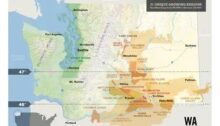
Because Washington’s AVAs cover a huge, dry, sun‑drenched interior with relatively low land and vineyard costs, many wineries can afford to invest in quality fruit and skilled winemaking while still pricing their wines below comparable Napa and Sonoma releases. This is especially clear in Cabernet Sauvignon, Bordeaux blends, and Syrah, where Washington wines regularly earn mid‑90s critic scores yet sell for less than Napa‑labeled counterparts, giving buyers far more “score‑per‑dollar” in the same style. The AVA system makes all of this transparent: a label that says “Red Mountain” or “Yakima Valley” or “Columbia Valley” signals a clear style and quality expectation, which wineries build on by blending within and across AVAs.